
Ilakaka, Madagascar: Photographing the Sapphire Town
Ilakaka madagascar for photographers: the 1998 sapphire rush town, the diggings, market portraits, consent and staying safe.
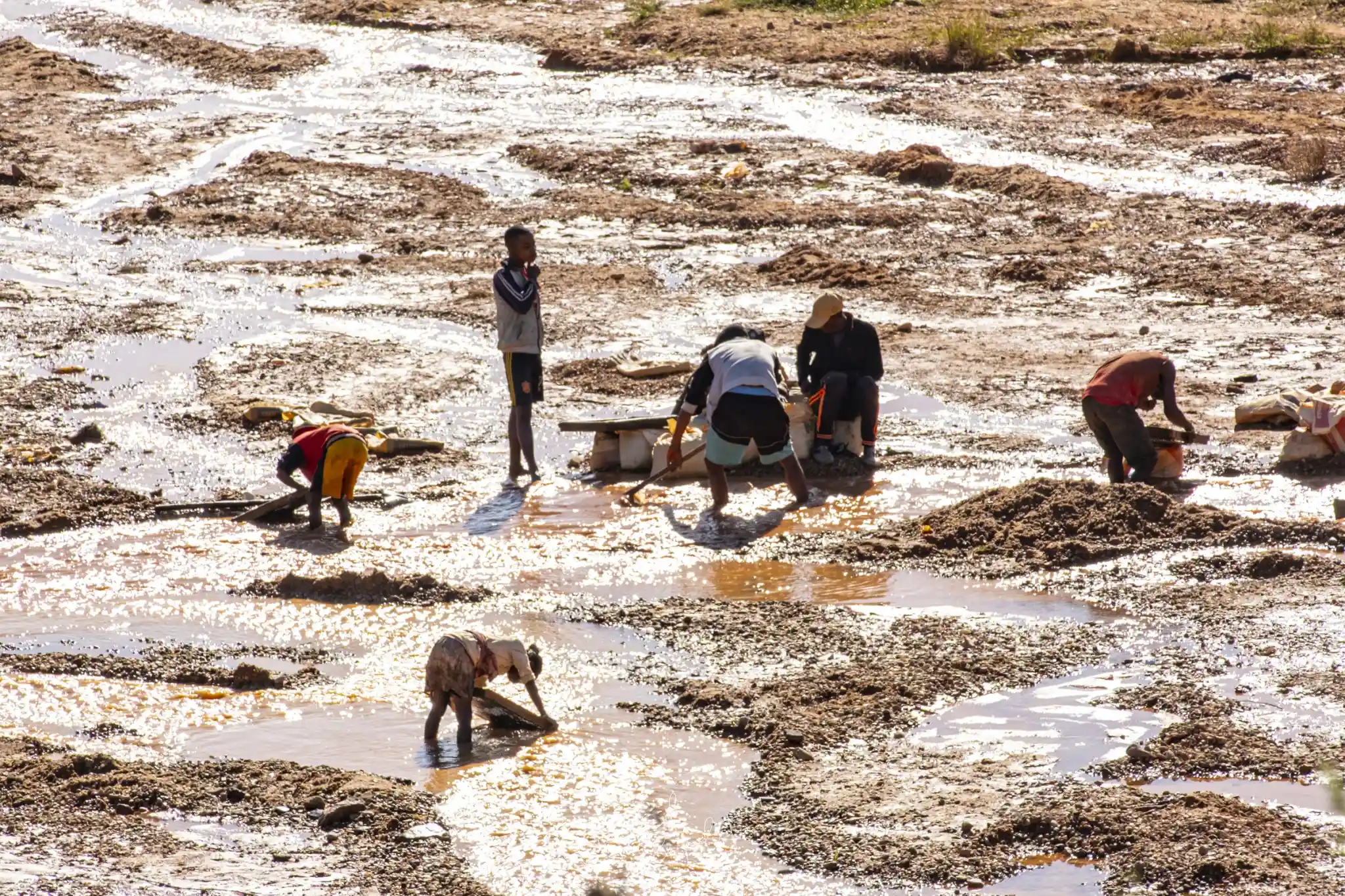
Ilakaka, Madagascar, is a sapphire town on the RN7 in the south, built almost from nothing after gems were found in the river gravels in 1998. For a photographer it is a documentary stop, not a scenic one: diggers washing gravel in the riverbed, gem dealers' signs along the main road, a busy roadside market, zebu carts and goats in the street. Ask before portraits, keep the camera low key around the gem trade, and shoot from the public road and the market.
Ilakaka is part of our RN7 Madagascar photography guide, and it sits close to Isalo National Park, which makes the contrast between the two hard to miss.
Ilakaka madagascar: how the town began
Ilakaka was a hamlet of a few dozen people until sapphires were found near the Ilakaka River in 1998. The Gemological Institute of America, which has reported on the area for years, describes how miners from across the island settled within months near the bridge over the river, and how a boomtown grew from that camp. Population estimates in the early years ran into the tens of thousands. The digging soon spread far beyond the town, and GIA called the wider Ilakaka-Sakaraha area probably the world's largest sapphire producer over the following decade. Later GIA field reports describe the town itself as much quieter than in the rush years. What you see from the road today is the result: a long main street of timber and corrugated iron, gem buying offices with painted signs, and diggings in the river flats.
Photographing the diggings
The sapphire diggings around Ilakaka are mostly small-scale and done by hand: people shovelling and washing gravel in shallow pools, sieves and buckets, the ground turned over into a maze of water and spoil. From a respectful distance, with a 70-200mm, the patterns of wet gravel and the bent figures make strong pictures, especially when the sky is bright and the water reflects it. Do not walk into the pits uninvited. These are people's claims and livelihoods, and the gem trade is understandably wary of strangers with cameras. Go with a local guide or driver who can ask on your behalf, and accept a no. Wide shots that show the work and the land, rather than faces, are both kinder and more telling.
Ilakaka: the main street and the market
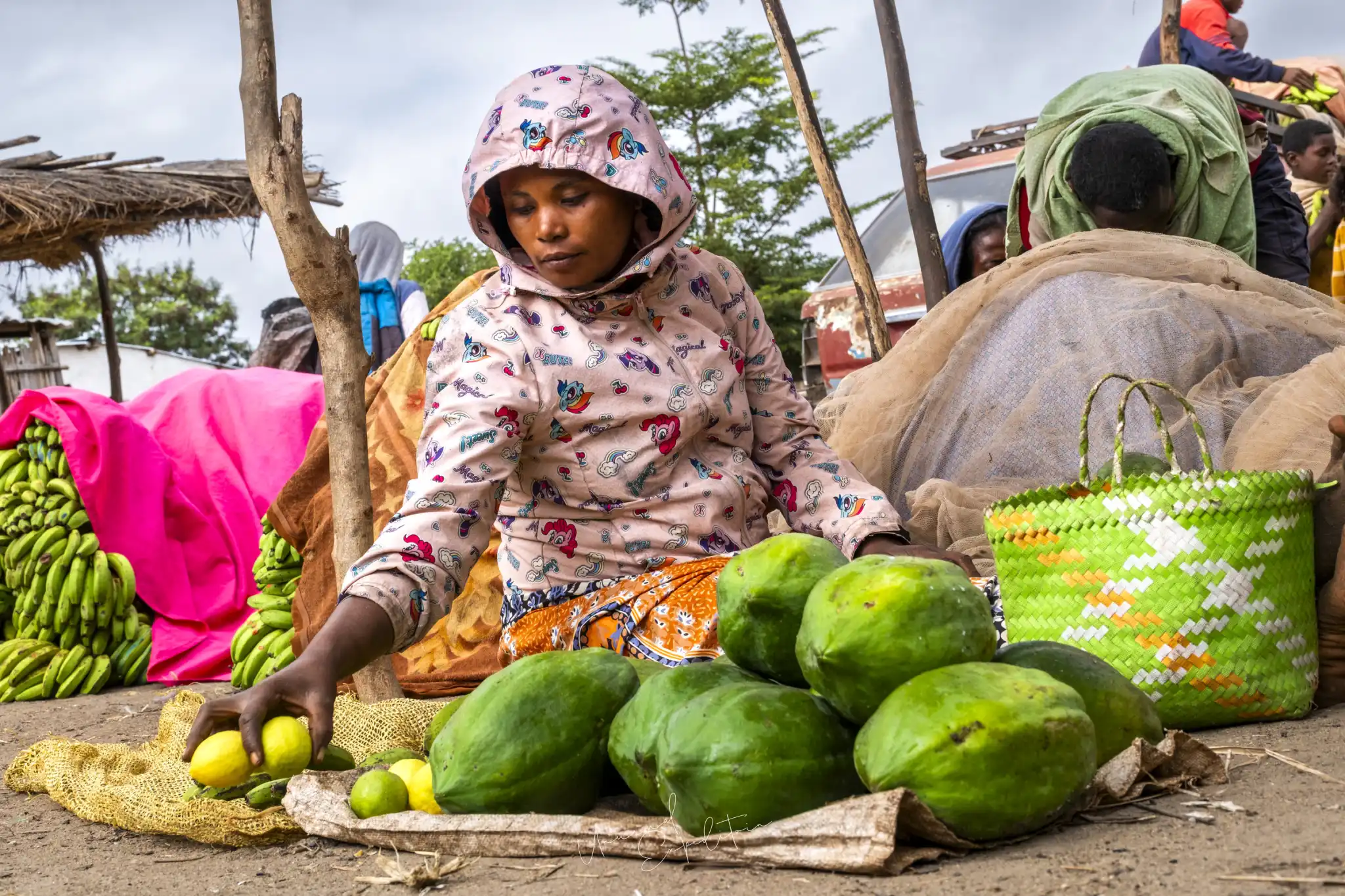
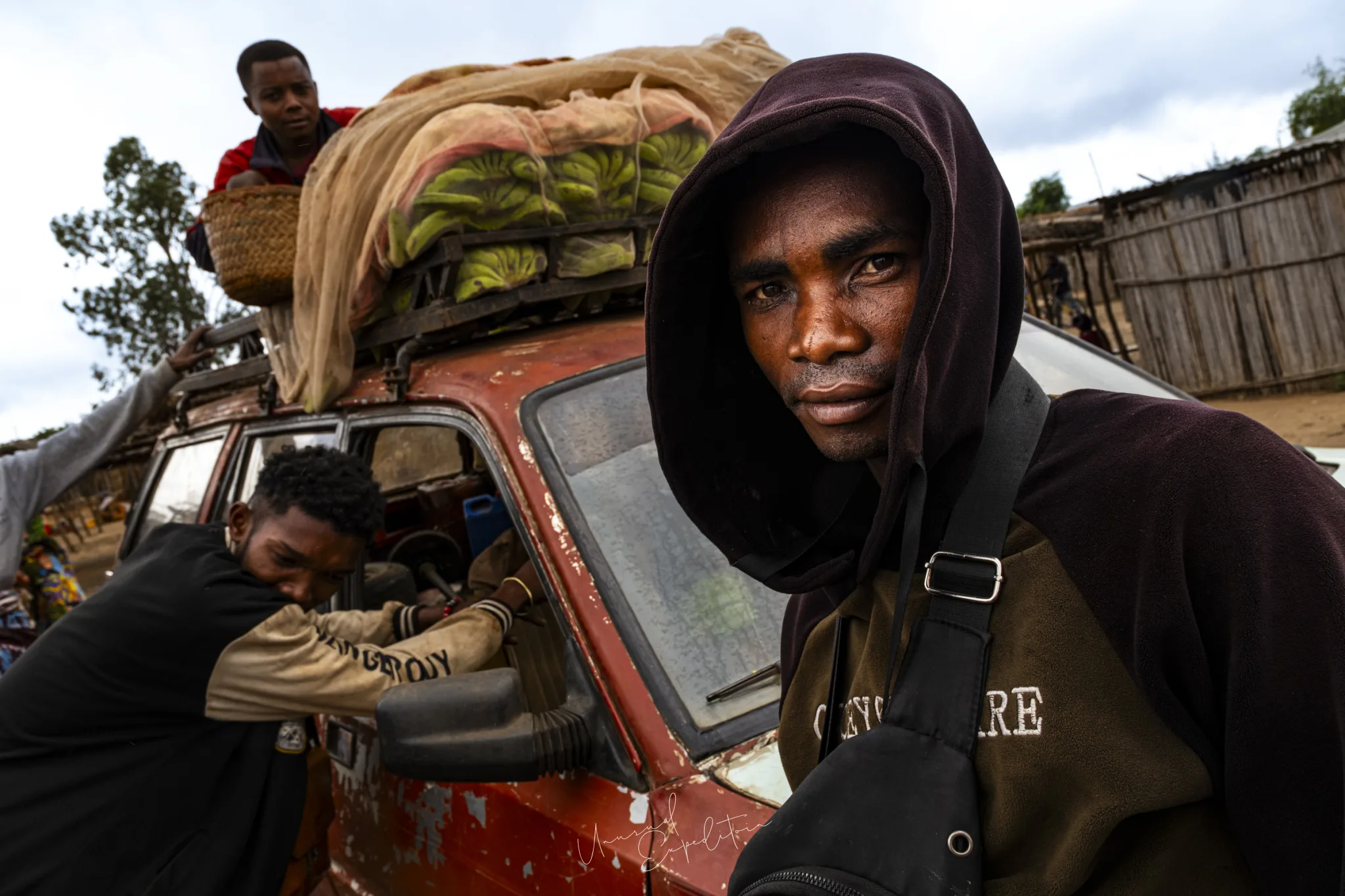
The main street of Ilakaka is where the town's character shows. Gem dealers' signs, some painted with stones and names, stand over the shopfronts; pickups and bush taxis park in front; herds of goats and zebu carts move along the verge. A roadside market sells fruit, vegetables, chickens and household goods, and the sellers are often willing to be photographed if you ask and buy something. Overcast days are common in the south at some times of year and suit this kind of work, with soft light on faces and no harsh shadow under hats. A 24-70mm covers the street; a 35mm or 50mm prime is less intrusive at the stalls. Look also for the details that tell the story of the town without anyone in them: hand-painted signboards showing cut stones, a row of scales on a counter seen through a window, the red dust on a parked pickup. Those frames work well alongside the portraits and need no permission beyond common sense.
Portraits and consent in Ilakaka
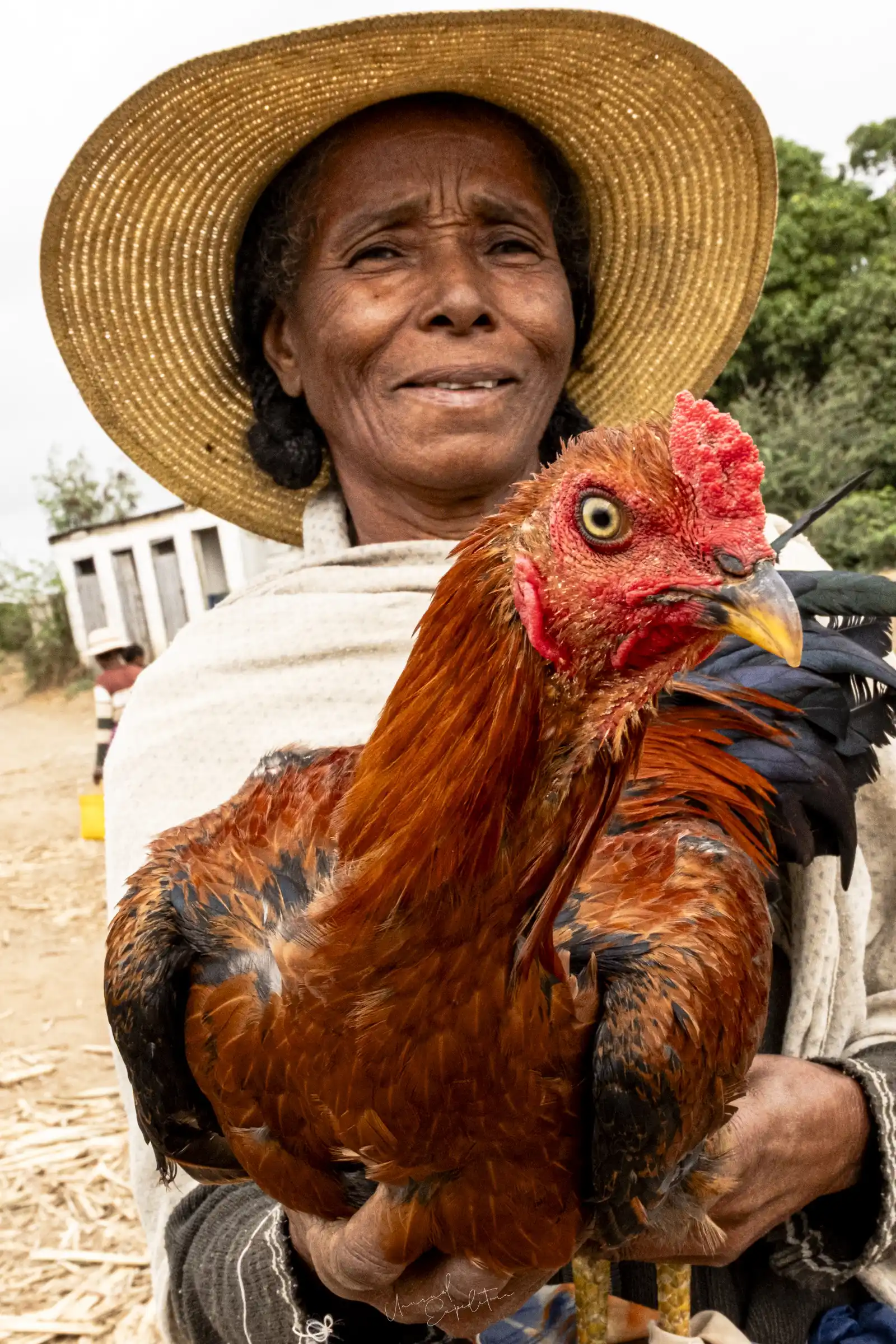
Ilakaka is a working town, not a showpiece, and the people who live there owe visitors nothing. The rule we follow everywhere in Madagascar matters most here: ask first, with a gesture or a word of Malagasy, show the picture afterwards, and buy from the stall you photographed. Many people are happy to pose and some will ask for the picture to be taken. Others, especially around the gem offices, will say no, and that is the end of it. Avoid photographing money, stones or transactions. Keep children out of the frame unless a parent is clearly happy with it. The best portraits from Ilakaka come from a few minutes of conversation at a market stall, not from a lens pointed down the street.
Ilakaka at a glance for photographers
| Subject | Where | Lens | Approach |
|---|---|---|---|
| Sapphire diggings | River flats outside town | 70-200mm | From a distance, with a guide |
| Gem dealers' signs and street | Main road | 24-70mm | Shoot the signs, not the deals |
| Market portraits | Roadside stalls | 35mm, 50mm | Ask, buy, show the picture |
| Goats, zebu carts, bush taxis | Along the RN7 | 24-70mm | Be ready from the vehicle |
The diggings and the market give two different stories, and a short stop is enough for both.
Ilakaka is not pretty and it is not meant to be. It is a town built by people who came to dig, and if you photograph it with respect you come away with the truest pictures of the whole road.
Joseph Mak, tour leader, Unusual Expedition
Is Ilakaka safe to stop in?
Wikipedia notes that violence has been a problem in Ilakaka because so much money moves through the gem trade, and the town has that reputation in Madagascar. In practice, visitors stop in daylight on the main road, stay with their driver or guide, and keep cameras and valuables out of sight when not in use. Do not wander into the diggings or side streets alone, and do not stay after dark. Your government's travel advice for Madagascar, such as the UK Foreign Office pages, is the place to check the current picture, and the country guide to safety, health and drones in Madagascar covers the rest.
Ilakaka on the road south
Ilakaka sits on the stretch of the RN7 between the sandstone of Isalo and the coast, where the road heads for Toliara and the spiny forest of Ifaty. After the landscapes of Isalo, it is a reminder that the south is lived in, and that people's work is as much a subject as the rock.
See the south with us
We run the RN7 south as a private photography trip for small groups on request, with local guides who can open doors in places like Ilakaka. Our scheduled Madagascar departures and all our guides are on the Madagascar photography tours page.
Join the RN7 photography tour
Madagascar Photo Tour – Madagascar departs 11 Apr 2027 To 19 Apr 2027, led by Joseph Mak. Small group, photography first. All RN7 photography tours.
Explore RN7 in depth
- RN7 Madagascar Photography Guide: the Road SouthMadagascar
- Ranomafana National Park Photography: Lemurs, Geckos and StreamsMadagascar
- Madagascar Central Highlands: Rice Harvest, Brick Villages and Craft TownsMadagascar
- Isalo National Park Photography: Sandstone, Pools and WildlifeMadagascar
- Ifaty and the Spiny Forest: Baobabs, Tortoises and Night SkiesMadagascar
- Antsirabe, Madagascar: Pousse-Pousse, Markets and Crater LakesMadagascar
- Anja Community Reserve: Photographing Ring-Tailed LemursMadagascar
Upcoming Photo Tours
- Egypt Photo Tour – EgyptEgypt 12 Dec 2026 To 20 Dec 2026
- Inner Mongolia Winter Owl Photo Tour – ChinaChina 01 Jan 2027 To 04 Jan 2027
- Inner Mongolia Winter Photo Tour – ChinaChina 05 Jan 2027 To 11 Jan 2027
- Mekong And Central Highland Vietnam Photo Tour - VietnamVietnam 16 Jan 2027 To 24 Jan 2027