
Ranomafana National Park Photography: Lemurs, Geckos and Streams
Ranomafana National Park, Madagascar for photographers: bamboo lemurs, leaf-tailed geckos, streams, settings and season.
Ranomafana National Park is Madagascar's best rainforest for photographing bamboo lemurs, and one of the best for leaf-tailed geckos, chameleons and frogs. It protects more than 41,000 hectares of montane rainforest on the eastern edge of the highlands, a short detour off the RN7. Expect steep, muddy trails, dim green light and animals at close range once the guides find them. A long lens with a fast aperture, high ISO and a good local guide matter more here than anywhere else on the road south.
Ranomafana is the rainforest chapter of our RN7 Madagascar photography guide, which places it among the other landscapes of the south.
Ranomafana National Park: what it is and why it exists
Ranomafana means "hot water" in Malagasy, after the thermal springs in the village beside the park. The forest became Madagascar's fourth national park in 1991, after the primatologist Patricia Wright rediscovered the greater bamboo lemur there and her team discovered a species new to science, the golden bamboo lemur. In 2007 UNESCO listed it as one of the parks that make up the Rainforests of the Atsinanana World Heritage Site. Next to the park, Stony Brook University runs Centre ValBio, a research station opened in 2003 that works on biodiversity, community health and reforestation, and many of the guides have worked with its researchers.
The park sits on an escarpment between roughly 800 and 1,200 metres above sea level, according to its Wikipedia entry, so it is cooler and wetter than the lowland forests, and mist is common in the mornings.
Ranomafana national park Madagascar: the lemurs
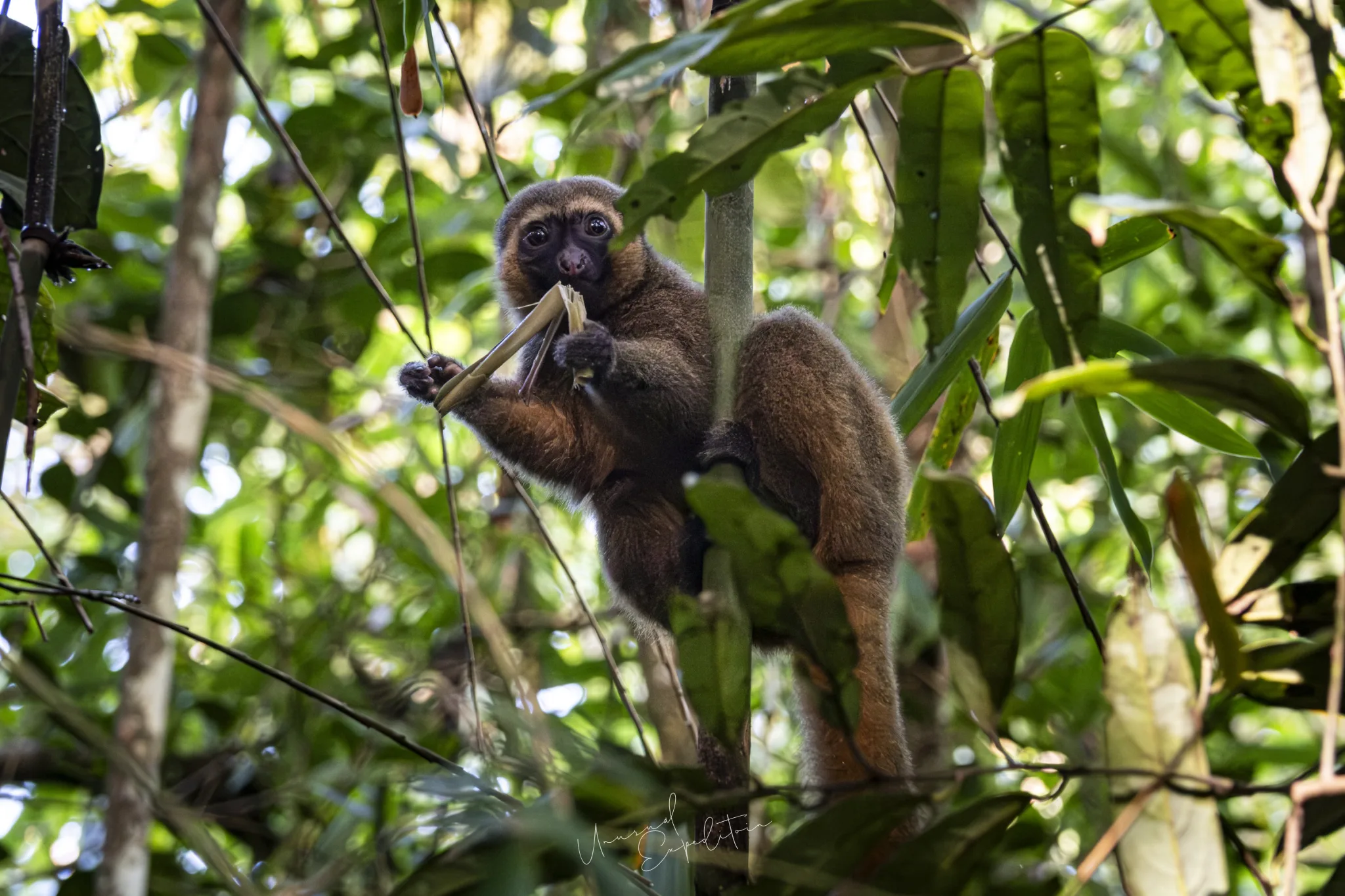
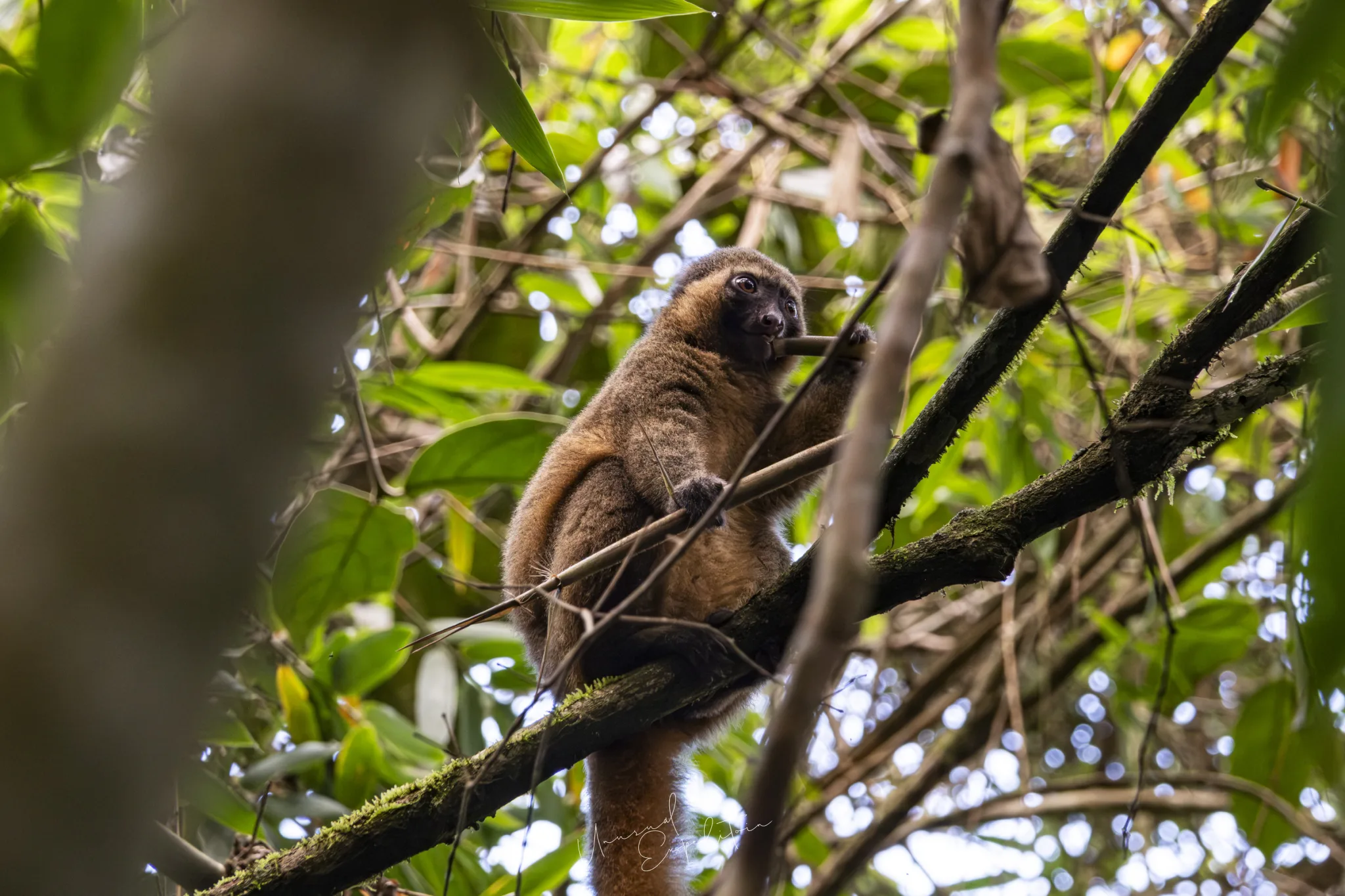
Thirteen lemur species are recorded in Ranomafana National Park Madagascar, seven active by day and six at night. The daytime list includes three bamboo lemurs (the golden, the greater and the Ranomafana grey), Milne-Edwards's sifaka, the southern black and white ruffed lemur, the red-bellied lemur and the red-fronted brown lemur. Bamboo lemurs are the speciality: they feed on bamboo shoots and stems, often low down in the thickets, and when a group is busy eating they let you watch for a long time.
Local guides track the groups from first light, so let them lead and keep up. Once you are in position, the hard part is the background: tangled stems and bright gaps in the canopy. Move a step left or right until the lemur's face sits against dark leaves, and wait for it to look up from the bamboo.
Leaf tailed gecko: finding the forest's best camouflage
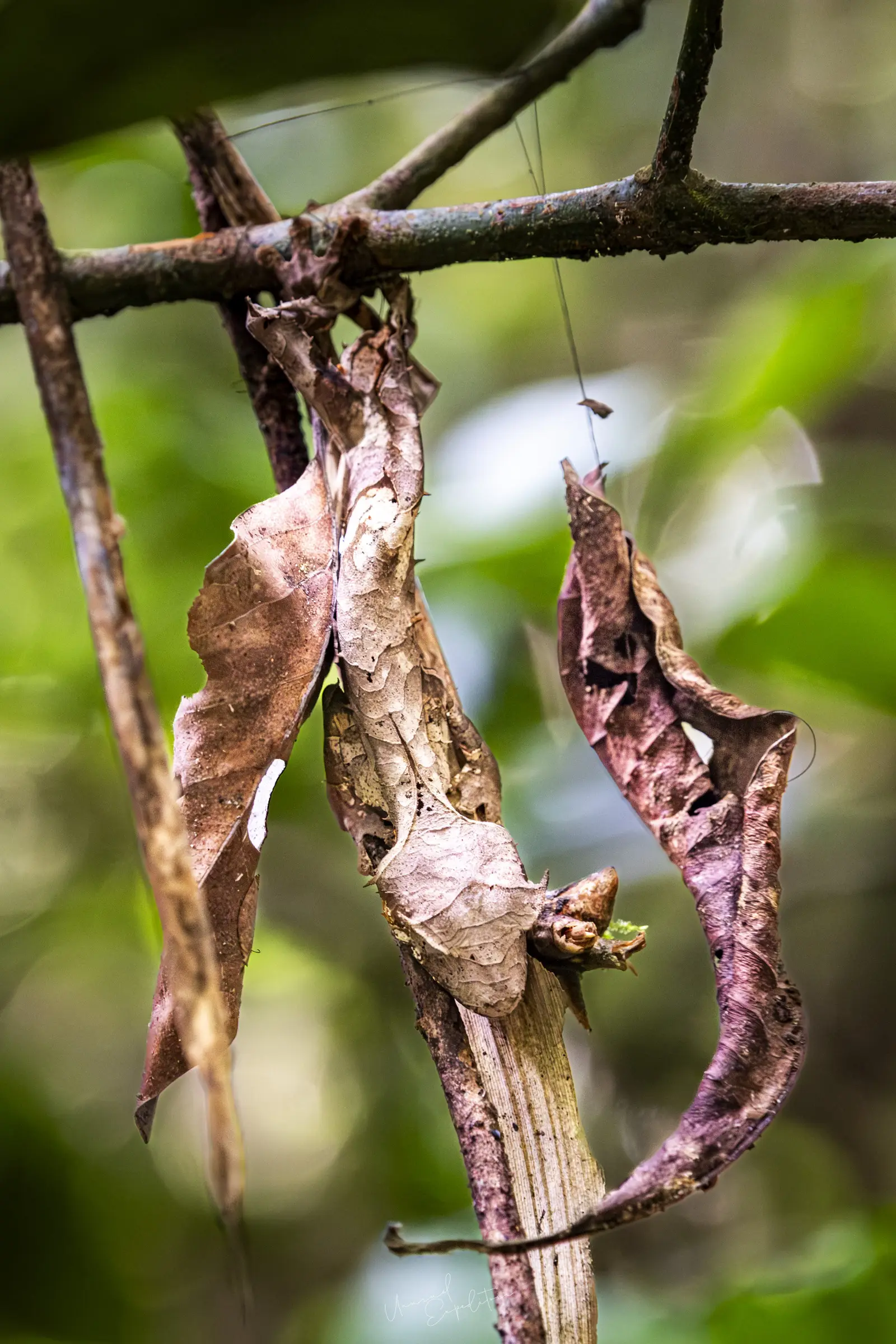
The leaf tailed gecko is the animal most photographers come to Ranomafana hoping to see after the lemurs. Several species of Uroplatus live in Madagascar's eastern forests, and the smaller ones hang head down among dead leaves, flattened, mottled brown and with a tail shaped and notched like a decaying leaf. Without a guide who knows the individual perches you will walk past them.
A macro lens or a 100-400mm at close focus both work. Shoot from the side so the outline separates from the twig, use a little flash or a reflector to lift the shadows, and include enough of the surrounding leaves that the camouflage is the subject of the picture. Night walks along the park boundary add chameleons, frogs and mouse lemurs; the torchlight technique is the same as on the night walk described in our Andasibe guide.
Streams, cascades and the forest itself
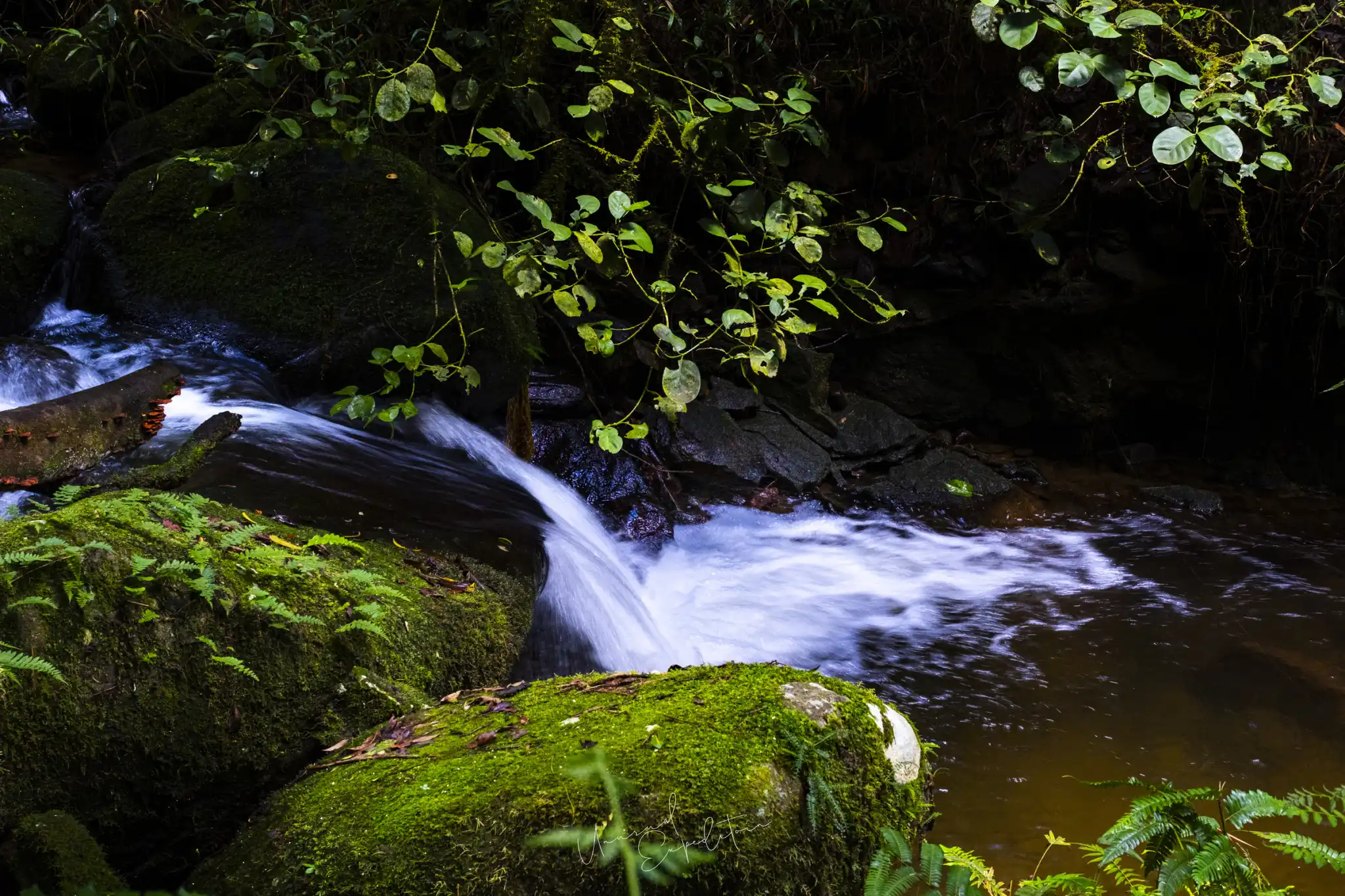
Ranomafana is a wet forest, and streams run through it over mossy boulders and small cascades that the trails cross again and again. These are good subjects for the middle of the day, when the animals rest and the light under the canopy is even. A tripod and a slow shutter turn the water to silk; a polarising filter cuts the glare on wet leaves and deepens the greens. On a grey or drizzly day, which is common here, the forest floor is at its best: ferns, fungi and moss photograph well in soft light, and the colours stay saturated without hard shadows.
Ranomafana is the hardest forest on the trip to photograph and the most rewarding. The light is poor and the slopes are steep, but when the guides whistle that they have found the bamboo lemurs, nobody remembers the climb.
Joseph Mak, tour leader, Unusual Expedition
Camera settings for Ranomafana
| Subject | Lens | Typical settings | Tip |
|---|---|---|---|
| Bamboo lemurs | 100-400mm | Wide open, ISO 1600 to 6400 | Dark leaves behind the face |
| Sifakas and ruffed lemurs in the canopy | 100-400mm | Expose for the animal, not the sky | Wait for them to come lower |
| Leaf-tailed geckos | Macro or 100-400mm close focus | f/8, gentle flash | Show the leaves around it |
| Streams and cascades | 24-70mm, 16-35mm | Tripod, slow shutter, polariser | Midday, overcast is best |
| Night walk | Macro, 24-70mm | Torch or flash, f/8 | Ask the guide before using flash |
High ISO is the price of a sharp lemur in Ranomafana; modern sensors handle it better than a blurred face.
When to visit Ranomafana for photography
Ranomafana is wet all year, but the drier months, roughly April to November, make the trails easier and the animals easier to follow. Mornings are best for lemurs. The rainy season, from about December to March, is warm with frequent heavy showers. Bring a rain cover for the camera at any time of year. For the rest of the island, see the best time for Madagascar photography.
Ranomafana and the rest of the road south
Ranomafana sits apart from the dry landscapes of the south, which is what makes it valuable on an RN7 trip. On the plateau above it, the rice country and craft towns are in Madagascar central highlands photography. Further south, the ring-tailed lemurs of Anja Community Reserve are a completely different kind of lemur encounter, in the open on granite rather than in the forest shade.
Photograph Ranomafana with us
We bring small groups to Ranomafana on private photography trips along the RN7, with local guides who know where the bamboo lemurs feed. Tell us your dates, and see the scheduled trips on our Madagascar photography tours page.
Join the RN7 photography tour
Madagascar Photo Tour – Madagascar departs 11 Apr 2027 To 19 Apr 2027, led by Joseph Mak. Small group, photography first. All RN7 photography tours.
Explore RN7 in depth
- RN7 Madagascar Photography Guide: the Road SouthMadagascar
- Madagascar Central Highlands: Rice Harvest, Brick Villages and Craft TownsMadagascar
- Isalo National Park Photography: Sandstone, Pools and WildlifeMadagascar
- Ilakaka, Madagascar: Photographing the Sapphire TownMadagascar
- Ifaty and the Spiny Forest: Baobabs, Tortoises and Night SkiesMadagascar
- Antsirabe, Madagascar: Pousse-Pousse, Markets and Crater LakesMadagascar
- Anja Community Reserve: Photographing Ring-Tailed LemursMadagascar
Upcoming Photo Tours
- Egypt Photo Tour – EgyptEgypt 12 Dec 2026 To 20 Dec 2026
- Inner Mongolia Winter Owl Photo Tour – ChinaChina 01 Jan 2027 To 04 Jan 2027
- Inner Mongolia Winter Photo Tour – ChinaChina 05 Jan 2027 To 11 Jan 2027
- Mekong And Central Highland Vietnam Photo Tour - VietnamVietnam 16 Jan 2027 To 24 Jan 2027