
Isalo National Park Photography: Sandstone, Pools and Wildlife
Isalo National Park Madagascar for photographers: sandstone ridges at sunrise, the Piscine Naturelle, lizards, guides and access.
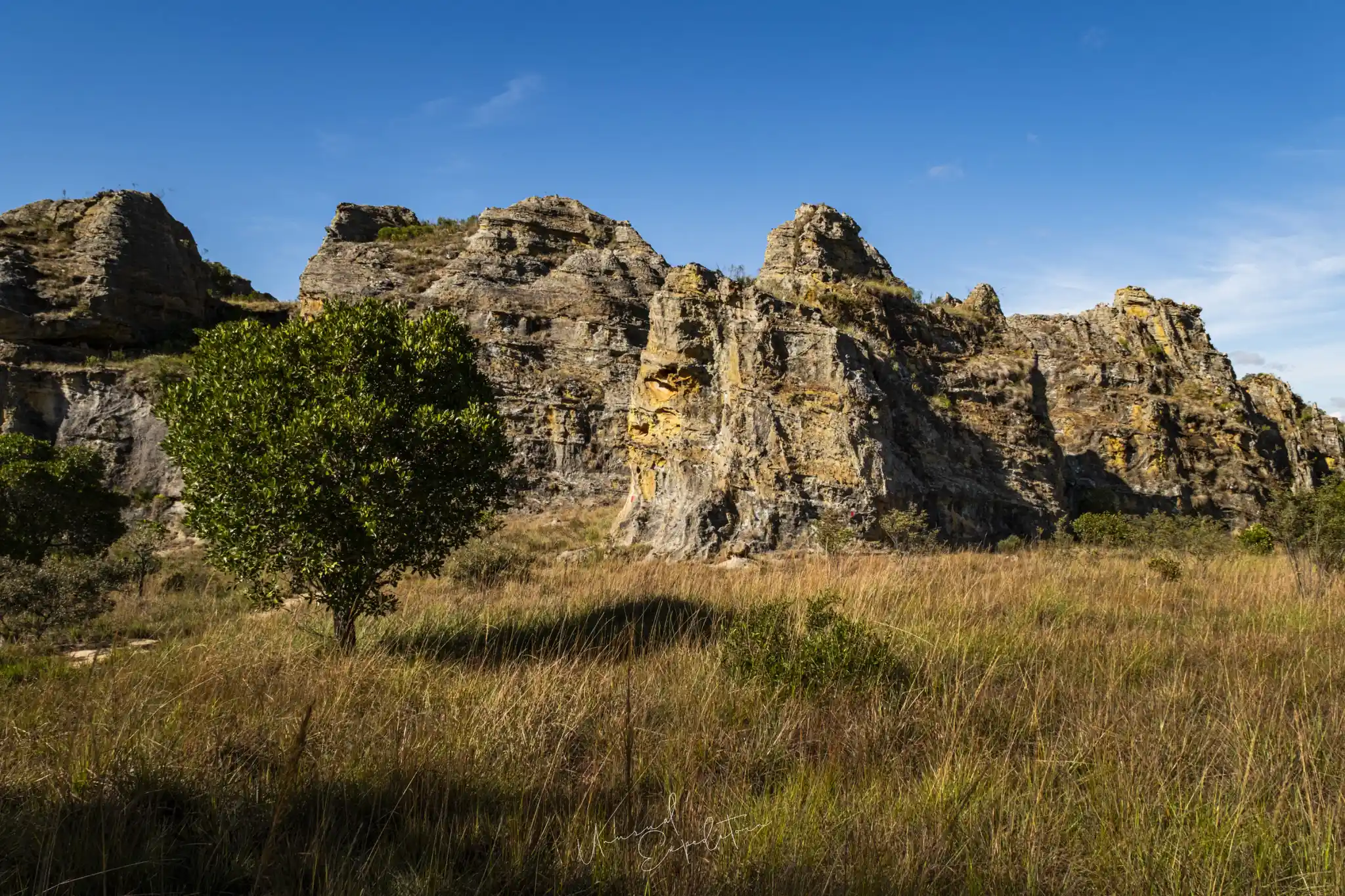
Isalo National Park is the sandstone massif in southern Madagascar where the RN7 crosses open grassland and runs past ridges of eroded rock, canyons lined with palms and clear natural pools. For photographers it gives three things: big landscapes at sunrise and in late light, small endemic life on the rock (lizards, the elephant's foot plant), and shaded canyon pools. You enter with a local guide, carry water, and plan the light around the walls.
Isalo is one of the places in our RN7 Madagascar photography guide, the road south from the highlands to the coast, and it is the landscape most people remember from that road.
Isalo National Park: what it is
Isalo National Park was created in 1962 and has been managed by Madagascar National Parks, the national park authority, since 1997. Wikipedia gives its area as about 815 square kilometres. The park protects the Isalo massif, a block of sandstone laid down in the Triassic and Jurassic periods and then cut by wind and water into domes, towers, flat tops and deep gorges. Between the rock there is dry grassland, and in the gorges there are permanent streams with pandanus and palms. Those two worlds sit side by side, which is why the park photographs so well: a bare ridge glowing orange in the open, and a few hundred metres away a green pool in deep shade. The village of Ranohira, on the RN7, is the base for the park, and the guides are hired there.
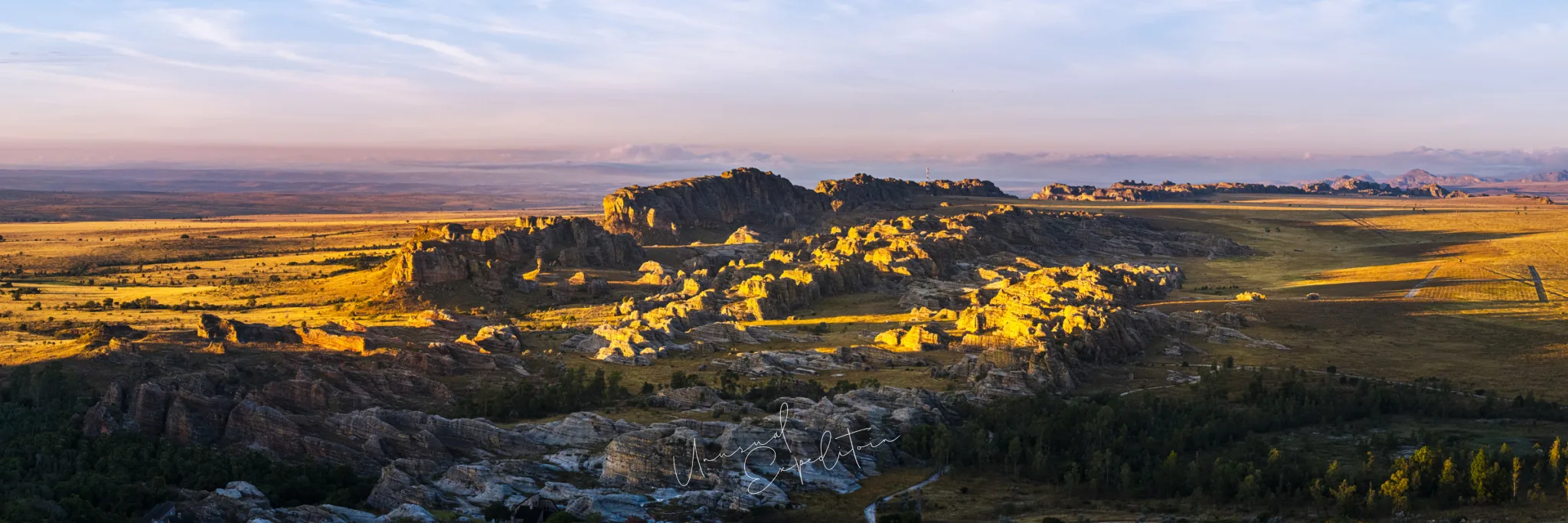
Isalo national park madagascar: the landscape in early and late light
The sandstone of Isalo is pale in the middle of the day and turns gold and orange when the sun is low. The ridges run in long walls, so side light picks out every crack and ledge, while light from behind you flattens them. Shoot the open country at sunrise and again in the last hour of the day, with the low sun across the walls and long shadows in the grass. The middle of the day belongs in the canyons, where the rock walls give shade and the light comes down soft and green. A drone flight at first light, where it is permitted and with the guide's agreement, shows the scale of the massif in a way no ground view can: the ridges sit on the plain like ruins. Ask at the park office before flying, because rules on drones in protected areas change and are enforced locally.
Parc national de l'Isalo: guides and access
At Parc national de l'Isalo you do not walk alone. The French travel guide Le Routard states that visits to the park, including the walk to the Piscine Naturelle, are made with a guide recruited at the park entrance, and the national newspaper L'Express de Madagascar describes guided circuits run by Madagascar National Parks together with the local guides' association. The guides know where the lizards bask and where the light reaches the pools, so use them as spotters as well as escorts. Fees are paid in ariary and change, so check the current rate at the park office before you travel. The trails are rocky and exposed, with steps cut into the sandstone in places; good shoes, a hat and more water than you think you need matter more here than an extra lens.
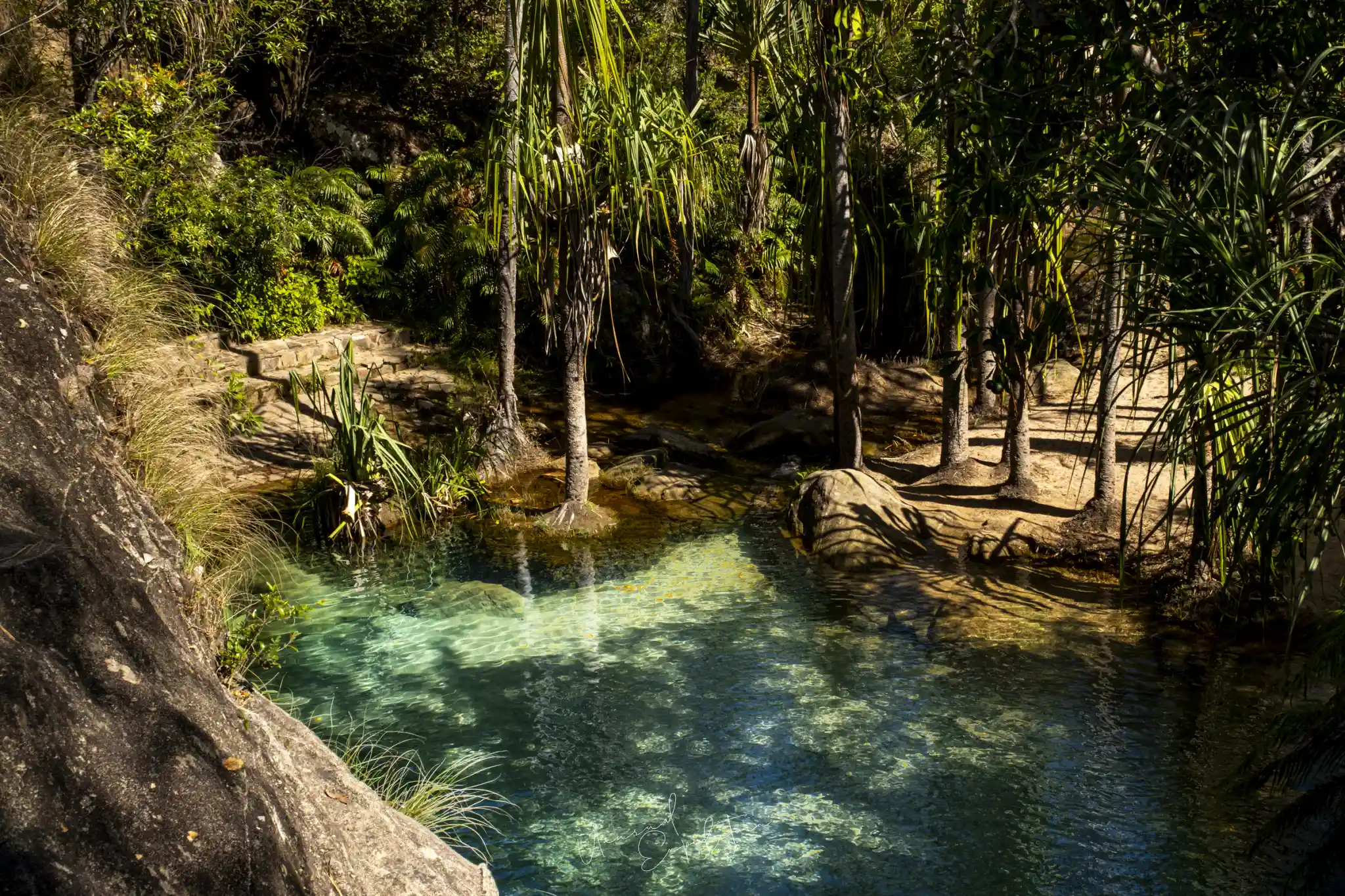
The Piscine Naturelle and the canyon pools
The Piscine Naturelle is the best known of the Isalo pools: a basin of clear water under a small fall, edged with pandanus and shaded by the canyon wall. The water is green and turquoise when the sun reaches the bottom of the pool and dull when it does not, so the time to photograph it is when the light falls straight in, usually around the middle of the day. A polarising filter cuts the glare and shows the sand and rock under the surface. People swim here, so if you want the pool empty, be ready early in the group or wait for a gap. Other canyon pools and falls in the park follow the same pattern, deep shade with one bright patch of water, and they reward a tripod and a slow shutter for the falling water.
Small subjects on the rock
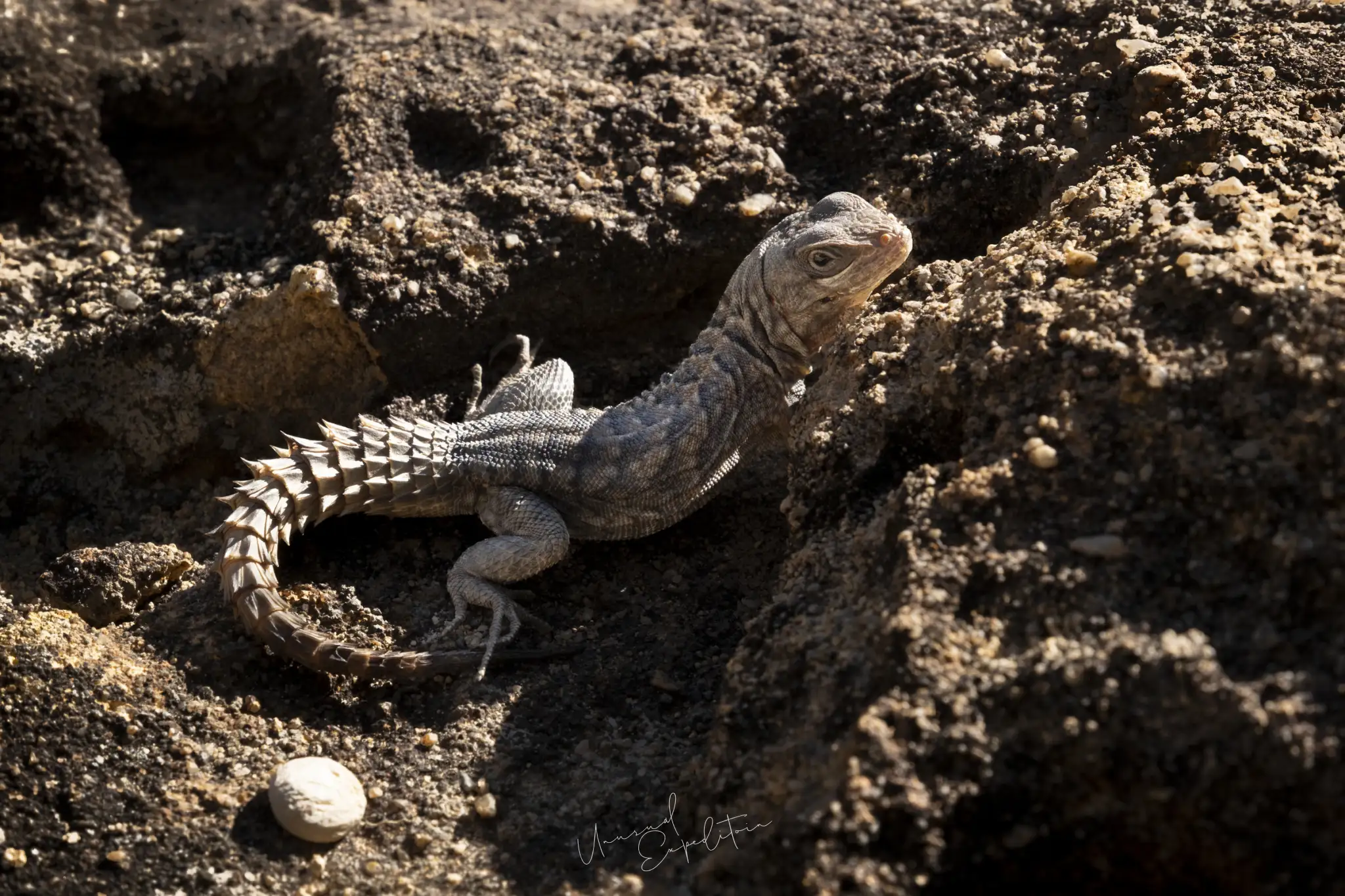
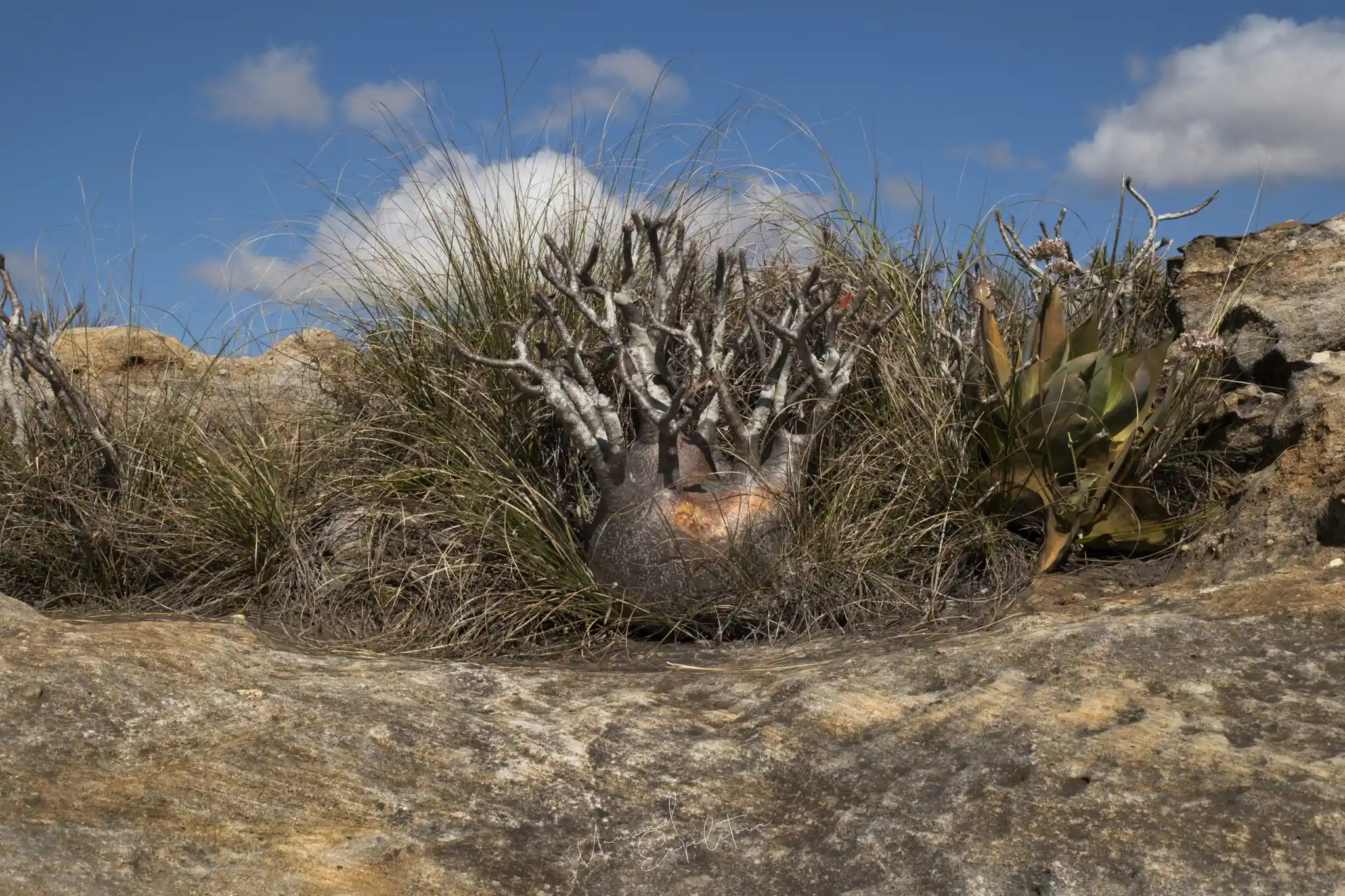
Isalo is not a lemur park first, though ring-tailed lemurs and sifakas are seen in the canyons. What the sandstone gives the patient photographer is small life. Spiny-tailed lizards sun themselves on the warm rock and freeze when you approach, so a 70-200mm lets you fill the frame without pushing them into a crack. The elephant's foot plant, a Pachypodium with a swollen grey base, grows straight out of the bare stone among grass tussocks. Get low and use a wide lens to put the plant against the sky, or the 24-70mm to show it in its rock garden. For lemur portraits on open rock, the place on this road is Anja Community Reserve, further north.
Isalo photography at a glance
| Subject | Best light | Lens | Note |
|---|---|---|---|
| Sandstone ridges and plain | Sunrise, late afternoon | 24-70mm, 70-200mm | Side light shows the texture |
| Piscine Naturelle and canyon pools | Sun high enough to reach the water | 16-35mm, polariser | Swimmers; be early in the group |
| Lizards on the rock | Morning, warm rock | 70-200mm | Approach slowly and low |
| Pachypodium and rock gardens | Any, best with clouds | 16-35mm, 24-70mm | Shoot low against the sky |
| Aerial view of the massif | First light | Drone, where allowed | Ask at the park office first |
The canyons save the middle of the day, which on the open plain is too harsh for anything but scouting.
Isalo looks empty at noon and then the sun drops and every ridge lights up at once. I tell people to stop shooting the pool and walk back out to the open for that last half hour.
Joseph Mak, tour leader, Unusual Expedition
Isalo National Park: heat, dust and what to carry
Southern Madagascar is dry for much of the year, and the Isalo plain has little shade outside the canyons. Carry a hat, sunscreen and water on every walk, and a cloth for the dust that settles on lenses in the wind. A light tripod is worth the weight for the pools and for the ridges at sunrise. Two bodies, one with a wide zoom and one with a 70-200mm, save lens changes in the dust. Swimwear is useful if you want to work from inside a pool, but keep the camera on the bank. For the season and the weather across the island, the country pages on the best time for Madagascar photography and what to pack apply here too.
Isalo on the road south
Isalo sits on the RN7 between the highlands and the coast, which makes it the natural break on a trip south. North of the park are the granite domes and lemurs of Anja; south of it is Ilakaka, the sapphire town, very different in feel and in subject; and at the end of the road, beyond Toliara, are the baobabs and spiny forest of Ifaty. Each place asks for a different eye. Isalo is the one for landscape.
Photograph Isalo with us
We run the RN7 south, Isalo included, as a private photography trip for small groups on request, timed for the light at each place. Our scheduled Madagascar departures and the full set of guides are on the Madagascar photography tours page.
Join the RN7 photography tour
Madagascar Photo Tour – Madagascar departs 11 Apr 2027 To 19 Apr 2027, led by Joseph Mak. Small group, photography first. All RN7 photography tours.
Explore RN7 in depth
- RN7 Madagascar Photography Guide: the Road SouthMadagascar
- Ranomafana National Park Photography: Lemurs, Geckos and StreamsMadagascar
- Madagascar Central Highlands: Rice Harvest, Brick Villages and Craft TownsMadagascar
- Ilakaka, Madagascar: Photographing the Sapphire TownMadagascar
- Ifaty and the Spiny Forest: Baobabs, Tortoises and Night SkiesMadagascar
- Antsirabe, Madagascar: Pousse-Pousse, Markets and Crater LakesMadagascar
- Anja Community Reserve: Photographing Ring-Tailed LemursMadagascar
Upcoming Photo Tours
- Egypt Photo Tour – EgyptEgypt 12 Dec 2026 To 20 Dec 2026
- Inner Mongolia Winter Owl Photo Tour – ChinaChina 01 Jan 2027 To 04 Jan 2027
- Inner Mongolia Winter Photo Tour – ChinaChina 05 Jan 2027 To 11 Jan 2027
- Mekong And Central Highland Vietnam Photo Tour - VietnamVietnam 16 Jan 2027 To 24 Jan 2027