
RN7 Madagascar Photography Guide: the Road South
RN7 Madagascar photography guide: highlands, Antsirabe, Ranomafana lemurs, Anja, Isalo, Ilakaka and Ifaty, by landscape and lens.
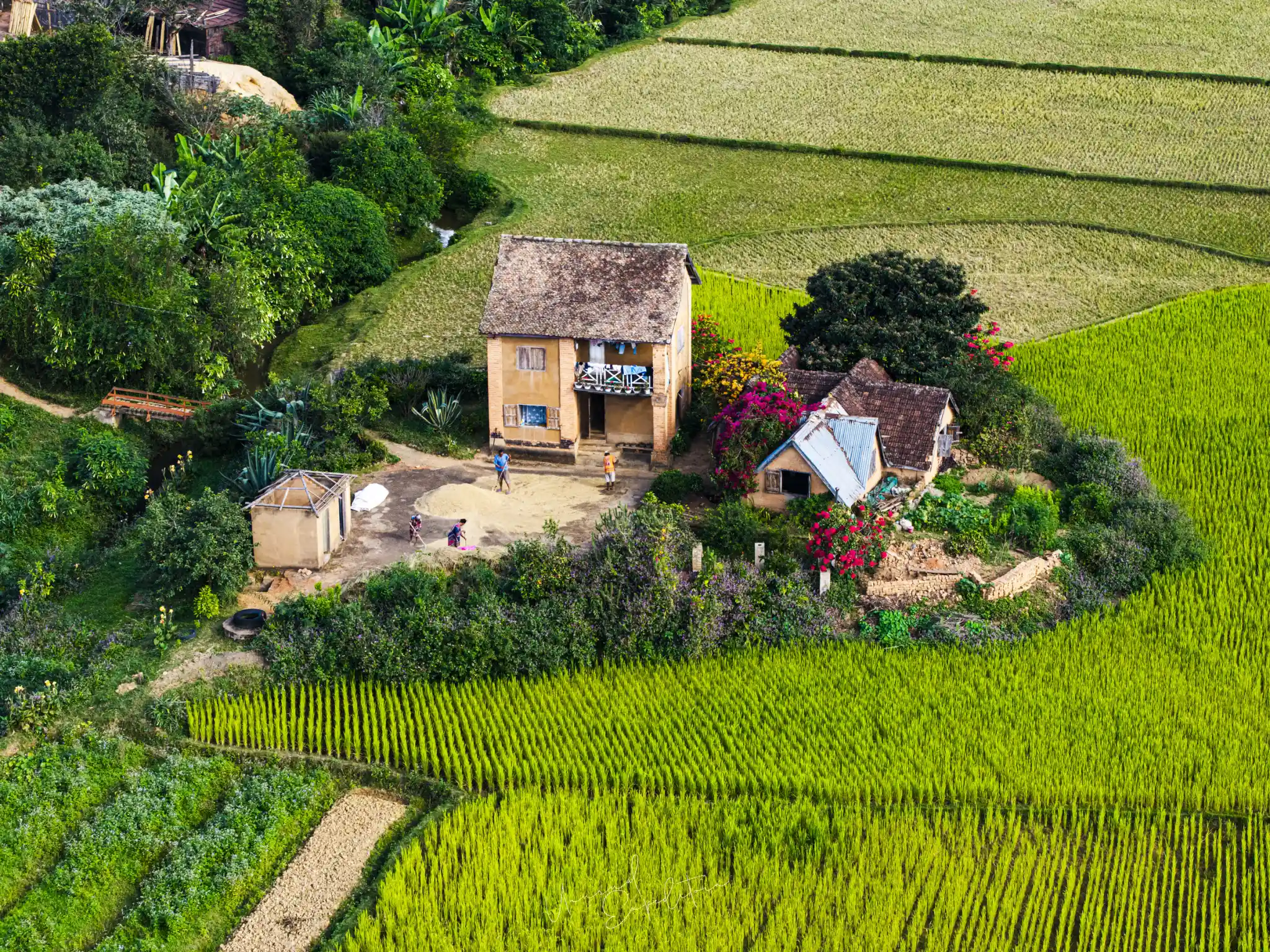
RN7 Madagascar, the Route Nationale 7, is the road that carries most photographers through the south of the island. It crosses the cool central highlands with their rice paddies, brick villages and pousse-pousse towns, passes close to the rainforest of Ranomafana and the granite country where ring-tailed lemurs sit on boulders, and reaches the sandstone of Isalo and the spiny forest and baobabs of the southwest coast. No other single road in Madagascar crosses so many landscapes, and each one asks for a different lens.
This guide is the starting point for our RN7 cluster. For the country as a whole, including the west coast and the Avenue of the Baobabs, read the complete guide to a Madagascar photography tour; the pages linked below go deep on each part of the south.
What is the RN7 in Madagascar?
The Route Nationale 7 is a primary highway that runs from Antananarivo in the highlands to Toliara on the southwest coast. Wikipedia gives its length as about 980 kilometres, while route listings put Toliara at roughly 925 kilometres along the road; either way it is the longest scenic road most visitors will travel in the country. Antsirabe, Fianarantsoa and Toliara are the large towns on it, and the national parks of Ranomafana and Isalo sit just off it or right beside it. Ifaty, with its spiny forest, lies a short way up the coast from Toliara, which is why most RN7 trips end there.
Road quality changes a great deal along the way. The Malagasy newspaper L'Express de Madagascar reported in 2025 that the stretch between Ranohira and Toliara is the worst section of the route, so a photographer should plan for slow travel and treat the road itself as a subject.
Route nationale 7 Madagascar: the landscapes, not the stops
It helps to think of the RN7 as five landscapes rather than a list of towns, because that is how the photographs fall.
| Landscape | What you photograph | Main lens | Read more |
|---|---|---|---|
| Central highlands | Rice paddies, brick farmhouses, harvest, market towns, craft workshops | 24-70mm | Highlands and Antsirabe |
| Eastern rainforest edge | Bamboo lemurs, leaf-tailed geckos, streams and cascades | 100-400mm, macro | Ranomafana |
| Granite country | Ring-tailed lemurs on boulders, granite domes over paddies | 70-200mm | Anja |
| Sandstone plateau | Eroded massifs, grassland, natural pools, lizards | 16-35mm, 24-70mm | Isalo |
| Southwest coast | Spiny forest, baobabs, tortoises, dark skies | 16-35mm, fast wide prime | Ifaty |
The highlands and the coast feel like different countries, so pack for both cool mornings and real heat.
The central highlands: paddies, brick houses and craft towns
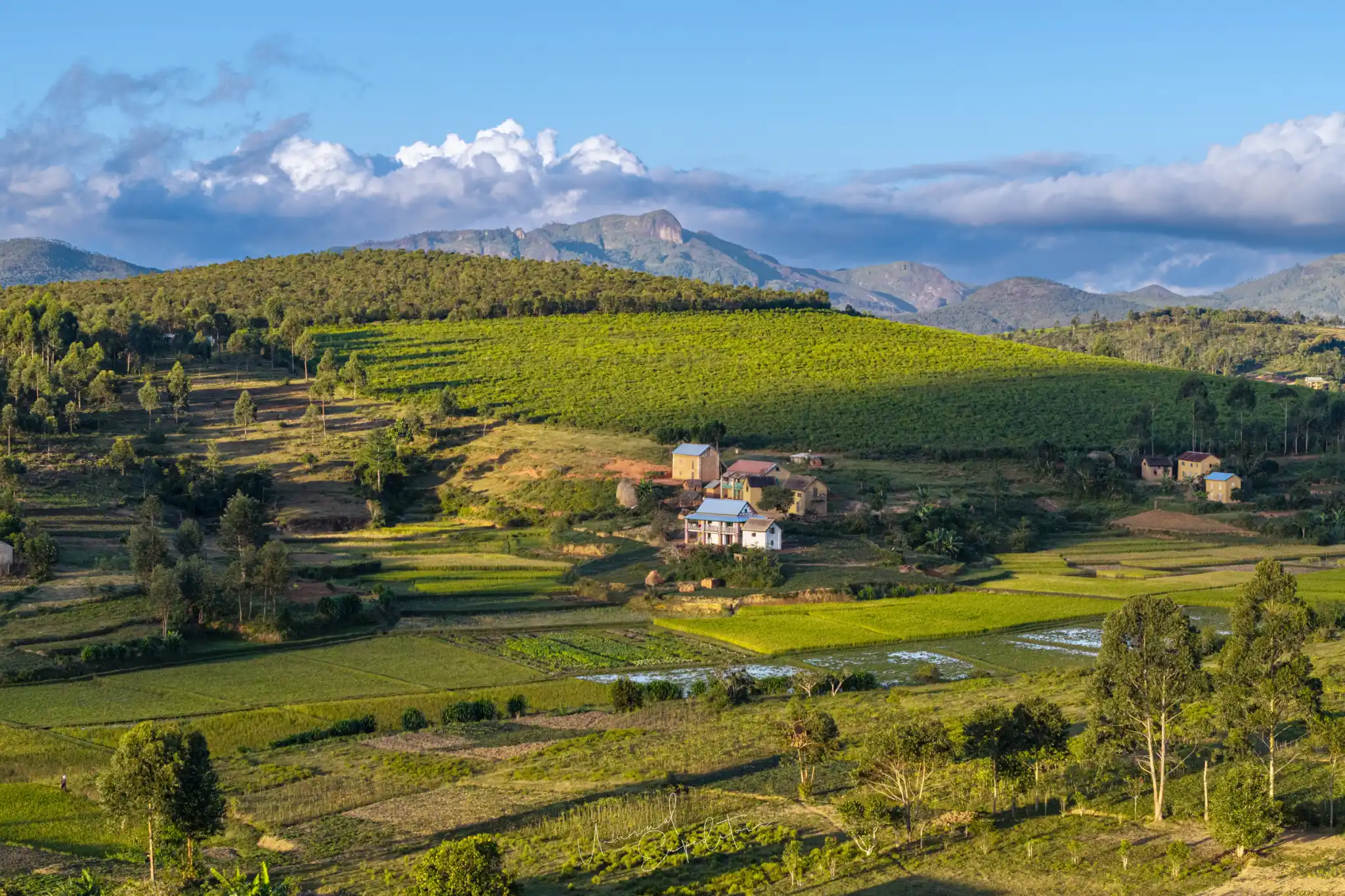
The highlands are where the RN7 begins and where most of its people live. The hills are terraced for rice, the houses are built of red brick with steep roofs, and in the harvest season families thresh rice by hand on tarpaulins beside the fields. Antsirabe, the old spa town, is famous for its pousse-pousse rickshaws and has crater lakes close to town; we cover it in Antsirabe photography. The wider region, with its harvest scenes, woodworking traditions and railway paths, is in Madagascar central highlands photography.
Ranomafana: the rainforest off the RN7
Ranomafana National Park lies a short detour east of the main road, on the edge of the escarpment where the highlands drop towards the Indian Ocean. It was made a national park in 1991 after the discovery of the golden bamboo lemur, and it is part of the Rainforests of the Atsinanana World Heritage Site listed by UNESCO in 2007. For a photographer it means bamboo lemurs feeding at eye level, leaf-tailed geckos that look exactly like dead leaves, and mossy streams under a dense canopy. Light is low and green, so a fast long lens and patience matter more than anything else. The details are in Ranomafana National Park photography.
Granite country and the ring-tailed lemurs of Anja
South of the highland towns the hills turn to bare granite domes, and paddies fill the valleys between them. Anja Community Reserve, run by the people of the local villages, protects a population of ring-tailed lemurs that live on the rocks and in the trees at the foot of a granite cliff. They are used to visitors, which makes them one of the easiest lemurs in Madagascar to photograph well. See Anja Community Reserve and its ring-tailed lemurs.
Isalo National Park: sandstone and pools
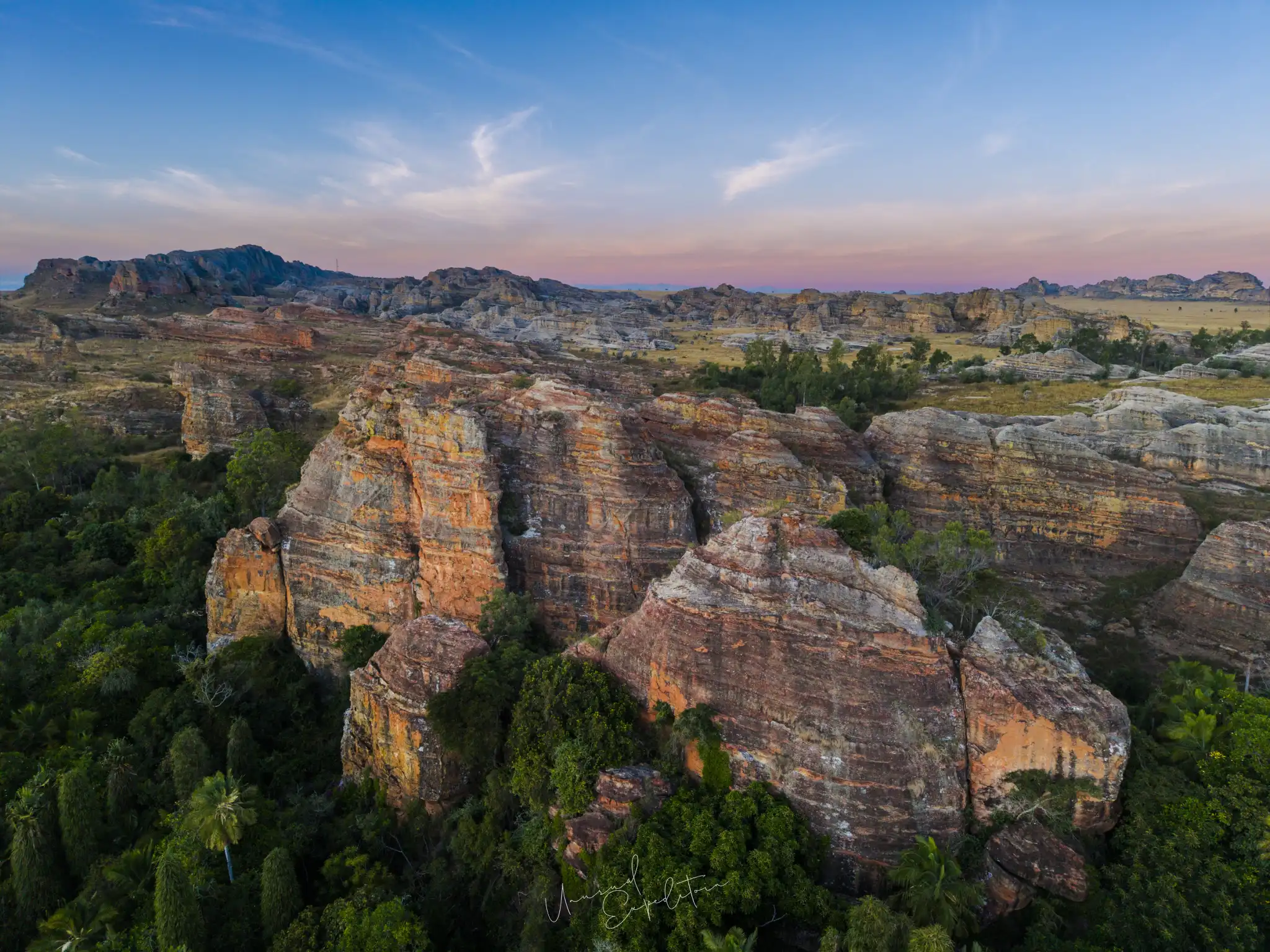
Isalo is the landscape most people picture when they think of the RN7: a high plateau of eroded sandstone, cut by canyons with palm-lined streams and natural swimming pools. The massifs glow at sunrise and sunset, and the open grassland around them gives you clean foregrounds. Our page on Isalo National Park photography covers the viewpoints, the pools and the wildlife.
Ilakaka, the sapphire town
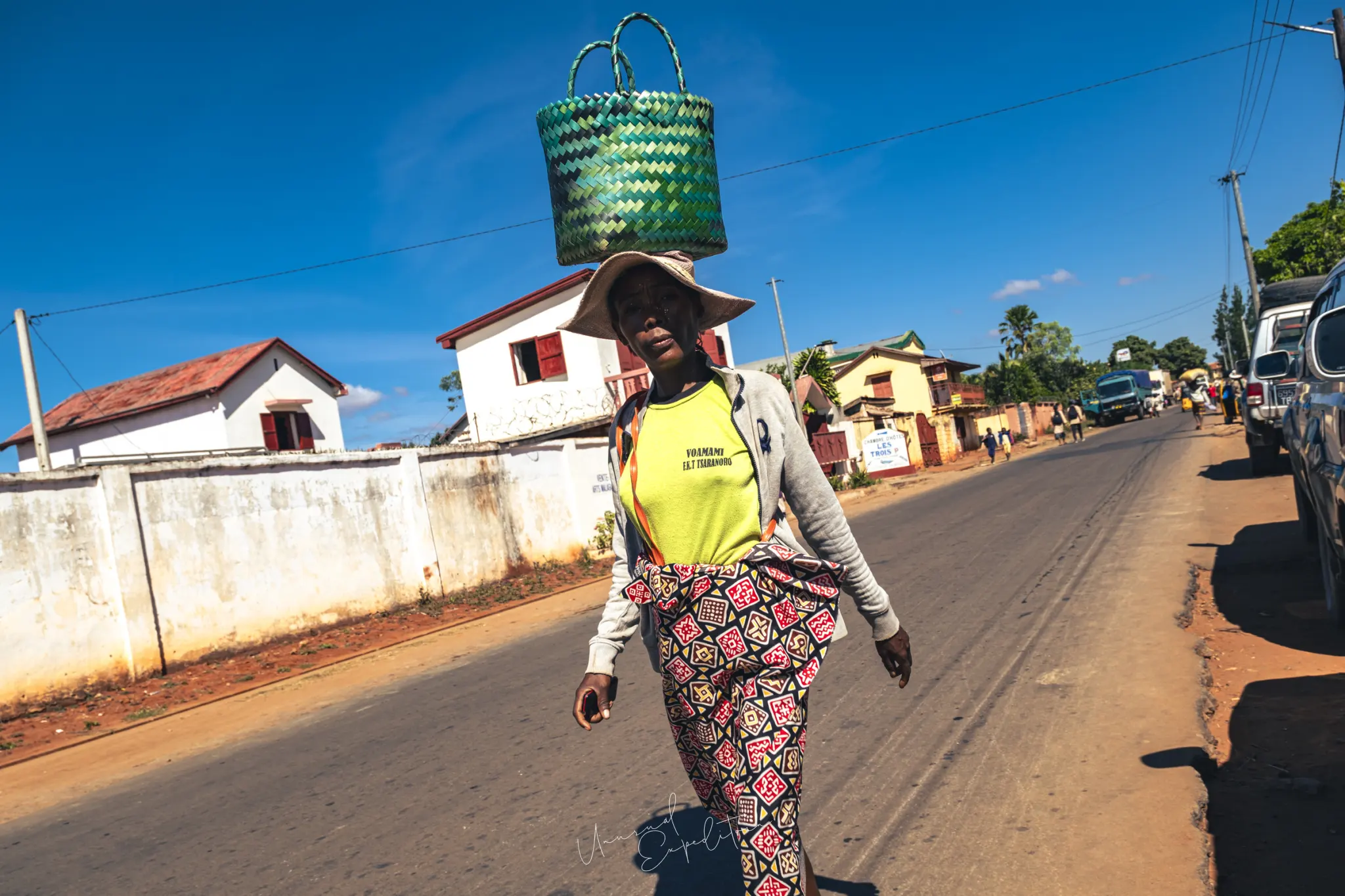
Between Isalo and the coast the road passes Ilakaka, a town that grew almost overnight after sapphires were found in the area in the late 1990s. It is rough, busy and very photogenic: gem dealers' signs, diggers working the river gravel, zebu carts and roadside markets. Treat it as street photography with care and a light kit; our notes are in Ilakaka, Madagascar: photographing the sapphire town.
Ifaty and the spiny forest
The RN7 ends at Toliara, and a short way up the coast Ifaty gives you the strangest forest in Madagascar: octopus trees and other spiny plants found only in the south, fat bottle-shaped baobabs, radiated tortoises and, on clear nights, a dark sky over the trees. It is the right place to finish a southern trip. Read Ifaty and the spiny forest.
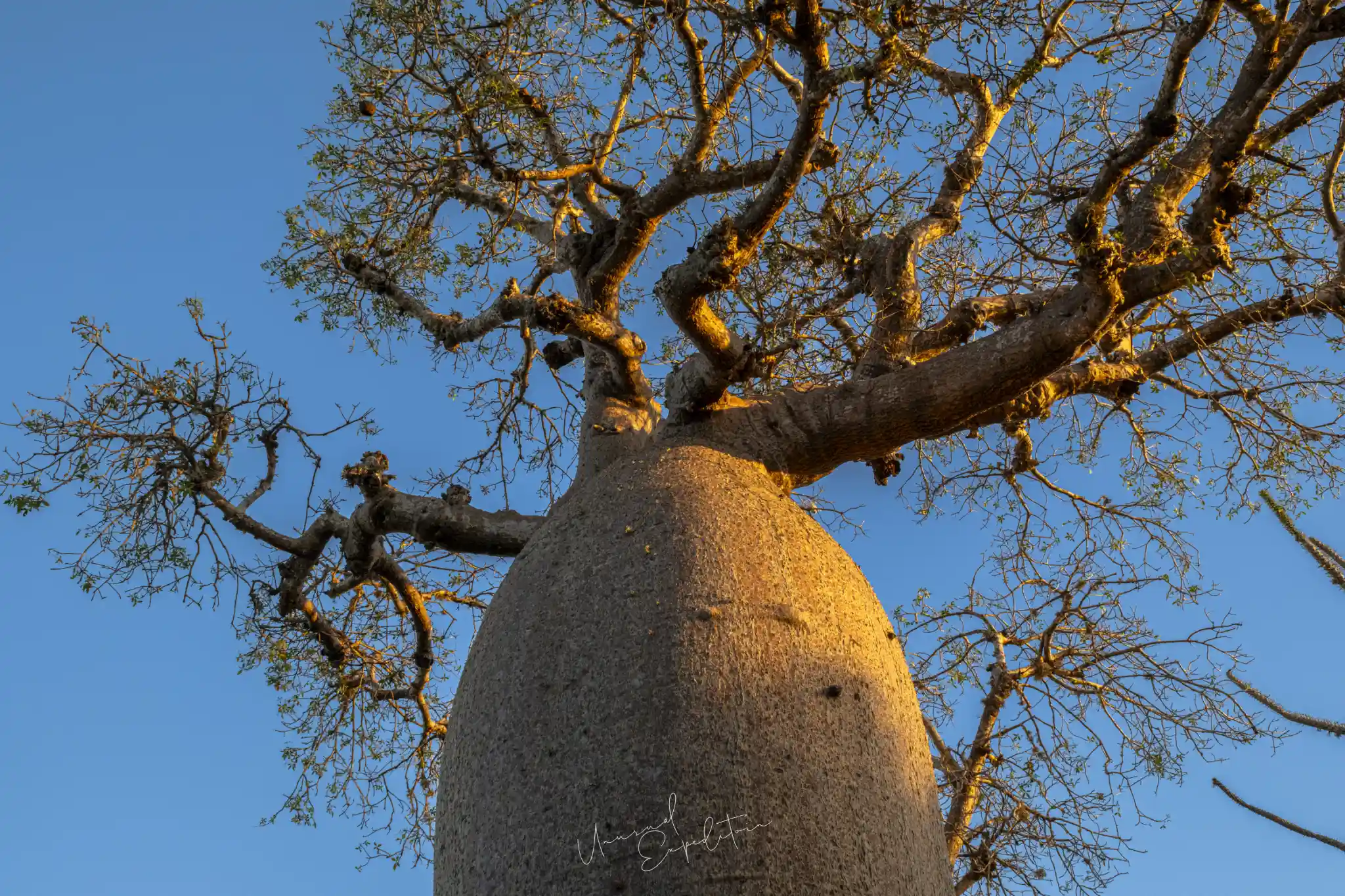
On the RN7 the best pictures are rarely at the famous places. They are in the paddies, the market towns and the roadside villages between them, so we stop often and never hurry the light.
Joseph Mak, tour leader, Unusual Expedition
Is a Madagascar road trip on the RN7 worth it for photographers?
A Madagascar road trip on the RN7 is worth it if you want variety: people, rainforest wildlife, open landscapes and night skies in one trip. The trade is time on the road and simple rooms in places. If your priority is the Avenue of the Baobabs and the dhow villages of the west coast, the west is a better first trip; if you have been to the west already, the south is the natural second. Our country page on whether Madagascar is worth visiting for a photographer sets out the wider trade.
When to photograph the RN7
The dry season, roughly April to November, is when the RN7 is most reliable. Late April and May keep the highland paddies green or golden at harvest and bring clear skies to Isalo and Ifaty; the highlands are cold at dawn in the southern winter. The rainy months bring heat, storms and damaged sections of road in the south. Month by month detail for the whole country is in the best time for Madagascar photography.
Explore the RN7 in depth
- Antsirabe photography: pousse-pousse, markets and crater lakes
- Madagascar central highlands: rice harvest, brick villages and craft towns
- Ranomafana National Park photography
- Anja Community Reserve and its ring-tailed lemurs
- Isalo National Park photography
- Ilakaka, the sapphire town
- Ifaty and the spiny forest
Photograph the road south with us
We have run the RN7 as a private photography trip and plan the light around each landscape rather than around the clock. If you would like to travel it with a small group or on your own dates, write to us; our scheduled Madagascar departures and private options are on the Madagascar photography tours page.
Join the RN7 photography tour
Madagascar Photo Tour – Madagascar departs 11 Apr 2027 To 19 Apr 2027, led by Joseph Mak. Small group, photography first. All RN7 photography tours.
Explore RN7 in depth
- Ranomafana National Park Photography: Lemurs, Geckos and StreamsMadagascar
- Madagascar Central Highlands: Rice Harvest, Brick Villages and Craft TownsMadagascar
- Isalo National Park Photography: Sandstone, Pools and WildlifeMadagascar
- Ilakaka, Madagascar: Photographing the Sapphire TownMadagascar
- Ifaty and the Spiny Forest: Baobabs, Tortoises and Night SkiesMadagascar
- Antsirabe, Madagascar: Pousse-Pousse, Markets and Crater LakesMadagascar
- Anja Community Reserve: Photographing Ring-Tailed LemursMadagascar
Upcoming Photo Tours
- Egypt Photo Tour – EgyptEgypt 12 Dec 2026 To 20 Dec 2026
- Inner Mongolia Winter Owl Photo Tour – ChinaChina 01 Jan 2027 To 04 Jan 2027
- Inner Mongolia Winter Photo Tour – ChinaChina 05 Jan 2027 To 11 Jan 2027
- Mekong And Central Highland Vietnam Photo Tour - VietnamVietnam 16 Jan 2027 To 24 Jan 2027