
Madagascar Central Highlands: Rice Harvest, Brick Villages and Craft Towns
Madagascar central highlands for photographers: rice harvest, brick farmhouses, porters on the paths and Ambositra woodwork.
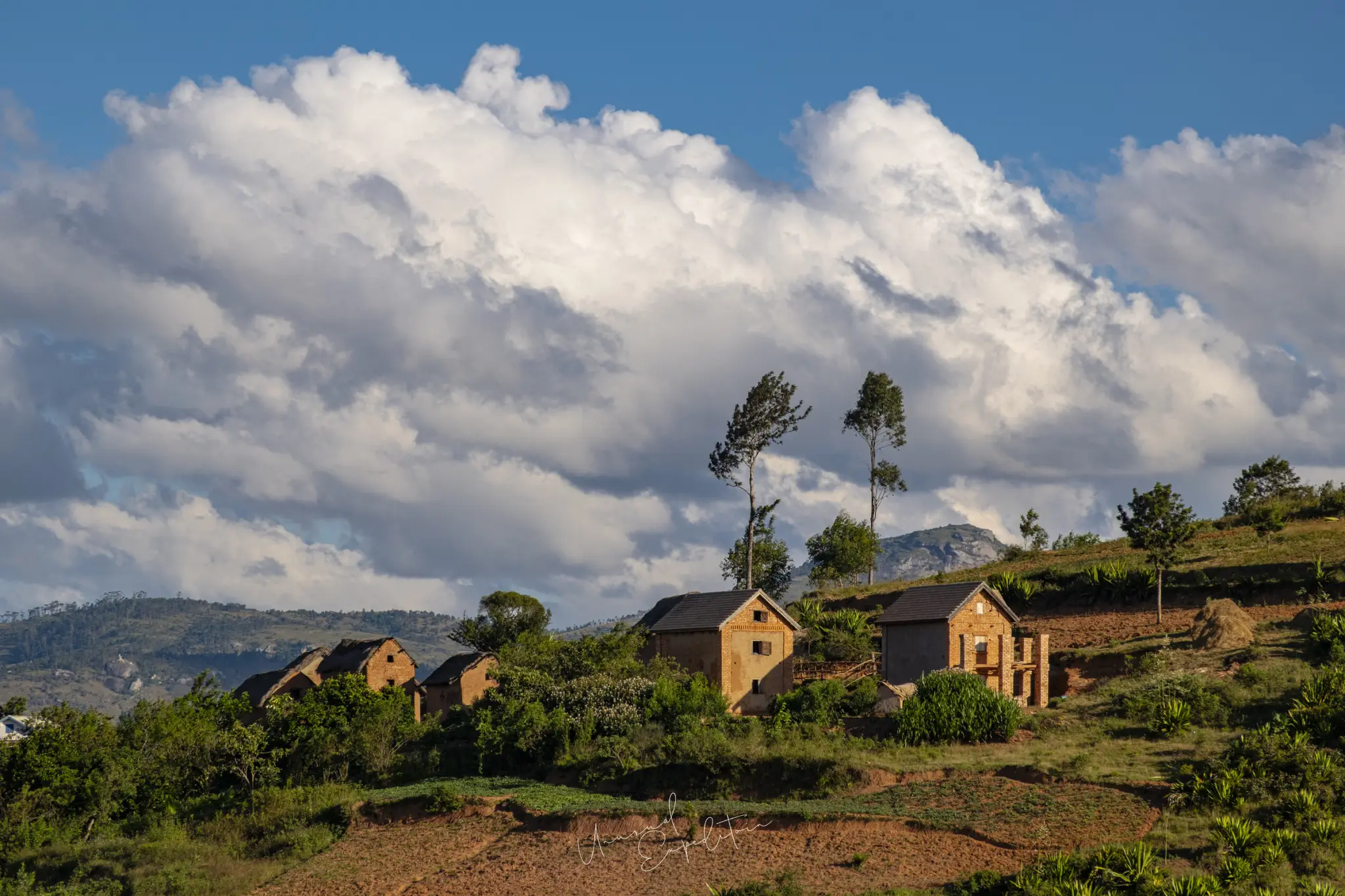
The Madagascar central highlands are the island's heartland: a high, rolling plateau of terraced rice paddies, red brick farmhouses, eucalyptus ridges and market towns, crossed by the RN7 on its way south. For a photographer they offer the country's best farming and village scenes, from the rice harvest threshed by hand beside the fields to porters walking the railway line, plus a strong craft tradition around Ambositra. The light is clear and the air cool, especially in the dry season.
The highlands are the first landscape of the road south described in our RN7 Madagascar photography guide; this page goes deeper into the farms, villages and crafts.
Madagascar highlands: what the plateau looks like
The Madagascar highlands sit high above the coasts (Antsirabe, for example, lies at about 1,500 metres), and the landscape is almost entirely shaped by people. Valleys are levelled into paddies, slopes are stepped into terraces, and the farmhouses stand on the higher ground with their tall gables and small windows, built of brick fired from the same red earth. The country is dominated by the Merina people in the north of the plateau and the Betsileo further south, and the Betsileo are known for the most carefully built terraces on the island.
The picture that sums the region up is a brick house on a rise, paddies around it, and a sky of big cumulus clouds that build through the day. Wide lenses work for the clouds and houses; a 70-200mm from a roadside bank compresses the terraces into layers of green or gold.
The rice harvest in the Madagascar central highlands
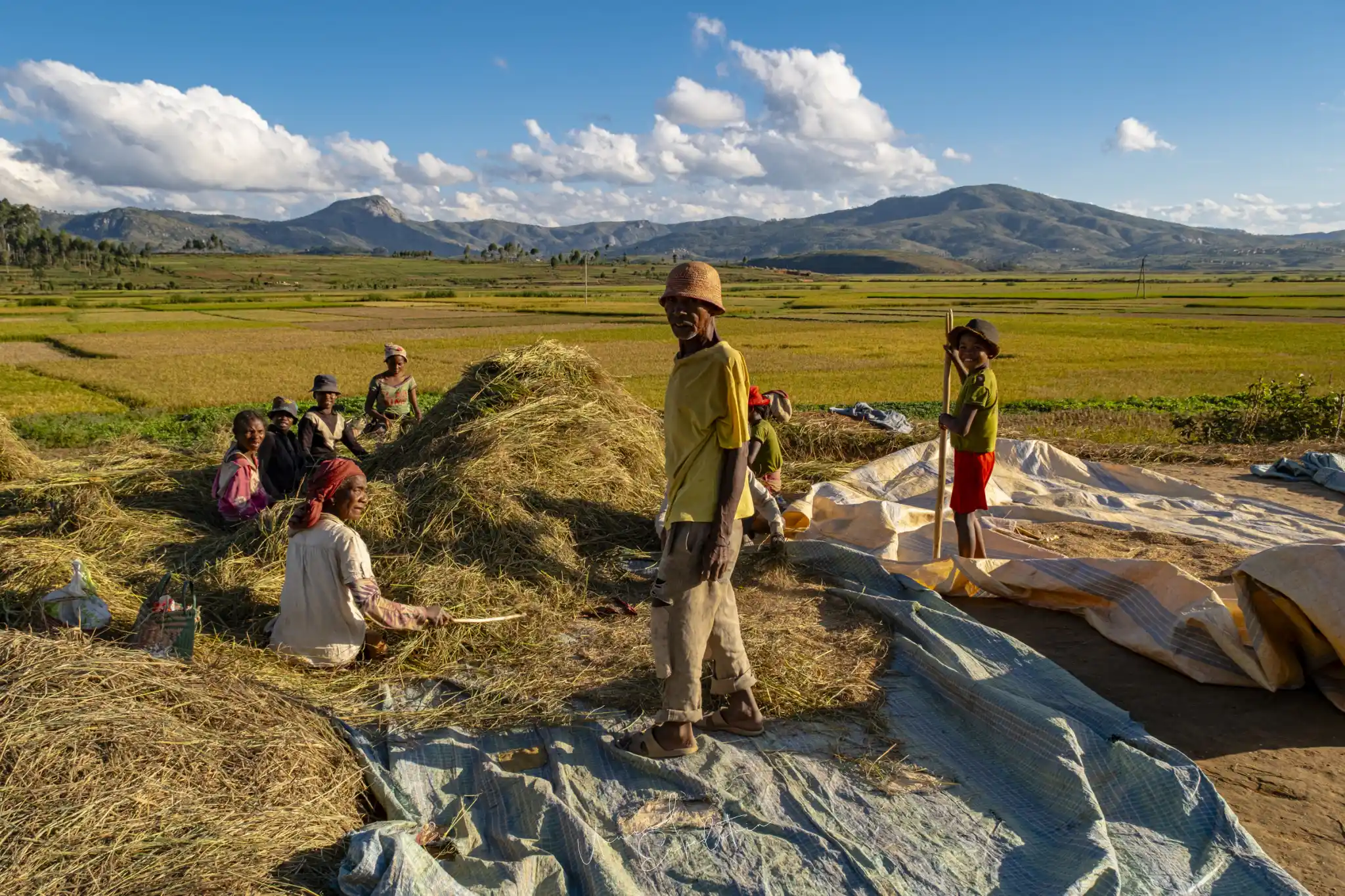
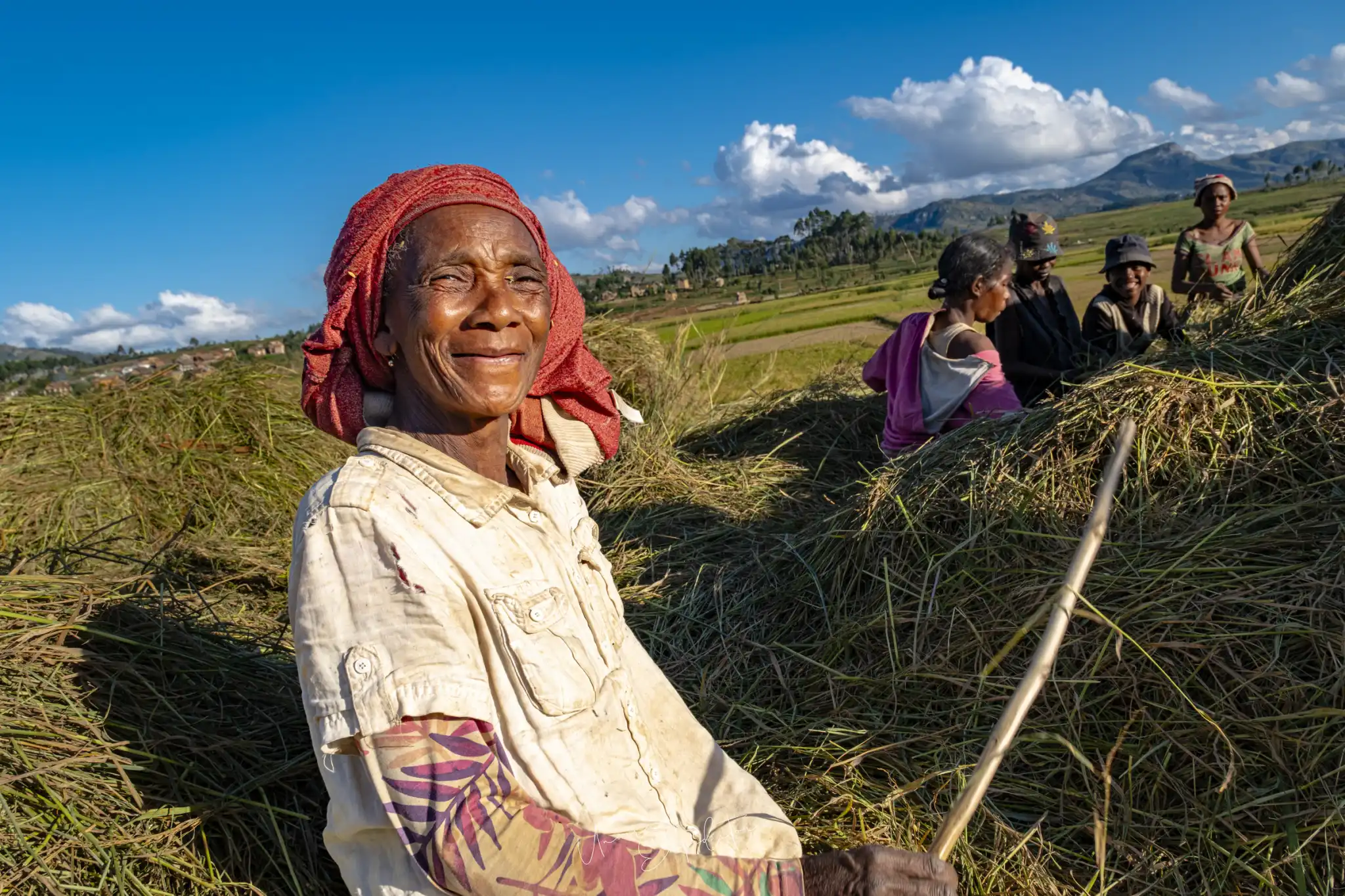
Rice is the staple of Madagascar and the centre of highland life. Around the end of the rainy season the paddies turn from green to gold, and families cut the rice by hand, stack it in sheaves and thresh it on tarpaulins at the edge of the fields, beating the stalks against stones or barrels. The work is communal and noisy, with children, grandparents and neighbours all involved, and visitors who stop and greet the group are usually welcomed.
These are some of the best people pictures on the whole RN7. Shoot wide to show the field, the straw and the mountains together, then come in close for portraits once people are used to you. Side light in the afternoon gives texture to the straw and faces. Ask your guide to introduce you, and do not walk on the drying grain.
Villages, footpaths and the railway line
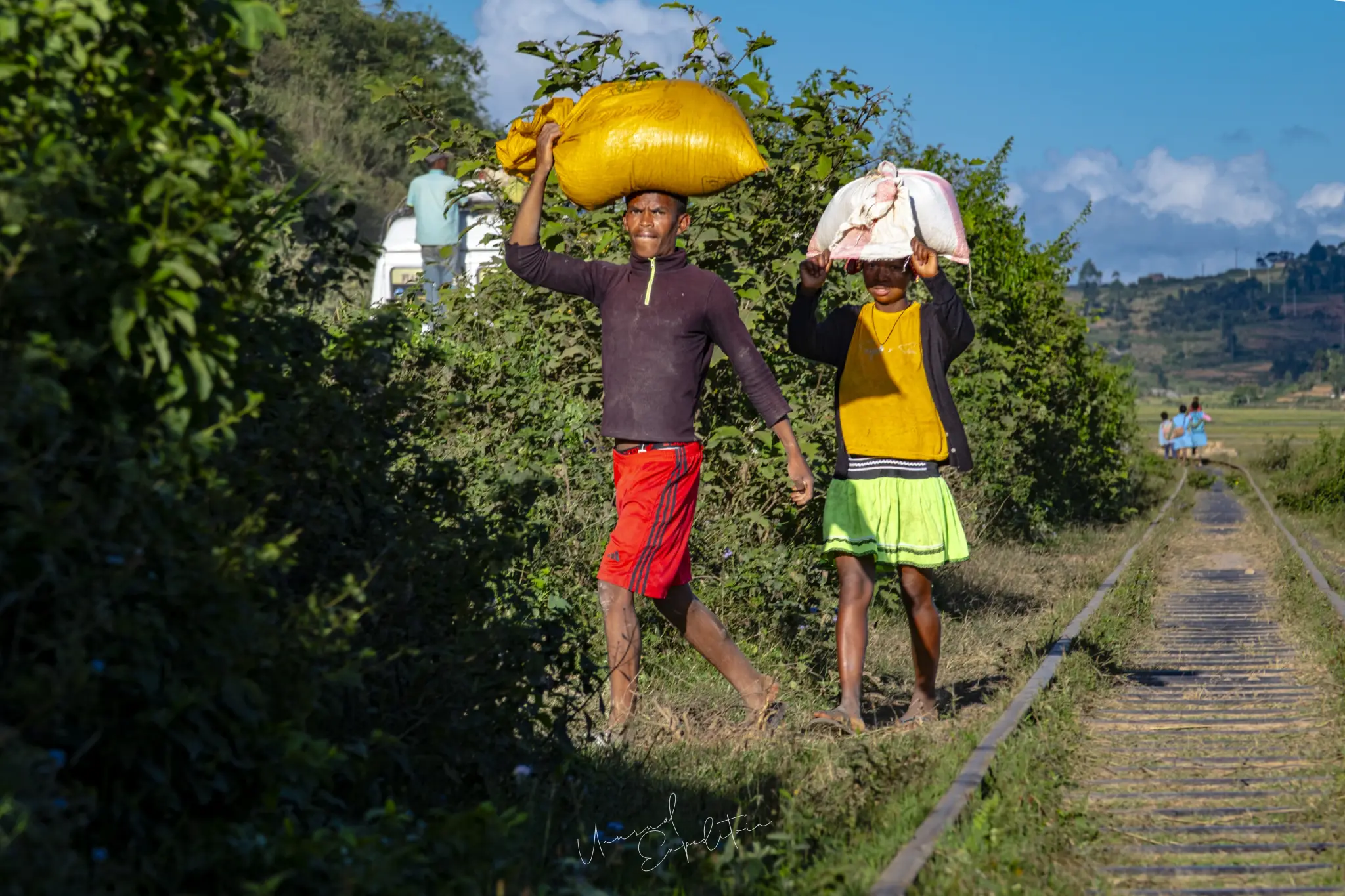
Away from the main road the highlands are a network of footpaths, and much of the movement is on foot: people carrying sacks of rice, charcoal or produce on their heads between villages and markets. Where a railway line runs through the hills, the track itself becomes a path, and the porters walking along the sleepers make a strong leading-line picture.
Shoot from the side of the path with a 24-70mm, let people walk into the frame rather than stopping them, and keep the background simple: a line of eucalyptus, a terrace, a stretch of sky. Morning and late afternoon give the warmest light and the most people on the move.
Ambositra Madagascar and the woodworking tradition
Ambositra, on the RN7 between Antsirabe and Fianarantsoa, is known as the woodcarving town of Madagascar. Its shops sell carved figures, boxes and marquetry, pictures made from inlaid pieces of different woods, and its workshops let you watch the work. The tradition draws on the Zafimaniry, a people who live in about a hundred villages in the forested hills southeast of the town. UNESCO inscribed the woodcrafting knowledge of the Zafimaniry on its Representative List of the Intangible Cultural Heritage of Humanity in 2008, noting that the community uses some twenty native tree species, each for a particular purpose.
Workshops make fine environmental portraits: old craftsmen bent over a bench, window light on sawdust, the half-finished piece in front of them. Ask first, buy something if you can, and use a wide aperture to separate the carver from a busy workshop.
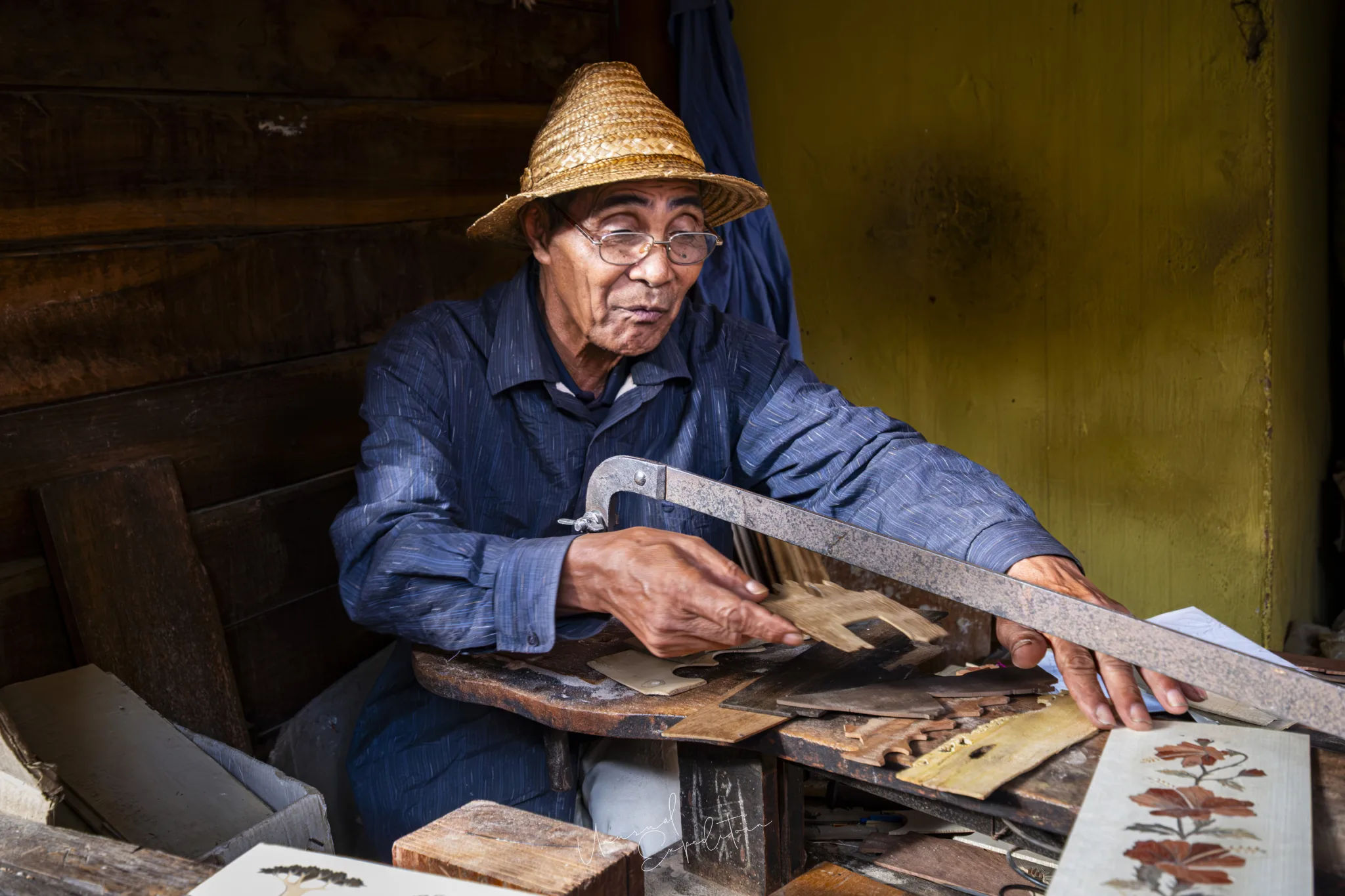
In the highlands I tell people to leave the long lens in the bag. The harvest, the paths and the workshops are about being close, being polite and staying long enough to be forgotten.
Joseph Mak, tour leader, Unusual Expedition
Highland subjects at a glance
| Subject | Season or light | Lens | Etiquette |
|---|---|---|---|
| Rice terraces | Green in the wet months, gold at harvest; morning side light | 70-200mm | Stay on the dykes |
| Threshing and harvest | Late wet season into the dry season; afternoon | 24-70mm | Greet the group first |
| Brick farmhouses | Afternoon clouds | 16-35mm, 24-70mm | Private homes: ask before entering yards |
| Porters on paths and rails | Morning, late afternoon | 24-70mm | Let them pass, do not stop them |
| Wood workshops | Window light, any time | 24-70mm, fast prime | Ask, and buy if you can |
The harvest is the one subject you cannot schedule, so ask locally where the cutting is happening that week.
When to photograph the Madagascar highlands
The highlands are green through the rainy season and turn gold as the rice ripens towards its end, with harvest spreading through the plateau into the early dry season. April and May combine harvest scenes with clearing skies. In the southern winter, from about June to August, mornings are cold and often misty and the fields are bare, which suits atmospheric landscapes more than farming scenes. For the whole island, see the best time for Madagascar photography.
Where the highlands lead
The highlands are not a destination on their own for most travellers, but they connect the places that are. Antsirabe, the pousse-pousse town with crater lakes nearby, is covered in Antsirabe photography. East of the plateau's southern half lies the rainforest of Ranomafana National Park, and further south the granite country of Anja Community Reserve, where ring-tailed lemurs sit on the rocks.
Travel the highlands with a camera
We run the highlands as part of private photography trips on the RN7, stopping where the harvest and the light are, not where the bus stops. Write to us about your dates, and see our Madagascar photography tours for scheduled departures.
Join the RN7 photography tour
Madagascar Photo Tour – Madagascar departs 11 Apr 2027 To 19 Apr 2027, led by Joseph Mak. Small group, photography first. All RN7 photography tours.
Explore RN7 in depth
- RN7 Madagascar Photography Guide: the Road SouthMadagascar
- Ranomafana National Park Photography: Lemurs, Geckos and StreamsMadagascar
- Isalo National Park Photography: Sandstone, Pools and WildlifeMadagascar
- Ilakaka, Madagascar: Photographing the Sapphire TownMadagascar
- Ifaty and the Spiny Forest: Baobabs, Tortoises and Night SkiesMadagascar
- Antsirabe, Madagascar: Pousse-Pousse, Markets and Crater LakesMadagascar
- Anja Community Reserve: Photographing Ring-Tailed LemursMadagascar
Upcoming Photo Tours
- Egypt Photo Tour – EgyptEgypt 12 Dec 2026 To 20 Dec 2026
- Inner Mongolia Winter Owl Photo Tour – ChinaChina 01 Jan 2027 To 04 Jan 2027
- Inner Mongolia Winter Photo Tour – ChinaChina 05 Jan 2027 To 11 Jan 2027
- Mekong And Central Highland Vietnam Photo Tour - VietnamVietnam 16 Jan 2027 To 24 Jan 2027