
Baby Wildebeest and the Other Newborns of Ndutu
Baby wildebeest at Ndutu: what a calf is called, how to photograph them, and the zebra foals, fawns and calves around them.
Baby wildebeest are born by the hundred thousand on the short-grass plains around Ndutu, in the southern Serengeti ecosystem of Tanzania, mostly in February. A baby wildebeest is called a calf. Calves are a pale tawny brown at birth, unlike the dark grey adults, and stand and run within minutes. Ndutu in calving season is also the best place in Tanzania to photograph other newborns: zebra foals, gazelle fawns, giraffe calves, elephant calves and baby baboons, often within the same morning.
The young animals are one of the reasons the Ndutu photography tour guide centres on calving season; this destination guide looks at each of them as a subject.
What is a baby wildebeest called?
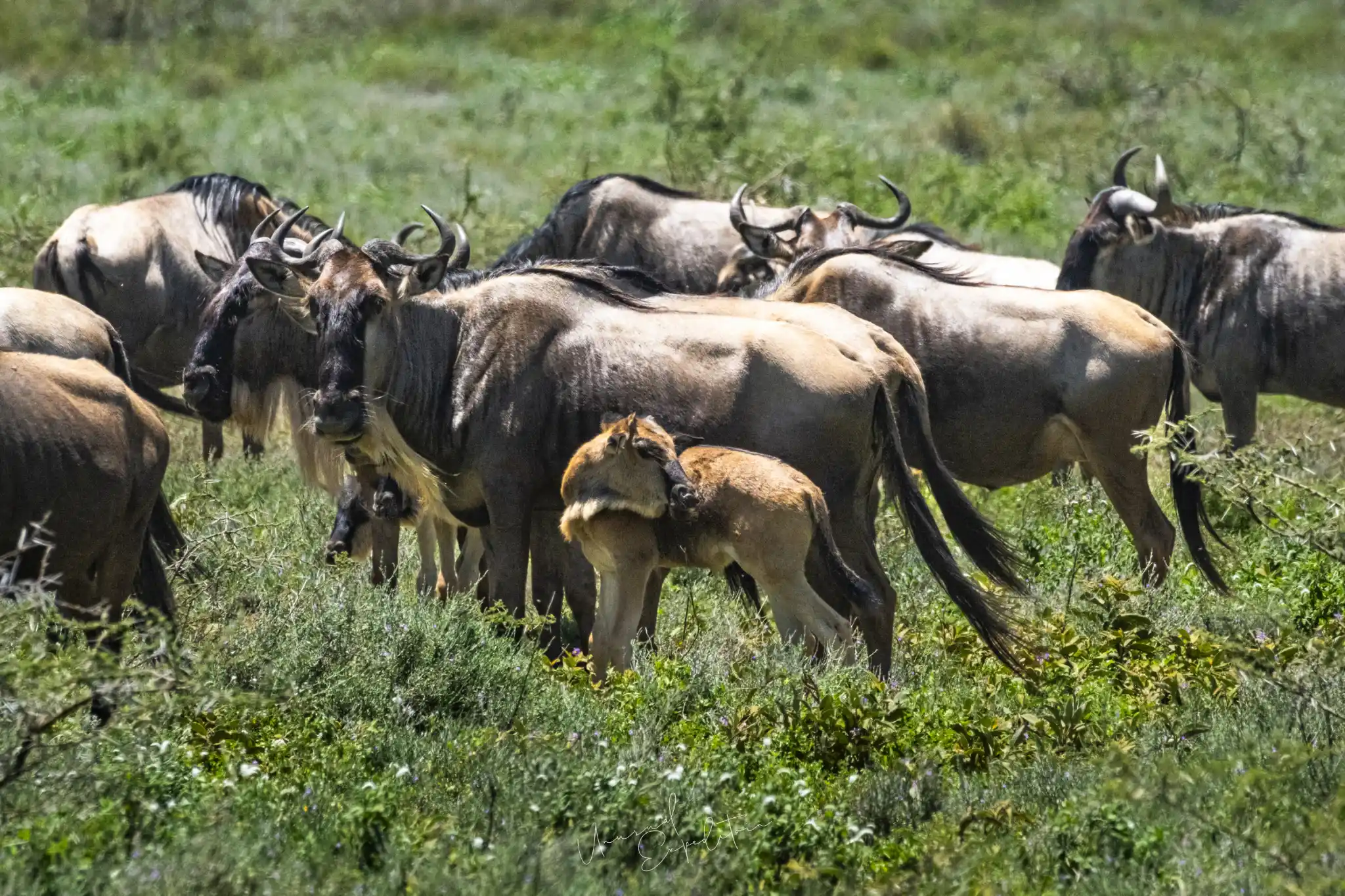
What is a baby wildebeest called? A calf, the same word used for cattle and buffalo, which are relatives in the same family. A newborn wildebeest calf at Ndutu is a light, sandy brown, with long legs and a short, dark face, and it slowly darkens over its first months. Calves are born in the middle of the herd, usually in the morning, and are up and following their mother very quickly, because the plains are full of predators. The Tanzania Daily News describes over half a million wildebeest calves born between late January and March on the southern plains. In practice that means you do not need to search for calves at Ndutu: they are all around the vehicle, and the work is choosing which one to photograph.
Wildebeest calves: how to photograph them
Wildebeest calves are restless, close to their mothers and almost always partly hidden by an adult's legs. The best frames come from patience and a clean line of sight: wait for a calf to step clear of the herd, to lie down in the grass, to nurse, or to bounce away in its first run. A 100-400mm lens gives you a tight portrait from the vehicle without pushing closer. Get as low as the vehicle allows, shooting from the window rather than the roof, so the calf is at eye level and the grass blurs behind it. Watch the mother as well as the calf: her head turning tells you where the calf will go next. For the timing and the herd's movements, read the Ndutu calving season destination guide.
Baby wildebeest calves and the other newborns
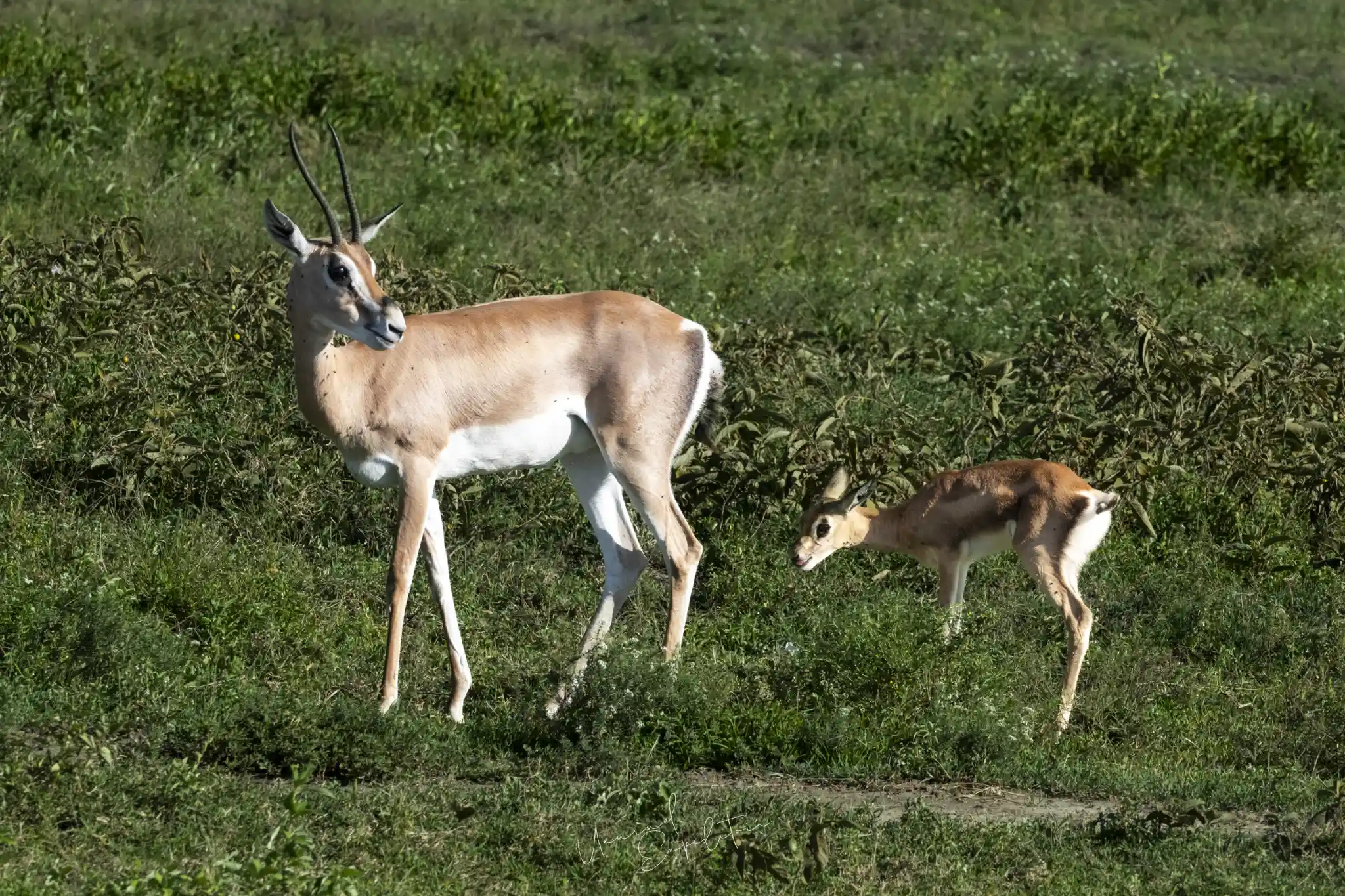
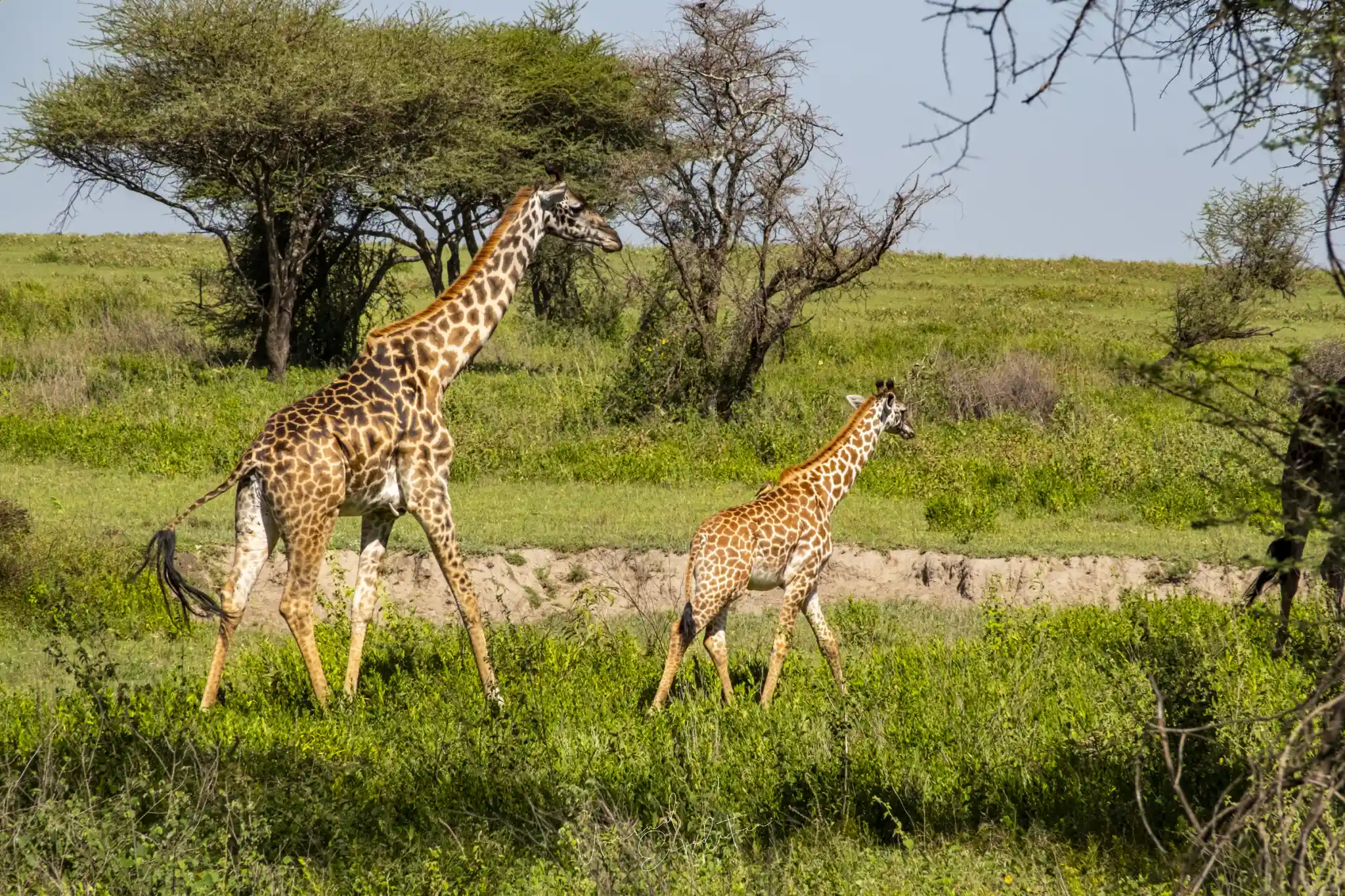
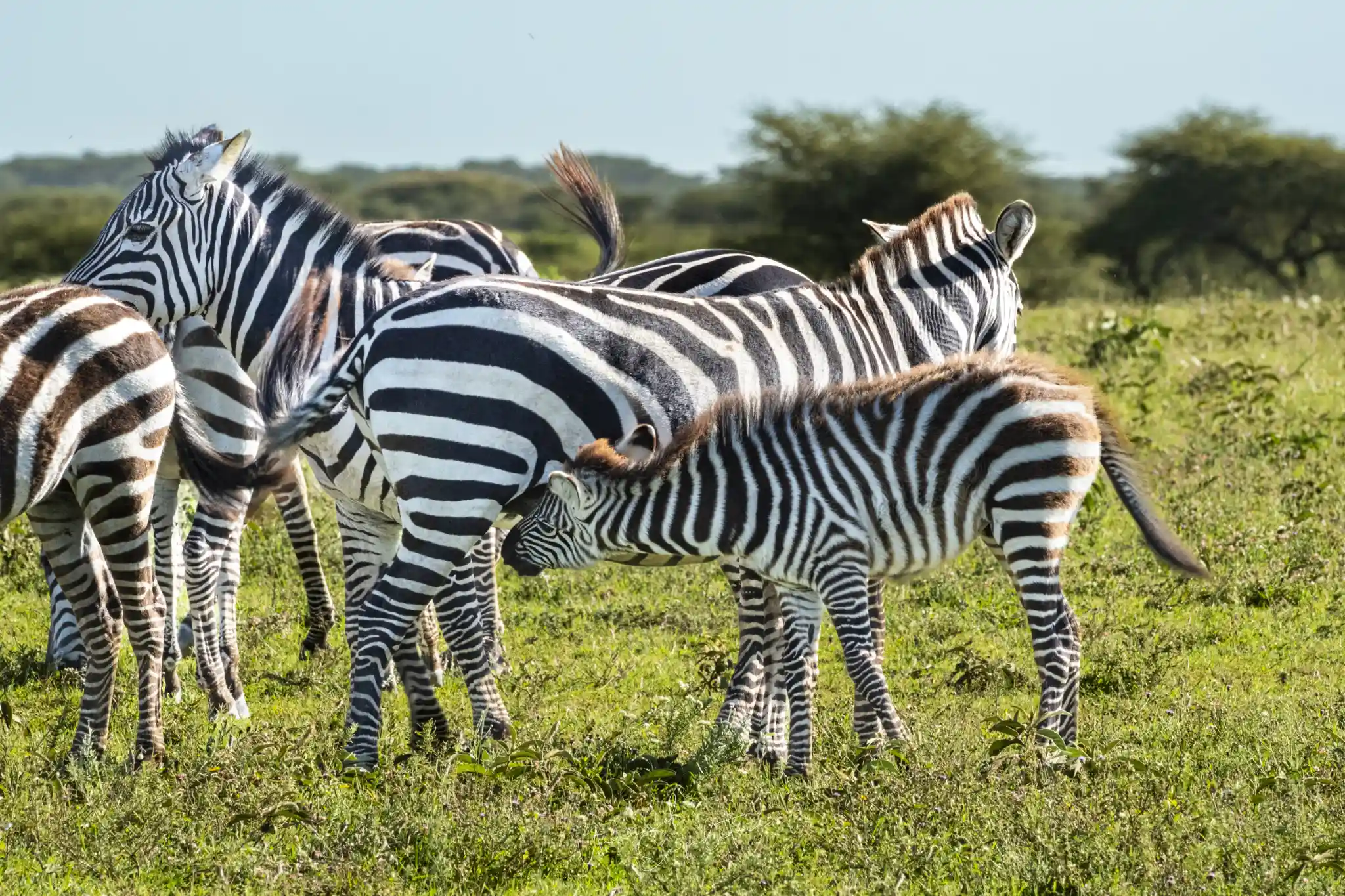
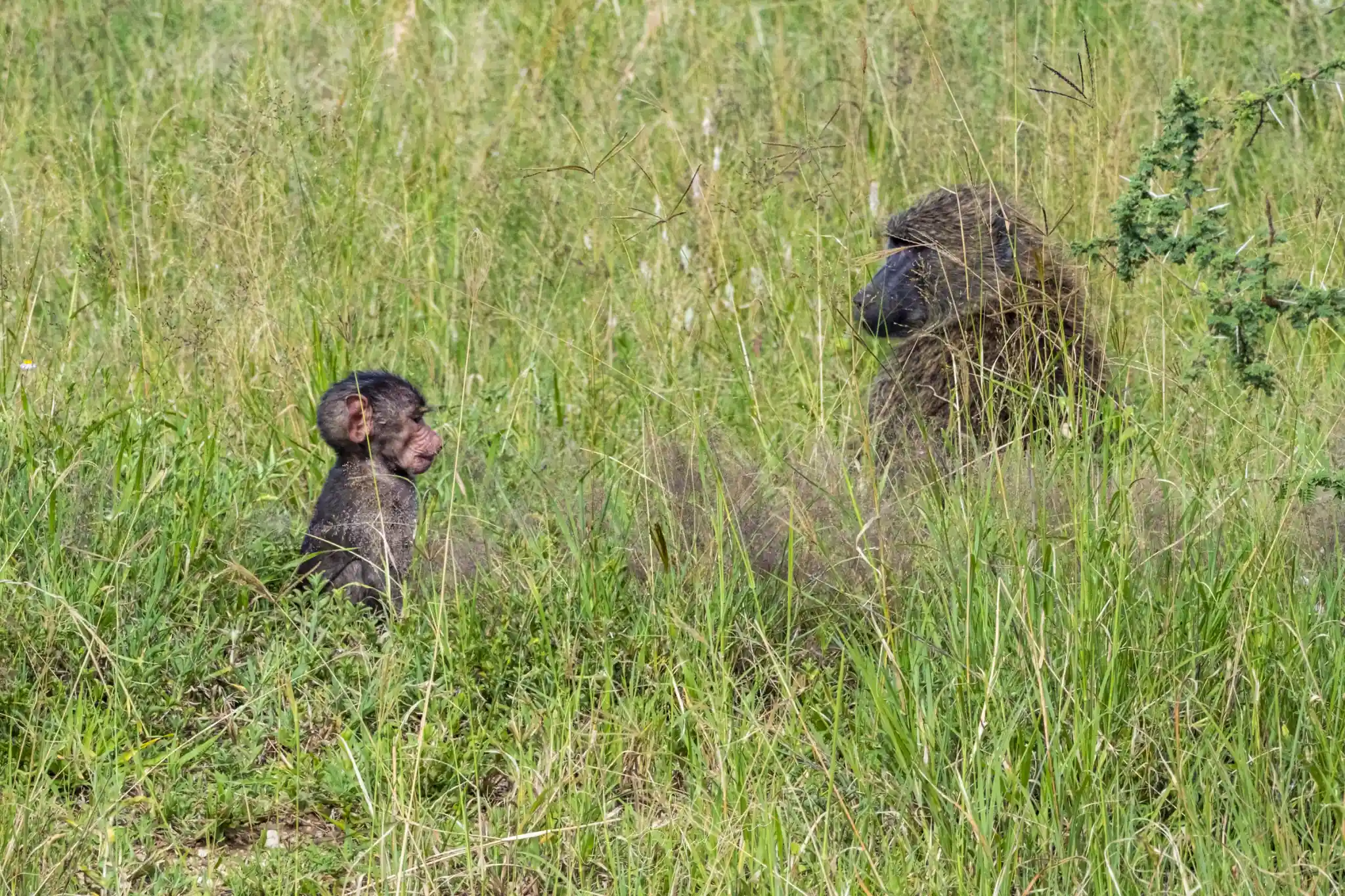
Baby wildebeest calves are not the only young animals at Ndutu. The same fresh grass that brings the herds south brings zebras, gazelles and antelope, and many of them give birth in the same weeks. Zebra foals are born with brown and white stripes and fluffy manes, and stay pressed against their mothers. Gazelle fawns lie flat and still in the grass while the mother grazes nearby, then bound after her. Giraffe calves stand in the acacia woodland around Lake Ndutu, where Africa Dream Safaris notes giraffes are resident year round. Elephant families with very young calves move through the plains and the woodland edges. You also find baby baboons riding on their mothers or sitting alone in the long grass for a moment.
Newborns at Ndutu at a glance
| Young animal | Called | Where at Ndutu | What to look for |
|---|---|---|---|
| Wildebeest | Calf | Open short-grass plains, inside the herds | The first stand, nursing, the first run |
| Zebra | Foal | Plains, mixed with the wildebeest | Brown stripes, a foal tucked against its mother |
| Gazelle | Fawn | Short grass near the woodland edge | A fawn lying flat, then following its mother |
| Giraffe | Calf | Acacia woodland around the lakes | Mother and young walking together |
| Elephant | Calf | Plains and woodland edges | A calf under its mother, a family closing round it |
| Baboon | Infant | Woodland edges and long grass | Riding on a mother's back or belly |
Most of these you see on the same drives, because they share the grass.
Zebra foals and gazelle fawns
Zebra foals at Ndutu are the easiest newborns to read: they stay close to the mother, and the herd often gathers around them when a predator appears. A frame of a foal against the mother's stripes, or of a family group with the foal in the middle, tells the story of the season. Gazelle fawns are harder. In their first days they hide, lying flat and still in the grass, and the picture comes when the mother returns and the fawn stands to meet her. Give the pair space; a hiding fawn relies on not being found, and a vehicle that stops right beside it can draw predators.
Why newborns attract predators
The newborns are also why Ndutu has so many predators in calving season. Young wildebeest and gazelles are the easiest prey on the plains, and cheetahs in particular rely on gazelle fawns and calves to feed their own cubs. The synchronised birth is a defence: by giving birth all at once, the herds produce far more calves than the predators can take. For a photographer, it means the gentle frames and the hard ones sit side by side, and on the same drive you can see a calf's first steps and a cheetah family feeding. The cats are covered in cheetahs of Ndutu.
People come for the wildebeest calves, and then a baby baboon sits up in the grass for a moment and that becomes the frame of their trip. Keep your eyes open for the small things at Ndutu; the plains are full of them.
Joseph Mak, tour leader, Unusual Expedition
Photographing young animals respectfully
Young animals are easily stressed, and a mother's reaction is the best guide to distance. If she stops grazing, stares at the vehicle or moves her young away, you are too close. Ask your guide to switch off the engine, keep voices low, and never call out or make noises to get a calf to look up. The rules published by the Ngorongoro Conservation Area Authority also limit the number of vehicles at one sighting, which keeps the animals calmer and the pictures more natural.
Photograph the newborns with us
Ndutu in calving season is a private trip on request with us, arranged around your dates and pace; we take care of all logistics, and a photographer or photography coaching can be added at extra cost. Ask at least two months ahead. See private tours, and for our scheduled departures in the country, the Tanzania photography tours page.
Ask us about photographing the newborns at Ndutu
Join the Ndutu photography tour
Serengeti Photo Tour – Tanzania 2027 departs 21 Aug 2027 To 01 Sep 2027. Small group, photography first. All Ndutu photography tours.
Explore Ndutu in depth
- Ndutu Photography Tour: Calving Season in Tanzania's Southern PlainsTanzania
- Serengeti in February: Weather, Light and Wildlife in Calving SeasonTanzania
- Ndutu Safari FAQ: Getting There, Fees, Rules and GearTanzania
- Ndutu Plains Photos: What the Calving Grounds Look LikeTanzania
- Cheetahs of Ndutu: Photographing the Southern Serengeti's CheetahsTanzania
- Ndutu Calving Season: When and Where the Wildebeest Give BirthTanzania
- Lake Ndutu and Lake Masek: Soda Lakes, Flamingos and WoodlandTanzania
Upcoming Photo Tours
- Egypt Photo Tour – EgyptEgypt 12 Dec 2026 To 20 Dec 2026
- Inner Mongolia Winter Owl Photo Tour – ChinaChina 01 Jan 2027 To 04 Jan 2027
- Inner Mongolia Winter Photo Tour – ChinaChina 05 Jan 2027 To 11 Jan 2027
- Mekong And Central Highland Vietnam Photo Tour - VietnamVietnam 16 Jan 2027 To 24 Jan 2027