
Ndutu Plains Photos: What the Calving Grounds Look Like
Ndutu plains photos: the short-grass plains, woodland and lakes of the Ndutu region, and what to photograph there.
The Ndutu plains look like an endless green lawn in calving season: short grass running to a flat horizon, dotted with wildebeest and zebra, broken by low bush, termite mounds and a band of acacia woodland around Lake Ndutu and Lake Masek. Ndutu photos from these plains in Tanzania show big skies, herds with their young, cats on the open ground, impala and gazelles at the woodland edge, and soft pink dusks over lone acacias. This page shows what the area looks like through our own frames.
For the full picture of the area and the season, start with the Ndutu photography tour guide.
Ndutu plains: what they look like
The Ndutu plains are part of the short-grass plains that cover the south of the Serengeti ecosystem. After the short rains they turn bright green, and in calving season the grass is grazed short by the herds, so the plains read as a smooth, open surface in photographs. NASA's Earth Observatory describes this corner at the southern tip of the Serengeti plains as the place the wildebeest give birth each February. To the east, the Crater Highlands form a long blue line on clear days. The flatness is the point: a wildebeest herd or a single cheetah stands out clearly against the grass, and a low camera angle turns a small group of animals into a scene with a horizon and a sky.
The photographs in this guide are our own, taken on our trips here; we hold the rights to them, and the notes come from knowing these places first hand.
Ndutu region: plains, woodland and lakes
The Ndutu region is more varied than the word "plains" suggests. There are three landscapes within a short drive of each other. The open short-grass plains hold the herds and the cheetahs. A belt of acacia woodland, with whistling thorn and scattered bush, runs around the two soda lakes and holds giraffes, elephants, birds and the shade where lions rest. The lakes themselves add flamingos and water. Our Lake Ndutu and Lake Masek destination guide covers the lakes and woodland. For photography, the edges are often best: the woodland edge, where impala and gazelles come out onto the grass, and the lake shore, where the herds cross.
Animals in the landscape
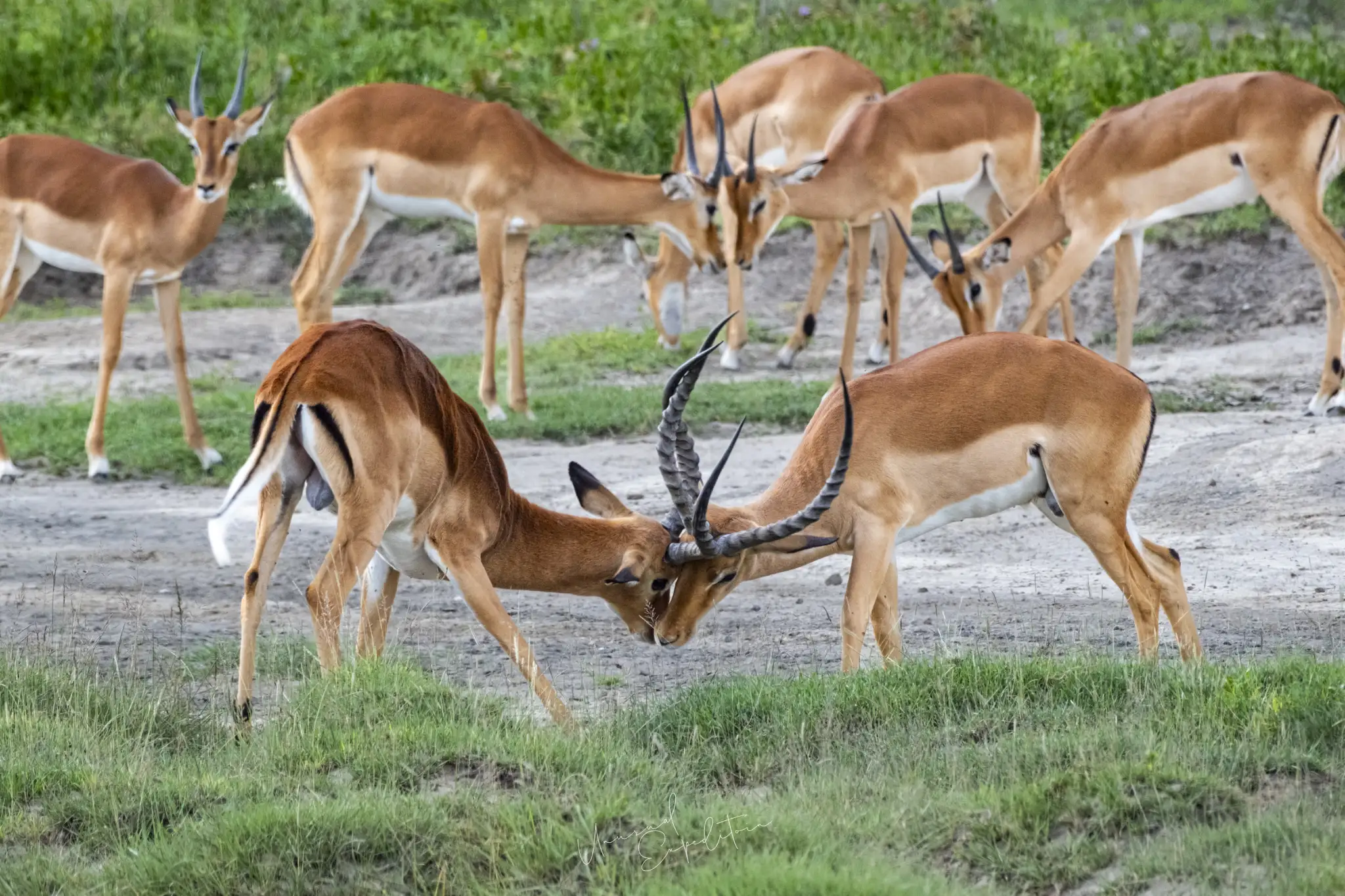
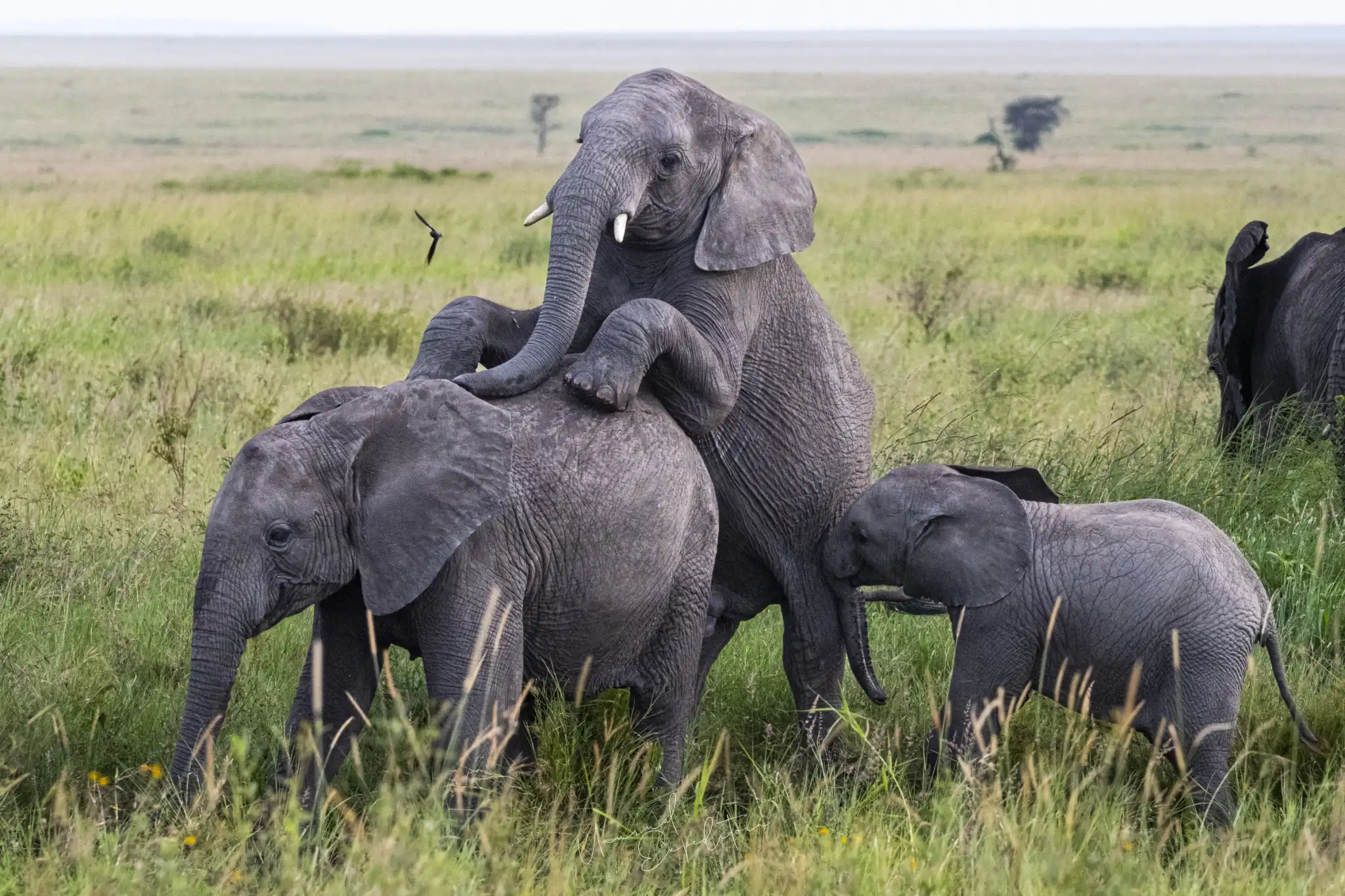
Most safari photography is tight portraits; at Ndutu the landscape is worth including. The plains give you clean, simple backgrounds: an elephant family on the open grass with the flat horizon behind, a line of wildebeest walking along the skyline, or impala rams sparring at the woodland edge with acacias behind them. Use a 70-200mm or a 24-70mm for these, and leave room in the frame. On green-season days the clouds build through the afternoon, and dark storm clouds over sunlit grass make some of the strongest pictures of the trip. When the herds are close, a wide lens from the vehicle window can show how many animals share the plain.
Impala are a good example of an edge subject. They rarely go far onto the open plain, but at the woodland margin the rams spar through the day, locking horns and pushing, while the females graze nearby. The fights are short and repeat, so once you see two rams squaring up, frame them with some grass in front and the acacias behind, set a fast shutter, and wait for the next clash.
Ndutu photo subjects at a glance
| Scene | Where | Light | Lens |
|---|---|---|---|
| Herds with calves on green grass | Open short-grass plains | Early morning | 100-400mm, 70-200mm |
| Elephant families | Plains and woodland edges | Morning, late afternoon | 70-200mm |
| Impala and gazelles | Woodland edge | Morning | 100-400mm |
| Storm skies over the plains | Anywhere open | Afternoon | 24-70mm |
| Acacia silhouettes | Woodland edge, lone trees on the plain | Sunset, blue hour | 24-70mm, 70-200mm |
| Woodland birds | Acacias and thorn bushes | Morning | 100-400mm or longer |
The plains reward a mix of lenses more than most safari areas, because the landscape matters.
Dusk on the plains
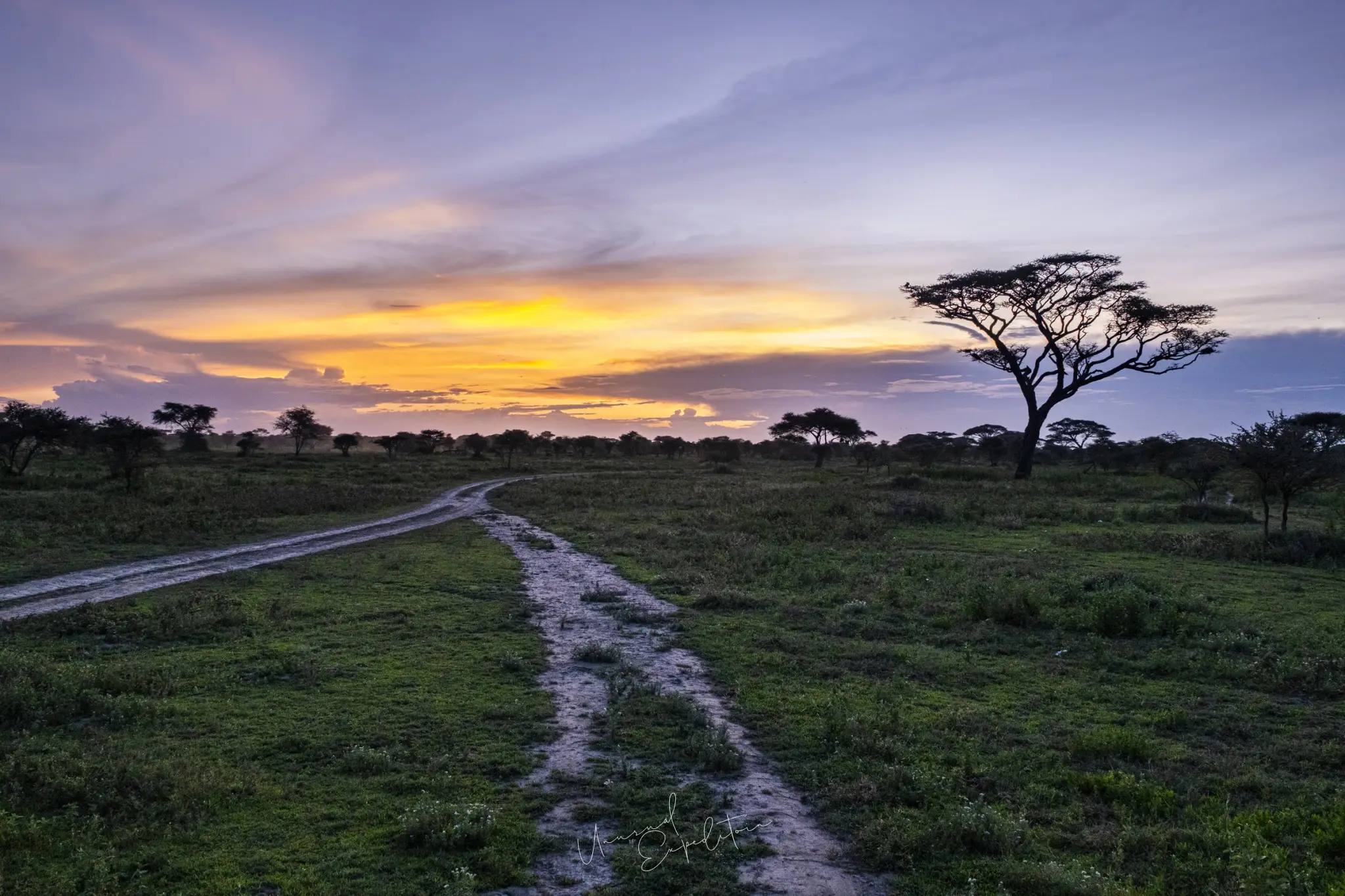
Evenings at Ndutu are short and colourful. As the sun drops, the sky over the plains turns orange and then pink, and lone umbrella acacias stand out as clean silhouettes. A vehicle track running towards a tree gives a leading line. Expose for the sky and let the land go dark, or wait for the blue hour, when the colour softens and the grass still holds some detail. Clouds make the difference: a clear sky gives a plain gradient, while broken green-season clouds catch colour long after sunset. Ask your guide to stop at a tree with a clean horizon before the light goes, because driving back across the plains in the dark is slow.
Small subjects in the bush
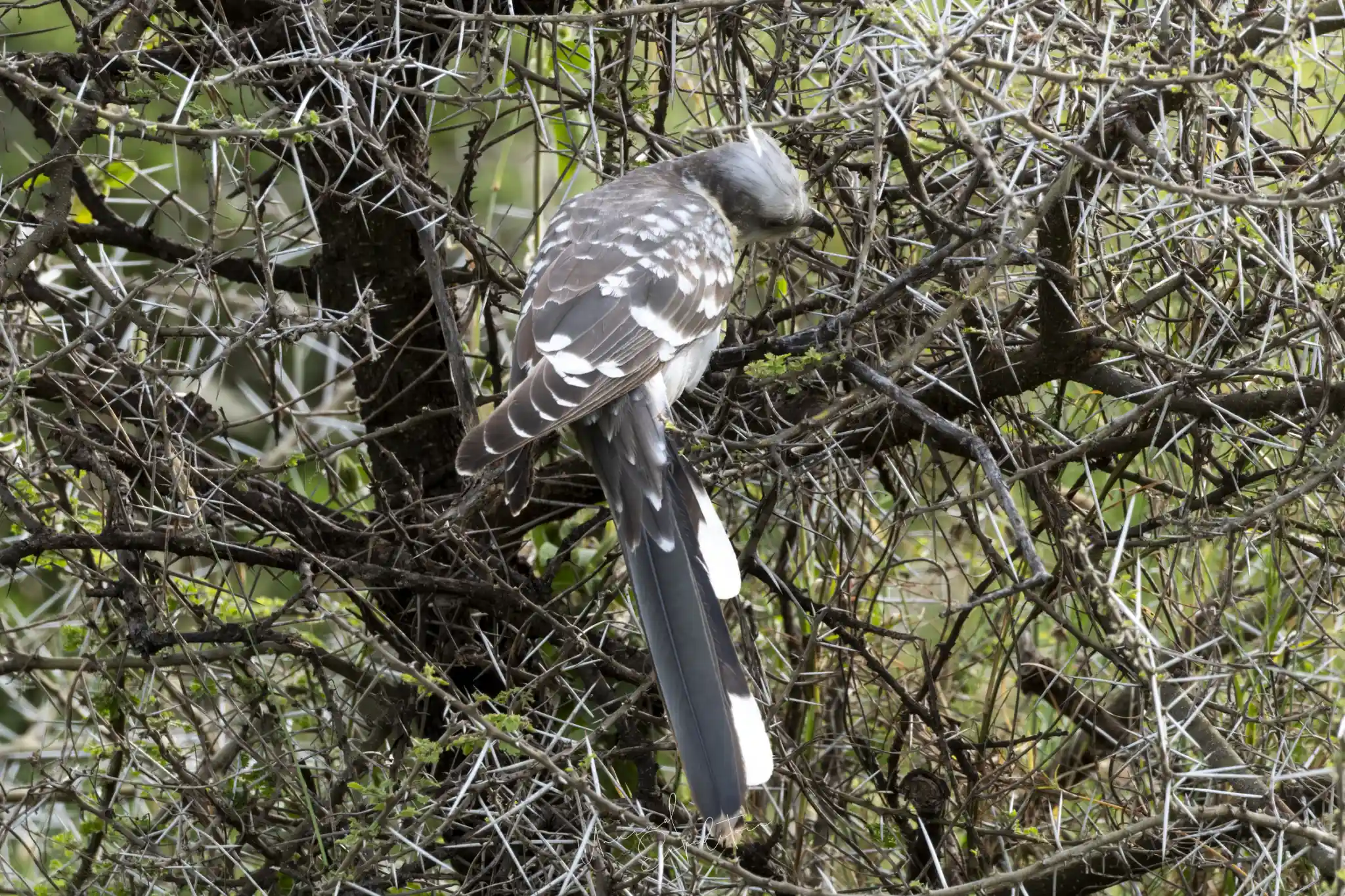
Between the big scenes, the bush around the plains is full of smaller subjects. Go-away-birds sit in the thorn trees, named for their call; starlings and weavers gather in the acacias; jackals rest in the shade of a bush; and dung beetles roll their balls across the tracks. These are the frames that give a set of trip photographs its variety. A long lens and a patient guide are all you need, and the best light for them is the soft morning before the heat haze rises off the plains.
The Ndutu plains look empty in a wide picture until you notice the animals in it. I always try to make one frame a day with a long lens and one with a wide lens: the close one shows the animal, the wide one shows the place.
Joseph Mak, tour leader, Unusual Expedition
More from Ndutu
The plains are the stage for the calving season itself, covered in the Ndutu calving season destination guide, and for the cats in cheetahs of Ndutu. For the light and weather through the month, read Serengeti in February.
Photograph the Ndutu plains with us
Ndutu is a private trip on request with us, run in calving season for individuals, couples, families or photographers at their own pace, with all logistics arranged. A photographer or photography coaching can be added at extra cost. Ask at least two months ahead. See private tours, and the Tanzania photography tours page for our scheduled departures.
Ask us about photographing the Ndutu plains
Join the Ndutu photography tour
Serengeti Photo Tour – Tanzania 2027 departs 21 Aug 2027 To 01 Sep 2027. Small group, photography first. All Ndutu photography tours.
Explore Ndutu in depth
- Ndutu Photography Tour: Calving Season in Tanzania's Southern PlainsTanzania
- Serengeti in February: Weather, Light and Wildlife in Calving SeasonTanzania
- Ndutu Safari FAQ: Getting There, Fees, Rules and GearTanzania
- Cheetahs of Ndutu: Photographing the Southern Serengeti's CheetahsTanzania
- Ndutu Calving Season: When and Where the Wildebeest Give BirthTanzania
- Lake Ndutu and Lake Masek: Soda Lakes, Flamingos and WoodlandTanzania
- Baby Wildebeest and the Other Newborns of NdutuTanzania
Upcoming Photo Tours
- Egypt Photo Tour – EgyptEgypt 12 Dec 2026 To 20 Dec 2026
- Inner Mongolia Winter Owl Photo Tour – ChinaChina 01 Jan 2027 To 04 Jan 2027
- Inner Mongolia Winter Photo Tour – ChinaChina 05 Jan 2027 To 11 Jan 2027
- Mekong And Central Highland Vietnam Photo Tour - VietnamVietnam 16 Jan 2027 To 24 Jan 2027