
Serengeti in February: Weather, Light and Wildlife in Calving Season
Serengeti in February: the calving season in the south, the weather in Tanzania in February, the light and what to bring.
The Serengeti in February is the peak of the calving season: the wildebeest and zebra herds are on the short-grass plains of the south, around Ndutu, and most calves are born this month. The weather in Tanzania in February sits between the short and long rains, so mornings are usually bright, afternoons bring building cloud and the odd storm, and the land is at its greenest. For photographers it means newborn animals, very active predators, clean green backgrounds and dramatic skies.
February is the month the Ndutu photography tour guide is planned around; this destination guide describes what the month is like on the ground.
Serengeti in February: where the action is
In February the action in the Serengeti is in the south. The herds that spend the dry season in the north have come down to the short-grass plains around Ndutu and Lake Masek, which straddle the boundary between Serengeti National Park and the Ngorongoro Conservation Area. NASA's Earth Observatory describes thousands of wildebeest calves born here each February, around 8,000 a day at the peak. The central Serengeti around Seronera still has its resident lions and leopards, and the north is quiet. If you are planning a February trip, base it in the south, and add the central park only if you have time for both. The Ndutu calving season destination guide covers the herds in detail.
Weather in Tanzania in February
The weather in Tanzania in February is shaped by the two rainy seasons of the north. The Tanzania Meteorological Authority describes northern Tanzania as bimodal: the short rains fall from about October to December, and the long rains from about March to May, sometimes starting in late February. February sits between them. In practice, at Ndutu, most mornings are clear or lightly clouded, the day warms quickly on the open plains, and cloud builds through the afternoon, sometimes into a short, heavy storm. Nights on the plains are mild. Every year is different, and a wet February can make some tracks muddy, so build some flexibility into the plan and follow the Tanzania Meteorological Authority's monthly outlook before you go.
Tanzania safari in February: the light
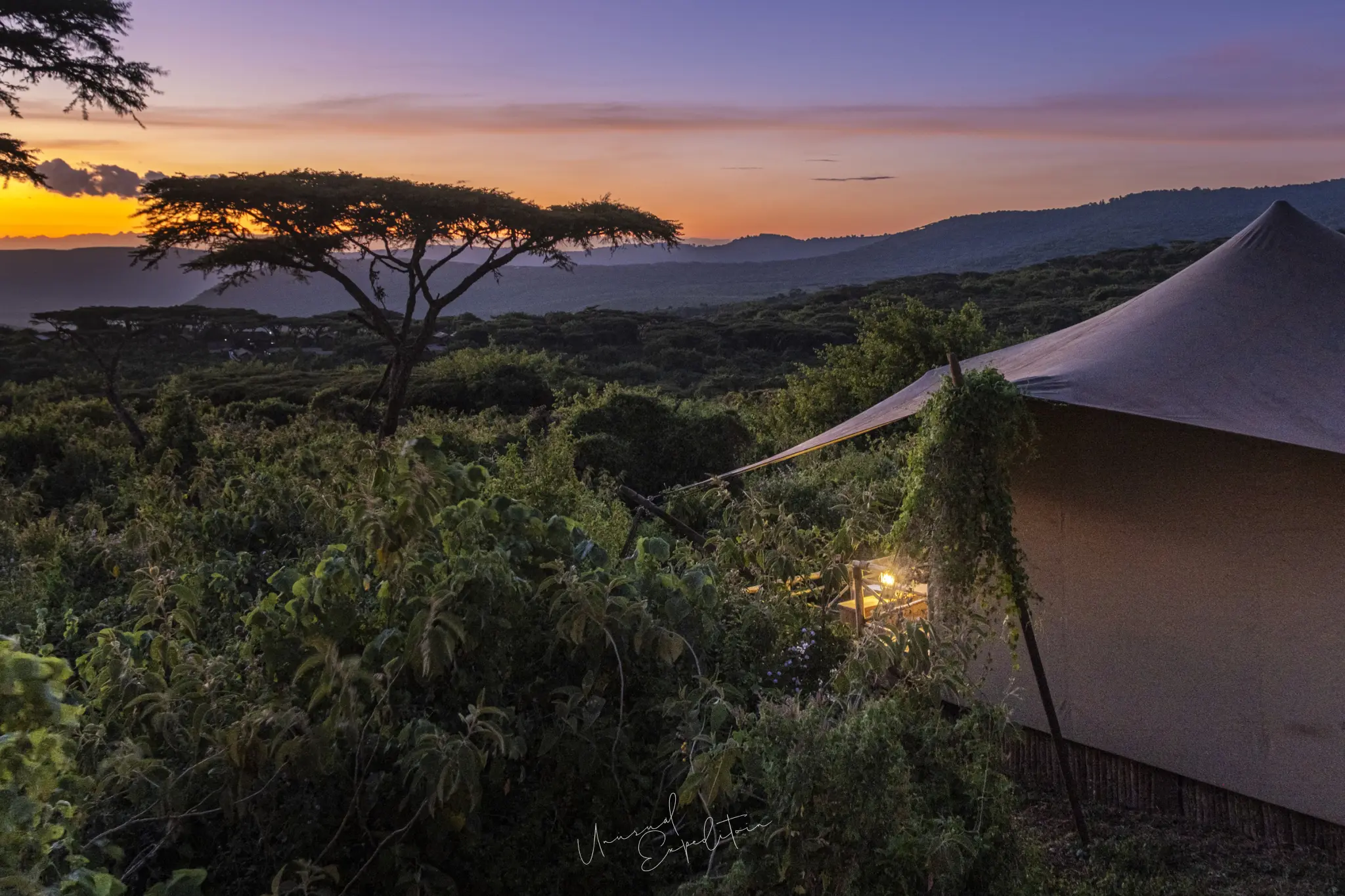
On a Tanzania safari in February, the light changes through the day more than in the dry season. Early mornings are soft and clear, with dew on the grass and the best conditions for calves and cats. By late morning the sun is high and the light harder; the green grass helps, bouncing some colour back into the shadows. Afternoons bring the clouds, and with them the most interesting skies of the year: dark storm clouds over sunlit plains, rain curtains in the distance and, if you are lucky, a rainbow. Sunsets are often colourful because of the broken cloud, and the blue hour after sunset is long enough to photograph acacia silhouettes and the tents of a seasonal camp glowing under the trees.
What you photograph in February
| Subject | February at Ndutu | Tip |
|---|---|---|
| Wildebeest calves | Peak births | Watch for a cow standing apart from the herd |
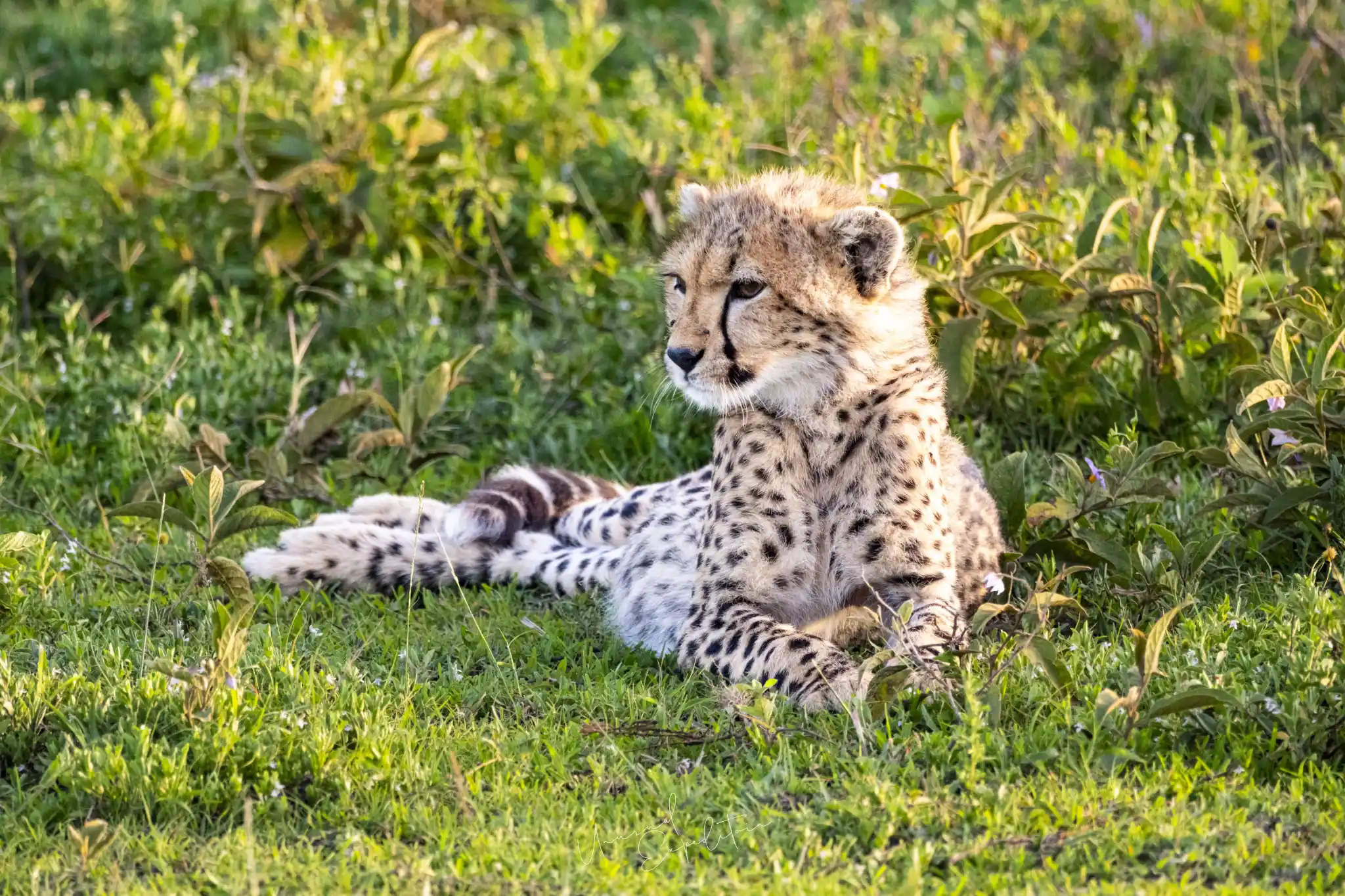
| Cheetahs | Very active, mothers with cubs | Stay with a family through the morning |
| Lions and hyenas | Near the herds | Dawn and dusk |
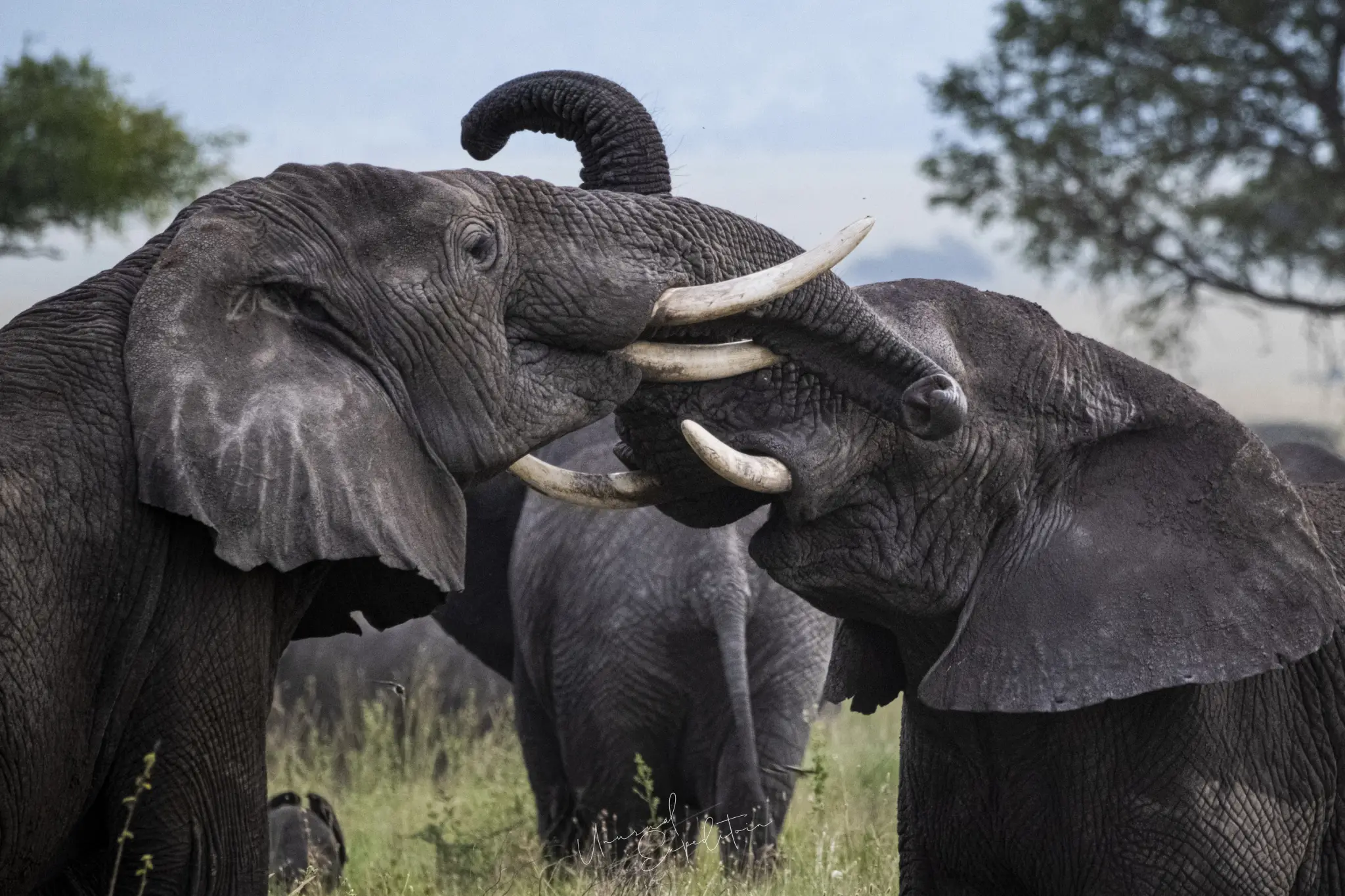
| Elephants | Families with young calves | Include the green landscape |
| Storm skies | Afternoons | Wide lens, expose for the clouds |
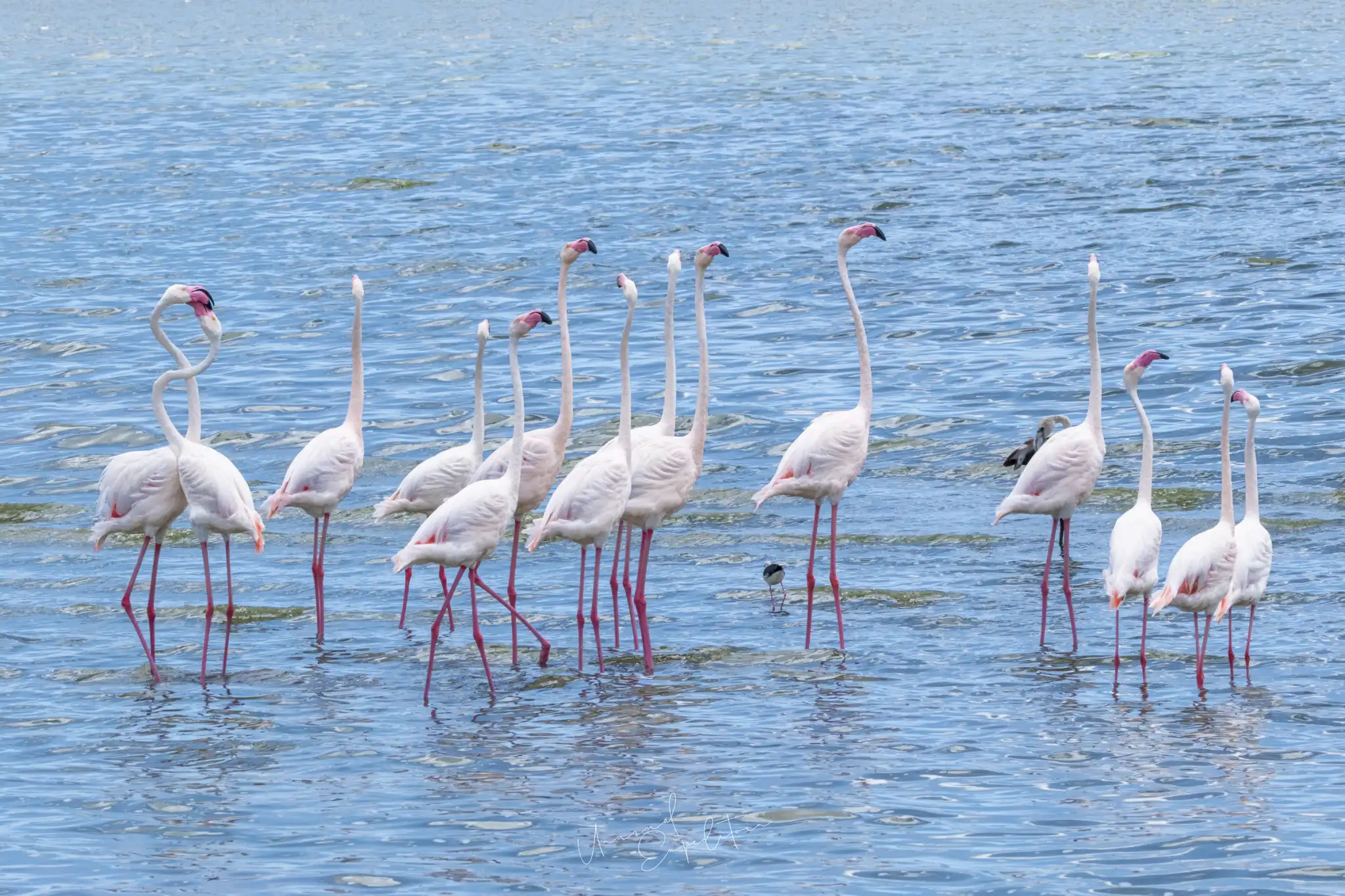
| Flamingos | On the soda lakes when water allows | Soft morning light |
No other month gives as many different subjects in one area.
Serengeti in January or February?
The Serengeti in January can be just as good as February, and sometimes quieter. In most years the herds reach the southern plains in December or January and calving begins in late January, so a late January trip catches the first calves and the herds settling in. February brings the peak of births and the most predator action; early March brings older, more active calves, with the risk of the long rains starting. The Tanzania Daily News describes the season as running between late January and March. If you can choose, February is the safest bet; if January is the month you have, go, and accept that the peak may still be ahead of you.
Tanzania in February: what to pack for the camera
Tanzania in February calls for a long lens, a second body or a mid-range zoom, and protection from dust and rain. A 100-400mm or 150-600mm does most of the wildlife work; a 24-70mm handles the landscapes and the skies. Bring a rain cover for the camera and a cloth for the window ledge, as afternoon showers blow into open vehicles. Spare batteries matter because charging in seasonal camps can be limited, and a bean bag is the best support in a vehicle. For clothing and health, the Tanzania photography tour guide and its siblings cover the practical side for the whole country.
February skies are the best of the year in the Serengeti. The mornings are for the animals, and the afternoons are for the clouds. Some of my favourite frames from Ndutu are an elephant or a single acacia under a storm that never quite reached us.
Joseph Mak, tour leader, Unusual Expedition
Is February busy?
February is a popular month at Ndutu, and the best camps fill early. Sightings can draw several vehicles, which is why the Ngorongoro Conservation Area Authority's rules limit the number at one animal or kill. A good guide spreads you away from the crowd and spends time with sightings others drive past. For fees, rules and getting there, see the Ndutu safari FAQ.
Plan a February trip with us
We run Ndutu in February as a private trip on request, at your own pace, with all logistics arranged; a photographer or photography coaching can be added at extra cost. Because February is popular, ask at least two months ahead, and earlier if you can. See private tours, and the Tanzania photography tours page for our scheduled departures in the country.
Ask us about a February trip to Ndutu
Join the Ndutu photography tour
Serengeti Photo Tour – Tanzania 2027 departs 21 Aug 2027 To 01 Sep 2027. Small group, photography first. All Ndutu photography tours.
Explore Ndutu in depth
- Ndutu Photography Tour: Calving Season in Tanzania's Southern PlainsTanzania
- Ndutu Safari FAQ: Getting There, Fees, Rules and GearTanzania
- Ndutu Plains Photos: What the Calving Grounds Look LikeTanzania
- Cheetahs of Ndutu: Photographing the Southern Serengeti's CheetahsTanzania
- Ndutu Calving Season: When and Where the Wildebeest Give BirthTanzania
- Lake Ndutu and Lake Masek: Soda Lakes, Flamingos and WoodlandTanzania
- Baby Wildebeest and the Other Newborns of NdutuTanzania
Upcoming Photo Tours
- Egypt Photo Tour – EgyptEgypt 12 Dec 2026 To 20 Dec 2026
- Inner Mongolia Winter Owl Photo Tour – ChinaChina 01 Jan 2027 To 04 Jan 2027
- Inner Mongolia Winter Photo Tour – ChinaChina 05 Jan 2027 To 11 Jan 2027
- Mekong And Central Highland Vietnam Photo Tour - VietnamVietnam 16 Jan 2027 To 24 Jan 2027