
Ndutu Calving Season: When and Where the Wildebeest Give Birth
Ndutu calving season: when it happens, where the herds go, the predators, and how to photograph the births.
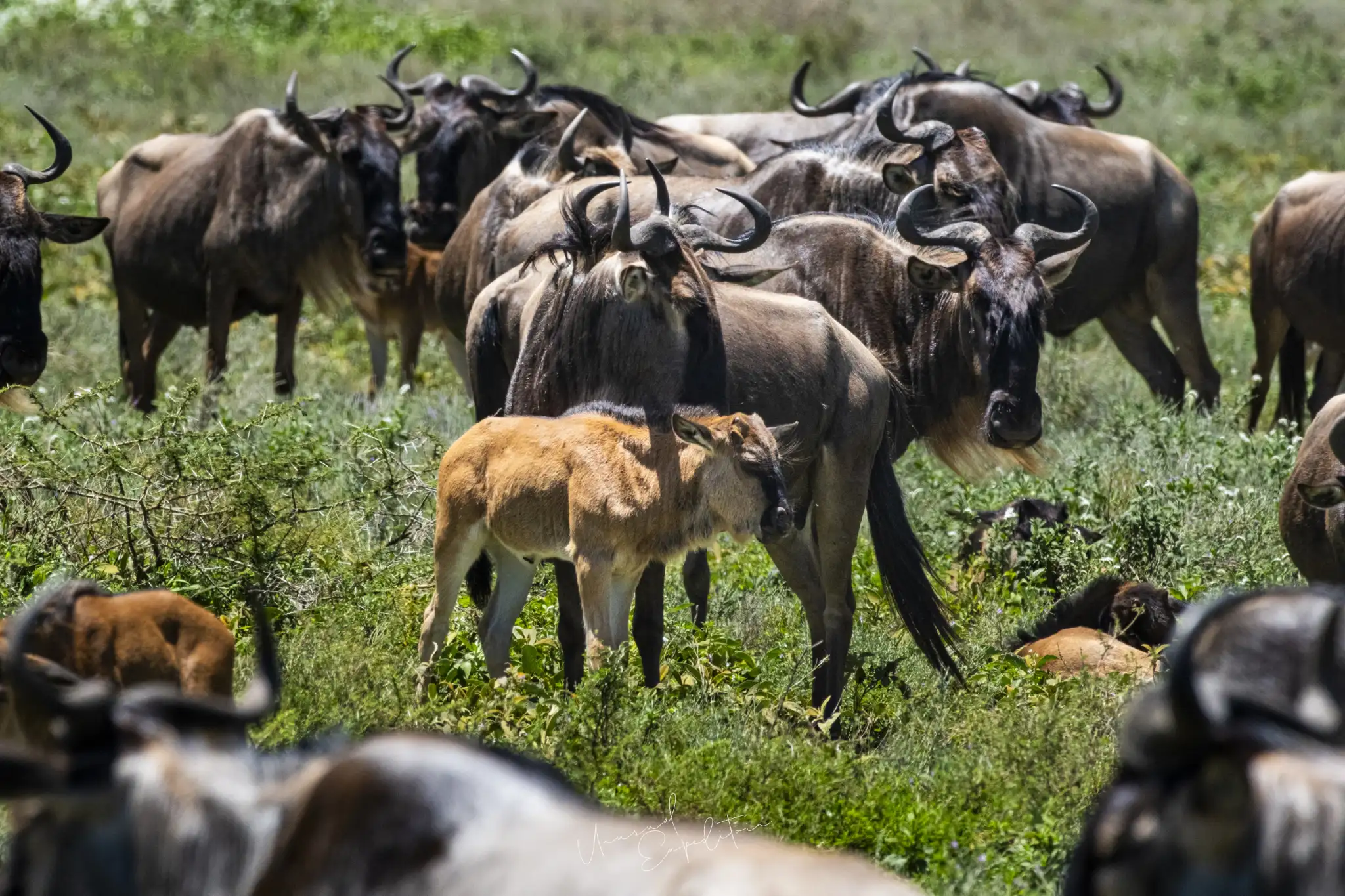
The Ndutu calving season runs from about late January to March, with most wildebeest calves born in February, on the short-grass plains around Ndutu in the southern Serengeti ecosystem of Tanzania. NASA's Earth Observatory describes around 8,000 calves a day at the peak, born within four to six weeks. The herds stay while the fresh grass lasts, and lions, cheetahs and hyenas stay with them. For photographers it means newborns, nursing, the first wobbly runs and hunts, all in green landscapes.
This is the season the whole Ndutu photography tour guide is built around; this destination guide explains when it happens, where the herds go and how to photograph it.
When is calving season?
When is calving season in the Serengeti? The wildebeest calve once a year, after the short rains, when the southern plains turn green. The Tanzania Daily News puts it between late January and March, and NASA's Earth Observatory writes that wildebeest give birth "each February". The births are tightly synchronised: most cows drop their calves within a few weeks of each other, which floods the plains with more newborns than the predators can take. Late January can be early if the rains were late, and early March can still be busy if the grass holds. If you can only choose one month, February is the safest choice; if your dates are fixed, a good guide will still find the herds, because they rarely leave the southern plains entirely in this season.
Serengeti calving season: where the herds go
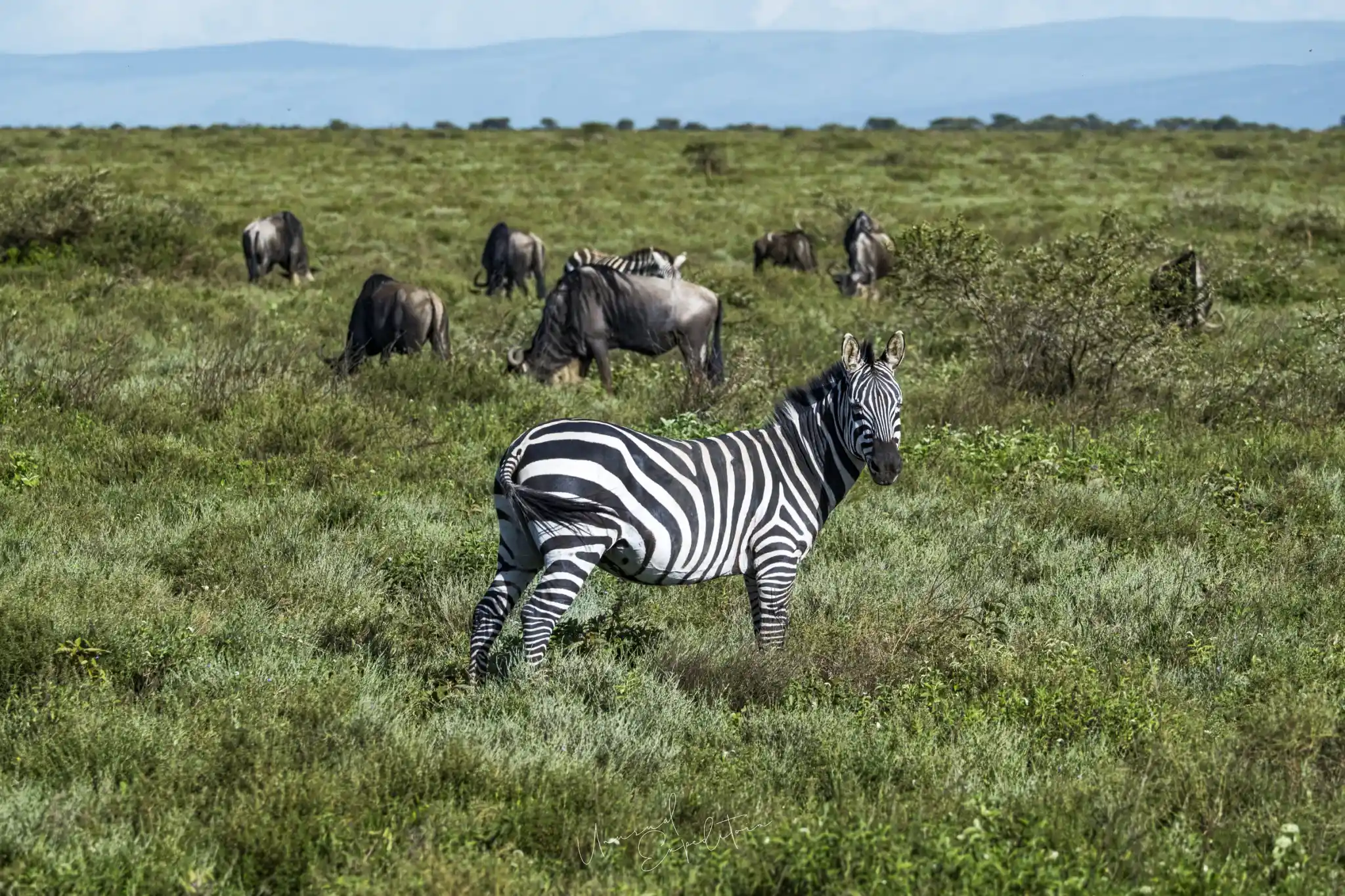
The Serengeti calving season happens on the short-grass plains in the far south of the ecosystem, on both sides of the boundary between Serengeti National Park and the Ngorongoro Conservation Area. Ndutu is the centre of it. Discover Africa, which follows the herds through the year, names Ndutu, Lake Masek and the Ngorongoro Conservation Area as the places the wildebeest spread through. The exact position changes with rain: after a storm the herds may move towards new grass overnight, and a dry week can push them back towards the woodland around the lakes. That is why each morning at Ndutu begins with the guide reading the plains. The herds are big enough that you rarely miss them, but the best sightings are where calving is happening that day.
Wildebeest calving season: what happens in a day
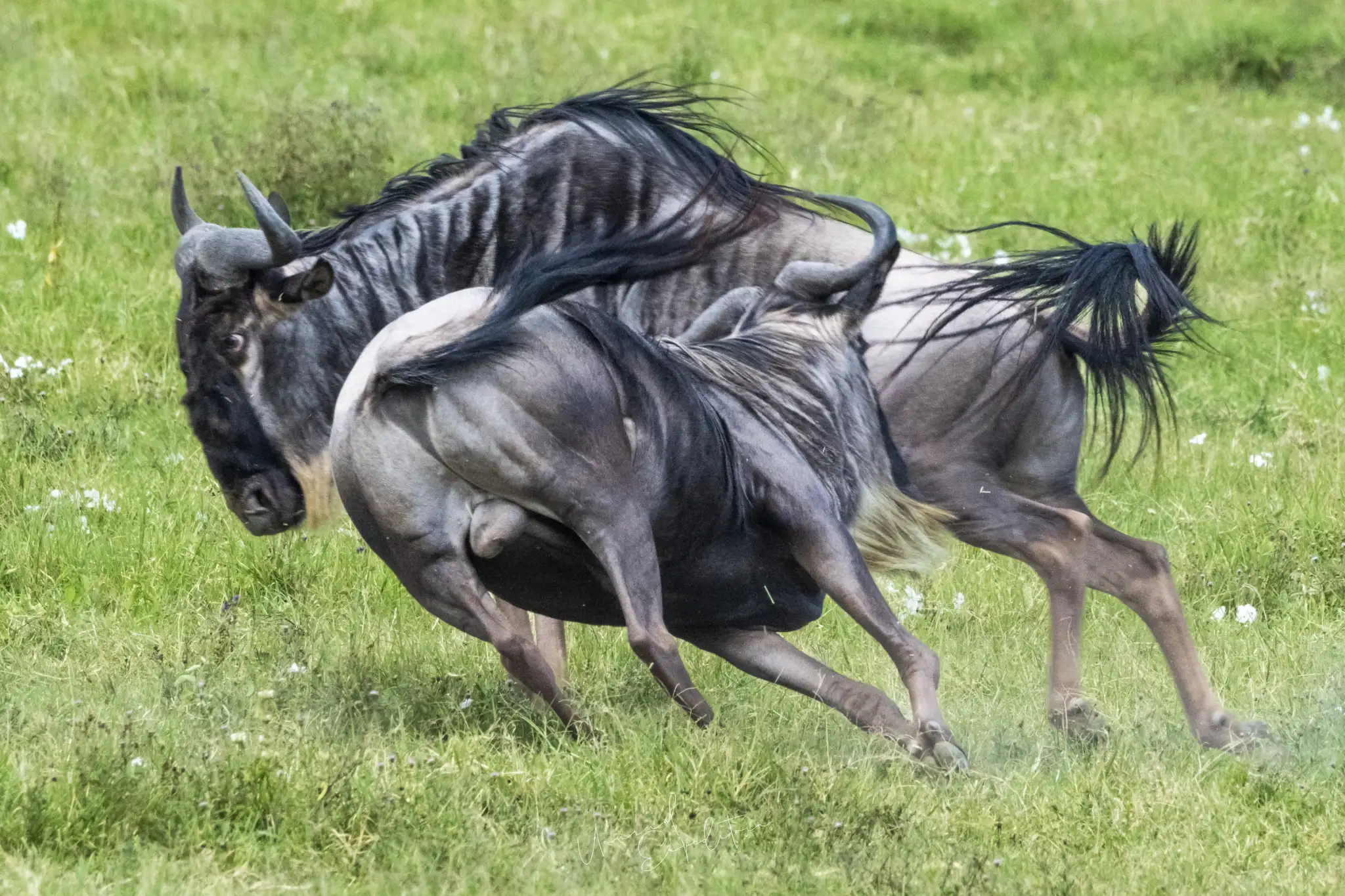
A wildebeest calving season day starts early. Births often happen in the morning, in the middle of the herd, and a calf is usually on its feet within minutes and running with its mother soon after. That first stand is the picture many photographers come for, and it needs patience: you watch a cow who has separated slightly from the herd, and you wait. Through the rest of the day you photograph nursing, calves sleeping in the grass, mothers calling for lost calves, bulls fighting over territory and the constant movement of the herd. Predators hunt at the edges. By late afternoon the light softens again and the herds often move, which gives you lines of animals against a big sky.
Predators in calving season
Predators are the other half of the Ndutu calving season. The Tanzania Daily News describes lions, cheetahs and hyenas as highly active during this period, and in our experience it is the best time of the year to photograph cheetahs. Lions rest in the shade near the herds and hunt at dusk and dawn; hyenas move through the herds at night and in the early morning; jackals pick up what is left. Kills are part of the season, and some guests prefer to look away; a good guide will always tell you what you are about to see. For the cats in detail, read cheetahs of Ndutu.
Calving season Tanzania: month by month
| Period | Herds | What you photograph | Weather |
|---|---|---|---|
| Late January | Arriving on the southern plains | First calves, big herds on green grass | Mostly dry, some showers |
| February | Spread across Ndutu and the short-grass plains | Peak births, nursing, predators | Bright mornings, afternoon cloud and storms |
| Early March | Still south, starting to stir | Young calves running, predators | Long rains may begin |
| April to May | Moving north and west | Ndutu quiet, many camps closed | Long rains |
The table is a guide, not a timetable; the rains set the dates each year.
How to photograph the calving
A 100-400mm or a 150-600mm zoom is the main lens for calving at Ndutu, because a birth happens inside the herd and you cannot drive into it. Keep a 70-200mm or 24-70mm on a second body for herds in their landscape. Shoot from the vehicle window with a bean bag. For the first stand and the first run, use continuous autofocus and at least 1/1000s; for nursing and sleeping calves, slow down and work with the light. Respect matters: never ask a guide to push closer to a cow in labour, because a disturbed mother can abandon her calf. The newborns themselves are covered in baby wildebeest and the other newborns of Ndutu.
The first time you watch a calf stand up and run with its mother, you forget to press the shutter. After that you learn where to look: the cow who stands a little apart from the others, head low. Then you wait, and you keep the camera ready.
Joseph Mak, tour leader, Unusual Expedition
Is February the only time to see calving?
February is the peak, but not the only option. Late January works in years when the rains came on time, and early March often still has young calves and very active predators. What changes outside February is certainty: in a late season the herds may be spread out, and in an early season the long rains can make tracks muddy. If you want to plan around the weather and the light as well, read Serengeti in February. For a broader view of the migration across the year, the Serengeti destination guides cover the dry-season river crossings in the north.
See the calving season with us
We run Ndutu in calving season as a private trip on request, timed to the herds and built around your pace, with all logistics arranged for you; a photographer or photography coaching can be added at extra cost. Ask at least two months ahead, as the camps fill early for February. Details are on our private tours page, and the Tanzania photography tours page lists our scheduled departures.
Ask us about the Ndutu calving season
Join the Ndutu photography tour
Serengeti Photo Tour – Tanzania 2027 departs 21 Aug 2027 To 01 Sep 2027. Small group, photography first. All Ndutu photography tours.
Explore Ndutu in depth
- Ndutu Photography Tour: Calving Season in Tanzania's Southern PlainsTanzania
- Serengeti in February: Weather, Light and Wildlife in Calving SeasonTanzania
- Ndutu Safari FAQ: Getting There, Fees, Rules and GearTanzania
- Ndutu Plains Photos: What the Calving Grounds Look LikeTanzania
- Cheetahs of Ndutu: Photographing the Southern Serengeti's CheetahsTanzania
- Lake Ndutu and Lake Masek: Soda Lakes, Flamingos and WoodlandTanzania
- Baby Wildebeest and the Other Newborns of NdutuTanzania
Upcoming Photo Tours
- Egypt Photo Tour – EgyptEgypt 12 Dec 2026 To 20 Dec 2026
- Inner Mongolia Winter Owl Photo Tour – ChinaChina 01 Jan 2027 To 04 Jan 2027
- Inner Mongolia Winter Photo Tour – ChinaChina 05 Jan 2027 To 11 Jan 2027
- Mekong And Central Highland Vietnam Photo Tour - VietnamVietnam 16 Jan 2027 To 24 Jan 2027