
Lake Ndutu and Lake Masek: Soda Lakes, Flamingos and Woodland
Lake Ndutu and Lake Masek: the two soda lakes of Ndutu, their flamingos, woodland birds and wildlife, and how to photograph them.
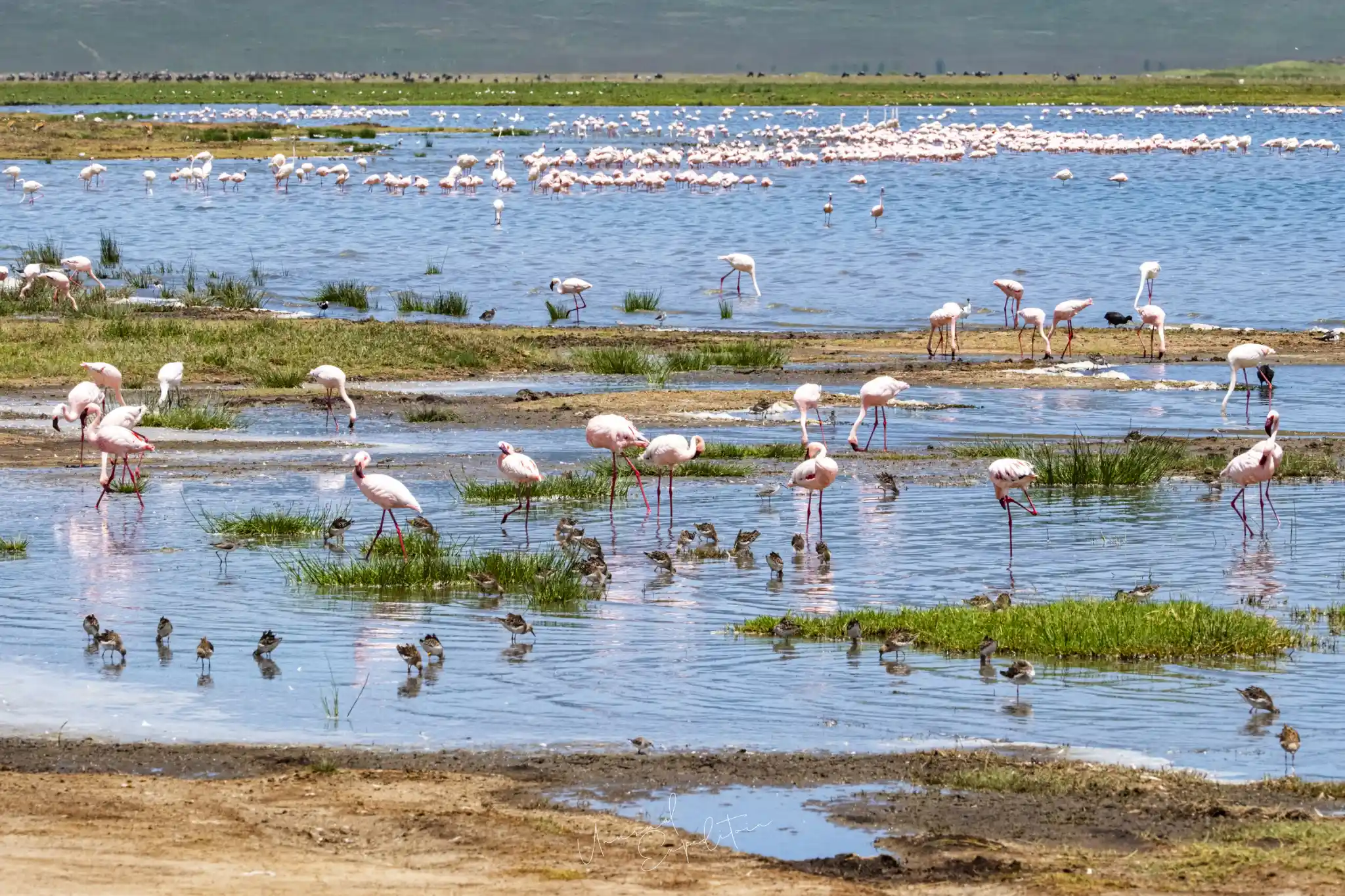
Lake Ndutu and Lake Masek are two shallow soda lakes in the Ndutu area of the Ngorongoro Conservation Area, Tanzania, on the southern edge of the Serengeti plains. Acacia woodland surrounds them, and the short-grass calving plains begin just beyond the trees. For photographers the lakes add a second landscape to a calving-season trip: flamingos and waterbirds on the alkaline water, giraffes and elephants coming to drink, and woodland birds and cats in the trees along the shore.
The lakes sit at the centre of the area described in the Ndutu photography tour guide; this destination guide covers what they look like and how to photograph them.
Lake Ndutu: the soda lake at the heart of the area
Lake Ndutu is the better known of the two lakes and gives the whole area its name. The Ngorongoro Conservation Area Authority describes both lakes as shallow basins that collect water from the slightly higher ground around them, with water far too saline to drink. Lake Ndutu has a pale, crusted shore, and its level rises and falls with the rains, so the shoreline you see depends on the year. Birding Places, the European birding guide, describes Ndutu as saline and alkaline lakes, acacia woodland, dry soda pans and short-grass plains, and that mix is what makes it good for photography: in a single drive you can go from flamingos in shallow water to giraffes in the woodland to herds on the open plain. The shore is also a place animals cross, so wildebeest moving between the plains and the woodland often walk along or through the edge of the water.
Lake Masek: the second lake
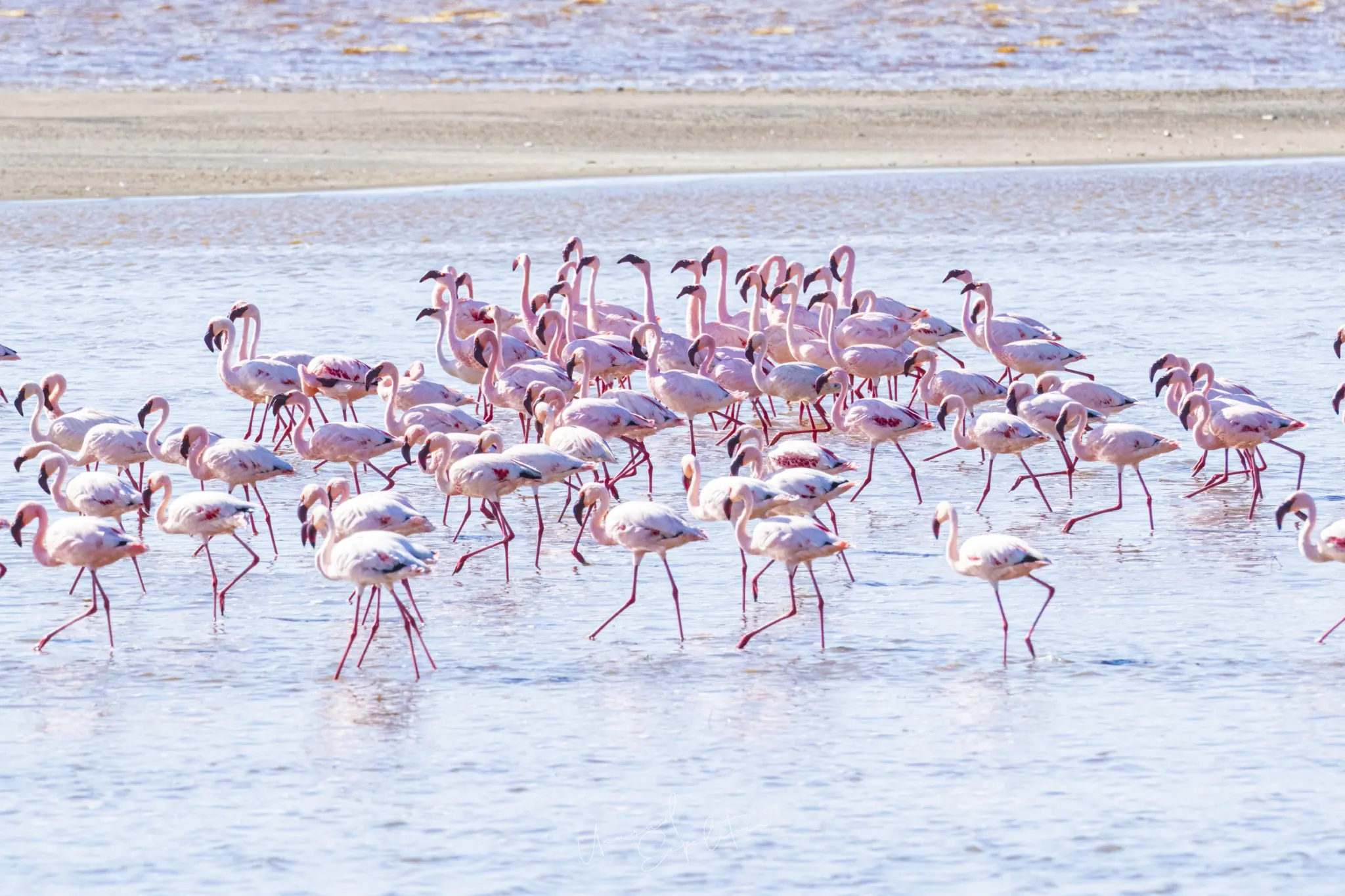
Lake Masek lies close to Lake Ndutu, a long, shallow lake with a low shoreline. Like Lake Ndutu it is saline and changes in size from year to year. Discover Africa names Lake Masek as one of the areas the wildebeest spread into during calving season, so in some weeks the herds are on the plains near Lake Masek rather than near Lake Ndutu. When people search for "Lake Masek Ndutu", it is usually because camps and lodges are described by one lake or the other; for photography, think of both lakes as one area, and let the herds decide which side you spend the day on.
Flamingos at Lake Ndutu and Lake Masek
Flamingos come and go on both lakes. Birding Places lists Lake Ndutu and Lake Masek as places for lesser and greater flamingos, and on our trip we photographed a large flock of lesser flamingos wading in the shallows and smaller groups feeding along a marshy shore. They are not guaranteed: numbers depend on the water level and on conditions at other Rift Valley lakes, and some weeks there are few. When they are there, they are a good subject. Lesser flamingos are the smaller, deeper pink birds that feed in tight groups; greater flamingos are taller and paler. Work from the shore with a 100-400mm, keep the horizon level, and look for a line of birds against a band of pale water, or for the reflections on a still morning.
Lake Ndutu photography at a glance
| Subject | Where | Best light | Lens |
|---|---|---|---|
| Flamingos | Shallows of both lakes, when present | Soft morning light, still water | 100-400mm |
| Giraffes and elephants drinking | Shoreline and woodland edge | Morning and late afternoon | 70-200mm |
| Woodland birds | Acacias around the lakes | Morning | 100-400mm or longer |
| Lake landscapes | Open shore, soda pans | Early morning, sunset | 24-70mm |
Midday light on the pale soda crust is harsh, so the lakes are a morning and late-afternoon subject.
Birds of the Ndutu woodland
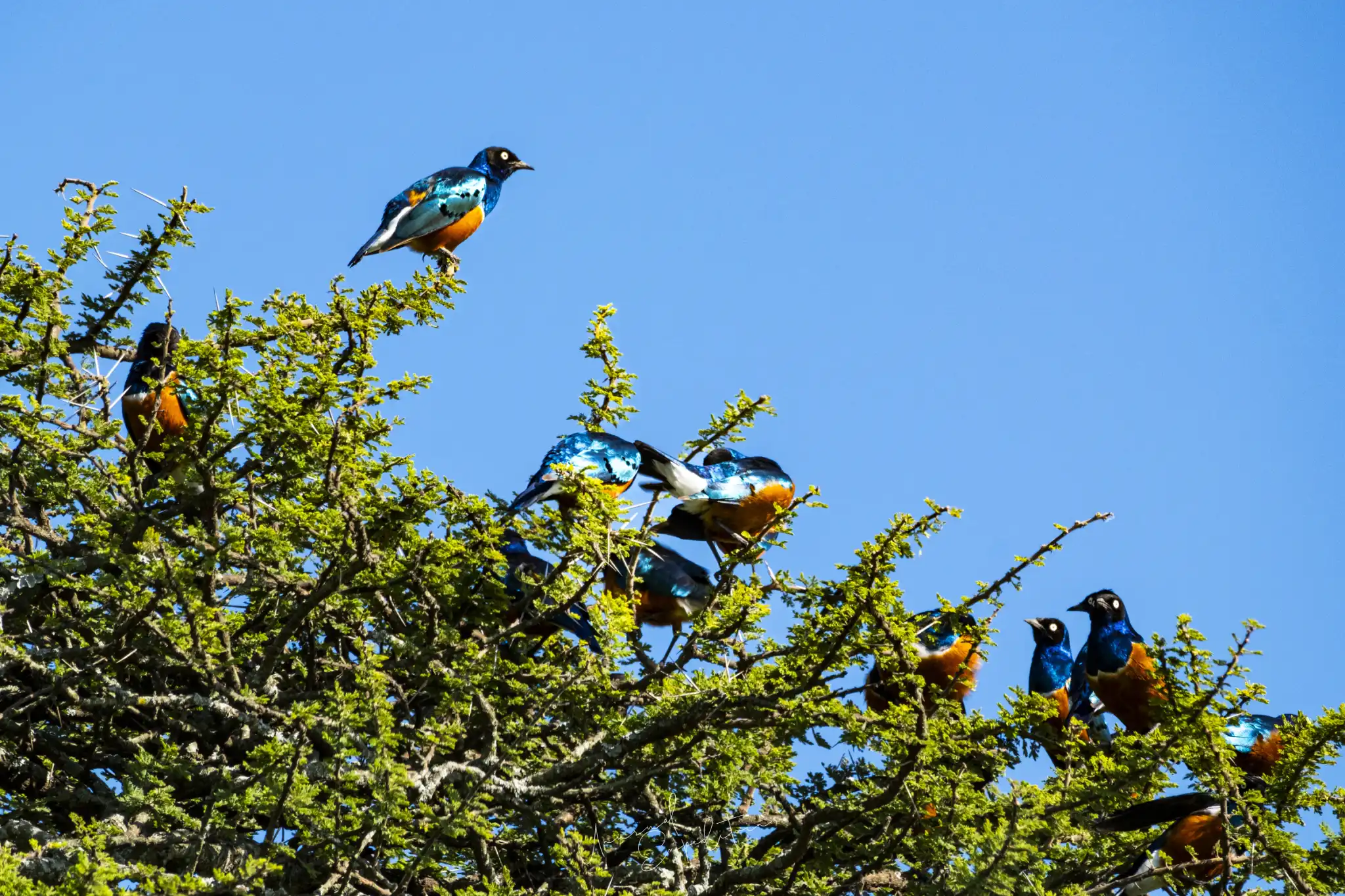
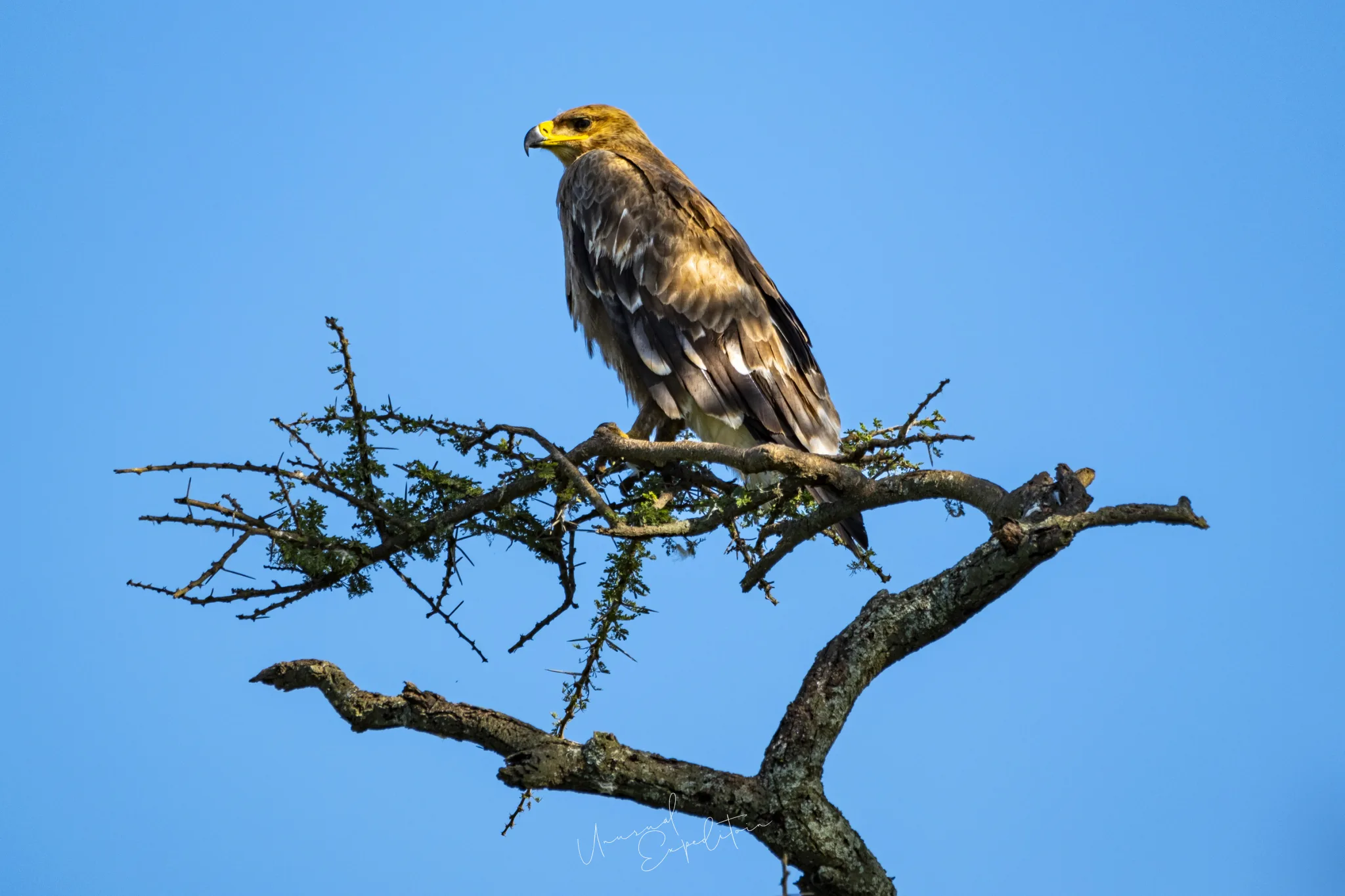
The acacia woodland around Lake Ndutu and Lake Masek is one of the richest bird areas of the southern Serengeti ecosystem. Superb starlings, with their glossy blue backs and orange bellies, gather in noisy groups at the tops of the trees. White-headed buffalo weavers, rollers and go-away-birds sit in the thorn bushes, and eagles and vultures perch on dead branches above the plains, watching the herds. In calving season the birds of prey are busy, because there is food everywhere. A bird lens is worth bringing for these, and the blue sky of a green-season morning makes a clean background for a bird on a bare branch.
Wildlife around the lakes
The woodland round the lakes is where the plains animals come for shade and water. Africa Dream Safaris, in their notes on the Lake Ndutu region, describe giraffes as resident in the area and cats as present all year, with cheetah sightings at their peak in calving season. Elephants move between the woodland and the plains, lions rest under the acacias in the heat of the day, and leopards use the bigger trees. A slow drive along the shore and the woodland edge in the late afternoon often produces as much as a long day on the open plain. The cats are covered in cheetahs of Ndutu, and the open grassland in Ndutu plains photos.
We go down to the lakes when the plains are quiet, and they rarely disappoint. One morning it is flamingos, another it is giraffes walking along the shore, and there is always an eagle sitting on a dead branch waiting for you.
Joseph Mak, tour leader, Unusual Expedition
Visiting the lakes
Both lakes are inside the Ngorongoro Conservation Area, so the conservation area's fees and rules apply, not those of Serengeti National Park. The lakes are easy to include on any calving-season game drive from a camp in the Ndutu area. Tracks near the shore can be soft after rain, and the soda crust can hide wet mud, so leave the route to your guide. For fees, rules and getting there, see the Ndutu safari FAQ.
Photograph the lakes and plains of Ndutu with us
We arrange Ndutu as a private trip on request in calving season, with your own pace and all logistics handled. A private trip can cost less than our group tours, as no tour leader travels, and a photographer or coaching can be added at extra cost. Ask at least two months ahead through our private tours page; scheduled departures in the country are on the Tanzania photography tours page.
Ask us about Lake Ndutu and Lake Masek
Join the Ndutu photography tour
Serengeti Photo Tour – Tanzania 2027 departs 21 Aug 2027 To 01 Sep 2027. Small group, photography first. All Ndutu photography tours.
Explore Ndutu in depth
- Ndutu Photography Tour: Calving Season in Tanzania's Southern PlainsTanzania
- Serengeti in February: Weather, Light and Wildlife in Calving SeasonTanzania
- Ndutu Safari FAQ: Getting There, Fees, Rules and GearTanzania
- Ndutu Plains Photos: What the Calving Grounds Look LikeTanzania
- Cheetahs of Ndutu: Photographing the Southern Serengeti's CheetahsTanzania
- Ndutu Calving Season: When and Where the Wildebeest Give BirthTanzania
- Baby Wildebeest and the Other Newborns of NdutuTanzania
Upcoming Photo Tours
- Egypt Photo Tour – EgyptEgypt 12 Dec 2026 To 20 Dec 2026
- Inner Mongolia Winter Owl Photo Tour – ChinaChina 01 Jan 2027 To 04 Jan 2027
- Inner Mongolia Winter Photo Tour – ChinaChina 05 Jan 2027 To 11 Jan 2027
- Mekong And Central Highland Vietnam Photo Tour - VietnamVietnam 16 Jan 2027 To 24 Jan 2027