
Cheetahs of Ndutu: Photographing the Southern Serengeti's Cheetahs
Cheetah in Serengeti country: why Ndutu, what cheetahs eat, how they live in groups, lenses, settings and ethics.
For a cheetah in Serengeti country, Ndutu in calving season is the place to go. The short-grass plains of the southern Serengeti ecosystem in Tanzania are open enough for a cheetah to see and run, and from late January to March they are full of gazelle fawns and wildebeest calves. Cheetah mothers with cubs, single males and coalitions of brothers hunt here in daylight, which gives photographers stalks, chases, kills and quiet family scenes in good light.
The cats are one of the reasons for a Ndutu trip, as the Ndutu photography tour guide explains; this destination guide is about finding and photographing them.
Cheetah in Serengeti: why Ndutu
A cheetah in the Serengeti needs open ground, prey it can catch and some distance from lions and hyenas, which kill cheetah cubs and steal kills. The southern plains around Ndutu give all three in calving season. Africa Dream Safaris, in their notes on the Lake Ndutu region, write that cheetah sightings peak during the calving season. The low bushes and the scattered acacias at the woodland edge give mothers somewhere to hide cubs, and the termite mounds and fallen trees give the cats a lookout over the grass. In our experience you can see several different cheetahs in a few days at Ndutu, more than anywhere else we work in East Africa.
Serengeti cheetah: when they hunt
The Serengeti cheetah hunts by day, mostly in the morning and late afternoon, to avoid the lions and hyenas that are more active at night. That suits photography. A typical hunt starts with a cheetah sitting up on a mound and scanning; then a slow, low walk towards a herd; then a stalk, freezing whenever a head comes up; and finally a sprint that is over in seconds. Most chases fail. When one succeeds, the cheetah holds the prey by the throat, then rests, panting, before eating. Be ready long before the sprint: once the cheetah starts its stalk, the guide positions the vehicle so the animal is not blocked and the light is behind you, and then you wait.
What do cheetahs eat in the Serengeti?
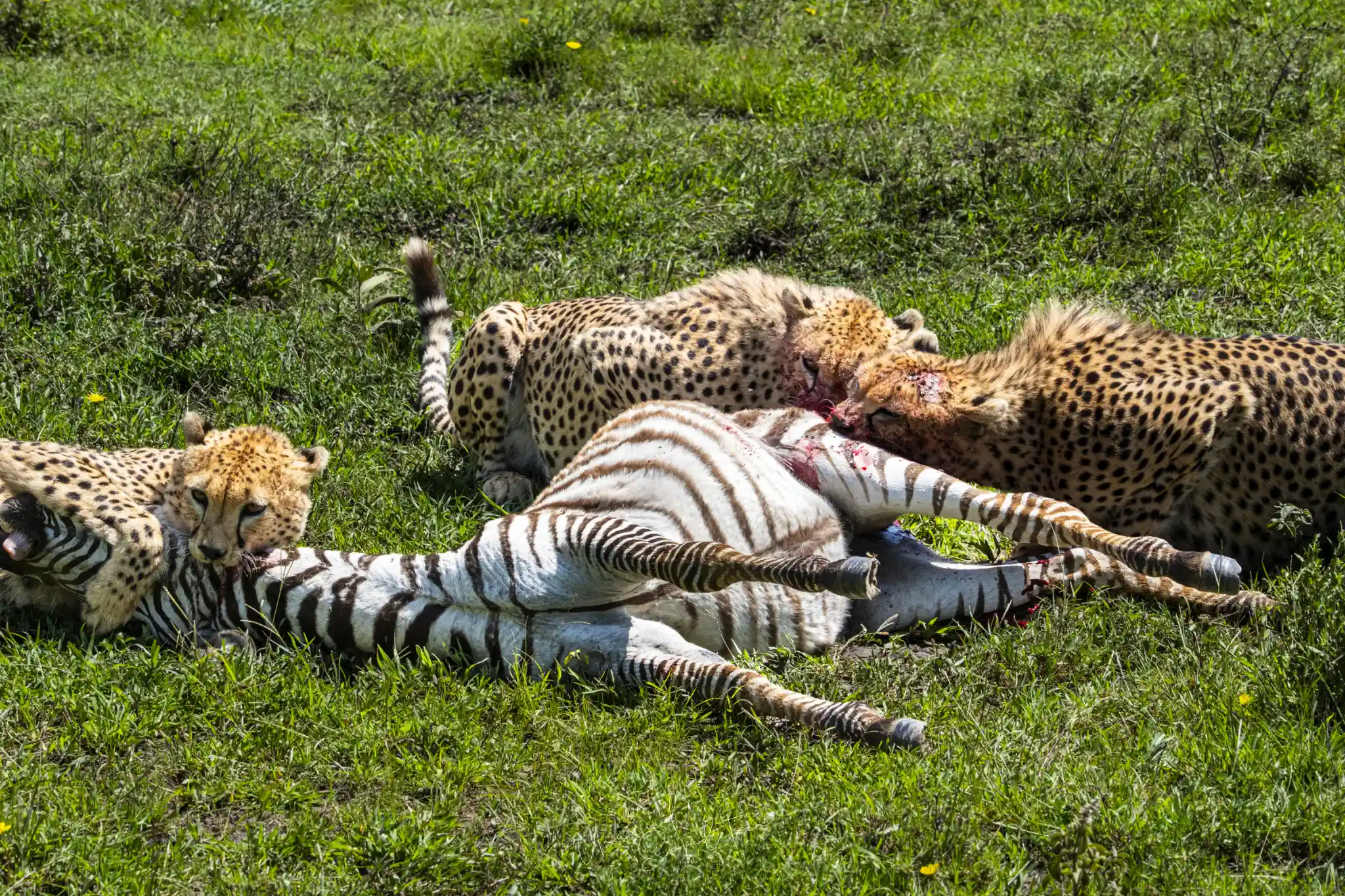
What do cheetahs eat in the Serengeti? Mostly Thomson's gazelles. Research by the Serengeti Cheetah Project, which has followed the park's cheetahs for decades, found that many cheetahs follow the movements of the gazelle herds, their main prey. Cheetahs also take Grant's gazelles, impala, hares and the young of larger animals: wildebeest calves in calving season, and sometimes zebra. On our trip a cheetah family brought down a young zebra on the open plain, and the mother and her grown cubs fed on it for a long time while the light changed around them. That kind of scene is common in calving season, when prey is plentiful and young cheetahs are learning to hunt.
How do the Serengeti cheetahs act as a group?
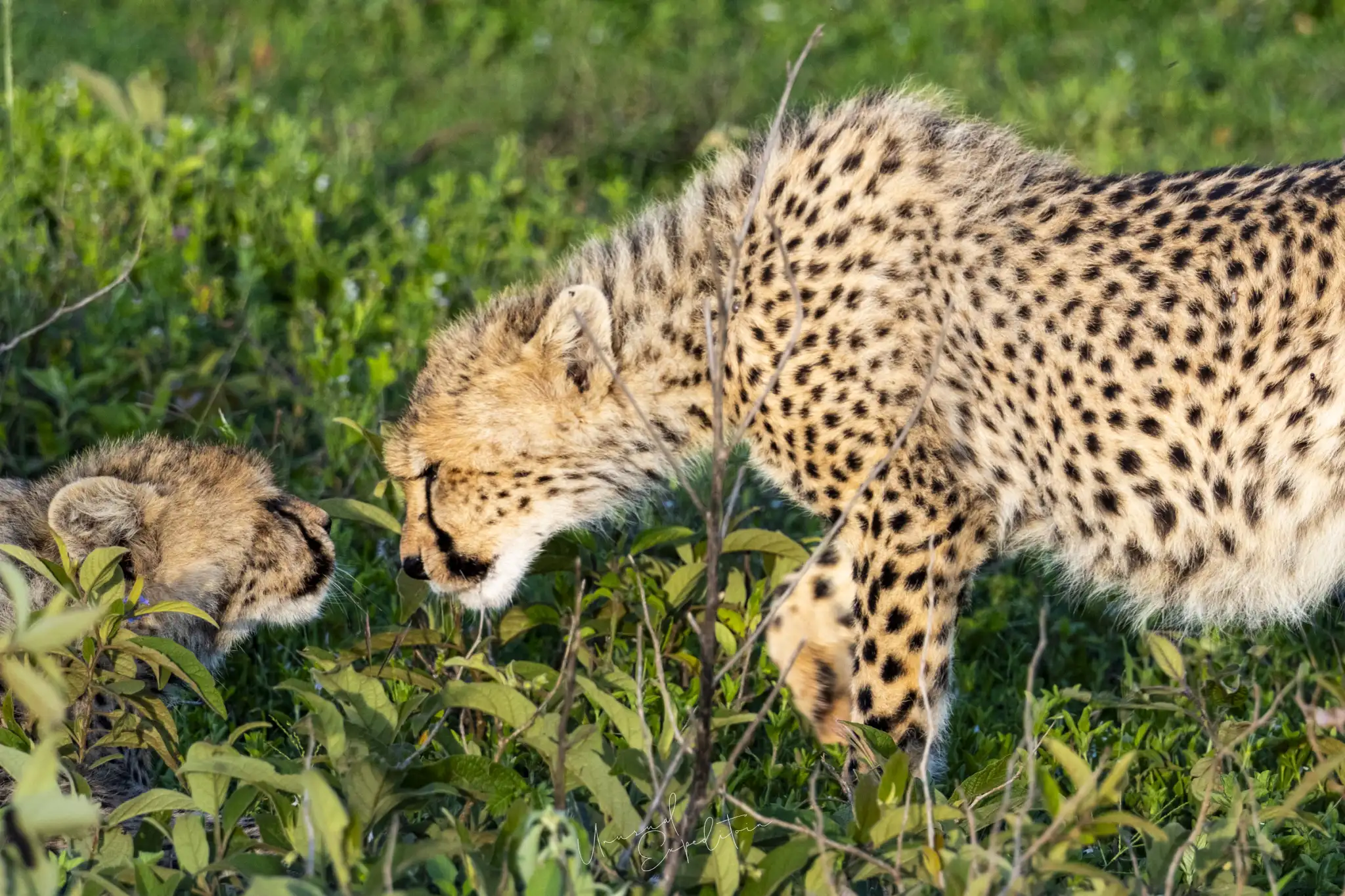
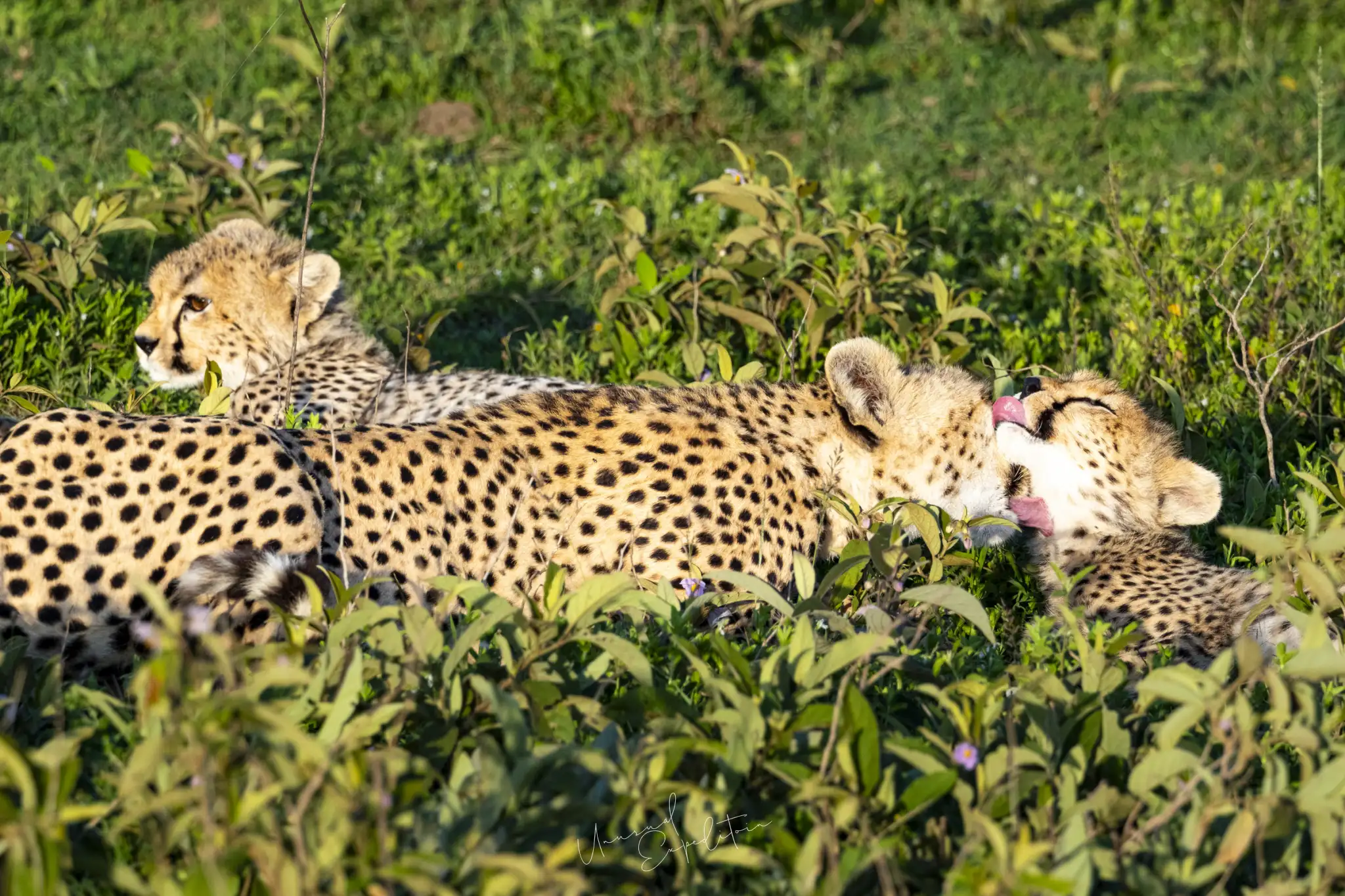
How do the Serengeti cheetahs act as a group? It depends on who they are. Adult females live alone unless they are raising cubs, and a mother keeps her cubs with her for well over a year, teaching them to hunt. Males are either solitary or live in coalitions, usually brothers, who hunt and hold territory together. A 2018 study by Serengeti Cheetah Project researchers in Behavioral Ecology and Sociobiology found that mothers with cubs stay watchful while feeding, looking up often to guard against lions and hyenas, while cheetahs without cubs eat fast to avoid losing the kill. Both are worth watching: a mother lifting her head over the carcass is a frame, and so is a coalition of brothers resting together on a mound.
Cheetah in Tanzania: Ndutu compared
| Area | Cheetah viewing | Best season | Terrain |
|---|---|---|---|
| Ndutu and the southern plains | Excellent in calving season | Late January to March | Short grass, low bush, woodland edge |
| Central Serengeti (Seronera) | Good all year | Any time | Plains, kopjes, river trees |
| Northern Serengeti | Fair | Dry season | Longer grass, rolling hills |
| Ngorongoro Crater | Occasional | Any time | Crater floor grassland |
For a cheetah-focused trip in Tanzania, the calving season at Ndutu is the strongest choice.
Lenses and settings for cheetahs
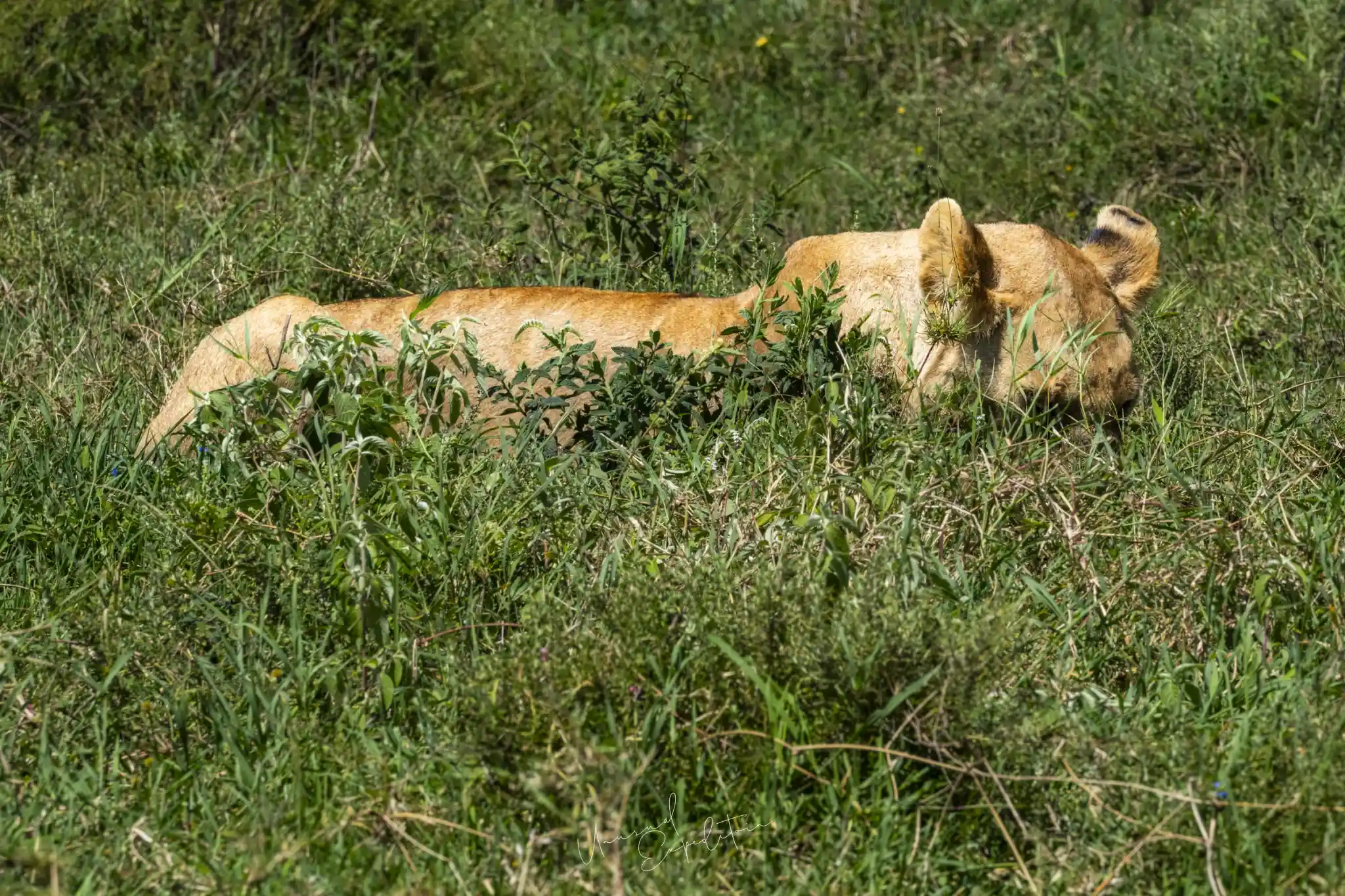
A 100-400mm or a 150-600mm zoom covers most cheetah situations, from a family resting in the bush to a cat on a mound. Keep a 70-200mm or 24-70mm on a second body: cheetahs sometimes walk right past the vehicle, and a wide frame of a cheetah in the plain tells more than a tight portrait. For the sprint, use continuous autofocus, a wide tracking area and 1/2000s or faster; for resting cats, slow down and wait for the head to lift and the eyes to catch the light. A bean bag on the window is better than a tripod in a vehicle. The best light falls in the early morning, when the cheetahs are also most active; in the middle of the day they tend to lie flat under a bush. Other cats at Ndutu are photographed the same way: lions resting near the herds, and in the woodland around the lakes, occasionally a leopard.
Ethics around cheetahs
Cheetahs are more sensitive to vehicles than lions, and a hunt is easily spoilt. The rules published by the Ngorongoro Conservation Area Authority allow no more than five vehicles around an animal or a kill, and a good guide stays well back, never drives between a cheetah and its prey and leaves when a mother moves her cubs away. Keep noise down and do not stand up through the roof hatch when a cheetah is stalking: a silhouette above the vehicle can alert the prey. These cats lose many hunts already; your presence should not add to them.
A cheetah hunt is mostly waiting. You sit for a long time watching a cat look at gazelles, and then everything happens in a few seconds. The people who get the picture are the ones who kept their camera up the whole time.
Joseph Mak, tour leader, Unusual Expedition
Where the cheetahs fit in a Ndutu trip
Cheetahs are one thread of a calving-season trip, alongside the herds and their calves and the soda lakes. Read the Ndutu calving season destination guide for timing, and baby wildebeest and the other newborns of Ndutu for the young animals the cheetahs hunt. If you are comparing seasons, the Serengeti destination guides cover cheetahs in the central and northern park.
Photograph the cheetahs of Ndutu with us
We run Ndutu as a private trip on request in calving season, at your pace and with all logistics handled; a photographer or photography coaching can be added at extra cost. Ask at least two months ahead. See private tours, or the Tanzania photography tours page for our scheduled trips.
Ask us about the cheetahs of Ndutu
Join the Ndutu photography tour
Serengeti Photo Tour – Tanzania 2027 departs 21 Aug 2027 To 01 Sep 2027. Small group, photography first. All Ndutu photography tours.
Explore Ndutu in depth
- Ndutu Photography Tour: Calving Season in Tanzania's Southern PlainsTanzania
- Serengeti in February: Weather, Light and Wildlife in Calving SeasonTanzania
- Ndutu Safari FAQ: Getting There, Fees, Rules and GearTanzania
- Ndutu Plains Photos: What the Calving Grounds Look LikeTanzania
- Ndutu Calving Season: When and Where the Wildebeest Give BirthTanzania
- Lake Ndutu and Lake Masek: Soda Lakes, Flamingos and WoodlandTanzania
- Baby Wildebeest and the Other Newborns of NdutuTanzania
Upcoming Photo Tours
- Egypt Photo Tour – EgyptEgypt 12 Dec 2026 To 20 Dec 2026
- Inner Mongolia Winter Owl Photo Tour – ChinaChina 01 Jan 2027 To 04 Jan 2027
- Inner Mongolia Winter Photo Tour – ChinaChina 05 Jan 2027 To 11 Jan 2027
- Mekong And Central Highland Vietnam Photo Tour - VietnamVietnam 16 Jan 2027 To 24 Jan 2027