
Lalibela Weather and the Best Time to Visit Lalibela
Lalibela weather and the best time to visit: dry season light, Genna and Timket in January, Easter and Meskel, month by month.
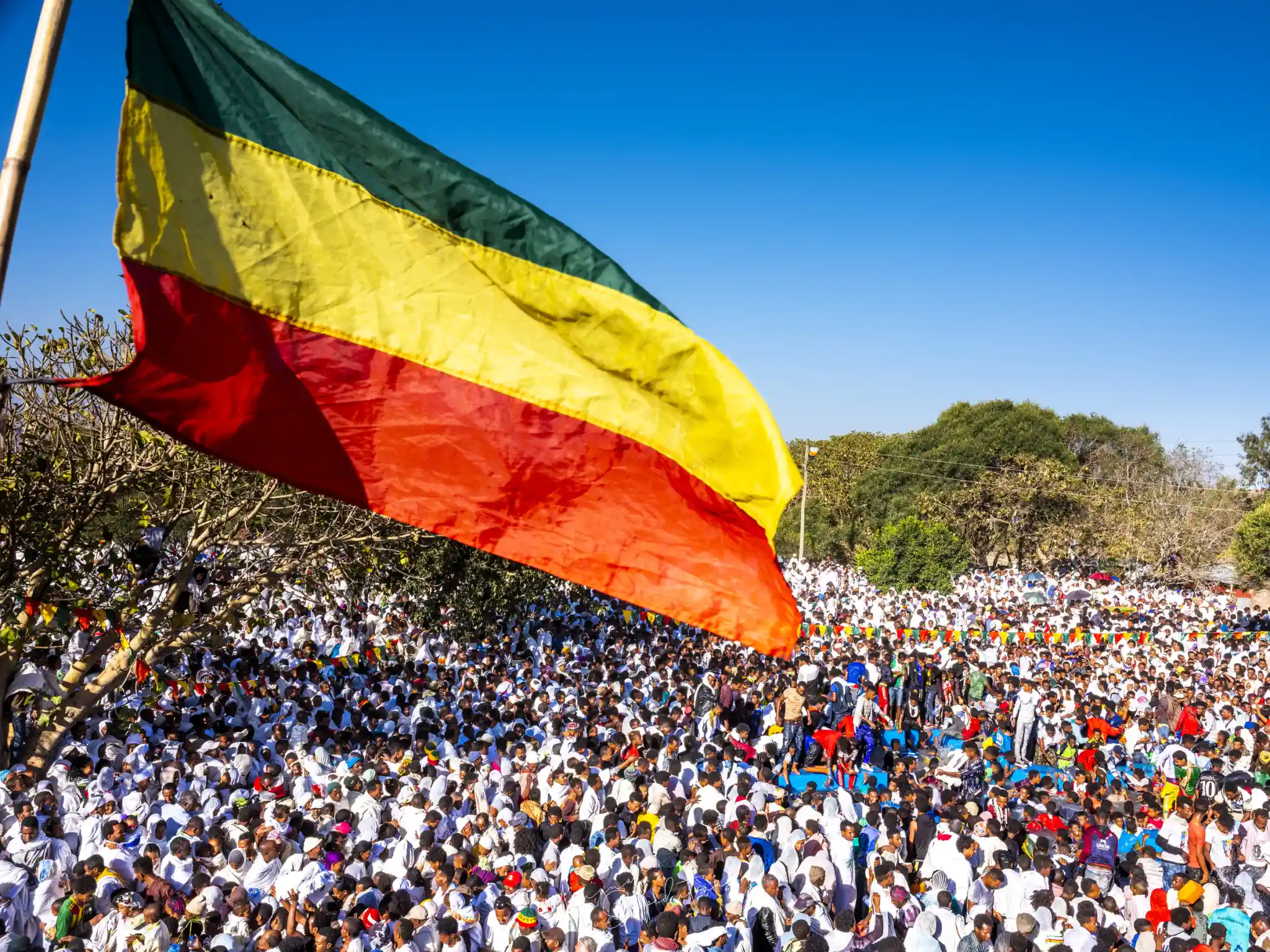
Lalibela weather is at its best for photography in the dry months, roughly October to February, which makes that the best time to visit Lalibela, and the single best week is Timket in January, when the town celebrates Epiphany around its rock-hewn churches. October and November bring green hills after the rains, clear skies and few visitors; early January brings Genna, the Ethiopian Christmas, and the largest pilgrim crowds of the year. From June to September the main rains make the mountains wet and grey.
Lalibela's seasons and feasts set the rhythm of every trip in our Lalibela photography tour guide. The months are set side by side below.
Lalibela weather through the year
Lalibela weather follows the pattern of the Ethiopian highlands, which the Ethiopia Meteorology Institute divides into three seasons: Bega, the dry season, from about October to January; Belg, the small rains, from about February to May; and Kiremt, the main rainy season, from June to September. Lalibela sits high in the Lasta mountains, so it is cooler than most visitors expect, with warm, bright days in the dry season and cold nights and early mornings; a fleece and a warm layer for the dawn hours are worth packing in any month. The dry season light is clear and hard by midday, softer at either end of the day, and dust can haze the long views by the end of the dry months. The small rains are often short afternoon showers; the main rains are heavy and bring low cloud over the escarpment.
Best time to visit Lalibela, month by month
| Months | Season | Feasts | For photography |
|---|---|---|---|
| October, November | Early dry season | Few major feasts | Green hills, clear air, quiet churches |
| December | Dry | Advent fast | Clear, dry light, crowds start to build late in the month |
| January | Dry | Genna on 7 January, Timket on 19 January | The busiest and most rewarding month for people and processions |
| February, March | Dry, turning to small rains | Lent begins | Quieter, browner hills, good for the churches |
| April, May | Small rains | Fasika, the Ethiopian Easter | Easter crowds, warmer, occasional showers |
| June to September | Main rains | Meskel in late September | Wet and cloudy; green at the end of the season |
If you can only go once, go for Timket; if you can go twice, add a quiet week in November for the churches alone.
Lalibela in January: Genna and Timket
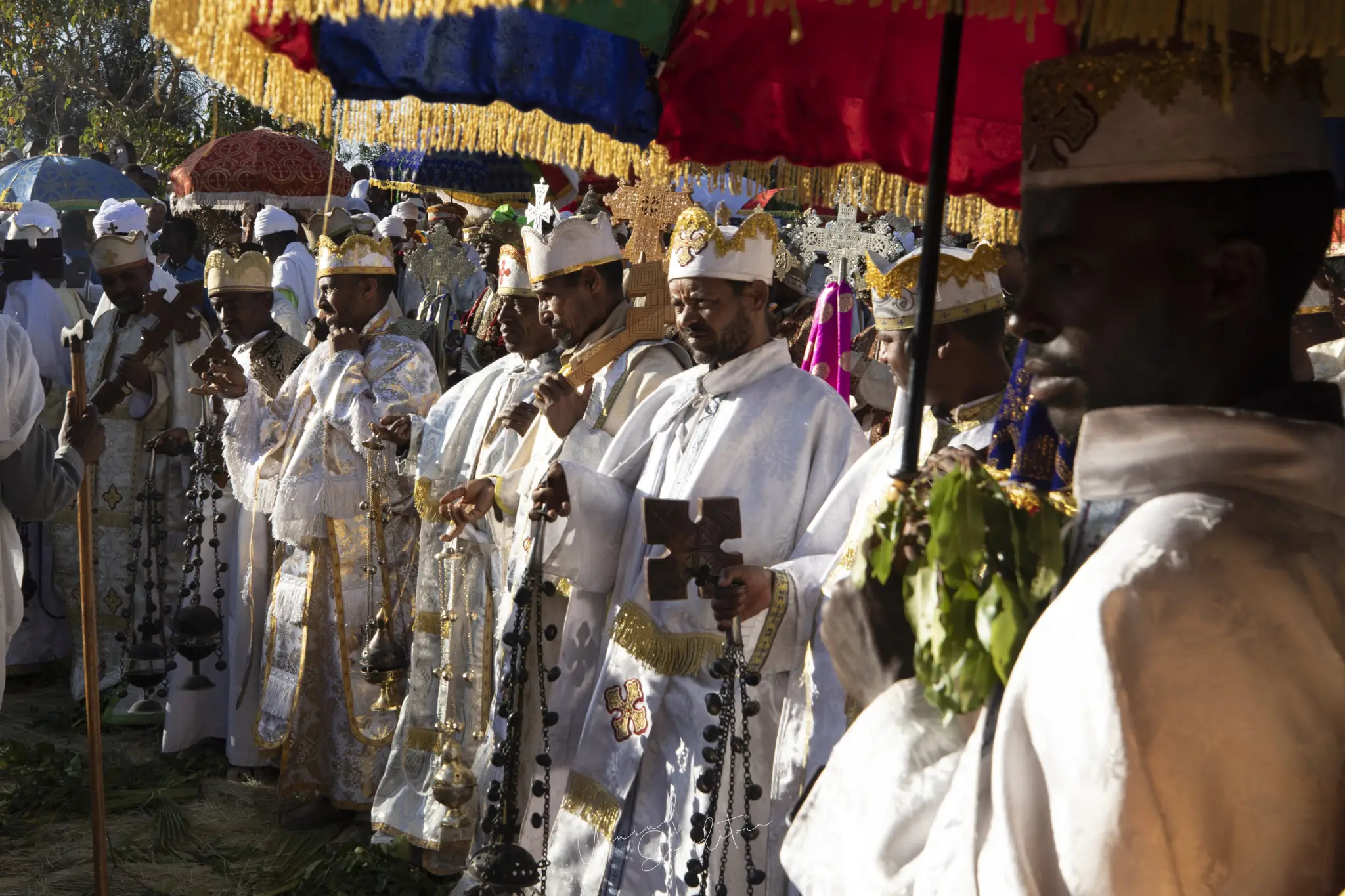
January is when Lalibela is most itself. Genna, the Ethiopian Christmas on 7 January, draws pilgrims from all over the country; the Ethiopian News Agency and international reporters describe the town filling with people in white who keep vigil among the churches through the night before the feast. Timket follows on 19 January, the date fixed by the Ethiopian calendar at 11 Tir, with its eve, Ketera, on the 18th; the Ethiopian News Agency notes that the feast moves to 20 January once every four years. Between the two there is a short lull. For photographers this is the month of processions, umbrellas, clergy in full vestments and crowds of worshippers, and it is also the month when rooms, flights and guides are hardest to find, so we plan January trips well ahead. The Timkat festival in Ethiopia page explains the feast day by day.
Ethiopian Orthodox holidays 2027 in Lalibela
The Ethiopian Orthodox holidays that matter most for a Lalibela trip in 2027 are Genna on 7 January and Timket on 19 January, with Ketera on the evening of 18 January. Fasika, the Ethiopian Easter, follows the Orthodox calculation and moves each year, so check the date with the church calendar before you plan around it; it comes at the end of the long Lenten fast, and the night service before it is one of the most moving of the year. Meskel, the finding of the True Cross, which UNESCO added to its intangible heritage list in 2013, falls in late September, at the end of the rains, and is marked with large bonfires. Each of these feasts changes the town: the churches are fuller, the services longer, and the streets busier.
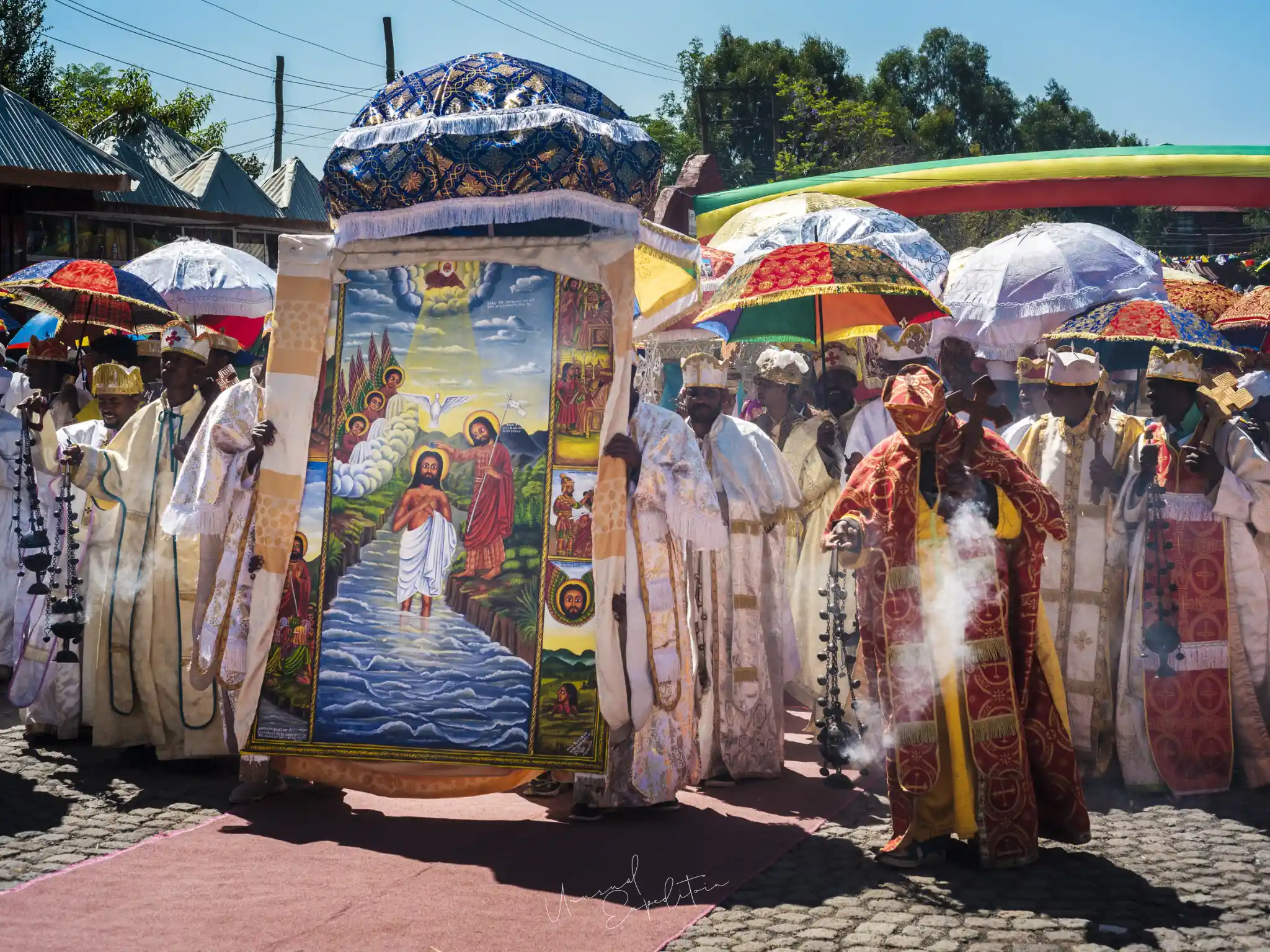
If you come to Lalibela outside the feasts, you get the churches almost to yourself and the priests have time for you. If you come for Timket, you get the whole town. Both are worth the trip, for different pictures.
Joseph Mak, tour leader, Unusual Expedition
Is October a good time to visit Lalibela?
October is one of the best months to visit Lalibela for landscape and church photography. The main rains have just ended, the terraces and hillsides below the town are still green, the air is washed clean and the views across the Lasta mountains are long and sharp. Visitor numbers are low before the January feasts, so the churches are calm, and the priests are often happy to sit for portraits. The weather can still be changeable early in the month, with the odd shower, and nights are cool. For the escarpment sunset above the valley, October and November give some of the clearest evenings of the year.
Light through the day in Lalibela
Whatever the month, light in Lalibela follows the same daily rhythm. Early morning is soft, cool and quiet, and the trenches around the churches are in shade while the roofs catch the first sun. By late morning the sun is high and harsh in the dry season, and the best place to be is inside a church, where it becomes a single shaft through a window. Late afternoon brings warm, raking light on the carved rock and on the escarpment, and the hour around sunset is the time for Bete Giyorgis and the views. The Church of St George page goes into that light in detail.
Travel advice and timing
Timing a Lalibela trip also means watching the travel advice. As at November 2026 the UK FCDO advises against all travel to the Amhara region, which includes Lalibela, and warns that flights across northern Ethiopia can be suspended at short notice. We plan Lalibela only when that advice allows and keep our plans flexible around it; the Lalibela photography FAQ explains more.
Plan the right month with us
We run Lalibela as a private trip on request, timed for Timket, Genna or a quiet week among the churches, when travel advice allows. Ask at least two months ahead, and earlier for January. Any scheduled departure appears on our Ethiopia photography tours page.
Ask us about the best month for Lalibela
Lalibela photography tours
The next Lalibela departure is announced on the Lalibela photography tours page, with previous expeditions and all the planning guides.
Explore Lalibela in depth
- Lalibela Photography Tour Guide: Rock-Hewn Churches and TimketEthiopia
- Timket Photos: Where to Stand and How to Shoot the FeastEthiopia
- Timkat Festival in Ethiopia: Ketera, the Water and the TabotsEthiopia
- Lalibela Photography FAQ: Airport, Tickets, Dress and SafetyEthiopia
- Lalibela Church Photos: Inside the Rock-Hewn ChurchesEthiopia
- Ethiopian Orthodox Priests in Lalibela: Vestments, Crosses, PortraitsEthiopia
- Church of St George, Lalibela: Photographing Bete GiyorgisEthiopia
Upcoming Photo Tours
- Egypt Photo Tour – EgyptEgypt 12 Dec 2026 To 20 Dec 2026
- Inner Mongolia Winter Owl Photo Tour – ChinaChina 01 Jan 2027 To 04 Jan 2027
- Inner Mongolia Winter Photo Tour – ChinaChina 05 Jan 2027 To 11 Jan 2027
- Mekong And Central Highland Vietnam Photo Tour - VietnamVietnam 16 Jan 2027 To 24 Jan 2027