
Lalibela Photography Tour Guide: Rock-Hewn Churches and Timket
Lalibela tour for photographers: the rock-hewn churches, Bete Giyorgis, priests and pilgrims, Timket in January, light and lenses.
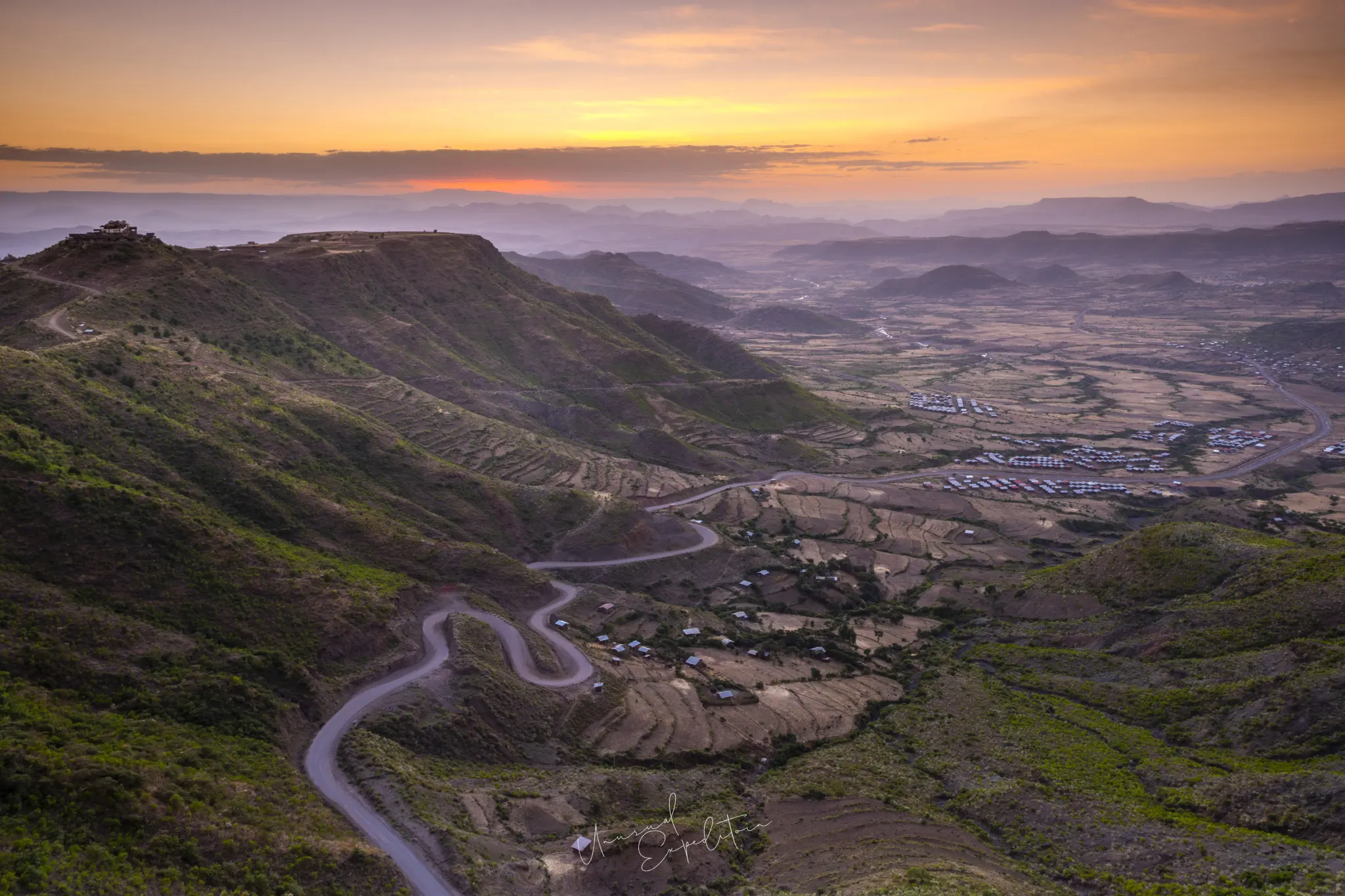
A Lalibela tour takes you to what the town is known for: eleven medieval churches cut down into the living rock of the Lasta mountains in northern Ethiopia, and the priests, pilgrims and festivals that still fill them. For a photographer that means three things: the rock-hewn churches themselves, the clergy and worshippers in white who use them every day, and the great feasts, above all Timket in January, when the whole town walks its tabots to the water under a canopy of embroidered umbrellas.
Lalibela is one area of our Ethiopia photography tour guide, which covers entry, money, safety advice and flights from Singapore once for the whole country. The photographs in this guide are our own, taken on our trips here; we hold the rights to them, and the notes come from knowing the place first hand.
What is Lalibela known for?
Lalibela is known above all for its rock-hewn churches. UNESCO, which inscribed them as a World Heritage Site in 1978, describes eleven monolithic churches carved out of the rock and attributes them to King Lalibela, who set out to build a "New Jerusalem" in the 12th century after Muslim conquests halted Christian pilgrimage to the Holy Land. The churches were not built up from blocks; each one was freed from the hillside by cutting trenches around it and then hollowed out, with doors, windows, columns and roofs chiselled from a single mass of stone. A channel known as the Jordan divides the two main groups, and the eleventh church, Bete Giyorgis, the Church of St George, stands apart from the others, joined to them by trenches. Lalibela is still a working holy town of the Ethiopian Orthodox Tewahedo Church, so the churches are full of people at prayer, which is what makes them so rewarding to photograph.
Where is Lalibela located?
Lalibela is located in the Amhara region of northern Ethiopia, in the Lasta highlands of North Wollo, on a shoulder of mountain above deep valleys. UNESCO places it some 645 km from Addis Ababa. The town spreads over the slopes around the church precinct, among round stone houses that UNESCO calls Lasta tukuls. The setting matters for photography: the high ground gives long views over folded ridges to the west, and the clear, dry air of the season after the rains makes for sharp sunsets. The Lalibela photography FAQ answers the practical questions on getting there, the airport and what to wear.
What you photograph in Lalibela
Lalibela gives you five kinds of picture, each with its own light and lens.
| Subject | Where | Light | Lens |
|---|---|---|---|
| Church exteriors | From the rim of the trenches, Bete Giyorgis above all | Low sun early and late, when the carved edges throw shadow | 16-35mm |
| Church interiors | Inside the churches, by the windows and doors | Shafts of daylight, very dim elsewhere | 24-70mm at a wide aperture, high ISO |
| Priests and pilgrims | Doorways, courtyards, the trenches | Open shade in the trenches | 24-70mm, 85mm for portraits |
| Timket processions | Streets and the Timket ground | Bright, high sun on white cloth | 24-70mm and 70-200mm |
| Mountain views | The escarpment edge above town | Sunset and blue hour | 24-70mm |
A standard zoom does most of the work; the longer lens earns its place on festival days, photographing from a bank above the crowd.
The rock-hewn churches of Lalibela
The rock-hewn churches of Lalibela fall into two main groups linked by trenches, tunnels and ceremonial passages, some of which open onto hermit caves. UNESCO lists Bete Medhane Alem, which it believes to be the largest monolithic church in the world, Bete Maryam, Bete Golgotha and others in the northern group, and Bete Amanuel, Bete Abba Libanos and Bete Gabriel Rafael in the southern group. Several interiors keep mural paintings. UNESCO also records that the drainage channels were filled with earth for centuries and that water damage has left several churches in a fragile state, which is why some now sit under modern shelters that change how they look from above. Our Lalibela church photos page shows what the interiors look like and how to photograph in that dim light, and the Church of St George page is about Bete Giyorgis alone.
Timket in Lalibela
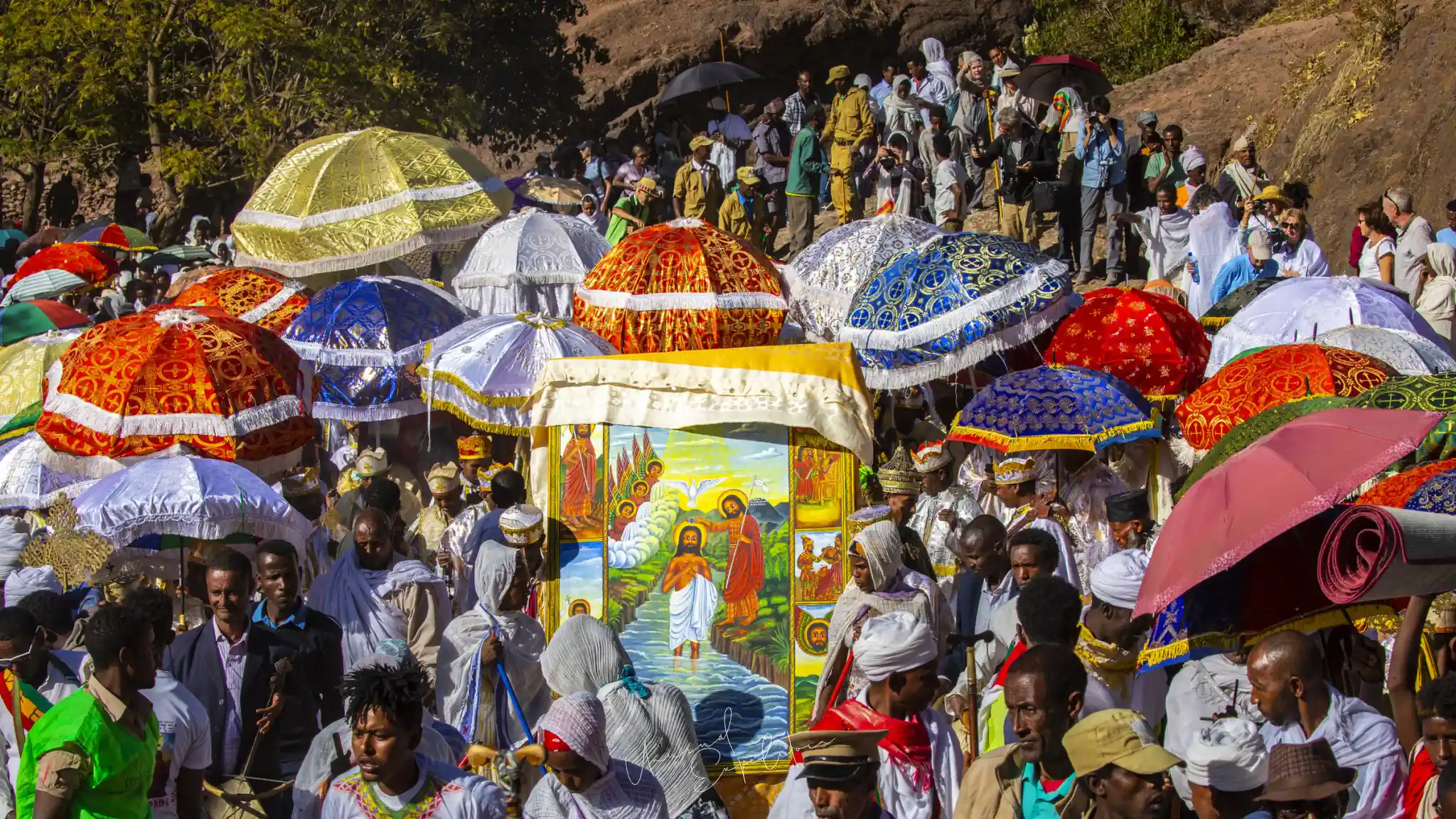
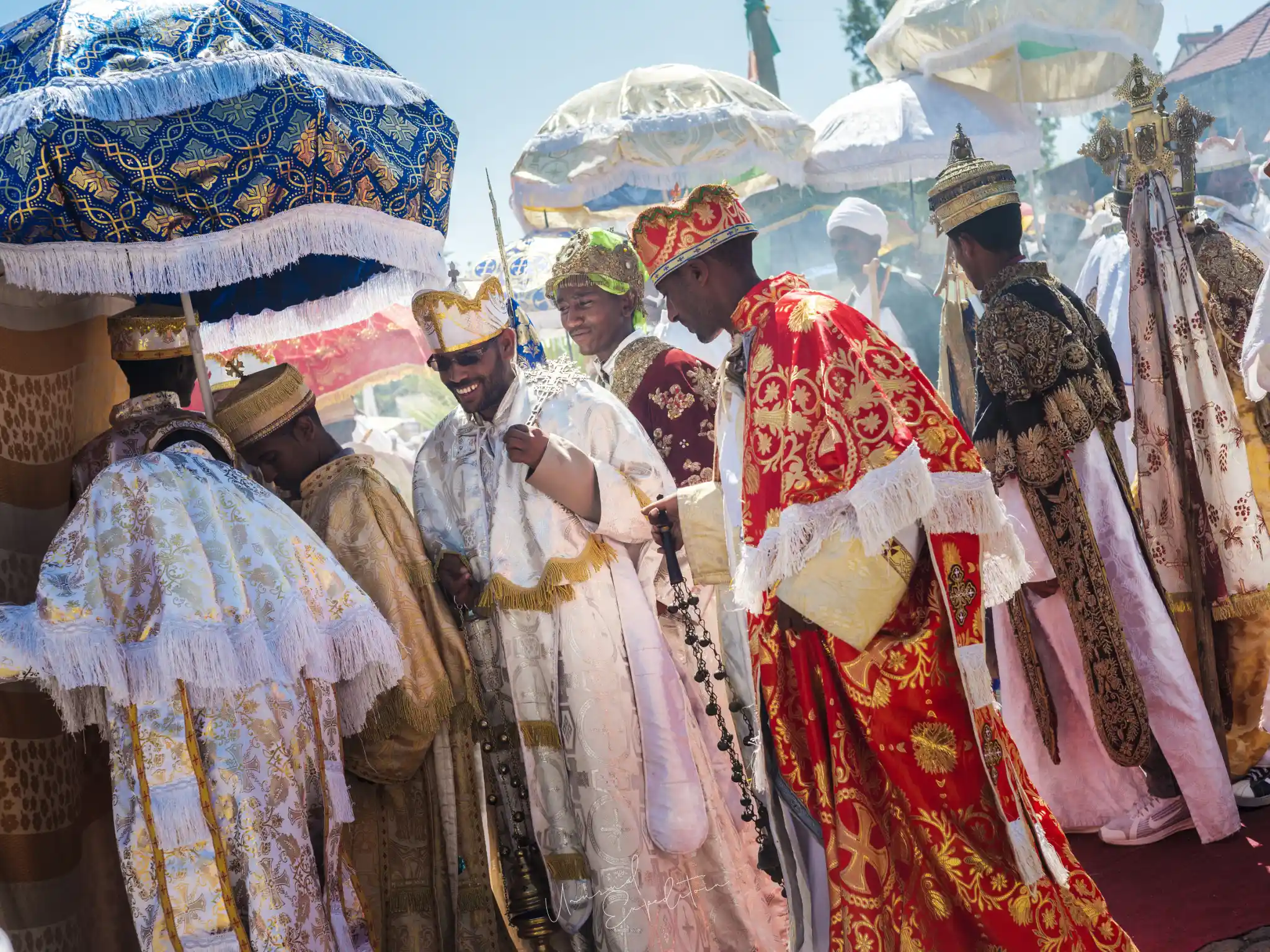
Timket, the Ethiopian Epiphany, is the reason many photographers come to Lalibela. UNESCO, which added it to its list of the Intangible Cultural Heritage of Humanity in 2019, describes the eve, known as Ketera, when each church's tabot, a replica of the Ark of the Covenant, is carried to a pool or river, and the main day, 19 January, when the water is blessed and sprinkled over the crowd before the tabots return to their churches in procession. In Lalibela the procession is a river of white netela shawls, gold vestments and velvet umbrellas moving between the churches and the Timket ground, and on the main day thousands press around the pool for the blessed water. The Timkat festival in Ethiopia page explains what happens on each day and how Lalibela differs from Gondar, and Timket photos is about where to stand and how to work in the crowd.
In Lalibela I tell people to slow down. Sit in a church long enough and a priest will come to the window to read, and the light does the rest. At Timket it is the opposite: find a high bank early and let the whole town come to you.
Joseph Mak, tour leader, Unusual Expedition
Photographing priests and pilgrims with respect
Photographing people in Lalibela works because the town is used to cameras, but the churches are places of worship first. We take our shoes off at every church door, keep quiet during services, never use flash inside, and ask before a close portrait of a priest; many are happy to be photographed, some will hold up a cross for you, and a few will say no, which is their right. Women and men often stand in separate parts of a church, and visitors should follow the same custom. During Timket the clergy carry the tabots wrapped in cloth on their heads; the tabot itself is never shown, and we do not push in front of it or block the way for a picture. Singapore's Ministry of Foreign Affairs describes Ethiopia as a conservative society and asks visitors to dress and behave modestly, which in Lalibela means covered shoulders and knees. Our Ethiopian Orthodox priests page goes further into vestments, crosses and how to photograph the clergy.
Best time to visit Lalibela
The best time to visit Lalibela for photography is the dry months from October to about February, after the main rains, when the hills are still green early on and the skies are clear. The Ethiopia Meteorological Institute describes the main rainy season, Kiremt, as June to September. The calendar of feasts matters as much as the weather: Genna, the Ethiopian Christmas on 7 January, and Timket on 19 January bring the largest crowds of pilgrims, while an ordinary week in November or February is quieter and better for the churches themselves. The best time to visit Lalibela page sets the months side by side.
Is it safe to visit Lalibela now?
As at November 2026 the UK Foreign, Commonwealth and Development Office advises against all travel to the Amhara region, which includes Lalibela, because of conflict between the security forces and armed groups since 2023; Singapore's Ministry of Foreign Affairs asks travellers to Ethiopia to stay alert to unrest that can escalate quickly. We plan Lalibela only when that advice allows, and we check it again before every trip. If you want to see Timket while the north is closed to visitors, it is celebrated across Ethiopia, and our Ethiopia photography tour guide covers the regions that are open.
Explore Lalibela in depth
- Timkat festival in Ethiopia: Ketera, the blessing of the water and the procession, in Lalibela and Gondar.
- Timket photos: where to stand, lenses and working in the crowd.
- Lalibela church photos: inside the rock-hewn churches.
- Church of St George, Lalibela: Bete Giyorgis from the rim and the trench.
- Ethiopian Orthodox priests: vestments, crosses and portraits.
- Best time to visit Lalibela: weather, feasts and crowds by month.
- Lalibela photography FAQ: location, airport, fees, dress and safety.
Photograph Lalibela with us
We have no scheduled departure to Lalibela at the moment. We run it as a private trip on request, for individuals, couples, families and photographers who want to go at their own pace, timed for Timket or for a quiet week among the churches when travel advice allows. We arrange all the logistics to your needs, a photographer or photography coaching can be added at extra cost, and it helps to ask at least two months ahead. Our Ethiopia photography tours page lists any departure we announce.
Lalibela photography tours
The next Lalibela departure is announced on the Lalibela photography tours page, with previous expeditions and all the planning guides.
Explore Lalibela in depth
- Timket Photos: Where to Stand and How to Shoot the FeastEthiopia
- Timkat Festival in Ethiopia: Ketera, the Water and the TabotsEthiopia
- Lalibela Photography FAQ: Airport, Tickets, Dress and SafetyEthiopia
- Lalibela Church Photos: Inside the Rock-Hewn ChurchesEthiopia
- Ethiopian Orthodox Priests in Lalibela: Vestments, Crosses, PortraitsEthiopia
- Church of St George, Lalibela: Photographing Bete GiyorgisEthiopia
- Lalibela Weather and the Best Time to Visit LalibelaEthiopia
Upcoming Photo Tours
- Egypt Photo Tour – EgyptEgypt 12 Dec 2026 To 20 Dec 2026
- Inner Mongolia Winter Owl Photo Tour – ChinaChina 01 Jan 2027 To 04 Jan 2027
- Inner Mongolia Winter Photo Tour – ChinaChina 05 Jan 2027 To 11 Jan 2027
- Mekong And Central Highland Vietnam Photo Tour - VietnamVietnam 16 Jan 2027 To 24 Jan 2027