
Ethiopian Orthodox Priests in Lalibela: Vestments, Crosses, Portraits
Ethiopian Orthodox priest clothing, crosses, deacons and debteras in Lalibela, and how to photograph the clergy with respect.
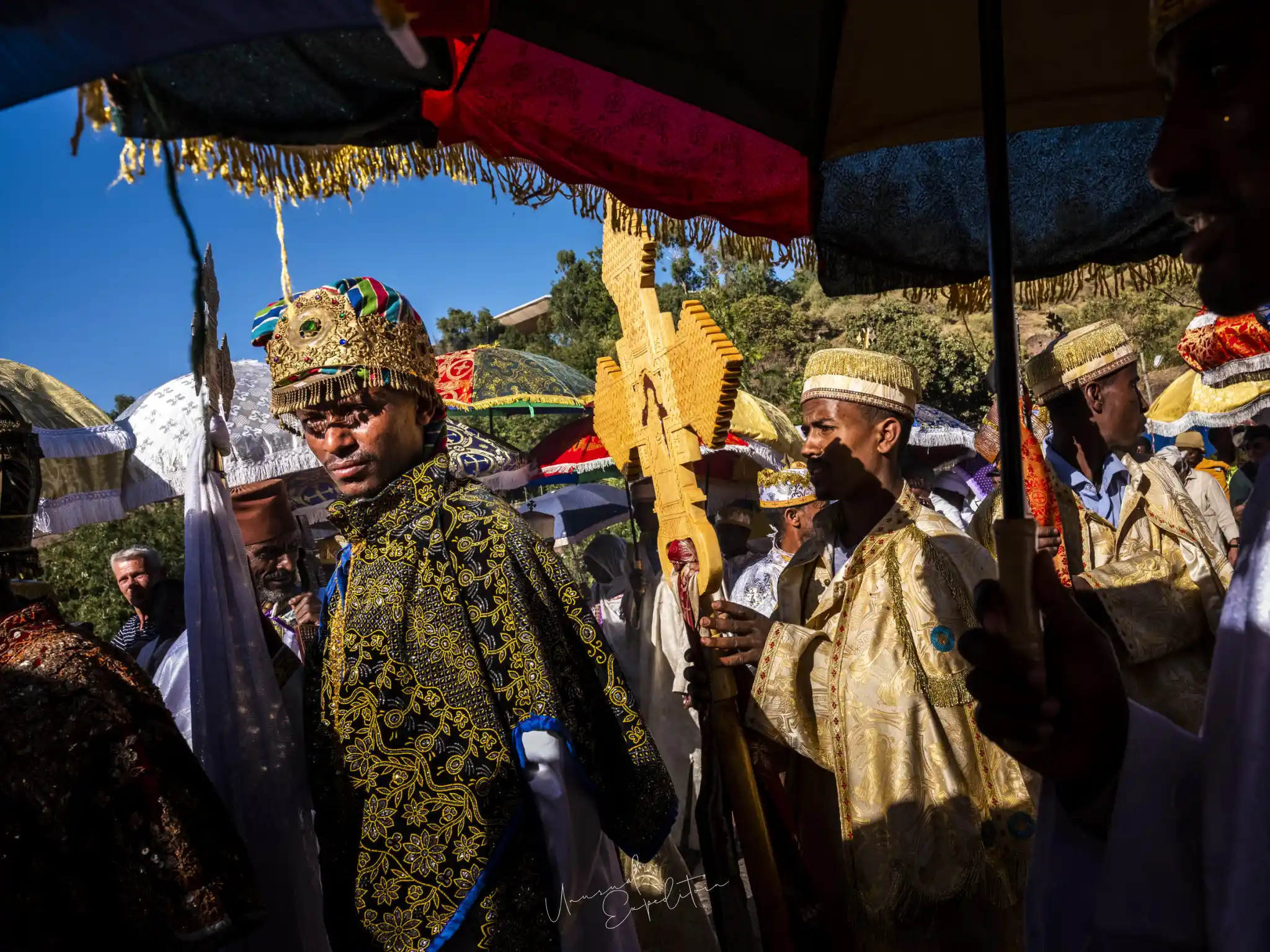
An Ethiopian Orthodox priest in Lalibela is easy to recognise and a privilege to photograph: a white cotton gabi or a brocade cape, a turban or an embroidered crown, a hand cross carried everywhere and offered to the faithful to kiss, and often a prayer staff to lean on through the long services. At feasts such as Timket the same priests appear in gold and red vestments under velvet umbrellas. Photographed with patience and permission, they are the soul of any set of Lalibela pictures.
The clergy of Lalibela's rock-hewn churches are part of what our Lalibela photography tour guide covers. Here is who they are, what they wear and carry, and how to make portraits that they are glad to be part of.
The Ethiopian Orthodox priest in Lalibela
The Ethiopian Orthodox Tewahedo Church is one of the oldest churches in Africa, and Lalibela is one of its holiest towns; UNESCO calls it a high place of Ethiopian Christianity and still a place of pilgrimage and devotion. Each of the rock-hewn churches has its own clergy who keep the services, guard the tabot in the sanctuary and look after the church day to day. Many of them sit at the church doors or in the trenches through the day, reading from prayer books written in Ge'ez, the old liturgical language, and they are used to visitors. The older priests in particular, with white beards, turbans and robes in white or yellow, are the classic Lalibela portrait. Remember that you are photographing a man at his work and his prayers: an unhurried approach, a greeting, and a little time spent with him before the camera comes up make all the difference.
Ethiopian Orthodox priest clothing
Ethiopian Orthodox clergy dress plainly on ordinary days and splendidly on feast days, and the difference is worth knowing before you go.
| Who | Everyday dress | Feast day dress | What they carry |
|---|---|---|---|
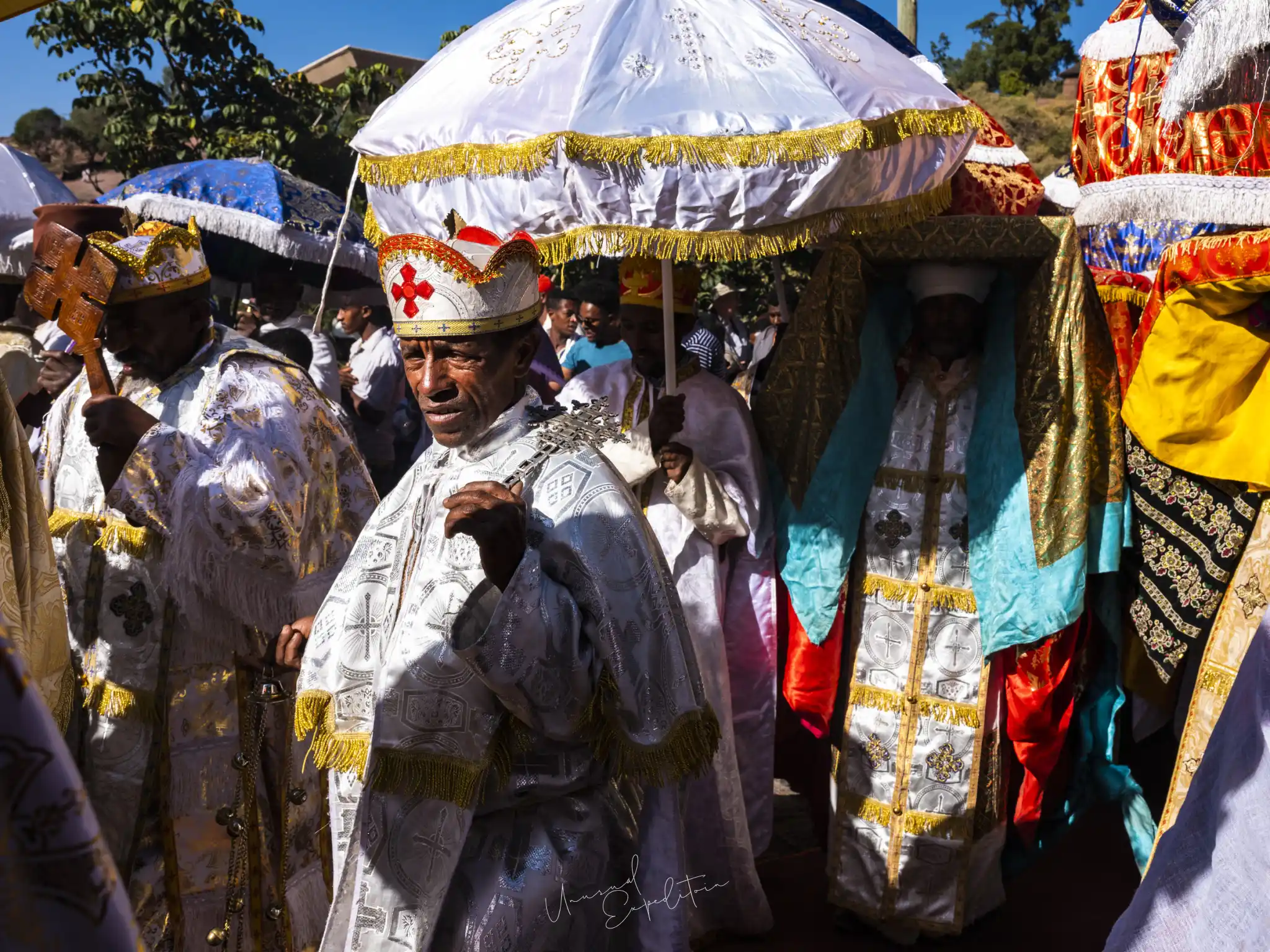
| Priests | White cotton gabi or shawl, turban or cap | Brocade capes in gold, red, green and silver, embroidered crowns | Hand cross, prayer book, prayer staff |
| Deacons | White robes | Capes and caps, often in bright colours | Censers, candles, processional crosses |
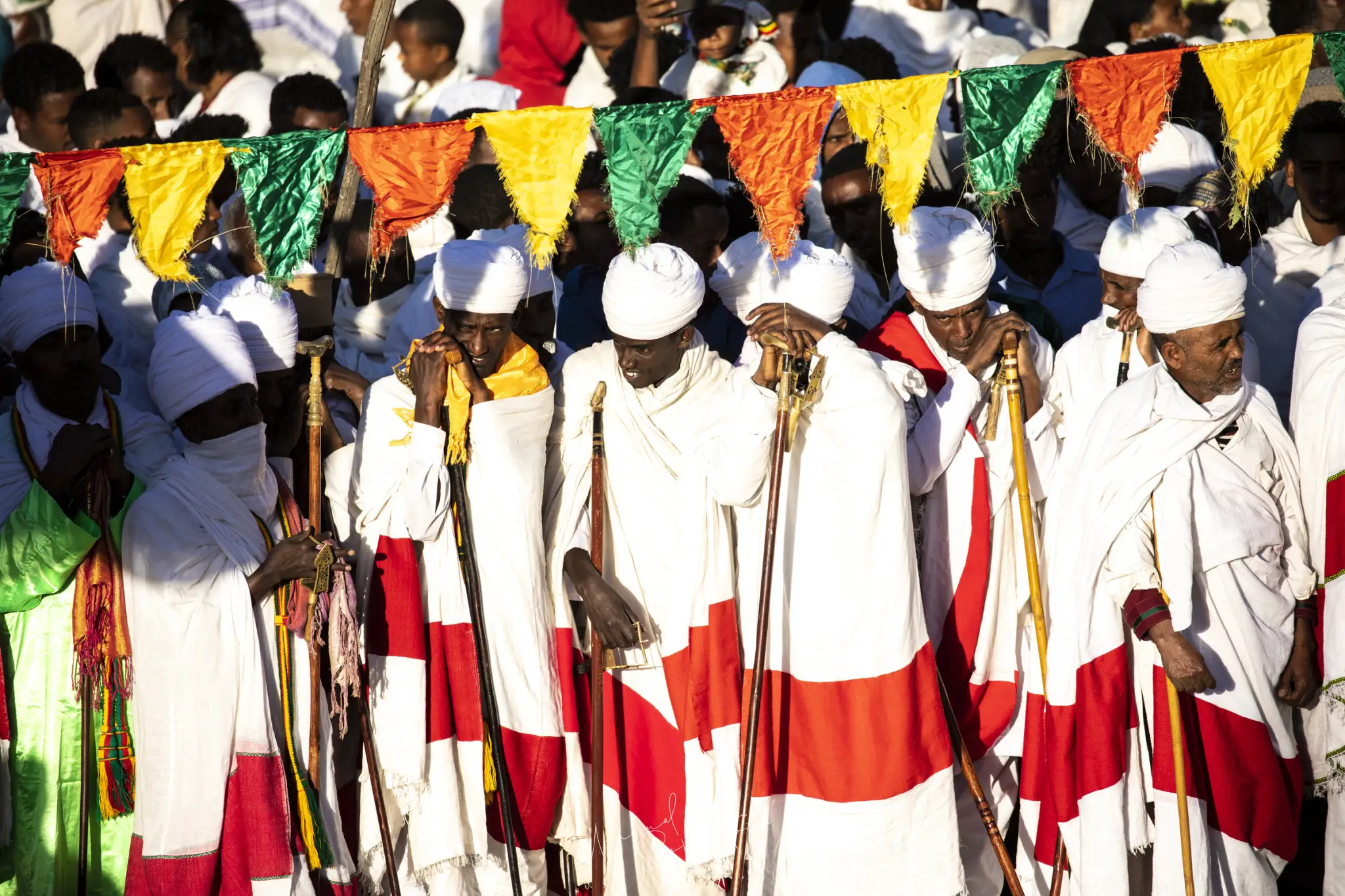
| Debteras (church singers) | White shawls and turbans | Their best white shawls and turbans | Prayer staffs and sistrums for chant and dance |
| Senior clergy | Dark or white robes | Crowns and the richest vestments, under the largest umbrellas | Processional crosses |
At Timket you will see every one of these together, which is why the processions are so rich in colour.
The Ethiopian Orthodox cross
The Ethiopian Orthodox cross is the object you will photograph most often in Lalibela after the churches themselves. Priests carry small hand crosses of wood, brass or silver and hold them out to people who come to kiss them and touch their foreheads to them. Processional crosses are larger, made of brass, silver or gold-coloured metal in open lattice designs, and mounted on staffs; at Timket they are carried at the head of each procession and held up over the crowd. Every region and many churches have their own patterns, and the Lalibela cross is one of the best known. Look for crosses against the sky from a low angle, a cross held in a priest's hand in a doorway, and the pattern of light through a lattice cross. Singapore's Ministry of Foreign Affairs notes that exporting items of historical or cultural significance from Ethiopia is illegal, so only buy crosses as new pieces from proper shops.
The Ethiopian Orthodox deacon and the debteras
An Ethiopian Orthodox deacon assists the priests in the liturgy; deacons are often young, and many are boys, so we keep our portraits to adult clergy. The debteras are the trained church singers and scholars who lead the chant, and at Timket they are the men you see dancing in slow, swaying lines, keeping time with sistrums, drums and prayer staffs. Their sung poetry, in Ge'ez and Amharic, is one of the great sounds of the feast. They make wonderful pictures in motion: a slow shutter as the line sways, or a fast one as a staff is raised. Ask before a close portrait, and do not step into the line while they are dancing.
The best portraits of priests in Lalibela come after the conversation, not before it. Sit with them, look at the book they are reading, and when the camera comes up they are already relaxed with you.
Joseph Mak, tour leader, Unusual Expedition
How to photograph priests with respect
Photographing priests in Lalibela is mostly a matter of manners. Greet them first; a few words of Amharic help. Ask before any close portrait, by gesture if you share no language, and take no for an answer. Some priests will expect a small offering for the church, which is customary. Never photograph during the liturgy without permission, never use flash inside the churches, and never ask a priest to remove or open anything sacred. At festivals keep out of the path of the tabots and the clergy carrying them. Show people the picture on the back of the camera; it is often the start of a friendly exchange, and sometimes of a second, better frame. The Timket photos page covers working in the festival crowd, and the Lalibela church photos page covers the interiors.
Lenses and light for clergy portraits
For portraits of clergy in Lalibela a 24-70mm or an 85mm is enough; you are close, and a long lens from far away feels like spying. The most flattering light is the open shade of the church trenches and doorways, where the white robes glow without burning out and faces are evenly lit. In festival sun, use the umbrellas: a priest under a red or gold canopy is lit by warm, coloured light from above. Expose for the white cloth, because it is the brightest thing in the frame, and lift the shadows later.
Photograph the clergy of Lalibela with us
We run Lalibela as a private trip on request when travel advice allows, with unhurried time at the churches and around Timket. We arrange all logistics to your needs, and photography coaching can be added at extra cost. Any scheduled departure appears on our Ethiopia photography tours page.
Lalibela photography tours
The next Lalibela departure is announced on the Lalibela photography tours page, with previous expeditions and all the planning guides.
Explore Lalibela in depth
- Lalibela Photography Tour Guide: Rock-Hewn Churches and TimketEthiopia
- Timket Photos: Where to Stand and How to Shoot the FeastEthiopia
- Timkat Festival in Ethiopia: Ketera, the Water and the TabotsEthiopia
- Lalibela Photography FAQ: Airport, Tickets, Dress and SafetyEthiopia
- Lalibela Church Photos: Inside the Rock-Hewn ChurchesEthiopia
- Church of St George, Lalibela: Photographing Bete GiyorgisEthiopia
- Lalibela Weather and the Best Time to Visit LalibelaEthiopia
Upcoming Photo Tours
- Egypt Photo Tour – EgyptEgypt 12 Dec 2026 To 20 Dec 2026
- Inner Mongolia Winter Owl Photo Tour – ChinaChina 01 Jan 2027 To 04 Jan 2027
- Inner Mongolia Winter Photo Tour – ChinaChina 05 Jan 2027 To 11 Jan 2027
- Mekong And Central Highland Vietnam Photo Tour - VietnamVietnam 16 Jan 2027 To 24 Jan 2027