
Timkat Festival in Ethiopia: Ketera, the Water and the Tabots
Timkat festival in Ethiopia: the date in the Ethiopian calendar, Ketera, the blessing of the water and the tabots, Lalibela or Gondar.
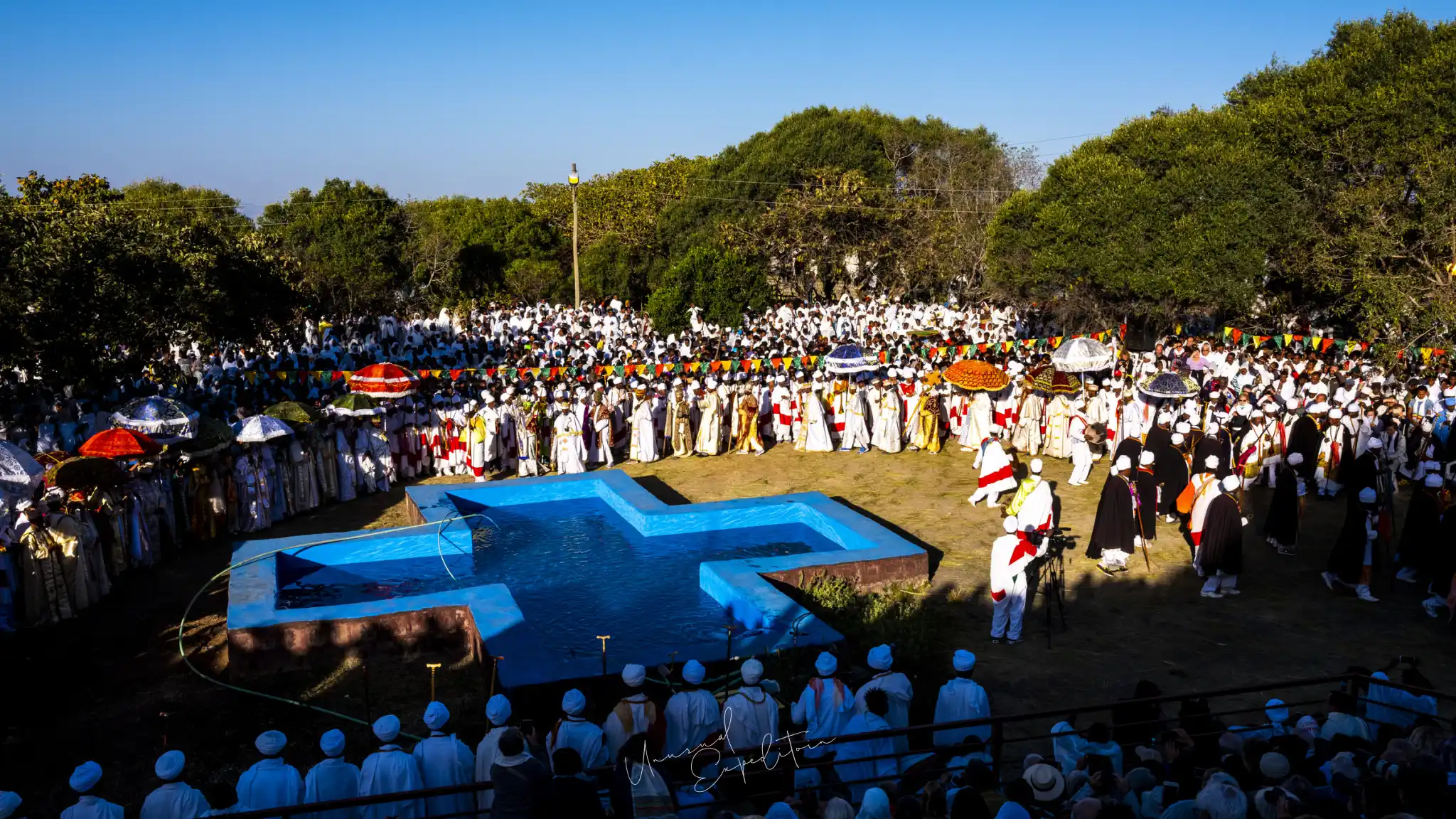
The Timkat festival in Ethiopia is the Ethiopian Orthodox celebration of Epiphany, the baptism of Christ in the Jordan, held on 19 January, or 20 January in a leap year. On the eve, called Ketera, every church carries its tabot, a replica of the Ark of the Covenant, to a pool or river; at dawn the water is blessed and sprinkled over the crowd, and later the tabots return to their churches in a long, singing procession of clergy, umbrellas and worshippers in white.
We photographed Timket in Lalibela, the town of rock-hewn churches covered in our Lalibela photography tour guide. Here is what happens over the two days and how to be there; Timket photos is about the camera work itself.
What is Timkat?
Timkat, also written Timket, takes its name from a Ge'ez word for immersion in water, and it is one of the great feasts of the Ethiopian Orthodox Tewahedo Church. UNESCO inscribed "Ethiopian epiphany" on its Representative List of the Intangible Cultural Heritage of Humanity in 2019 and describes a colourful festival celebrated all over Ethiopia, carried by the clergy who sing the hymns, carry the Ark and preach, and by hundreds of thousands of people who take part. The heart of it is the tabot. Every Ethiopian Orthodox church keeps one in its sanctuary, and at Timket it leaves the church wrapped in embroidered cloth on the head of a priest. Nobody outside the clergy sees the tabot itself; what you photograph is the cloth, the umbrellas held over it, and the people walking with it.
When is Timkat? The date in the Ethiopian calendar
Timkat falls on 11 Tir in the Ethiopian calendar, which the Ethiopian Orthodox association Mahibere Kidusan gives as 19 January in the Gregorian calendar. Because the Ethiopian calendar adds a leap day on its own cycle, the Ethiopian News Agency notes that the feast moves to 20 January once in every four years. The date never depends on the moon, so you can plan years ahead: Ketera is always the evening before, and the main day follows. In Lalibela the celebrations run over the eve and the main day, and pilgrims fill the town, so plan early.
| Part of the feast | When | What you see |
|---|---|---|
| Ketera, the eve | 18 January (19 in a leap year), afternoon into night | Tabots carried from every church to the water, night vigil and hymns |
| Blessing of the water | Main day, before and around sunrise | Liturgy at the pool, the water blessed with a processional cross |
| Sprinkling and immersion | Main day, early morning | Blessed water thrown over the crowd, young men pressing to the pool |
| Return procession | Main day, from mid-morning | Tabots walked back to their churches with singing and dancing |
The eve is the better day for processions and portraits; the main day belongs to the water and the crowd.
Ketera: the eve of Timket
Ketera means blocking the flow of water, as UNESCO explains, and the Ethiopian News Agency adds the older sense recorded by travellers: damming a stream to make a baptismal pool. In Lalibela the tabots leave the rock-hewn churches during the afternoon. Each one moves under a cluster of velvet umbrellas, with priests in gold and silver capes and crowns, deacons with censers, elders with prayer staffs and a crowd of women in white netela shawls clapping and ululating around them. Painted icons of the baptism are carried alongside, and young men with long sticks and flags run ahead singing. By dusk the tabots reach the Timket ground, where they stay overnight, and people stay for the vigil, the hymns and the liturgy that follows in the small hours.
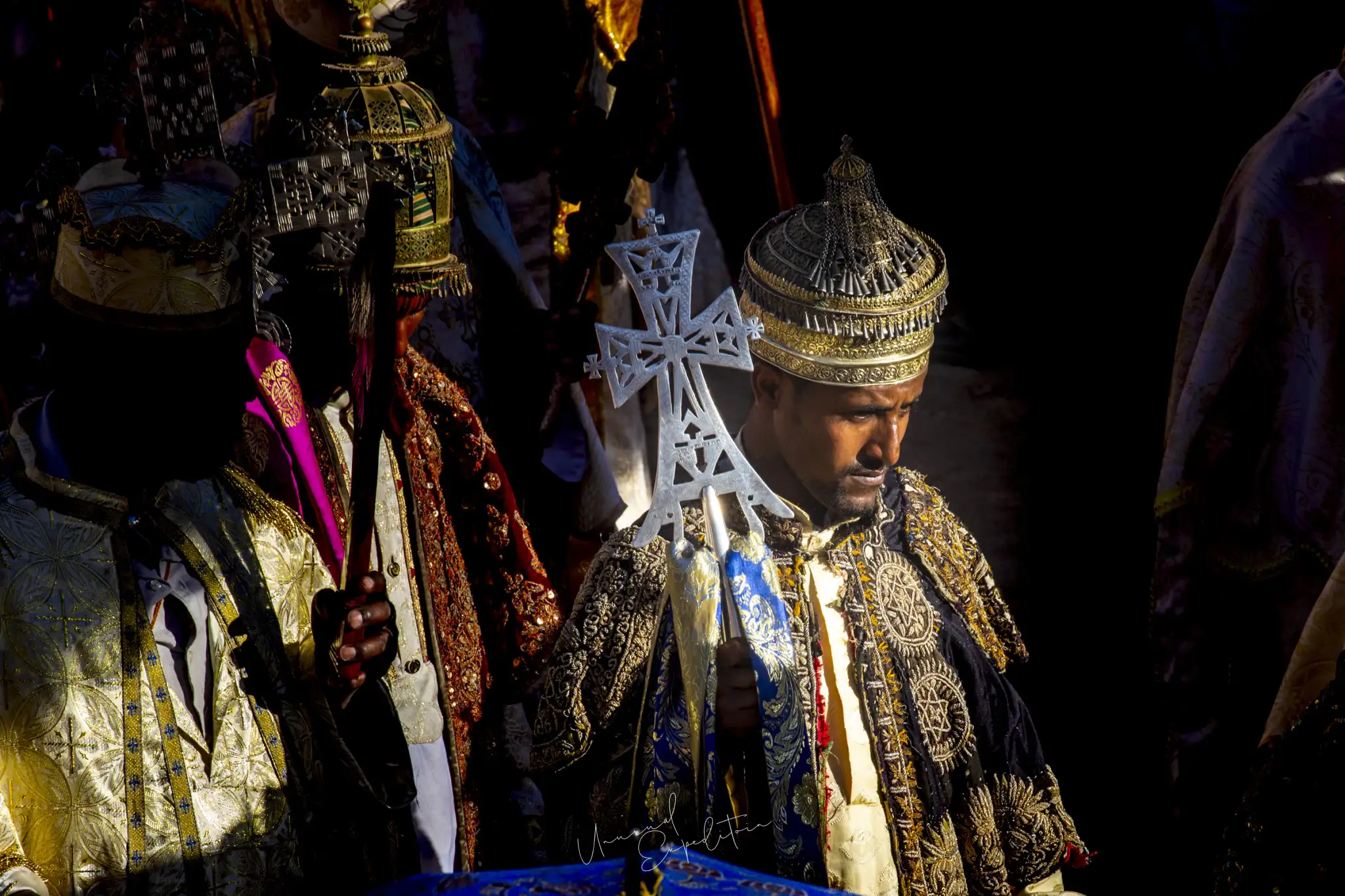
The Timket celebration on the main day
The Timket celebration on the main day starts in the dark. The liturgy is sung beside the water, and towards dawn the senior priest blesses the pool, dipping a processional cross into it. In Lalibela the Timket ground has a pool in the shape of a cross, and on the morning we were there the clergy stood in a wide ring around it in white and red before the water was opened to the people. Then the mood changes. Blessed water is thrown over the crowd, and young men climb to the edge of the pool to splash and be splashed, holding out bottles to carry some home. It is loud, joyful and wet, and you should keep your camera covered. Some people immerse themselves to renew their baptismal vows, which is the private heart of a very public day.
How the tabots return
The return of the tabots is the longest procession of the feast. UNESCO describes each tabot setting off back to its church in a colourful ceremony with traditional and religious songs, and in Lalibela the tabots of different churches go home by different streets. Clergy dance slow steps with sistrums and prayer staffs, the umbrellas sway, incense drifts across the road, and families walk the whole way. When each tabot is back inside its church, the crowd thins quickly and people go home to celebrate with their families.
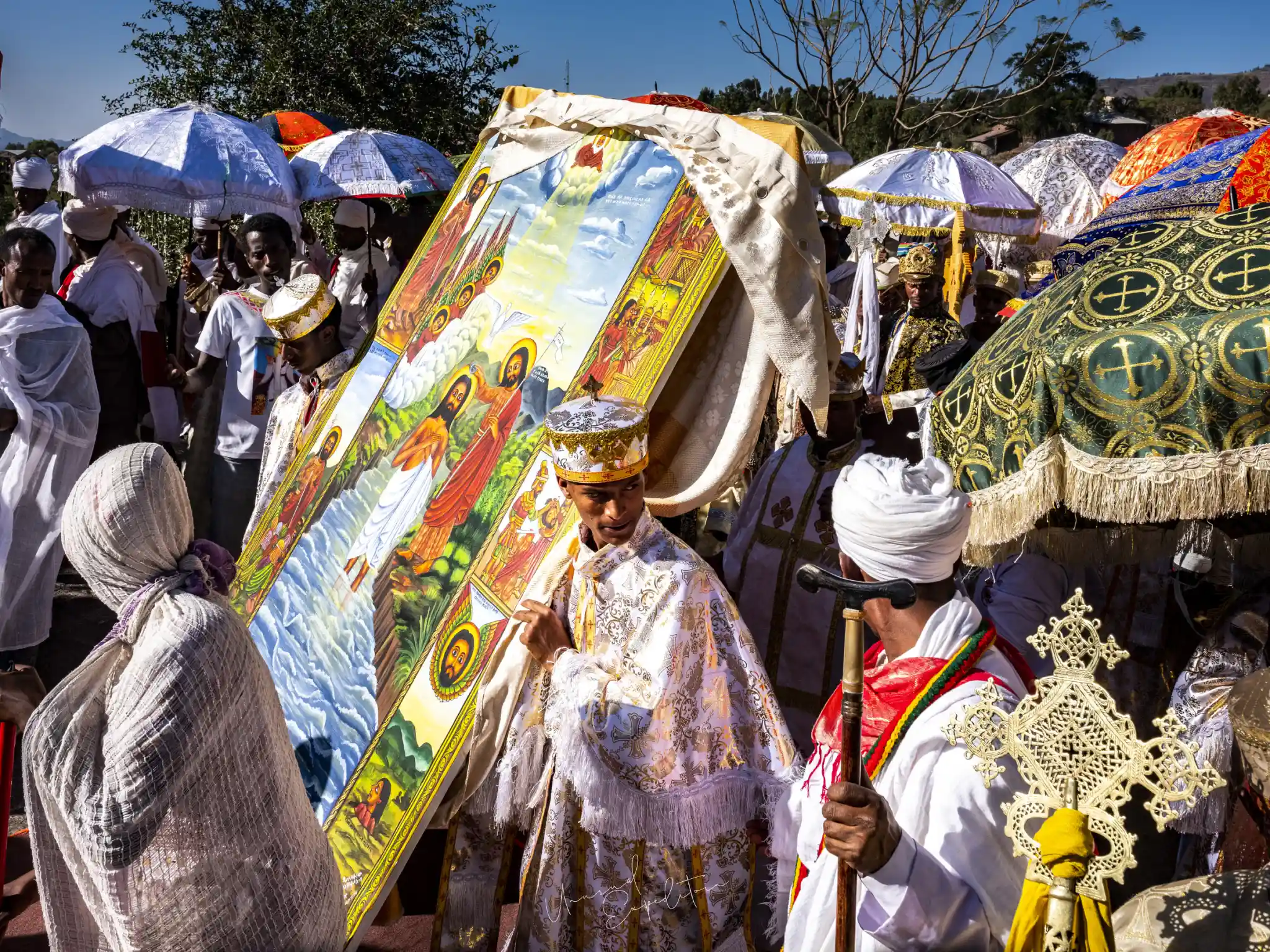
The eve of Timket is the day I would not miss. The tabots come out of the rock, the umbrellas start moving, and for a few hours the whole of Lalibela is walking in the same direction.
Joseph Mak, tour leader, Unusual Expedition
Timket in Gondar or Lalibela?
Timket in Gondar and Timket in Lalibela are the two celebrations most visitors ask about, and they are quite different. Gondar holds the feast at Fasilides' Bath, a 17th-century walled pool that is part of the Fasil Ghebbi World Heritage property, where the Library of Congress describes young people jumping into the water once the bishop and the high clergy have blessed it. Lalibela is smaller and more intimate, set among the rock-hewn churches, with the procession winding between them.
| Gondar | Lalibela | |
|---|---|---|
| Setting | Fasilides' Bath, a large walled pool | A cross-shaped pool on the Timket ground near the rock-hewn churches |
| Main image | Jumping into the pool | Processions of tabots, umbrellas and clergy |
| Crowd | Very large city crowd | Townspeople and pilgrims, still large |
| Other subjects | Royal castles | The churches themselves |
We photographed Timket in Lalibela, so the frames on this page are all from there.
Being a respectful visitor at Timkat
Timkat is a religious feast before it is a spectacle, and people notice visitors who forget that. Wear modest clothes, and white if you want to blend in. Never step in front of a tabot or the priests walking with it. Keep a respectful distance during the liturgy and do not climb onto walls or church roofs that the clergy have not opened. Ask before close portraits; most clergy and elders are glad to be photographed, especially once they see you have been standing with them for a while. The Ethiopian Orthodox priests page covers vestments and portraits, and the best time to visit Lalibela page sets Timket against the other feasts of the year.
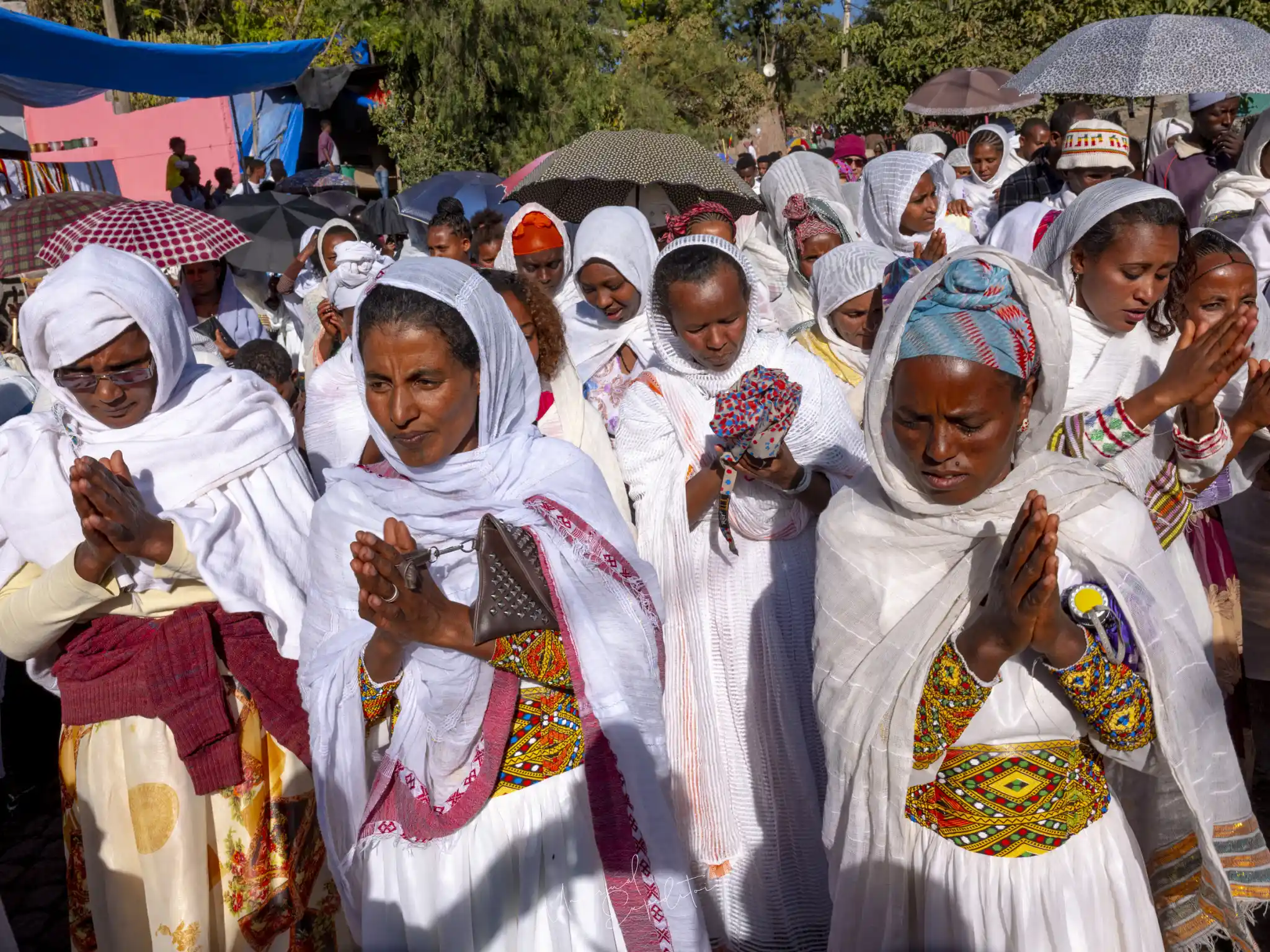
Plan your Timkat trip with us
We run Timket in Lalibela as a private trip on request, built around the eve and the main day, when travel advice allows travel to the Amhara region; as at November 2026 the UK FCDO advises against it, and our Lalibela photography FAQ explains what that means. Private trips suit individuals, couples, families and photographers who want to go at their own pace, and we arrange all logistics to your needs. Ask us at least two months ahead for Timket. Any scheduled departure appears on our Ethiopia photography tours page.
Lalibela photography tours
The next Lalibela departure is announced on the Lalibela photography tours page, with previous expeditions and all the planning guides.
Explore Lalibela in depth
- Lalibela Photography Tour Guide: Rock-Hewn Churches and TimketEthiopia
- Timket Photos: Where to Stand and How to Shoot the FeastEthiopia
- Lalibela Photography FAQ: Airport, Tickets, Dress and SafetyEthiopia
- Lalibela Church Photos: Inside the Rock-Hewn ChurchesEthiopia
- Ethiopian Orthodox Priests in Lalibela: Vestments, Crosses, PortraitsEthiopia
- Church of St George, Lalibela: Photographing Bete GiyorgisEthiopia
- Lalibela Weather and the Best Time to Visit LalibelaEthiopia
Upcoming Photo Tours
- Egypt Photo Tour – EgyptEgypt 12 Dec 2026 To 20 Dec 2026
- Inner Mongolia Winter Owl Photo Tour – ChinaChina 01 Jan 2027 To 04 Jan 2027
- Inner Mongolia Winter Photo Tour – ChinaChina 05 Jan 2027 To 11 Jan 2027
- Mekong And Central Highland Vietnam Photo Tour - VietnamVietnam 16 Jan 2027 To 24 Jan 2027