
Church of St George, Lalibela: Photographing Bete Giyorgis
Church of St George, Lalibela: where to stand above Bete Giyorgis, sunrise and sunset light, the interior and when it was built.
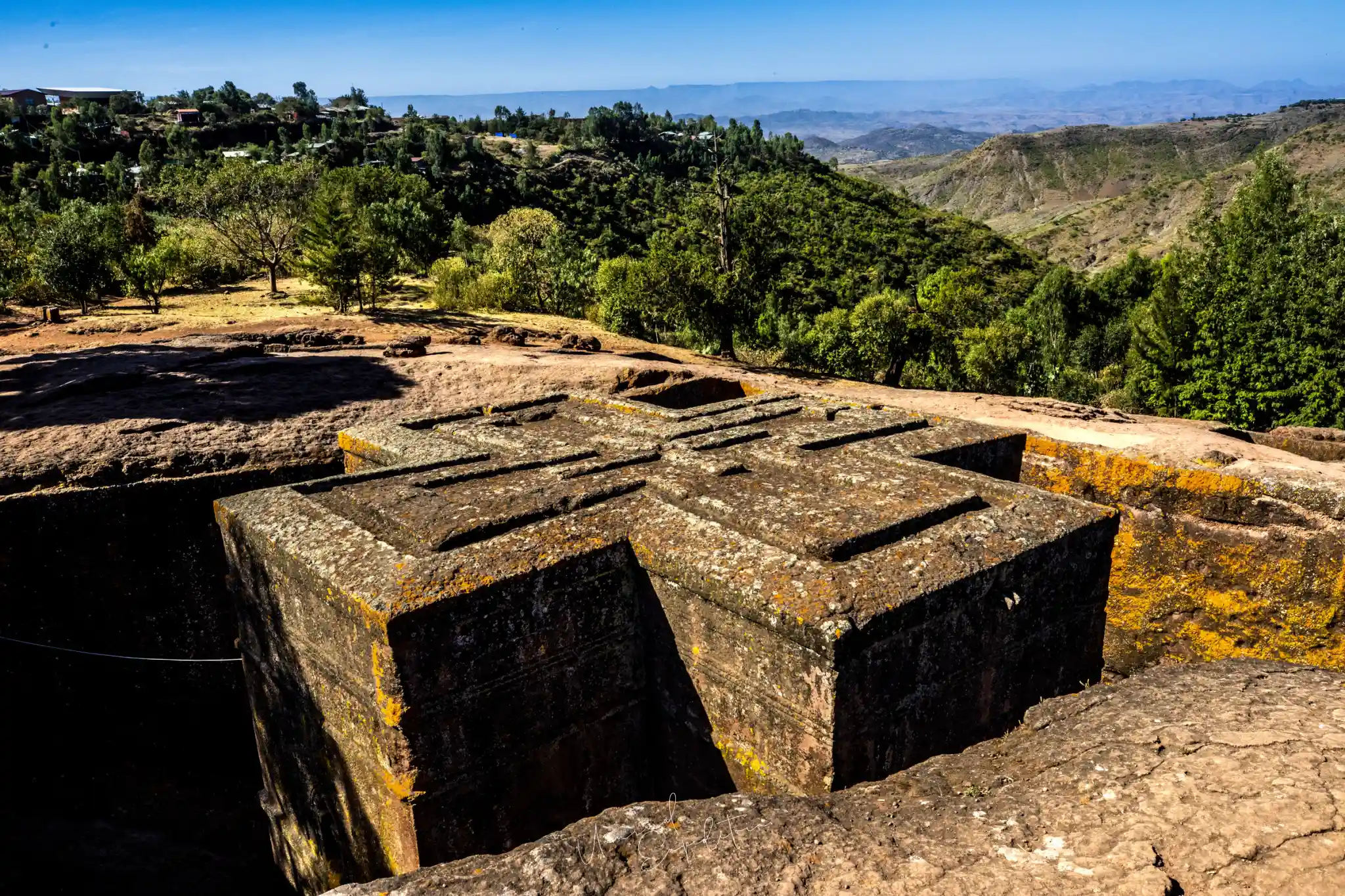
The Church of St George, Lalibela, known as Bete Giyorgis, is the cross-shaped church cut straight down into the rock that has become the picture of Ethiopia. From the rim you look down onto a roof carved as three stepped crosses, one inside the other, with the walls dropping away into a square trench around it. It is among the last of the eleven rock-hewn churches to have been cut, stands apart from the others, and is the one to photograph at both ends of the day.
Bete Giyorgis is one of the churches covered in our Lalibela photography tour guide, and the rest of them appear on the Lalibela church photos page.
Church of St George, Lalibela: what Bete Giyorgis is
Bete Giyorgis, the House of St George, is a single block of rock shaped into a church. UNESCO describes the eleventh church of Lalibela as isolated from the others but connected to them by a system of trenches, and notes its remarkable cruciform plan. Wikipedia's entry explains that it was carved downwards from volcanic tuff, the only material in the structure, and dates it to the late 12th or early 13th century, in the reign of King Gebre Mesqel Lalibela of the Zagwe dynasty. Tradition says the king built it after a vision in which he was told to, and many tellings name St George himself as the one who asked. Bete Giyorgis is part of the UNESCO World Heritage property "Rock-Hewn Churches, Lalibela", inscribed in 1978, and it is still a working church with its own priests, who keep a replica of the Ark of the Covenant, the tabot, behind a curtain inside.
Bete Giyorgis, Lalibela, Ethiopia: where to stand
Bete Giyorgis in Lalibela is photographed almost entirely from above, which is the opposite of most buildings. The ground around the trench is open, worn rock, and you can walk a long way around the rim. Each corner gives a different picture: the roof cross straight on, the roof and one tall wall together, or the church with the green Lasta hills and the town behind it. From the trench below you see the full height of the walls and the upper windows, and the narrow passage that leads down gives a fine frame of the church appearing at the end of a cut.
| Viewpoint | Best light | Lens | The picture |
|---|---|---|---|
| Rim, corner with the hills behind | Late afternoon | 16-35mm | Church, trench and landscape together |
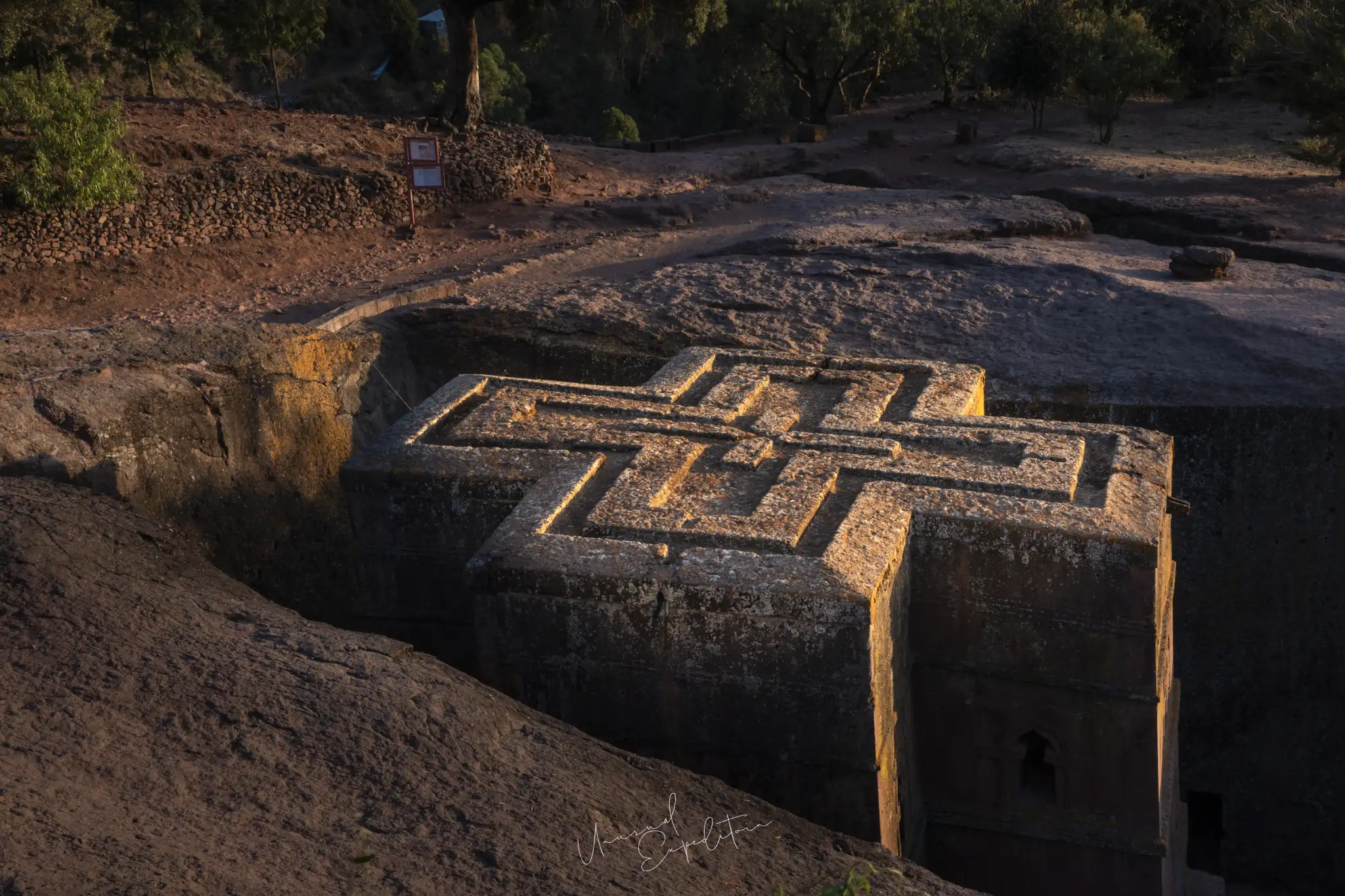
| Rim, straight above the roof | Early morning, dusk | 24-70mm | The three stepped crosses as a graphic shape |
| Trench floor | Open shade, middle of the day | 16-35mm | Walls, windows and the doorway |
| Access passage | Any, by contrast | 24-70mm | The church framed by the cut |
Keep well back from the edge, which drops sheer into the trench.
Bete Giyorgis at sunrise and sunset
Bete Giyorgis changes more with the light than any other church in Lalibela, because its roof is open to the sky. Around sunrise the trench is still in shadow and the cross on the roof is the first thing the sun touches, which gives a dark frame around a glowing shape. Late in the afternoon the low sun rakes across the roof from the side, the stepped edges throw long shadows, and the rock turns orange; this is the light for the wide frame with the hills. At dusk, after the sun has gone, the stone holds a soft, even tone that suits a straight-down view of the cross. In the middle of the day the trench fills with flat light and the roof looks washed out, so that is the time for the other churches.
Inside Bete Giyorgis
The inside of Bete Giyorgis is a simple, dim space, smaller than the outside suggests. Wikipedia describes a simple shrine to St George and, behind a curtain that only priests may pass, the tabot. Visitors may enter when the church is open, shoes off at the door; ask the priest on duty before photographing inside, and never use flash. Around the walls of the trench there are openings into the rock, and Wikipedia records that pilgrims who died after reaching the site were placed in an open tomb in the outer walls. Treat those openings with the same respect as the church itself.
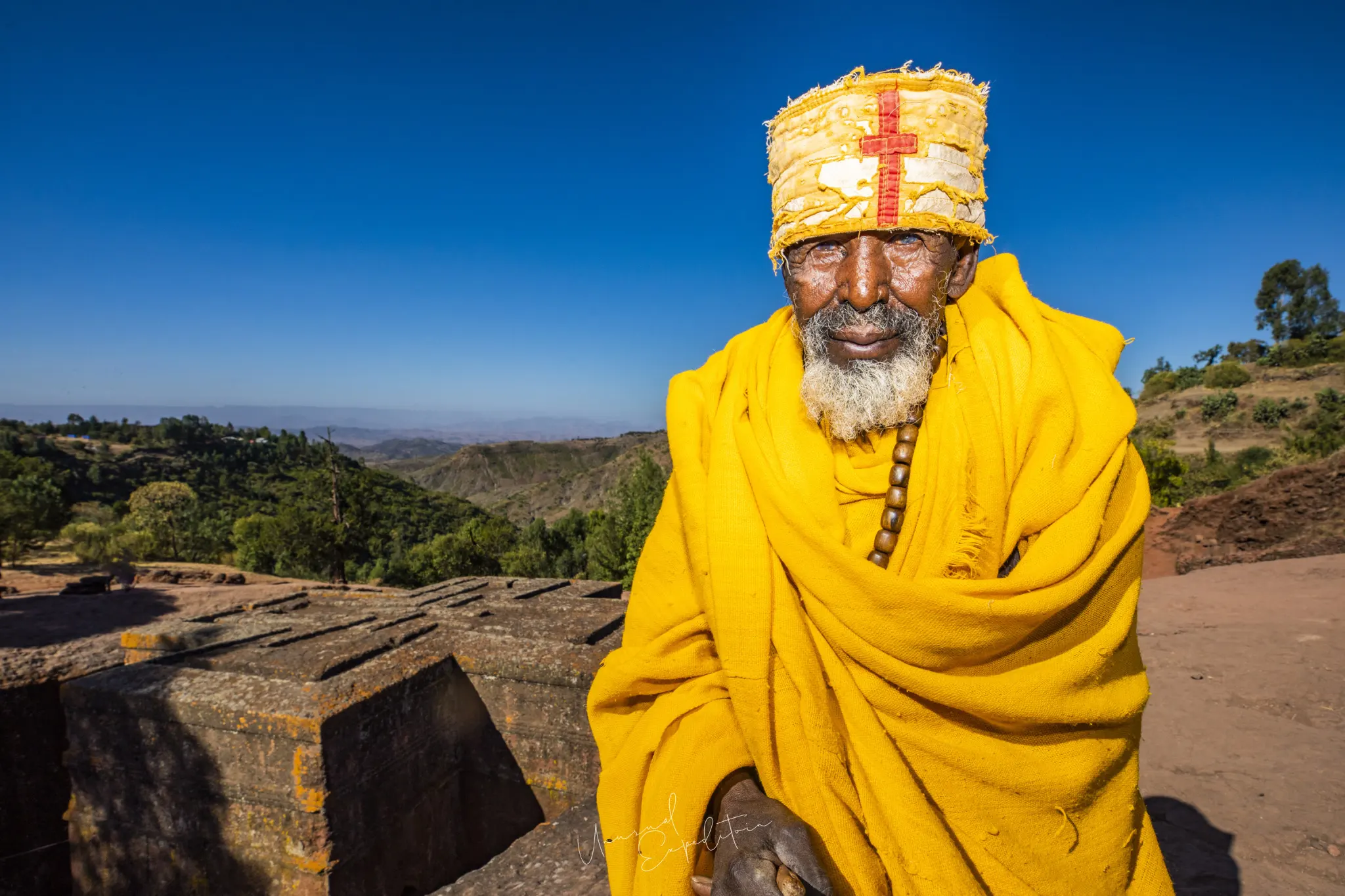
I go back to Bete Giyorgis every evening we are in Lalibela. It is the same church, but never the same picture, and the priests who sit on the rim at that hour are often happy to be part of it.
Joseph Mak, tour leader, Unusual Expedition
When was Bete Giyorgis built?
Bete Giyorgis was built, or more exactly cut, in the late 12th or early 13th century, according to the dates Wikipedia gives, and UNESCO places the work of King Lalibela in the 12th century. Like all the churches here, it was made by first cutting a trench around a block of rock and then working inwards and downwards, removing stone to leave the walls, roof, windows and the interior space. UNESCO records that the old drainage channels around the churches were filled with earth for centuries and that water and earthquakes have damaged several of them, and conservation work goes on. Bete Giyorgis has no modern shelter over it, which is why it photographs so cleanly.
How to visit the Church of St George
The Church of St George is reached on foot from the main church precinct in Lalibela, and the single ticket for the churches covers it; check the price at the ticket office or with your guide before you go, as it changes. Wear shoes that grip worn rock and are quick to take off. Early morning and late afternoon are the times to be on the rim, and on feast days the area fills with pilgrims, so arrive early. At Timket the tabots of Lalibela's churches are carried out to the Timket ground; the Timkat festival in Ethiopia page explains the feast. Lalibela is in the Amhara region, and as at November 2026 the UK FCDO advises against all travel there, so check the advice before you plan.
Photograph Bete Giyorgis with us
We run Lalibela as a private trip on request when travel advice allows, with evenings kept free for Bete Giyorgis and time inside the other churches. A photographer or photography coaching can be added at extra cost. Any scheduled departure appears on our Ethiopia photography tours page.
Lalibela photography tours
The next Lalibela departure is announced on the Lalibela photography tours page, with previous expeditions and all the planning guides.
Explore Lalibela in depth
- Lalibela Photography Tour Guide: Rock-Hewn Churches and TimketEthiopia
- Timket Photos: Where to Stand and How to Shoot the FeastEthiopia
- Timkat Festival in Ethiopia: Ketera, the Water and the TabotsEthiopia
- Lalibela Photography FAQ: Airport, Tickets, Dress and SafetyEthiopia
- Lalibela Church Photos: Inside the Rock-Hewn ChurchesEthiopia
- Ethiopian Orthodox Priests in Lalibela: Vestments, Crosses, PortraitsEthiopia
- Lalibela Weather and the Best Time to Visit LalibelaEthiopia
Upcoming Photo Tours
- Egypt Photo Tour – EgyptEgypt 12 Dec 2026 To 20 Dec 2026
- Inner Mongolia Winter Owl Photo Tour – ChinaChina 01 Jan 2027 To 04 Jan 2027
- Inner Mongolia Winter Photo Tour – ChinaChina 05 Jan 2027 To 11 Jan 2027
- Mekong And Central Highland Vietnam Photo Tour - VietnamVietnam 16 Jan 2027 To 24 Jan 2027