
Lalibela Church Photos: Inside the Rock-Hewn Churches
Lalibela church photos: the rock-hewn churches from the rim, light inside, the two groups, who built them, and rules for cameras.
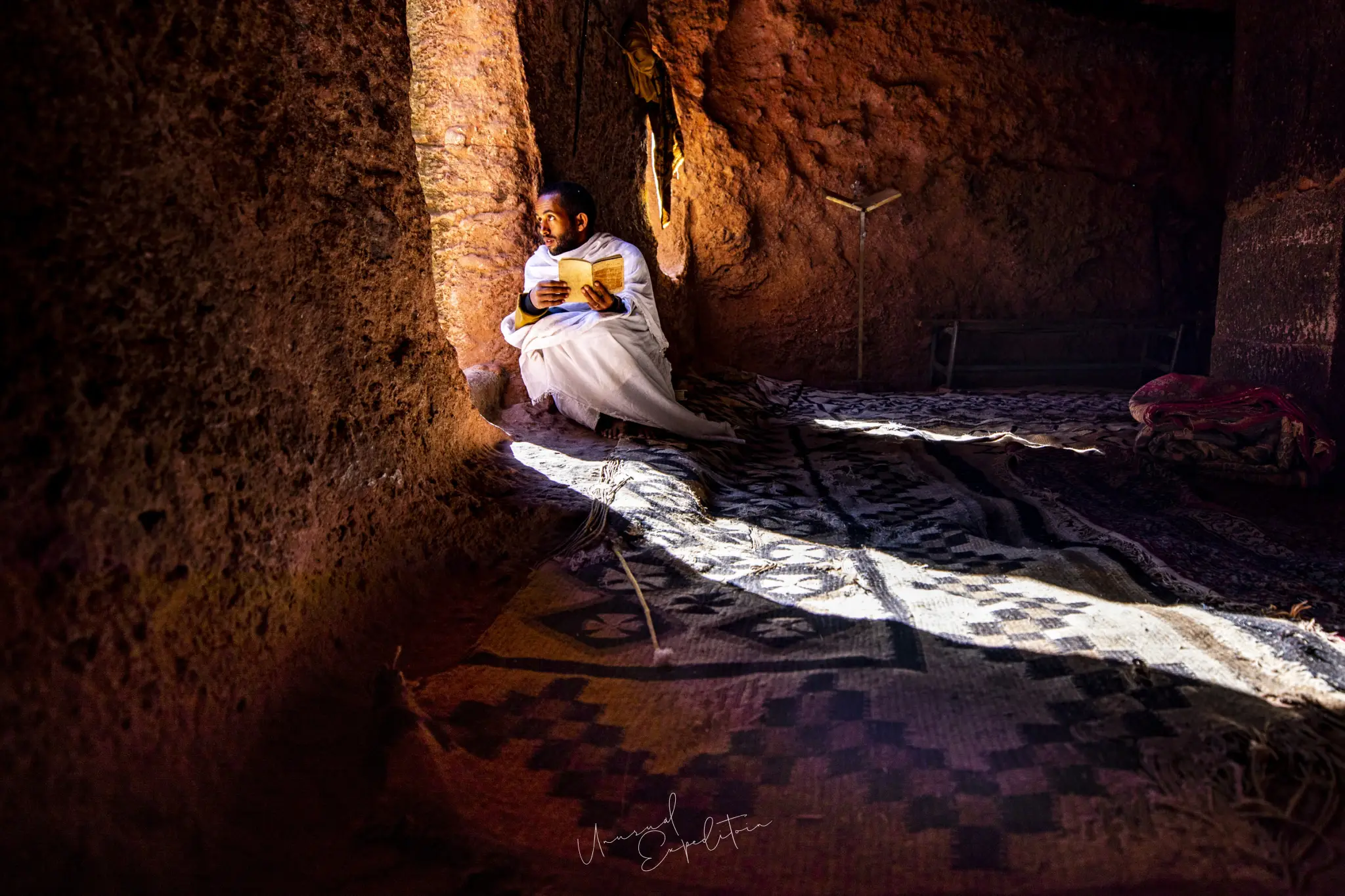
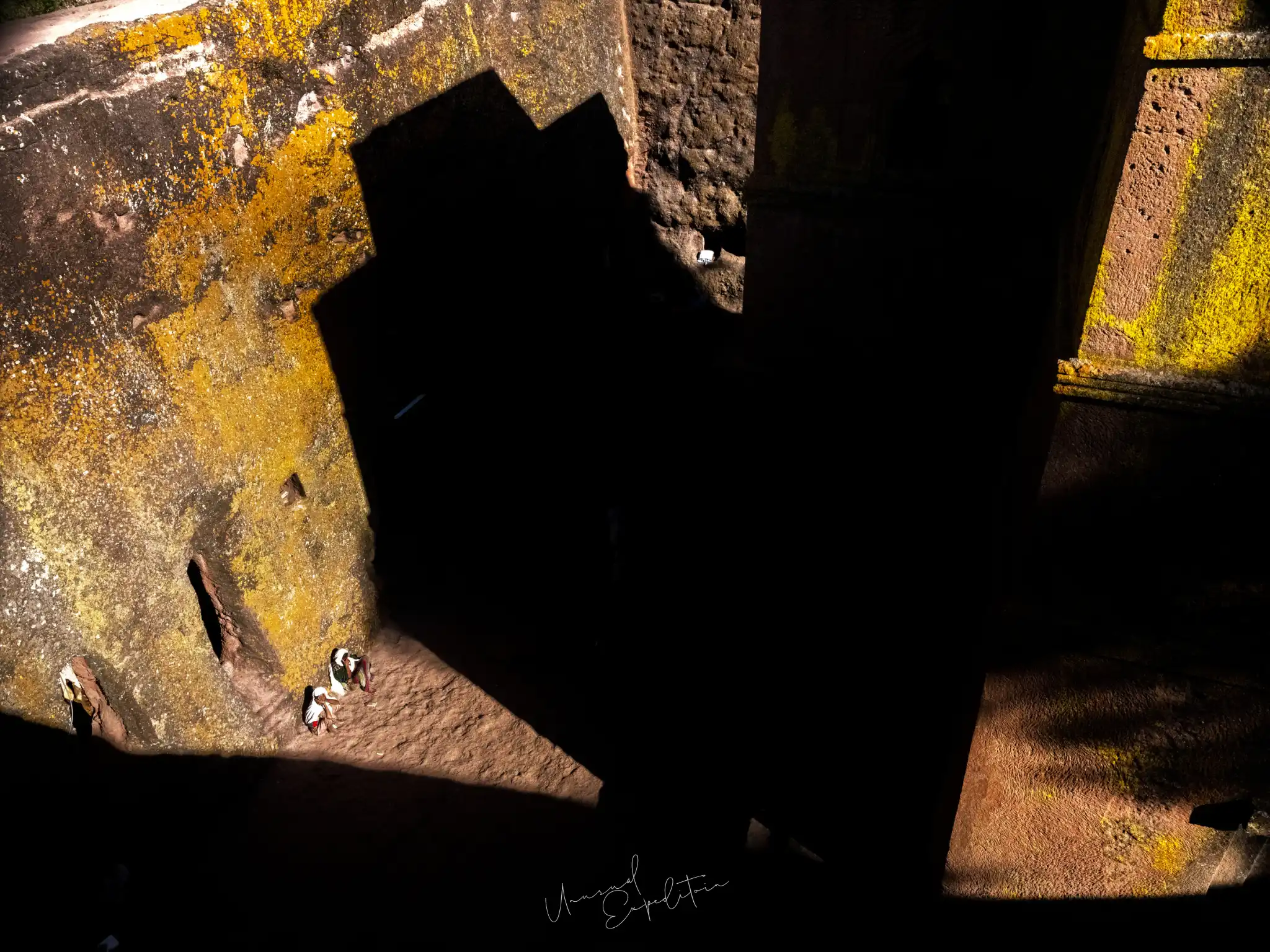
Lalibela church photos show stone that was never built, only cut away: churches freed from the red volcanic rock by trenches, then hollowed into naves, pillars and windows. Outside, the best pictures look down from the rim into the trenches; inside, they are pictures of light, a single shaft from a window falling across carpets and a priest reading in the gloom. The churches are in daily use, so the people in them are as much the subject as the carving.
The churches are the core of our Lalibela photography tour guide. The photographs in this guide are our own, taken on our trips here; we hold the rights to them, and the notes come from knowing the place first hand.
Lalibela church photos: what the churches look like
Lalibela's churches look nothing like churches elsewhere, because they sit below the ground you walk on. You arrive at the edge of a trench and look down at a roof, or you walk through a cut passage and find a façade of columns and windows facing you across a narrow courtyard. UNESCO describes eleven monolithic churches, hewn from the living rock and then chiselled into doors, windows, columns, floors and roofs, with an extensive system of drainage ditches, trenches and ceremonial passages, some opening onto hermit caves and catacombs. The stone is a soft reddish volcanic rock, often streaked with yellow and green lichen, and it takes the low sun warmly. Some of the churches now sit under large modern shelters put up to protect them from rain, which UNESCO notes affect how the site looks; plan your wide frames around them, and favour Bete Giyorgis, which stands open to the sky.
Lalibela church inside: light and photography
The inside of a Lalibela church is dark, cool and quiet, lit only by small windows and the open door. That is exactly why the interiors make such strong pictures. A shaft of sun from a window lands on the woven carpets that cover the floor, a priest or a pilgrim sits at its edge to read, and the rest of the nave falls away into near black. Expose for the bright patch and let the shadows go. A 24-70mm at a wide aperture handles most interiors, and you will need a high ISO; a tripod is impractical and unwelcome during prayers. Hangings, painted wooden panels, prayer staffs leaning against pillars and the processional crosses that priests sometimes bring to the door are all worth a frame. Look for faded paintings of saints on the walls and pillars near doorways, which survive in a few churches.
The two groups of churches
UNESCO divides the churches of Lalibela into two main groups on either side of a channel called the Jordan, with Bete Giyorgis on its own. The table follows UNESCO's names.
| Group | Churches | What to photograph |
|---|---|---|
| North of the Jordan | Bete Medhane Alem, Bete Maryam, Bete Maskal, Bete Denagel, Bete Golgotha Mikael | Bete Medhane Alem's ranks of columns; courtyards and the carved windows of Bete Maryam |
| South of the Jordan | Bete Amanuel, Bete Qeddus Mercoreos, Bete Abba Libanos, Bete Gabriel Rafael, Bete Lehem | Deep trenches and tunnels, façades in shade, priests at the doors |
| On its own | Bete Giyorgis, the Church of St George | The cross-shaped roof from the rim, early and late |
UNESCO believes Bete Medhane Alem, with its five aisles, to be the largest monolithic church in the world.
Who built the Lalibela churches?
Tradition and UNESCO both attribute the Lalibela churches to King Lalibela of the Zagwe dynasty, who, UNESCO says, set out in the 12th century to build a "New Jerusalem" after Muslim conquests halted Christian pilgrimage to the Holy Land. That is why the names echo the Holy Land: a river Jordan, and a Bete Golgotha that UNESCO says holds replicas of the tomb of Christ and the crib of the Nativity. UNESCO also records that two of the churches, Bete Mercoreos and Bete Gabriel Rafael, may first have been royal residences. Wikipedia's entry on the Church of St George dates that church to the late 12th or early 13th century and describes it as among the last built. Exactly how long the work took, and who did it, is still discussed by historians, and a well-known local story credits angels with carrying on the work at night; you will hear it from the priests, and it is worth hearing.
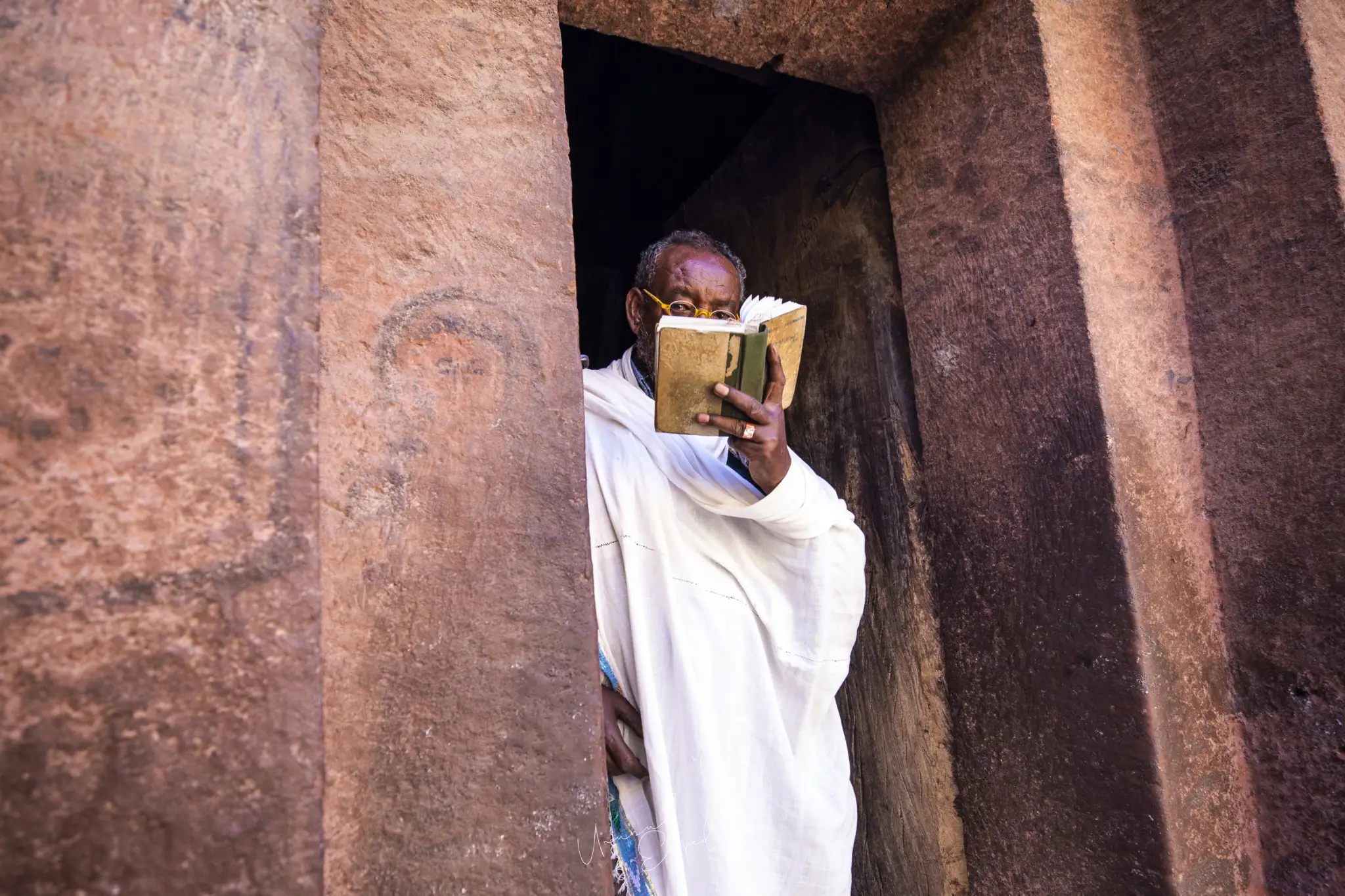
Inside the churches I hardly look at the carving at first. I look for where the light falls, then I wait. Sooner or later someone sits down there to read, and that is the picture.
Joseph Mak, tour leader, Unusual Expedition
Rules and manners inside the churches
Lalibela's churches are places of worship, and the clergy who look after them set the rules. Shoes come off at the door, and a guide or a church helper will usually mind them. Flash is not used inside, both for the old paintings and for the people praying. Some churches ask for no photographs of particular objects or during services; ask the priest at the door, and accept the answer. Many priests will pose with a processional cross when asked politely, and a small offering in the church box is customary. Singapore's Ministry of Foreign Affairs reminds visitors that exporting items of historical or cultural significance from Ethiopia is illegal, so buy crosses and icons only from proper shops with receipts, and never anything offered from inside a church.
Best light for each church
Light in the trenches of Lalibela changes fast. Early in the morning the courtyards are in soft shade and the tops of the façades catch the sun; by late morning the light drops straight into the trenches and becomes harsh; in the late afternoon the rim glows again and the interiors get their best window light from the low sun. We usually save the late light for Bete Giyorgis and spend the middle of the day inside the larger churches, where the hard light outside becomes a single bright doorway. The Church of St George page covers that one church, and the Lalibela photography FAQ answers questions on tickets, guides and dress.
Photograph the churches of Lalibela with us
We run Lalibela as a private trip on request when travel advice allows, with unhurried time in the churches and a photographer or coaching added at extra cost if you want it. Ask at least two months ahead; last-minute requests can sometimes be arranged. Any scheduled departure is listed on our Ethiopia photography tours page.
Lalibela photography tours
The next Lalibela departure is announced on the Lalibela photography tours page, with previous expeditions and all the planning guides.
Explore Lalibela in depth
- Lalibela Photography Tour Guide: Rock-Hewn Churches and TimketEthiopia
- Timket Photos: Where to Stand and How to Shoot the FeastEthiopia
- Timkat Festival in Ethiopia: Ketera, the Water and the TabotsEthiopia
- Lalibela Photography FAQ: Airport, Tickets, Dress and SafetyEthiopia
- Ethiopian Orthodox Priests in Lalibela: Vestments, Crosses, PortraitsEthiopia
- Church of St George, Lalibela: Photographing Bete GiyorgisEthiopia
- Lalibela Weather and the Best Time to Visit LalibelaEthiopia
Upcoming Photo Tours
- Egypt Photo Tour – EgyptEgypt 12 Dec 2026 To 20 Dec 2026
- Inner Mongolia Winter Owl Photo Tour – ChinaChina 01 Jan 2027 To 04 Jan 2027
- Inner Mongolia Winter Photo Tour – ChinaChina 05 Jan 2027 To 11 Jan 2027
- Mekong And Central Highland Vietnam Photo Tour - VietnamVietnam 16 Jan 2027 To 24 Jan 2027