
Cenote Suytun Photos and the Other Cenotes Worth a Frame
Cenote Suytun photos: the platform, when the light beam appears, how to photograph a cenote and other cenotes in Yucatan.
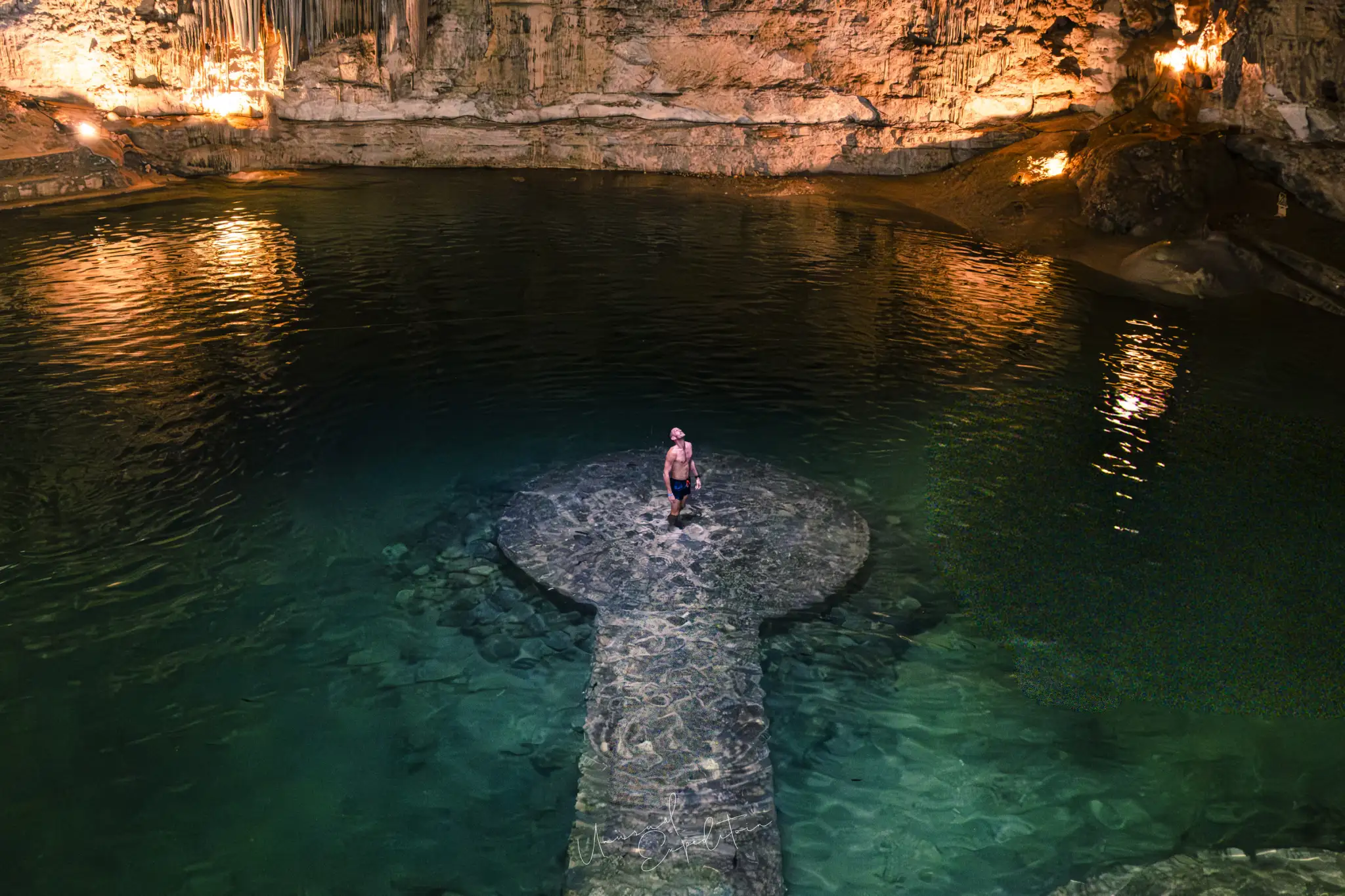
Cenote Suytun is the cave cenote near Valladolid with a round stone platform at the end of a walkway, in still turquoise water under a hole in the roof. On a clear day around midday a shaft of sunlight falls through that hole onto the platform, and that is the cenote photo people travel for. Under cloud there is no beam, but the lamps and the platform still make a strong frame. The other cenotes in Yucatán look nothing like it.
Cenotes are part of our Yucatan photography tour guide for a simple reason: they are where the middle of the day goes. The Maya sites are best at opening and late in the afternoon; the cenotes take the hours in between, out of the sun.
What is a cenote?
A cenote is a natural sinkhole where the limestone of the Yucatán peninsula has collapsed and opened a window onto the groundwater below. The peninsula has almost no rivers on its surface; the rain sinks straight through the porous rock into a vast aquifer, and the cenotes are the places where that water shows itself. Some are open to the sky like wells, some are half open, and some are caves reached by stairs, with only a small opening in the roof. Geologists have also traced a ring of cenotes in the north west of the peninsula that follows the buried edge of the Chicxulub impact crater, one of the reasons the Yucatán has so many. For the Maya the cenotes were the water supply and, at Chichén Itzá, a place of offerings.
Cenote Suytun: the platform and the light
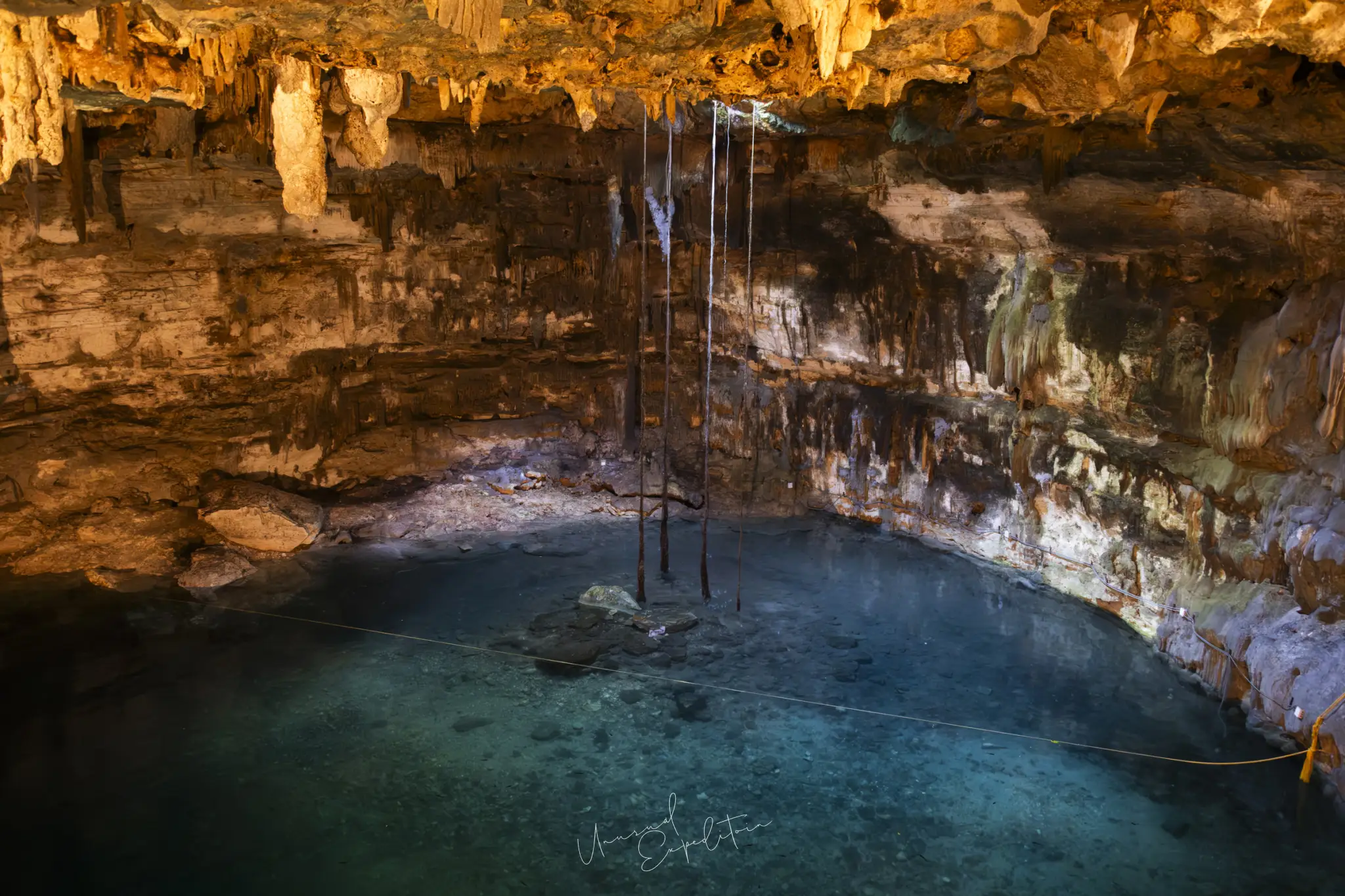
Cenote Suytun sits outside Valladolid in the state of Yucatán, is privately run, and is reached down a stairway into the cave. The walkway runs from the edge of the water to the round platform in the centre, so anyone standing on the platform becomes the subject of every frame taken from the stairs. That is the picture: a single figure on the platform, the water clear enough to see the stone below it, the cave walls glowing around the edges. Shoot it from the bottom of the stairs with a 24-70mm at the wide end, or from higher up with a 10-24mm to include the roof. Expect to wait your turn: the platform is the reason everyone comes, and on busy days people queue for it.
Suytun cenote illumination: when does the beam appear?
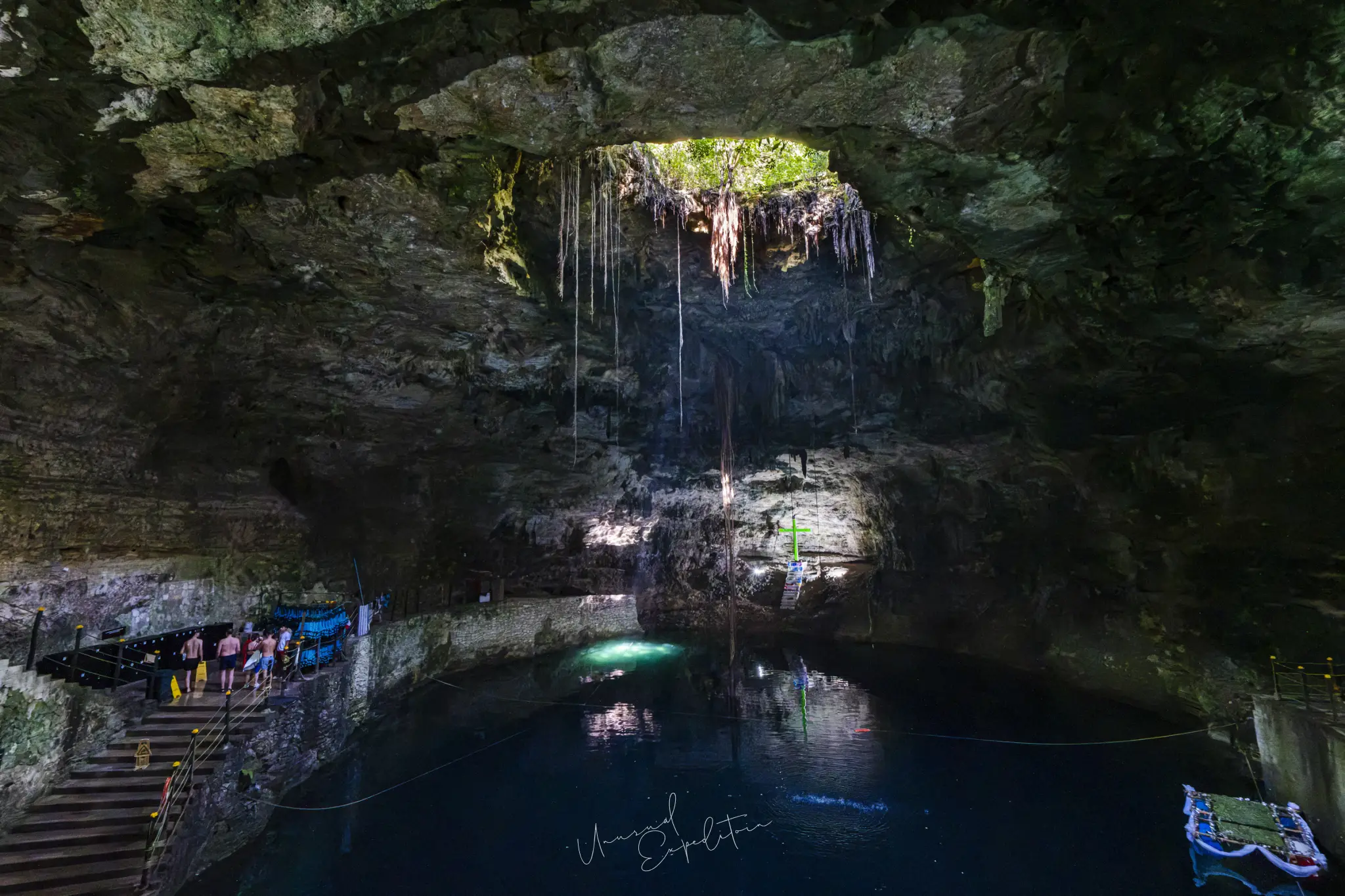
The Suytun cenote illumination, the beam of sunlight through the roof, needs two things: a high sun and a clear sky. Travel guides place it around the middle of the day, roughly from late morning to early afternoon, and it disappears as soon as a cloud covers the sun. Several guides suggest the drier months give the best odds, but there is no reliable calendar for it; the weather on the day decides. In the afternoon, when the beam has moved off, the cave is lit by its own lamps plus whatever daylight falls through the opening, and that softer light is kinder to skin and to the water. Our own frames from Suytun were made in that softer light, with a person on the platform for scale.
"Everyone waits for the beam, and the beam is a lottery. The picture I would rather have is the quiet one in the afternoon, one person on the platform, the water so still you can count the stones under it."
Joseph Mak, tour leader, Unusual Expedition
How to photograph a cenote
Photographing a cenote is low light photography with a very bright patch in it. Expose for the bright patch, the beam or the opening, and let the cave go dark, or bracket and blend if you want detail everywhere. Without a tripod, and tripods are often not allowed or not practical on the stairs, work at 1/60 of a second or faster with the ISO raised to 1,600 or more; modern sensors handle it. A wide lens matters more than a long one, because you are always inside the subject. Humidity is the hidden problem: a cold camera fogs the moment it enters a warm, wet cave, so let it adjust in its bag before you start. Swim first and photograph after, or the other way round, but keep the camera in a dry bag between the two.
The other cenotes in Yucatan worth a frame
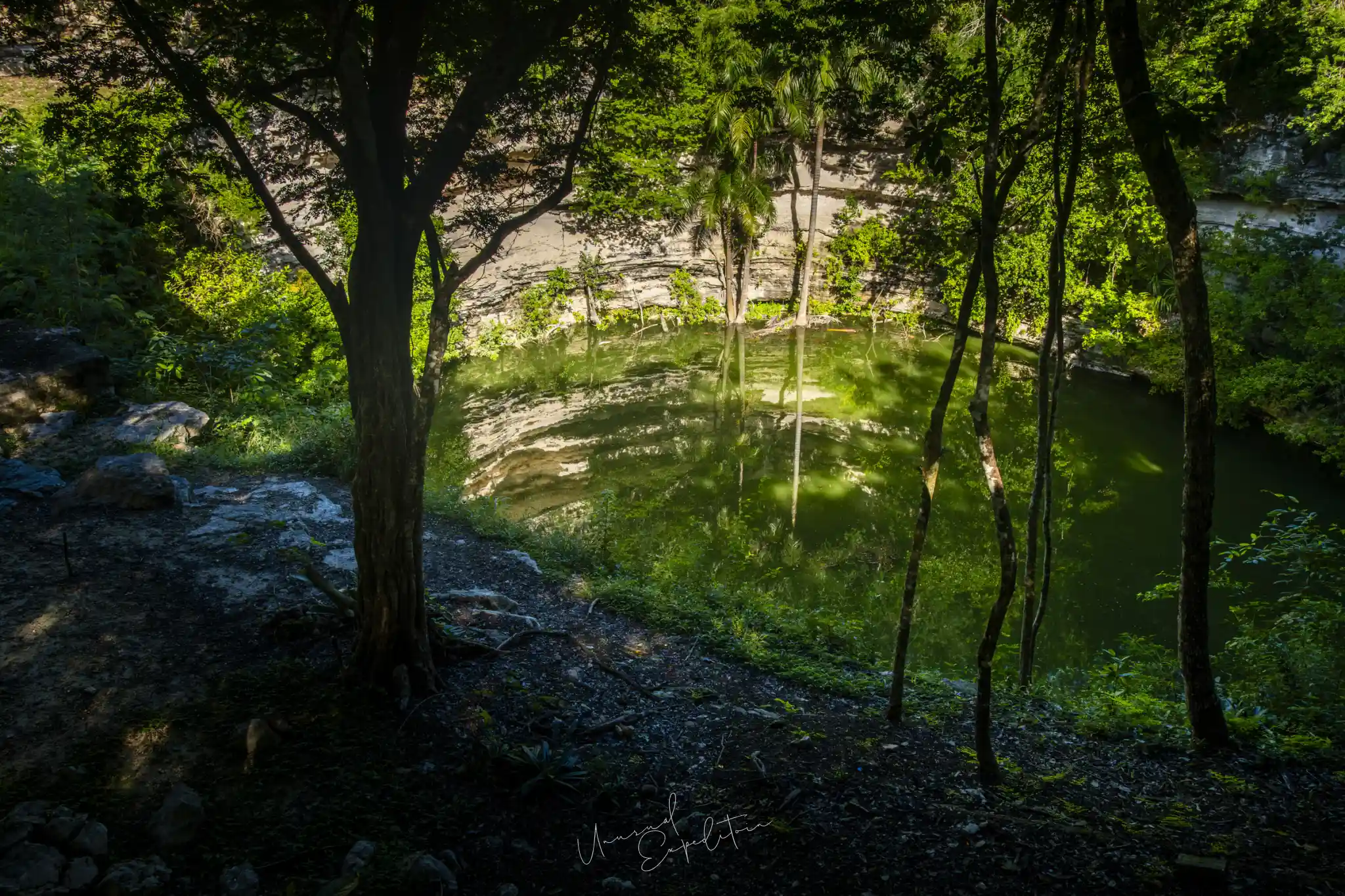
The cenotes in Yucatán fall into types, and each type photographs differently. Cave cenotes like Suytun, with stalactites and hanging roots, are about light falling into darkness. Open cenotes are about colour and greenery: a deep round pool, vines dropping from the rim, swimmers small at the bottom. The Sacred Cenote at Chichén Itzá is a cenote you photograph but do not swim in, a great green well at the end of a causeway north of El Castillo, where the Maya made offerings; it sits inside the archaeological zone and is covered by the ticket. Our Chichén Itzá photos article covers the rest of that site. Near Ek Balam there is also X'Canché, which we describe in Ek Balam photos.
| Type | Example | What it gives the camera | Best light |
|---|---|---|---|
| Cave cenote with platform | Suytun | One figure on stone in still water | Midday for the beam, afternoon for soft light |
| Cave cenote | Several around Valladolid | Stalactites, roots, lamplit water | Any time; the lamps do the work |
| Open cenote | Deep pools with stairs and vines | Colour, greenery, swimmers for scale | Midday, when the sun reaches the water |
| Sacred cenote | Chichén Itzá | History and setting, no swimming | Morning, with the site |
Pick one cave and one open cenote and you have both halves of the subject.
Cenote Suytun, Valladolid: practical notes
Because Cenote Suytun in Valladolid is a private operation, its hours, prices and rules are its own and change; check them locally before you go. Most cenotes ask swimmers to shower before entering and to skip sunscreen, because the water feeds the aquifer. Life jackets are common and sometimes required. Some cenotes charge extra for professional cameras or ban tripods; ask at the entrance. The busiest hours are the beam hours. For the season, including the rainy months when cenote water can turn cloudy, read best time to visit Yucatan for photography, and for the sites the cenotes sit between, Ek Balam photos and Chichén Itzá photos.
Come down into the cenotes with us
The cenotes are the cool middle of our Yucatán days, between the Maya cities and Valladolid at dusk. Photographers join us from anywhere in the world; the current departure, when one is scheduled, is on our Mexico photography tours page.
Yucatan photography tours
The next Yucatan departure is announced on the Yucatan photography tours page, with previous expeditions and all the planning guides.
Explore Yucatan in depth
- Yucatan Photography Tour: The Complete GuideMexico
- Maya Culture in Yucatan: Embroidery, Tortillas and PortraitsMexico
- Tulum Ruins Photos: the Maya City on the CaribbeanMexico
- Is Chichen Itza Worth It? Crowds, Vendors and Getting ThereMexico
- Ek Balam Photos: the Acrópolis Without the CrowdsMexico
- Chichen Itza Photos: El Castillo, the Serpents and Las MonjasMexico
- Best Time to Visit Yucatan for PhotographyMexico
Upcoming Photo Tours
- Egypt Photo Tour – EgyptEgypt 12 Dec 2026 To 20 Dec 2026
- Inner Mongolia Winter Owl Photo Tour – ChinaChina 01 Jan 2027 To 04 Jan 2027
- Inner Mongolia Winter Photo Tour – ChinaChina 05 Jan 2027 To 11 Jan 2027
- Mekong And Central Highland Vietnam Photo Tour - VietnamVietnam 16 Jan 2027 To 24 Jan 2027