
Ek Balam Photos: the Acrópolis Without the Crowds
Ek Balam photos: the Acrópolis and its stucco doorway, the best light, climbing, the cenote nearby and a short Ek Balam history.
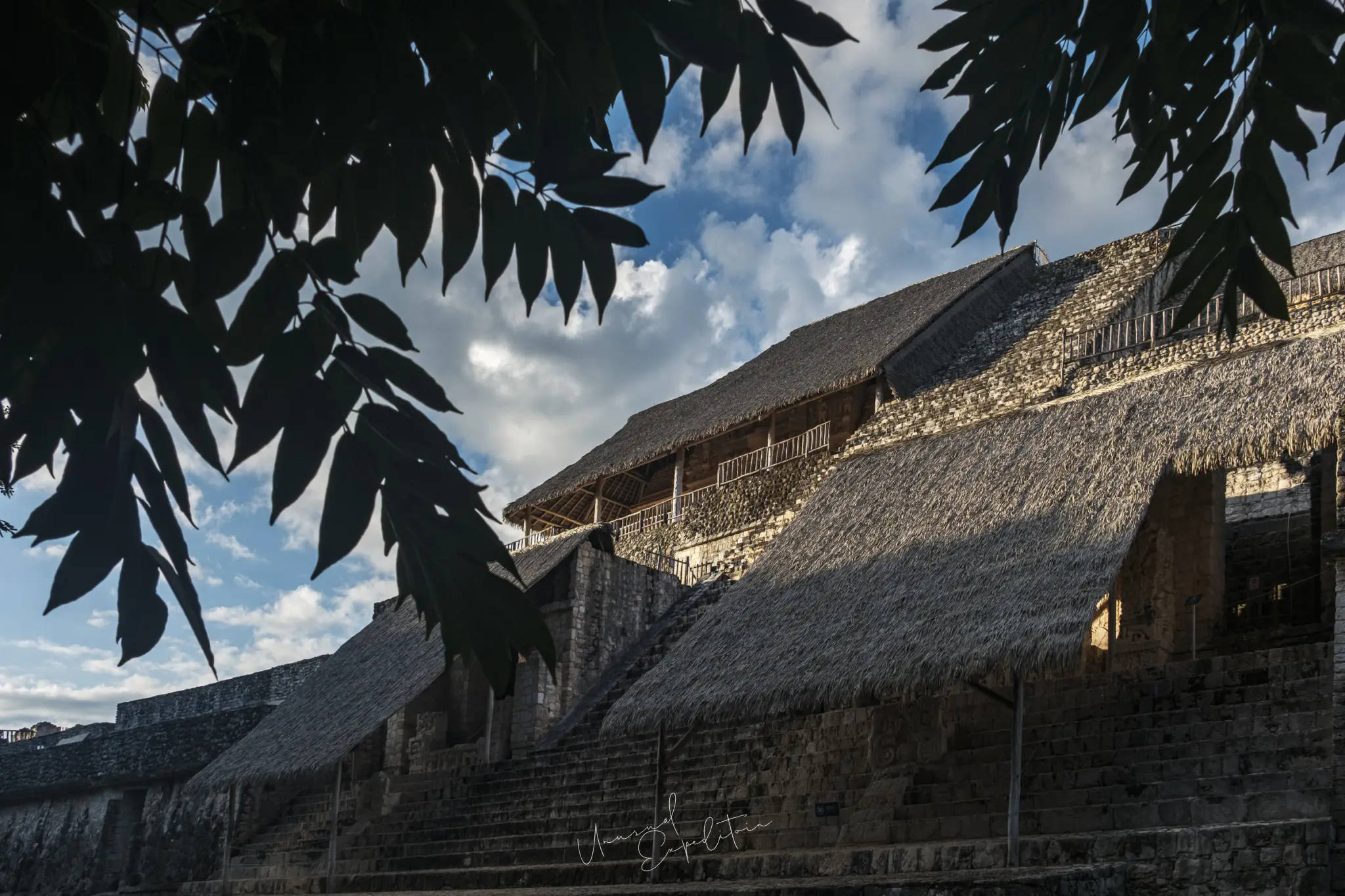
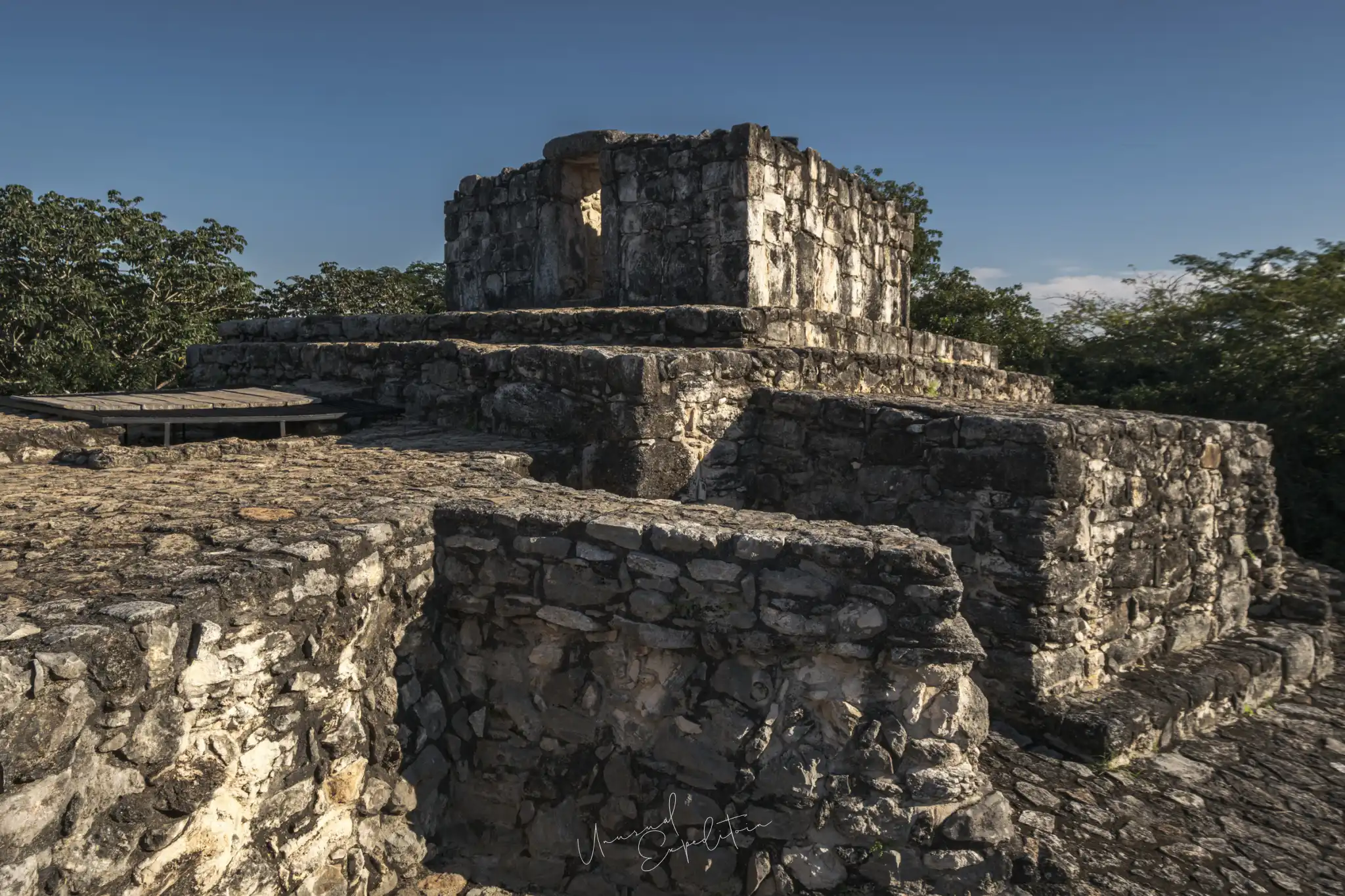
Ek Balam photos come down to three subjects: the Acrópolis under its thatched shelters, the stucco doorway halfway up it, carved as a monster's open jaws with winged figures, and the smaller temples on the lawns below, with the forest close on every side. The site lies north of Valladolid in Yucatán and is quiet enough that most frames have no one in them. Mid to late afternoon, with the sun low on the stone, is its best light.
Ek Balam is one chapter of our Yucatan photography tour guide, and the site we pair with Chichén Itzá on purpose: the big one at opening, the quiet one in the afternoon. What follows is where to stand, what the light does, what the site lets you do, and how it compares.
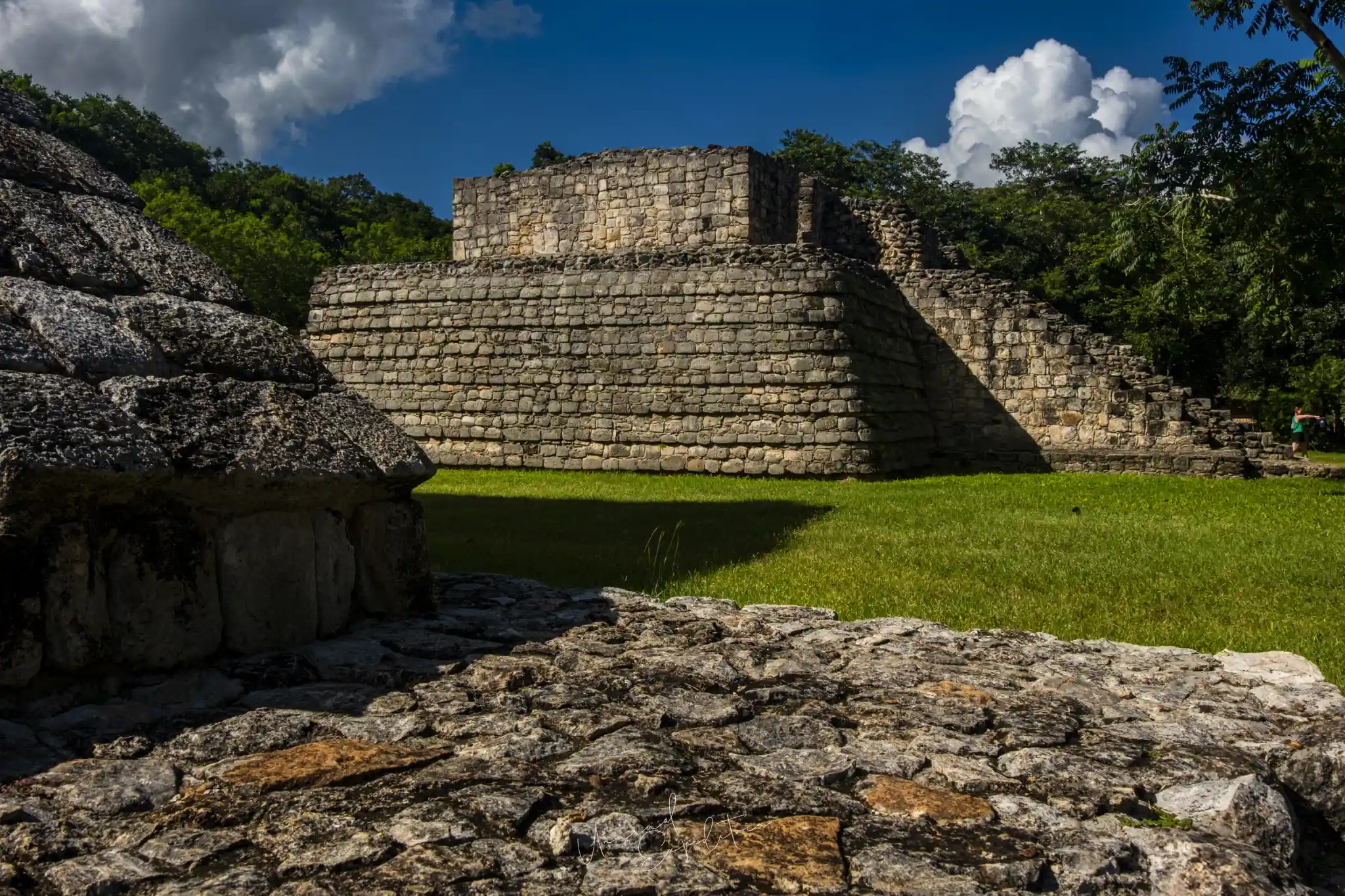
Ek Balam ruins: what is there to photograph?
The Ek Balam ruins are compact. A low wall once ringed the centre, and inside it the buildings sit close together around grassy plazas: two twin temples facing each other, a ball court, a tall oval structure, and on the north side the Acrópolis, by far the largest building on the site. INAH, Mexico's national institute of anthropology and history, gives the Acrópolis as about 160 metres long, with six levels built in many stages. Around the plazas the forest is close, so the lawns are bright and the edges are dark, which suits a photographer who exposes for the stone and lets the trees go black. Most of the good frames here are made with a 24-70mm from ground level, looking up at a stair or along a wall; wide views of the whole site are few.
The Acrópolis and the stucco doorway
The Acrópolis is the reason Ek Balam is on a photography trip. Halfway up its front, protected by a thatched roof, is the entrance INAH describes as a monster's mouth with large fangs, modelled in stucco, with seated and winged human figures around it. According to INAH this was the residence and tomb of the ruler Ukit Kan Lek Tok', and the room behind the doorway held his remains with an offering of thousands of shells. The thatch that protects the stucco also shades it, so the doorway is best photographed when the sun is low enough to reach under the roof, and with a wide lens from close in. From below, the thatched shelters stacked up the Acrópolis make a strong frame of their own, especially seen through the leaves at the edge of the plaza.
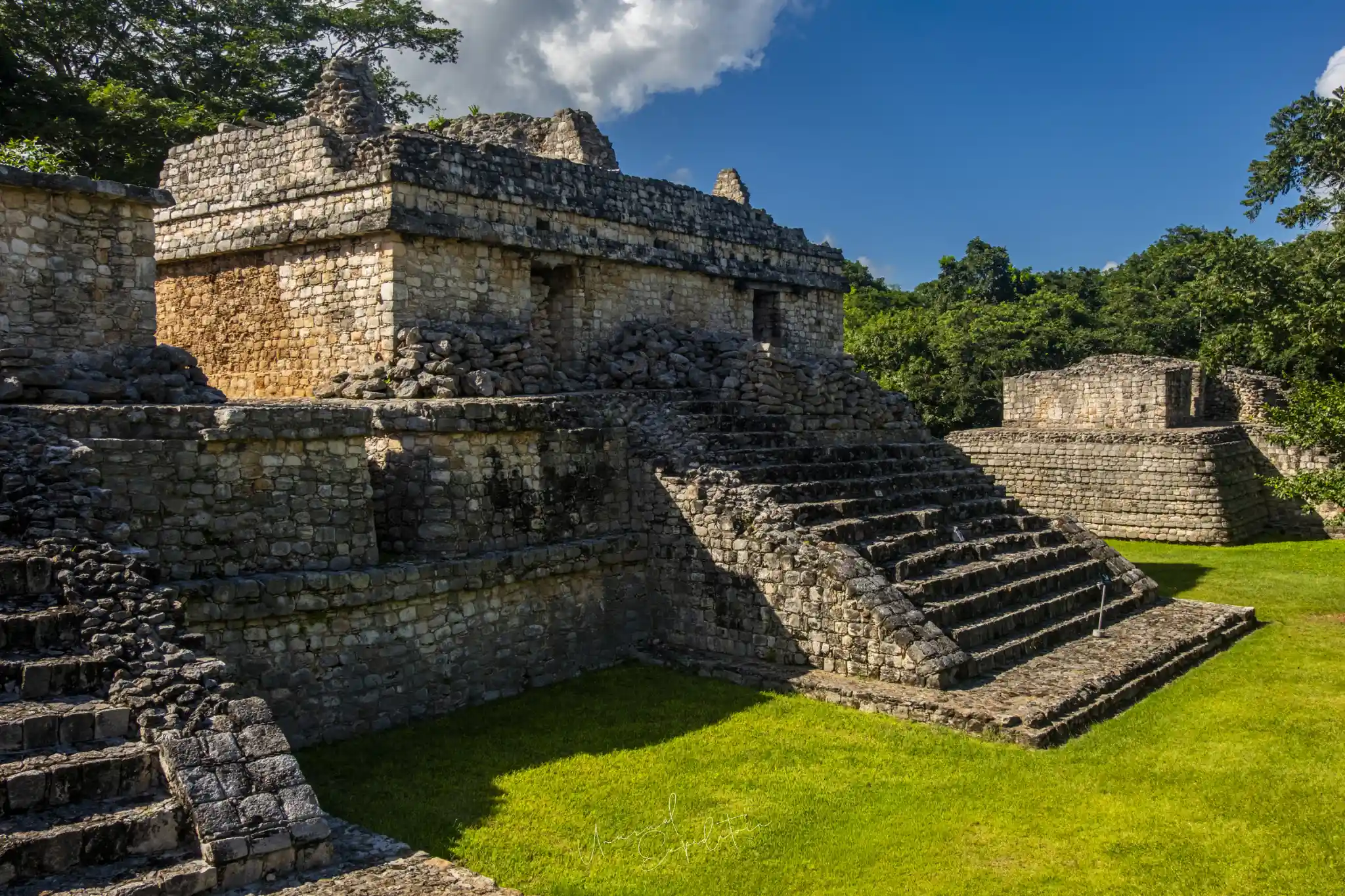
Can you still climb at Ek Balam?
Ek Balam is one of the Maya sites where visitors have been allowed to climb the main building, unlike El Castillo at Chichén Itzá, where climbing has been banned since 2008. Recent visitor reports and Yucatán tourism pages still describe the climb up the Acrópolis, with a rope down the centre of the stair to hold. INAH has not published a separate rule on it that we could find, and these rules change, so check at the gate on the day. If it is open, the top gives the one view that shows the whole site, the plazas, the twin temples and the flat green forest to the horizon in every direction. If it is closed, the raised platforms around the plazas give a lower version of the same view.
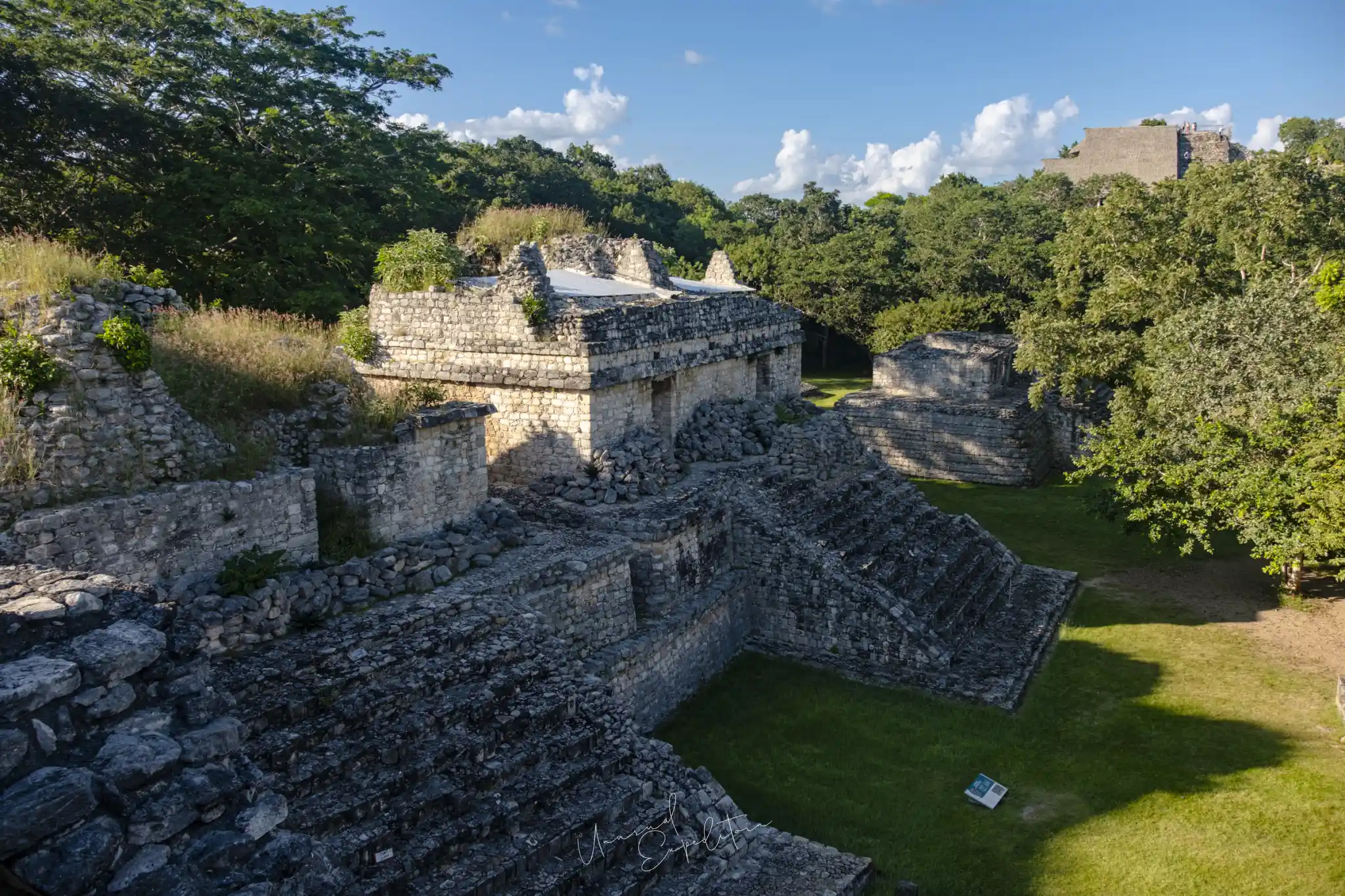
When is the light best at Ek Balam?
The light at Ek Balam is best from mid afternoon until it goes flat. The low sun comes across the plazas and lights the west faces, the steps throw long shadows, and the grey limestone turns warm. INAH lists the site as open every day from 8:00 to 17:00 with last entry at 16:00, so the afternoon is not a short window. The middle of the day is the time to be somewhere else: the light on pale stone is hard, and in the Yucatán heat a cave cenote is a better use of it, as we explain in Cenote Suytun photos. Morning works too, but by then you would rather be at Chichén Itzá for the opening, which is why the two sites split the day the way they do. On clouded afternoons Ek Balam still works: soft light suits the stucco and the textures of the walls.
"Chichén Itzá is the picture people know. Ek Balam is the one they come home talking about, because they had a whole plaza to themselves in good light and nobody walked into the frame."
Joseph Mak, tour leader, Unusual Expedition
Ek Balam history in a few lines
Ek Balam history is mostly a Classic Maya story. The city flourished in the centuries before Chichén Itzá rose to dominate the north of the peninsula, and the stucco on the Acrópolis survived because, as INAH explains, the facade of the tomb was later covered over and protected. The name is usually translated from Yucatec Maya as black jaguar, or dark star. For a photographer the history matters in one practical way: the surviving stucco is fragile, which is why it sits under shelters and why the rules about touching and flash are strict here. Keep a hand off the walls, keep the flash off, and shoot the doorway from where the barrier lets you stand.
Ek Balam cenote: X'Canché
The Ek Balam cenote people search for is X'Canché, a cenote close to the archaeological zone that is run separately and reached from the site area. We have not photographed it on our trips, so we cannot show it here; if you want a cenote on an Ek Balam afternoon it is the obvious one to add, and you should check its own opening hours locally. The cenotes we do photograph, including Suytun with its stone platform and the open sinkholes with their hanging roots, are covered in Cenote Suytun photos.
Ek Balam or Chichén Itzá?
| Question | Ek Balam | Chichén Itzá |
|---|---|---|
| Crowds | Light all day | Heavy after the first hour |
| Signature subject | Stucco doorway on the Acrópolis | El Castillo on its lawn |
| Climbing | Described as allowed; check on the day | Banned on El Castillo since 2008 |
| Best light | Mid to late afternoon | At opening |
| Lens | 24-70mm, a 10-24mm for the doorway | 24-70mm and 70-200mm |
They are not alternatives; on our trips they are the morning and the afternoon of the same idea.
If you can only do one, read Is Chichén Itzá worth it? before you decide, and look at Chichén Itzá photos for what the bigger site offers. For the season, best time to visit Yucatan for photography covers heat and rain. The five sites of our whole Mexico route, from Tula to Tulum, are compared in Mexico's pyramids.
Practical notes for Ek Balam
Ek Balam is small enough to cover on foot without hurrying, and there is little shade on the plazas, so a hat and water matter more than a second lens. Tripods and video rigs need permission under INAH rules, and drones are not allowed without INAH authorisation, as at every federal archaeological site. Entry is paid at the gate and the state of Yucatán sets fees of its own at several sites; prices change, so check the official INAH listing before you go. Wear shoes that grip if you plan to climb, and keep both hands free on the stair: put the camera on a strap, not in your hand.
Photograph Ek Balam with us
Ek Balam is our afternoon in the Maya forest, after Chichén Itzá and before Valladolid at dusk. Photographers join us from anywhere in the world, and the current departure, when one is scheduled, is on our Mexico photography tours page with every Mexico guide.
Yucatan photography tours
The next Yucatan departure is announced on the Yucatan photography tours page, with previous expeditions and all the planning guides.
Explore Yucatan in depth
- Yucatan Photography Tour: The Complete GuideMexico
- Maya Culture in Yucatan: Embroidery, Tortillas and PortraitsMexico
- Tulum Ruins Photos: the Maya City on the CaribbeanMexico
- Is Chichen Itza Worth It? Crowds, Vendors and Getting ThereMexico
- Chichen Itza Photos: El Castillo, the Serpents and Las MonjasMexico
- Cenote Suytun Photos and the Other Cenotes Worth a FrameMexico
- Best Time to Visit Yucatan for PhotographyMexico
Upcoming Photo Tours
- Egypt Photo Tour – EgyptEgypt 12 Dec 2026 To 20 Dec 2026
- Inner Mongolia Winter Owl Photo Tour – ChinaChina 01 Jan 2027 To 04 Jan 2027
- Inner Mongolia Winter Photo Tour – ChinaChina 05 Jan 2027 To 11 Jan 2027
- Mekong And Central Highland Vietnam Photo Tour - VietnamVietnam 16 Jan 2027 To 24 Jan 2027