
Maya Culture in Yucatan: Embroidery, Tortillas and Portraits
Mayan culture in the Yucatan peninsula: hipil embroidery, tortillas over a wood fire, costumed performers and portrait etiquette.
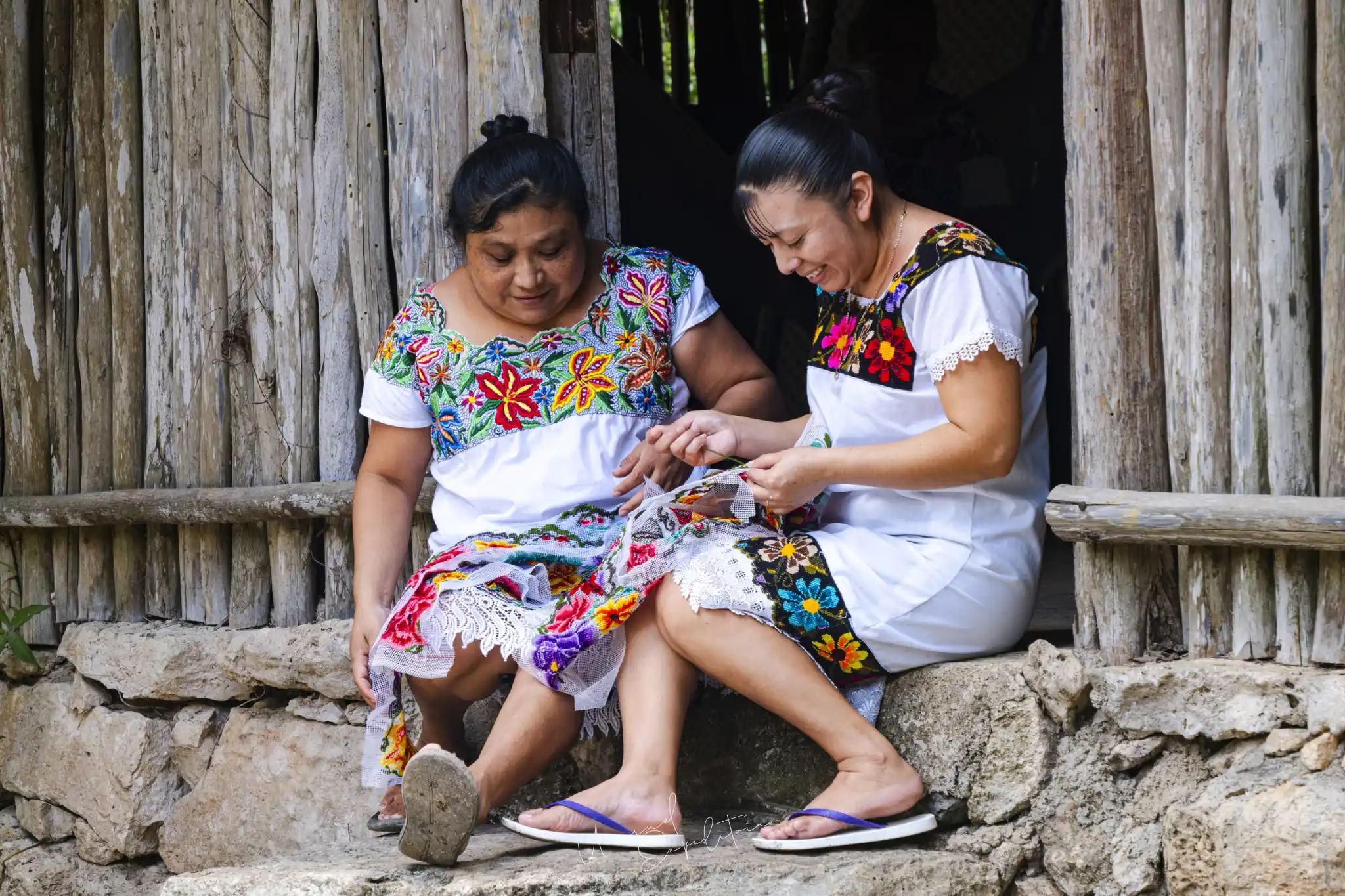
Mayan culture in the Yucatan peninsula, Mexico, is living, not only a set of ruins. Yucatec Maya is still spoken in the villages, women still embroider the white hipil dresses with bands of flowers and wear them every day, and tortillas are still pressed by hand and cooked over a wood fire. For a photographer this is the human side of the trip, and it asks for permission, time, a fair arrangement and a lens used from close in.
This is the people chapter of our Yucatan photography tour guide. The sites give the stone; this article is about the embroidery, the kitchens and the costumed performers you meet near the ruins, and how to photograph all three with respect.
Yucatan culture: what you see today
Yucatan culture today is a mix of Maya roots and colonial Spanish layers, and you see both on the same street. In Valladolid and the villages around it, Maya surnames, Maya words on signs and the Yucatec Maya language are part of daily life, and older women in particular wear the hipil, the square-necked white dress with an embroidered yoke and hem. The thatched oval house with walls of poles, the kind you find behind many village homes, is still in use as a kitchen and workshop. Markets sell embroidered blouses, hammocks and the local food. None of this is staged, and that is the point: the best pictures come from slowing down in one place.
Maya embroidery: the hipil and its flowers
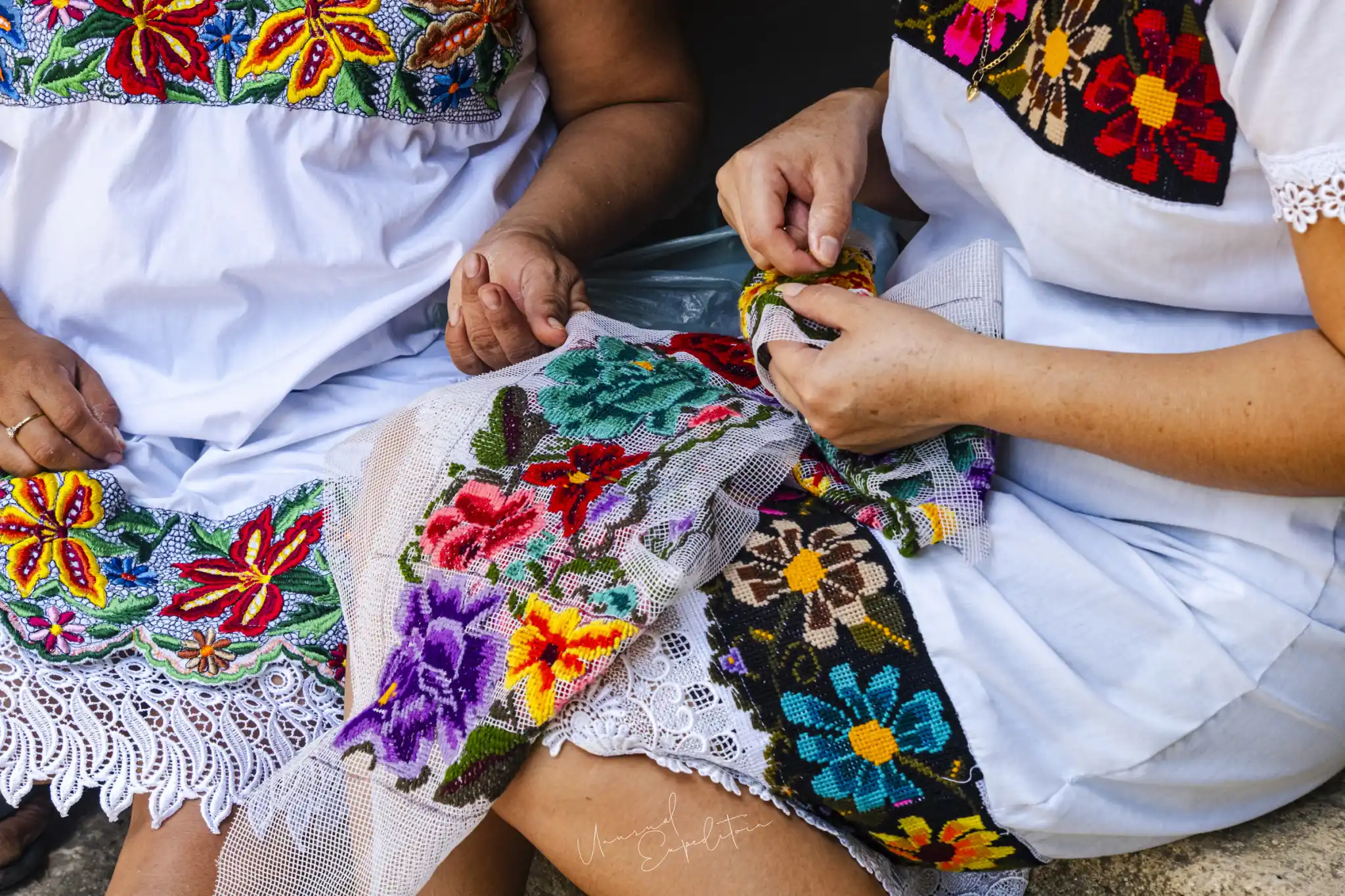
Maya embroidery in the Yucatán is worked on the hipil, the traditional Yucatecan dress, which local writers distinguish from the huipil worn further south. The bands of flowers are stitched by hand or on a pedal machine, in cross stitch and in older stitches such as xmanikté, a name taken from a Maya word for a flower. The formal version, worn with a lace petticoat and an embroidered collar, is called the terno and appears at weddings and dances. The Yucatán state government and UNESCO have worked together on programmes to recognise and keep alive Yucatecan embroidery. In a frame, the embroidery reads best close up: the needle in the cloth, the flowers sharp, the hands in the frame and the faces out of it if the women prefer.
How to arrange a visit
The embroidery and kitchen pictures here were made at a home visit where the women knew photographers were coming, and it shows in how relaxed they are. That is the way to photograph daily Maya life: set the visit up through a local guide, agree any payment for their time before you arrive, let the women choose where to sit, and take a no to a close portrait without argument. A doorway of a thatched house gives soft side light and a plain background of poles, which is why so many of the best frames end up there. Spend most of the visit watching the work and photograph in the gaps. Children in the house stay out of the pictures.
"I tell people to put the camera down for the first part of the visit. Watch the needle for a while, ask about the pattern, eat the tortilla. When you pick the camera up again they have forgotten it, and that is when the hands relax."
Joseph Mak, tour leader, Unusual Expedition
Tortillas over a wood fire
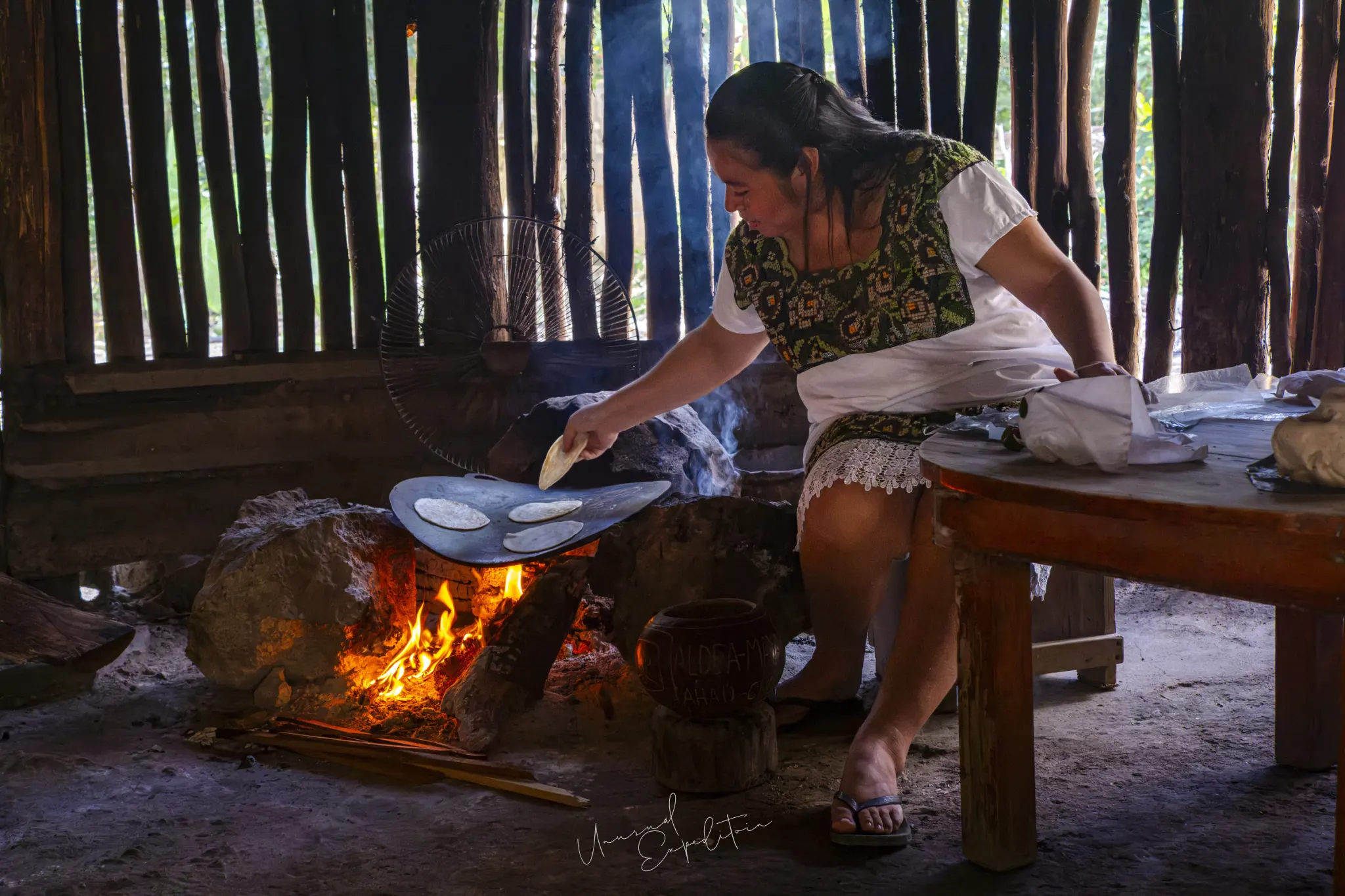
Tortillas are the other picture in a Maya kitchen. The dough is pressed by hand into thin rounds and laid on a clay or metal griddle over an open wood fire on the floor or on a low hearth, then turned with the fingers. The light in a thatched kitchen comes from the doorway and from gaps between the poles, with the fire as a second, warm source low in the frame, so it is a scene for a raised ISO and a fast lens, never flash. Smoke softens everything. Shoot from low down, near the fire's level, and let the background of poles go dark.
Costumed performers near the sites
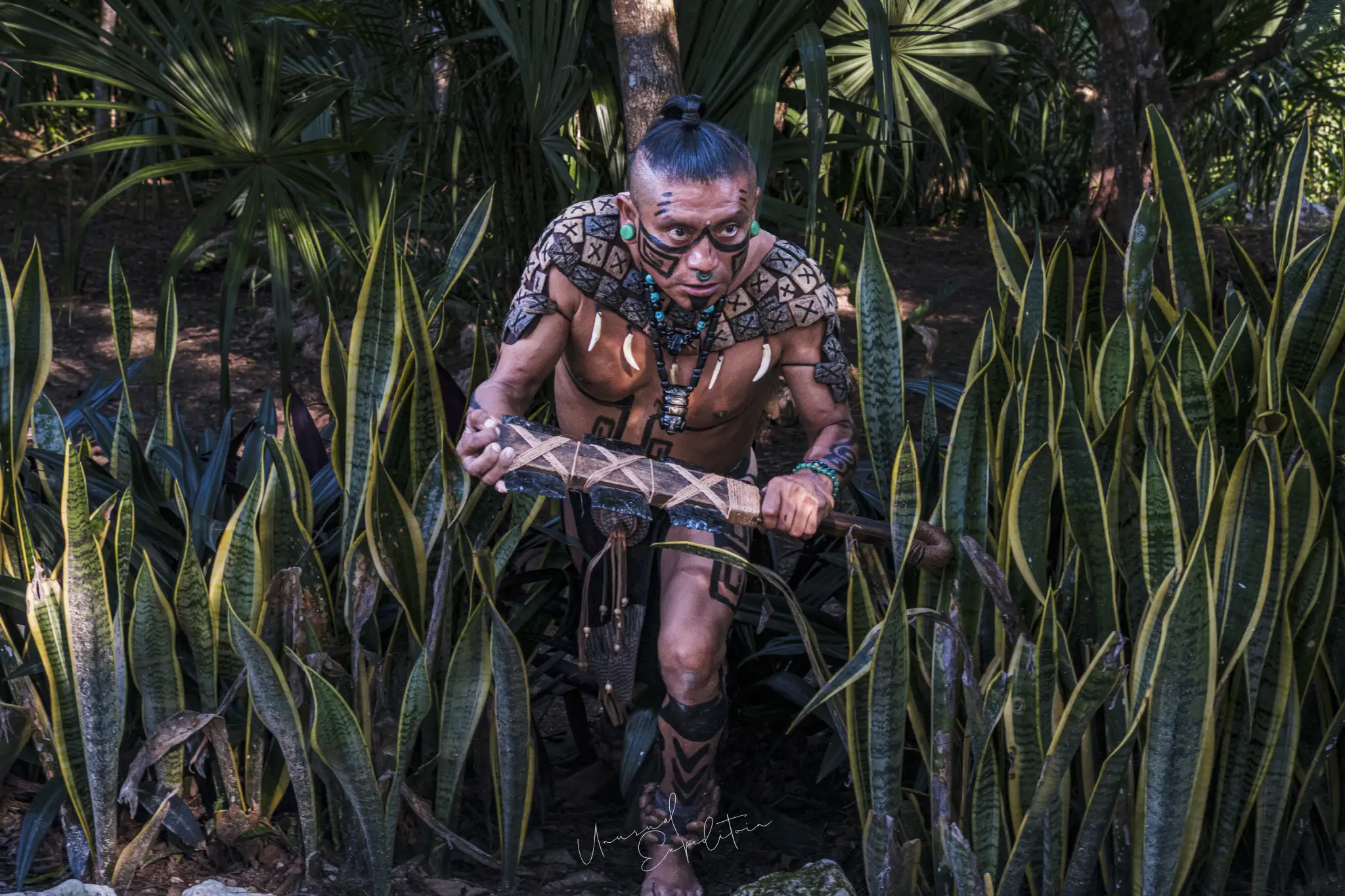
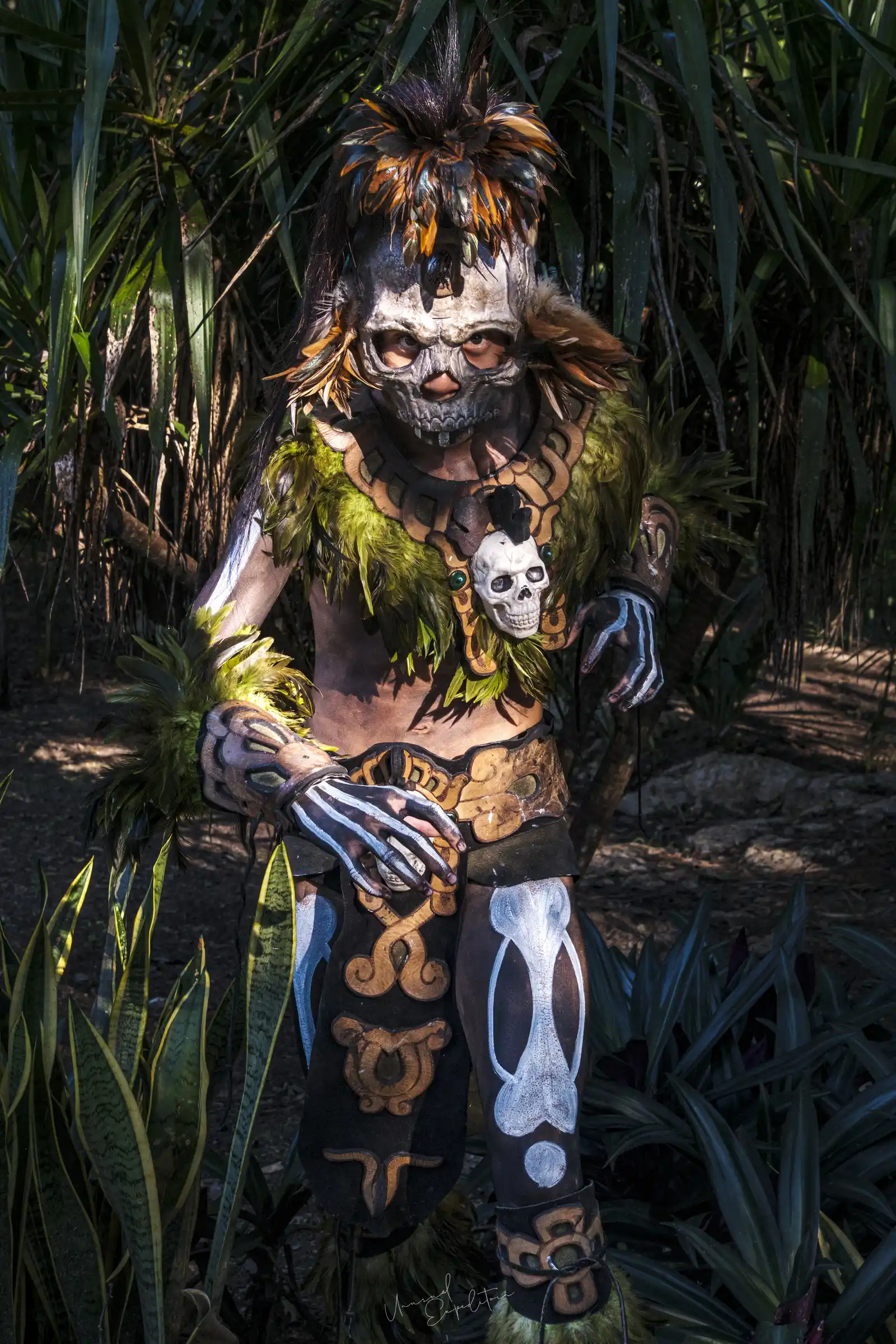
Near the archaeological sites and the cenotes you will meet performers in Maya-inspired costume: feathered headdresses, painted bodies, carved props, some in skull paint. They are there to be photographed, and they expect to be paid for it; agree the price before the first frame, not after. These are portraits of a performance, not documents of daily Maya life, and captions should say so. They are also a gift for the camera: the performers know how to pose and hold still, and the plants and shade around them give natural backdrops. A 24-70mm at the long end, slightly below eye level, keeps the background soft.
Portraits with respect: the rules we follow
| Situation | What we do | Lens |
|---|---|---|
| Arranged embroidery visit | Payment agreed beforehand, the women choose the pose and the distance | 24-70mm, close |
| Kitchen and tortillas | Ask before entering, no flash, stay out of the cook's way | Fast prime or 24-70mm |
| Performers at the sites | Agree the fee first, caption as a performance | 24-70mm, long end |
| Markets and streets | Ask with a gesture, accept a no, no children | 24-70mm |
| Churches and ceremonies | No photography during services unless invited | None |
Every row comes down to the same thing: the person in the frame decides.
Where Maya culture fits on a Yucatan trip
On our trips the people pictures sit between the stone and the water. Mornings go to the sites, Chichén Itzá photos at opening and Ek Balam photos in the afternoon light, the middle of the day to the cenotes, and the visits fit wherever a family can host us. A wide lens is not the tool here; a 24-70mm or a fast 35mm or 50mm prime is. Spanish helps, and a few words of Yucatec Maya, starting with bix a beel for how are you, earn a smile. For the coast and its own scenes, see Tulum ruins photos.
Meet the Yucatan with us
The visits to Maya families are the part of our Yucatán days that people remember longest. Photographers join us from anywhere in the world, and the current departure, when one is scheduled, is on our Mexico photography tours page.
Yucatan photography tours
The next Yucatan departure is announced on the Yucatan photography tours page, with previous expeditions and all the planning guides.
Explore Yucatan in depth
- Yucatan Photography Tour: The Complete GuideMexico
- Tulum Ruins Photos: the Maya City on the CaribbeanMexico
- Is Chichen Itza Worth It? Crowds, Vendors and Getting ThereMexico
- Ek Balam Photos: the Acrópolis Without the CrowdsMexico
- Chichen Itza Photos: El Castillo, the Serpents and Las MonjasMexico
- Cenote Suytun Photos and the Other Cenotes Worth a FrameMexico
- Best Time to Visit Yucatan for PhotographyMexico
Upcoming Photo Tours
- Egypt Photo Tour – EgyptEgypt 12 Dec 2026 To 20 Dec 2026
- Inner Mongolia Winter Owl Photo Tour – ChinaChina 01 Jan 2027 To 04 Jan 2027
- Inner Mongolia Winter Photo Tour – ChinaChina 05 Jan 2027 To 11 Jan 2027
- Mekong And Central Highland Vietnam Photo Tour - VietnamVietnam 16 Jan 2027 To 24 Jan 2027