
Chichen Itza Photos: El Castillo, the Serpents and Las Monjas
Chichen Itza photos: El Castillo at opening, the serpent heads, Las Monjas masks, El Caracol, lenses and INAH camera rules.
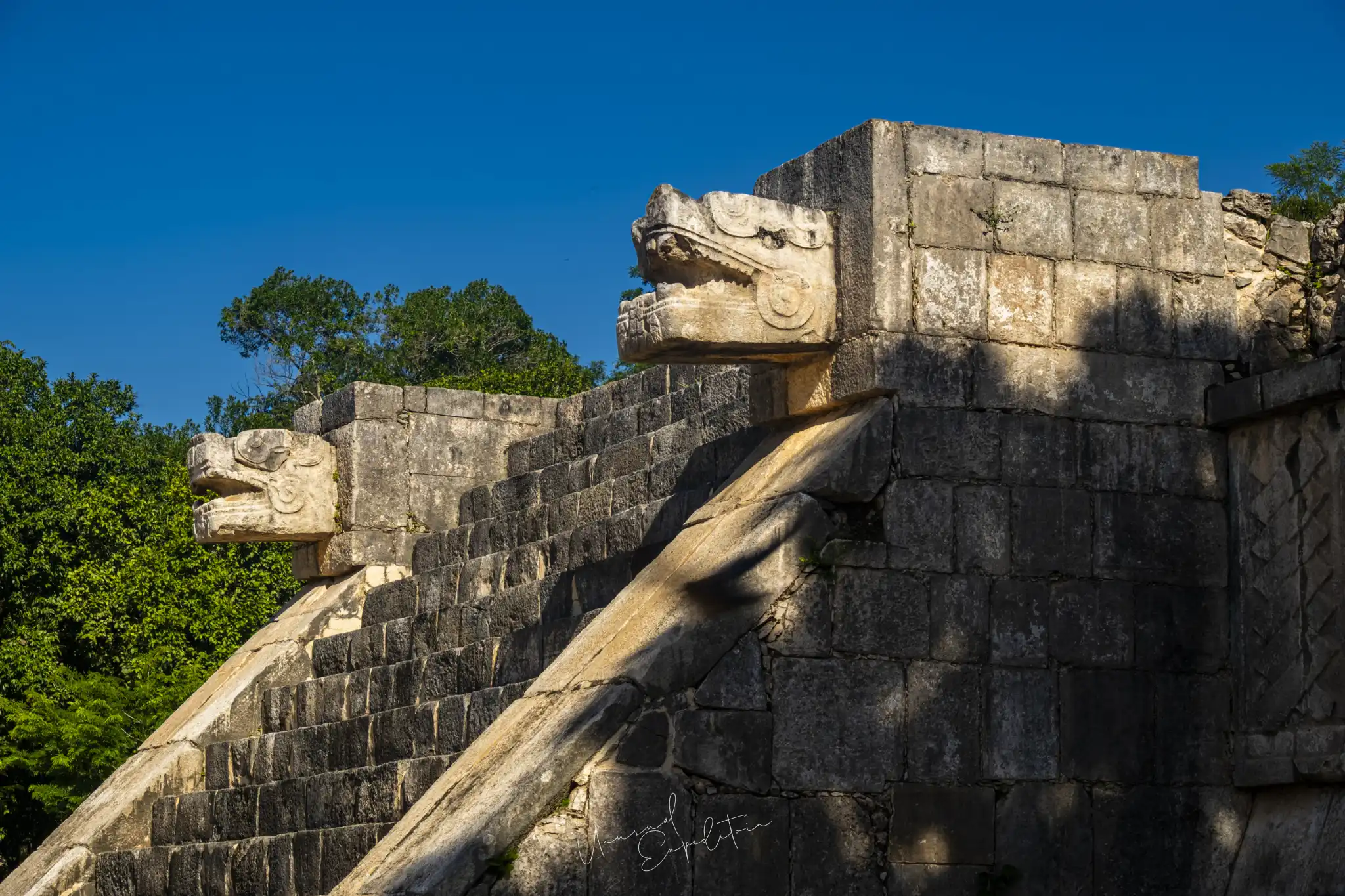
Chichen Itza photos that stand out are made in the first hour after the gates open, when El Castillo stands alone on its lawn and the low sun draws every terrace in shadow. After that the site is still worth photographing, but the subject changes: the serpent heads, the carved masks of the Las Monjas group, the round observatory called El Caracol and the smaller temples on the edges. This is where to stand for each and how to frame it.
Chichén Itzá is the biggest single site in our Yucatan photography tour guide, and the one most people already have a picture of in their head. The aim here is to come home with something better than the postcard.
Chichen Itza photography: what you are photographing
Chichén Itzá was one of the great Maya cities of the Yucatan, and UNESCO inscribed it as a World Heritage Site in 1988 for the way it joins Maya building with ideas from central Mexico. For a photographer the site falls into three parts. The Great Plaza holds El Castillo, the pyramid of Kukulcán, with the Temple of the Warriors and the Great Ball Court around it. To the south, the older Las Monjas group and El Caracol carry the densest carving. Between and around them are smaller platforms and temples, many with serpent heads at the foot of their stairs. INAH manages the site and lists it as open every day from 8:00, last entry 15:00. There is no sunrise inside the site, so the light you get at the gate is the best of the day.
El Castillo: the photo of Chichen Itza everyone wants
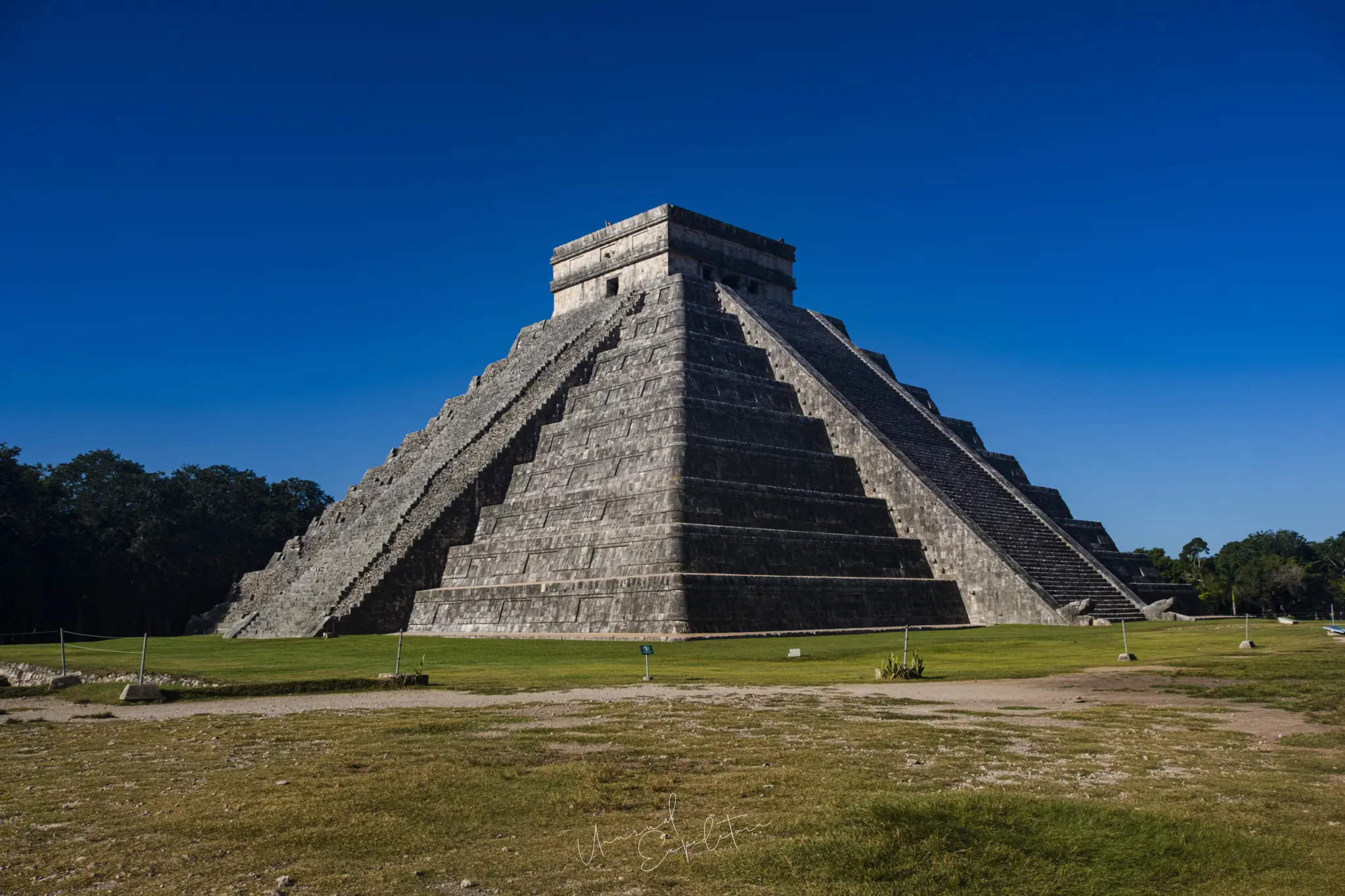
El Castillo is the photo of Chichén Itzá that sells the trip, and in the morning it is easy to make well. Its four stairways, one for each side, and its nine stepped terraces read as a clean triangle against a clear sky. Walk to a corner and the pyramid turns into two faces, one lit and one in shade, which shows its shape better than a flat front view. The east face takes the sun first, so start there. A wide lens from close makes the stairs tower; a longer lens from the far edge of the lawn keeps the proportions true and lets the dark line of forest sit under it. Climbing has been banned since 2008, so nobody will be on the steps, and in the first hour nobody in front of them either.
The serpent heads of Kukulcán
The feathered serpent, Kukulcán, is everywhere at Chichén Itzá once you start looking: carved heads with open jaws at the foot of El Castillo's north stairway, along the balustrades of the platforms and on the columns of the Temple of the Warriors. They make the best detail frames on the site, because the deep carving holds shadow even in hard light. Shoot them from low, so the jaws come towards the lens and the sky goes behind. The famous light effect also belongs here: at the spring and autumn equinoxes the late afternoon sun throws a line of triangles down the north stairway that joins the serpent head at the bottom, so the body seems to slide down the pyramid. It draws very large crowds, and it is not a time we are there.
Las Monjas and the carved facades
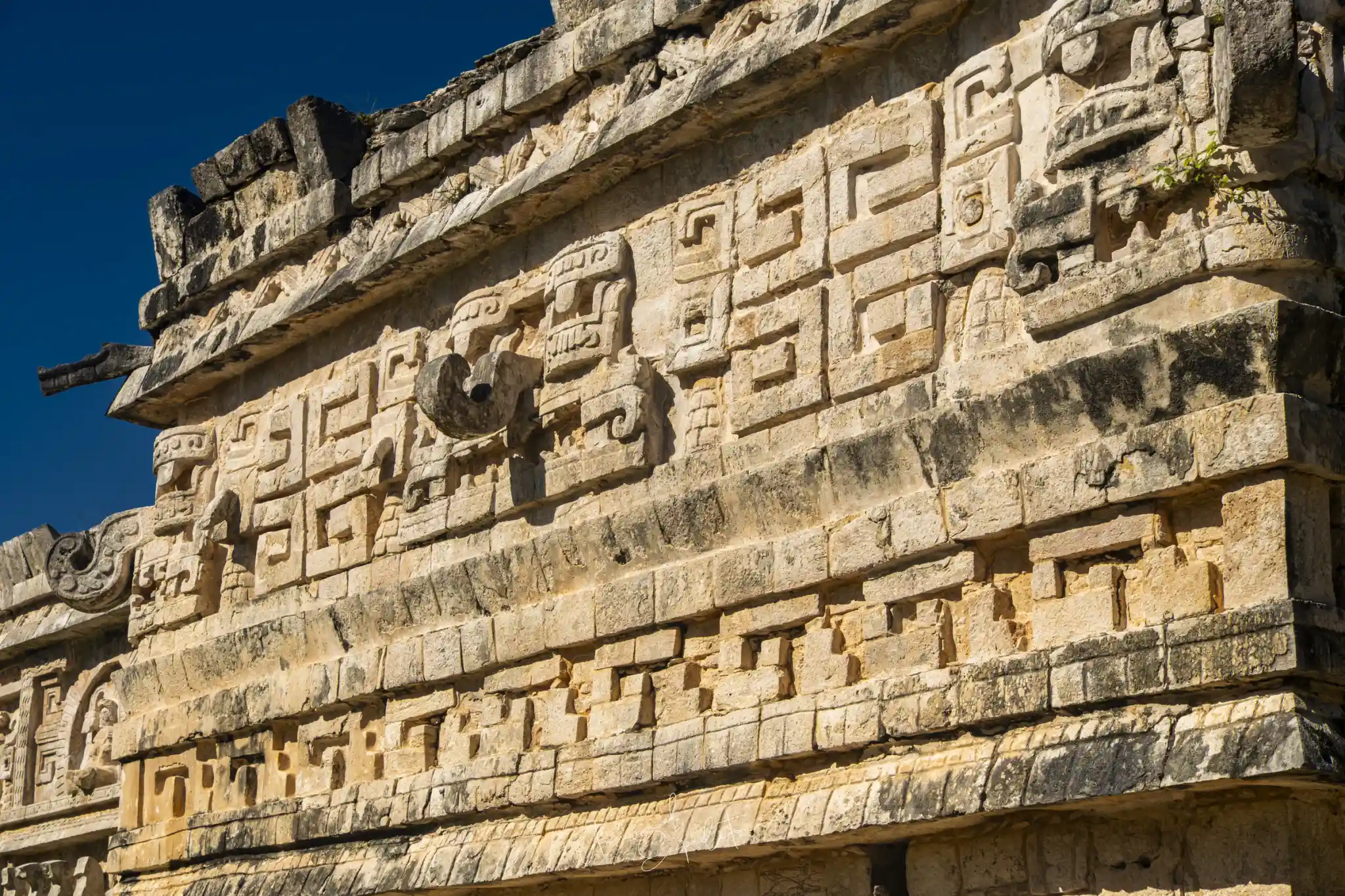
The Las Monjas group, in the south of the site, is the place for texture. Its facades are covered in stone masks of the rain god Chaac, with curled noses that stick out from the wall, and in stepped frets and lattices that turn into pure pattern when you fill the frame with them. This is the part of Chichén Itzá most visitors pass quickly on the way back to the buses, which is why it stays quiet when the Great Plaza is full. Side light is everything: a facade lit straight on looks flat, the same facade with the sun across it looks carved. Work it with a short telephoto and let a corner of blue sky in to give the stone colour.
El Caracol and the smaller temples
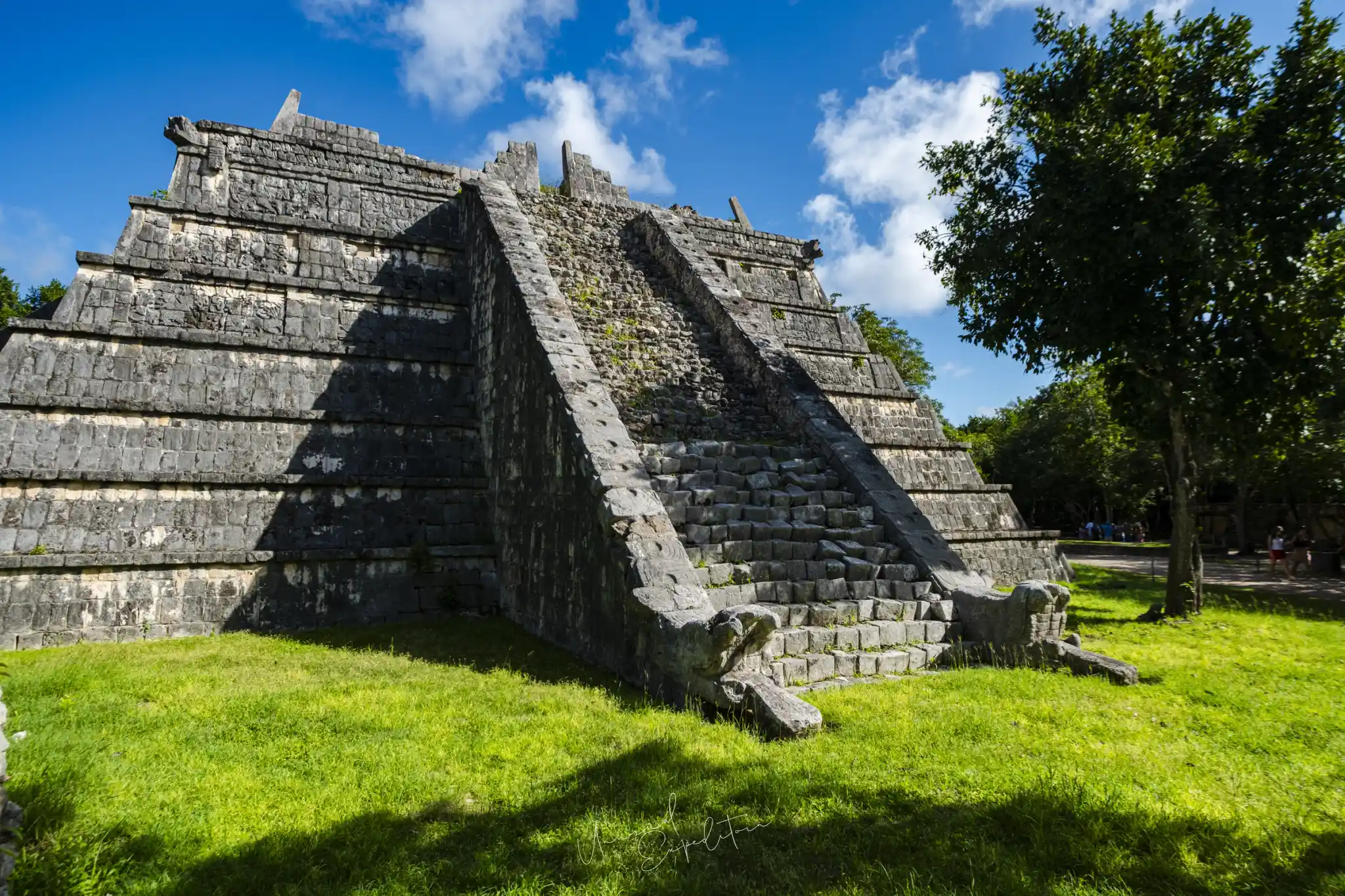
El Caracol, the round building on a square platform, is usually read as an observatory, and it is the one structure at Chichén Itzá that does not look like anything else on the site. Shoot it from the lawn to the west so the dome sits against the sky with its platform below. Around the edges of the site are smaller pyramids and temples that make good secondary frames, especially those with their own serpent heads at the foot of the stair and trees growing close behind them. We picture one of them below; we do not name it in the caption, because we would rather check than guess.
"At Chichén Itzá I tell people to take their El Castillo picture in the first ten minutes and then forget the pyramid. The pictures nobody else has are on the Las Monjas walls, and you have them to yourself while everyone queues for the same view."
Joseph Mak, tour leader, Unusual Expedition
Chichen Itza photos by subject and light
| Subject | Where | Best light | Lens |
|---|---|---|---|
| El Castillo, whole | Great Plaza, from a corner | At opening | 16-35mm, 24-70mm |
| Serpent heads | North stairway, platforms | Morning side light | 24-70mm from low |
| Chaac masks and fretwork | Las Monjas group | Side light, any time | 70-200mm |
| El Caracol | From the west lawn | Morning | 24-70mm |
| Vendors' masks and calendars | Along the paths | Shade, late morning | 24-70mm |
The pyramid needs the early hour; everything else on the list survives the midday sun.
Camera rules at Chichen Itza
INAH's listing for Chichén Itzá says no flash and charges an extra fee for professional cameras, and tripods, video rigs and drones need the institute's permission. A normal camera, hand held, is fine on a normal ticket. Stay behind the ropes: they are there because the stone is fragile, and guards enforce them. The state of Yucatán adds its own fee to the federal ticket at this site; both change, so check the official INAH page for the current amounts. Bring water and a hat, because there is little shade on the Great Plaza. For the practical side, the crowds, the vendors and how people get there, see is Chichén Itzá worth it.
Where Chichen Itza fits in the Yucatan
Chichén Itzá is the morning of a Yucatan day. The quieter site of Ek Balam is better in the afternoon, and the middle of the day belongs in a cenote, which we cover in Cenote Suytun photos and in Ek Balam photos. For the coast, the next site is in Tulum ruins photos.
Come to Chichen Itza with us
We go in at opening, on the Yucatan days of our Day of the Dead trip. The next departure, when it is on sale, is on the Mexico photography tours page.
Yucatan photography tours
The next Yucatan departure is announced on the Yucatan photography tours page, with previous expeditions and all the planning guides.
Explore Yucatan in depth
- Yucatan Photography Tour: The Complete GuideMexico
- Maya Culture in Yucatan: Embroidery, Tortillas and PortraitsMexico
- Tulum Ruins Photos: the Maya City on the CaribbeanMexico
- Is Chichen Itza Worth It? Crowds, Vendors and Getting ThereMexico
- Ek Balam Photos: the Acrópolis Without the CrowdsMexico
- Cenote Suytun Photos and the Other Cenotes Worth a FrameMexico
- Best Time to Visit Yucatan for PhotographyMexico
Upcoming Photo Tours
- Egypt Photo Tour – EgyptEgypt 12 Dec 2026 To 20 Dec 2026
- Inner Mongolia Winter Owl Photo Tour – ChinaChina 01 Jan 2027 To 04 Jan 2027
- Inner Mongolia Winter Photo Tour – ChinaChina 05 Jan 2027 To 11 Jan 2027
- Mekong And Central Highland Vietnam Photo Tour - VietnamVietnam 16 Jan 2027 To 24 Jan 2027