
Tulum Ruins Photos: the Maya City on the Caribbean
Tulum ruins photos: the best places on the cliff path, the beach, Tulum from the water, the iguanas, hours and the rules.
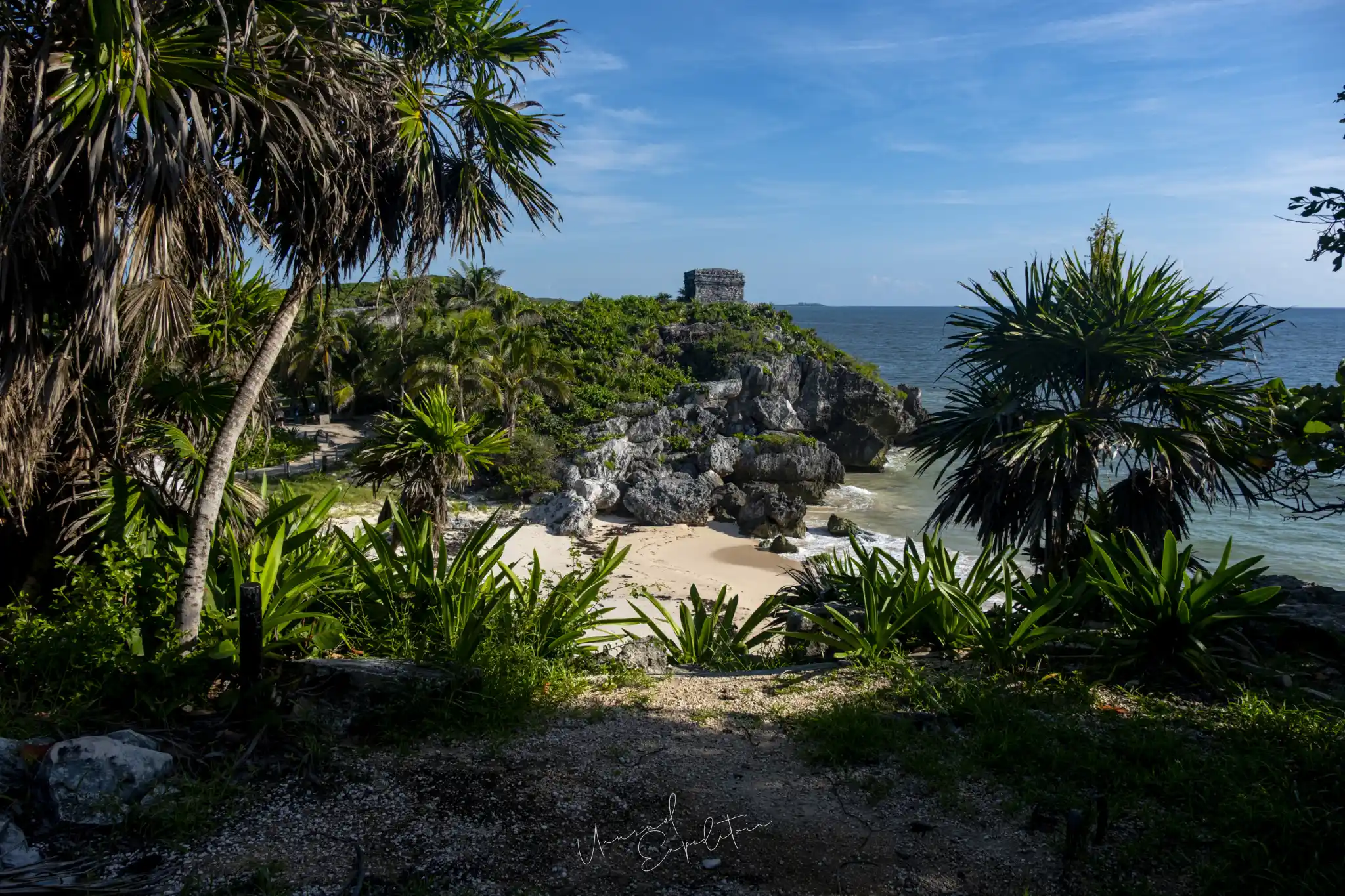
Tulum ruins photos are about one thing no other Maya site has: stone temples on a limestone cliff with the Caribbean underneath. The strongest frames put the temple called El Castillo, the cliff and the water together, from the paths above the beach coves inside the site or from a boat offshore. Inside the walls the smaller temples, the palace and the iguanas fill the rest of a morning. Go in at opening, because Tulum gets hot and busy fast.
Tulum is the coastal end of our Yucatan photography tour guide, the site where the trip meets the sea. Here is where to stand, what light to expect and what the rules allow.
What are the Tulum ruins?
The Tulum ruins are the remains of a walled Maya town on the east coast of the Yucatan peninsula, in the state of Quintana Roo. It was one of the later Maya cities, a port on the coastal trade routes, and it was still inhabited when Spanish ships first sailed along this shore. The town is enclosed on three sides by a stone wall, with the sea as the fourth. The buildings are smaller than at Chichén Itzá, and the carving is less dense; what Tulum has instead is position. El Castillo stands on the highest point of the cliff above a small cove, and from almost anywhere on the site the turquoise water is in the frame.
Best places at the Tulum ruins for photos
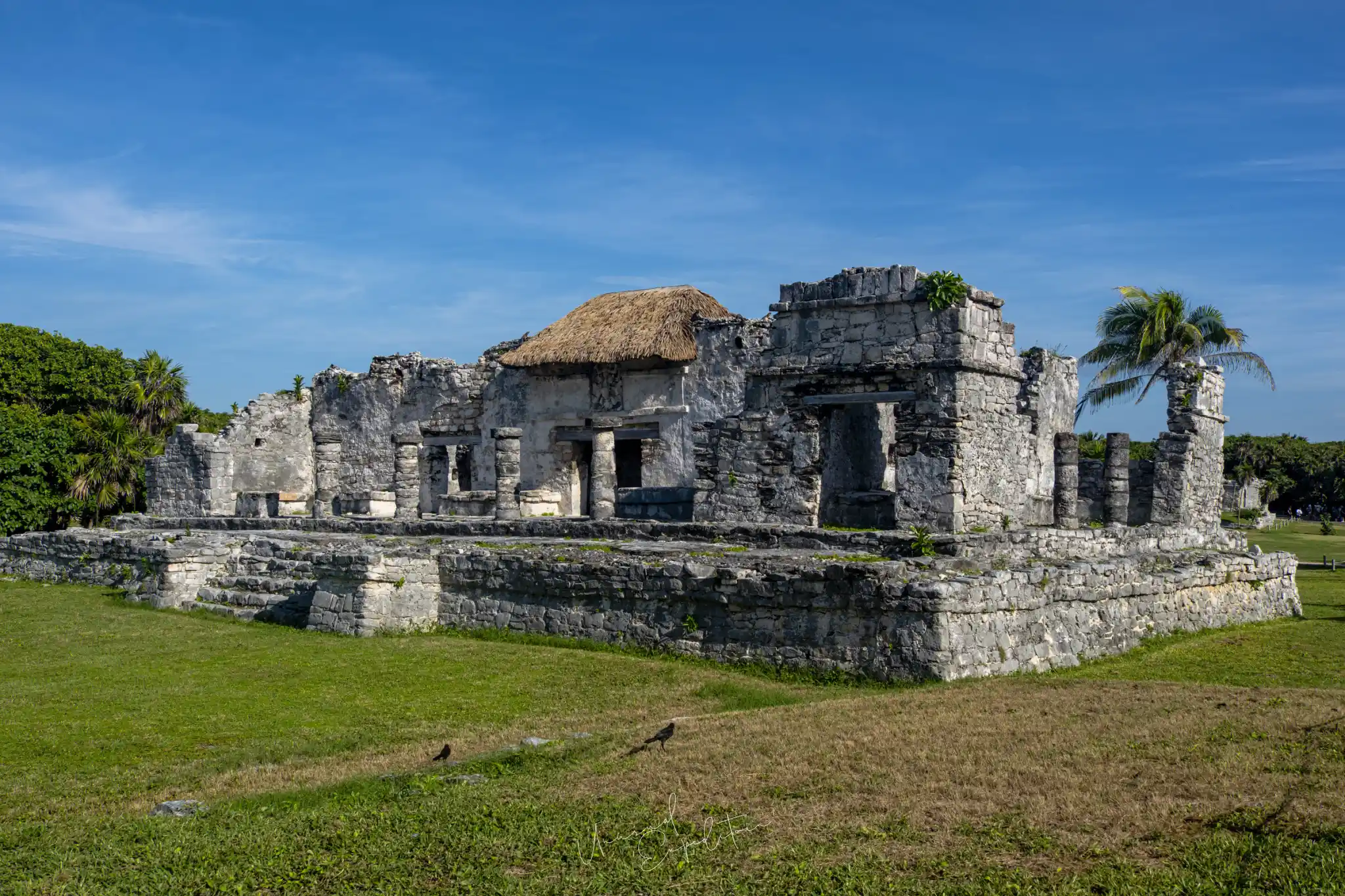
The best places at the Tulum ruins for photos are along the cliff path, where the view opens over the beach coves. From the south side of the main cove you look across sand and palms to El Castillo on its rock, which is the classic frame and the one on this page's card. Further north the path runs above a long beach with the temple small on the skyline, which works with a wider lens and the palms in front. Inside the walls, the low temples and the palace with its thatched shelter are better from the grass, with the sky behind them. Rope lines keep visitors off the buildings and off some of the cliff edge, so the views are from set points; walk the whole circuit first, then go back to the two or three that suit the light.
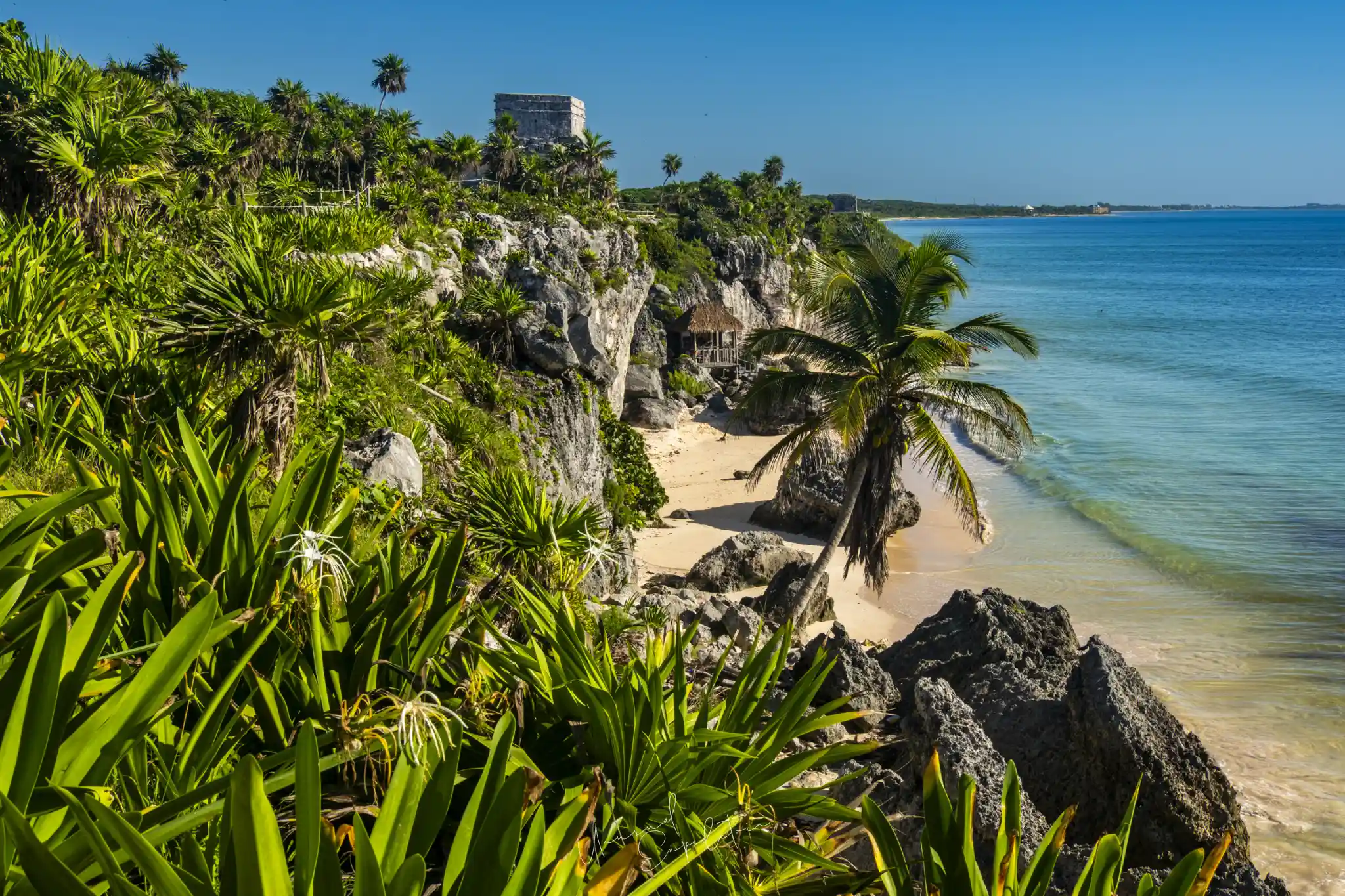
Tulum ruins beach
The Tulum ruins beach is the cove under El Castillo, reached by wooden steps from the site, and it is the one beach in Mexico with a Maya temple above it. When access is open, it gives you a frame looking up at the cliff, with the temple on top and the water at your feet. It is also the place everyone wants to swim, so by mid morning the sand is busy. Access to the beach is sometimes closed, so do not plan a picture around it. The safer beach frames are from above, on the cliff path, where the cove, the palms and the colour of the water read together.
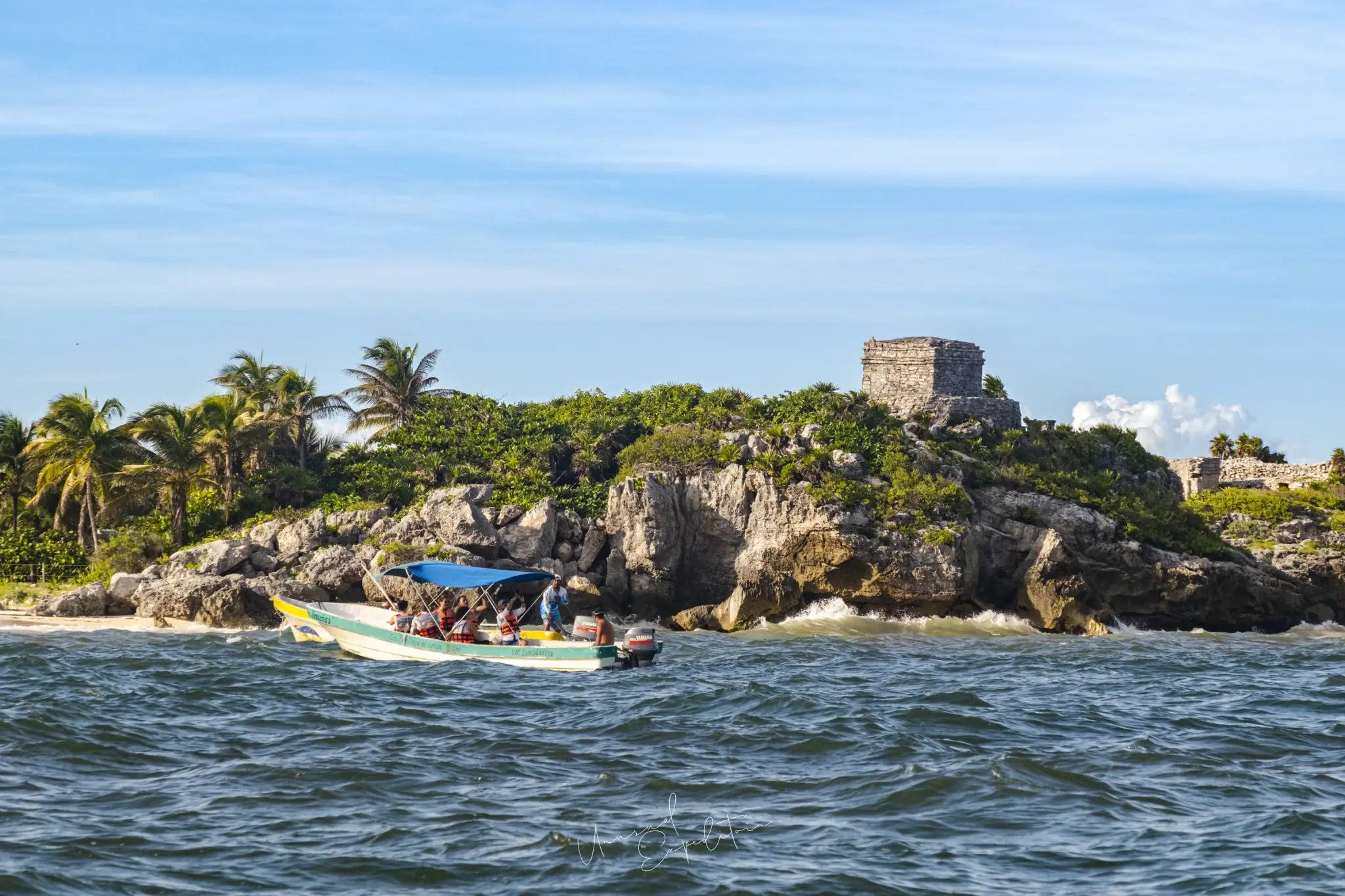
Tulum from the water
Tulum from the water is the picture that shows why the town was built here. From a boat off the beach the whole cliff stretches across the frame, El Castillo at the top, the smaller temple on the northern headland, the rock dropping into the waves. We photographed it from a small boat with a 70-200mm, which lets you choose a single temple or the whole line of cliff. Boat trips along this coast are sold separately from the ticket to the ruins. The sea moves, so shoot at a fast shutter speed and take many frames; the one with the horizon level and the boat steady is the keeper.
"At Tulum the temple is not the subject, the cliff is. Frame the stone with the water under it, and the picture tells you where you are. Frame the temple alone and it could be anywhere in the Yucatan."
Joseph Mak, tour leader, Unusual Expedition
The palace, the temples and the iguanas
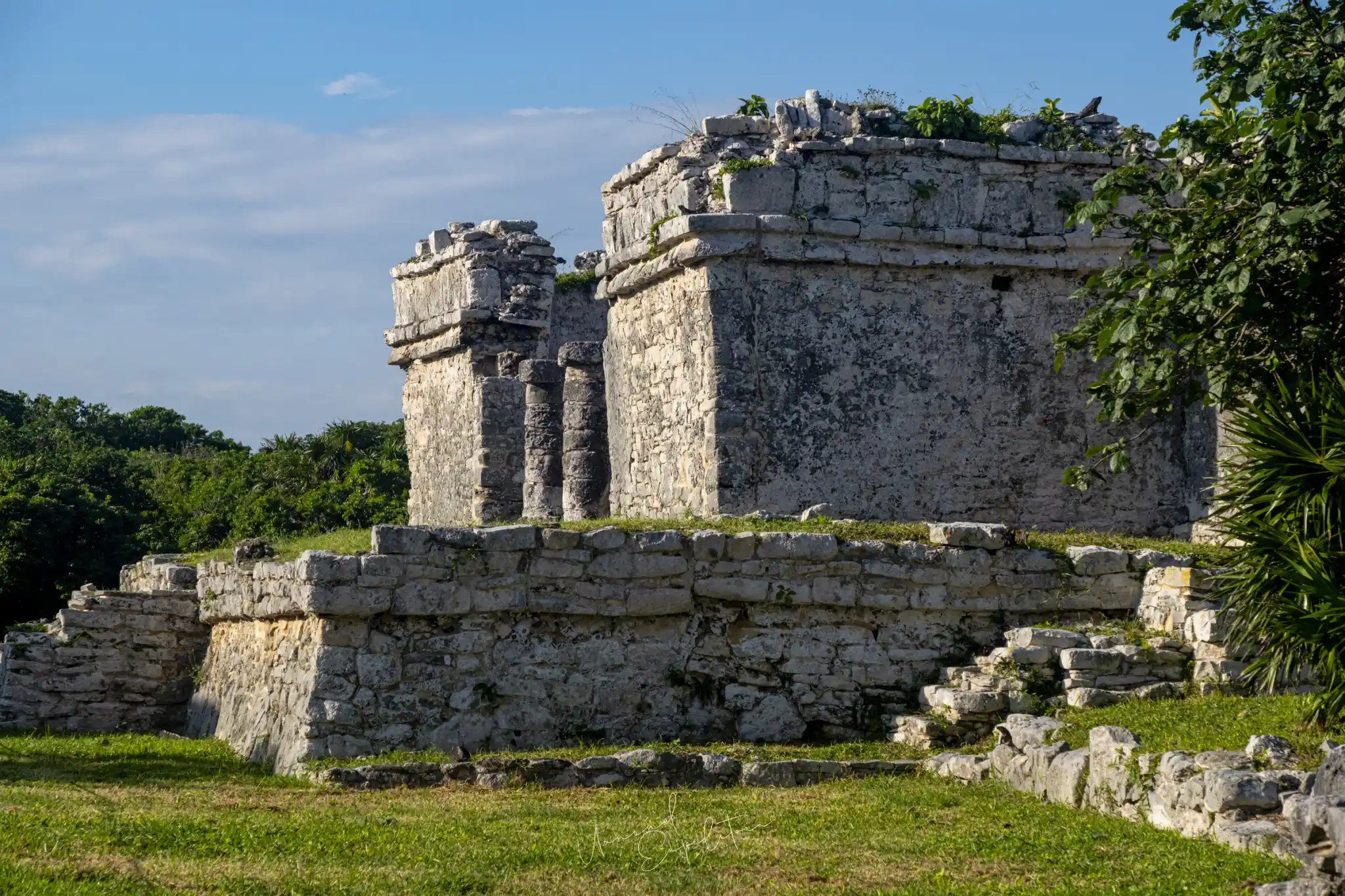
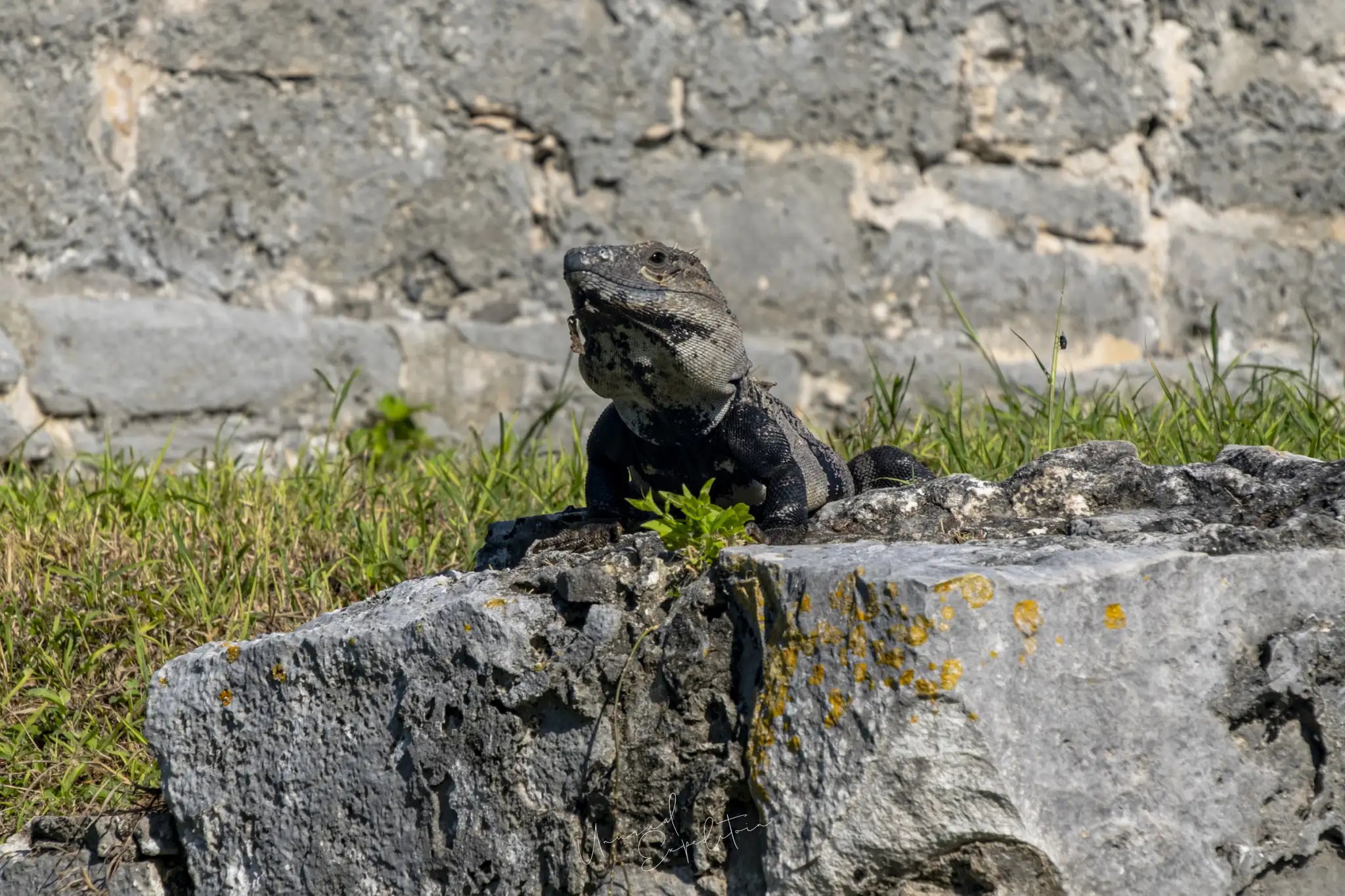
Away from the cliff, Tulum is a small town of low stone buildings on short grass: houses, platforms, a palace with columns across its front and a thatched shelter over part of it. These work as quieter frames, especially in the morning when the sun comes from the sea side and gives the stone texture. The site's other residents are the black iguanas that sun themselves on every wall and step. They tolerate people at a few metres, which makes them easy subjects for a 70-200mm, and a lizard on a carved stone gives you an image that says Tulum without the cliff.
Tulum ruins hours and rules
Tulum ruins hours, as given by INAH, are 8:00 to 17:00, with last entry at 15:30; check the official INAH page before you go, because times and tickets have changed with the new access arrangements. The archaeological zone now sits within the Parque del Jaguar, a national park around the site, and the park and the ruins may each charge their own entry; check the official sources for the current fees. Drones are prohibited without INAH authorisation, and tripods and professional video gear need permission. The site is not open at sunrise, so the first hour of the day, at opening, is the one to aim for. Bring water and sun protection: there is very little shade inside the walls.
Tulum photos by viewpoint
| Viewpoint | What you get | Best time | Lens |
|---|---|---|---|
| Cliff path above the main cove | El Castillo, cove and palms | At opening | 16-35mm, 24-70mm |
| Path above the northern beach | Long beach, temple on the skyline | Morning | 16-35mm |
| Inside the walls | Temples, palace, iguanas | Morning | 24-70mm, 70-200mm |
| Boat offshore | The whole cliff with the sea | Afternoon | 70-200mm |
The cliff path gives the famous frame; the boat gives the one that explains it.
Tulum in a Yucatan trip
Tulum is the end of the line for us, after the inland sites. Chichén Itzá photos covers the big inland city, Ek Balam photos the quiet one, and Cenote Suytun photos the water in between. For heat and rain by season, read best time to visit Yucatan for photography.
Finish the Yucatan with us
Tulum is our last morning in Mexico, at the gate when it opens. When the next departure is on sale it will be on our Mexico photography tours page.
Yucatan photography tours
The next Yucatan departure is announced on the Yucatan photography tours page, with previous expeditions and all the planning guides.
Explore Yucatan in depth
- Yucatan Photography Tour: The Complete GuideMexico
- Maya Culture in Yucatan: Embroidery, Tortillas and PortraitsMexico
- Is Chichen Itza Worth It? Crowds, Vendors and Getting ThereMexico
- Ek Balam Photos: the Acrópolis Without the CrowdsMexico
- Chichen Itza Photos: El Castillo, the Serpents and Las MonjasMexico
- Cenote Suytun Photos and the Other Cenotes Worth a FrameMexico
- Best Time to Visit Yucatan for PhotographyMexico
Upcoming Photo Tours
- Egypt Photo Tour – EgyptEgypt 12 Dec 2026 To 20 Dec 2026
- Inner Mongolia Winter Owl Photo Tour – ChinaChina 01 Jan 2027 To 04 Jan 2027
- Inner Mongolia Winter Photo Tour – ChinaChina 05 Jan 2027 To 11 Jan 2027
- Mekong And Central Highland Vietnam Photo Tour - VietnamVietnam 16 Jan 2027 To 24 Jan 2027