
Kyoto Photo Spots: Where to Stand in Kyoto, Osaka and Nara
Kyoto photo spots and best views: the Yasaka pagoda, Fushimi Inari, Arashiyama bamboo, Gion rules, Dotonbori and Nara Park, with light.
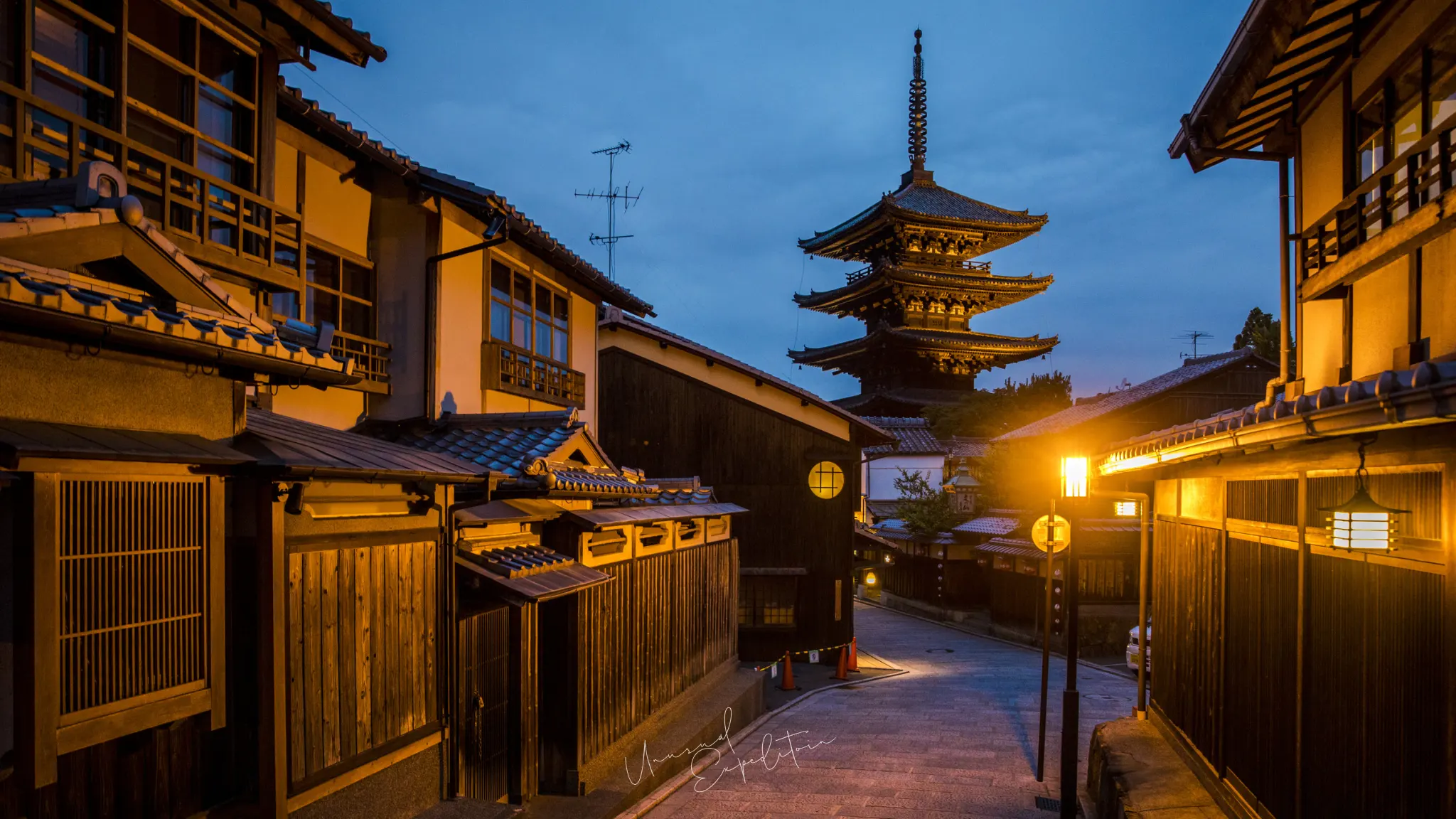
The Kyoto photo spots that repay an early start are the Yasaka pagoda above the lanes of Higashiyama, the torii tunnels of Fushimi Inari, the bamboo grove at Arashiyama and the old streets of Gion. Pair them with Osaka's Dotonbori canal and Nara Park's deer and you have the classic set for the area. Kyoto wants first light, before the crowds; Osaka wants dusk and neon; Nara works through the day. Six places, each with its own hour.
This guide sits inside our Kyoto and Osaka photography tour guide, which covers the area as a whole. The photographs are our own, from our early-summer trip in the rainy season, and the notes on where to stand come from working these places with a camera. For Osaka on its own, our Osaka photo spots guide goes street by street.
Kyoto photo spots at a glance
| Spot | What you photograph | Best light | Lens |
|---|---|---|---|
| Yasaka pagoda, Higashiyama | The pagoda above a sloping lane of wooden houses | Blue hour, first light | 24-70mm |
| Fushimi Inari Taisha | Tunnels of vermilion torii on Mount Inari | Early morning, overcast | 24-70mm, 70-200mm |
| Arashiyama bamboo grove | Tall stems, green light, maples at the edges | Early morning, soft overcast | 16-35mm, 24-70mm |
| Gion | Teahouse facades, lantern-lit streets | Blue hour | 24-70mm |
| Dotonbori, Osaka | The canal and its giant signs | Dusk, night, still mornings | 16-35mm, 24-70mm |
| Nara Park | Sika deer among old trees and temple gates | Morning, late afternoon | 70-200mm |
The three Kyoto classics all fill by mid morning, so give each of them a different first light.
Kyoto instagram spots: the Yasaka pagoda and Higashiyama
The five-storey pagoda of Hokan-ji, known as the Yasaka pagoda, rises above a sloping lane of wooden townhouses in Higashiyama, and it is the most copied frame in Kyoto. Stand downhill in the lane so the pagoda sits at the end of the street, with the houses leading in from both sides. Blue hour is the time: the lanterns come on, the sky behind the pagoda turns deep blue, and the lane is quieter than in the day. At first light the street is almost empty, and in the rain the paving shines. In the day the lane is one of the busiest in the city, and rickshaws and kimono photo shoots fill it; be patient and keep out of the road. The lanes around it, Ninenzaka and Sannenzaka, give stepped stone streets and shopfronts on the walk up to Kiyomizu-dera.
Fushimi Inari: the torii tunnels
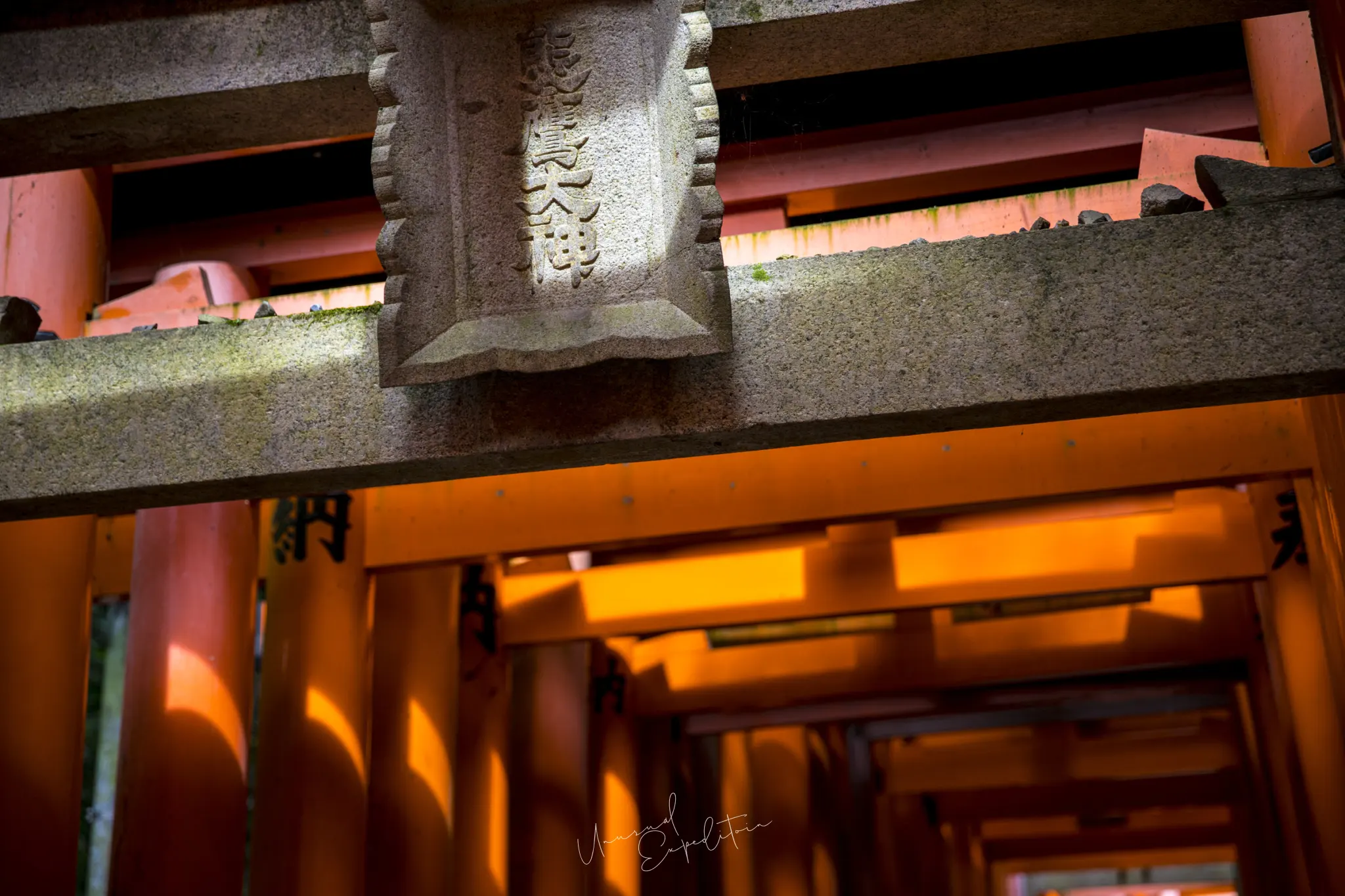
Fushimi Inari Taisha is open around the clock and free to enter, which makes it the one Kyoto classic you can photograph before sunrise. The torii are donations, and the donors' names are painted on them, so the gates read as a wall of characters when you look back down the tunnel. The lower tunnels near the main shrine are crowded from mid morning; the higher you climb Mount Inari, the emptier the paths. Look up as well as along: the stone gates, the black-capped tops of the torii and the light coming through gaps all make pictures. Our Fushimi Inari photography guide has more on the walk up the mountain.
Best views in Kyoto: the Arashiyama bamboo grove
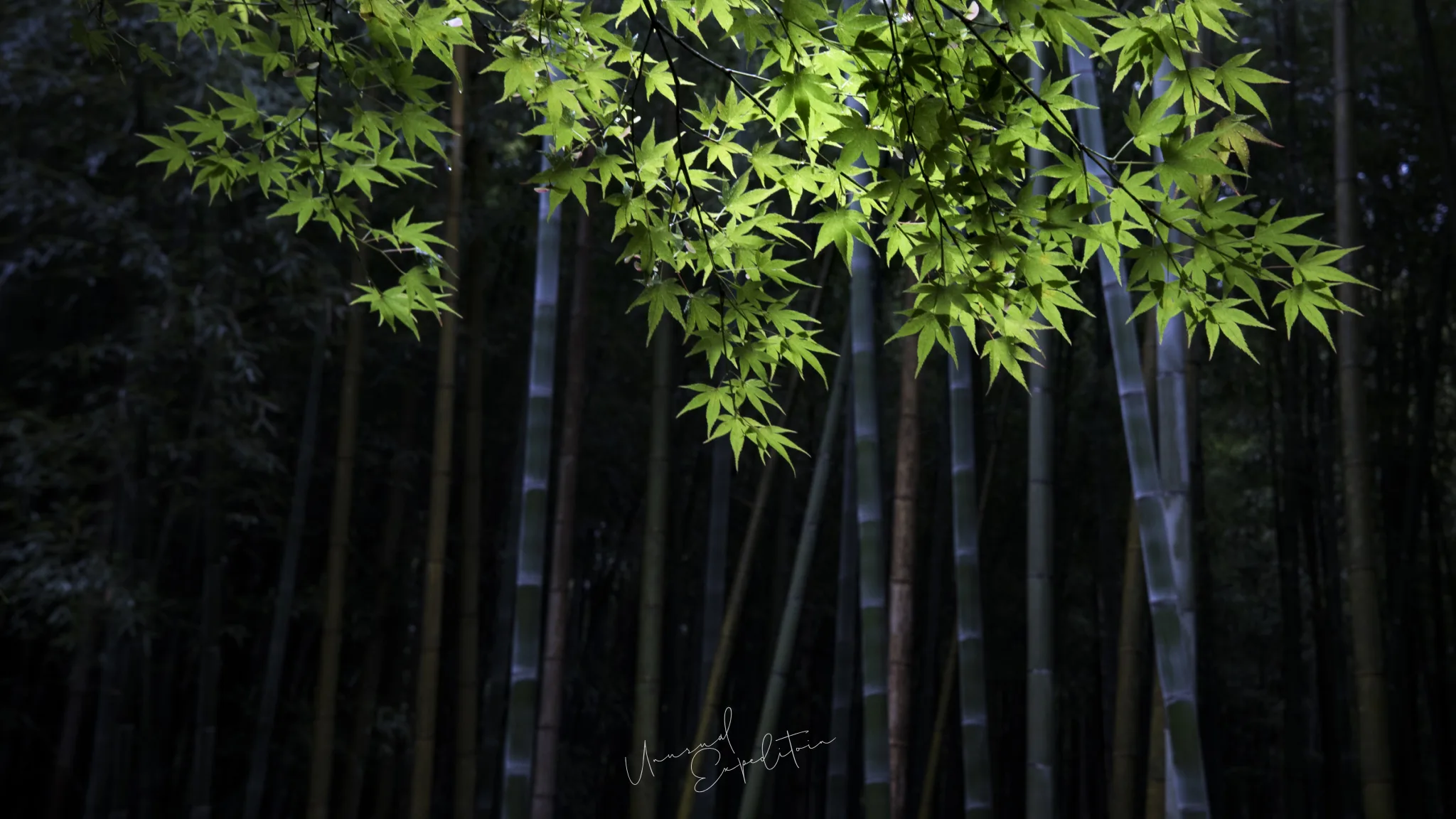
The bamboo grove at Arashiyama is the green counterpart to Fushimi's vermilion. The path through it is short, and in the middle of the day it carries a steady stream of visitors, so this is a place for the first hour of light or a grey, drizzly morning. Shoot upwards with a wide lens to make the stems converge, or find maple branches at the edge of the grove, which add a second green and, in autumn, red. Overcast light is kinder than sun here: the grove is dark, and bright patches burn out against the shade. Stay on the path; the bamboo is fenced for a reason, and carving on the stems damages them.
Gion: streets, not people
Gion is Kyoto's best-known teahouse district, and its rules have tightened. Residents' groups have put up signs banning photography on the district's private lanes, and those signs must be respected; Hanamikoji itself is a public street. Photograph the architecture: the latticed facades, the lanterns at blue hour, the canal and willows of Shirakawa. Do not follow or block anyone in kimono, and never photograph geiko or maiko at close range without their consent. Lonely Planet and Time Out Tokyo have both reported on the restrictions, and they have changed over time, so read the signs on the day.
Dotonbori: Osaka's canal of signs
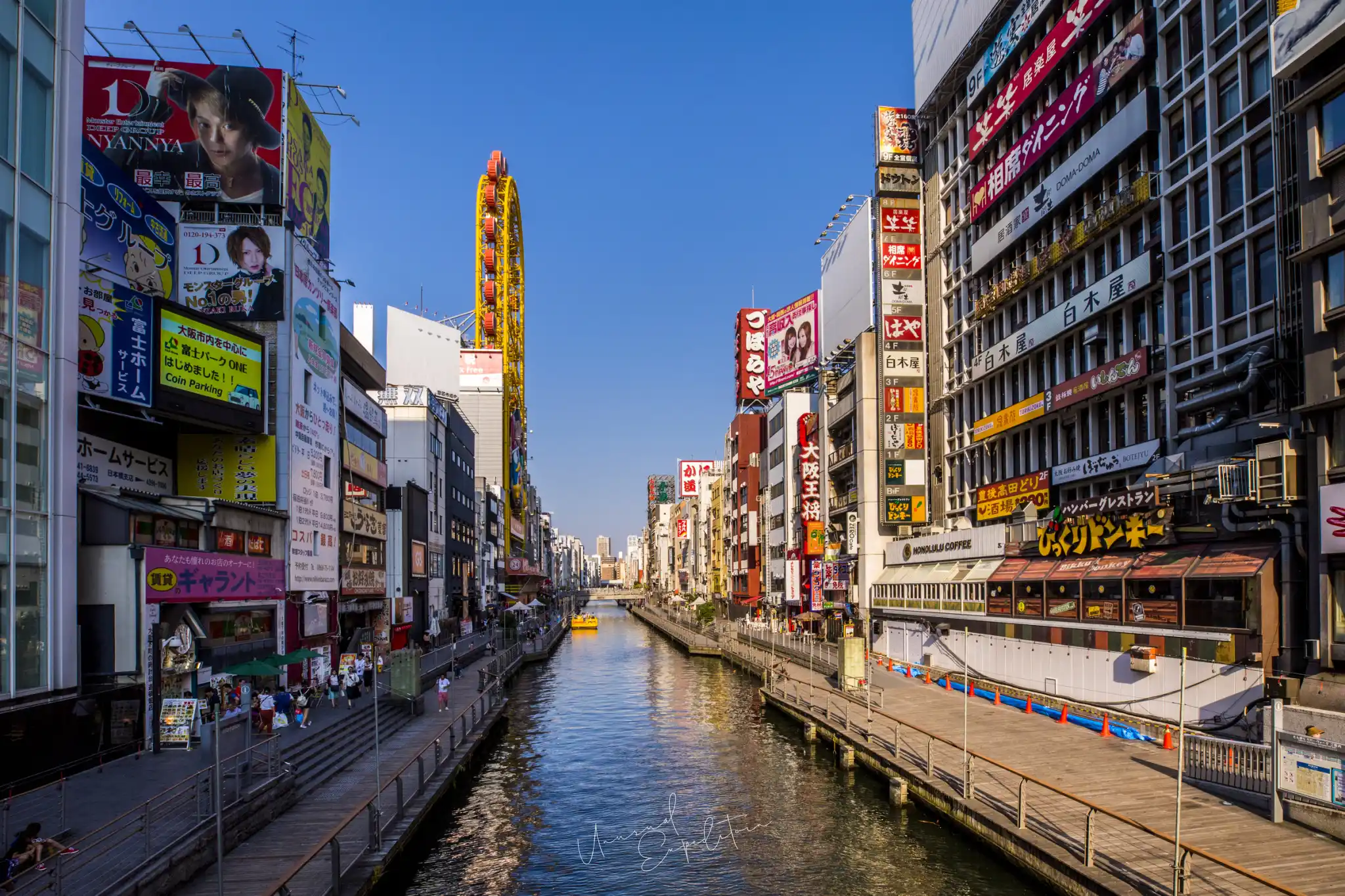
Osaka is a short train ride away and the opposite of Kyoto in mood. Dotonbori, the canal lined on both banks by restaurants under giant signs, with the Glico running man above Ebisu Bridge, is the city's postcard. In the day the canal gives a long view with the signs stacked along it, and on a still morning their reflections are clean; at dusk the neon takes over and the crowds arrive. Stand to the side of the bridges, which are among the busiest footpaths in the city. Our Dotonbori and Shinsekai at night guide covers the evening, and Shinsekai, with Tsutenkaku tower above its lantern-hung streets, is the place to go after it.
Nara Park: deer among the temples
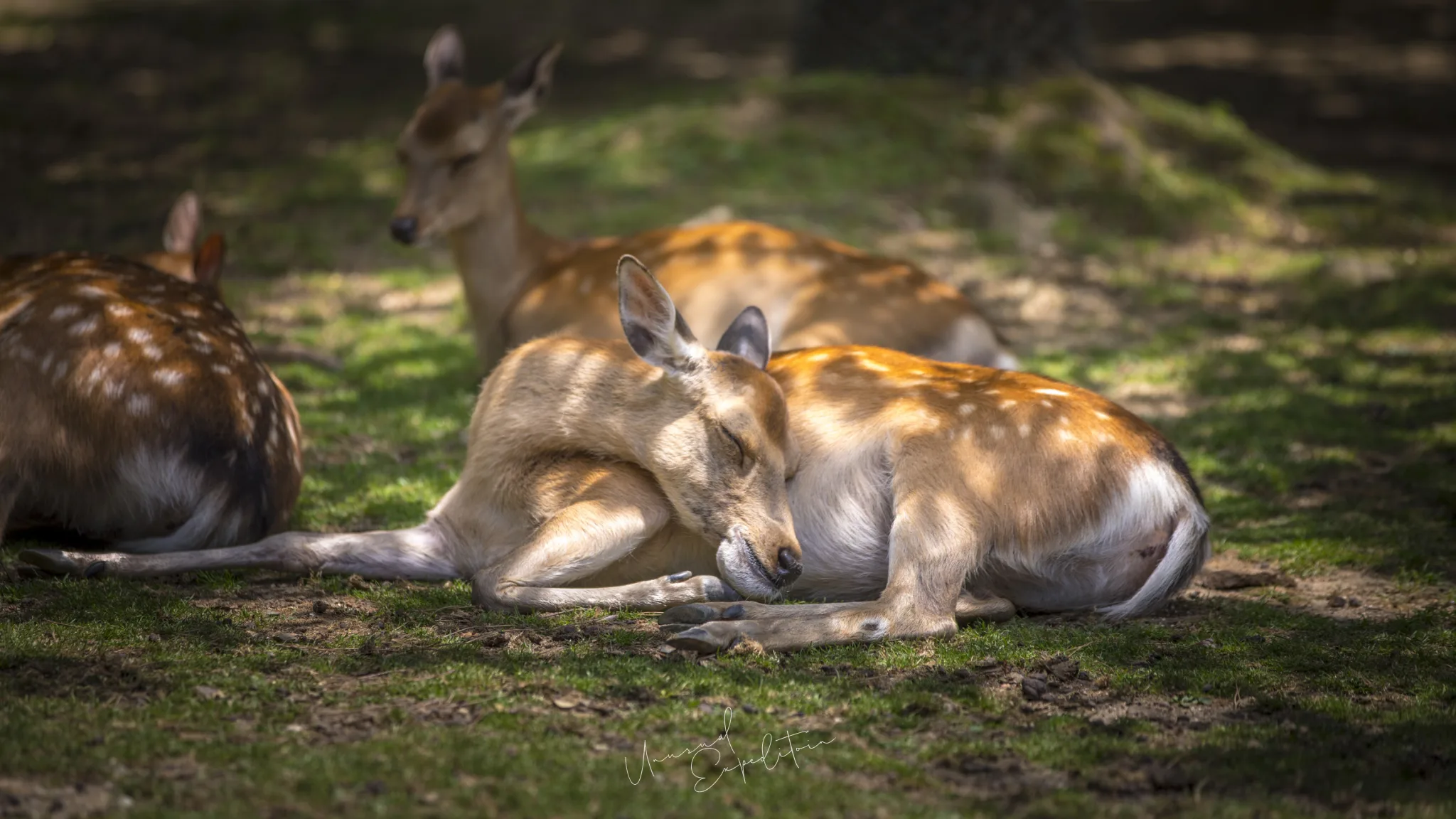
Nara, between Kyoto and Osaka, adds the deer: sika deer roam Nara Park among the temples of the old capital, a UNESCO World Heritage site since 1998. The best pictures are the quiet ones, a deer resting in the shade of old trees or standing under a temple gate, and the park is calmer early and late in the day. A 70-200mm lets you work without crowding the animals. Park signs warn that the deer are wild and may bite or butt; the special crackers sold in the park are the only food they should be given. Our Nara deer park guide explains how to photograph them well.
"Kyoto rewards the people who get up. By nine the famous places belong to everyone; at first light they still belong to the city."
Joseph Mak, tour leader, Unusual Expedition
Crowds, rules and timing
The area is busy in every season, and busiest in cherry blossom and autumn colour. Kyoto's cherry blossom usually opens around late March and is best in early April, and its autumn colour peaks from mid November into early December; the rainy season, from around early June to mid July in the Kinki region according to the Japan Meteorological Agency, brings fewer people, deep green moss and shining streets. Drones are not an option in the city centres: flying over densely inhabited districts needs permission from Japan's transport ministry, and most temples and parks ban them. Many temple halls ban photography inside; follow the signs. Our best time to visit Kyoto and Osaka article goes through the seasons.
Photograph Kyoto with us
We run Kyoto and Osaka as a private trip on request, timed to the season you want and planned around these hours of light; see our private tours page. Our scheduled Japan departures are listed on the Japan photography tours page.
Ask us about a Kyoto photography trip
Join the Kyoto and Osaka photography tour
Kyushu, Shikoku And Setouchi Photography Journey departs 25 Sep 2027 To 05 Oct 2027, led by Joseph Mak. Small group, photography first. All Kyoto and Osaka photography tours.
Explore Kyoto and Osaka in depth
- Osaka Food Guide: Where to Eat Near the Best Photo SpotsJapan
- Kyoto and Osaka Photography Tour Guide: Temples, Torii, Deer and NeonJapan
- Osaka Photo Spots: Dotonbori, Shinsekai, Osaka Castle and UmedaJapan
- Nara Deer Park: Photographing the Deer of NaraJapan
- Nara Day Trip from Kyoto and Osaka: Todai-ji, the Deer and Kasuga TaishaJapan
- Is Osaka Worth Visiting? A Photographer's Case for the CityJapan
- Fushimi Inari Photography: The Torii Gates at Dawn, Dusk and After DarkJapan
- Dotonbori Night and Shinsekai at Night: Photographing Osaka's NeonJapan
- Best Time to Visit Kyoto and Osaka for Photography: Blossom, Maples and RainJapan
Upcoming Photo Tours
- Egypt Photo Tour – EgyptEgypt 12 Dec 2026 To 20 Dec 2026
- Inner Mongolia Winter Owl Photo Tour – ChinaChina 01 Jan 2027 To 04 Jan 2027
- Inner Mongolia Winter Photo Tour – ChinaChina 05 Jan 2027 To 11 Jan 2027
- Mekong And Central Highland Vietnam Photo Tour - VietnamVietnam 16 Jan 2027 To 24 Jan 2027