
Osaka Food Guide: Where to Eat Near the Best Photo Spots
Osaka food guide: five Michelin Bib Gourmand places to eat, the local dishes to try, and how to eat around Dotonbori and Shinsekai.
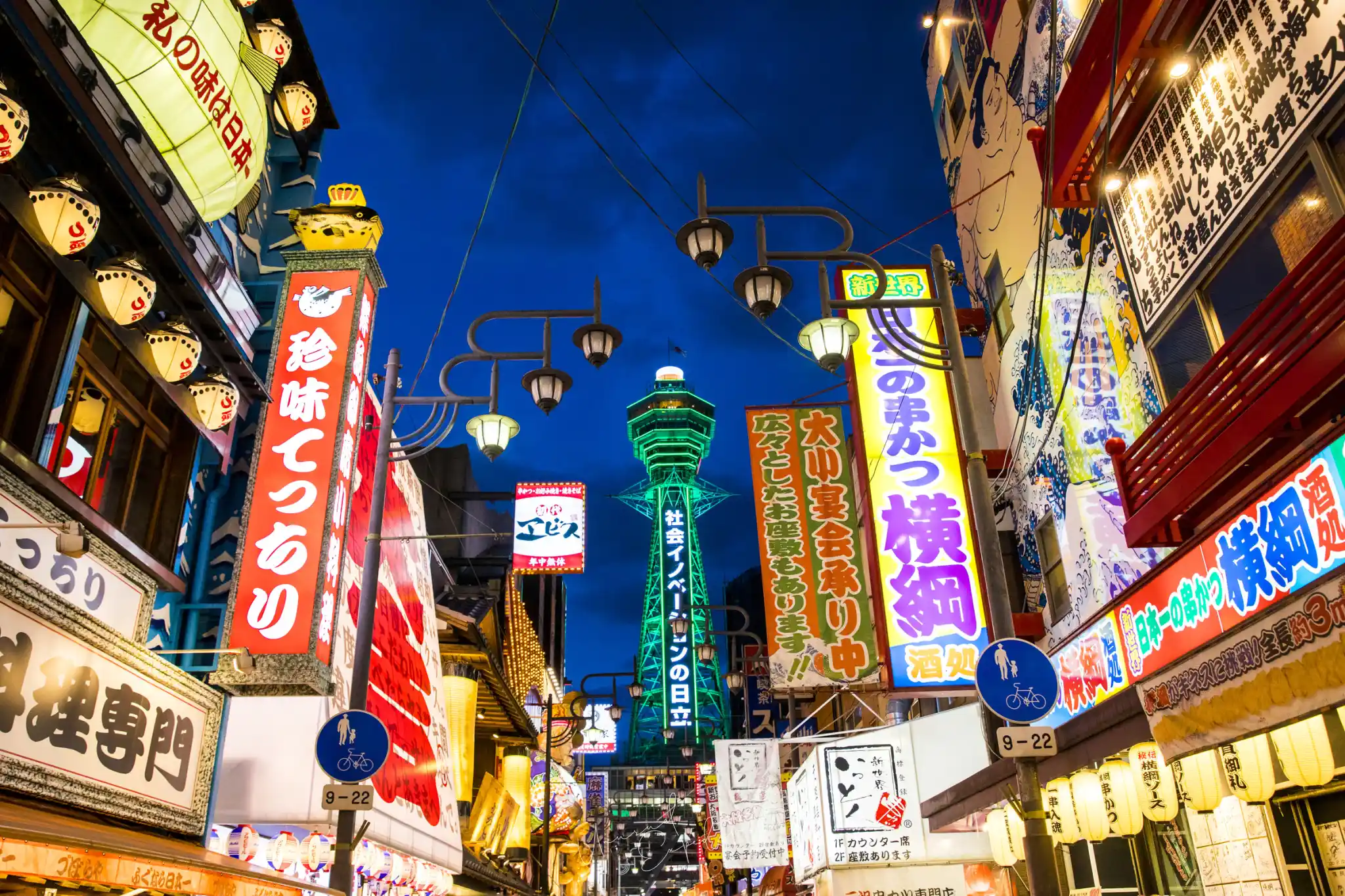
This Osaka food guide names five places to eat that the Michelin Guide lists in its current Bib Gourmand selection for Osaka, the category for good cooking at a moderate price: a kushikatsu counter near Osaka Castle, a ramen shop in Kita, a millstone udon house in the business district, a seafood izakaya and a teppanyaki and okonomiyaki bistro in Nishi-ku. Around them sit the street foods Osaka is famous for, eaten in Dotonbori and Shinsekai between the evening photographs.
The guide belongs to our Kyoto and Osaka photography tour guide. We have not eaten at every restaurant below; the choices come from published guides, named in each entry, and the photographs are our own pictures of Osaka's dining streets. Prices are given only as a band, since menus change.
Where to eat in Osaka: the five at a glance
| Restaurant | Food | Area | Price band |
|---|---|---|---|
| Kushikatsu Gojoya | Kushiage skewers | Uchihiranomachi, Chuo-ku | Budget |
| Ramen Hayato | Ramen | Minamimorimachi, Kita-ku | Budget |
| Aozora blue | Udon | Hiranomachi, Chuo-ku | Budget |
| Daidokoro Kamiya | Izakaya, seafood | Kyomachibori, Nishi-ku | Mid-range |
| Oribe | Teppanyaki, okonomiyaki | Shimmachi, Nishi-ku | Mid-range |
None of the five is a splurge: Osaka's strength is cooking at everyday prices.
Kushikatsu Gojoya
Kushikatsu, meat, fish and vegetables on skewers, breaded and deep-fried, is the dish Shinsekai is built around, and Kushikatsu Gojoya in Uchihiranomachi, in Chuo-ku east of the city centre and within reach of Osaka Castle, is the version the Michelin Guide picks. Its inspectors describe a lively kitchen where cooks deep-fry imaginative skewers, with flavours drawn from various countries, and recommend the omakase, the chef's selection. It sits in the budget band. The restaurant takes its own bookings, so phone ahead for an evening table rather than relying on walking in.
Ramen Hayato
Ramen Hayato in Minamimorimachi, Kita-ku, is a long-serving shop known, in the Michelin Guide's words, for its "three great ramens": soy sauce, salt and miso. The guide notes that the chef is from Hokkaido and trained in Sapporo, which is why the miso bowl draws people, and that the soy sauce ramen uses a double soup. It is a budget meal and a useful one for photographers working Umeda and the old Tenjinbashi area to the north of the centre. Like most ramen shops, expect a short queue at busy times and quick turnover once you are in.
Aozora blue
Aozora blue in Hiranomachi, Chuo-ku, makes udon with the methods of handmade soba, a craft the chef learned before switching noodles, grinding unpolished wheat on a millstone, according to the Michelin Guide. The house speciality is a coarse-ground chilled udon served on a bamboo tray, and the meal ends with the cooking water, as a soba meal would. It is in the budget band and sits in the office district around Honmachi, and it makes a quiet lunch stop on a day spent at Osaka Castle. Contact the restaurant directly to book.
Daidokoro Kamiya
Daidokoro Kamiya is an izakaya in Kyomachibori, Nishi-ku, a neighbourhood of small restaurants a short walk west of the main shopping streets. The Michelin Guide says seafood and appetisers are its selling points, with white-fleshed fish, "an indispensable part of Osaka cuisine", at the centre. It is in the mid-range band and open in the evening, which suits a dinner after blue hour. Reservations can be made online through the restaurant's booking page or by phone, and booking ahead is the safer plan for a small izakaya.
Oribe
Oribe in Shimmachi, Nishi-ku, mixes teppanyaki with a French bistro touch: pâté and smoked salmon among the starters, a "cabbage steak" that the Michelin Guide says was dreamed up from the essential ingredients of okonomiyaki, and a meal that ends with the real okonomiyaki, Osaka's savoury pancake. The name comes from the chef's interest in Oribe ware, the green-glazed pottery that sets the colour of the room. It is mid-range, serves dinner at the counter, and takes reservations online or by phone.
Osaka food: the local dishes worth trying
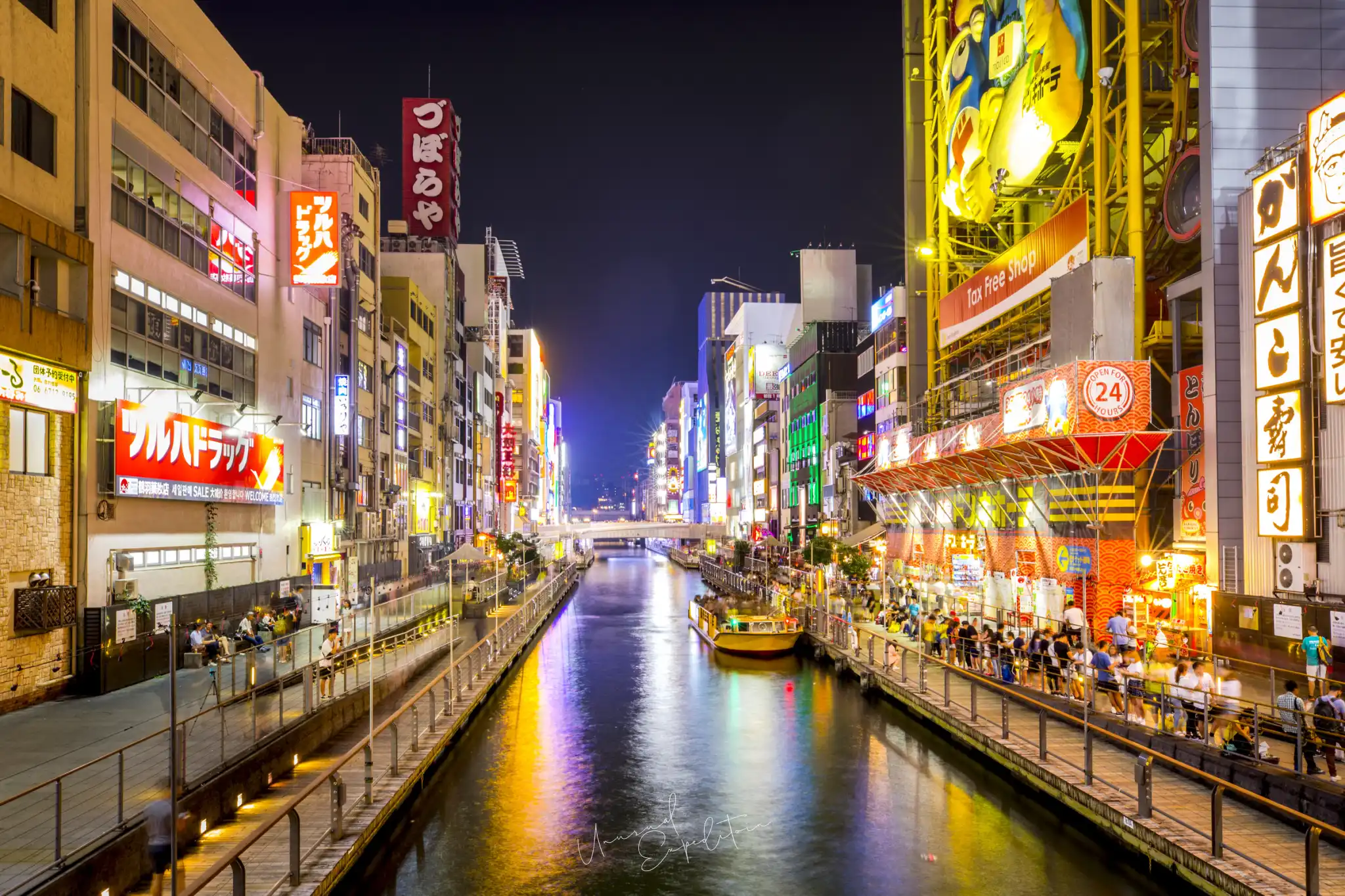
The Osaka Convention and Tourism Bureau calls okonomiyaki "a soul food for Osakans" and lists the city's local dishes on its official site. Takoyaki, battered octopus balls, is the classic street snack, bought from stalls and eaten standing. Kushikatsu comes with a shared sauce and the famous rule against double dipping. Osaka also claims box sushi, pressed in a wooden mould, udon in a light kelp and bonito broth, and the pork bun, butaman. For raw material, Kuromon Market in Nipponbashi, about 150 shops under a long arcade, is nicknamed "Osaka's kitchen" by the bureau and has eat-in counters for sushi and seafood bowls. Okonomiyaki houses cluster around Dotonbori and Namba; the bureau's own listings include long-running ones there.
Eating around the photo schedule
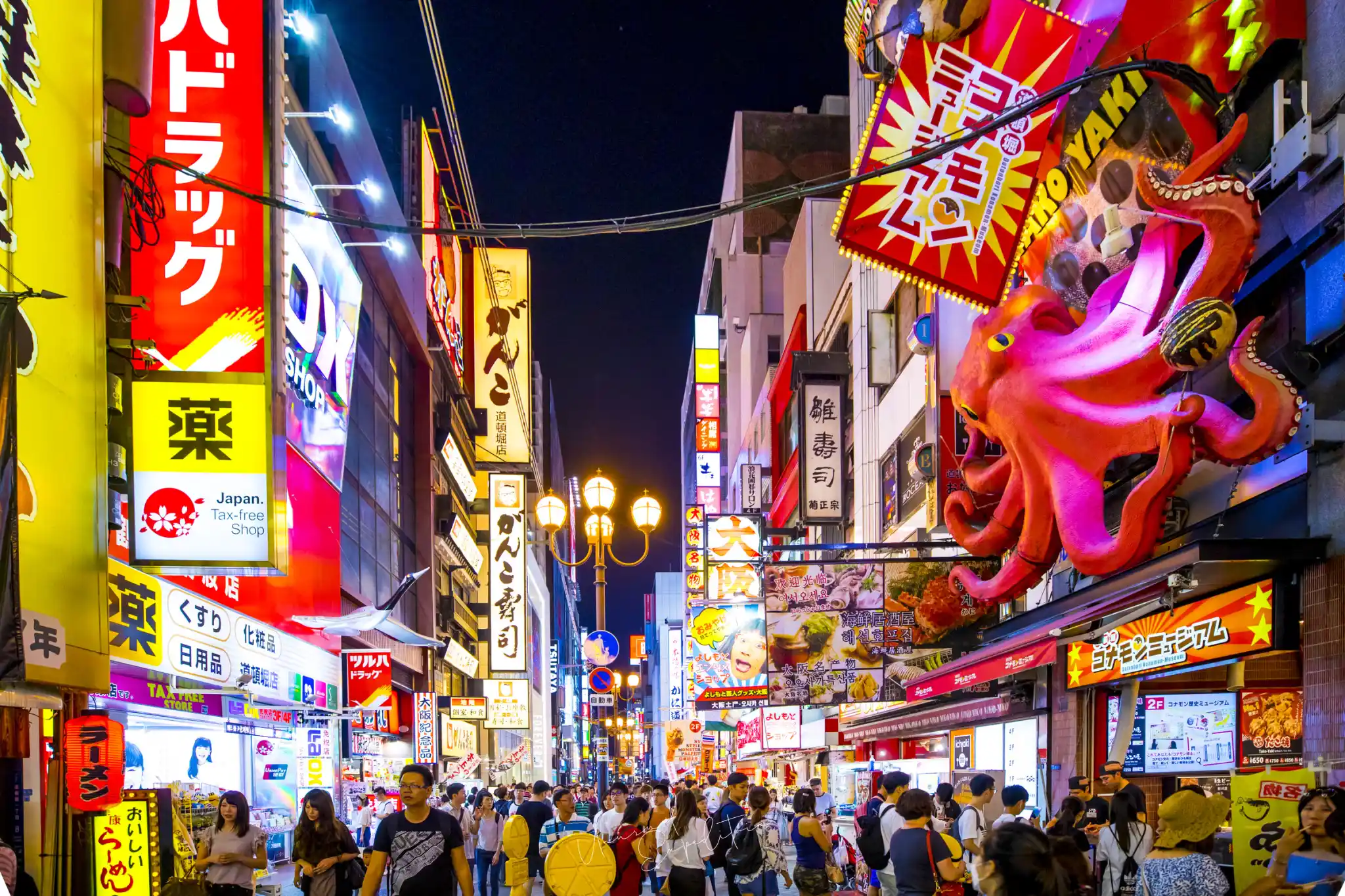
Osaka's photography happens at the edges of the day, and so does its eating. Dotonbori and Shinsekai are at their best from dusk, when the signs come on, and they are also where the takoyaki stands and kushikatsu counters are, so a snack between frames is easy. The proper dinner comes after the light has gone, which is why the evening izakaya and teppanyaki rooms above are worth booking. Kuromon is a morning place: go early, while the stalls are being set out and before the crowds, and eat there. Ramen and udon fit the middle of the day, when the light is hard and the streets are less interesting to photograph.
"In Osaka the food is part of the picture. The best signs in Dotonbori are restaurant signs, and the steam from a takoyaki stall at dusk is worth a frame on its own."
Joseph Mak, tour leader, Unusual Expedition
Booking and etiquette
Small restaurants in Osaka often have a counter and a handful of tables, so booking matters more than the price band suggests; several of the restaurants above take reservations online, others by phone. Ask before photographing inside a restaurant or a stall, and do not point a camera at other diners. Our Osaka photo spots guide shows where the dining streets are best photographed, and is Osaka worth visiting puts the city alongside Kyoto.
Eat and photograph Osaka with us
We run Kyoto and Osaka as a private trip on request, with evenings built around the neon streets; see our private tours page, and our scheduled departures on the Japan photography tours page.
Ask us about a trip to Kyoto and Osaka
Join the Kyoto and Osaka photography tour
Kyushu, Shikoku And Setouchi Photography Journey departs 25 Sep 2027 To 05 Oct 2027, led by Joseph Mak. Small group, photography first. All Kyoto and Osaka photography tours.
Explore Kyoto and Osaka in depth
- Kyoto and Osaka Photography Tour Guide: Temples, Torii, Deer and NeonJapan
- Kyoto Photo Spots: Where to Stand in Kyoto, Osaka and NaraJapan
- Osaka Photo Spots: Dotonbori, Shinsekai, Osaka Castle and UmedaJapan
- Nara Deer Park: Photographing the Deer of NaraJapan
- Nara Day Trip from Kyoto and Osaka: Todai-ji, the Deer and Kasuga TaishaJapan
- Is Osaka Worth Visiting? A Photographer's Case for the CityJapan
- Fushimi Inari Photography: The Torii Gates at Dawn, Dusk and After DarkJapan
- Dotonbori Night and Shinsekai at Night: Photographing Osaka's NeonJapan
- Best Time to Visit Kyoto and Osaka for Photography: Blossom, Maples and RainJapan
Upcoming Photo Tours
- Egypt Photo Tour – EgyptEgypt 12 Dec 2026 To 20 Dec 2026
- Inner Mongolia Winter Owl Photo Tour – ChinaChina 01 Jan 2027 To 04 Jan 2027
- Inner Mongolia Winter Photo Tour – ChinaChina 05 Jan 2027 To 11 Jan 2027
- Mekong And Central Highland Vietnam Photo Tour - VietnamVietnam 16 Jan 2027 To 24 Jan 2027