
Pushkar Fair Photos: Camels, Herders and the Trading Ground
Pushkar fair photos: camels, herders, water tank reflections, carts and tents at the Pushkar camel fair, with light, lenses and settings.
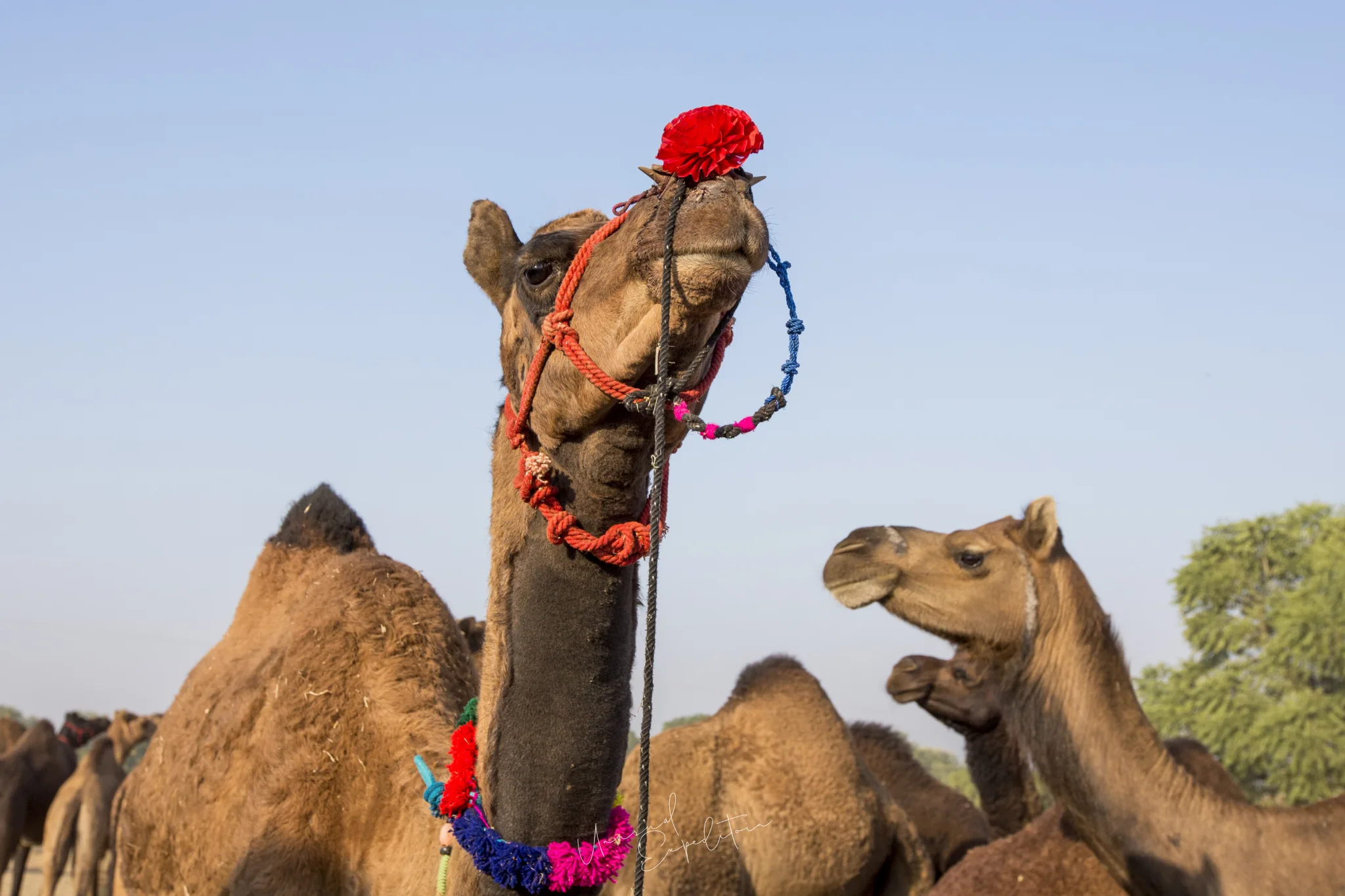
Pushkar fair photos are mostly pictures of camels and the men who own them: herds tethered on the sand, decorated animals dressed for sale, herders in bright turbans, carts and tents, all washed in dust and low sun. The camel fair at Pushkar in Rajasthan gives you portraits, animal studies and wide scenes on the same patch of ground, often within a few steps of each other. Below is what the trading ground looks like, subject by subject, and how each picture was made.
The photographs here are our own, taken on our two trips to the fair; we hold the rights to them, and the notes come from knowing the ground first hand. For the fair as a whole, start with the Pushkar photography tour guide.
Pushkar camel fair images: the camels
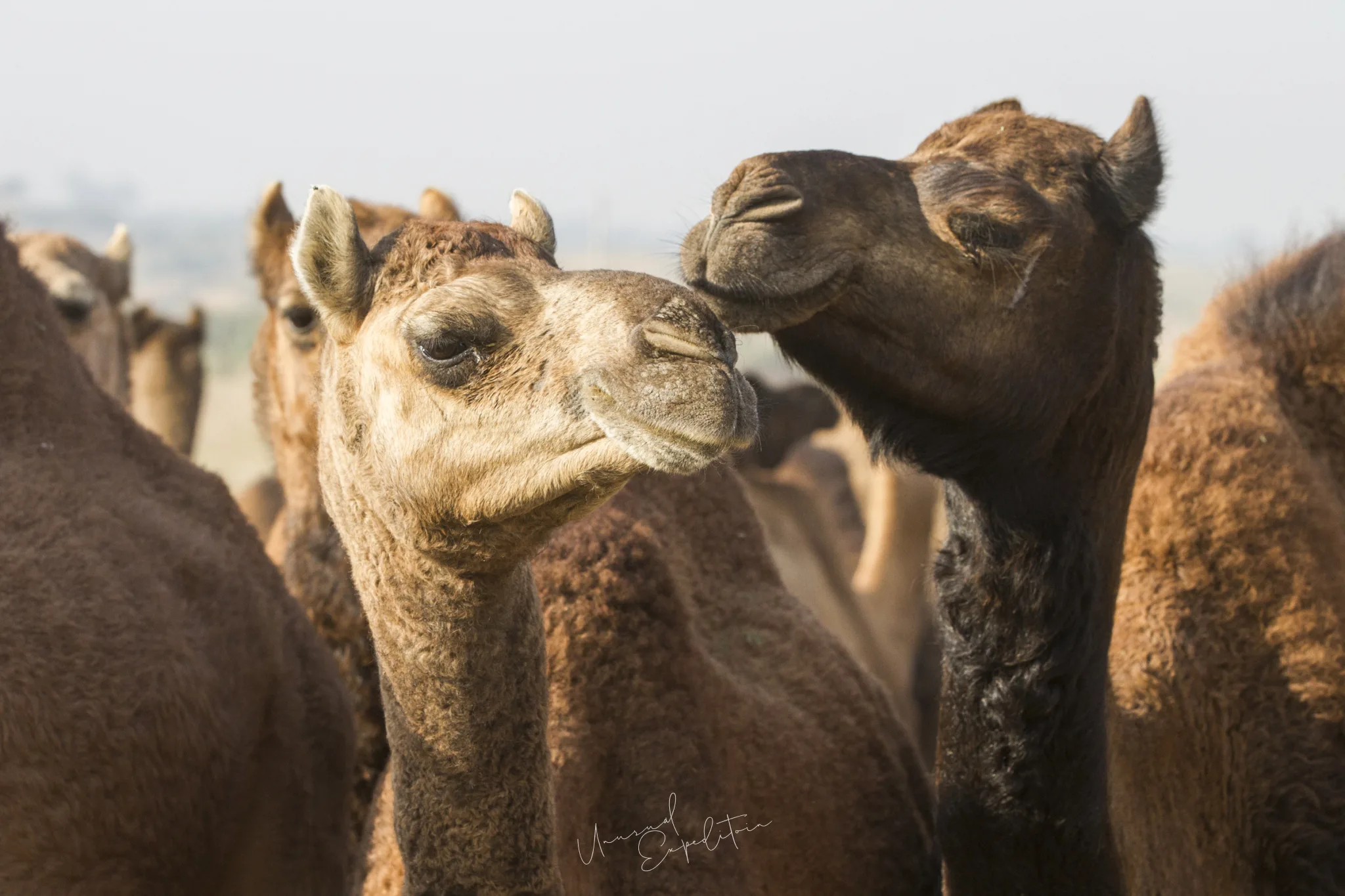
The camels come first. At the Pushkar camel fair they stand in tethered rows, kneel in groups to rest, or wander loose within a herd while the herders talk. The ones that make the best images are the animals prepared for sale: faces strung with red pompoms and bead halters, necks hung with tassels, saddle cloths embroidered in every colour. Shoot them from low against a clean sky to lose the clutter of the fairground, and wait for the head to turn. Camels are curious and will often lean in towards the lens, which is the moment the portrait comes alive. A 70-200mm lets you isolate a single head from the herd; a 24-70mm, close and low, gives you the animal and its owner in one frame.
Pushkar fair photos of the herders
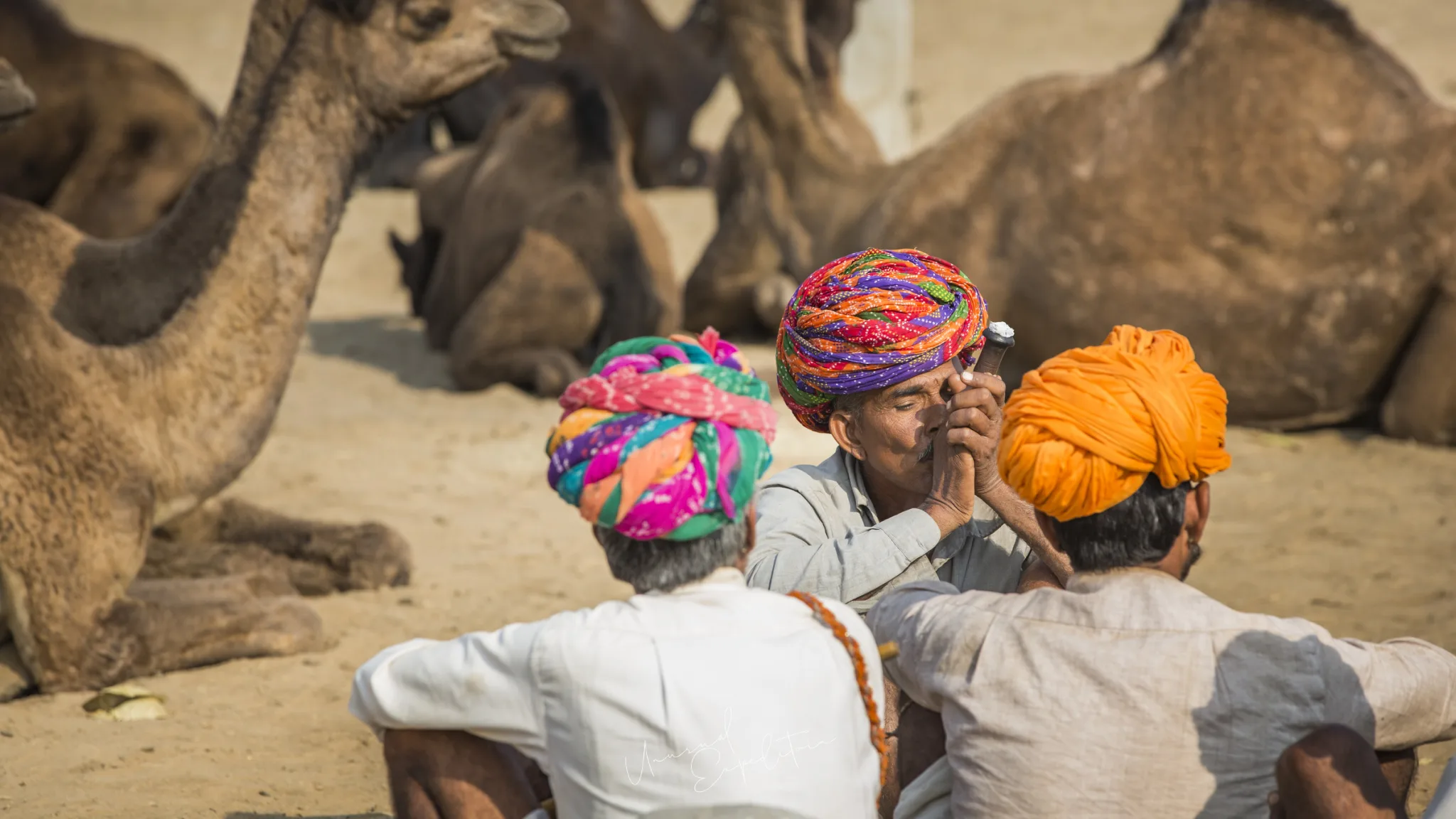
The herders are the other half of every Pushkar fair photo. Most are men from the villages and grazing country of Rajasthan, in white dhotis and long shirts, with turbans of saffron, red, pink or white. They sit in small groups on the sand, lean on their sticks and talk for hours about animals and prices. Photograph them as they are before asking for a pose: a group seen from behind, the colours of three turbans against a resting herd, often says more than a face. When you do want a portrait, greet the man, show him the camera and wait for his answer. Some herders will ask for a small payment for a posed picture; decide your own rule beforehand and keep to it politely.
Reflections at the water tanks
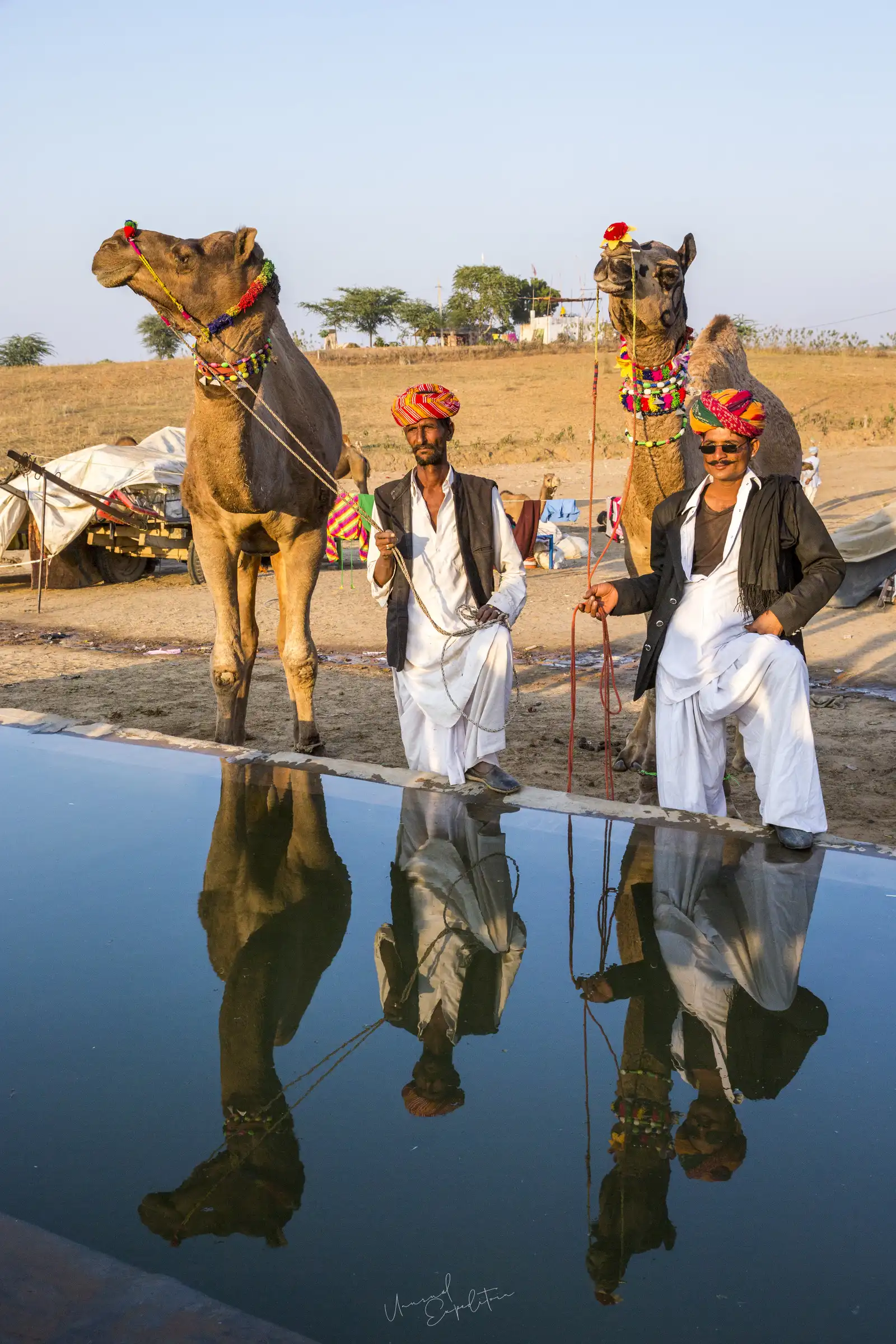
Concrete water tanks on the trading ground hold water for the animals, and when the air is still they turn into mirrors. Herders bring their decorated camels to drink and the whole scene doubles in the water: legs, turbans, tassels and sky. Get low, close to the edge, and use a 16-35mm or the wide end of a 24-70mm to keep both the subject and its reflection. The surface only holds still between gusts and between animals drinking, so be patient. These tanks draw photographers, so expect company, and keep out of the herders' way while their animals drink.
Carts, tents and the wide scene
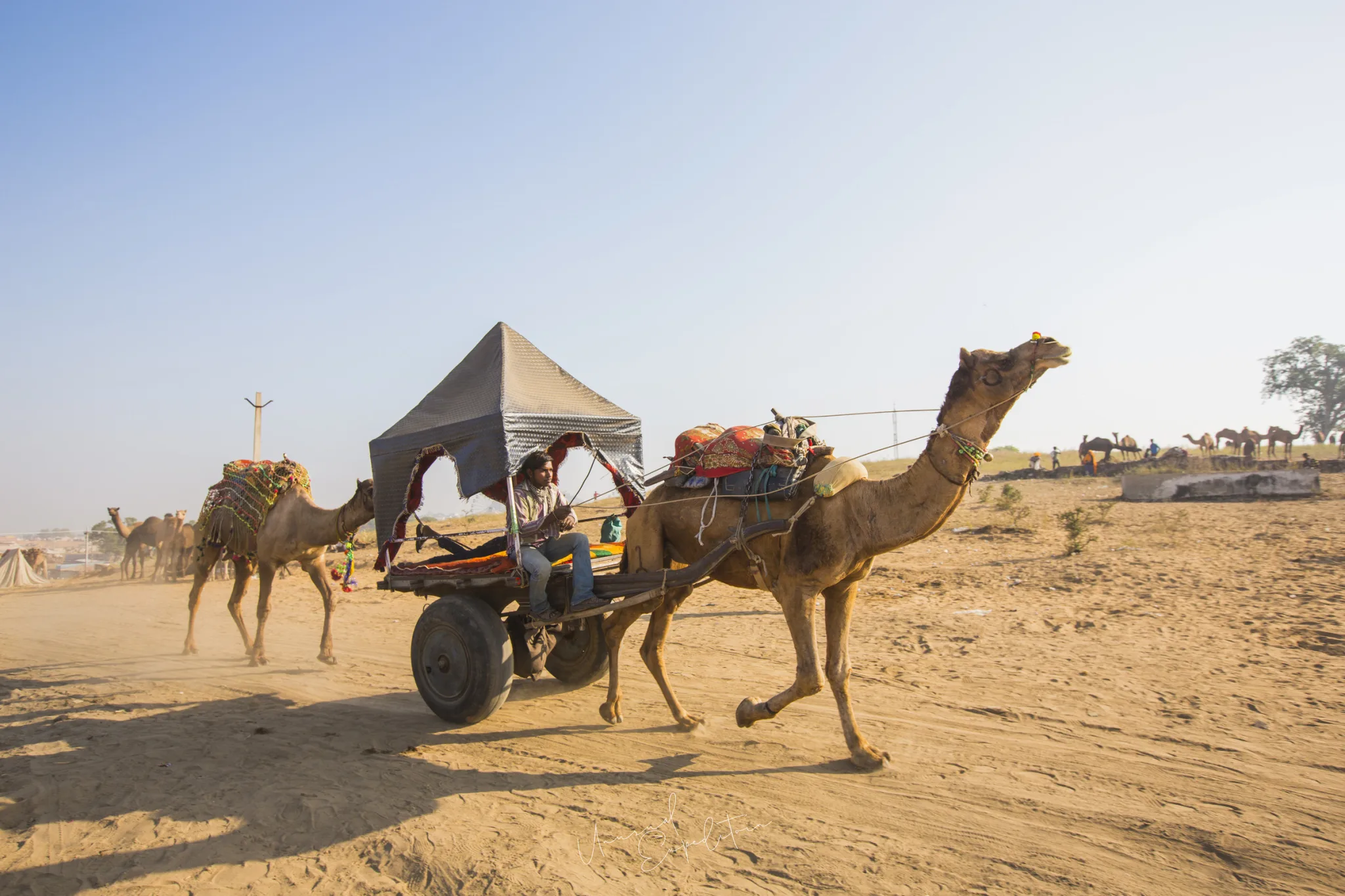
Step back from the animals and the fair becomes a landscape. Camel carts with canvas canopies cross the sand carrying people and goods; tents and tarpaulins spread to the hills; smoke rises from the cooking fires in the camps. The wide scene works best early, when the dust hangs low and the sun is behind the carts, or late, when the shadows stretch. Pick a subject that moves across the frame, like a cart or a herd being driven, and keep the background simple. The Pushkar sunrise and sunset article covers the silhouettes at the end of the day.
What to photograph at the Pushkar fair
| Subject | Best light | Lens | Tip |
|---|---|---|---|
| Decorated camel heads | Morning, clean sky | 70-200mm | Shoot from low to lose the clutter |
| Herders in groups | Soft morning | 24-70mm | Colour of turbans, backs to camera |
| Water tank reflections | Still air, low sun | 16-35mm | Get low, wait for calm water |
| Carts and herds | Early or late, with dust | 24-70mm | Backlight the dust |
| Portraits | Open shade | 24-70mm, 85mm | Greet first, ask, then shoot |
Almost everything on the ground looks better before the sun climbs high, so plan to work early and rest at midday.
"The camels at Pushkar are natural models. Stand still with the camera and sooner or later one will push its nose right into the lens hood. Keep the shutter fast, because the next second it will be licking the glass."
Joseph Mak, tour leader, Unusual Expedition
Pushkar photos beyond the camels
Not every Pushkar photo has a camel in it. The fair market is full of colour, with clay pots, wooden tools and camel finery for sale, and the Pushkar fair market article covers it. The town itself, with its lake, lamps and evening bazaar, is covered in is Pushkar worth visiting. After dark, folk dancers perform at the camps and the fairground lights come on. The one subject we leave out is children: families camp on the ground, and we do not photograph them.
Camera settings that work on the ground
Pushkar's trading ground moves all the time, so set up for action. Shutter priority or manual with auto ISO at 1/500 second or faster freezes a camel turning its head or a horse rearing. Expose for the faces and let a bright sky go, or use the sky as your background and silhouette the subject. Dust is the enemy of sensors: change lenses inside a bag or not at all, and carry a blower. A second body with a different lens saves you from changing lenses on the sand. Our Pushkar photography FAQ covers the practical questions.
Photograph the fair with us
We run the Pushkar fair as a private trip on request, at your own pace, with all the logistics arranged around the fair; a photographer or photography coaching can be added at extra cost. See private tours and our India photography tours page.
Ask us about photographing Pushkar
Pushkar photography tours
The next Pushkar departure is announced on the Pushkar photography tours page, with previous expeditions and all the planning guides.
Explore Pushkar in depth
- Pushkar Photography Tour Guide: the Camel Fair, the Lake and the TownIndia
- Pushkar Sunrise and Sunset: the Dunes, the Lake and the HillIndia
- Pushkar Photography FAQ: the Fair, the Ghats, Gear and SafetyIndia
- Pushkar Fair Market: Pots, Tools and Camel Finery at the Camel MelaIndia
- Pushkar Camel Fair: What Happens at the Pushkar MelaIndia
- Is Pushkar Worth Visiting? The Lake, the Ghats and How to Reach PushkarIndia
- Best Time to Visit Pushkar for the Camel Fair and the TownIndia
Upcoming Photo Tours
- Egypt Photo Tour – EgyptEgypt 12 Dec 2026 To 20 Dec 2026
- Inner Mongolia Winter Owl Photo Tour – ChinaChina 01 Jan 2027 To 04 Jan 2027
- Inner Mongolia Winter Photo Tour – ChinaChina 05 Jan 2027 To 11 Jan 2027
- Mekong And Central Highland Vietnam Photo Tour - VietnamVietnam 16 Jan 2027 To 24 Jan 2027