
Pushkar Camel Fair: What Happens at the Pushkar Mela
What is Pushkar mela: the Pushkar camel fair's camel and horse trading, its history, the competitions and the pilgrimage, for photographers.
The Pushkar camel fair is a livestock market and a Hindu pilgrimage held together each year in the town of Pushkar, Rajasthan, in the lunar month of Kartik. Herders bring camels, horses and cattle to trade on the sand outside town, while pilgrims come to bathe in Pushkar Lake on the full moon that closes the fair. For a photographer it is two events in one place: a working animal market full of people and movement, and a religious festival at the ghats.
Here is the fair itself, how it works and what to photograph. For the wider area, the light and the town, start with the Pushkar photography tour guide; for the dates and the season, see the best time to visit Pushkar.
What is Pushkar mela?
Pushkar mela, the Pushkar fair, is a gathering that the Government of India's tourism site, Incredible India, ties to Kartik Purnima, the full moon night of the Hindu month of Kartik. Wikipedia's account describes it as both a livestock fair and an important pilgrimage season for Hindus to Pushkar Lake. Locally it is also called the pashu mela, the animal fair. On the trading ground, men buy and sell camels, horses, cattle, sheep and goats. In town, pilgrims fill the bathing ghats and temples. Between the two runs a fairground of stalls, rides, food tents and a stage for competitions and dance. Most visitors see a little of each; photographers usually spend their mornings and evenings on the trading ground and their full moon at the lake.
History of Pushkar mela
The pilgrimage is the older half of the story. Incredible India records the belief that on Kartik Purnima the gods and goddesses descended on Pushkar to consecrate its lake, and a ritual bath in the lake on that full moon is held to bring great merit. Around that pilgrimage grew a market, and the two have run side by side ever since: Wikipedia's account treats the fair as both a livestock fair and a pilgrimage season. Today the Rajasthan authorities announce an official programme each year, but the trading ground still runs on the herders' own rhythm. They arrive early, camp beside the animals and do most of their selling before the pilgrims fill the ghats.
Pushkar mela is famous for its camels
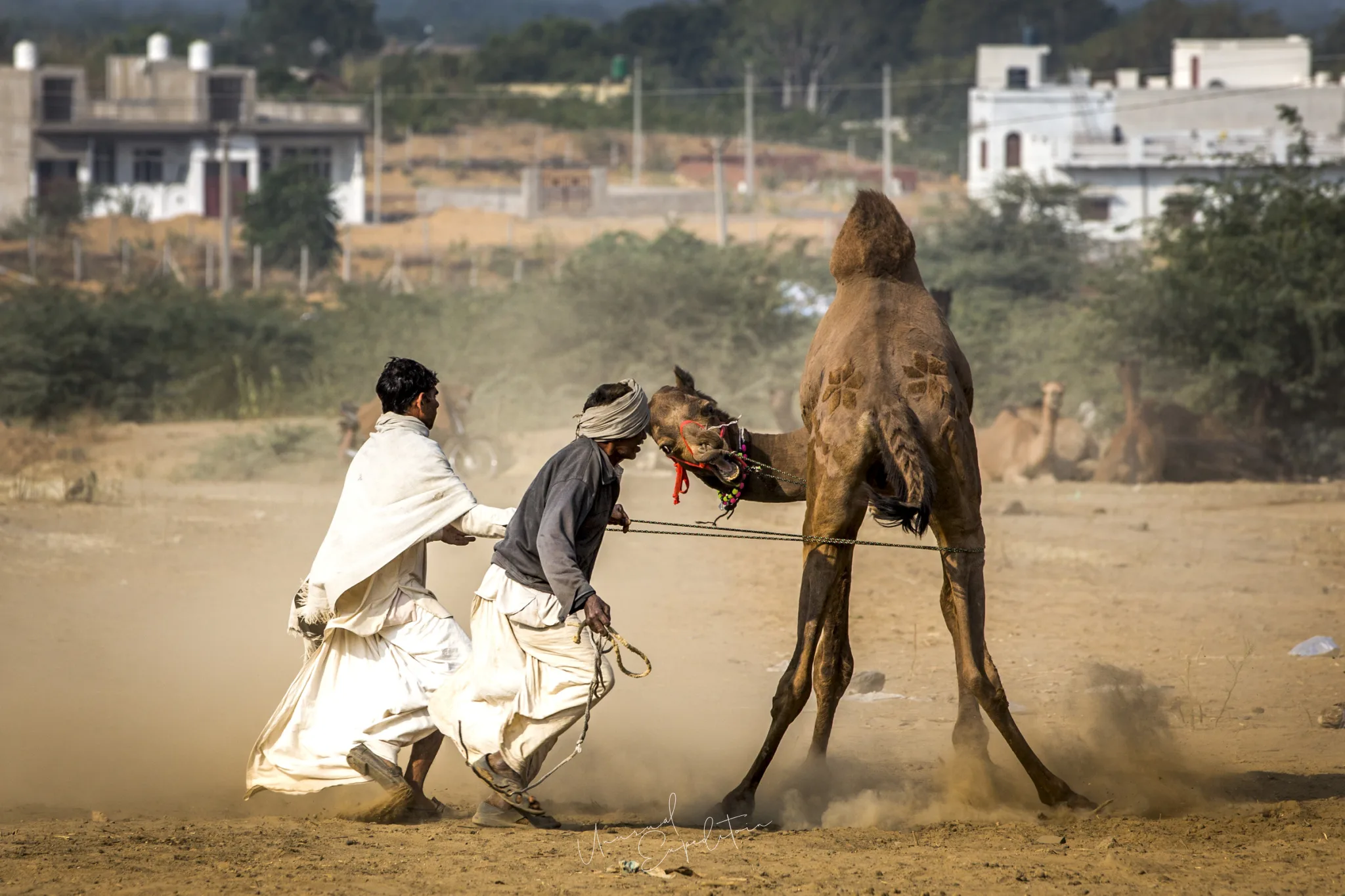
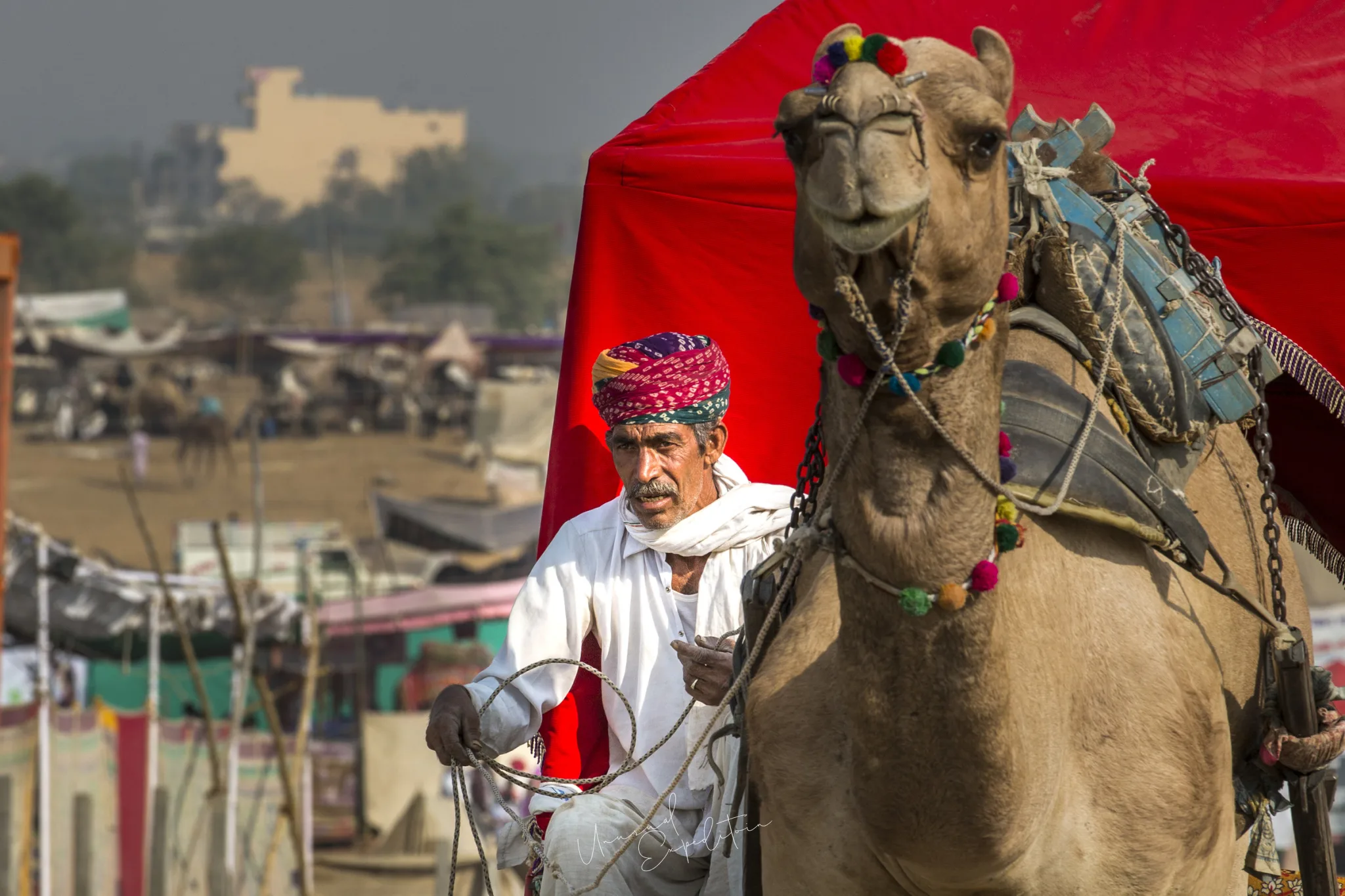
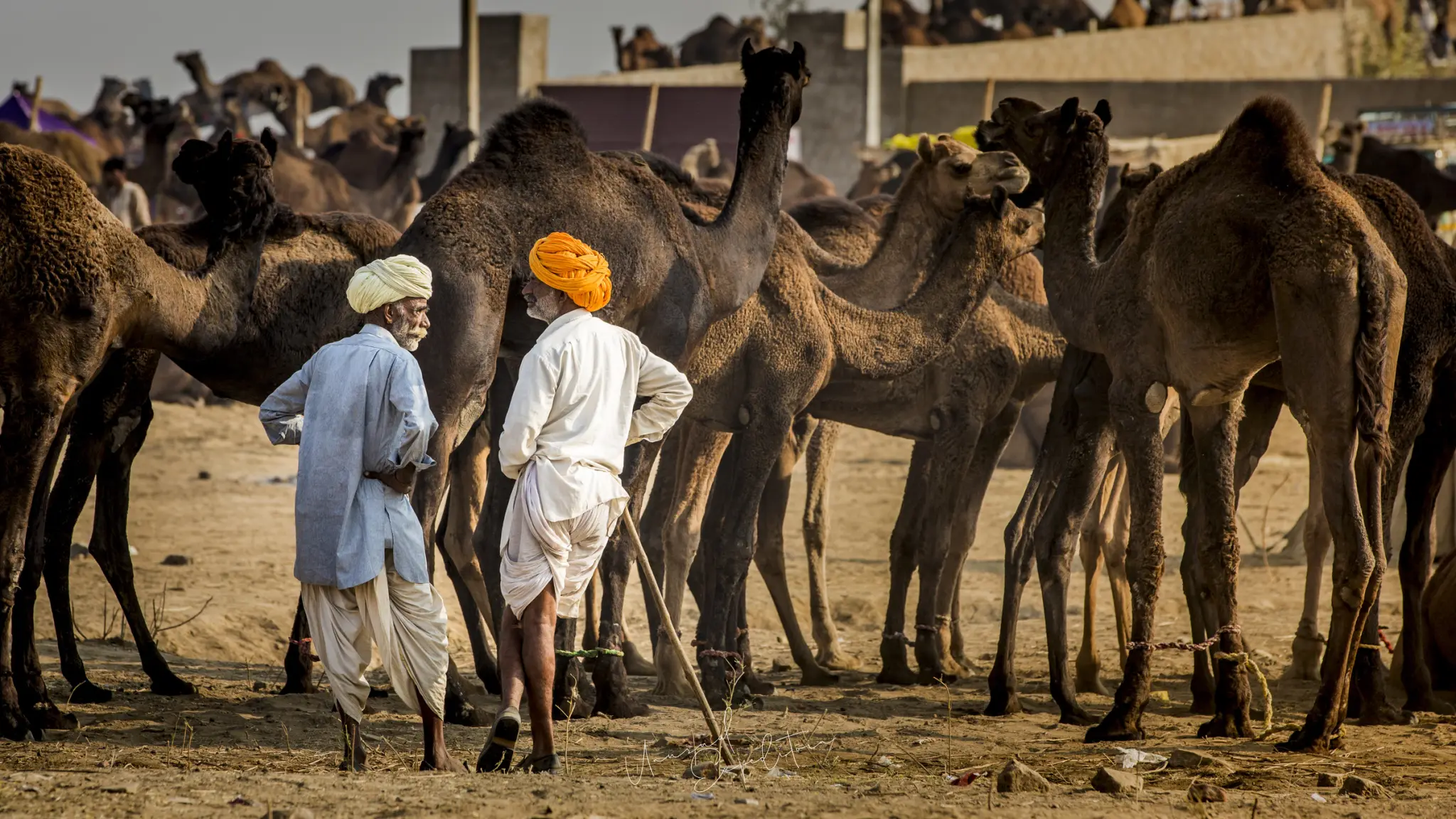
The camels are what make Pushkar mela famous, and they are what most photographers remember. Herds stand tethered in rows across the sand, some plain working animals, some dressed for sale with embroidered saddle cloths, pompoms, bells and painted patterns. Traders walk the lines with their hands behind their backs, stop, look at teeth and legs, and start a slow negotiation that may last most of a morning. Young camels are trained on open ground, sometimes with a struggle and a cloud of dust. In the evening herders walk their animals back to the camps for water and fodder. Each of these is a photograph, and our Pushkar fair photos article shows them scene by scene.
Pushkar mela horse trading
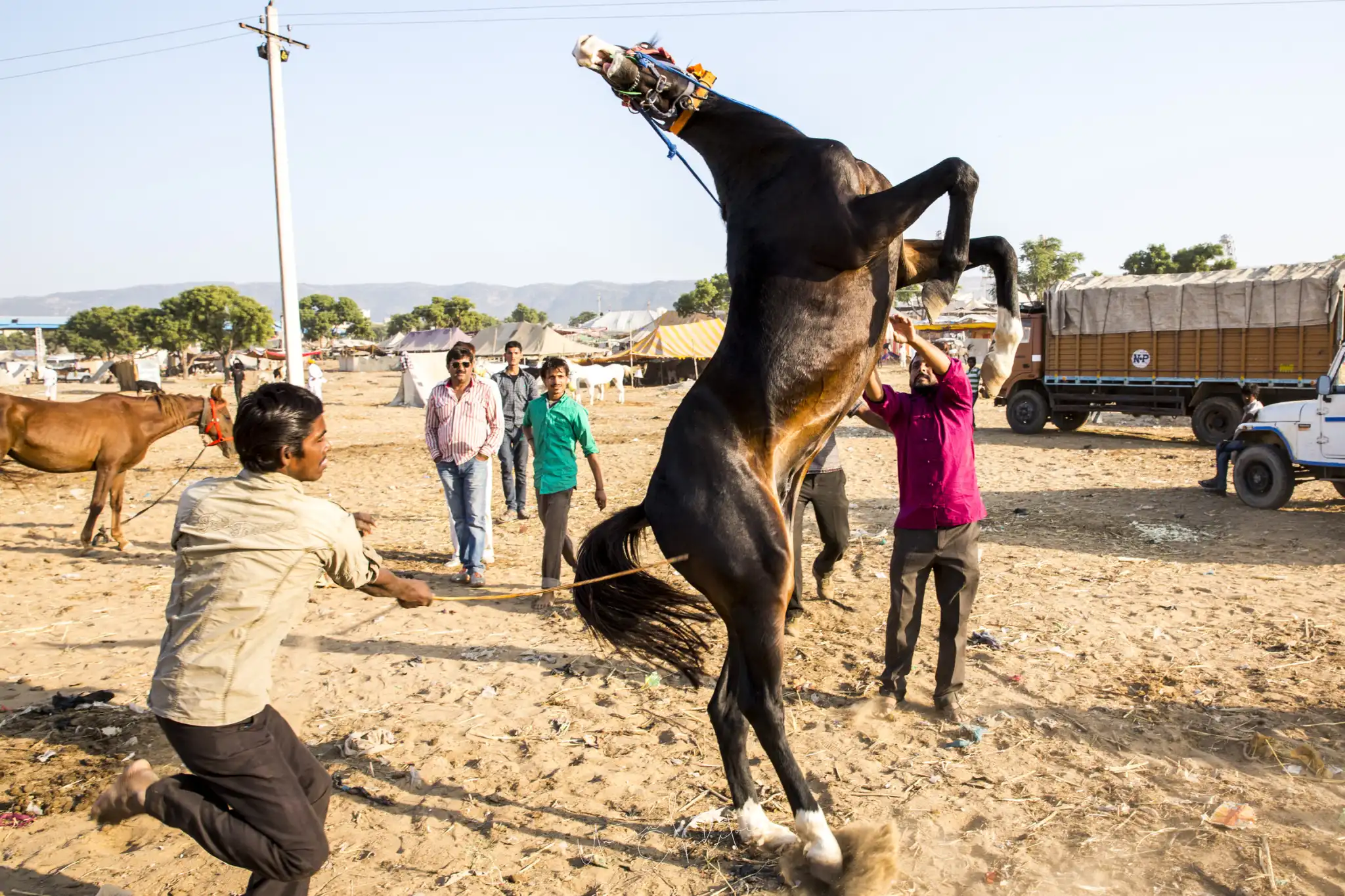
Horses have their own corner of the trading ground at Pushkar mela, and it is the liveliest. Sellers show off their animals by making them rear and dance on the sand while a crowd of buyers and onlookers stands back. Look for the Marwari, the horse of Rajasthan, whose ears curve inward until the tips almost meet. Keep your distance here: a rearing horse moves fast and the handlers need room, so a 70-200mm from the edge of the crowd is safer and better than a wide lens up close.
What happens at the Pushkar camel fair
| Subject | Where | What to look for |
|---|---|---|
| Camel trading | Main trading ground | Negotiations, herds in rows, decorated camels |
| Horse trading | Horse section of the ground | Rearing horses, buyers watching |
| Herders' camps | Around the edges of the ground | Cooking fires, tents, evening watering |
| Competitions | Fairground arena | Camel parades, moustache contest, matka tod |
| Pilgrimage | Pushkar Lake and ghats | Lamps and offerings at the full moon |
The trading ground and the arena run in parallel, so a photographer who wants both has to choose by the light.
Competitions and the fairground
The fair's programme mixes livestock shows with games. Incredible India lists camel parades, moustache competitions and matka tod, a pot-breaking contest, and Wikipedia adds tug of war between women's teams and men's teams. These are fun, crowded and well covered by the press; the camera positions near the arena fill early. Beyond the arena the fairground has rides, food stalls and folk performers, with dancers in mirrored skirts after dark. The stalls of the Pushkar fair market sit between the arena and the trading ground.
"The competitions are entertaining, but the pictures I keep from Pushkar are from the trading ground: two old men arguing over a camel's price, a young animal refusing the rope. That part of the fair has not been staged for anyone."
Joseph Mak, tour leader, Unusual Expedition
Camel fair in Rajasthan: how Pushkar compares
When people look for a camel fair in Rajasthan, Pushkar is usually the one they mean, though the state has other livestock fairs and desert festivals across the year. What sets Pushkar apart for photographers is the combination: a real animal market, a pilgrimage at a sacred lake, and a town small enough to walk. The fair has grown into an event for visitors as well as buyers, yet the herders' camps on the edge of the ground still look much as they always have. For the people side of the fair and how to approach them, see the Pushkar photography FAQ.
Practical notes for the fair
The fairground is sand, and the dust gets into everything: change lenses inside a bag, carry a blower and keep a cloth over the camera between shots. Wear closed shoes. Camels and horses kick, so never walk directly behind one. Herders may ask for a small payment for a posed portrait; decide your own rule and keep to it politely. Pushkar is a holy town where meat and alcohol are not allowed, so expect vegetarian food everywhere. India's visa rules and money are covered in the India photography trip FAQ.
See the Pushkar fair with us
We run the Pushkar fair as a private trip on request, for individuals, couples, families and photographers at their own pace, with every arrangement made around the fair's calendar; photography coaching can be added at extra cost. See private tours and our India photography tours.
Pushkar photography tours
The next Pushkar departure is announced on the Pushkar photography tours page, with previous expeditions and all the planning guides.
Explore Pushkar in depth
- Pushkar Photography Tour Guide: the Camel Fair, the Lake and the TownIndia
- Pushkar Sunrise and Sunset: the Dunes, the Lake and the HillIndia
- Pushkar Photography FAQ: the Fair, the Ghats, Gear and SafetyIndia
- Pushkar Fair Market: Pots, Tools and Camel Finery at the Camel MelaIndia
- Pushkar Fair Photos: Camels, Herders and the Trading GroundIndia
- Is Pushkar Worth Visiting? The Lake, the Ghats and How to Reach PushkarIndia
- Best Time to Visit Pushkar for the Camel Fair and the TownIndia
Upcoming Photo Tours
- Egypt Photo Tour – EgyptEgypt 12 Dec 2026 To 20 Dec 2026
- Inner Mongolia Winter Owl Photo Tour – ChinaChina 01 Jan 2027 To 04 Jan 2027
- Inner Mongolia Winter Photo Tour – ChinaChina 05 Jan 2027 To 11 Jan 2027
- Mekong And Central Highland Vietnam Photo Tour - VietnamVietnam 16 Jan 2027 To 24 Jan 2027