
Pushkar Photography FAQ: the Fair, the Ghats, Gear and Safety
Pushkar mela in which state, photographing herders and the ghats, camel safari in Pushkar, the horse fair, dust, drones and safety.
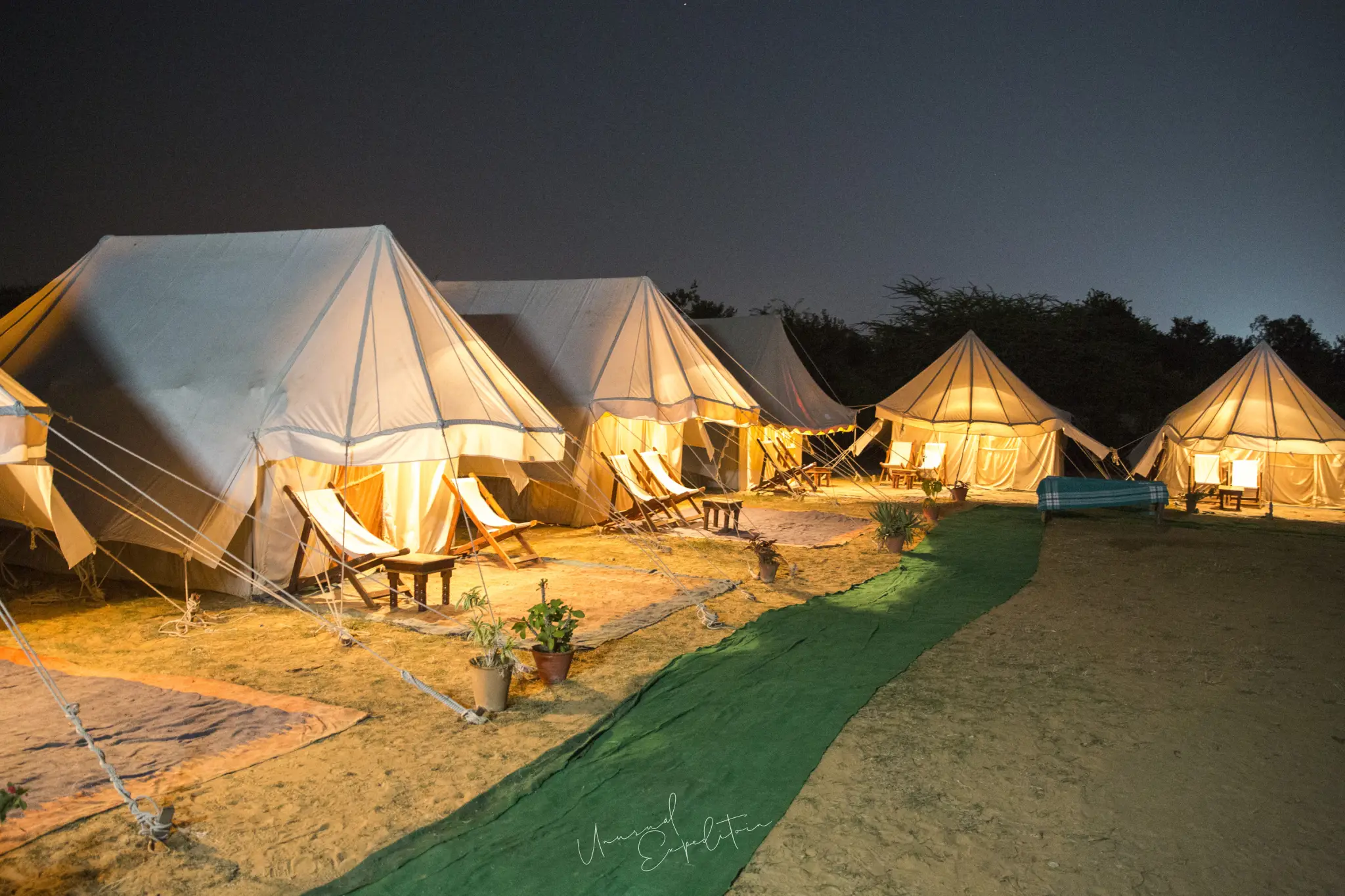
Pushkar mela in which state, on which dates, and with what rules for the camera: those are the questions photographers ask us most, along with what to bring for the dust and whether a drone or a camel safari is worth it. The quick answers: Pushkar is in Rajasthan; the camel fair ends on the full moon of Kartik; herders usually agree to a portrait if you ask first; people bathing at the ghats are never photographed; and two lenses and a blower matter more than a drone.
This FAQ is part of our Pushkar photography tour guide. Visas, money and flights for the whole of India are answered in the India photography trip FAQ.
Pushkar mela in which state?
The Pushkar mela is held in Rajasthan, in north-west India, in the small town of Pushkar in Ajmer district. Pushkar sits in a valley of the Aravalli hills, close to the city of Ajmer, which is the nearest railway hub. The fair takes place on the sand around the town and at its sacred lake. Our is Pushkar worth visiting article explains how to reach Pushkar by train, road and air.
When is the fair, and how long should I stay?
The fair follows the Hindu lunar calendar and ends on Kartik Purnima, the full moon of the month of Kartik, so its Gregorian dates move each year between late October and November; the Rajasthan authorities publish the official programme. For photography, plan to arrive several days before the full moon, when the trading ground is busiest, and stay through the full moon for the pilgrims at the lake. The best time to visit Pushkar covers the choice in detail.
Can I photograph people at the Pushkar fair?
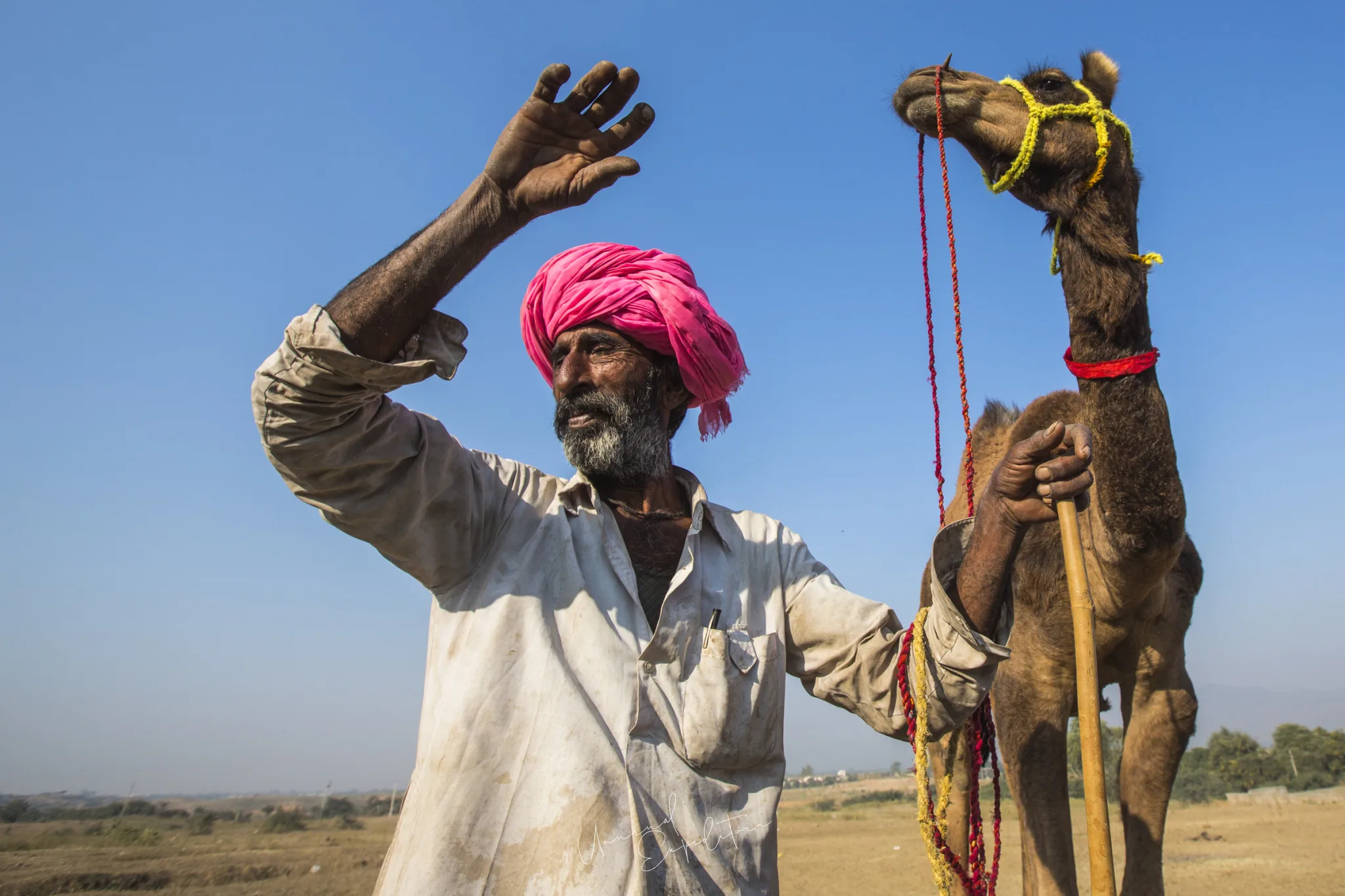
Yes, with manners. The herders at the Pushkar fair are used to cameras, and most will agree to a portrait once you have greeted them and shown them what you are doing. Some will ask for a small payment for a posed photograph; decide your own rule and stick to it politely. Women in the camps are often more reserved, so ask, and accept a no. Families camp on the ground, but we do not photograph children, and we suggest you do the same. Showing a person the picture on the back of the camera is the easiest way to say thank you.
Can I photograph at the ghats and temples?
The ghats of Pushkar Lake are a place of worship, and the rules are simple. Take your shoes off on the steps. Never photograph people bathing. Ask before photographing anyone at prayer, and keep a respectful distance at the evening aarti. Photography is not allowed inside the sanctum of the Brahma Temple. Priests at the ghats may offer flowers or a blessing and then ask for a donation; offerings are not mandatory, and a polite refusal is fine. Pushkar is also a holy town where meat and alcohol are not allowed.
Is there a camel safari in Pushkar?
Yes. Camel safaris in Pushkar, from a short ride at sunset to longer outings into the dunes around town, are offered by operators in town and at the camps, especially during the fair. For a photographer, a ride is less useful than walking: the best pictures are of the camels and herders, not from their backs. If you do take a camel safari in Pushkar, agree the route, the length and the price before you set off, and check that the animal looks well cared for.
Is the Pushkar horse fair separate from the camel fair?
No. The Pushkar horse fair is part of the same fair, on its own section of the trading ground. Horse traders show off their animals by making them dance and rear on the sand, which draws a crowd. Keep your distance and use a 70-200mm. The Pushkar camel fair article describes the trade in camels and horses.
What camera gear should I bring?
| Item | Why |
|---|---|
| 24-70mm | Portraits, camps, market, most of the fair |
| 70-200mm | Herds, horses, camel heads, silhouettes |
| 16-35mm | Reflections, wide scenes, tents |
| Second body | Avoids changing lenses in the dust |
| Blower, cloths, rain cover | Sand and dust protection |
| Small torch | Camps and the climb to the hill temple before dawn |
Two zooms on two bodies cover almost everything the fair offers.
How do I protect my camera from the dust?
The trading ground is soft sand, and animals and carts keep it in the air all day. Change lenses inside your bag, or carry two bodies and do not change at all. Keep a rain cover or a cloth over the camera between shots, clean with a blower before a brush, and check the sensor every evening. A UV or clear filter is worth having to protect the front element from blowing sand.
"Somebody always changes a lens in the wind on the trading ground and spends the evening cleaning spots off a sensor. Bring the second body. It is the best piece of kit for this fair."
Joseph Mak, tour leader, Unusual Expedition
Can I photograph at night?
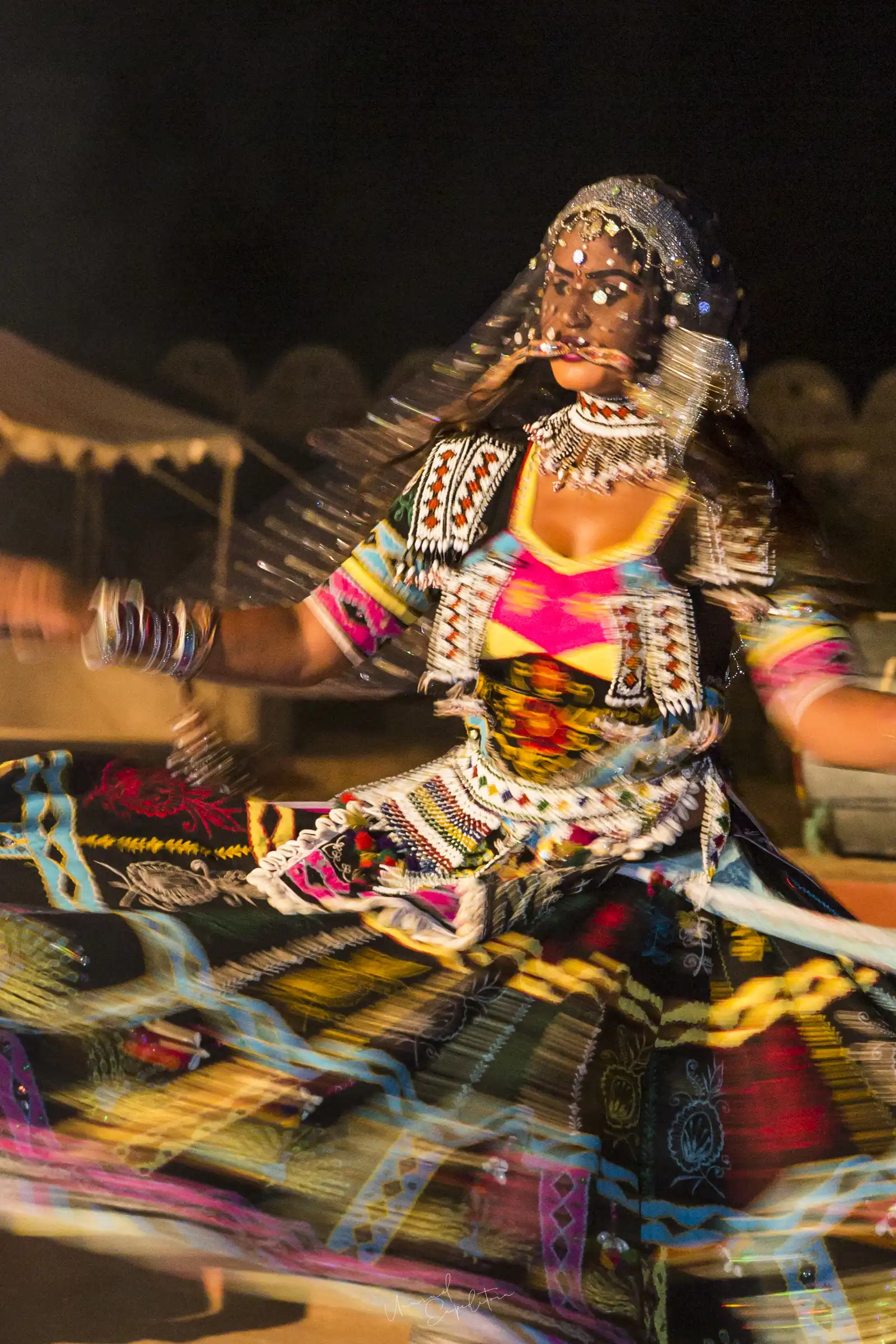
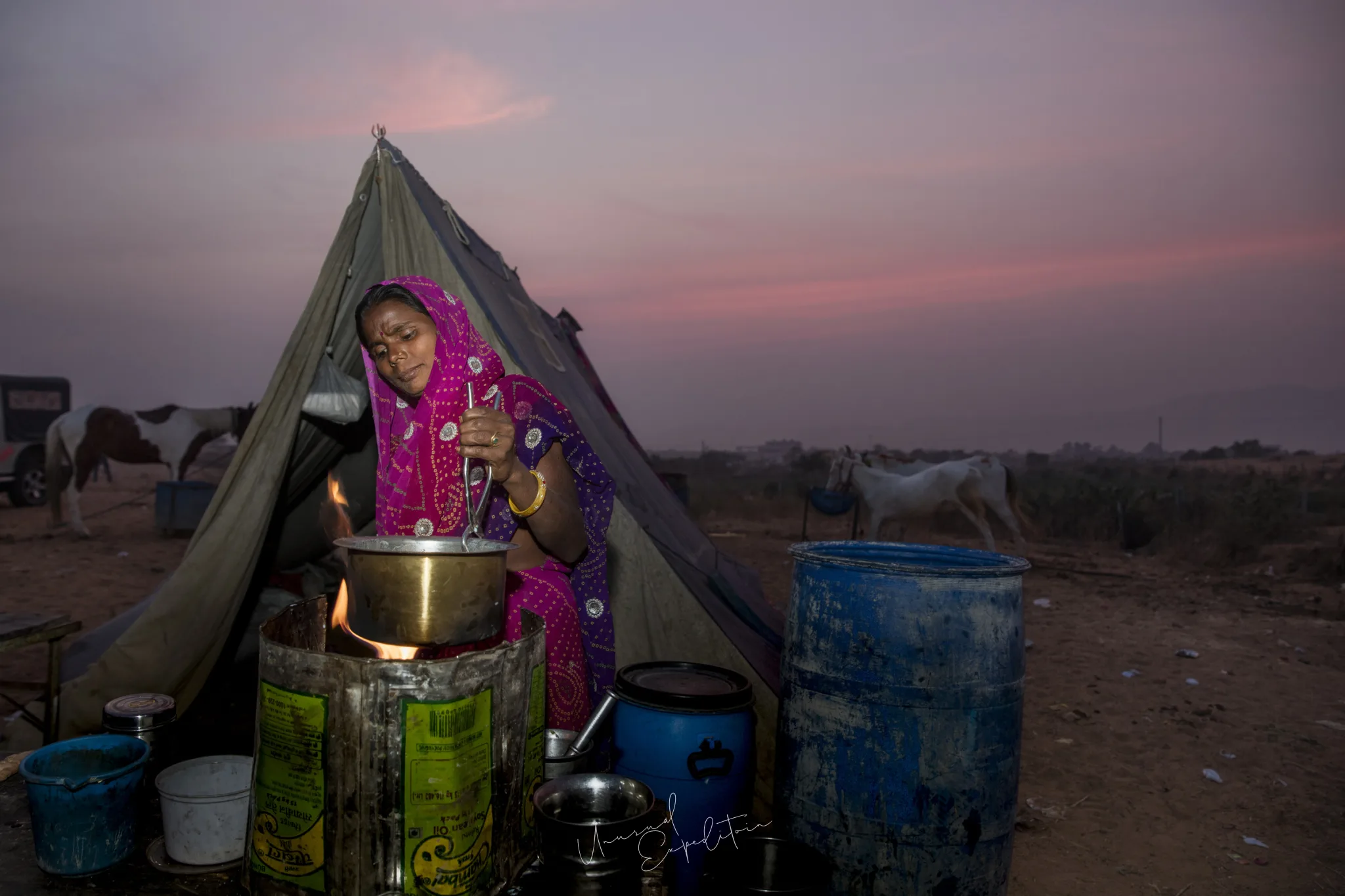
Yes, and the fair's nights are worth it. The herders' camps glow with cooking fires and lamps, folk dancers perform in mirrored skirts, and the tents near the fairground are lit from inside. A fast lens or a high ISO handles most of it; slow the shutter for a dancer's spinning skirt. Keep the camera close in crowds. The Pushkar sunrise and sunset article covers the light at both ends of the day.
Can I fly a drone at Pushkar?
India regulates drones under the Drone Rules 2021, with registration through the DGCA's Digital Sky platform, and the position for foreign visitors is restrictive and not clearly published. Check the official source before you travel, and expect that you may not be able to fly. At the fair itself, crowds and nervous animals make a drone a bad idea in any case; we leave ours at home.
Is Pushkar safe for photographers?
Pushkar is a busy pilgrimage town and, in our experience, a friendly one. The UK FCDO's travel advice for India and Singapore's Ministry of Foreign Affairs both warn against travel to some regions, chiefly Jammu and Kashmir, Manipur and the border with Pakistan, but neither names Pushkar or Ajmer. Read both before you go. Normal care applies: watch your bag in crowds, especially on the full moon, take registered taxis at night, and dress modestly near the temples.
Ask us about Pushkar
We run Pushkar as a private trip on request, for individuals, couples, families and photographers at their own pace; we arrange all the logistics, and a photographer or photography coaching can be added at extra cost. Ask at least two months ahead if you can, though a late request can often still be arranged. See private tours and our India photography tours page.
Pushkar photography tours
The next Pushkar departure is announced on the Pushkar photography tours page, with previous expeditions and all the planning guides.
Explore Pushkar in depth
- Pushkar Photography Tour Guide: the Camel Fair, the Lake and the TownIndia
- Pushkar Sunrise and Sunset: the Dunes, the Lake and the HillIndia
- Pushkar Fair Market: Pots, Tools and Camel Finery at the Camel MelaIndia
- Pushkar Camel Fair: What Happens at the Pushkar MelaIndia
- Pushkar Fair Photos: Camels, Herders and the Trading GroundIndia
- Is Pushkar Worth Visiting? The Lake, the Ghats and How to Reach PushkarIndia
- Best Time to Visit Pushkar for the Camel Fair and the TownIndia
Upcoming Photo Tours
- Egypt Photo Tour – EgyptEgypt 12 Dec 2026 To 20 Dec 2026
- Inner Mongolia Winter Owl Photo Tour – ChinaChina 01 Jan 2027 To 04 Jan 2027
- Inner Mongolia Winter Photo Tour – ChinaChina 05 Jan 2027 To 11 Jan 2027
- Mekong And Central Highland Vietnam Photo Tour - VietnamVietnam 16 Jan 2027 To 24 Jan 2027