
Pushkar Sunrise and Sunset: the Dunes, the Lake and the Hill
Sunset point Pushkar: camel silhouettes on the dunes, the lake at dusk, sunrise from the Savitri Temple hill, with lenses and settings.
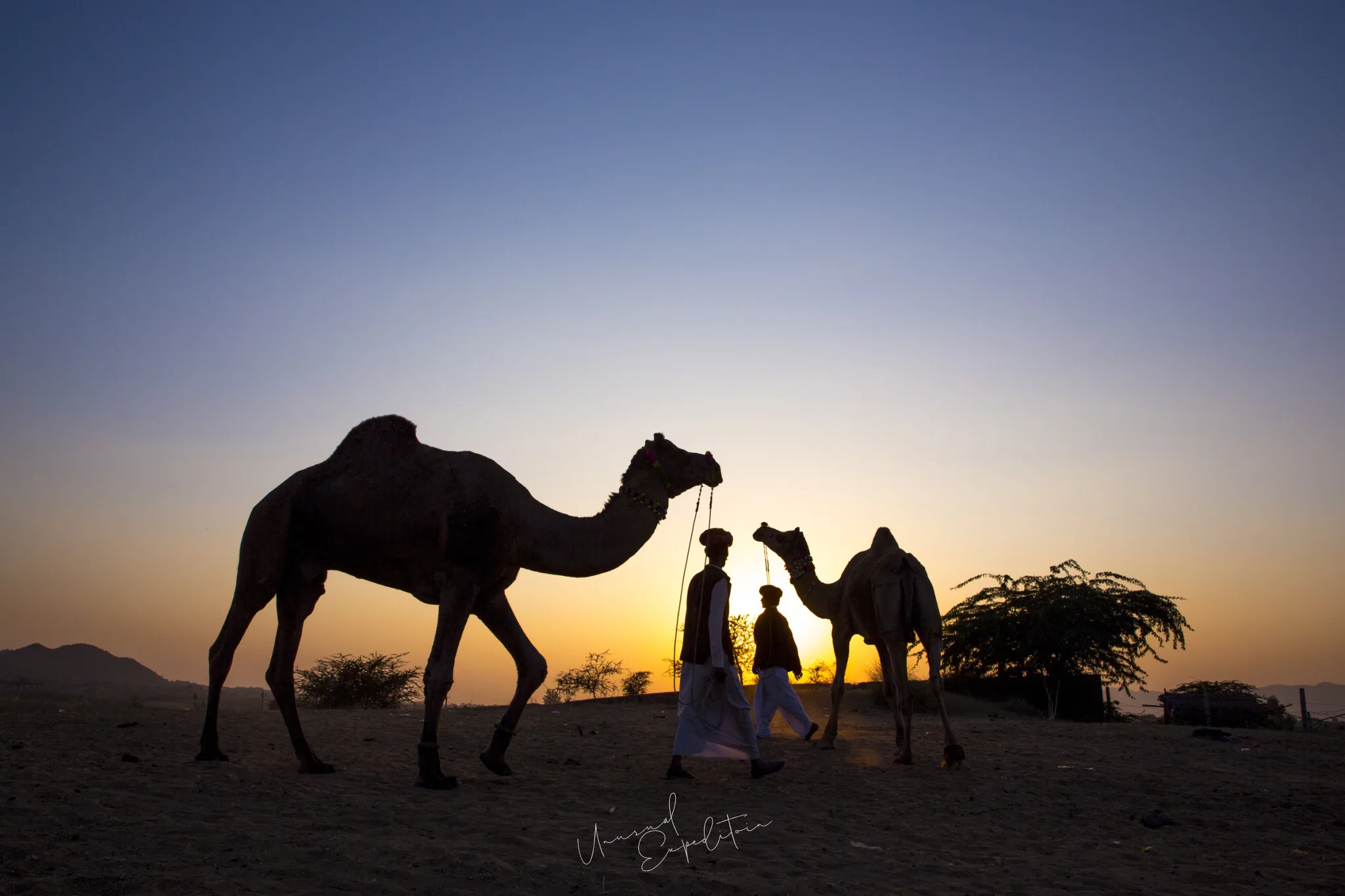
The sunset point Pushkar is known for is a spot by the lake, but a photographer has more than one choice at either end of the day. At sunset, the classic picture is a line of camels and herders silhouetted on the dunes around the fairground, the sun sinking behind them; in town, the lakeside Sunset Point draws a crowd for the evening light. At sunrise, the Savitri Temple on the hill above town looks down on the lake, and the camps wake up in smoke and dust.
This guide is part of our Pushkar photography tour guide. All the photographs here were taken on the fairground in the last light of the day.
Sunset point Pushkar: the lake, the hill or the dunes
Ask in town for the sunset point Pushkar is known for and you will be sent to the lake, where a spot by the ghats is marked on maps as Sunset Point and draws a crowd in the evening. Travel guides disagree on which shore it sits on, so check a map when you arrive. It is a pleasant place to watch the light go, though a crowded one for a tripod. Soon after sunset, the evening aarti begins at the ghats, with lamps, bells and chanting, which is the better subject. During the fair, many photographers skip the lake at sunset and head for the dunes around the trading ground, where the herders bring their camels in against the sky.
Pushkar camel fair at sunset: silhouettes on the dunes
The silhouette of a camel against a red sky is the picture everyone wants from the Pushkar camel fair, and the dunes around the fairground deliver it. As the sun nears the horizon, herders walk their animals across the higher ground, and a camel's long neck and hump read instantly in silhouette. Get low so the animals stand clear of the horizon, put the sun just behind a body or a tree to control the flare, and expose for the sky. A 16-35mm or 24-70mm works when the animals are close; a 70-200mm compresses a distant camel against a large sun. Keep the frame simple: one or two camels, one figure, open sky. Herders know the picture photographers want, and some will offer to walk a camel along the ridge for a tip; whether you accept is your choice, but say so before, not after.
Where to watch sunrise and sunset in Pushkar
| Place | Best for | What you see | Lens |
|---|---|---|---|
| Dunes around the fairground | Sunset | Camel and herder silhouettes | 16-35mm, 70-200mm |
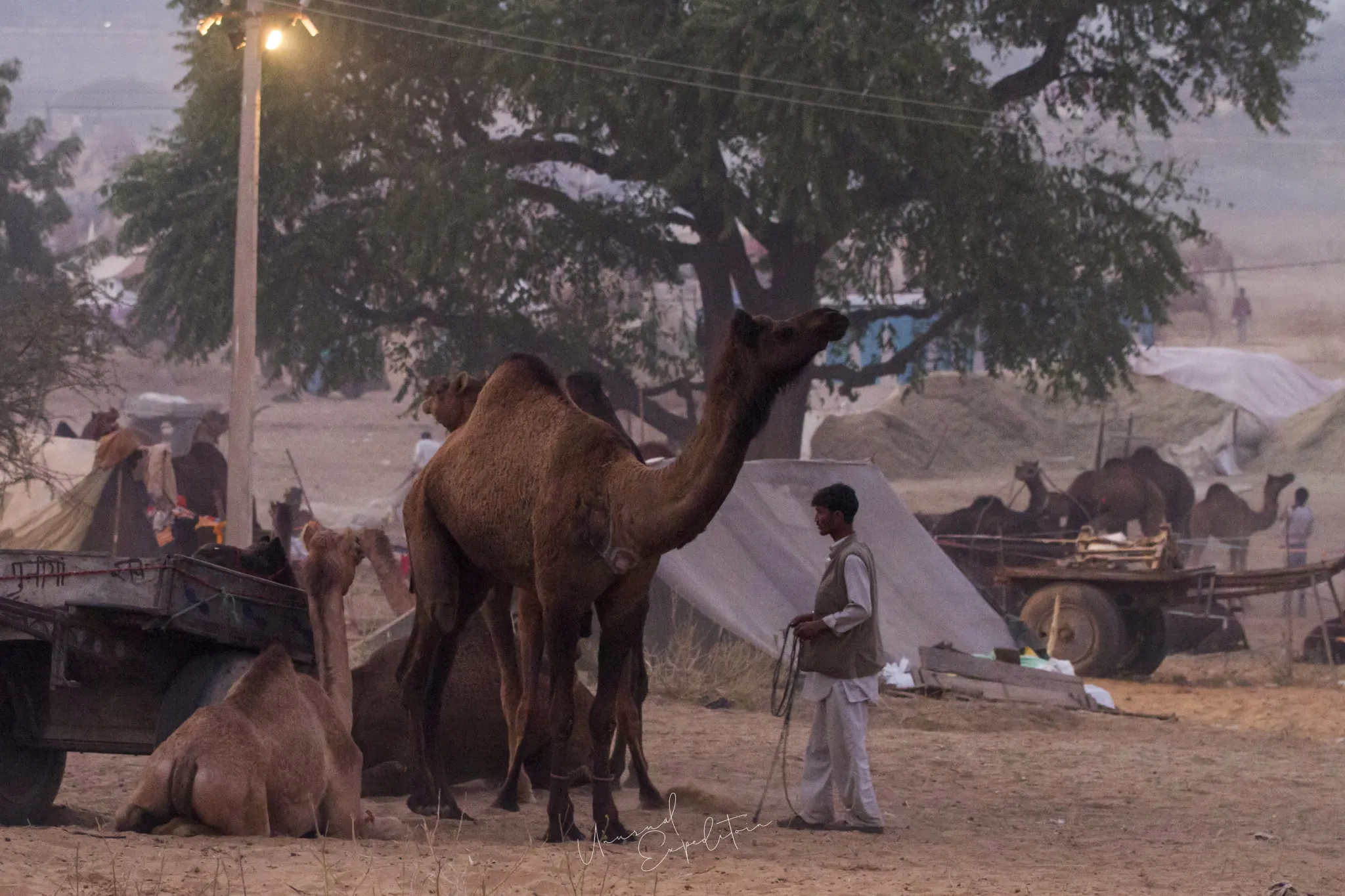
| Herders' camps | Sunrise and dusk | Smoke, dust, cooking fires, lamps | 24-70mm |
| Savitri Temple hill | Sunrise | The town and the lake from above | 24-70mm, 70-200mm |
| Sunset Point by the lake | Sunset | The lake and the evening crowd | 24-70mm |
| The ghats | After sunset | The evening aarti, lamps on the water | 24-70mm |
During the fair, the dunes at sunset and the camps at sunrise are the two that only exist for those few days.
Sunrise in Pushkar: the hill and the camps
For sunrise, Wikivoyage recommends the climb to the Savitri Temple on the hill above town, a long stair ascent that rewards you with the lake and the rooftops of Pushkar below; travel sites report a ropeway as well, so check whether it is running. Start in the dark and carry a light. During the fair, sunrise is also the best time on the trading ground: smoke from the cooking fires and dust from the animals hang over the camps, the sun comes up as a soft disc, and herders lead their camels out to water. The low light at that hour suits portraits too, and our Pushkar fair photos article shows the morning scenes.
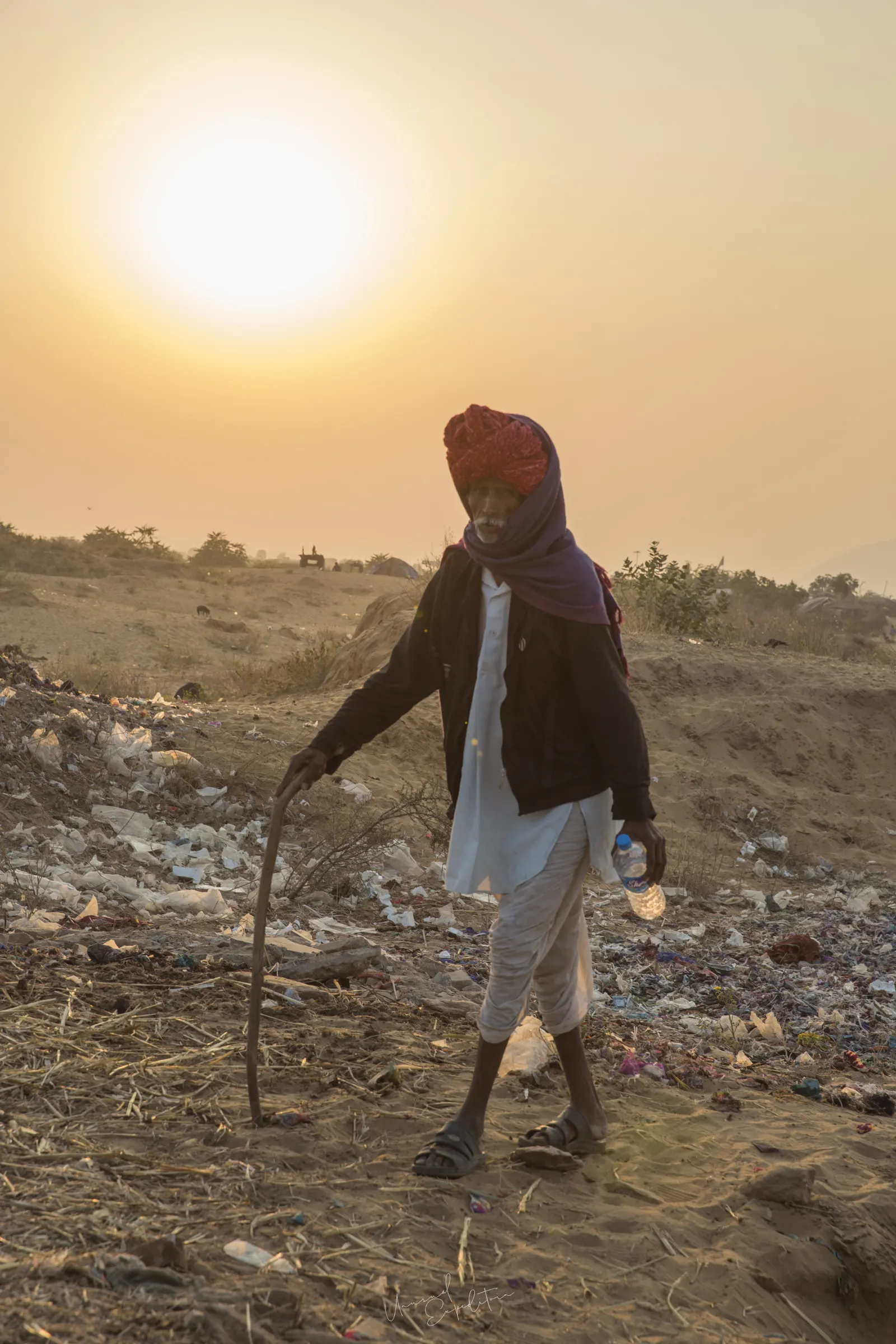
"Everyone points the camera at the sun. Turn around for a minute: the light on the herders' faces and the dust behind them is often the better picture, and you have it to yourself."
Joseph Mak, tour leader, Unusual Expedition
Dusk and blue hour over the fairground
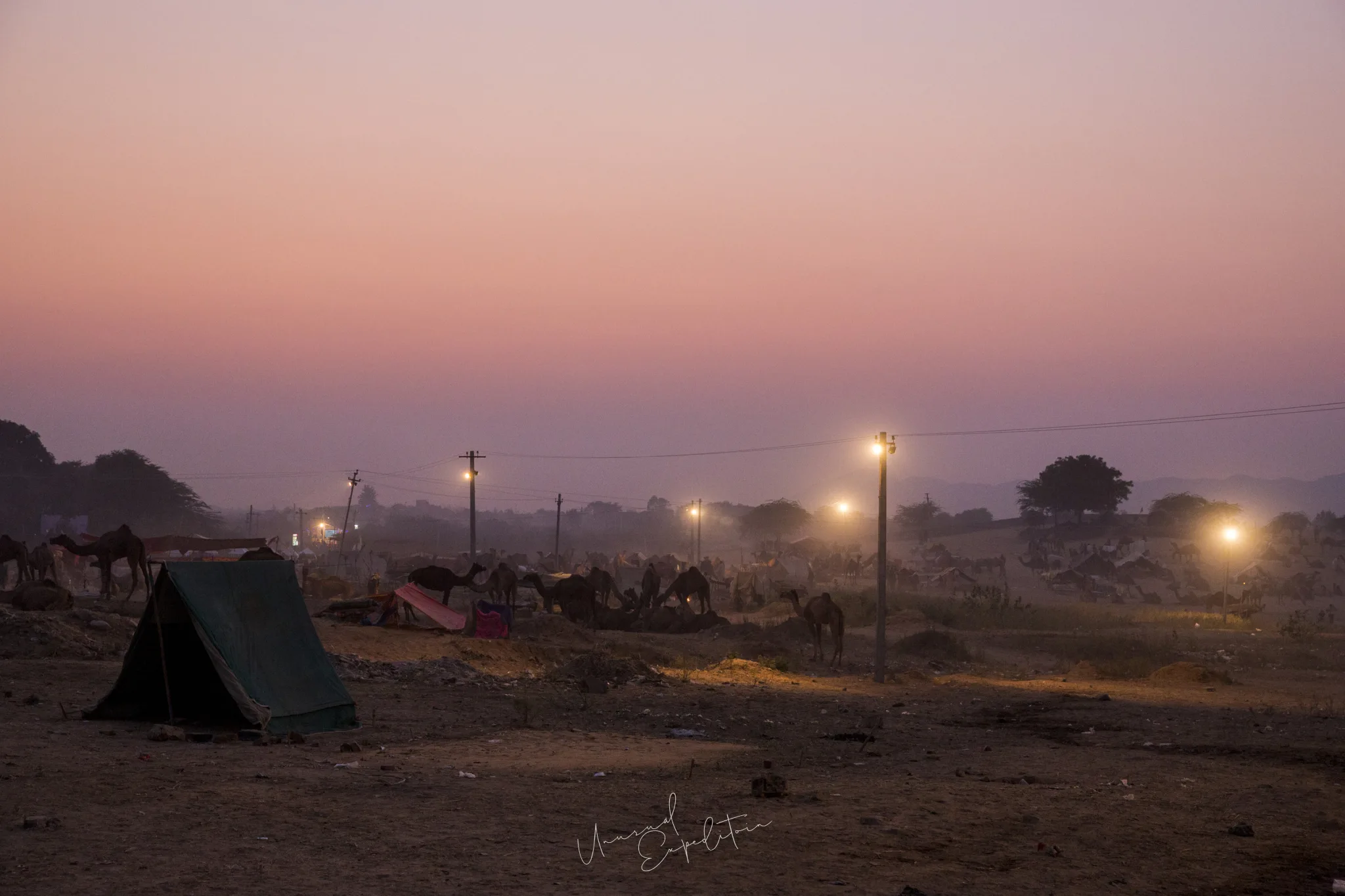
After the sun goes, stay. The sky over the fairground turns pink and then deep blue, the street lights and lamps come on across the camps, and the dust that blurred the day softens into haze. A tripod or a steady wall helps here, with a 24-70mm and an exposure long enough to hold the colour of the sky. Then the night begins: folk dancers perform at the camps, and the fairground rides light up. The Pushkar photography FAQ has notes on photographing at night and on keeping the camera safe in a crowd.
The full moon rising over Pushkar
The fair ends on a full moon, and a full moon rises in the east at about the time the sun sets in the west. On the evenings around Kartik Purnima, that gives you a second subject: turn away from the sunset and look for the moon lifting over the hills and the camps while the sky is still light. A 70-200mm or longer makes the moon large against a tent, a temple or a camel's head; once the sky darkens, the moon will be too bright to hold detail with the land, so the best minutes are the first ones. At the lake, the same full moon is the night of the year when pilgrims crowd the ghats with lamps.
Settings for silhouettes and low sun
Silhouettes are simple to expose: meter on the bright sky beside the sun, lock it, and let the subject go black. Underexpose a third to two thirds of a stop to hold the colour. Stop down for a sunstar if the sun sits at the edge of a body or a branch. For the haze of dawn and dusk, expose for the highlights and lift the shadows later; the fine dust will flatten contrast, which is part of the mood. Keep a cloth over the lens between shots, because the evening wind carries sand. For the fair's calendar and which days to come, see the best time to visit Pushkar.
Catch the light in Pushkar with us
We run Pushkar as a private trip on request, planned around sunrise, sunset and the fair; you set the pace and we arrange the rest, and a photographer or photography coaching can be added at extra cost. See private tours and our India photography tours page.
Ask us about Pushkar at sunrise and sunset
Pushkar photography tours
The next Pushkar departure is announced on the Pushkar photography tours page, with previous expeditions and all the planning guides.
Explore Pushkar in depth
- Pushkar Photography Tour Guide: the Camel Fair, the Lake and the TownIndia
- Pushkar Photography FAQ: the Fair, the Ghats, Gear and SafetyIndia
- Pushkar Fair Market: Pots, Tools and Camel Finery at the Camel MelaIndia
- Pushkar Camel Fair: What Happens at the Pushkar MelaIndia
- Pushkar Fair Photos: Camels, Herders and the Trading GroundIndia
- Is Pushkar Worth Visiting? The Lake, the Ghats and How to Reach PushkarIndia
- Best Time to Visit Pushkar for the Camel Fair and the TownIndia
Upcoming Photo Tours
- Egypt Photo Tour – EgyptEgypt 12 Dec 2026 To 20 Dec 2026
- Inner Mongolia Winter Owl Photo Tour – ChinaChina 01 Jan 2027 To 04 Jan 2027
- Inner Mongolia Winter Photo Tour – ChinaChina 05 Jan 2027 To 11 Jan 2027
- Mekong And Central Highland Vietnam Photo Tour - VietnamVietnam 16 Jan 2027 To 24 Jan 2027