
Pushkar Photography Tour Guide: the Camel Fair, the Lake and the Town
What Pushkar is famous for and how to photograph it: the camel fair, the herders' camps, the lake and ghats, the light and the etiquette.
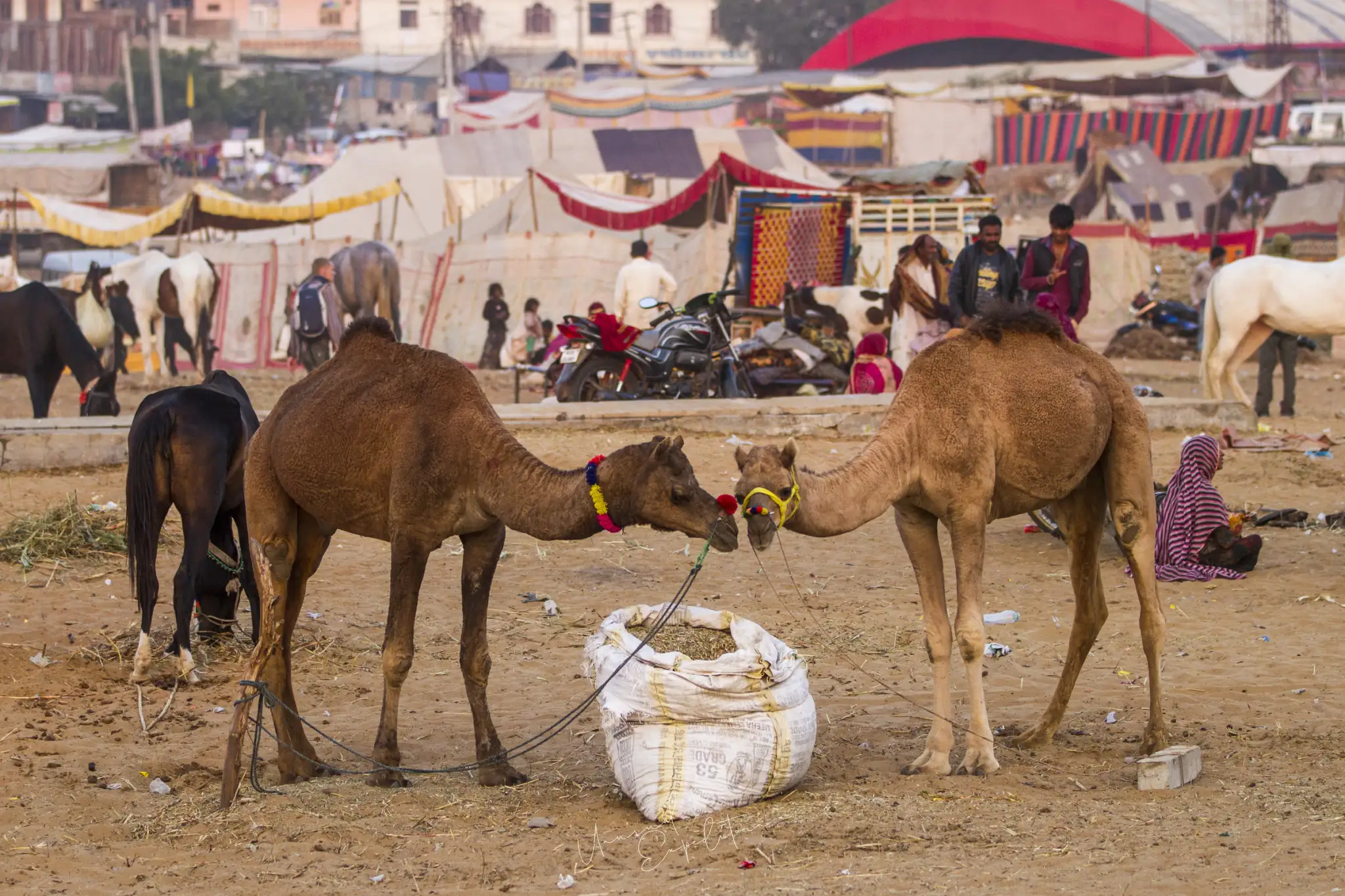
Pushkar is famous for three things a photographer can use: the camel fair, when herders from across Rajasthan camp on the sand outside town with their camels, horses and cattle; the sacred lake with its bathing ghats; and the Brahma Temple, one of very few in the world. For pictures, the fair is the reason to come. The trading ground gives you herders, decorated camels and dust lit low by the sun, and the town gives you pilgrims, lamps and lanes.
This is the Pushkar area guide within our India photography tour guide, which covers visas, money, flights and the rest of the country. We photographed the fair on two trips. The photographs in this guide are our own, taken on those trips; we hold the rights to them, and the notes come from knowing the place first hand.
What Pushkar is famous for
Pushkar is a small pilgrimage town in the Ajmer district of Rajasthan, set around a lake in a basin of the Aravalli hills. Hindu tradition holds the lake sacred, and Wikipedia's account of Pushkar Lake counts 52 bathing ghats around its shore. The Brahma Temple stands just back from the water; Wikivoyage describes it as one of the very few temples in the world dedicated to Brahma. For most of the year the town is quiet, a place of temples, cafes and narrow bazaars. Once a year, in the Hindu month of Kartik, it fills with herders, traders and pilgrims for the Pushkar fair, and the dunes outside town turn into a city of tents. That is the Pushkar most photographers come for, and the one most of this guide is about.
The Pushkar camel fair for photographers
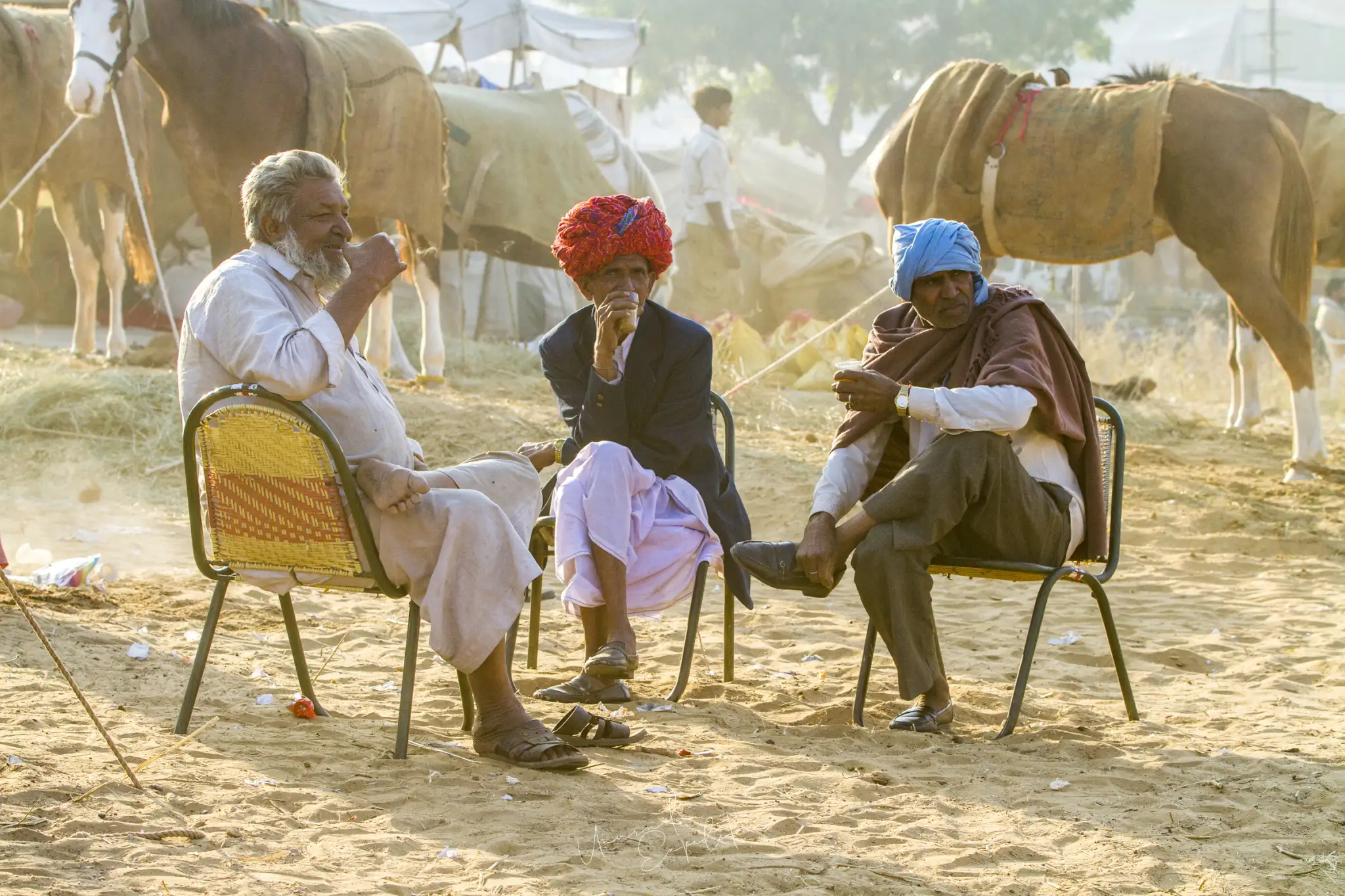
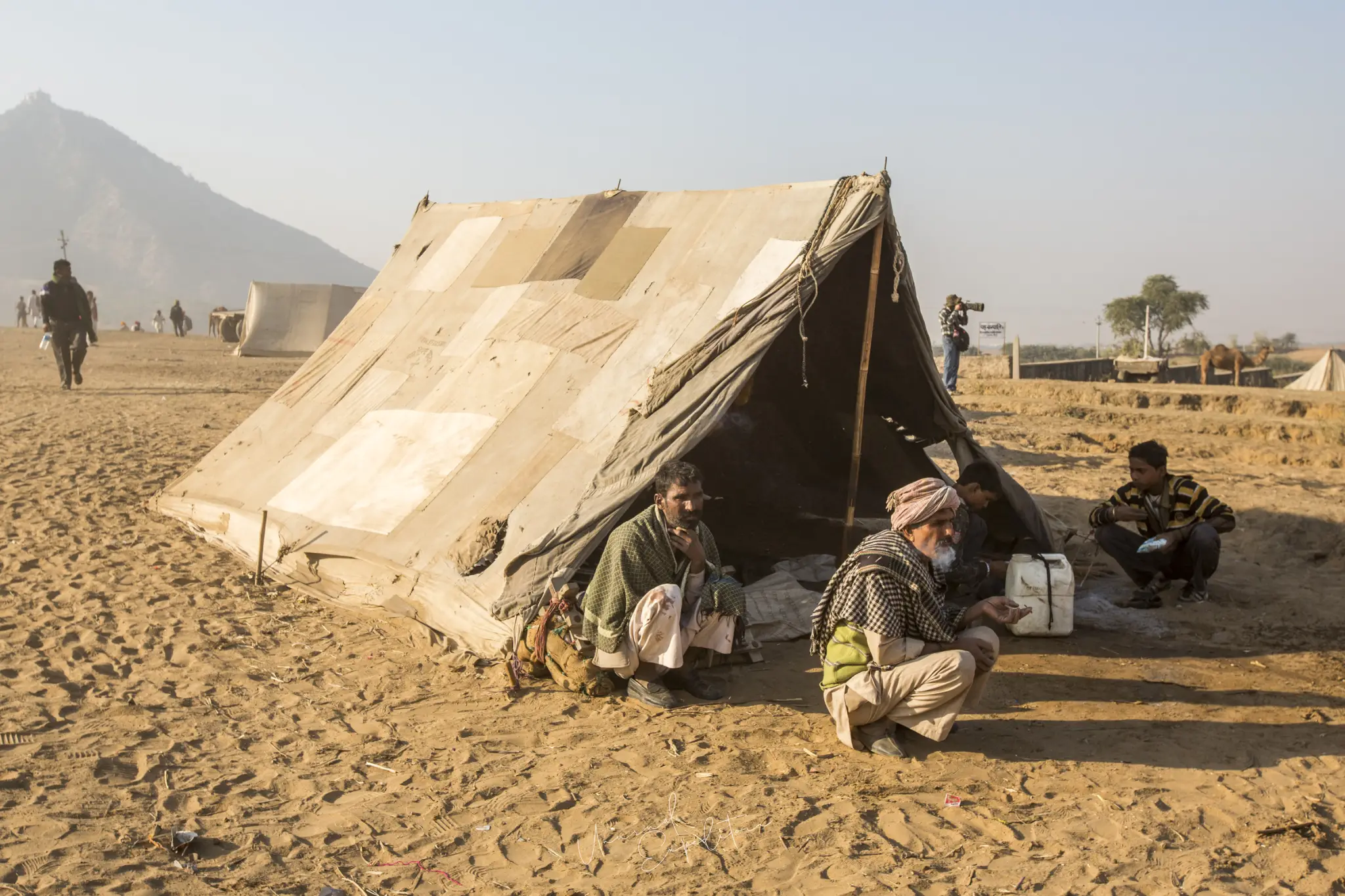
The Pushkar camel fair, the Pushkar mela, is part livestock market and part religious festival. On the trading ground, herders from across Rajasthan bring camels, horses and cattle to sell; they camp beside their animals, cook over small fires and spend the day showing, haggling and training. Around them grows a temporary market of saddles, ropes, pots and camel finery. The Pushkar camel fair article explains how the fair works and what happens on the ground, and Pushkar fair photos shows what the trading ground actually looks like through the lens.
The fair rewards patience more than any single viewpoint. Walk the ground slowly, say hello before you lift the camera, and come back to the same camp on another morning. The herders who waved you away on the first day will often call you over on the second.
Where to photograph in Pushkar
| Place | Subject | Best light | Lens |
|---|---|---|---|
| Camel trading ground | Herds, herders, trading, training | First light and the last hour before sunset | 24-70mm, 70-200mm |
| Herders' camps | Tents, cooking fires, portraits | Dawn, dusk | 24-70mm |
| Dunes around the ground | Camel silhouettes | Sunset | 16-35mm, 24-70mm |
| Fair market | Stalls, pots, camel decorations | Morning | 24-70mm |
| Lake and ghats | Pilgrims, lamps, temples on the shore | Dawn, evening aarti | 24-70mm, 70-200mm |
The fair ground and the ghats both work at the two ends of the day, for different reasons: the ground for its low, dusty light, the lake for its rituals.
The lake, the ghats and the town
Pushkar Lake is the heart of the town and the reason for the pilgrimage. Pilgrims bathe at the ghats, especially around the full moon of Kartik, and priests perform the evening aarti on the steps. It is also where photographers most often get it wrong. Bathing is a religious act: do not photograph people in the water, take your shoes off on the ghat steps, and ask before you photograph anyone at prayer. Photography is not allowed inside the sanctum of the Brahma Temple. Away from the water, the bazaar lanes, the vegetable market at night and the temples above the rooftops make good street photography. Our is Pushkar worth visiting article covers the town, the lake and how to reach Pushkar.
When to go to Pushkar
The fair follows the Hindu lunar calendar. Incredible India, the Government of India's tourism site, places it at Kartik Purnima, the full moon of the month of Kartik, which falls in late October or November; the Gregorian dates change every year, so check the Rajasthan Tourism calendar before you plan. In our experience the trading ground is busiest with camels and herders in the days before the full moon, while the religious crowd at the lake peaks on the full moon itself. Outside the fair, the cooler months are the comfortable time to visit the town. The best time to visit Pushkar article sets out the choices.
"At Pushkar I tell people to put the long lens away for the first hour and just walk. Sit with a herder, drink the tea he offers, let him see the camera. The best portraits I have from the fair came from men I had talked to the day before."
Joseph Mak, tour leader, Unusual Expedition
Light: dawn, dusk and after dark
Rajasthan in the fair season is dry, and the trading ground is a field of sand churned by hooves and cart wheels. At dawn the smoke of cooking fires and the dust hang over the camps and soften everything; in the last hour of the day the light turns gold and then red, and the herders walk their camels back across the dunes. Midday is flat and harsh, the time for the market and for rest. After dark the camps glow with lamps, folk dancers perform and the fairground lights come on. The Pushkar sunrise and sunset guide covers where to stand.
The fair market
Every fair needs a market, and Pushkar's is half the picture. Women sell clay water pots laid out on the sand, craftsmen sell wooden pitchforks and tools, and walking vendors carry bundles of tassels and halters for decorating camels. Fodder arrives on overloaded trucks. Our Pushkar fair market article covers the stalls as a subject.
Photographing people with respect
The fair is a working market and a pilgrimage, and the people in it are not a show. Most herders are happy to be photographed once you have greeted them, some will ask for a print or a small payment, and some will say no; respect every answer. Families camp on the ground, so be careful with children: we do not photograph them, and we suggest you do not either. The Pushkar photography FAQ answers the practical questions, from dust and drones to the rules at the ghats.
Explore Pushkar in depth
- Pushkar camel fair: what happens at the Pushkar mela
- Pushkar fair photos: camels, herders and the trading ground
- Best time to visit Pushkar for the camel fair
- Pushkar sunrise and sunset: the dunes, the lake and the hill
- Pushkar fair market: pots, tools and camel finery
- Is Pushkar worth visiting? The town, the lake and how to reach Pushkar
- Pushkar photography FAQ
Photograph Pushkar with us
We run Pushkar as a private trip on request, timed to the fair or outside it, for individuals, families, couples and photographers who want their own pace; we arrange all the logistics around what you want to photograph, and a photographer or photography coaching can be added at extra cost. Ask at least two months ahead if you can. See private tours and our India photography tours page.
Pushkar photography tours
The next Pushkar departure is announced on the Pushkar photography tours page, with previous expeditions and all the planning guides.
Explore Pushkar in depth
- Pushkar Sunrise and Sunset: the Dunes, the Lake and the HillIndia
- Pushkar Photography FAQ: the Fair, the Ghats, Gear and SafetyIndia
- Pushkar Fair Market: Pots, Tools and Camel Finery at the Camel MelaIndia
- Pushkar Camel Fair: What Happens at the Pushkar MelaIndia
- Pushkar Fair Photos: Camels, Herders and the Trading GroundIndia
- Is Pushkar Worth Visiting? The Lake, the Ghats and How to Reach PushkarIndia
- Best Time to Visit Pushkar for the Camel Fair and the TownIndia
Upcoming Photo Tours
- Egypt Photo Tour – EgyptEgypt 12 Dec 2026 To 20 Dec 2026
- Inner Mongolia Winter Owl Photo Tour – ChinaChina 01 Jan 2027 To 04 Jan 2027
- Inner Mongolia Winter Photo Tour – ChinaChina 05 Jan 2027 To 11 Jan 2027
- Mekong And Central Highland Vietnam Photo Tour - VietnamVietnam 16 Jan 2027 To 24 Jan 2027