
Is Pushkar Worth Visiting? The Lake, the Ghats and How to Reach Pushkar
Is Pushkar worth visiting: the lake and ghats, the aarti, the Brahma Temple, the fair versus the quiet months, and how to reach Pushkar.
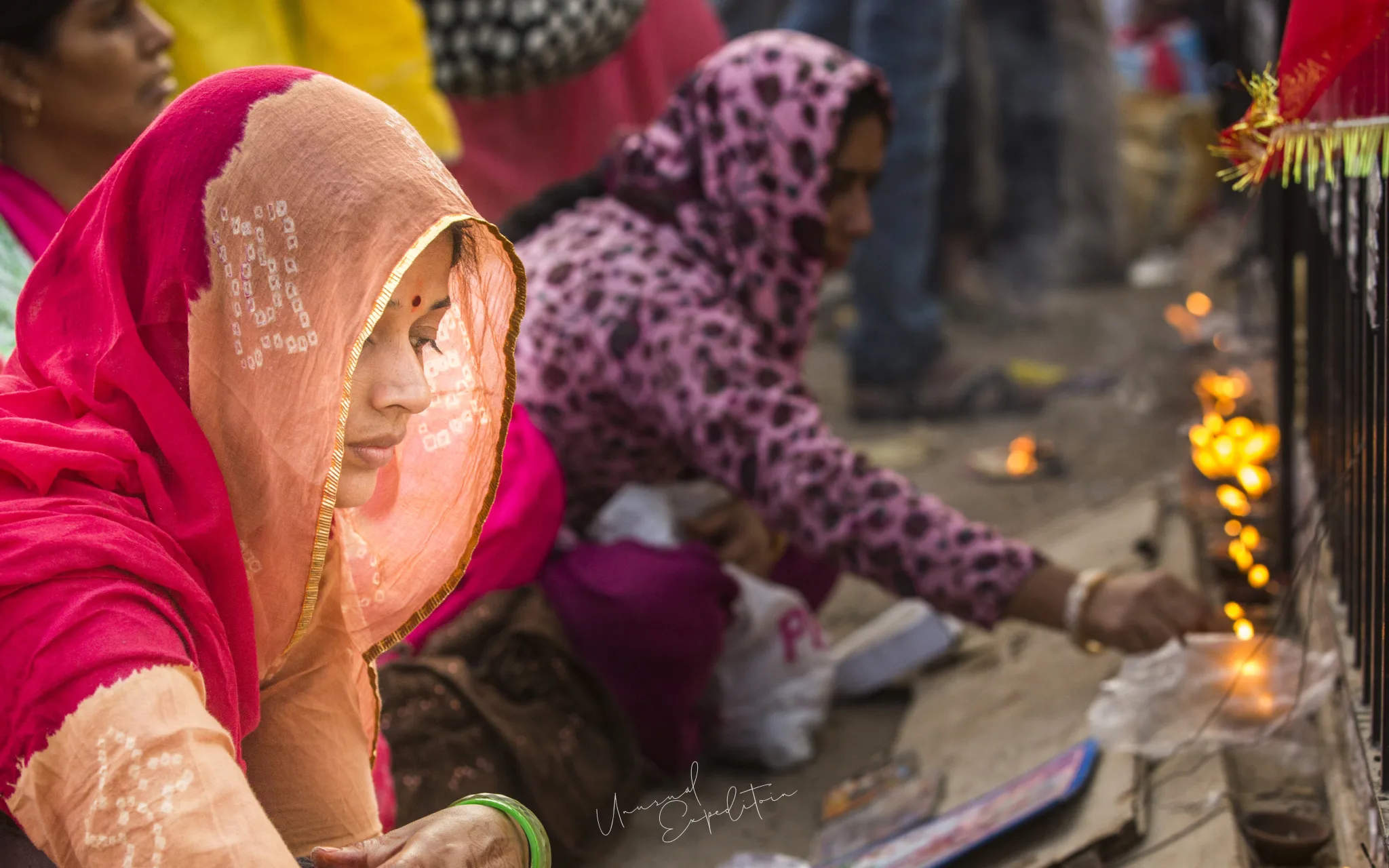
Is Pushkar worth visiting? For a photographer, yes, and above all during the camel fair, when herders, camels and pilgrims fill the town and the dunes around it. Outside the fair Pushkar is still worth a short stay: a holy lake ringed by bathing ghats, the Brahma Temple, an evening aarti on the steps and walkable bazaars. It is small and busy with visitors, and it asks for respect at the water, but few towns in Rajasthan give you so much within walking distance.
Here is the town, the lake and how to reach Pushkar; the camel fair itself is covered in our Pushkar photography tour guide and the articles it links.
What is Pushkar famous for?
Pushkar is famous for its lake, its temple and its fair. The lake is one of the holiest in Hindu tradition; Wikipedia's account of Pushkar Lake counts 52 bathing ghats around it, and a bath on the full moon of Kartik is held to bring salvation. The Brahma Temple, which Wikivoyage calls one of the very few temples in the world dedicated to Brahma, stands a short walk from the water. And once a year the camel fair brings herders and pilgrims from across Rajasthan, which is what puts Pushkar on most photographers' maps. Pushkar is also a vegetarian town where meat and alcohol are not allowed, which shapes its daily life and its restaurants.
Pushkar lake and ghats
The lake and its ghats are the centre of Pushkar. Wide stone steps lead down to the water from temples and old houses on every side, and pilgrims bathe, pray and float small lamps from them. Wikipedia's account names, among others, Varaha Ghat, Brahma Ghat and Gau Ghat, which was renamed Gandhi Ghat after Mahatma Gandhi's ashes were immersed there. The water level depends on the monsoon, and in dry years the lake can run low. For a photographer the ghats are a place to slow down: take off your shoes on the steps, never photograph anyone bathing, and ask before photographing anyone at prayer. Priests may offer flowers and a blessing and then ask for money; Wikivoyage reminds visitors that offerings at the ghats are not mandatory, so decline politely if you do not want one.
Pushkar lake aarti
Every evening after sunset, priests perform the aarti at the ghats, waving lamps, ringing bells and chanting as the light fades over the water. It is short, atmospheric and one of the best things to photograph in Pushkar, as long as you stay at the back and keep the camera quiet. A 24-70mm at a high ISO is enough; no flash. The full moon of Kartik, at the end of the camel fair, is the night of the year when the lake is busiest, with pilgrims lighting lamps along the steps. The Pushkar sunrise and sunset article has more on the evening at the lake.
Brahma temple Pushkar
The Brahma Temple in Pushkar is the town's best known temple. Wikipedia's account of the lake dates the present structure to the fourteenth century, on a site believed to be far older. It is a short walk up from the lakeside lanes. Shoes stay outside, and photography is not allowed inside the sanctum, so photograph the temple from the street and the steps. On the hills around town stand other temples, including the Savitri Temple, reached by a long stair climb and visited for sunrise views over the lake.
Pushkar places to visit for photographers
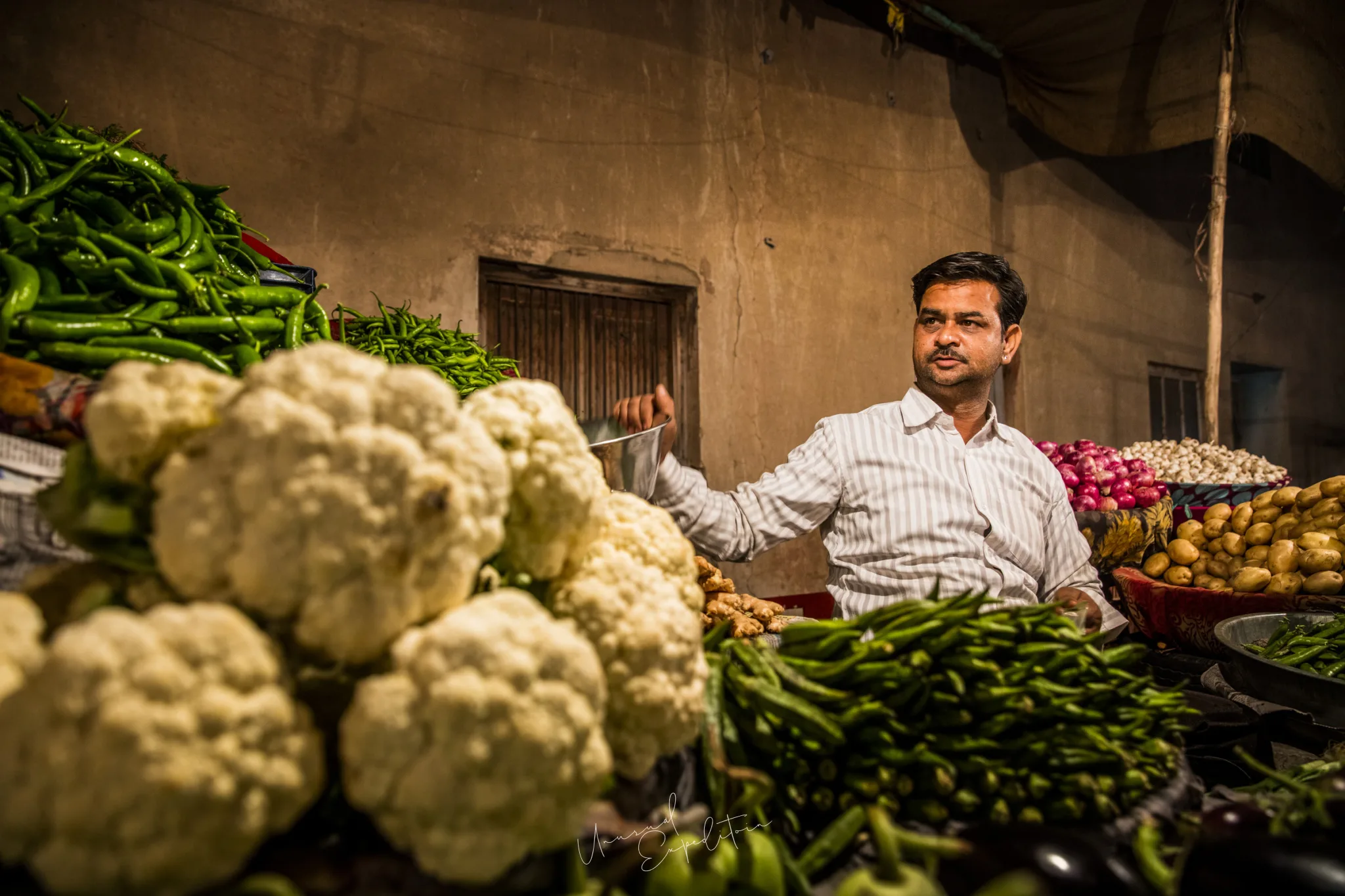
The Pushkar places to visit with a camera are close together. The ghats, for pilgrims, lamps and the evening aarti. The Brahma Temple and the smaller temples along the lakeside lanes, photographed from outside. The main bazaar, busiest and most colourful in the evening, when vegetable sellers light their stalls with bare bulbs and the street fills with shoppers. The hill temples above town, the Savitri Temple among them, for the view over the lake and the rooftops at sunrise. And, in fair season, the trading ground and its camps on the sand outside town, covered in Pushkar fair photos. Everything in town is within walking distance, which is part of Pushkar's appeal.
Is Pushkar worth visiting outside the fair?
| During the camel fair | Outside the fair | |
|---|---|---|
| Main subjects | Camels, herders, trading, the full moon pilgrimage | Lake, ghats, temples, bazaars |
| Crowds | Very busy, especially at the full moon | Moderate, many backpackers |
| Light | Dust and smoke at dawn and dusk | Clear winter light |
| Who it suits | Photographers who want people and animals | Slow travel, street and temple photography |
Without the fair, Pushkar is a pleasant small town rather than an essential one; with it, it is one of India's great photographic events.
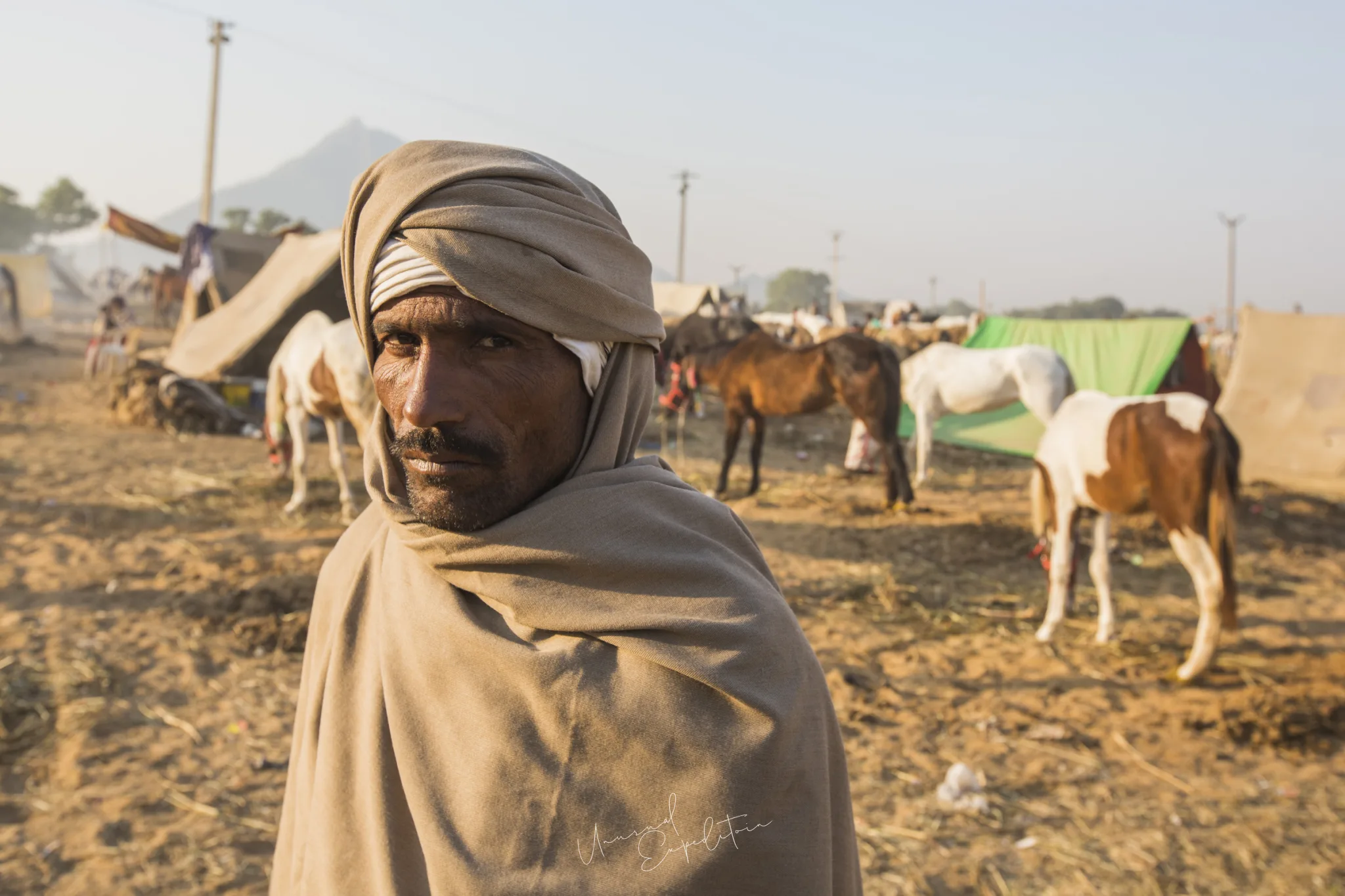
"Pushkar outside the fair is a lovely town to sit in. During the fair it is a different place altogether. If you only have one chance, go for the fair and give the lake its full moon evening."
Joseph Mak, tour leader, Unusual Expedition
How to reach Pushkar
Pushkar is in the Ajmer district of Rajasthan, and Ajmer is the gateway. According to Wikivoyage, trains into Pushkar itself are few, while Ajmer's railway station has good connections to the major cities of India; buses and taxis run on to Pushkar. The nearest commercial airport is Kishangarh Airport, which serves Ajmer and Kishangarh and is operated by the Airports Authority of India; Jaipur International Airport, with many more flights, is the larger choice. Buses also run to Pushkar from Jaipur and other Rajasthani cities.
How to reach Pushkar from Delhi
From Delhi, the usual ways to reach Pushkar are a train to Ajmer and then a road transfer, a domestic flight to Kishangarh or Jaipur and then a road transfer, or a road trip through Jaipur. Trains to Ajmer can fill up around the fair, so reserve early. International travellers usually arrive in Delhi or Jaipur; India's e-Visa and the rest of the planning are covered in how to plan a photography trip to India. For when to come, see the best time to visit Pushkar.
See Pushkar with us
We run Pushkar as a private trip on request, during the camel fair or in the quiet months, for individuals, couples, families and photographers at their own pace, with all the logistics handled; a photographer or photography coaching can be added at extra cost. See private tours and our India photography tours page.
Pushkar photography tours
The next Pushkar departure is announced on the Pushkar photography tours page, with previous expeditions and all the planning guides.
Explore Pushkar in depth
- Pushkar Photography Tour Guide: the Camel Fair, the Lake and the TownIndia
- Pushkar Sunrise and Sunset: the Dunes, the Lake and the HillIndia
- Pushkar Photography FAQ: the Fair, the Ghats, Gear and SafetyIndia
- Pushkar Fair Market: Pots, Tools and Camel Finery at the Camel MelaIndia
- Pushkar Camel Fair: What Happens at the Pushkar MelaIndia
- Pushkar Fair Photos: Camels, Herders and the Trading GroundIndia
- Best Time to Visit Pushkar for the Camel Fair and the TownIndia
Upcoming Photo Tours
- Egypt Photo Tour – EgyptEgypt 12 Dec 2026 To 20 Dec 2026
- Inner Mongolia Winter Owl Photo Tour – ChinaChina 01 Jan 2027 To 04 Jan 2027
- Inner Mongolia Winter Photo Tour – ChinaChina 05 Jan 2027 To 11 Jan 2027
- Mekong And Central Highland Vietnam Photo Tour - VietnamVietnam 16 Jan 2027 To 24 Jan 2027