
Taj Mahal View Points: Where to Stand in Agra for the Classic Shot
Taj Mahal view points: the gate, the channel, the mosque platform, the garden, Agra Fort, Mehtab Bagh and the river, with light and rules.
The Taj Mahal view points that give the classic shots are the great gate, the central water channel, the platforms of the mosque and the guest hall, the side paths of the garden, the riverside terraces of Agra Fort, Mehtab Bagh across the Yamuna and the riverbank below the fort. The Taj faces south over its garden, so morning light comes from the right and late afternoon light from the left as you look at it.
This guide to where to stand belongs to our Agra photography tour guide; the India photography tour guide covers entry and money. The photographs are our own, taken on our trips to Agra; we hold the rights to them, and the notes come from knowing these places first hand. The rules quoted below are from the official Taj Mahal site of the Uttar Pradesh Department of Tourism.
Taj Mahal view point basics: orientation and rules
The official site describes the tomb at the northern end of the garden, with the mosque on the west and the assembly hall, the Mihman Khana, on the east. Everything about the light follows from that. From inside the garden you face north: the sun rises on your right and sets on your left, and the white marble changes colour through the day. The monument opens half an hour before sunrise and closes half an hour before sunset, and it is closed on Fridays. Tripods are prohibited, drones are strictly prohibited in and around the Taj, and photography is not allowed inside the main mausoleum. Plan for handheld work and a 24-70mm.
The great gate
The great gate, the darwaza-i rauza, stands in the middle of the south wall of the garden, and walking through it is the moment most people remember. The arch frames the Taj perfectly from just inside the gate, with the dark sandstone as a natural vignette. Go at opening time to have the frame without crowds; by mid-morning the gate is the busiest place in the complex. Expose for the marble and let the arch go dark.
The central water channel
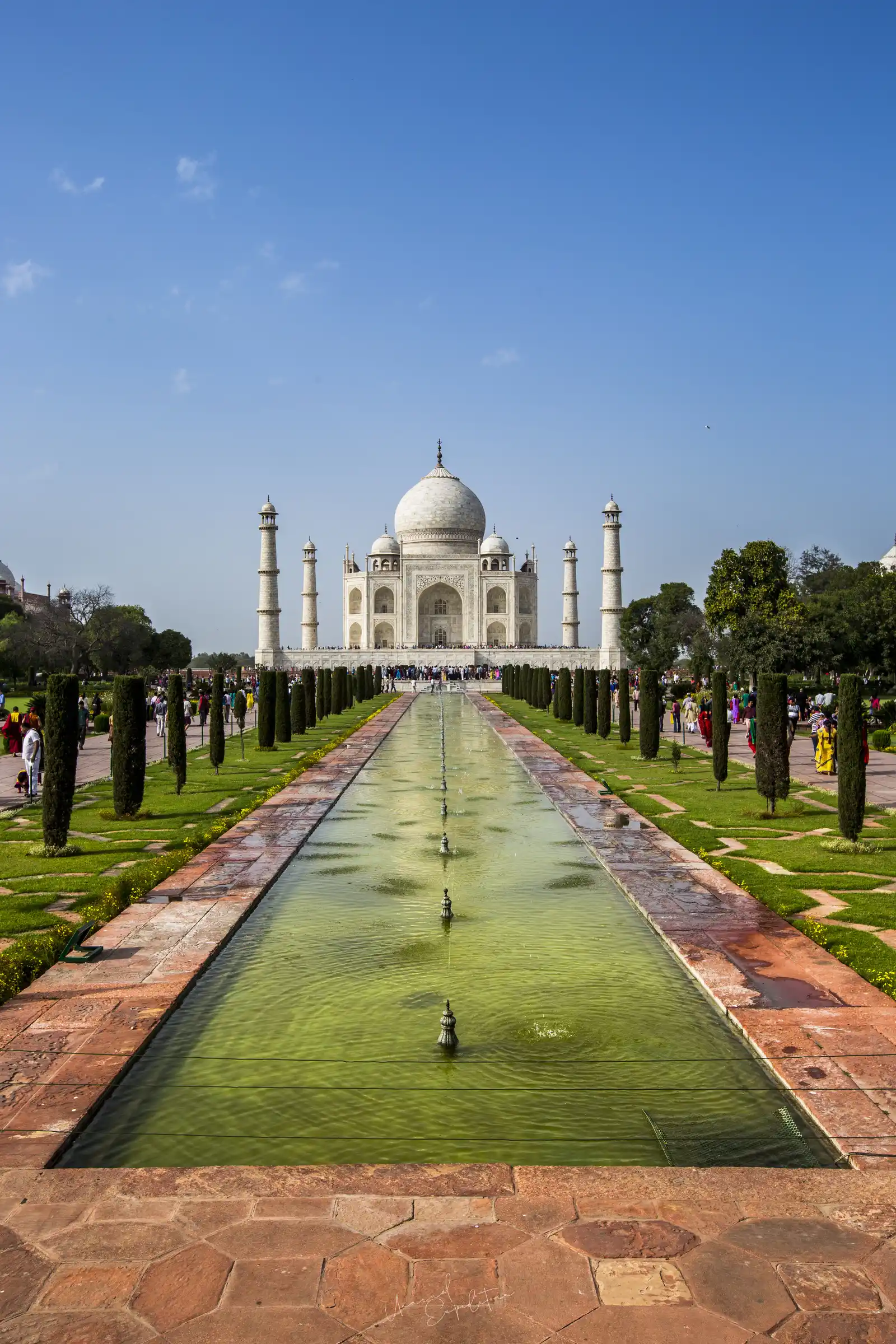
From the platform in front of the gate, the long water channel runs north to the tomb, lined with paths and cypress-shaped trees. On a still morning it gives the famous reflection. Stand low and centred for symmetry, or step a little to one side to break it on purpose. The marble benches by the central tank are where everyone sits for portraits, so photograph the reflection from the gate end first and walk forward later. Our Taj Mahal photography guide covers the composition in more detail.
The mosque and guest hall platforms
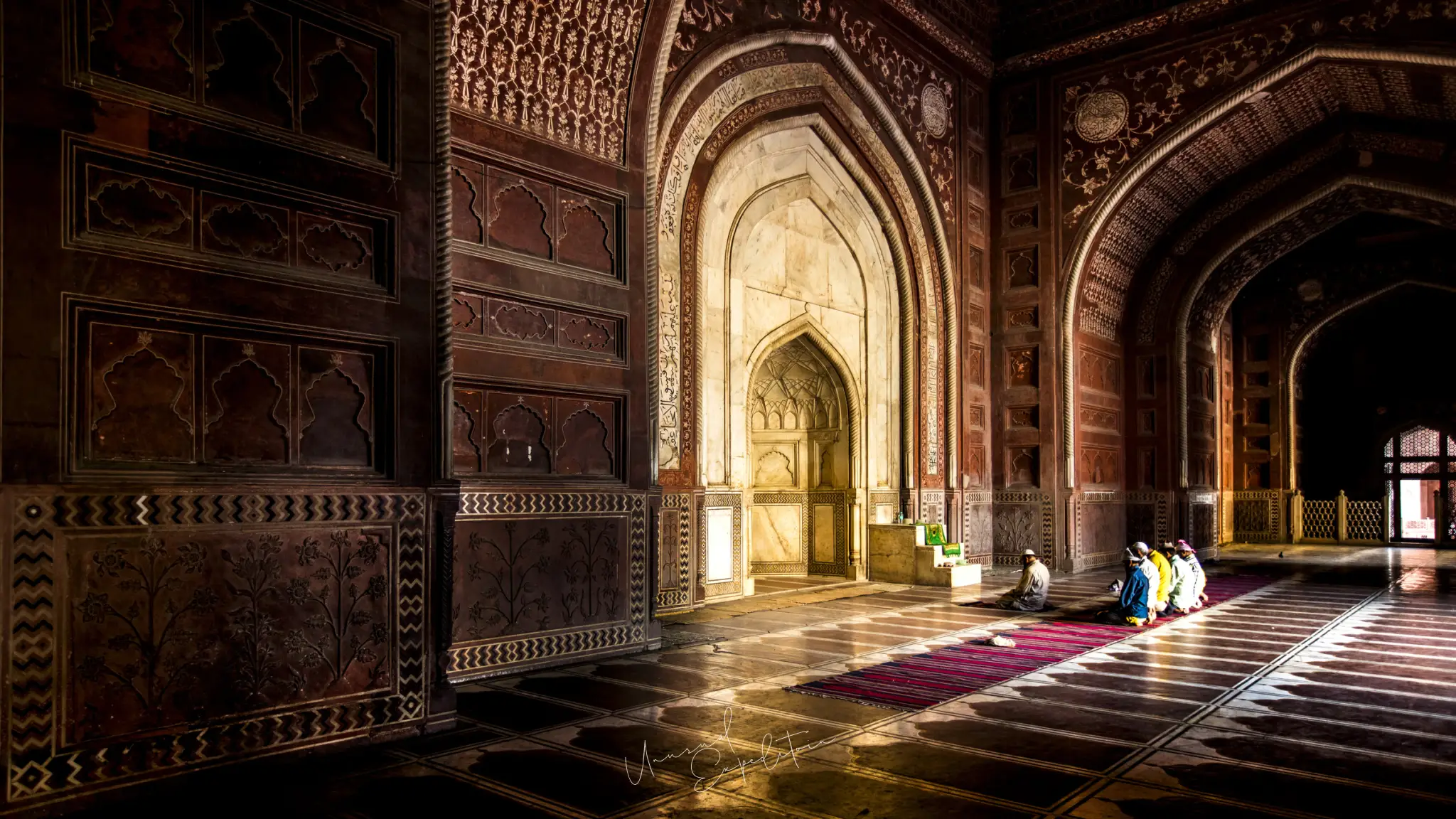
The red sandstone mosque on the west and its twin, the guest hall on the east, stand on platforms beside the tomb terrace. They give a diagonal view of the Taj with sandstone arches in the foreground. Use the mosque platform in the late afternoon, with the sun behind you lighting the west face of the tomb, and the guest hall platform in the morning. The mosque is a place of prayer: dress modestly and keep your voice down. Its interior arches make a frame of their own.
The side paths of the garden
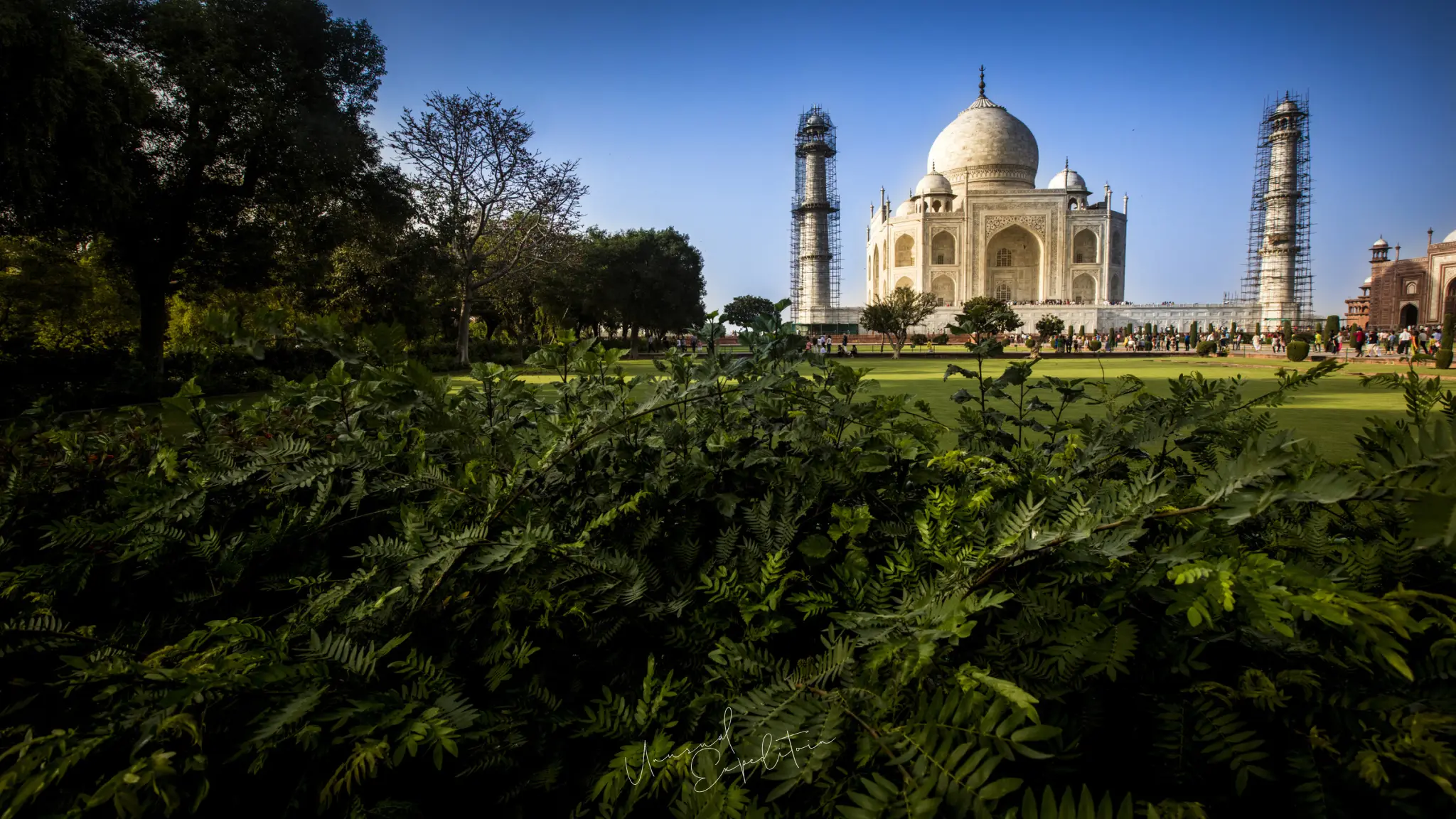
The charbagh garden is divided into four quarters, and its side paths are far quieter than the central axis. From under the trees you can frame the dome above the foliage, or use branches and shade as a foreground. This is the place to escape the crowd in the middle of the day, and the place for a longer lens to compress the minarets against the dome.
"Everyone runs to the reflection pool. I walk to the side of the garden first, because the Taj looks bigger over the trees than it does down the channel, and nobody stands in your way."
Joseph Mak, tour leader, Unusual Expedition
Agra Fort and its river terraces
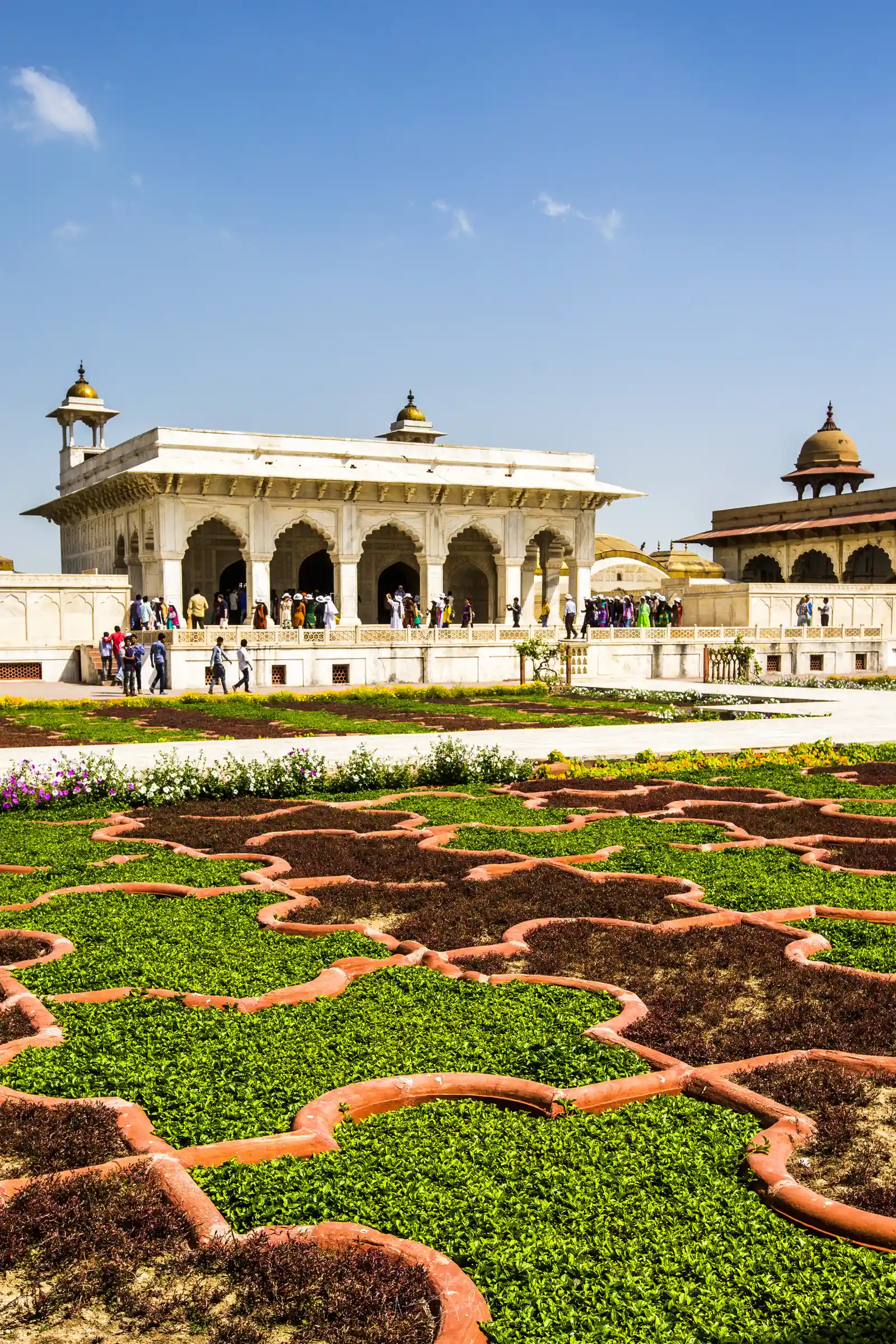
Agra Fort lies upstream to the west on the same bank of the Yamuna. The Agra district administration describes a memorable riverside view of the Taj Mahal from the Musamman Burj, the tower where Shah Jahan spent his last years, and the marble pavilions of the fort's river side give distant views down the river. In the afternoon the light is behind you for the Taj. The fort is open every day, including Fridays, which makes it the Friday view point. Our Agra Fort photography guide covers the palaces themselves.
Mehtab Bagh across the Yamuna
Mehtab Bagh is the garden on the far bank, directly opposite the Taj Mahal. The district administration calls it the finest vantage point for viewing and photographing the Taj, especially at sunset, and it is open from sunrise to sunset every day. Here you face south: the sun rises on your left and sets on your right. In summer the setting sun comes from behind your right shoulder and lights the river face of the Taj; in winter it sets ahead and to the right, and the river face is in shade. Beside the garden, a viewpoint run by the Agra Development Authority looks across the river too.
The Yamuna riverbank below the fort
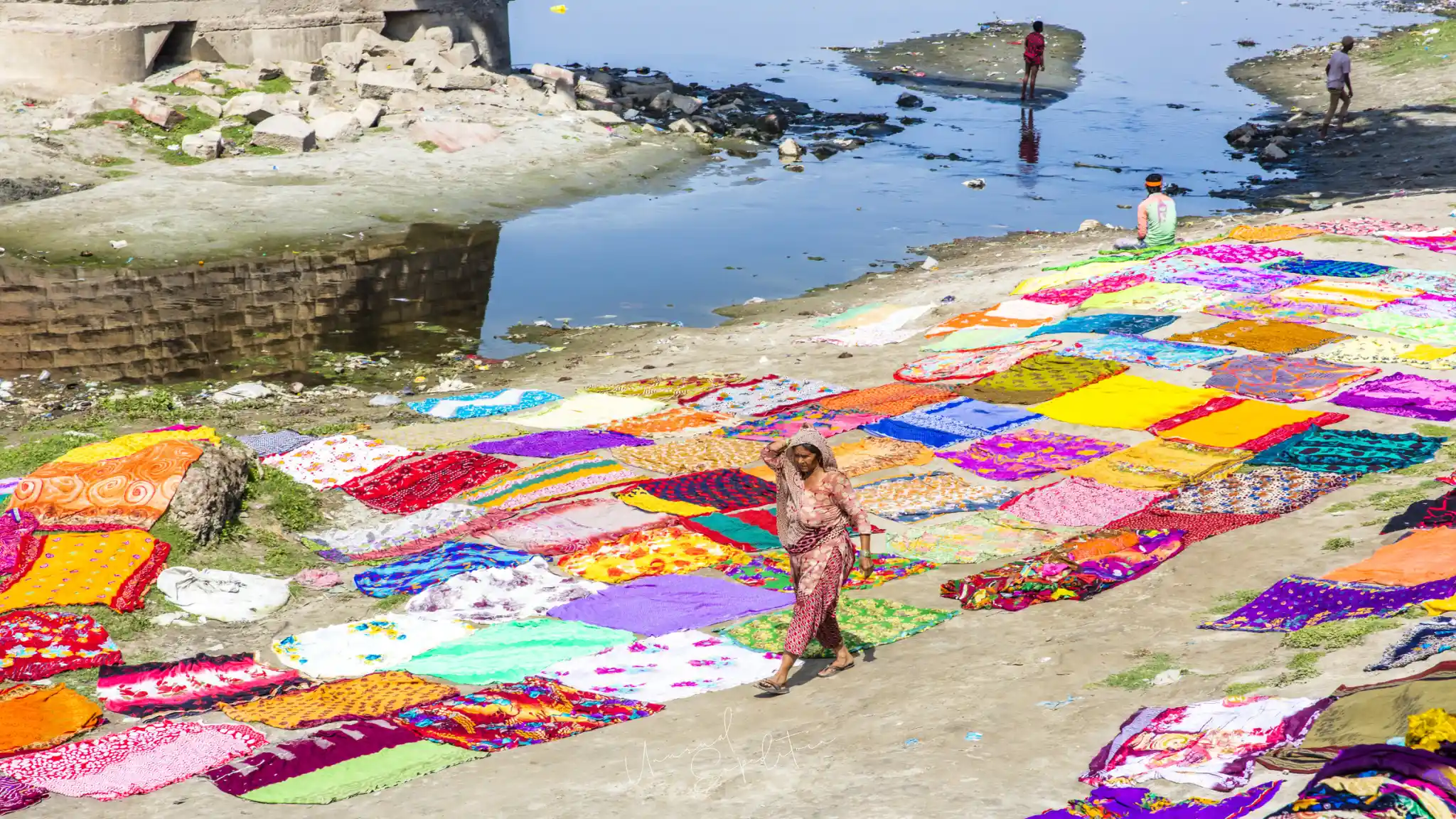
Between the fort and the river, the bank is a working place. Washermen beat cloth on stones in the shallows and spread saris and sheets across the sand to dry, a field of colour under the old walls and the railway bridge. It is one of the most photogenic places in Agra and has nothing to do with the monuments. Go in the morning, ask before photographing anyone at work, and keep off the drying cloth. Our is Agra worth visiting guide has more of this side of the city.
Taj Mahal view points at a glance
| View point | Best light | Lens | Notes |
|---|---|---|---|
| Great gate | Opening time | 24-70mm | Busiest by mid-morning |
| Central channel | Still early morning | 16-35mm, 24-70mm | Reflection on calm days |
| Mosque platform | Late afternoon | 24-70mm | Place of prayer, modest dress |
| Guest hall platform | Morning | 24-70mm | Sun behind you |
| Garden side paths | Any time, quietest at midday | 70-200mm | Away from the crowd |
| Agra Fort terraces | Afternoon | 70-200mm | Open on Fridays |
| Mehtab Bagh | Sunset | 24-70mm, 70-200mm | Sunrise to sunset, every day |
| Yamuna riverbank | Morning | 24-70mm | Working people, ask first |
One visit at opening time and one at sunset across the river covers the Taj from both faces, with Agra Fort for the Friday when the Taj is shut.
Photograph the Taj Mahal with us
We run Agra as a private trip on request, often with Delhi, Holi in Mathura and Vrindavan, or Varanasi. Private tours suit individuals, families, couples and photographers at their own pace; we arrange all the logistics, the cost can be lower than our group tours because no tour leader travels, and a photographer or photography coaching can be added at extra cost. Ask at least two months ahead if you can; last-minute trips can be arranged. See private tours and our India photography tours page.
Agra photography tours
The next Agra departure is announced on the Agra photography tours page, with previous expeditions and all the planning guides.
Explore Agra in depth
- Agra Photography Tour Guide: the Taj Mahal, Agra Fort and the YamunaIndia
- Taj Mahal Sunrise and Sunset: Where to Be and Which Way the Light FallsIndia
- Taj Mahal Rules for Photographers: Tripods, Drones and the MausoleumIndia
- Taj Mahal Photography: Where to Stand, the Light and Photo IdeasIndia
- Is Agra Worth Visiting? What to See Beyond the Taj MahalIndia
- Best Time to Visit Taj Mahal: the Month, the Day and the HourIndia
- Agra Fort Photos: What to Photograph Inside the Red Fort of AgraIndia
Upcoming Photo Tours
- Egypt Photo Tour – EgyptEgypt 12 Dec 2026 To 20 Dec 2026
- Inner Mongolia Winter Owl Photo Tour – ChinaChina 01 Jan 2027 To 04 Jan 2027
- Inner Mongolia Winter Photo Tour – ChinaChina 05 Jan 2027 To 11 Jan 2027
- Mekong And Central Highland Vietnam Photo Tour - VietnamVietnam 16 Jan 2027 To 24 Jan 2027