
Varanasi Ghat Photo Spots: Where to Stand on the Ganges and in the Old City
Varanasi ghat photo spots: the aarti at Dashashwamedh, the river by boat at sunrise, Kedar and Assi ghats, the lanes and an akhara.
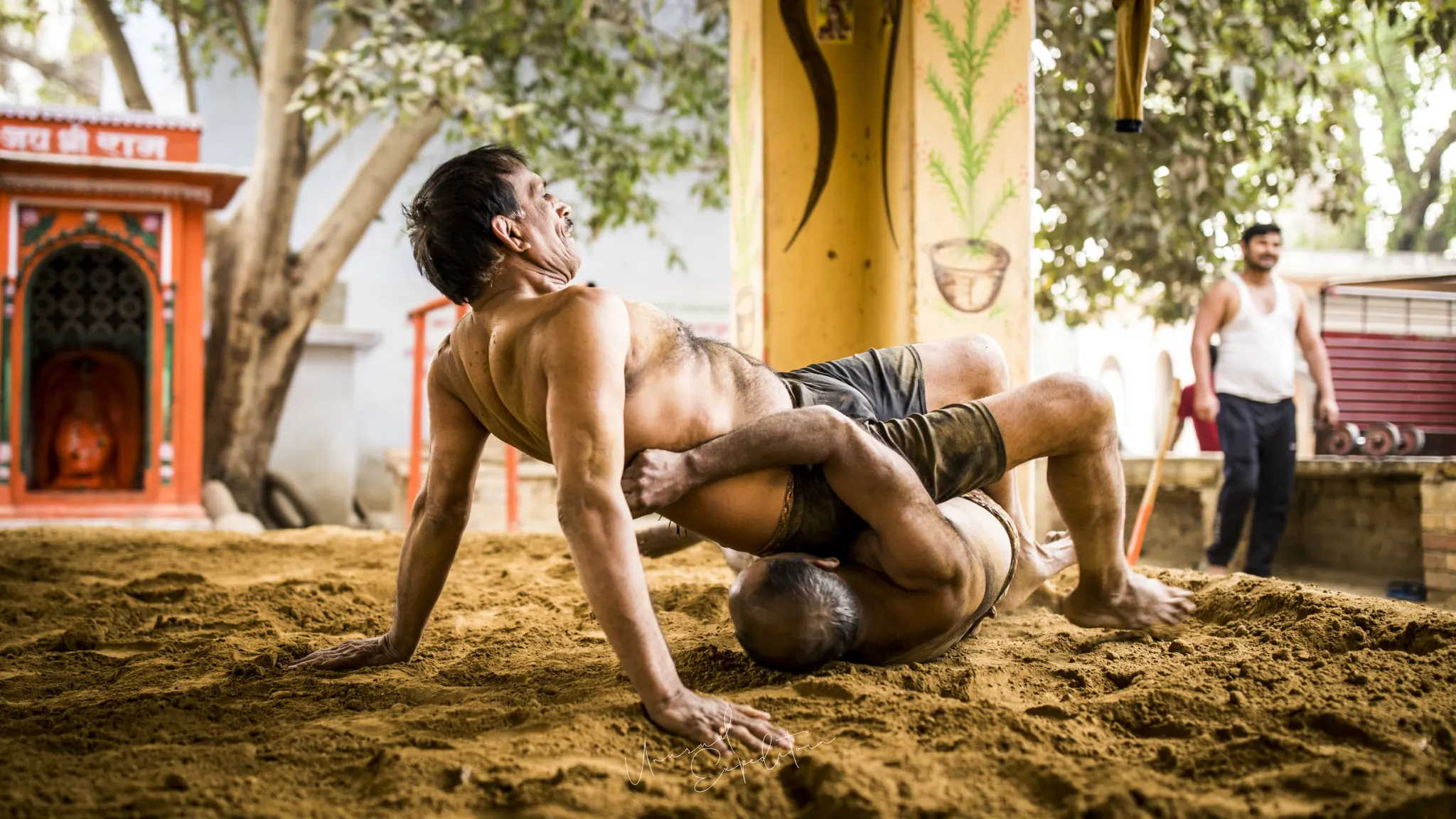
The best Varanasi ghat photo spots are Dashashwamedh Ghat for the evening aarti, the river itself from a rowing boat at sunrise, the striped steps of Kedar Ghat, Assi Ghat for the morning gathering, Scindia Ghat and its leaning temple, the lanes behind the ghats, and a wrestling akhara by the river. The ghats line the west bank and face east, so sunrise lights them full on and evenings belong to lamps and silhouettes.
This spot guide belongs to our Varanasi photography tour guide, and the India photography tour guide covers entry and money. The photographs are our own, taken on our trips to Varanasi; we hold the rights to them, and the notes come from knowing the ghats first hand. One rule runs through every section: the cremation ghats are not a photo spot.
Varanasi ghat photo spots: reading the river
Varanasi's ghats run for kilometres along a curve of the Ganges, stone steps down to the water with temples, palaces and shrines above them. The far bank is open sand, so there is nothing to block the sunrise, and the whole city faces it. That makes the first hour of the day the most important for photographs: bathers in the river, priests opening their parasols, boats pulling out. Midday is flat and hot, and the lanes behind the ghats take over. In the evening the light goes behind the city, and the pictures come from fire, lamps and crowds.
Dashashwamedh Ghat and the evening aarti
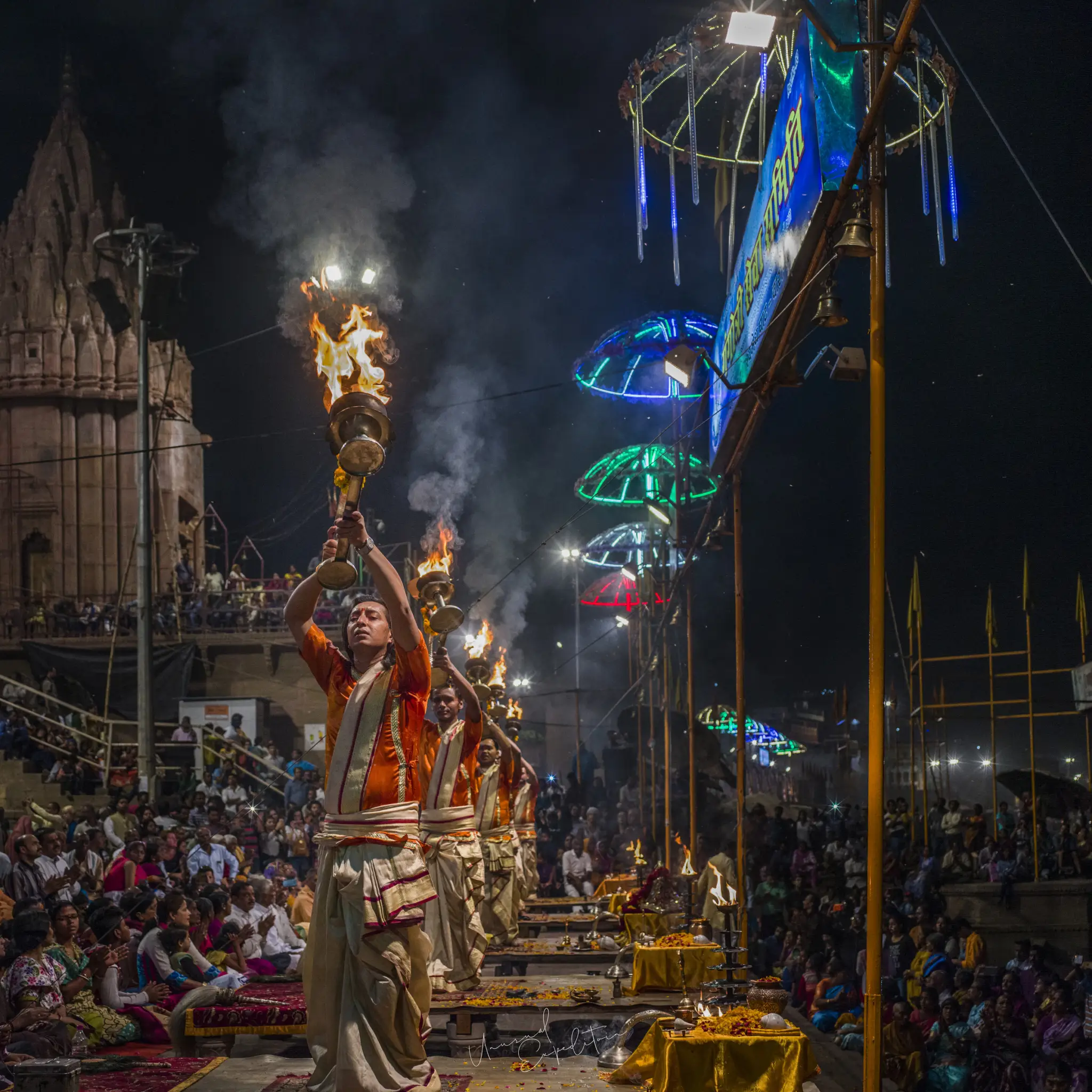
Incredible India calls Dashashwamedh one of the oldest and most sacred ghats, and its evening Ganga aarti, with conch shells, bells and tiers of brass lamps, is the most photographed ceremony in the city. You can watch from the steps or from a boat moored in front. The steps give faces and the priests' platforms at close range; a boat gives the whole row of priests with the lamps rising together. Arrive well before the start for a place, keep your flash off, and stay seated when those around you are seated. A 24-70mm and a high ISO handle it. Our Ganga aarti in Varanasi guide covers it in depth.
The river from a rowing boat at sunrise
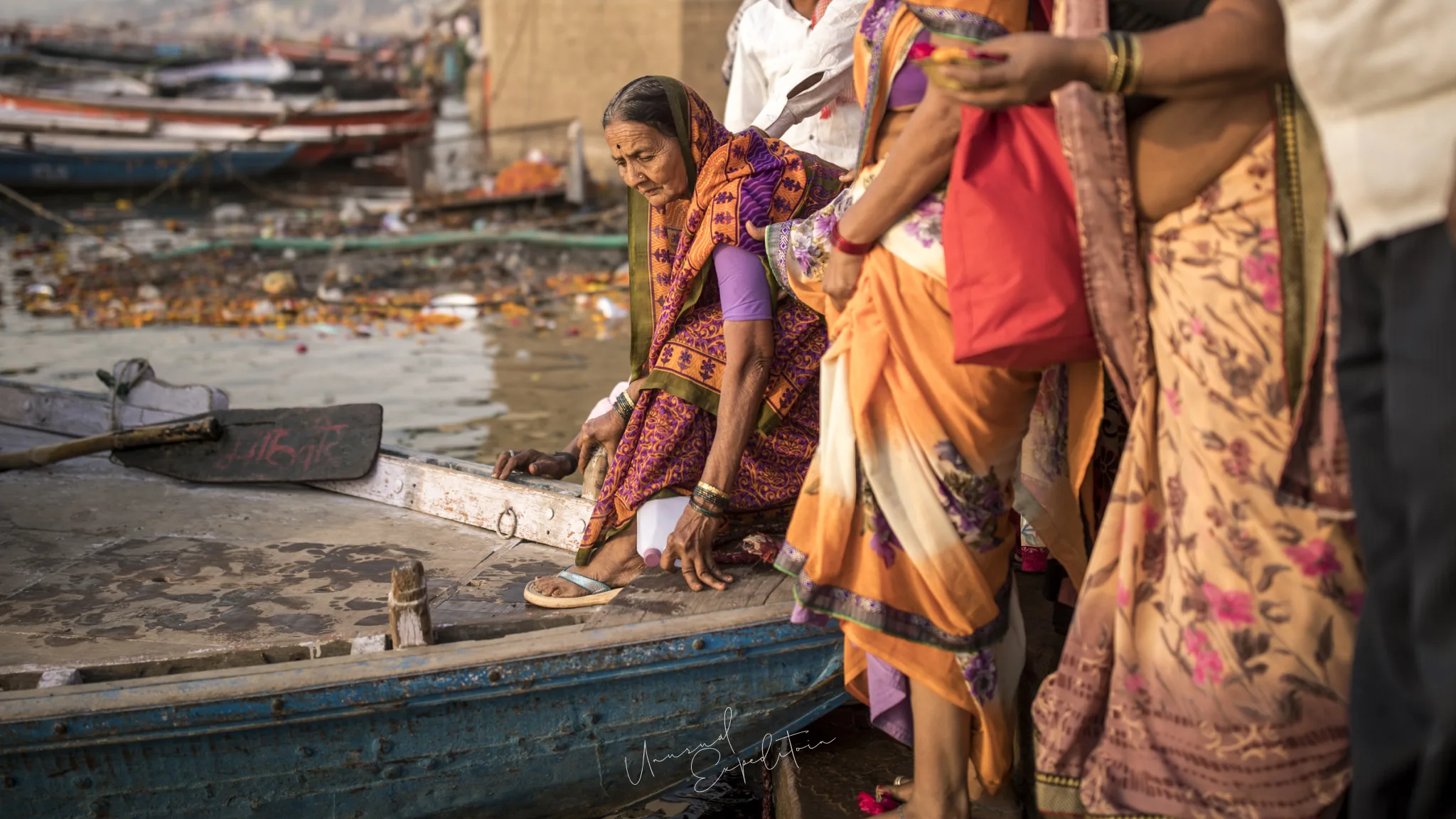
The best way to see the ghats is from the water, and the best time is sunrise, when the sun comes up over the far bank behind you and lights the whole riverfront. Hire a rowing boat rather than a motorboat: it is quieter, slower and steadier for a camera. Ask the boatman to hold the boat off the bathing ghats instead of passing close, and to stop when you want a frame. Long lenses are useful here, a 70-200mm for single bathers and priests, a 24-70mm for the sweep of steps and palaces. In the monsoon the river rises over the lower ghats, and boats can be stopped by the district for safety.
Kedar Ghat and its striped steps
Kedar Ghat, with its steps painted in bright stripes and a temple above, is busy with bathers and very photogenic, as Wikivoyage describes it. The stripes make a strong graphic base for a frame, and they work best from slightly above, from a landing on the steps or from a boat just offshore. Morning is the time, when the low sun lights the paint and the bathers.
Assi Ghat at first light
At the southern end of the main ghats, Assi Ghat hosts the Subah-e-Banaras, which Incredible India describes as a serene sunrise gathering of yoga, music and devotion. It is calmer than Dashashwamedh and a good place to begin a dawn walk north along the river. Photograph the gathering from its edge, without walking into the rows of people.
Scindia Ghat and the leaning temple
Next to Manikarnika, Scindia Ghat is known for the Ratneshwar temple, which leans toward the river and stands with its base under water for much of the year. It is best photographed from a boat in the morning, when it is lit from the front. Keep the camera pointed at the temple and away from the cremation ghat beside it; the boatmen know the custom and will expect you to respect it.
Where not to photograph: Manikarnika and Harishchandra
Manikarnika and Harishchandra are the cremation ghats. Wikivoyage and Lonely Planet both advise quiet, respectful behaviour and no photographs of cremations, even from the river. We do not photograph them, not from the steps and not from a boat. If someone offers to take you closer for a fee, decline.
"Varanasi gives you everything before breakfast. Be on the water when the sky goes pale, and by the time the sun is a hand above the far bank you have the best light of the day behind you."
Joseph Mak, tour leader, Unusual Expedition
The lanes behind the ghats
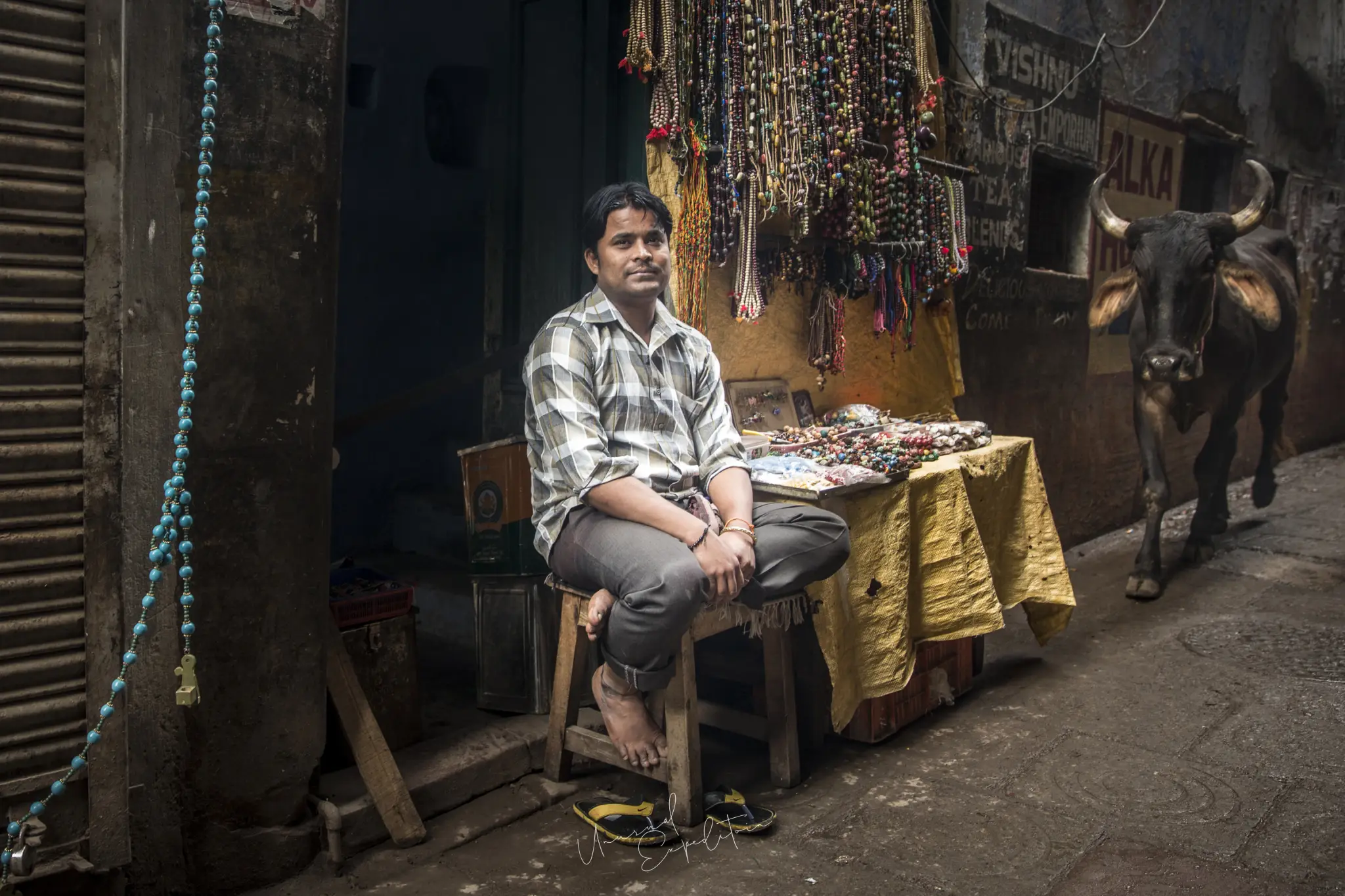
Behind Dashashwamedh and the ghats beside it is a maze of narrow lanes, the galis: shrines in walls, cows in doorways, sweet shops, garland makers and bead sellers. The light comes down in narrow slots, so look for a lit face against a shaded wall. It is easy to get lost, which is half the point, but walk them with someone who knows the way back to the river. Our Varanasi street photography guide covers the lanes in detail.
A wrestling akhara by the river
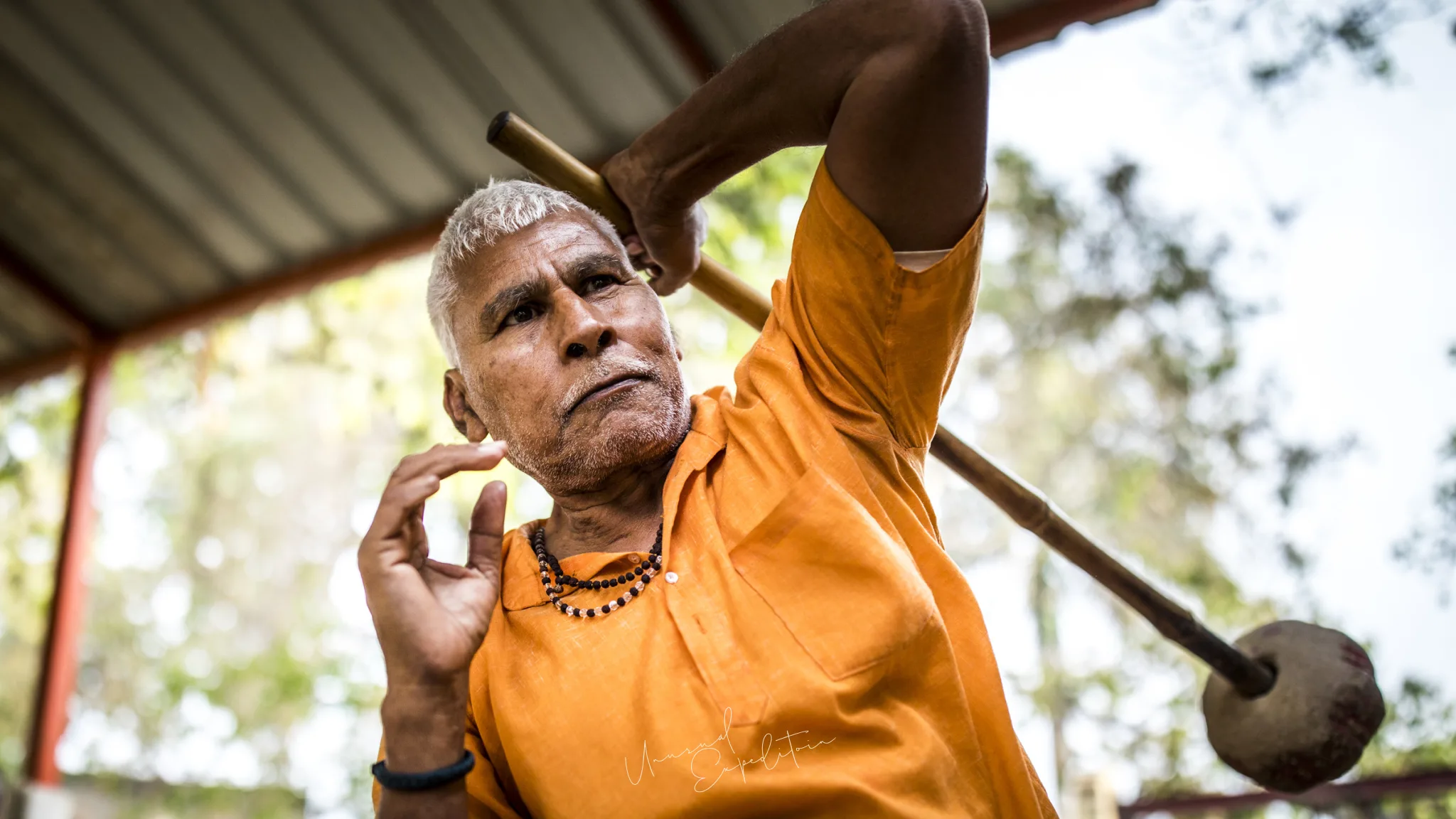
Varanasi keeps the tradition of the akhara, the earth-pit wrestling school, alive in courtyards near the river, often beside a small Hanuman shrine. Wrestlers train in the morning with press-ups, heavy clubs and bouts in the soft earth. Go with an introduction, ask the guru first, and keep to the edge. The low sun through the trees and the dust thrown up by the bouts make it one of the best morning subjects in the city.
Varanasi photo spots at a glance
| Spot | Best light | Lens | Etiquette |
|---|---|---|---|
| Dashashwamedh aarti | After sunset | 24-70mm | No flash, arrive early |
| River by rowing boat | Sunrise | 24-70mm, 70-200mm | Stay off the bathing ghats |
| Kedar Ghat | Morning | 24-70mm | Bathers: ask before close portraits |
| Assi Ghat | First light | 24-70mm | Shoot from the edge of the gathering |
| Scindia Ghat | Morning, from a boat | 70-200mm | Camera away from the cremation ghat |
| Old city lanes | Late morning, midday | 24-70mm | Buy first, then ask |
| Akhara | Early morning | 24-70mm | Introduction and the guru's permission |
Dawn on the river and dusk at the aarti are fixed points; everything else fits into the hours between them.
Photograph Varanasi with us
We run Varanasi as a private trip on request, on its own or with Delhi, Agra, or Holi in Mathura and Vrindavan. Private tours suit individuals, families, couples and photographers at their own pace; we arrange all the logistics, the cost can be lower than our group tours because no tour leader travels, and a photographer or photography coaching can be added at extra cost. Ask at least two months ahead if you can; last-minute trips can be arranged. See private tours and our India photography tours page.
Varanasi photography tours
The next Varanasi departure is announced on the Varanasi photography tours page, with previous expeditions and all the planning guides.
Explore Varanasi in depth
- Varanasi Photography Tour Guide: the Ghats, the Aarti and the Old CityIndia
- Varanasi Sunrise and Sunset: Boats on the Ganges at Both Ends of the DayIndia
- Varanasi Street Photography: the Old City Lanes and Their PeopleIndia
- Varanasi Photos: the River, the Lanes and the PeopleIndia
- Is Varanasi Worth Visiting? Getting There and What to KnowIndia
- Ganga Aarti in Varanasi: Where to Watch and How to Photograph ItIndia
- Best Time to Visit Varanasi: Weather, Festivals and Light by MonthIndia
- Best Ghats in Varanasi for Photography, Ghat by GhatIndia
Upcoming Photo Tours
- Egypt Photo Tour – EgyptEgypt 12 Dec 2026 To 20 Dec 2026
- Inner Mongolia Winter Owl Photo Tour – ChinaChina 01 Jan 2027 To 04 Jan 2027
- Inner Mongolia Winter Photo Tour – ChinaChina 05 Jan 2027 To 11 Jan 2027
- Mekong And Central Highland Vietnam Photo Tour - VietnamVietnam 16 Jan 2027 To 24 Jan 2027