
Best Time to Visit Hokkaido in Winter for Photography: Month by Month in the East
Best time to visit Hokkaido in winter for photographs: cranes, eagles, swans and drift ice by month, weather, driving and light.
The best time to visit Hokkaido in winter for photography is from January to early March, and the exact choice depends on your main subject. January brings the cranes at their feeding grounds, deep snow and the coldest dawns on the Setsuri River. February is the month for drift ice on the Okhotsk coast and the eagle boats at Rausu, with the swans still on Lake Kussharo. Early March still has snow and eagles, but the ice and the cold start to ease.
This month guide supports our Hokkaido photography tour guide, which introduces each subject of the eastern Hokkaido winter. Here we set out what each part of the season gives you, how the weather and light behave, and what driving on Hokkaido's winter roads involves.
Best time to visit Hokkaido in winter, subject by subject
Every winter subject in Hokkaido has its own window, and they overlap in the middle of the season. The red-crowned cranes come to the feeding grounds of Tsurui and Akan from around November to March, according to the Wild Bird Society of Japan and Visit Hokkaido, but the dance and the frosted river mornings are best in the deep cold of midwinter. The Steller's sea eagles winter on the Shiretoko and Nemuro coasts, and Japan's national parks site gives the drift ice season as late January to early April, at its best in the second half of February. The whooper swans of Lake Kussharo are present through the winter, with travel guides suggesting December to February. That overlap is why a late January or February trip can take in all of them.
What to see in Hokkaido in winter, month by month
| Month | Cranes | Eagles and drift ice | Swans | Landscapes |
|---|---|---|---|---|
| December | Arriving at feeding grounds | Eagles arriving, no ice | Arriving | Early snow, short days |
| January | Good, cold river dawns | Eagles present, ice uncertain | Good | Deep snow, Biei at its best |
| February | Good, more dancing in our experience | Best chance of drift ice | Good | Coldest weeks, clear skies |
| Early March | Still at feeding grounds | Eagles and late ice | Begin to head north | Longer days, snow still lying |
If you can only pick one month for everything in the east, February is the safest choice.
Hokkaido winter weather and what it means for pictures
Hokkaido winter weather divides the island in two. The west and centre, around Sapporo, Biei and the ski fields, get heavy snow from the Sea of Japan side; the east is drier and often clearer, but colder, especially at dawn inland. For photography that difference is useful: Biei gives fresh snow and soft overcast days, while the east gives blue skies, sharp low light and the frost and river mist that need cold, calm mornings. Days are short in midwinter and the sun stays low, so the warm light lasts longer than at home, and even midday gives some modelling. Check the forecast from the Japan Meteorological Agency, and plan a spare day for weather, since blizzards can close roads.
Driving in Hokkaido winter
Driving in Hokkaido winter is possible for confident drivers, but it is not like driving in a warm city. Roads in the east are often packed snow or ice, visibility drops quickly in blowing snow, and deer cross the road at dusk. Rental cars come with winter tyres, but four-wheel drive, slow speeds and long gaps between cars are still needed. Most visitors need an international driving permit that Japan recognises, or an official translation for some licences, so check the requirements for your licence before you travel. Many photographers prefer a driver who knows the roads, which also lets you watch the fields for foxes and deer instead of the road. Fuel up whenever you can, because petrol stations in the east are far apart and some close early.
In eastern Hokkaido the weather makes the plan, not the calendar. We always keep a free morning or two, because a clear, still dawn on the river or a day of drift ice is worth waiting for.
Joseph Mak, tour leader, Unusual Expedition
Hokkaido in winter beyond the wildlife: trains, vents and lighthouses
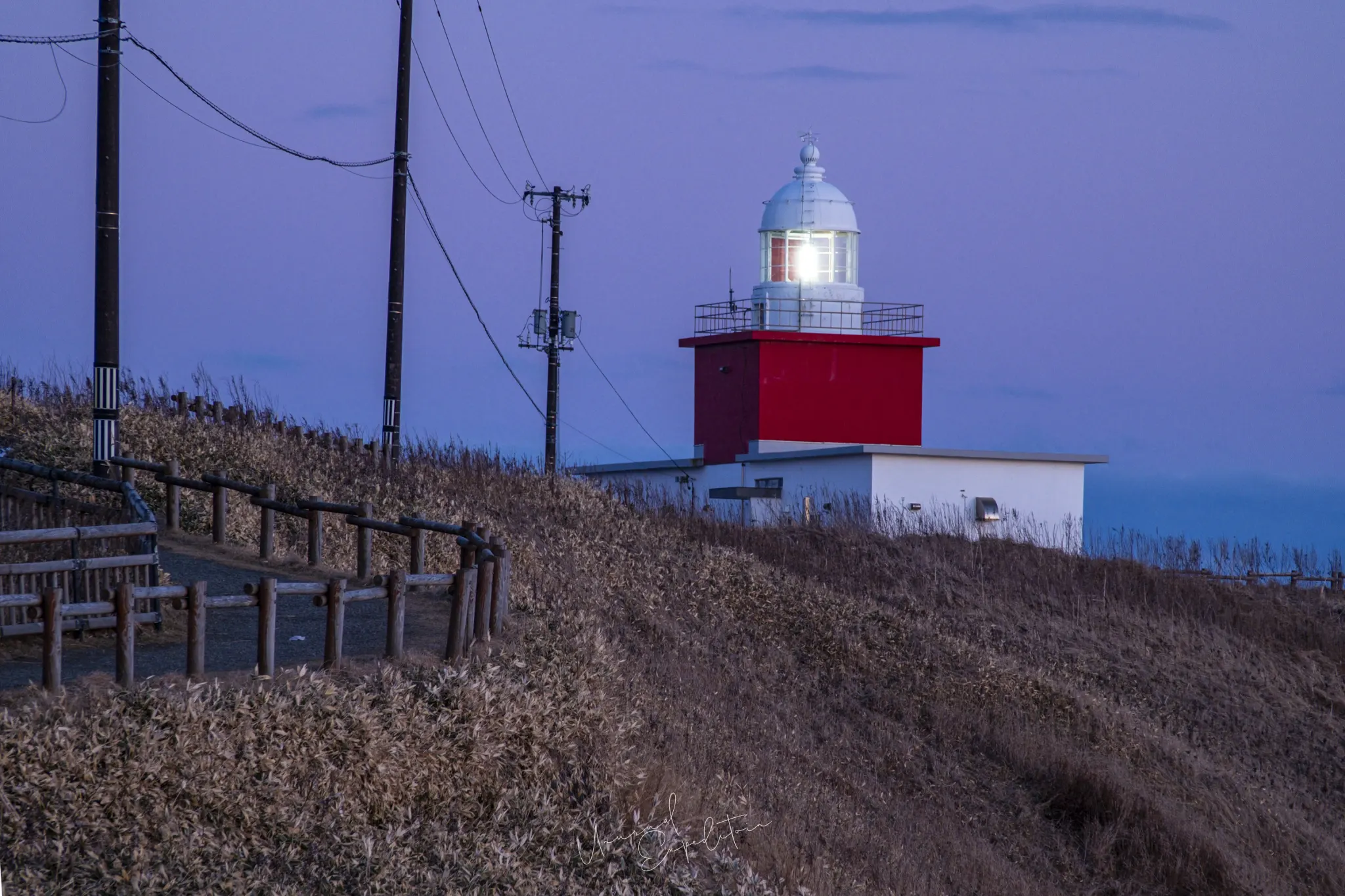
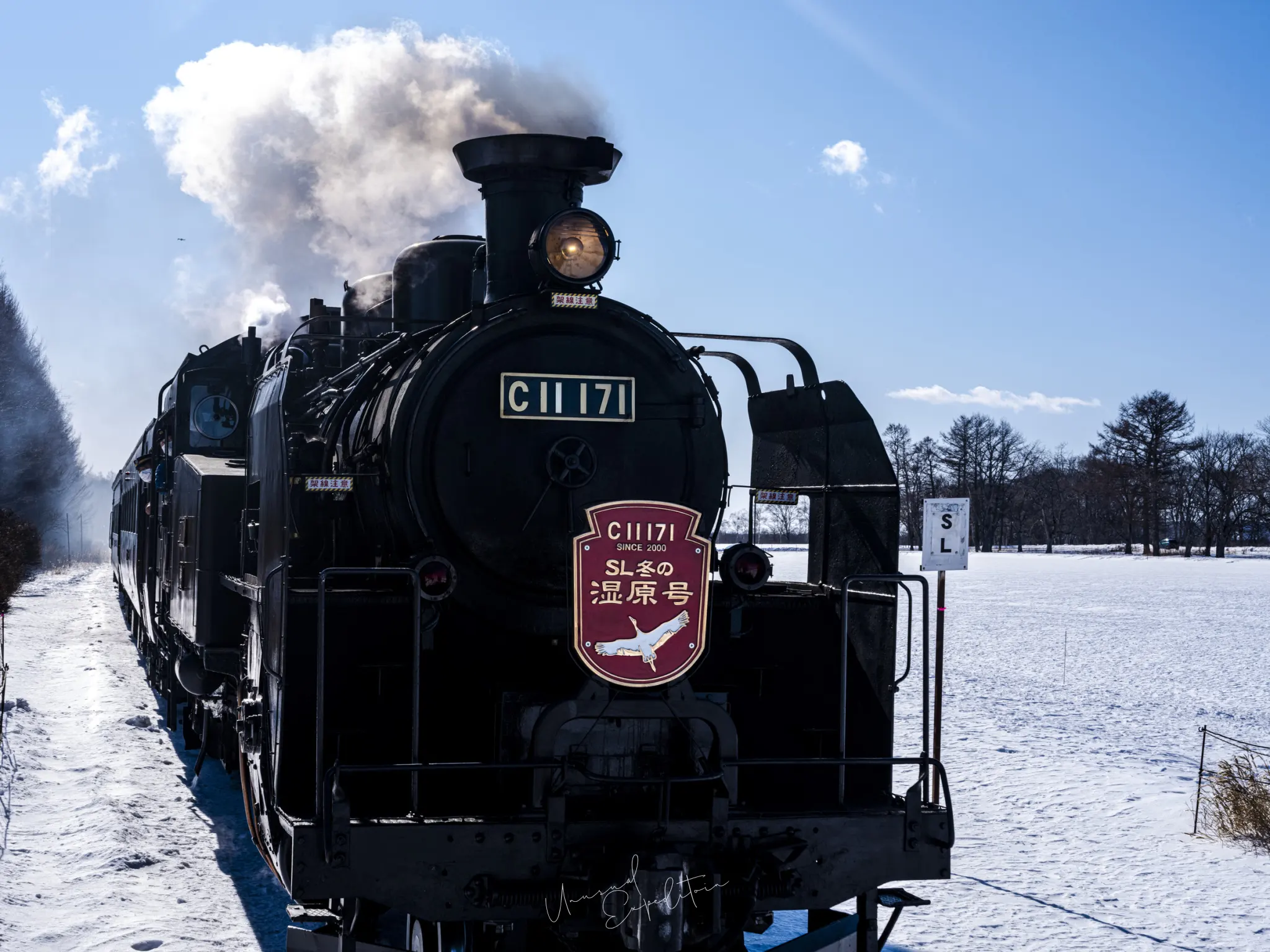
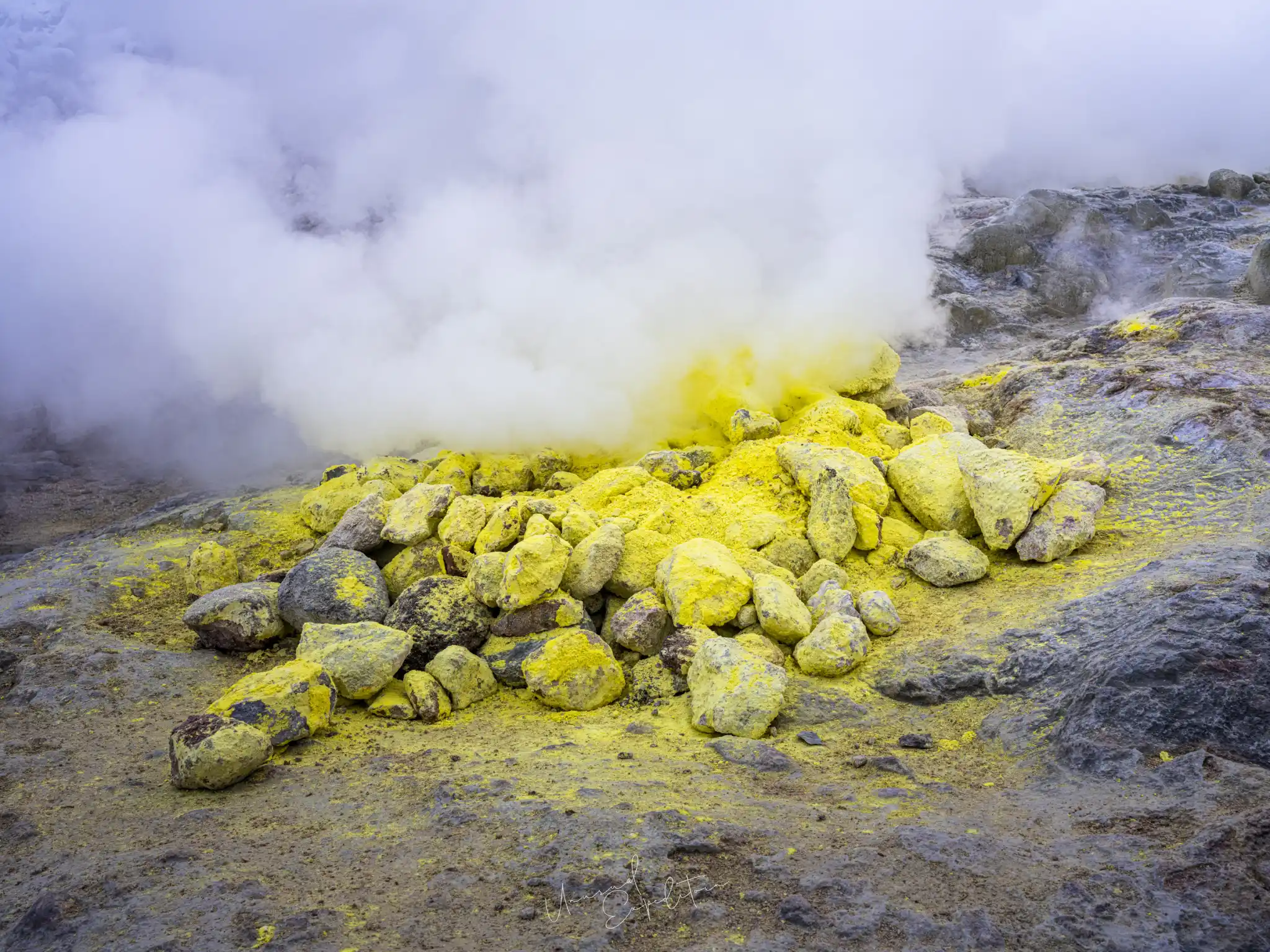
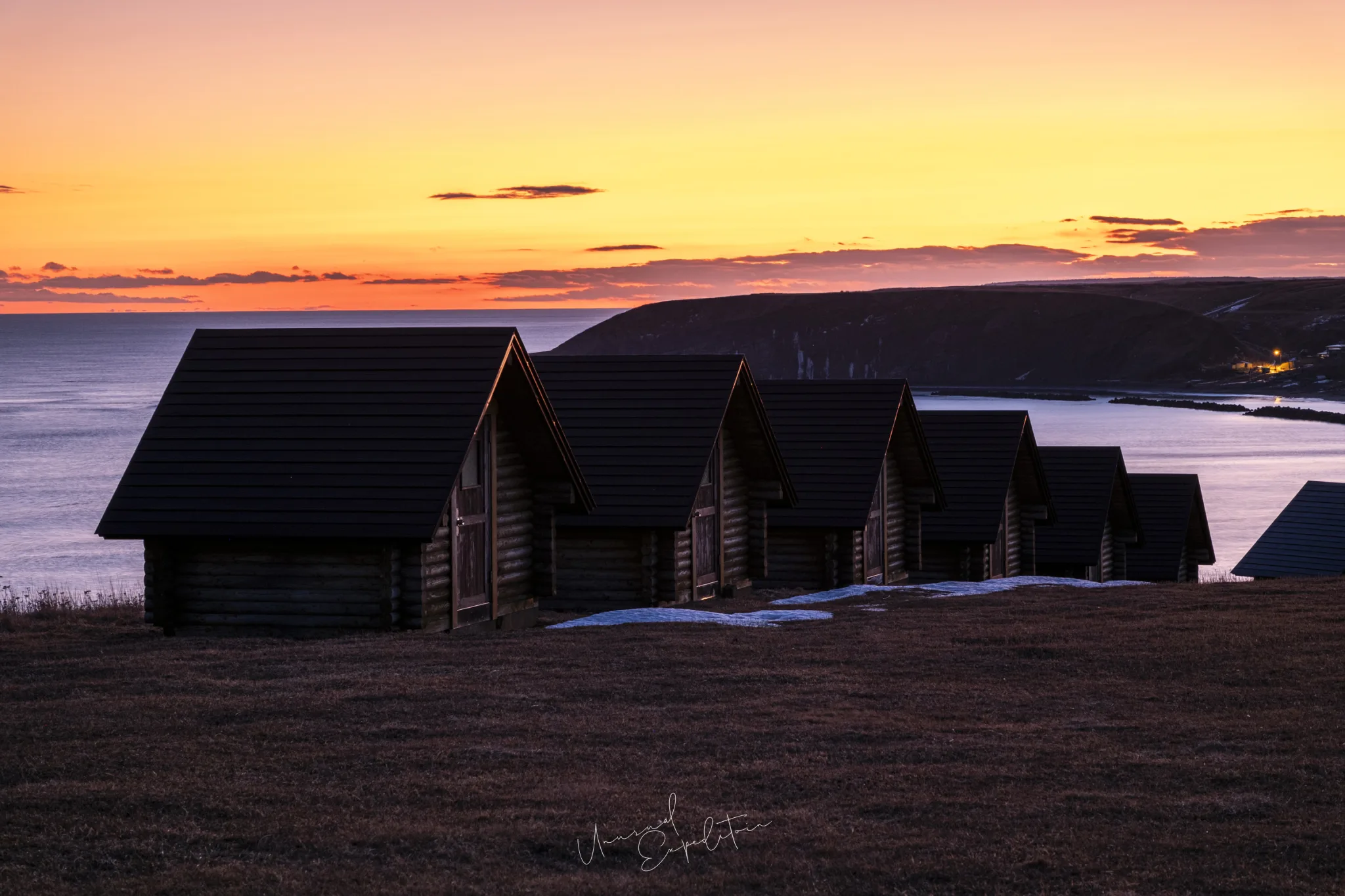
Hokkaido in winter offers more than birds and snow. The SL Fuyu-no-Shitsugen, JR Hokkaido's winter steam train, runs between Kushiro and Shibecha through the wetlands from January to March, and a plume of steam over the white marsh makes a strong picture from the trackside. The sulphur vents of Mount Io, near Kawayu Onsen in Akan-Mashu National Park, steam yellow and white against the snow. On the Nemuro coast, the red Hanasaki Lighthouse stands above the cliffs and catches the last light, and along the coast you will find small huts, fishing boats and long sunsets over the sea.
Hokkaido winter photography: dawn and dusk in the east
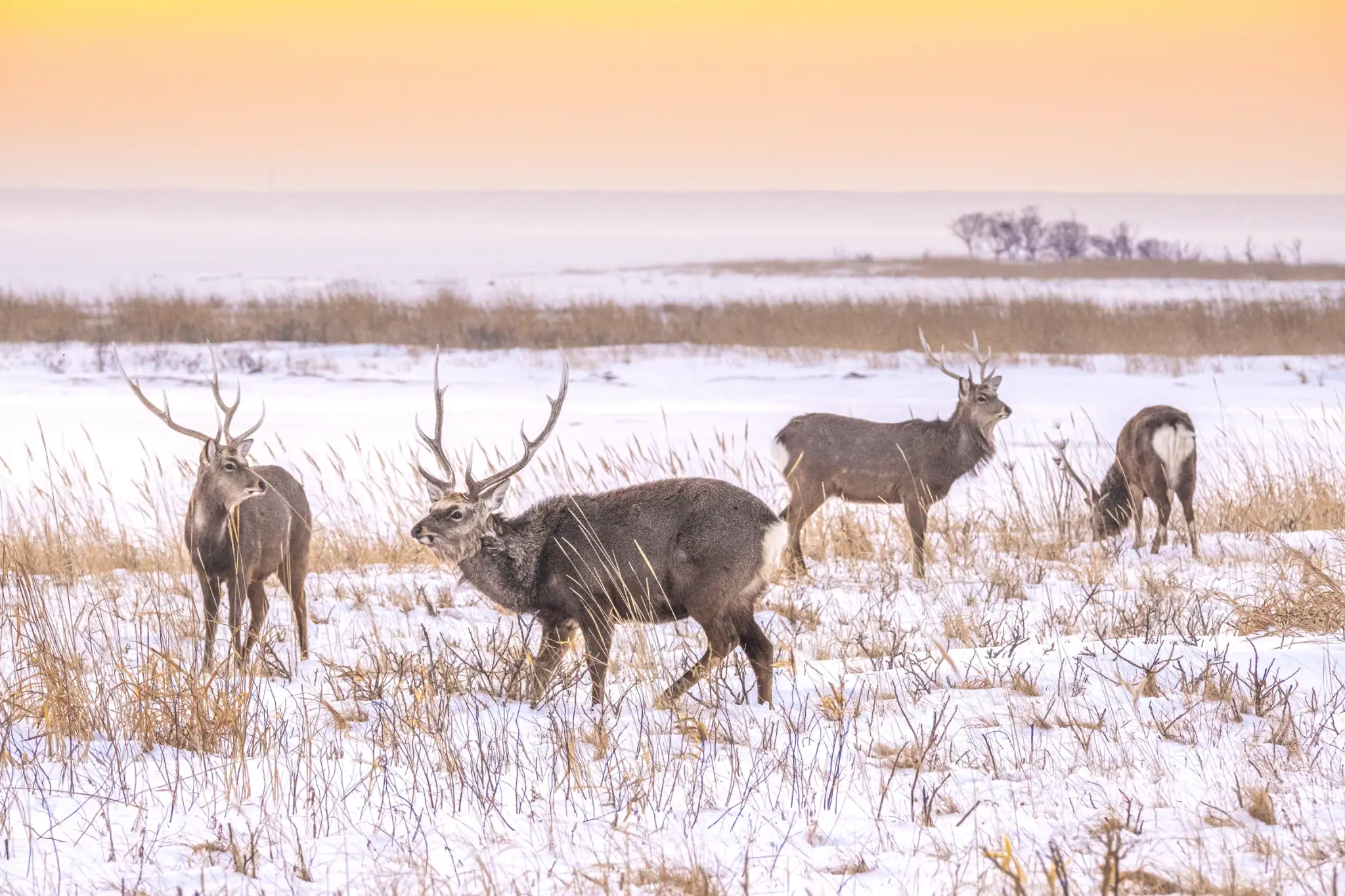
Hokkaido winter photography in the east is built around the two ends of the day. Dawn is for the Setsuri River cranes, the frost and the deer on the coastal meadows in low light. The middle of the day suits the eagle boats, the crane feeding grounds and Biei's snow fields. Late afternoon brings the crane dance into warm light and long shadows, and dusk is for the coast and the lighthouses. Night is for the Blakiston's fish owl at Rausu and the lit Blue Pond in Biei. A day that starts at the river and ends at the owl lodge is long, so plan rest between them.
What to pack for a Hokkaido winter
Dress in layers, with a thermal base, a fleece and a windproof insulated jacket; insulated, waterproof boots with good grip; a hat, a neck gaiter and two pairs of gloves. Microspikes help on icy paths at the Blue Pond and along the lakes. For the camera, bring spare batteries kept warm, a rain cover for snow, lens cloths and a zip bag for moving between the cold and warm rooms. Our red crowned crane Hokkaido and Steller's sea eagle guides cover lenses and settings for each subject.
Plan your winter in Hokkaido with us
We run eastern Hokkaido and Biei as private trips on request, timed for the subjects you care about most, with all the logistics in place and a flexible day or two for the weather. A photographer or photography coaching can be added at extra cost. Ask at least two months ahead for the crane and eagle season. See our private tours and the Japan photography tours page.
Ask us about Hokkaido in winter
Join the Hokkaido photography tour
Kyushu, Shikoku And Setouchi Photography Journey departs 25 Sep 2027 To 05 Oct 2027, led by Joseph Mak. Small group, photography first. All Hokkaido photography tours.
Explore Hokkaido in depth
- Hokkaido Photography Tour Guide: Cranes, Eagles, Owls and Snow in Eastern HokkaidoJapan
- Steller's Sea Eagle Photography in Rausu: Size, Wingspan and the Winter BoatsJapan
- Red Crowned Crane Hokkaido: Photographing the Cranes of Tsurui, Akan and the Setsuri RiverJapan
- Whooper Swans at Lake Kussharo, Hokkaido: Photographing the Swans of the Hot Spring ShoreJapan
- Hokkaido Wildlife Photography: Red Foxes, Sika Deer, Owls and Forest Birds in WinterJapan
- Blakiston Fish Owl: How to Photograph the World's Largest Owl in HokkaidoJapan
- Biei in Winter: The Christmas Tree, the Blue Pond and the Snow Fields of HokkaidoJapan
Upcoming Photo Tours
- Egypt Photo Tour – EgyptEgypt 12 Dec 2026 To 20 Dec 2026
- Inner Mongolia Winter Owl Photo Tour – ChinaChina 01 Jan 2027 To 04 Jan 2027
- Inner Mongolia Winter Photo Tour – ChinaChina 05 Jan 2027 To 11 Jan 2027
- Mekong And Central Highland Vietnam Photo Tour - VietnamVietnam 16 Jan 2027 To 24 Jan 2027