
Hokkaido Photography Tour Guide: Cranes, Eagles, Owls and Snow in Eastern Hokkaido
Hokkaido photography in winter: cranes at Tsurui, eagles at Rausu, fish owls, Kussharo swans, Biei snow, with our own photos.
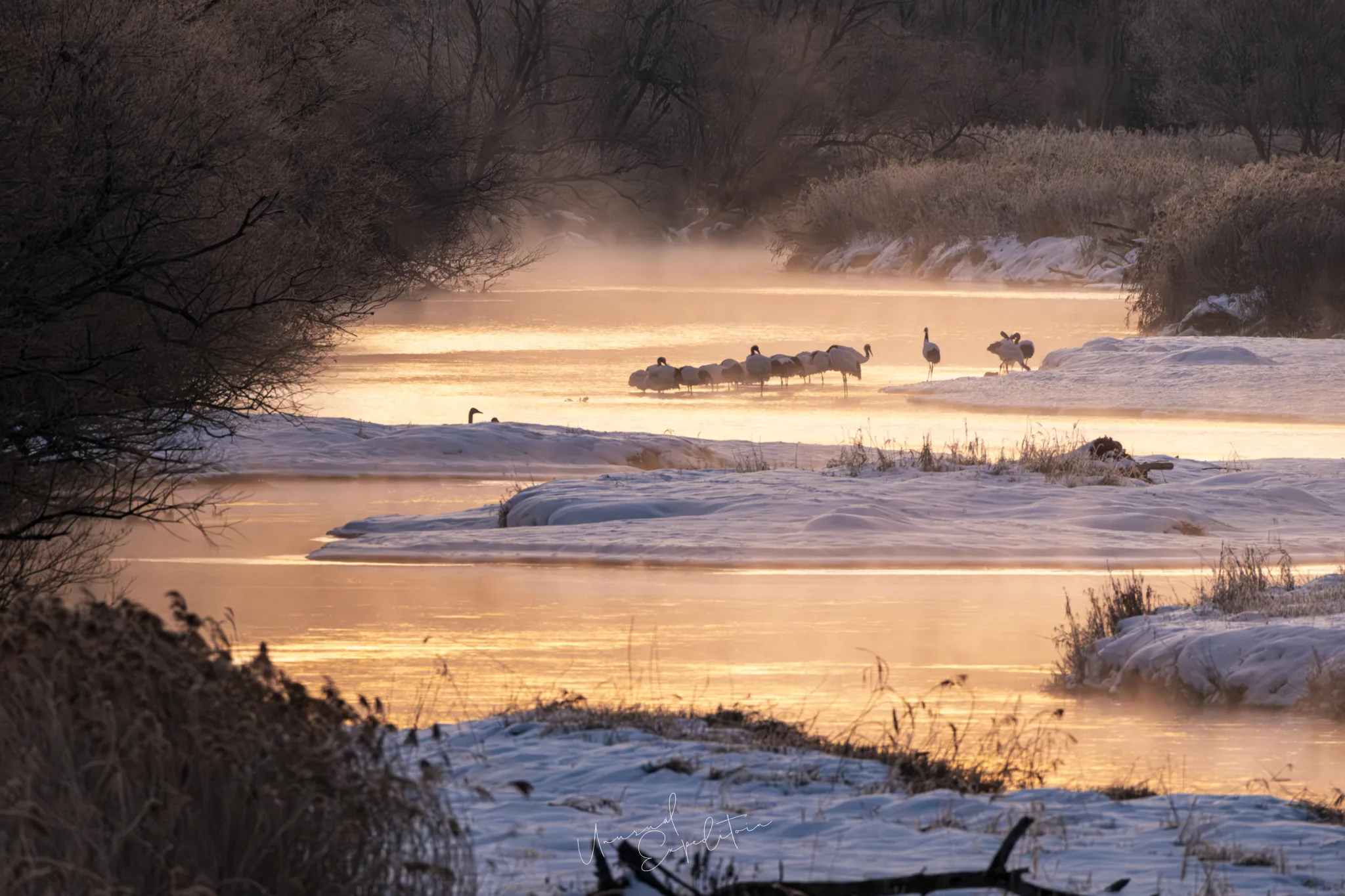
Hokkaido photography is at its best in winter, in the east of the island, where wildlife and snow come together as nowhere else in Asia. Red-crowned cranes dance on the feeding grounds of Tsurui and Akan, Steller's sea eagles hunt over the sea at Rausu, Blakiston's fish owls come to the streams at night, and whooper swans gather on the warm shore of Lake Kussharo. Biei adds the quiet snow landscapes, and the Okhotsk coast brings drift ice in the coldest weeks.
Hokkaido is the northern island of Japan, and this guide, written for photographers joining from any country, is the regional part of our Japan photography tour guide, which covers entry, money and the rest of the country. The photographs in this guide are our own, taken on our winter trips to eastern Hokkaido; we hold the rights to them, and the notes come from knowing these places first hand. Each subject below has its own destination guide with more detail.
Hokkaido photography: why eastern Hokkaido in winter
Most visitors to Hokkaido stay around Sapporo, Otaru and the ski fields of the west. For photography, the east is where winter turns into a wildlife season. The marshes around Kushiro hold the red-crowned cranes, the Shiretoko Peninsula holds the sea eagles and the fish owl, and the caldera lakes of Akan-Mashu National Park hold the swans and the steaming volcanic ground. The distances are long and the roads are often white, but the subjects sit within reach of one another, which is why a trip here is planned around a handful of bases rather than a long list of stops. Central Hokkaido, with Biei and the Blue Pond, is a separate trip of its own or a short extension.
Photos of Hokkaido: the subjects that matter
Photos of Hokkaido that people remember tend to fall into a few families, and each has its own guide. The red crowned crane Hokkaido guide covers the feeding grounds of Tsurui and Akan and the dawn roost on the Setsuri River. The Steller's sea eagle guide covers Rausu and the boats that go out into the Nemuro Strait. The Blakiston fish owl guide explains how the rarest of these birds is photographed at night. The whooper swans at Lake Kussharo guide covers the hot spring shore. The Hokkaido wildlife guide covers the red fox, the sika deer and the small forest birds, and the Biei winter guide covers the Christmas tree, the Blue Pond and the open snow fields.
Red-crowned cranes and the Setsuri River at dawn
The red-crowned crane is the bird that brings most photographers to Hokkaido. The cranes spend the winter around the Kushiro wetlands and come to fields where they are fed through the cold months, at the Tsurui-Ito Tancho Sanctuary run by the Wild Bird Society of Japan and at the Akan International Crane Center. In the afternoon pairs dance, bowing and leaping with their wings open. At dawn the birds roost standing in the Setsuri River, and on very cold mornings the river steams and the frost on the trees turns pink and gold as the sun comes up. That scene, seen from the Otowa Bridge, opens this guide. The cranes are no longer counted as threatened in Japan: the January 2025 survey found 1,927 birds in Hokkaido, according to figures reported by nippon.com.
Sea eagles and owls on the Shiretoko Peninsula
Rausu, on the eastern side of the Shiretoko Peninsula, is where the Steller's sea eagles and white-tailed eagles of the region gather in winter. Small boats leave the harbour in the eagle season and the birds come down to the water around them, so the pictures are close and fast. When the drift ice reaches this coast, the eagles stand on the floes; when it does not, they fly over open blue water, which is how most of our frames look. Shiretoko is a UNESCO World Heritage Site, and its forests and rivers also hold the Blakiston's fish owl, which Japan's Ministry of the Environment lists as critically endangered. In Rausu a lodge beside a stream lets you watch the owls come down to fish at night without walking into their habitat.
Hokkaido places to visit in winter beyond the wildlife
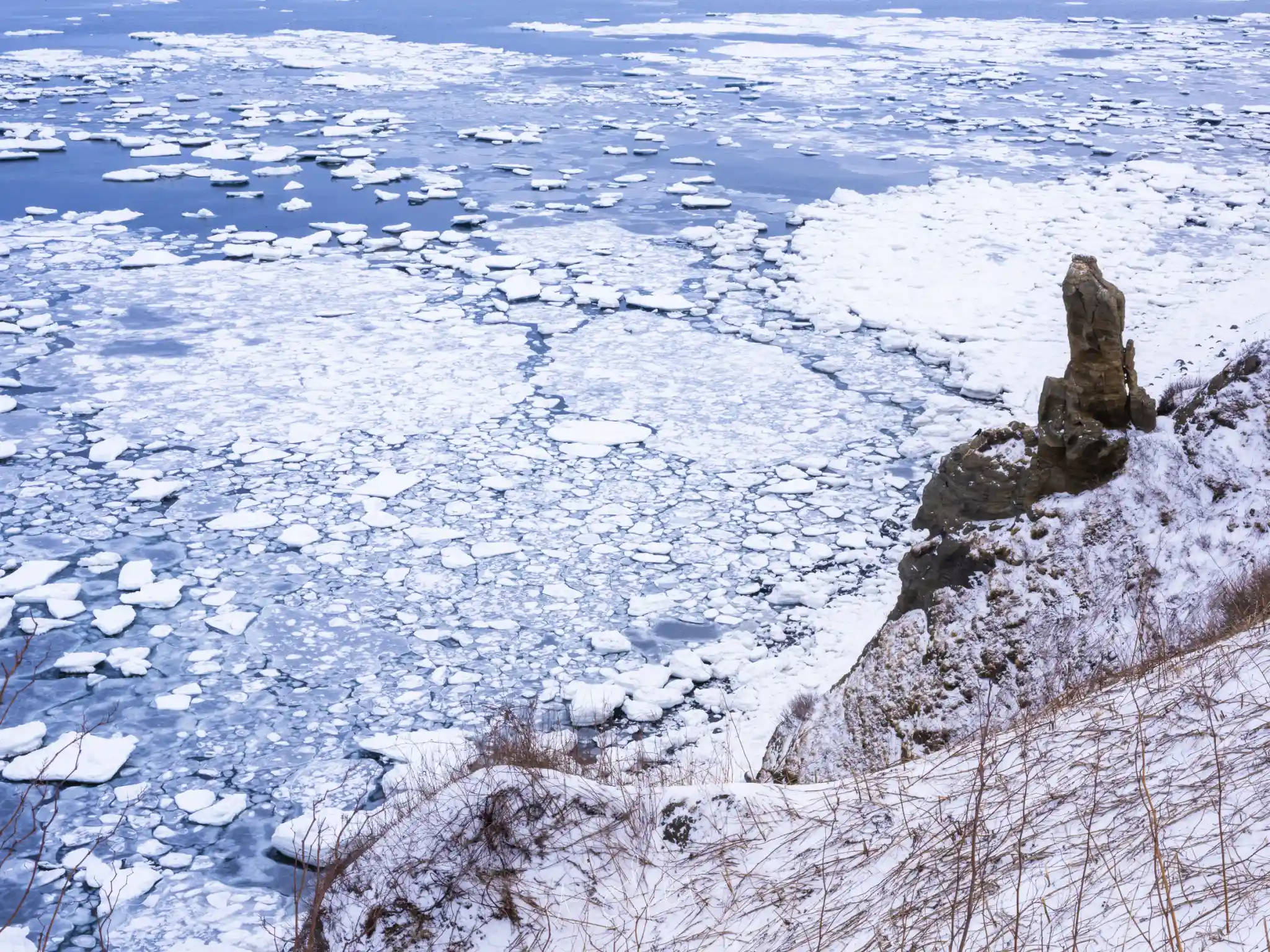
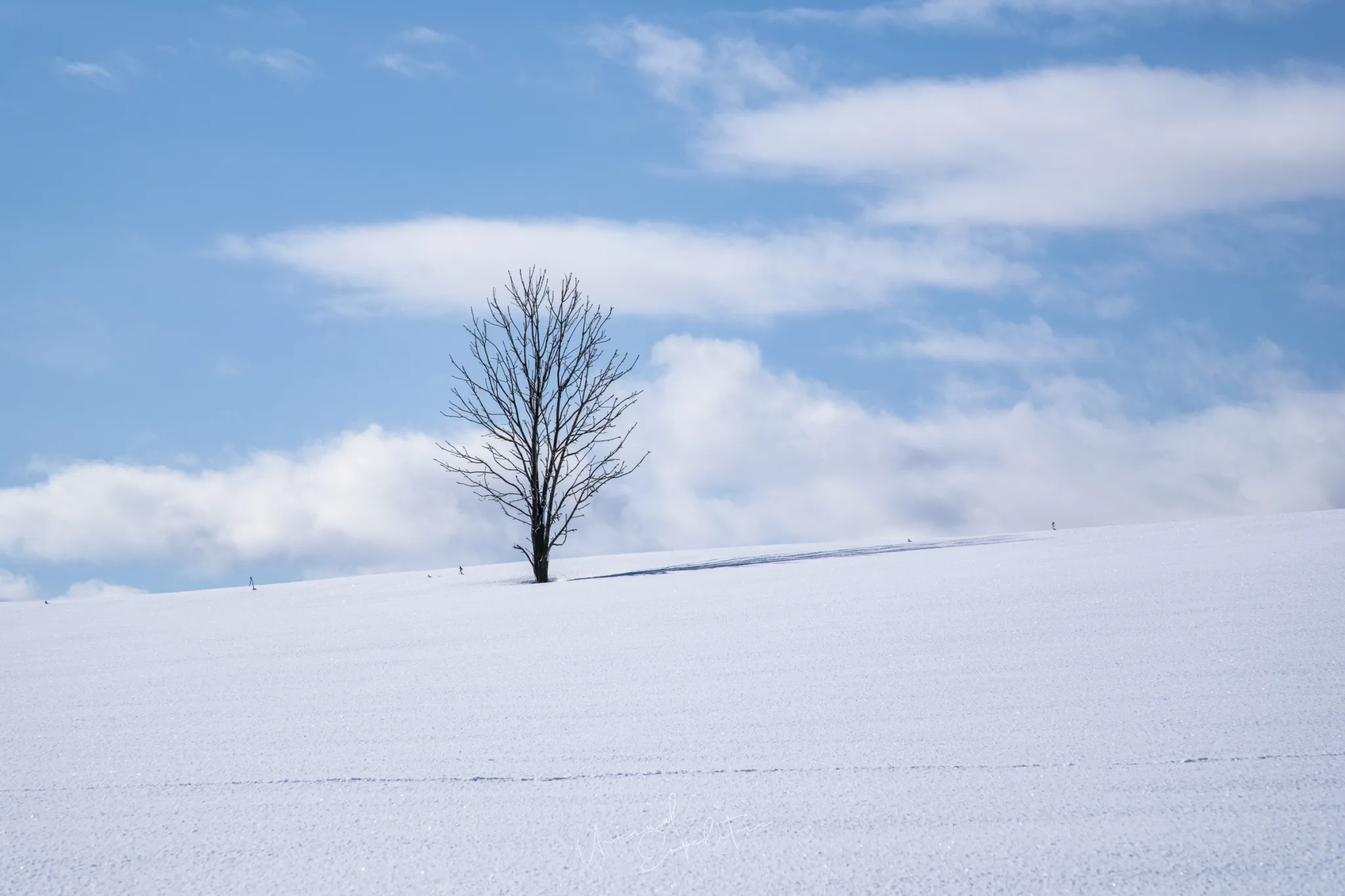
Hokkaido places to visit in winter for landscapes are spread across the island. On the Okhotsk coast, drift ice can pack the sea in the coldest weeks; Japan's national parks site puts the season from late January to early April, but the ice varies from year to year, so it is never a promise. In Akan-Mashu National Park the sulphur vents of Mount Io steam above Kawayu Onsen, and Lake Kussharo stays partly open where hot springs warm the shore. On the Nemuro coast the red Hanasaki Lighthouse stands above the cliffs, and the SL Fuyu-no-Shitsugen steam train runs through the Kushiro marshes in the coldest months. In the centre of the island, Biei turns into rolling white fields dotted with single trees. Our guide to the best time to visit Hokkaido in winter explains which months suit which subject.
Eastern Hokkaido is the one place I know where you photograph cranes dancing in the afternoon, eagles over the sea the next morning and an owl in the snow that same night. It rewards people who dress properly and are patient.
Joseph Mak, tour leader, Unusual Expedition
Which Hokkaido subject suits which photographer
| Subject | Where | Best in | Lens |
|---|---|---|---|
| Red-crowned cranes | Tsurui, Akan, Setsuri River | Midwinter | 100-400mm, 70-200mm |
| Steller's and white-tailed eagles | Rausu, Shiretoko Peninsula | Late winter | 100-400mm, 70-200mm |
| Blakiston's fish owl | Rausu | All winter, at night | 70-200mm, fast aperture |
| Whooper swans | Lake Kussharo | Midwinter | 24-70mm, 100-400mm |
| Red fox, sika deer, small birds | Eastern Hokkaido, Biei | All winter | 100-400mm |
| Snow landscapes | Biei, the Okhotsk coast | All winter | 24-70mm, 70-200mm |
A long zoom does most of the work here; the wide lens comes out for Biei, the swans and the coast.
What to bring and how to work in the cold
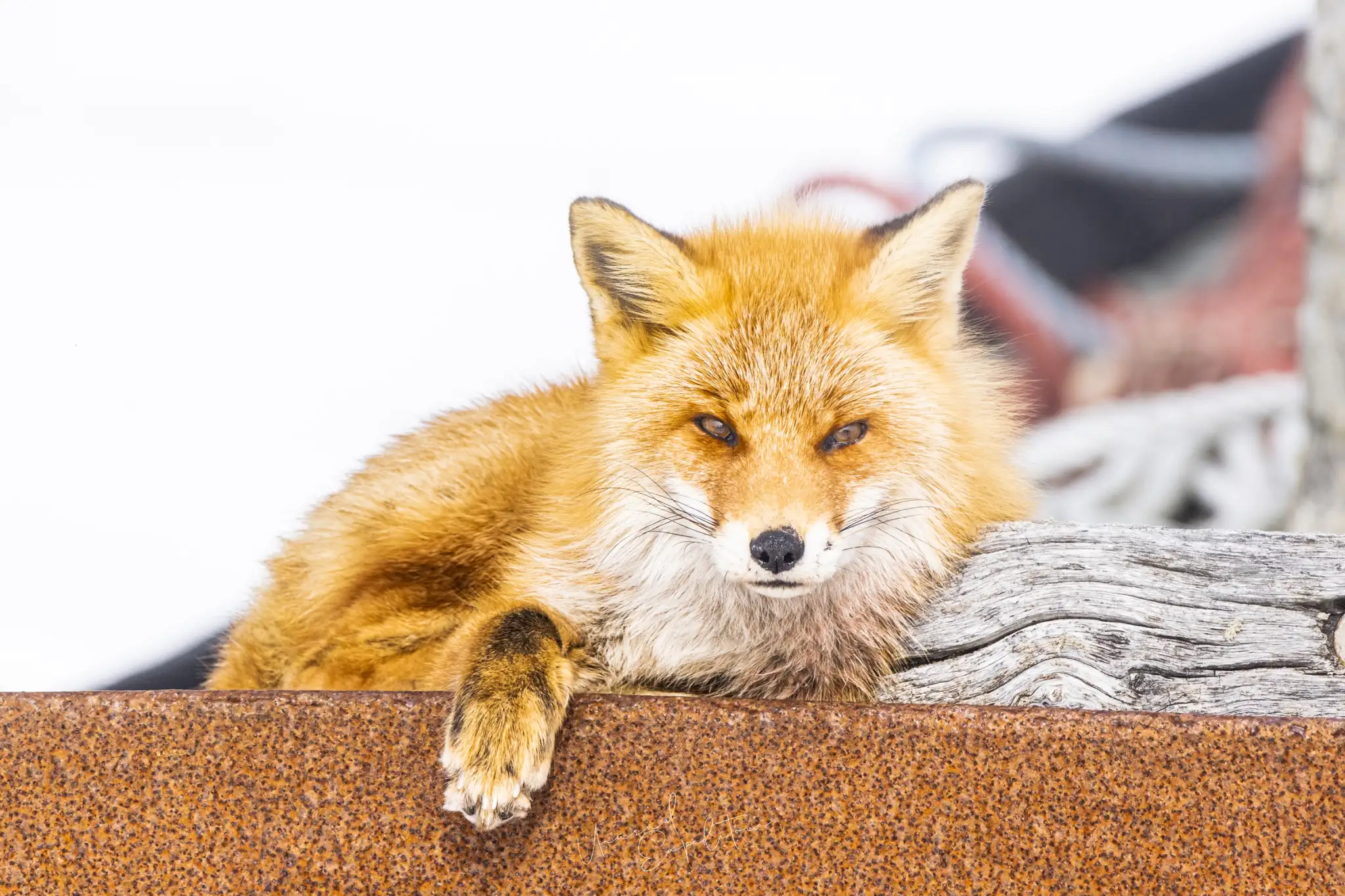
Hokkaido in winter is properly cold, especially in the east and at dawn, when you stand still on a bridge or a riverbank for a long time. Layers, insulated boots with good grip, a hat that covers the ears and thin gloves under thick mittens matter more than any lens. Batteries drain quickly in the cold, so carry spares in an inside pocket and swap them often. When you bring a camera from the cold into a warm room, leave it in a closed bag until it warms up, or condensation forms inside it. Snow fools the meter, so expect to add exposure to keep it white. A tripod helps at the Setsuri River and for the steam train, and a beanbag or a monopod is useful from a boat. Do not feed or touch the foxes: Hokkaido's wild foxes can carry a parasite that infects people, and feeding them is discouraged by the Ministry of the Environment.
How to get to Hokkaido
Most international visitors reach Hokkaido through New Chitose Airport near Sapporo, which has direct flights from several Asian cities, some of them seasonal, or through Tokyo and other Japanese hubs. Eastern Hokkaido is then reached by domestic flight to Kushiro, Memanbetsu or Nakashibetsu, or by road. Entry rules depend on your passport: many nationalities, Singapore's among them, can visit Japan without a visa for a short stay, but check Japan's official guidance and your own government's advice for your passport. The rest of the practical detail is in our Japan guide and in our article on the Japan private tour. Hokkaido pairs well with the north of Honshu in other seasons: our Aomori photography tour guide covers the castle blossom of Hirosaki and the Oirase stream in autumn.
Explore Hokkaido in depth
- Red crowned crane Hokkaido: Tsurui, Akan and the Setsuri River
- Steller's sea eagle photography in Rausu
- Blakiston fish owl: photographing the world's largest owl
- Whooper swans at Lake Kussharo
- Biei in winter: the Christmas tree and the Blue Pond
- Hokkaido wildlife photography: foxes, deer and forest birds
- Best time to visit Hokkaido in winter
Photograph Hokkaido with us
We run Hokkaido as a private trip on request, for individuals, families, couples and photographers who want to work at their own pace. We arrange all the logistics around your needs, and because no tour leader travels with a private trip, the cost can be lower than our group tours; a photographer or photography coaching can be added at extra cost. Ask us at least two months ahead, especially for the crane and eagle season, although last-minute trips can be arranged. Read more on our private tours page, and see our other trips on the Japan photography tours page.
Join the Hokkaido photography tour
Kyushu, Shikoku And Setouchi Photography Journey departs 25 Sep 2027 To 05 Oct 2027, led by Joseph Mak. Small group, photography first. All Hokkaido photography tours.
Explore Hokkaido in depth
- Steller's Sea Eagle Photography in Rausu: Size, Wingspan and the Winter BoatsJapan
- Red Crowned Crane Hokkaido: Photographing the Cranes of Tsurui, Akan and the Setsuri RiverJapan
- Whooper Swans at Lake Kussharo, Hokkaido: Photographing the Swans of the Hot Spring ShoreJapan
- Hokkaido Wildlife Photography: Red Foxes, Sika Deer, Owls and Forest Birds in WinterJapan
- Blakiston Fish Owl: How to Photograph the World's Largest Owl in HokkaidoJapan
- Biei in Winter: The Christmas Tree, the Blue Pond and the Snow Fields of HokkaidoJapan
- Best Time to Visit Hokkaido in Winter for Photography: Month by Month in the EastJapan
Upcoming Photo Tours
- Egypt Photo Tour – EgyptEgypt 12 Dec 2026 To 20 Dec 2026
- Inner Mongolia Winter Owl Photo Tour – ChinaChina 01 Jan 2027 To 04 Jan 2027
- Inner Mongolia Winter Photo Tour – ChinaChina 05 Jan 2027 To 11 Jan 2027
- Mekong And Central Highland Vietnam Photo Tour - VietnamVietnam 16 Jan 2027 To 24 Jan 2027