
Hokkaido Wildlife Photography: Red Foxes, Sika Deer, Owls and Forest Birds in Winter
Hokkaido wildlife photography in winter: the Ezo red fox, sika deer, Ural owl and shima-enaga, with lenses and field manners.
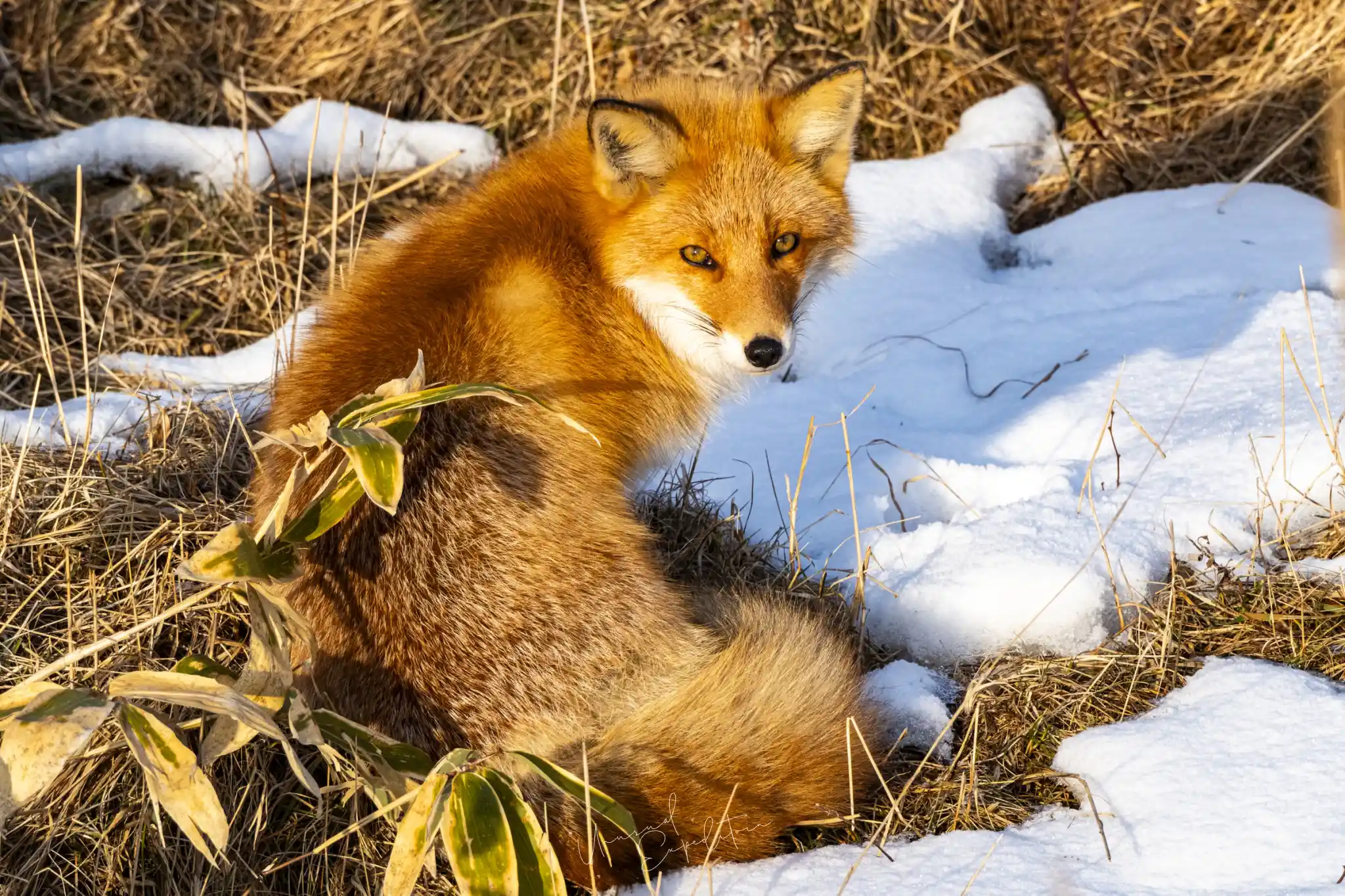
Hokkaido wildlife photography in winter goes well beyond the famous cranes and eagles. The Ezo red fox hunts across the snow fields, Ezo sika deer graze the coastal grassland, Ural owls roost in tree hollows, and small forest birds such as the white-faced long-tailed tit, the shima-enaga, come to the bare branches. Most of these animals are seen from the roadside or at the edge of the forest, between the main subjects, and they often give the most personal pictures of a trip.
These animals fill the gaps between the headline subjects of our Hokkaido photography tour guide. The pictures in this guide are our own, taken on our winter trips through eastern Hokkaido and Biei; we hold the rights to them, and the notes come from knowing these places first hand.
Hokkaido wildlife: what you can see in winter
Hokkaido wildlife in winter is concentrated and visible. Snow pushes animals towards roads, rivers and the coast, where food is easier to find, and the bare trees make birds and owls easier to spot. In the east you can expect red foxes and sika deer almost daily, as well as eagles along the coast, cranes in the fields and swans on the lakes. Small birds such as woodpeckers, nuthatches and tits gather wherever there is shelter and food. Brown bears sleep through the winter, so they are not a subject in this season. The skill is less in finding the animals than in being ready when they appear, with the right lens on and the camera set.
Ezo red fox Hokkaido: the fox in the snow
The Ezo red fox is Hokkaido's own subspecies of the red fox, and in winter its thick orange coat against white snow is one of the most photographed sights on the island. Foxes hunt mice under the snow in open fields, listening, then leaping and diving head first, and they rest curled up in sheltered spots between hunts. You will meet them along farm roads, at the edges of forests and on frozen rivers. A 100-400mm lens from the car window is often the best tool, because a fox that is not approached stays relaxed. Get low if you can safely do so: an eye-level picture of a fox in snow is very different from one taken looking down.
Hokkaido red fox: why you should never feed them
Some Hokkaido red foxes have learned to approach cars and people for food, which makes for easy pictures and a bad outcome. Wild foxes in Hokkaido can carry the echinococcus tapeworm, a parasite that can infect people, as Japan's Ministry of Health, Labour and Welfare explains, and the Ministry of the Environment's office in Kushiro asks visitors not to feed wild animals. A fox that learns to wait by the road for food is also standing in the path of traffic. Keep your distance, do not touch or feed them, and wash your hands after a day in the field. The best fox pictures show a wild animal hunting, resting or watching you from its own space.
Ezo sika deer on the coast and in the forest
The Ezo sika deer is the large deer of Hokkaido, and in winter stags with full antlers gather in herds on coastal grassland and forest edges. On our winter trips we have found them grazing on snowy meadows by the sea in the east, where a low sun at dawn or late afternoon lights their coats and the frost on the grass. Deer are easy to find and easy to photograph badly, so look for something extra: a stag against the sea, a herd in a line across the snow, breath in cold air. They cross roads suddenly, so drive slowly in deer country, especially at dusk.
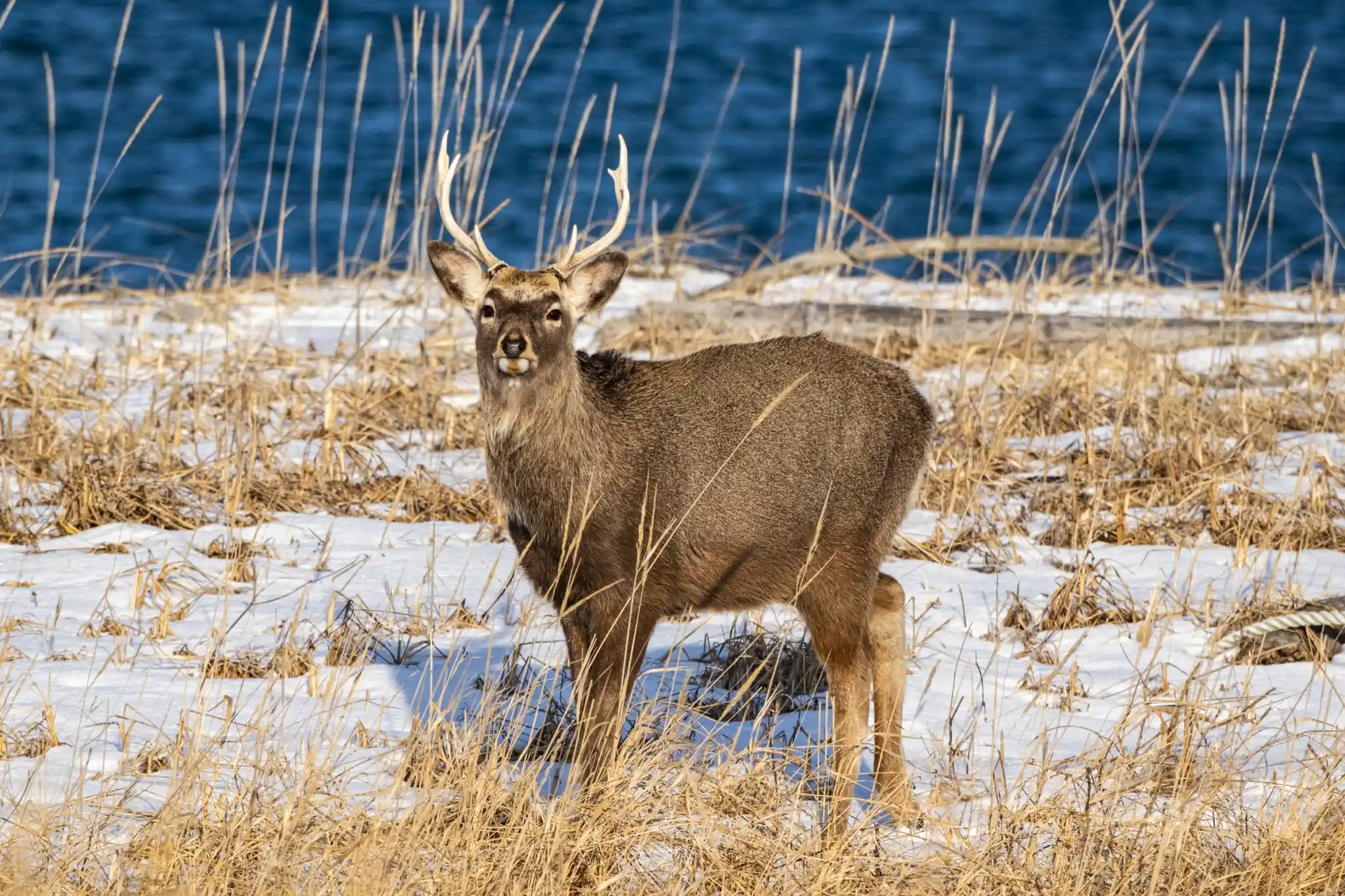
Some of my favourite Hokkaido frames are of animals we did not plan for. A fox asleep in the bamboo grass, a stag standing on the coast. Keep the long lens on the camera in the car, because they do not wait.
Joseph Mak, tour leader, Unusual Expedition
Hokkaido bird photography beyond the cranes and eagles
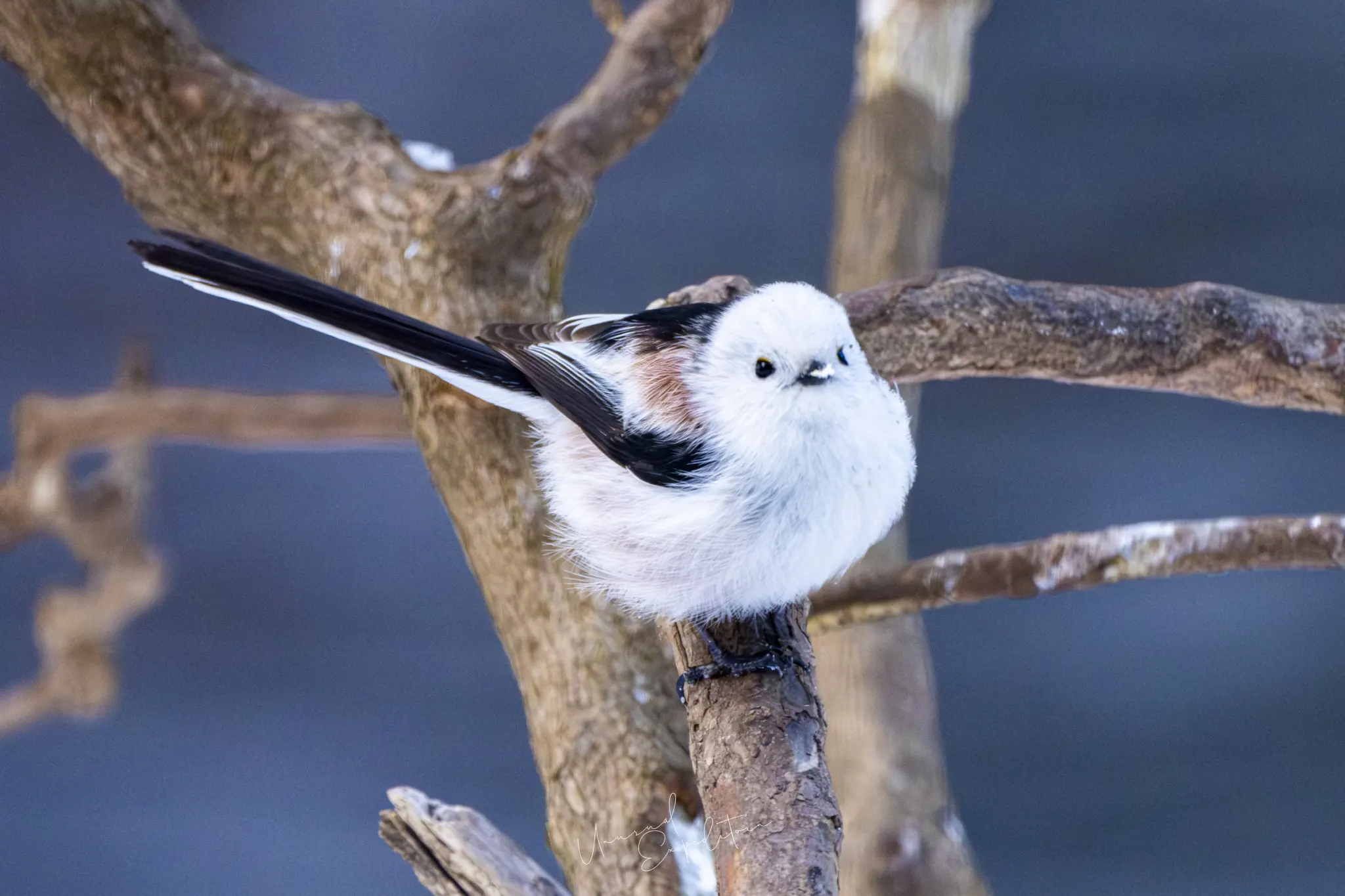
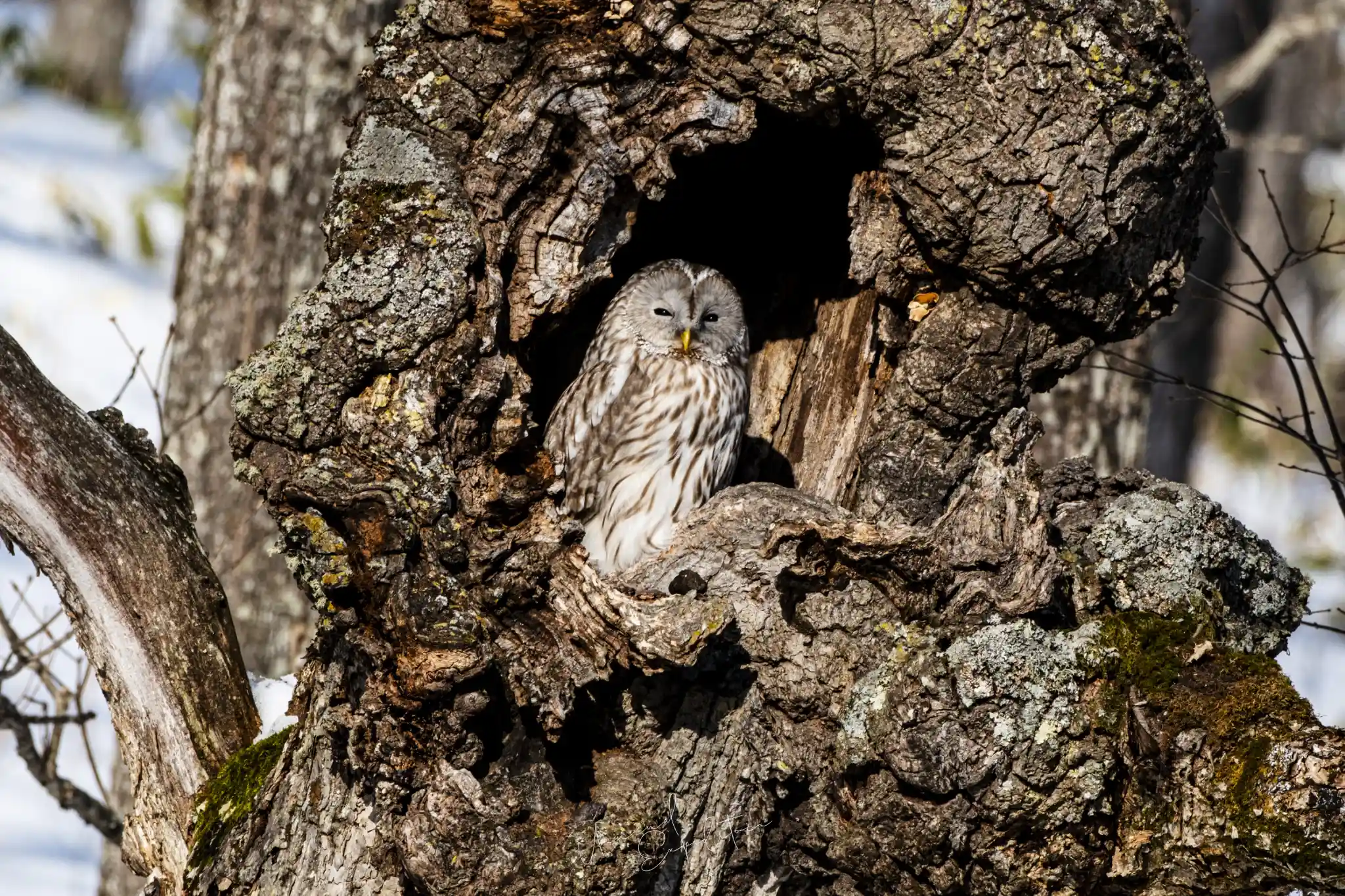
Hokkaido bird photography in winter has a lot to offer beyond the big species. The long-tailed tit of Hokkaido, called the shima-enaga, has a pure white face and has become something of a national favourite, appearing on calendars and souvenirs across Japan. It moves fast in small flocks through bare branches, so a fast shutter and continuous focus help. Great spotted and Japanese pygmy woodpeckers, Eurasian nuthatches and several tits visit the same woods. The Ural owl, a large pale grey owl, often roosts by day in the hollow of an old tree, sitting still for hours, which makes it a patient photographer's subject. Keep a respectful distance from roosting owls, and leave if the bird starts to watch you closely or shift.
Hokkaido wildlife trips: subjects, places and lenses
| Animal | Where we found it | Behaviour to wait for | Lens |
|---|---|---|---|
| Ezo red fox | Farm roads, fields, frozen rivers, Biei | Mouse hunting leaps, resting curled up | 100-400mm |
| Ezo sika deer | Coastal grassland, forest edges in the east | Stags in low sun, herds on snow | 70-200mm, 100-400mm |
| Ural owl | Old trees in eastern forests | Opening its eyes, looking out of the hollow | 100-400mm |
| Shima-enaga and forest birds | Woods and parks in the east | Feeding on branches, fluffed in the cold | 100-400mm, fast shutter |
A single long zoom covers almost every animal on this list, which keeps the car tidy and the camera ready.
Field manners for wildlife in Hokkaido
Most wildlife in Hokkaido is seen near roads and farmland, so field manners are road manners. Pull over only where it is safe and legal, never block a lane, and keep the engine and voices low. Do not walk into farmland, and stay on paths in parks and reserves. Owls, cranes and foxes are all sensitive to people approaching on foot, and a long lens from a distance gives better pictures of relaxed animals in any case. The red crowned crane Hokkaido feeding grounds and the Blakiston fish owl destination guides explain how the managed viewing places work, and the Biei winter guide covers the farmland rules there.
Photograph Hokkaido's wildlife with us
We arrange eastern Hokkaido as a private trip on request, with time built in for foxes, deer and birds between the main subjects, and all logistics taken care of. A photographer or photography coaching can be added at extra cost. See our private tours and the Japan photography tours page.
Ask us about wildlife in Hokkaido
Join the Hokkaido photography tour
Kyushu, Shikoku And Setouchi Photography Journey departs 25 Sep 2027 To 05 Oct 2027, led by Joseph Mak. Small group, photography first. All Hokkaido photography tours.
Explore Hokkaido in depth
- Hokkaido Photography Tour Guide: Cranes, Eagles, Owls and Snow in Eastern HokkaidoJapan
- Steller's Sea Eagle Photography in Rausu: Size, Wingspan and the Winter BoatsJapan
- Red Crowned Crane Hokkaido: Photographing the Cranes of Tsurui, Akan and the Setsuri RiverJapan
- Whooper Swans at Lake Kussharo, Hokkaido: Photographing the Swans of the Hot Spring ShoreJapan
- Blakiston Fish Owl: How to Photograph the World's Largest Owl in HokkaidoJapan
- Biei in Winter: The Christmas Tree, the Blue Pond and the Snow Fields of HokkaidoJapan
- Best Time to Visit Hokkaido in Winter for Photography: Month by Month in the EastJapan
Upcoming Photo Tours
- Egypt Photo Tour – EgyptEgypt 12 Dec 2026 To 20 Dec 2026
- Inner Mongolia Winter Owl Photo Tour – ChinaChina 01 Jan 2027 To 04 Jan 2027
- Inner Mongolia Winter Photo Tour – ChinaChina 05 Jan 2027 To 11 Jan 2027
- Mekong And Central Highland Vietnam Photo Tour - VietnamVietnam 16 Jan 2027 To 24 Jan 2027