
Steller's Sea Eagle Photography in Rausu: Size, Wingspan and the Winter Boats
Steller's sea eagle photography at Rausu, Hokkaido: size and wingspan, habitat, the winter boats, drift ice and settings.
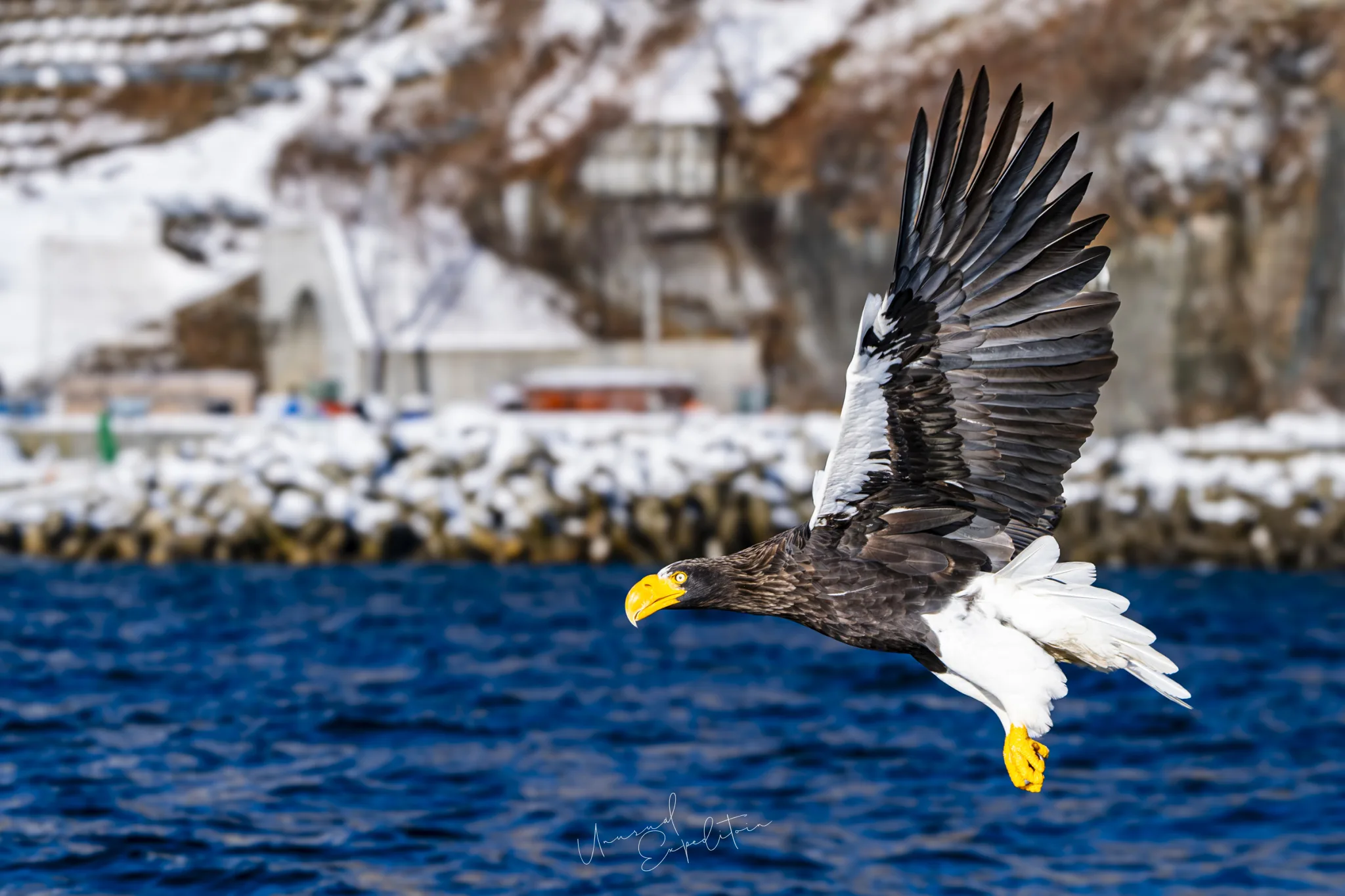
The Steller's sea eagle is the great winter bird of Rausu, on the Shiretoko Peninsula in eastern Hokkaido, and the easiest way to photograph it is from one of the small boats that leave Rausu harbour in the eagle season. The eagles, together with white-tailed eagles, come down to the water around the boat, so the pictures are close, fast and full of wings. With drift ice they stand on the floes; without it they fly over open blue sea.
The eagles are one of the main subjects of our Hokkaido photography tour guide, which covers the rest of the island in winter. Here we look at the bird itself, how the Rausu boats work for photographers, what drift ice changes, and the settings that keep a big dark eagle sharp against bright water.
Steller's sea eagle: the bird behind the pictures
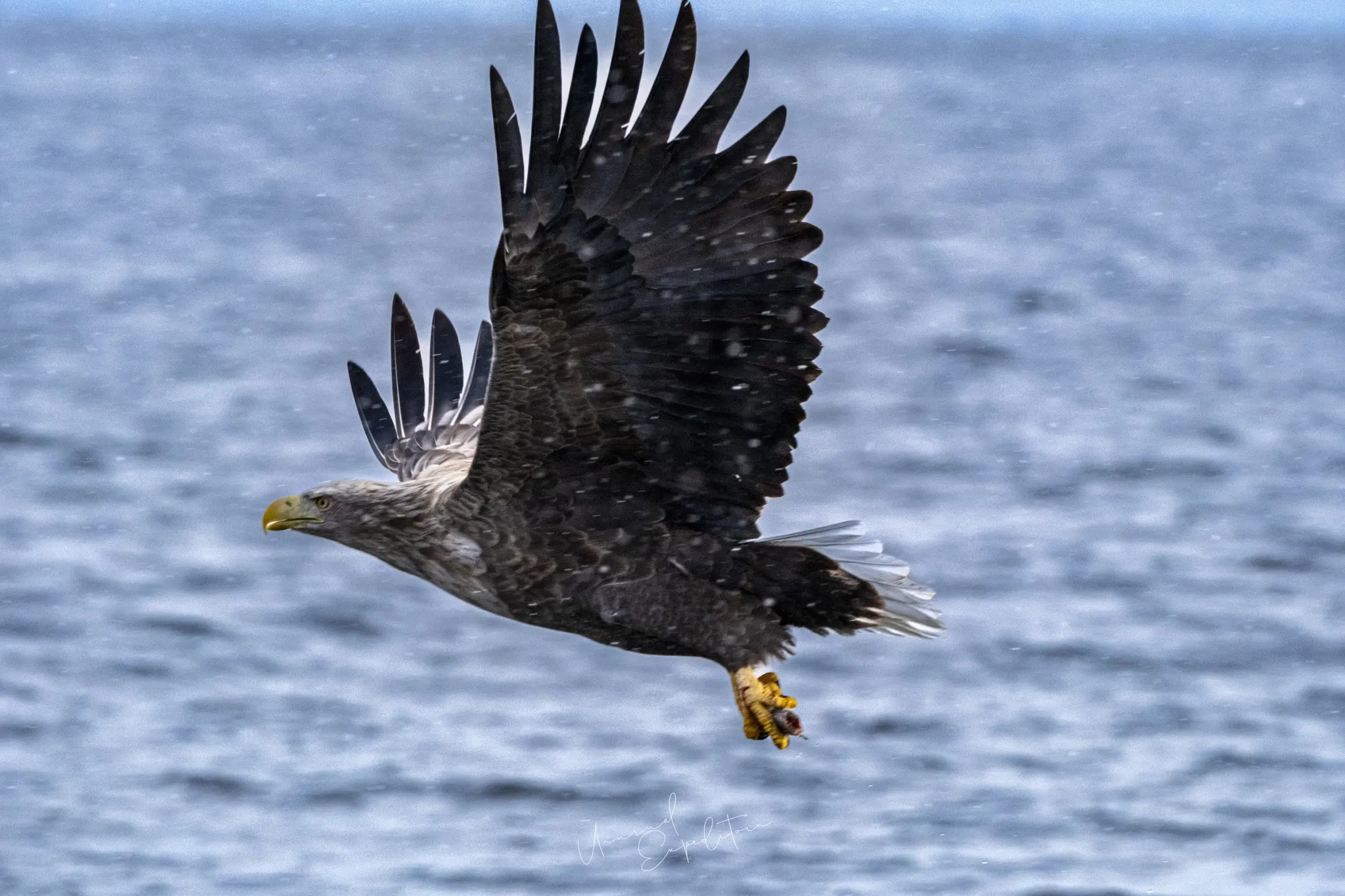
The Steller's sea eagle breeds around the Sea of Okhotsk in the Russian Far East and comes south for the winter. BirdLife International, which assesses it as vulnerable, notes that most of the world's population, roughly two thousand birds, winters in the southern Kuril Islands and Hokkaido. That makes the Shiretoko and Nemuro coasts one of the few places on earth where you can see the species in numbers. The bird is unmistakable: dark brown with white shoulders, white thighs, a white wedge of a tail and a huge yellow-orange bill. White-tailed eagles share the same coast, browner overall with a pale head and a white tail, and the two often compete over the same fish, which is where the most dramatic frames come from.
Steller's sea eagle size and wingspan
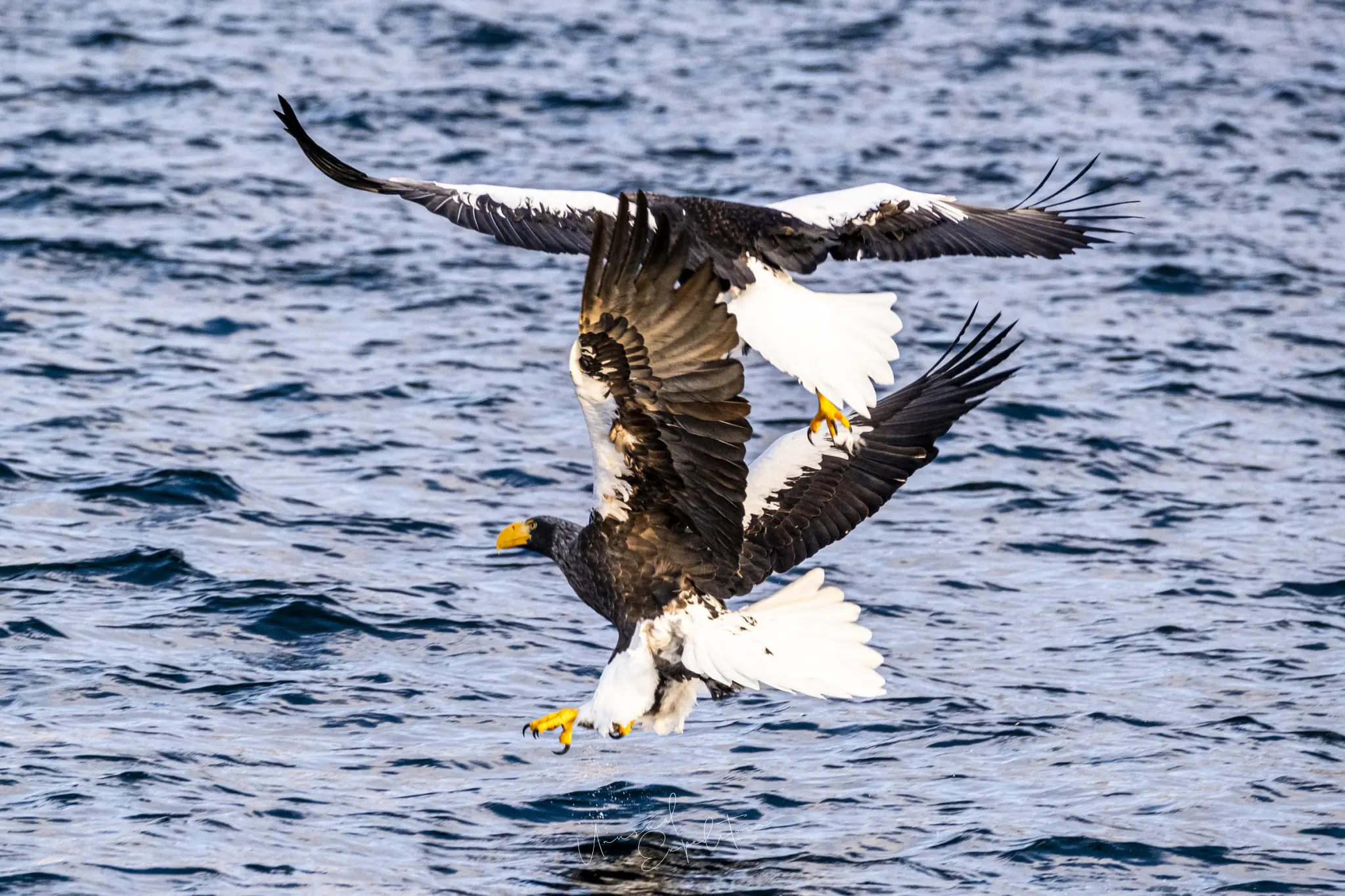
Steller's sea eagle size is the first thing people notice from the boat. It is among the largest eagles in the world, with a wingspan of around two metres or more and a body that makes a white-tailed eagle look slim beside it. In practice the size changes how you frame. A bird that close fills the viewfinder quickly, so a 100-400mm lens is often better than a long prime, and zooming out keeps the wingtips in the frame when it banks. Leave space in the direction of flight. Against a clear sky the dark body and bright bill read well, but the white patches burn out easily, so watch the highlights rather than the average exposure.
Steller's sea eagle habitat in winter: Rausu and the Nemuro Strait
Steller's sea eagle habitat in winter is the coast: open water, river mouths and, when it arrives, the drift ice. Rausu faces the Nemuro Strait, with the Kunashir coastline visible across the water, and the town's fishing harbour sits under steep snowy slopes. That backdrop is part of the picture: an eagle over blue water with white hills behind looks very different from the same bird against an empty sky. The Shiretoko Peninsula is a UNESCO World Heritage Site, inscribed for the way the sea ice, the ocean and the land ecosystems connect, and the eagles are part of that story. The wintering areas of Shiretoko and Lake Furen are national wildlife protection areas, according to BirdLife.
Sea eagle Hokkaido boats from Rausu
Sea eagle Hokkaido boat trips leave Rausu through the winter season. Visit Hokkaido describes wildlife cruises in winter, roughly January to March, and Japan's national parks site puts the drift ice season from late January to early April, at its best in the second half of February. The boats are small and the deck is crowded with photographers, so a compact zoom handles better than a big prime on a tripod. Dress for wind and spray; the sea feels far colder than the harbour. On days without ice, the eagles still come to the boat over open water, and the light on blue sea can be cleaner than a grey ice field. With ice, the pictures change completely: eagles perched on floes, squabbling on the white, with the Shiretoko mountains behind.
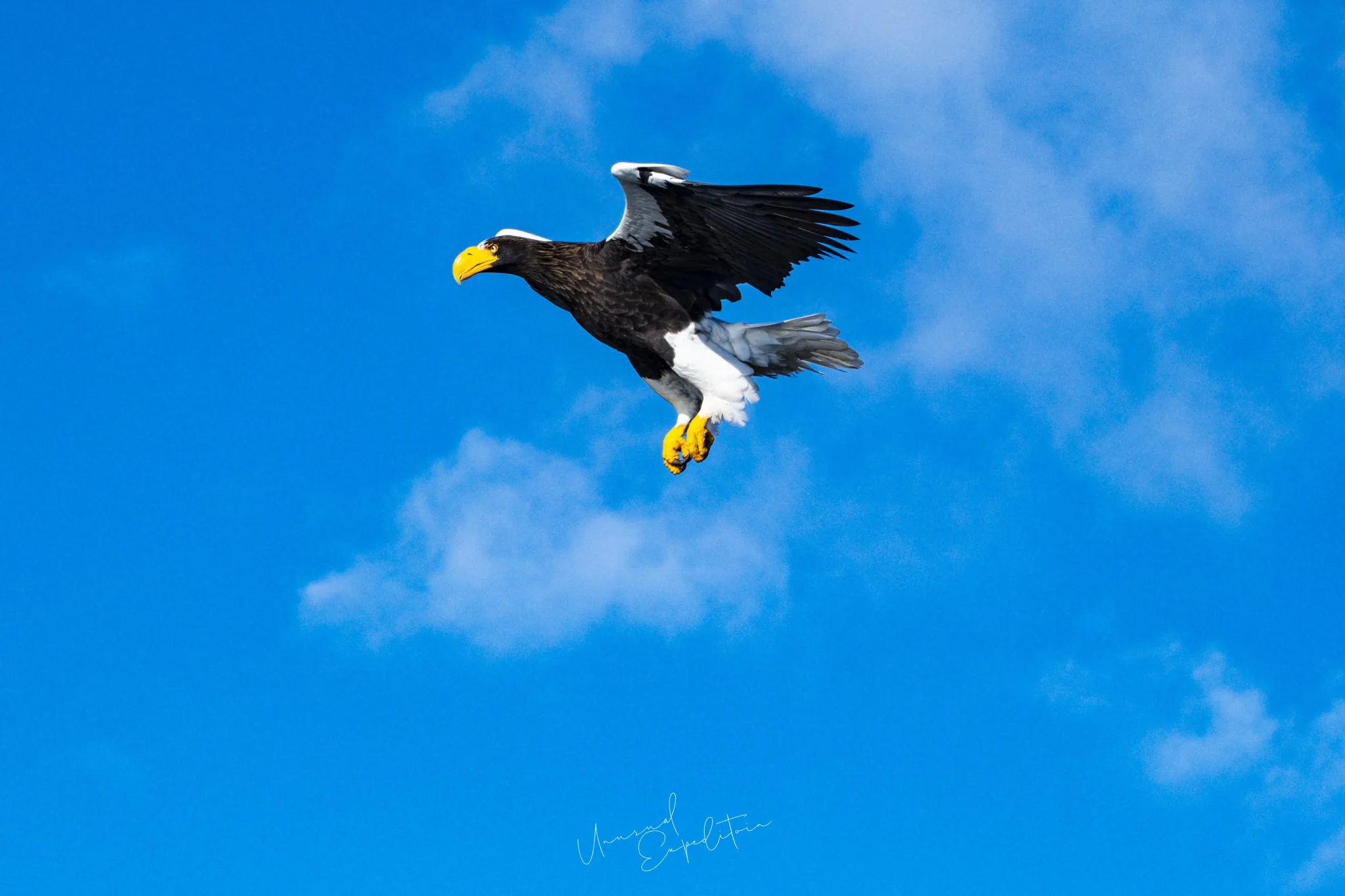
Drift ice is a bonus, never a promise. Some of our best eagle pictures came on mornings with no ice at all, just blue water, low sun and the birds turning close to the boat.
Joseph Mak, tour leader, Unusual Expedition
Settings for eagles in flight
| Situation | Shutter | Focus | Lens |
|---|---|---|---|
| Eagle diving for fish | Very fast, to freeze spray | Continuous, wide area tracking | 100-400mm |
| Two eagles in a fight | Very fast, burst | Continuous, zone | 70-200mm, 100-400mm |
| Eagle against blue sky | Fast | Continuous, single point | 100-400mm |
| Eagles on drift ice | Moderate | Single point on the eye | 100-400mm, 24-70mm for scenes |
The boat moves as much as the birds, so raise the shutter speed above what you would use on land.
Steller's sea eagle vs bald eagle: what to expect
Photographers who have shot bald eagles in North America often ask how the Steller's compares. It is heavier in build, with a much bigger bill and more white on the body, and on the Rausu boats it is usually closer than most bald eagle situations. The white-tailed eagle is the closer relative in behaviour on this coast, and the two species together give more variety than either alone. Expect gulls too, which steal fish and add movement to the frames, and look out for ravens on the ice.
Combining the eagles with the rest of Shiretoko
Rausu is also where the Blakiston's fish owl comes to the streams at night, so an eagle morning and an owl evening fit together well; our Blakiston fish owl guide explains how that works. The road from Rausu leads back towards Lake Kussharo and the crane country, covered in the red crowned crane Hokkaido guide. On the way, the roadside fields hold foxes and sika deer.
Photograph the eagles with us
We run the Shiretoko Peninsula as a private trip on request, combined with the cranes and owls of eastern Hokkaido, with all logistics arranged for you and photography coaching available at extra cost. Details are on our private tours and Japan photography tours pages.
Ask us about the eagles of Rausu
Join the Hokkaido photography tour
Kyushu, Shikoku And Setouchi Photography Journey departs 25 Sep 2027 To 05 Oct 2027, led by Joseph Mak. Small group, photography first. All Hokkaido photography tours.
Explore Hokkaido in depth
- Hokkaido Photography Tour Guide: Cranes, Eagles, Owls and Snow in Eastern HokkaidoJapan
- Red Crowned Crane Hokkaido: Photographing the Cranes of Tsurui, Akan and the Setsuri RiverJapan
- Whooper Swans at Lake Kussharo, Hokkaido: Photographing the Swans of the Hot Spring ShoreJapan
- Hokkaido Wildlife Photography: Red Foxes, Sika Deer, Owls and Forest Birds in WinterJapan
- Blakiston Fish Owl: How to Photograph the World's Largest Owl in HokkaidoJapan
- Biei in Winter: The Christmas Tree, the Blue Pond and the Snow Fields of HokkaidoJapan
- Best Time to Visit Hokkaido in Winter for Photography: Month by Month in the EastJapan
Upcoming Photo Tours
- Egypt Photo Tour – EgyptEgypt 12 Dec 2026 To 20 Dec 2026
- Inner Mongolia Winter Owl Photo Tour – ChinaChina 01 Jan 2027 To 04 Jan 2027
- Inner Mongolia Winter Photo Tour – ChinaChina 05 Jan 2027 To 11 Jan 2027
- Mekong And Central Highland Vietnam Photo Tour - VietnamVietnam 16 Jan 2027 To 24 Jan 2027