
Whooper Swans at Lake Kussharo, Hokkaido: Photographing the Swans of the Hot Spring Shore
Whooper swans at Lake Kussharo, Hokkaido, Japan: why they gather on the hot spring shore, when to go, and how to photograph them.
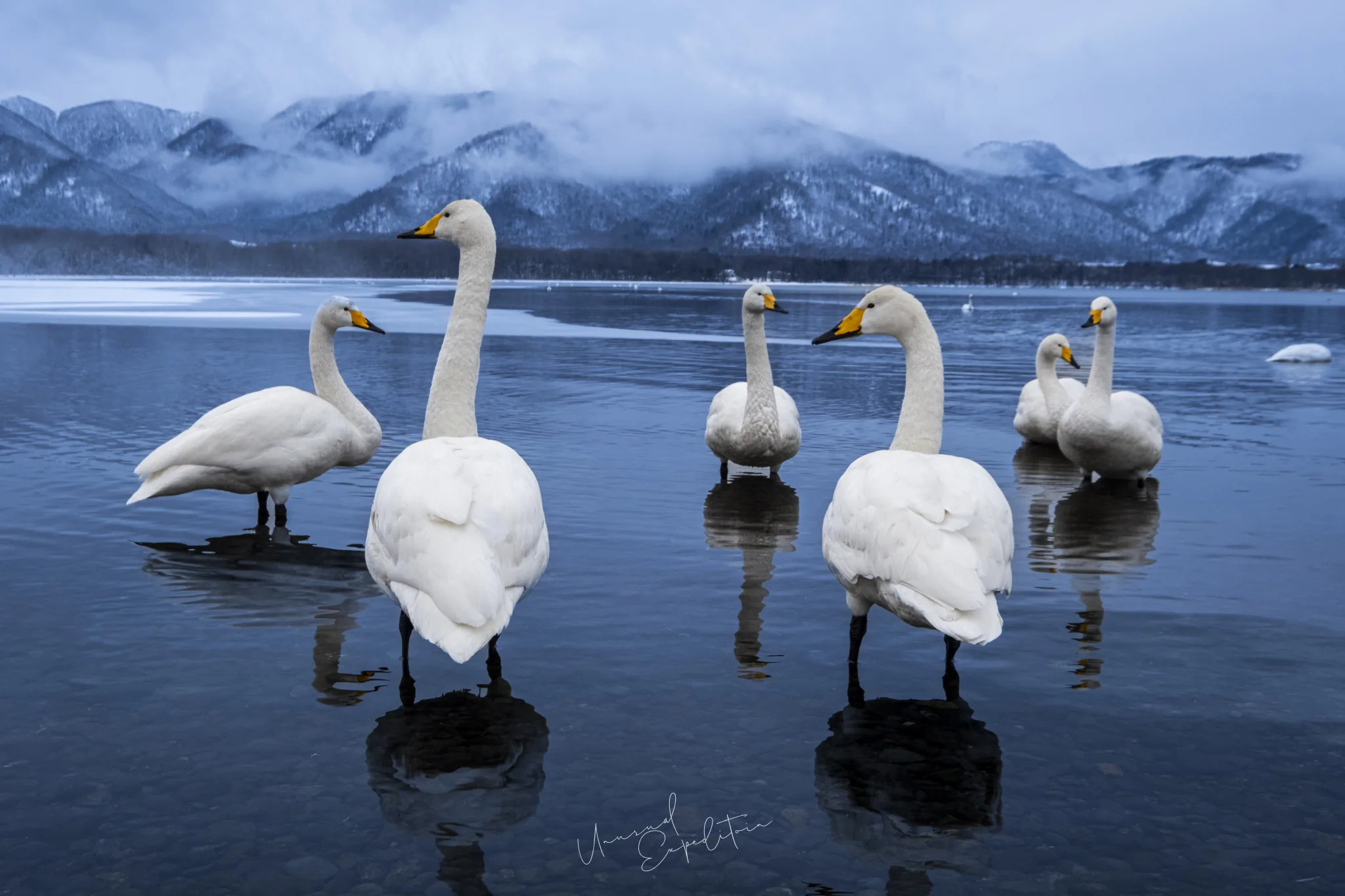
Whooper swans at Lake Kussharo, Hokkaido, Japan gather each winter on the few stretches of shore that hot springs keep free of ice, in Akan-Mashu National Park in the east of the island. Several hundred birds spend the cold months there, close to the water's edge, with snow-covered mountains behind and steam rising off the lake on cold mornings. It is one of the easiest wildlife subjects in Hokkaido to reach, and one of the most rewarding in soft winter light.
The swans are one of the quieter chapters of our Hokkaido photography tour guide, between the drama of the cranes and the eagles. White birds on blue water and snow are harder to expose than they look, and the shore itself shapes every picture.
Whooper swans at Lake Kussharo, Hokkaido, Japan: the warm shore
Lake Kussharo is a large caldera lake in Akan-Mashu National Park, surrounded by low wooded mountains. In winter most of its surface freezes, but hot springs along parts of the shore keep the water open and warm enough for the swans to rest and feed. The Japan Tourism Agency's descriptions of the national park speak of 400 to 500 swans gathering each year, drawn by the geothermal warmth, and note that people sitting in the outdoor hot spring baths can watch the birds swim right in front of them. For photographers, that open water at the edge of a frozen lake is the whole attraction: the swans are close, the background is ice, snow and mountains, and the mornings often bring mist off the warm water.
Whooper swans Japan: where they come from
Whooper swans in Japan are winter visitors. They breed in the far north, in Russia, and fly south when their breeding grounds freeze, spreading across the lakes and rivers of Hokkaido and northern Honshu. They are large, white swans with a wedge of yellow on a black bill, and their bugling calls carry across the ice. In Hokkaido you will meet them on several lakes in winter, but Kussharo is where the hot spring shore brings them close and keeps them in one place, which is why we stop there on our winter trips.
Swans on the lake are often in family groups through the winter, and the young of the year are easy to pick out by their grey plumage. Including one in a frame of white adults adds a quiet note of contrast and tells the story of a family that has flown south together.
Whooper swan migration and the timing of a visit
The whooper swan migration sets the window. The birds arrive in late autumn and leave in early spring, and the coldest part of the winter, when the lake is frozen except at the warm shore, concentrates them best. Travel guides such as Rove.me recommend December to February. That matches the crane season to the south and the eagle season on the Shiretoko coast, so the swans fit easily into the same trip. Our best time to visit Hokkaido in winter guide compares the months for every subject in the east.
Where to stand on the shore
The swans gather near the hot spring areas on the lake shore, where the ground is open and you can walk to the water's edge. Work low: crouching or kneeling at the waterline puts the birds against the far shore and the mountains rather than against the sky, and gives you reflections in calm water. Move slowly and the swans ignore you. Watch the wind, because take-offs and landings happen into it, and position yourself so a bird running across the water comes towards you or across the frame. The shore is often icy and the stones are slippery, so wear boots with grip, and remember that the ground near the hot springs can be warm and soft.
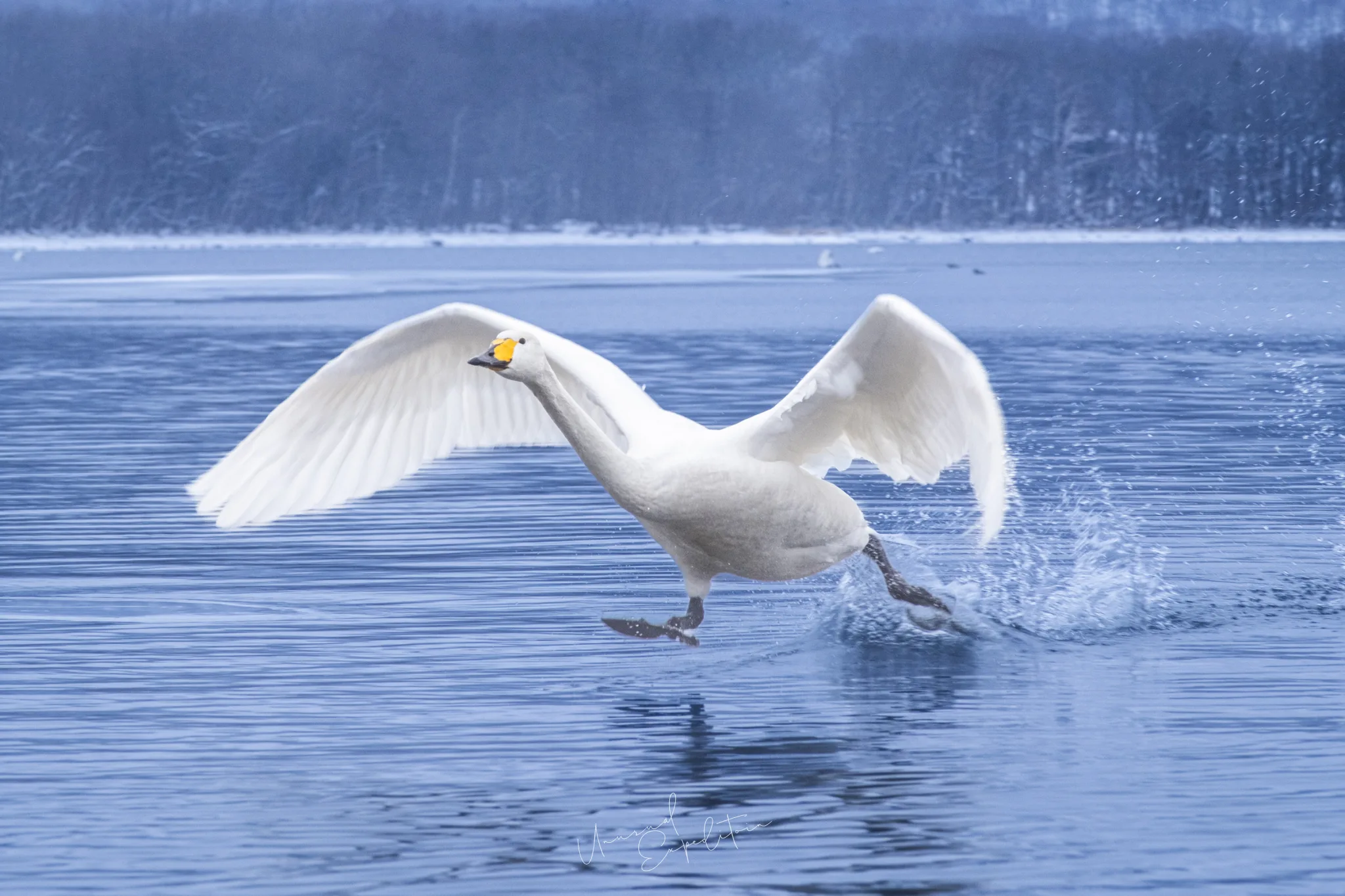
Kussharo is the place to slow down after the cranes and eagles. Get down to the waterline on a misty morning, wait for a swan to stretch or run to take off, and the pictures come to you.
Joseph Mak, tour leader, Unusual Expedition
Photographing white birds on blue water
White swans on blue water and snow are a test of exposure. The camera meter tends to underexpose the scene, so add exposure, then check the histogram and the highlight warning: the feathers should be bright but still show texture. Overcast and misty mornings are easier than bright sun, which burns out the white side of the bird. A 100-400mm lens isolates single birds and behaviour; a 24-70mm lens close to the water shows the swans in their setting with the mountains behind. For take-offs, use a fast shutter and continuous focus, and start the burst when the bird begins to run.
Lake Kussharo Hokkaido: what to photograph
| Subject | Light | Lens | Tip |
|---|---|---|---|
| Swans in mist with mountains | Early morning, cold and calm | 24-70mm | Stay low at the waterline |
| Take-off runs | Any, into the wind | 100-400mm | Fast shutter, burst |
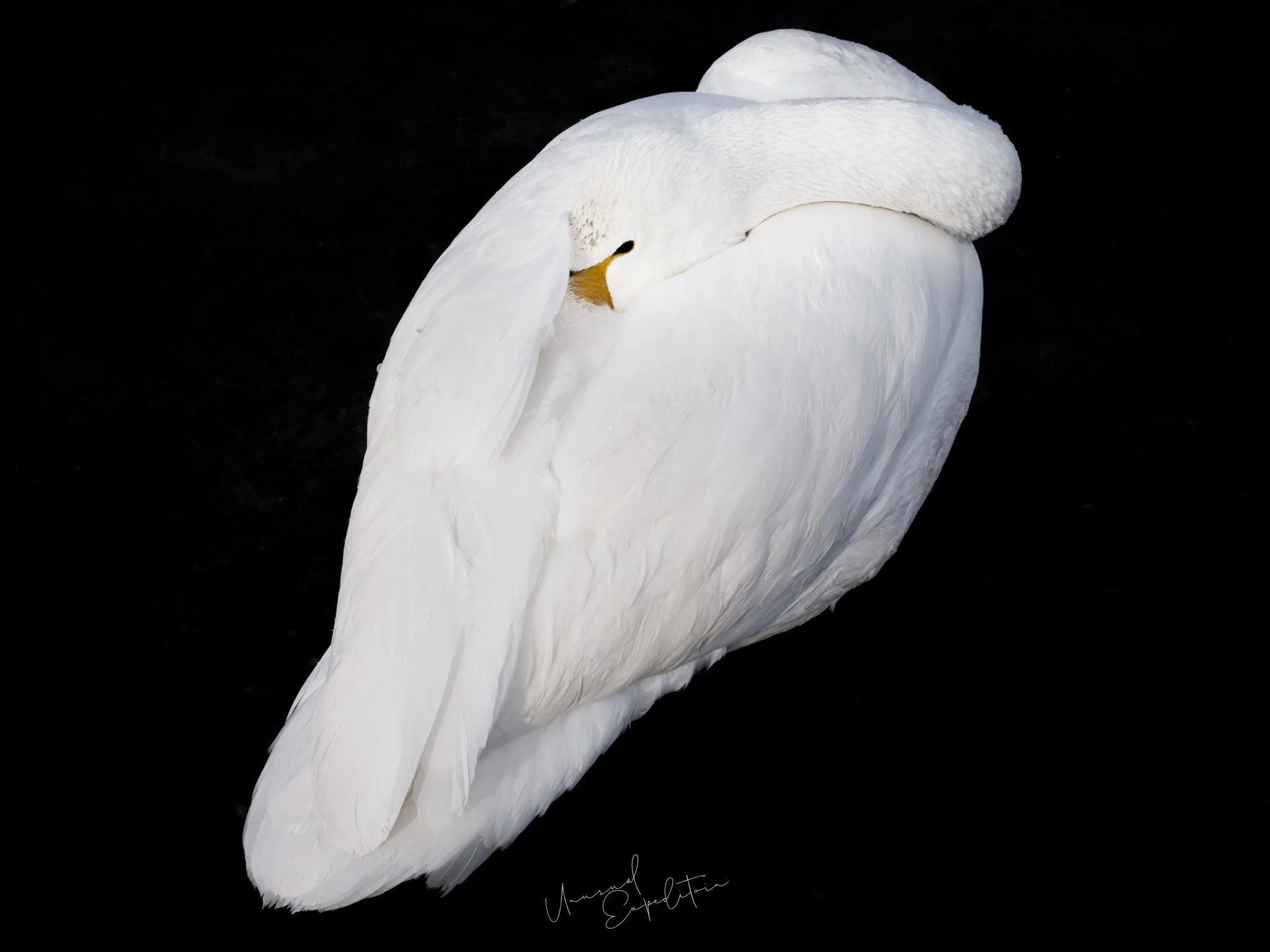
| Sleeping swans | Overcast or shade | 100-400mm | Expose for the white, let water go dark |
| Wing stretches and display | Morning and late afternoon | 70-200mm | Wait after a bird preens |
Behaviour comes in bursts, so keep the camera up after a quiet spell rather than packing away.
Swans, sulphur and the rest of Akan-Mashu
Near Lake Kussharo, the sulphur vents of Mount Io steam above Kawayu Onsen, and Lake Mashu sits in its own crater nearby. Both make a good change of subject between sessions on the shore. From here, the crane feeding grounds in our red crowned crane Hokkaido guide and the eagles of the Steller's sea eagle guide lie on either side, so the lake sits naturally between them. Do not feed the swans: the Ministry of the Environment asks visitors in eastern Hokkaido not to feed wild animals, and bread does the birds no good.
Photograph the swans with us
Lake Kussharo is part of the private trips we arrange through eastern Hokkaido in winter, on request, planned around your pace and the weather. We look after all the logistics; photography coaching can be added at extra cost. See our private tours and the Japan photography tours page.
Join the Hokkaido photography tour
Kyushu, Shikoku And Setouchi Photography Journey departs 25 Sep 2027 To 05 Oct 2027, led by Joseph Mak. Small group, photography first. All Hokkaido photography tours.
Explore Hokkaido in depth
- Hokkaido Photography Tour Guide: Cranes, Eagles, Owls and Snow in Eastern HokkaidoJapan
- Steller's Sea Eagle Photography in Rausu: Size, Wingspan and the Winter BoatsJapan
- Red Crowned Crane Hokkaido: Photographing the Cranes of Tsurui, Akan and the Setsuri RiverJapan
- Hokkaido Wildlife Photography: Red Foxes, Sika Deer, Owls and Forest Birds in WinterJapan
- Blakiston Fish Owl: How to Photograph the World's Largest Owl in HokkaidoJapan
- Biei in Winter: The Christmas Tree, the Blue Pond and the Snow Fields of HokkaidoJapan
- Best Time to Visit Hokkaido in Winter for Photography: Month by Month in the EastJapan
Upcoming Photo Tours
- Egypt Photo Tour – EgyptEgypt 12 Dec 2026 To 20 Dec 2026
- Inner Mongolia Winter Owl Photo Tour – ChinaChina 01 Jan 2027 To 04 Jan 2027
- Inner Mongolia Winter Photo Tour – ChinaChina 05 Jan 2027 To 11 Jan 2027
- Mekong And Central Highland Vietnam Photo Tour - VietnamVietnam 16 Jan 2027 To 24 Jan 2027