
Laguna Colorada Flamingos: Where to See Flamingos in Bolivia
Laguna Colorada flamingos: where to see flamingos in Bolivia, the three species, the red lake, elevation and how to shoot them.
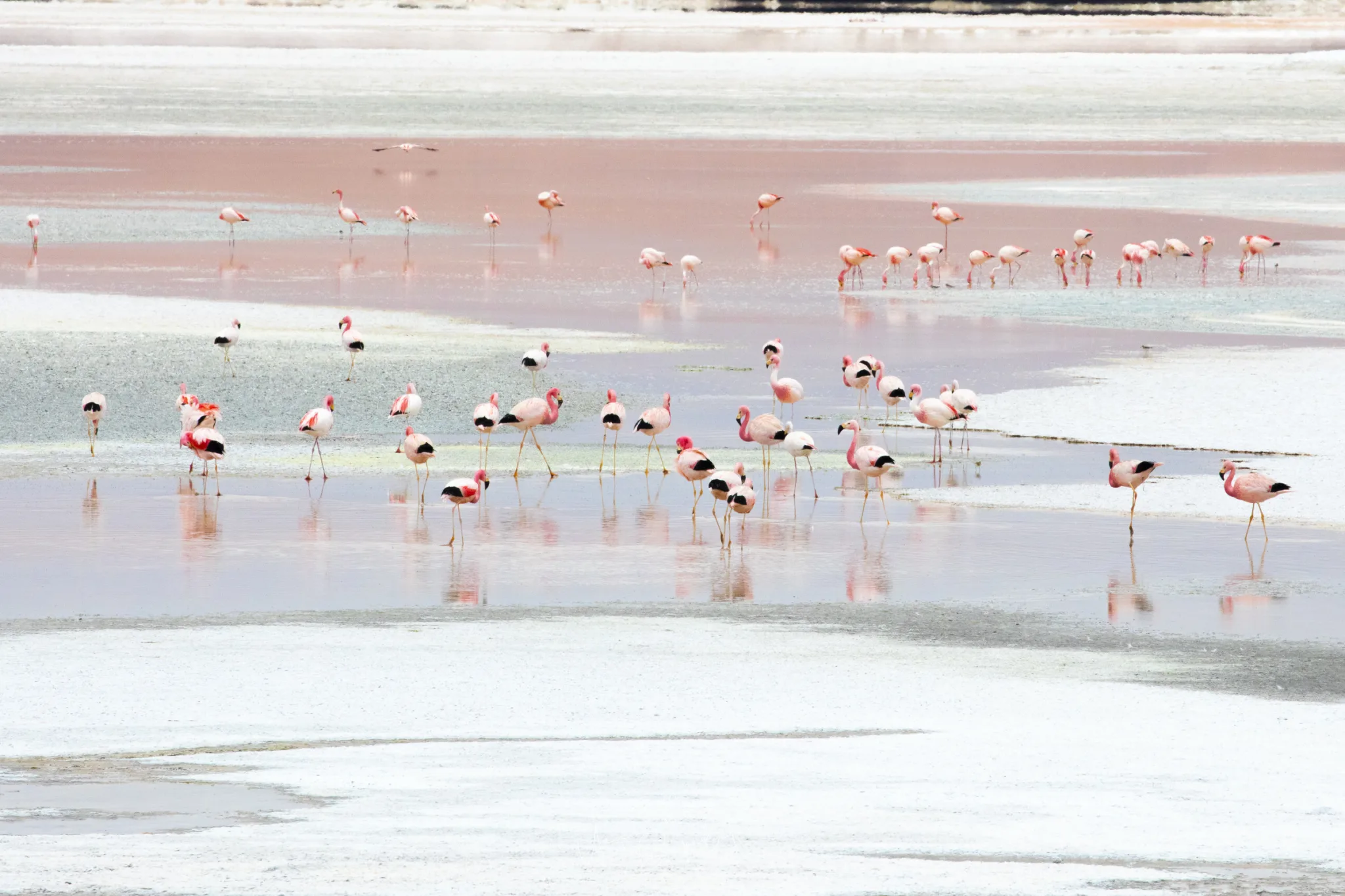
Laguna Colorada flamingos are the best known wildlife pictures in Bolivia: hundreds of pink birds feeding in a shallow lake whose water runs red, white and rust at about 4,278 metres in the far southwest of the country. If you are asking where to see flamingos in Bolivia, the answer is the chain of high lagoons south of the Salar de Uyuni, with Laguna Colorada as the largest and most famous. Three species feed there.
Laguna Colorada is part of the wider Uyuni area, introduced in our Uyuni photography tour guide. The photographs on this page are our own, made on the lagoons of southwest Bolivia.
Laguna Colorada flamingos: what you will see
Laguna Colorada sits inside the Eduardo Avaroa Andean Fauna National Reserve, and it has been listed as a Ramsar wetland of international importance since 1990. The lake is shallow, salty and broad, about 60 square kilometres, with white borax islands and shores. The red colour comes from algae and sediment in the water, and it shifts through the day with the light and the wind, from brick red to pale rose. Flamingos spread across the shallows in loose flocks, heads down, filtering the water for algae and tiny invertebrates. They rarely come close to the shore, so the classic picture is a wide or mid-length frame of birds scattered across coloured water, rather than a portrait. Laguna Colorada is also an important breeding site, and the reserve asks visitors to keep to the marked areas and away from the birds.
Where to see flamingos in Bolivia
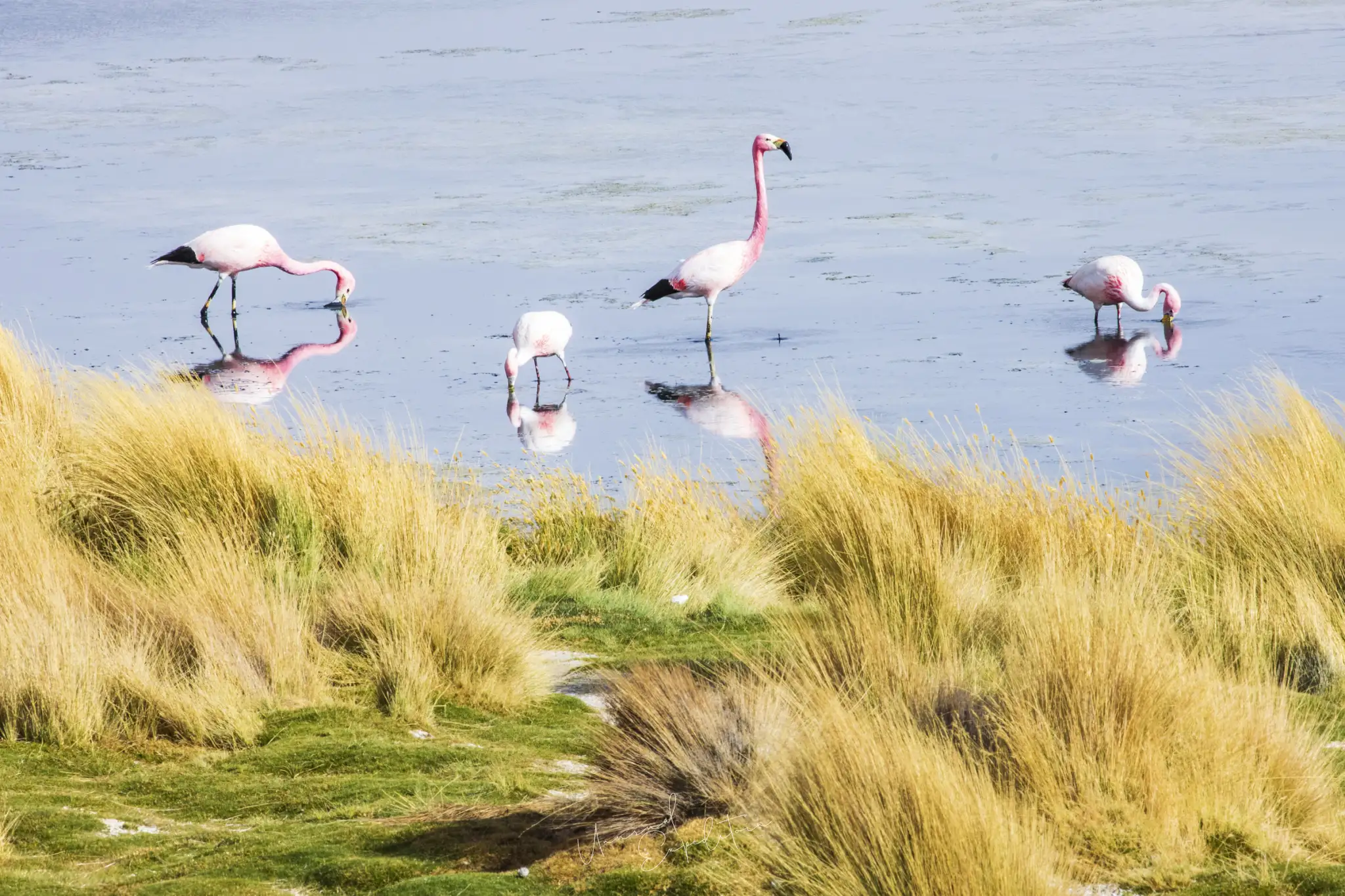
Where to see flamingos in Bolivia comes down to the lagoons of the Altiplano in the southwest, along the route between the Salar de Uyuni and the Chilean border. Several smaller lagoons before Laguna Colorada also hold flamingos, often closer to the track and in calmer water; some of our best close frames came from these, with tussock grass in the foreground. On the salt flat itself you see few birds, so a trip that stays only on the salt will usually miss them. The lagoons are high, between about 4,200 and 5,400 metres across the reserve, and reached only by four-wheel-drive. If flamingos are a priority, plan for time on the southern loop, not a single day on the salt.
The three species: Andean, Chilean and James's flamingo
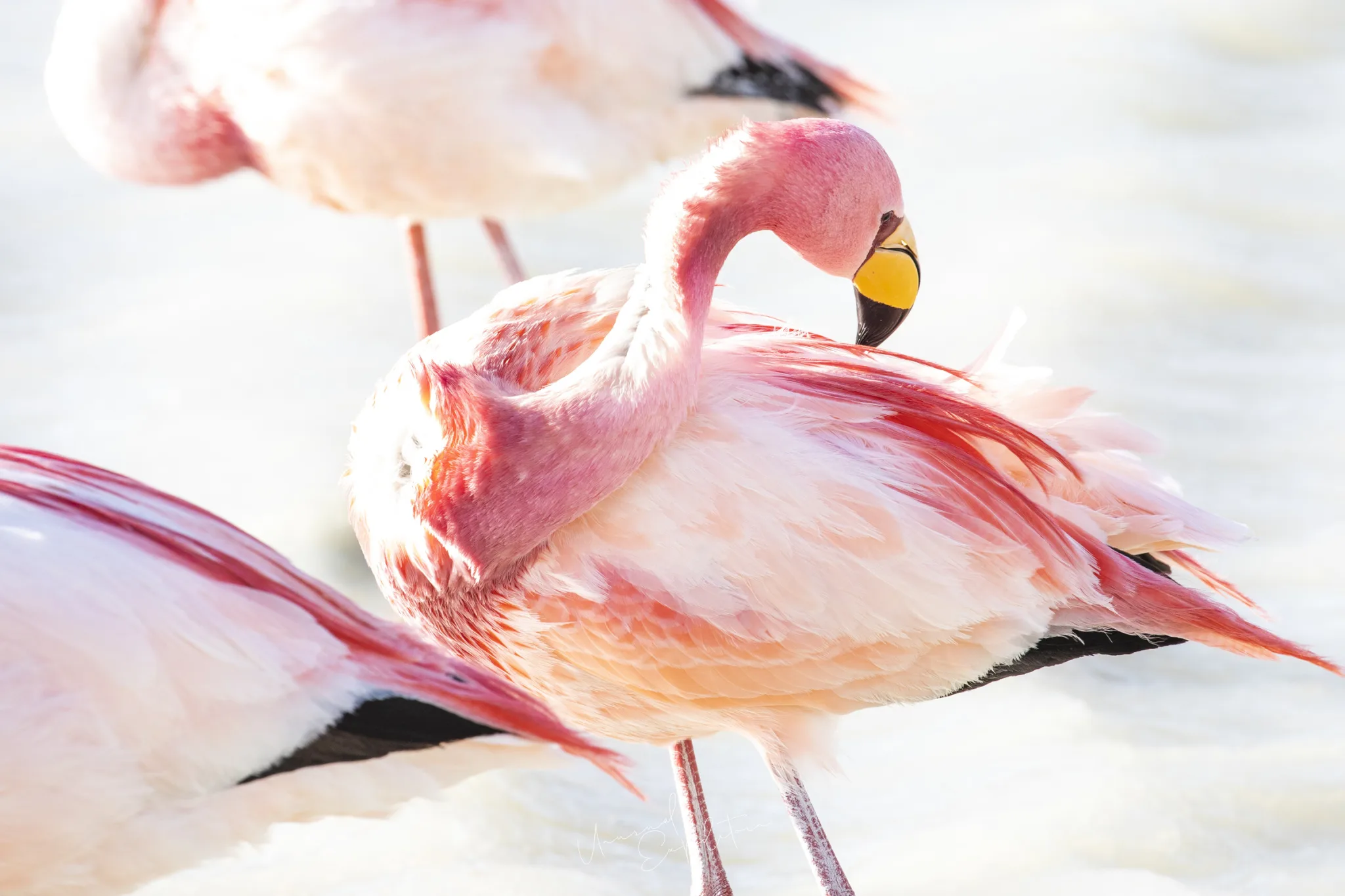
The lagoons of southwest Bolivia hold three flamingo species, and telling them apart makes better captions and better pictures. The James's flamingo, the smallest, has a short bright yellow bill tipped with black and dark red legs; most of the close birds we photographed were this species. The Andean flamingo is larger and paler, with yellow legs and a bill that is half yellow and half black, and a black rear that shows clearly when it walks. The Chilean flamingo is the pinkest at a distance, with grey-blue legs and pink knees. The Ramsar listing for Laguna Colorada names all three, and Britannica records that James's flamingo, long thought extinct, was rediscovered nesting at Laguna Colorada in the 1950s. A 100-400mm lens is the minimum for separating individual birds; a 1.4x converter helps.
Bolivia flamingos red lake: how to photograph the colour
The Bolivia flamingos red lake picture depends on the sun and the wind. In flat midday light from a high sun, the red water of Laguna Colorada can look dull and the birds turn to white specks. Earlier in the morning, with the sun lower and behind you, the water is calmer, the colour is deeper and the birds cast reflections. Later in the day the wind on the Altiplano usually picks up, the surface breaks into ripples and the lake can turn a stronger red, but reflections are gone. A polarising filter deepens the colour of the water; use it carefully, because at this altitude the sky can go almost black. Expose for the bright white of the borax shores and the pink of the birds, not for the water, or the highlights will burn out. For a frame that shows the size of the lake, include a strip of shore or the mountains behind.
"At the lagoons I put the long lens on and stop talking. The birds are working, heads down, and every so often one lifts its wings to settle. You only get that if you are already pointed at it, so pick a group and wait."
Joseph Mak, tour leader, Unusual Expedition
Laguna Colorada elevation and the cold
The Laguna Colorada elevation is about 4,278 metres in most references, and the reserve around it climbs well above that. The altitude matters for photographers in three ways. You will tire faster carrying a long lens, so keep walks short and slow. The cold is serious: nights well below freezing are normal through much of the year, and the wind on the open shore cuts through. And batteries drain quickly in the cold, so carry spares in an inside pocket. Most visitors reach Laguna Colorada after a few days at altitude on the salt, which helps. The full picture of acclimatising, visas and flights is in our guide to getting to Uyuni.
Flamingos on the Uyuni route: a quick comparison
| Place | What you see | Best light | Lens |
|---|---|---|---|
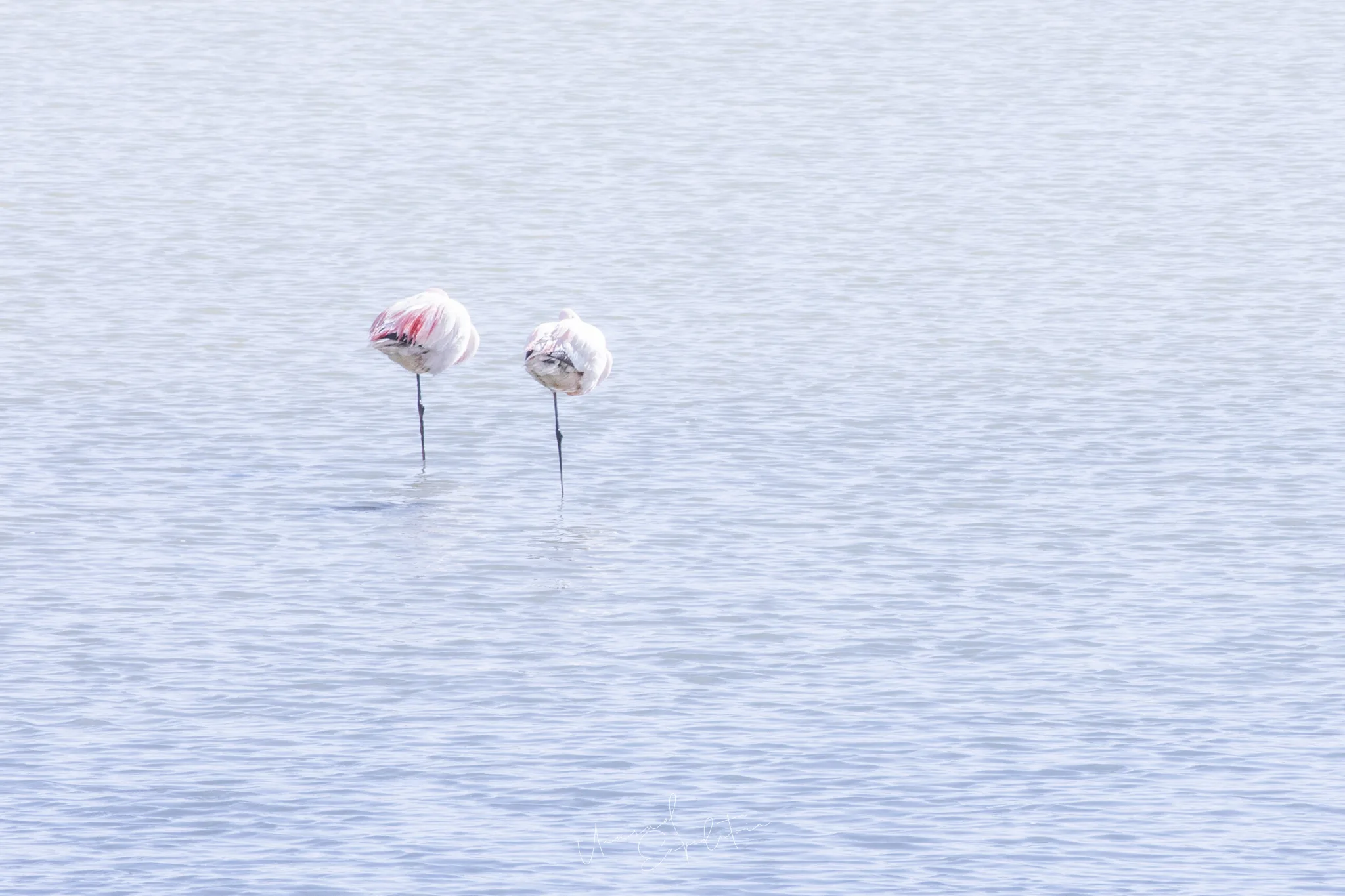
| Smaller lagoons south of the salt | Birds closer to the track, grass and still water | Morning | 100-400mm |
| Laguna Colorada | Large flocks on red water, borax shores | Morning, sun behind you | 24-70mm for the lake, 100-400mm for birds |
| Salar de Uyuni | Few birds | Not a flamingo site | None needed |
The lagoons before Laguna Colorada are where the frame-filling birds usually come from, so do not save all your time for the famous lake.
Combining flamingos with the salt and the geysers
Laguna Colorada sits between the two other great subjects of the area. North of it lies the Salar de Uyuni, with its hexagons and mirror; south and higher lies the Sol de Mañana geothermal field, best at sunrise when the steam is thickest. A trip that includes all three gives three different kinds of photography, from wide landscape to wildlife to backlit steam. See our Sol de Mañana geysers article for the geothermal field, and best time to visit Uyuni salt flats for which months keep the southern route open.
See the flamingos with us
We run the Uyuni salt flat and the southwest lagoons as a private trip on request, with time at the lagoons planned around the morning light. You set the pace; we handle the logistics. With no tour leader travelling, a private trip can cost less than a group tour, and a photographer or photography coaching can be added at extra cost. Ask us at least two months ahead if you can; shorter notice can be arranged. See private tours and our Bolivia photography tours page.
Uyuni photography tours
The next Uyuni departure is announced on the Uyuni photography tours page, with previous expeditions and all the planning guides.
Explore Uyuni in depth
- Uyuni Photography Tour: The Salt Flats, Lagoons and GeysersBolivia
- How to Get to Uyuni Salt Flats: Visa, Flights, Altitude and MoneyBolivia
- Is Uyuni Salt Flats Worth It? Isla Incahuasi and How to Get ThereBolivia
- Sol de Mañana Geysers: Photographing Bolivia's Highest Geothermal FieldBolivia
- Uyuni Sunset, Sunrise and Night Sky: Photographing the Salt Flats After DarkBolivia
- Best Time to Visit Uyuni Salt Flats: Mirror Season or Dry SeasonBolivia
- Uyuni Salt Flats Photos: Photo Ideas and Where to StandBolivia
Upcoming Photo Tours
- Egypt Photo Tour – EgyptEgypt 12 Dec 2026 To 20 Dec 2026
- Inner Mongolia Winter Owl Photo Tour – ChinaChina 01 Jan 2027 To 04 Jan 2027
- Inner Mongolia Winter Photo Tour – ChinaChina 05 Jan 2027 To 11 Jan 2027
- Mekong And Central Highland Vietnam Photo Tour - VietnamVietnam 16 Jan 2027 To 24 Jan 2027