
Best Time to Visit Uyuni Salt Flats: Mirror Season or Dry Season
Best time to visit Uyuni salt flats: the mirror season, the rainy and dry seasons, month by month, lagoons and geysers.
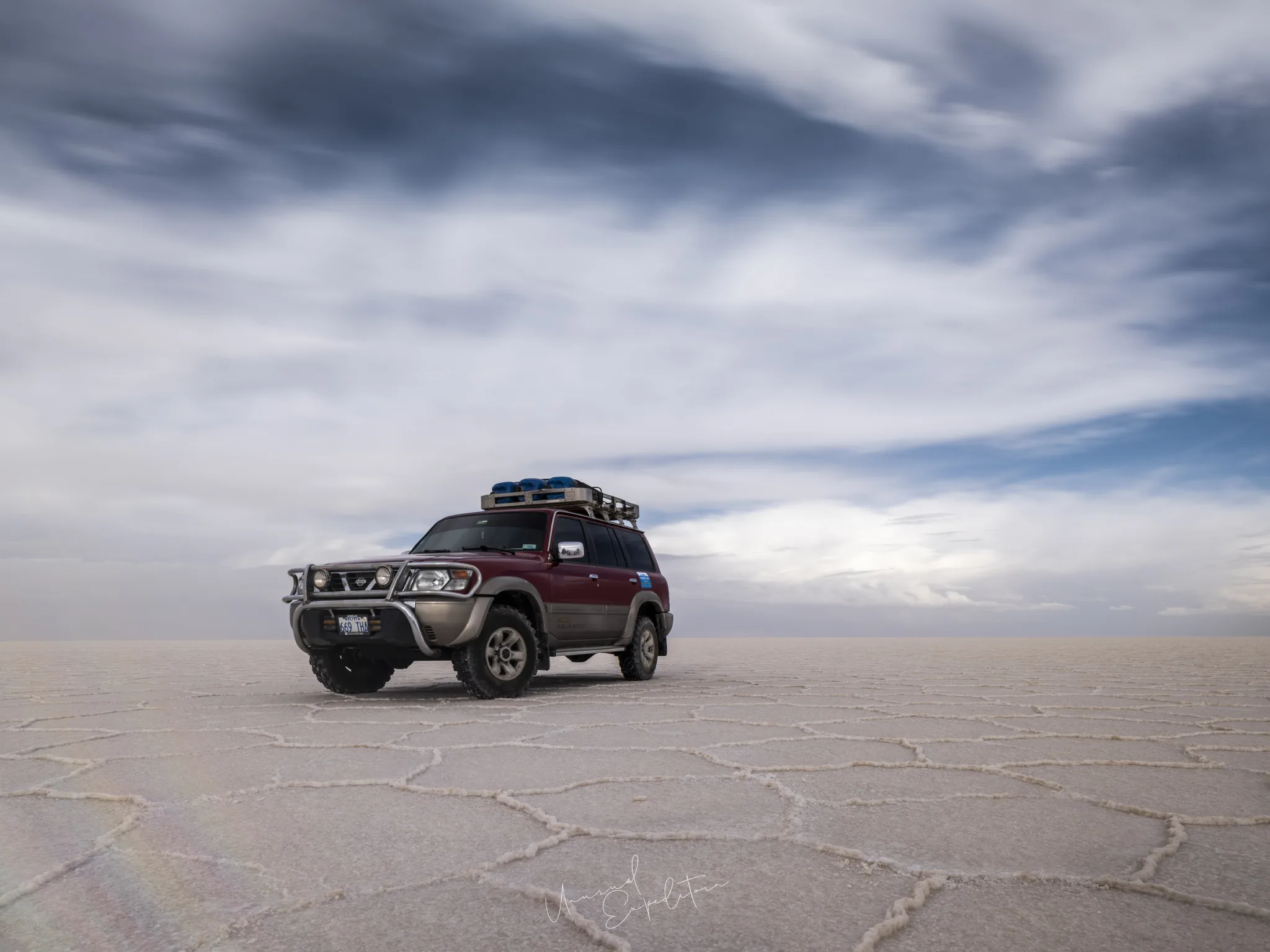
The best time to visit Uyuni salt flats depends on which picture you want. For the mirror, when rainwater lies on the salt and reflects the sky, go in the wet season, broadly December to April, with January to March the most reliable. For dry white crust, sharp hexagons, clear night skies and easy access to the lagoons further south, go in the dry season, roughly May to November. The shoulder months give a mix of both.
This page sits under our Uyuni photography tour guide, which introduces the salt, the lagoons and the geysers. Here we stay on seasons and light, month by month.
Best time to visit Uyuni salt flats: the two seasons
The Salar de Uyuni has two photographic seasons, and they are not variations of one trip. In the rainy months the salt carries a thin film of water across large areas, the famous reflection appears, clouds build over the Altiplano most afternoons and storms roll across the flat. In the dry months the water evaporates, the crust hardens into polygons, the sky is clear and deep blue, and the nights are bitterly cold and full of stars. Travel guides such as Jacada Travel and Wanderlust broadly agree on the split: the mirror from late December to around March or April, the dry crust from May to October or November. Our own trip on the salt fell right at the turn of the seasons, and our frames show both kinds of ground within a short drive of each other, which is also why the light was so changeable.
Uyuni mirror season and the Salar de Uyuni mirror effect
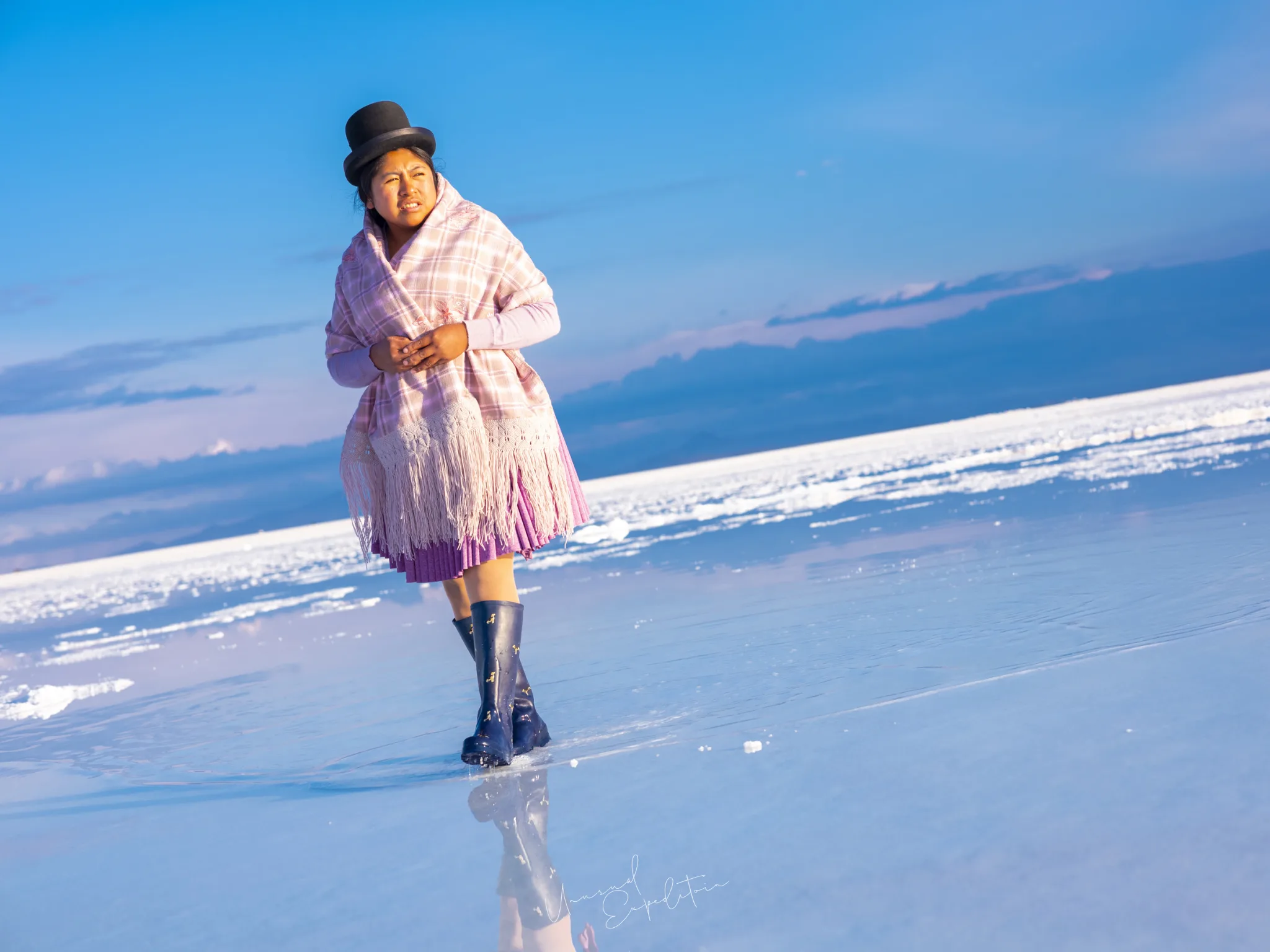
The Uyuni mirror season is the wet season, and the Salar de Uyuni mirror effect needs three things at once: water a few centimetres deep, a calm surface and an interesting sky. Too much water and the vehicles cannot drive out; too little and the reflection breaks into patches. Wind is the enemy, which is why the best reflections are often at dawn and in the last light, when the air settles. In the wettest weeks parts of the flat, Isla Incahuasi and some routes can be cut off, and longer circuits to the southern lagoons may change or close. If the mirror is the reason you are going, give yourself more than one evening and one morning on the salt, so that one windy or overcast session does not decide the trip.
Uyuni rainy season: what changes for photographers
The Uyuni rainy season changes more than the ground. Cloud is the big gain: towering afternoon cumulus and dark storm fronts make skies that the dry season never gives, and on wet salt you get them twice. The cost is uncertainty. Some days the sun never appears at the right moment, and heavy rain can make tracks impassable for a day or two. Gear needs more care too. Salt water dries into a crust on boots, tripod legs and lens barrels, so rinse everything with fresh water each evening and keep a dry cloth for the front element. We pack a 16-35mm and a 24-70mm for the reflections and a longer lens for figures far out on the water, where they read as a small upright shape against a doubled sky.
Uyuni dry season: hexagons, lagoons and stars
The Uyuni dry season is the time for the crust. Without water, the salt shows its polygon pattern at its clearest, and a low sun near the end of the day picks out every ridge. It is also the most practical season for the full southwest loop: the lagoons and Laguna Colorada, the Sol de Mañana geysers and the high desert roads to the Chilean border are generally open. Nights are clear and very cold at this altitude, which makes for the best Milky Way and star photography of the year. The trade is the sky: often cloudless, so the drama has to come from the ground, from twilight colour and from the stars. For a photographer who wants hexagons, flamingos and night skies on one trip, the dry season is the safer choice.
Best month to visit Uyuni salt flats: month by month
| Months | Salt surface | Sky and light | Best for |
|---|---|---|---|
| January to March | Water over large areas, mirror most likely | Big cloud, storms, changeable | Reflections, dramatic skies |
| April | Drying, mirror in patches | Clearing, calmer | Mirror patches and crust in one trip |
| May and June | Dry crust, hexagons forming | Clear, cold | Hexagons, lagoons, stars |
| July and August | Dry, hard crust | Clear, coldest nights, wind | Night sky, full southwest loop |
| September and October | Dry crust | Clear, windy afternoons | Hexagons, flamingos, geysers |
| November | Dry, first showers possible | Cloud returning | Crust with some sky interest |
| December | Rain begins, patchy water | Building cloud | Crust and early mirror patches |
Weather on the Altiplano does not follow the calendar exactly, so treat the edges of each band as soft.
"Our salt days fell when the first rain was arriving. We had cracked white crust in one place and a sheet of water a little further out, and a different sky every hour. If you can live with not knowing exactly what you will get, the turn of the seasons is a wonderful time to be there."
Joseph Mak, tour leader, Unusual Expedition
Best time to visit Uyuni for the lagoons and geysers
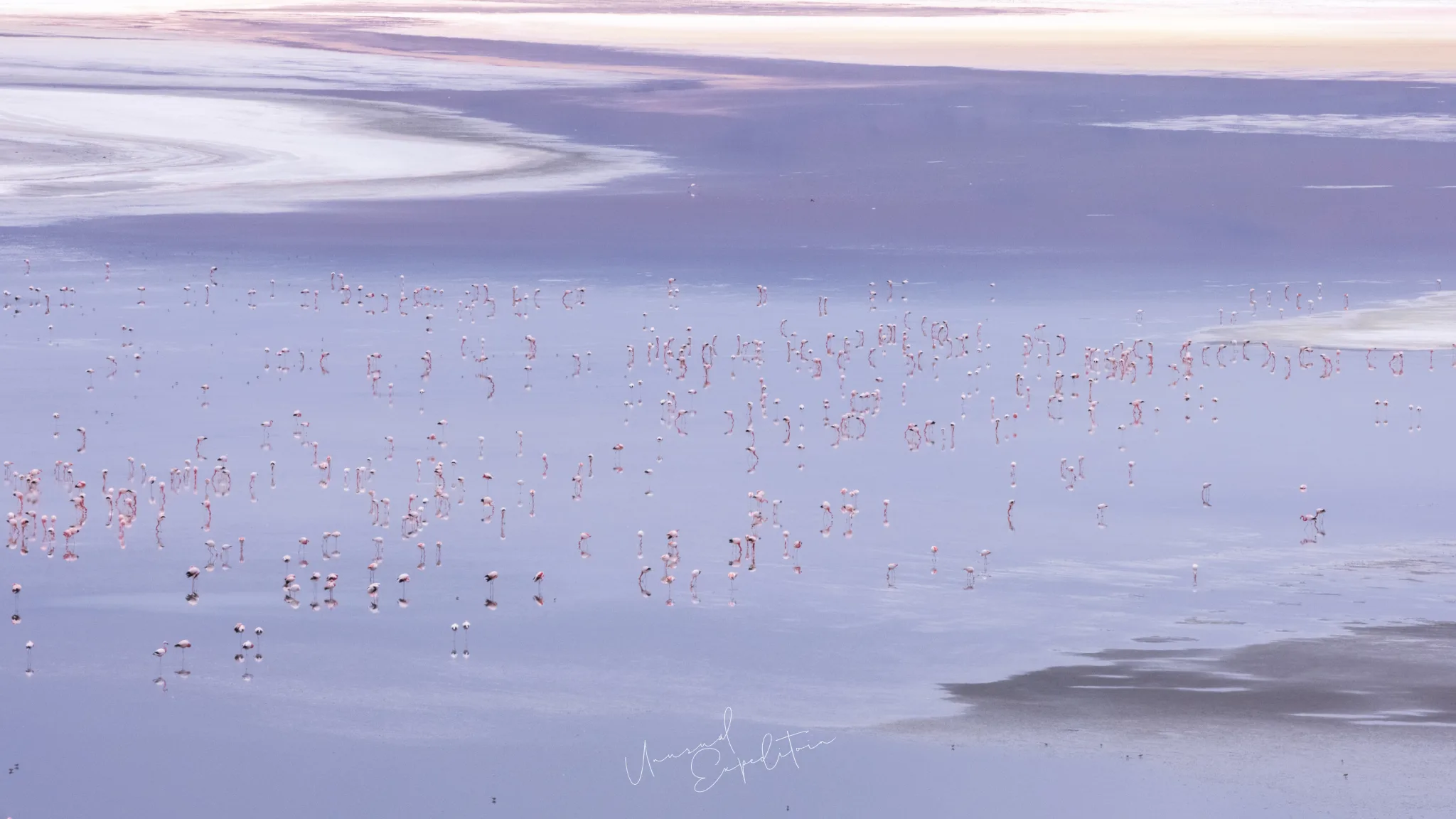
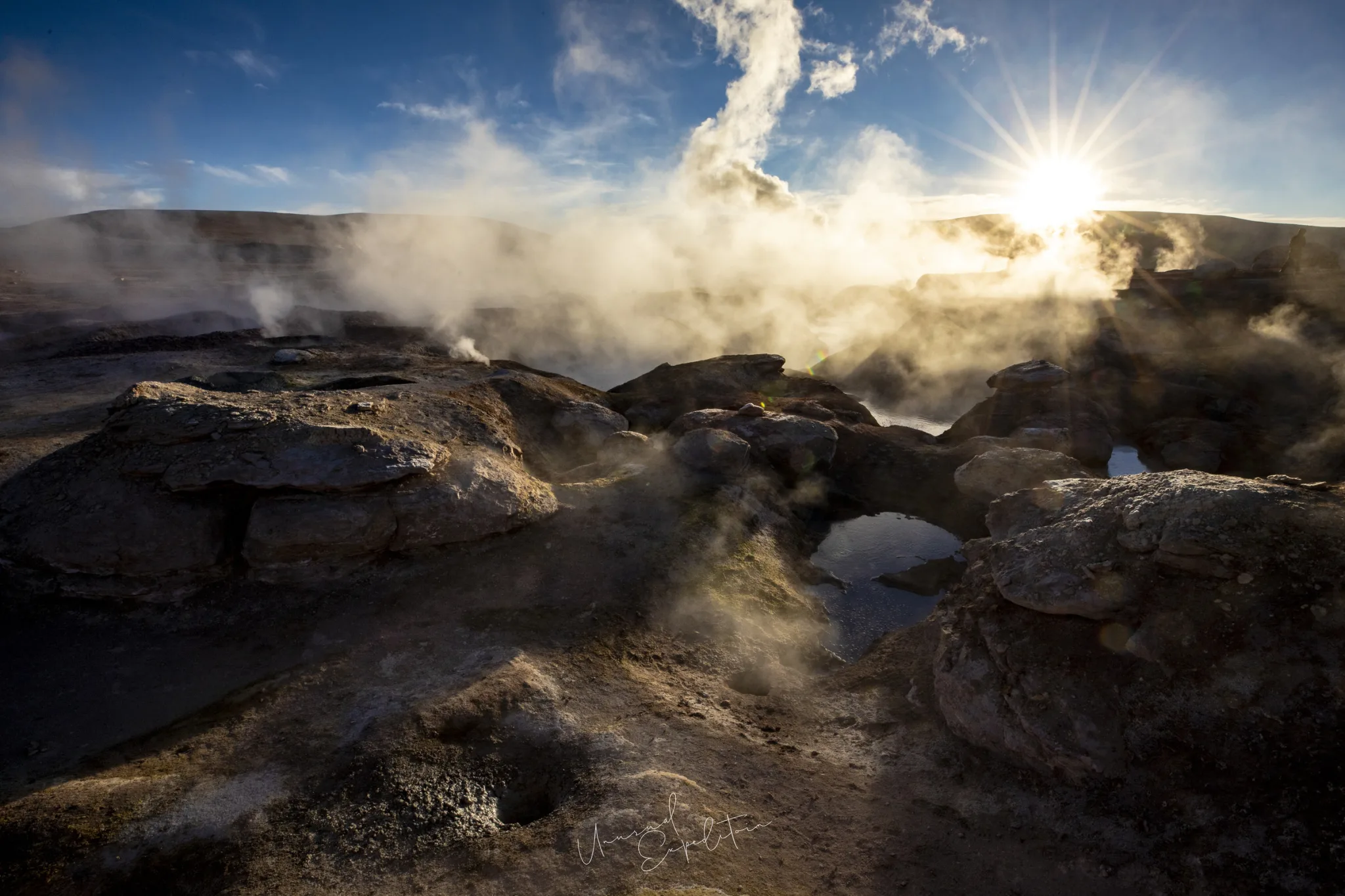
If the lagoons and geysers south of the salt matter as much as the salt itself, the dry months are the better bet. The road into the Eduardo Avaroa Andean Fauna National Reserve climbs past 4,000 metres, and Sol de Mañana sits at about 4,900 metres; snow or heavy rain can close these routes for a time in the wet season. Flamingos feed on the lagoons through much of the year, and the steam at Sol de Mañana is thickest on the coldest mornings, which the dry season has plenty of. The details are in our Laguna Colorada flamingos and Sol de Mañana geysers articles.
Bolivia salt flats best time to go if you are also visiting Peru or Chile
Many people add Uyuni to a trip through Peru or northern Chile. The seasons line up reasonably well: the Andean dry season that suits Machu Picchu and the Atacama is also the dry season on the salt, so a combined trip in the middle of the year favours hexagons, lagoons and stars over the mirror. If the reflection is the priority, accept wetter weather on the Peruvian side too. Altitude is the same question in every season; the guide to getting to Uyuni covers acclimatising, flights and visas, and our best time to visit Bolivia guide puts Uyuni alongside La Paz and Lake Titicaca.
Plan your Uyuni season with us
Tell us which picture you want, the mirror or the crust, and we will build a private Uyuni trip around the right weeks. Private tours run at your pace for individuals, couples, families and photographers, with every arrangement made for you; with no tour leader travelling, the cost can come in below our group tours, and a photographer or coaching can be added at extra cost. Two months' notice is ideal, though shorter can be arranged. See private tours and our Bolivia photography tours page.
Uyuni photography tours
The next Uyuni departure is announced on the Uyuni photography tours page, with previous expeditions and all the planning guides.
Explore Uyuni in depth
- Uyuni Photography Tour: The Salt Flats, Lagoons and GeysersBolivia
- How to Get to Uyuni Salt Flats: Visa, Flights, Altitude and MoneyBolivia
- Is Uyuni Salt Flats Worth It? Isla Incahuasi and How to Get ThereBolivia
- Sol de Mañana Geysers: Photographing Bolivia's Highest Geothermal FieldBolivia
- Laguna Colorada Flamingos: Where to See Flamingos in BoliviaBolivia
- Uyuni Sunset, Sunrise and Night Sky: Photographing the Salt Flats After DarkBolivia
- Uyuni Salt Flats Photos: Photo Ideas and Where to StandBolivia
Upcoming Photo Tours
- Egypt Photo Tour – EgyptEgypt 12 Dec 2026 To 20 Dec 2026
- Inner Mongolia Winter Owl Photo Tour – ChinaChina 01 Jan 2027 To 04 Jan 2027
- Inner Mongolia Winter Photo Tour – ChinaChina 05 Jan 2027 To 11 Jan 2027
- Mekong And Central Highland Vietnam Photo Tour - VietnamVietnam 16 Jan 2027 To 24 Jan 2027