
What to See in Lalibela with a Camera: Six Photo Spots Among the Rock Churches
What to see in Lalibela with a camera: the top view of Bete Giyorgis, church interiors, trenches, Timket and the escarpment.
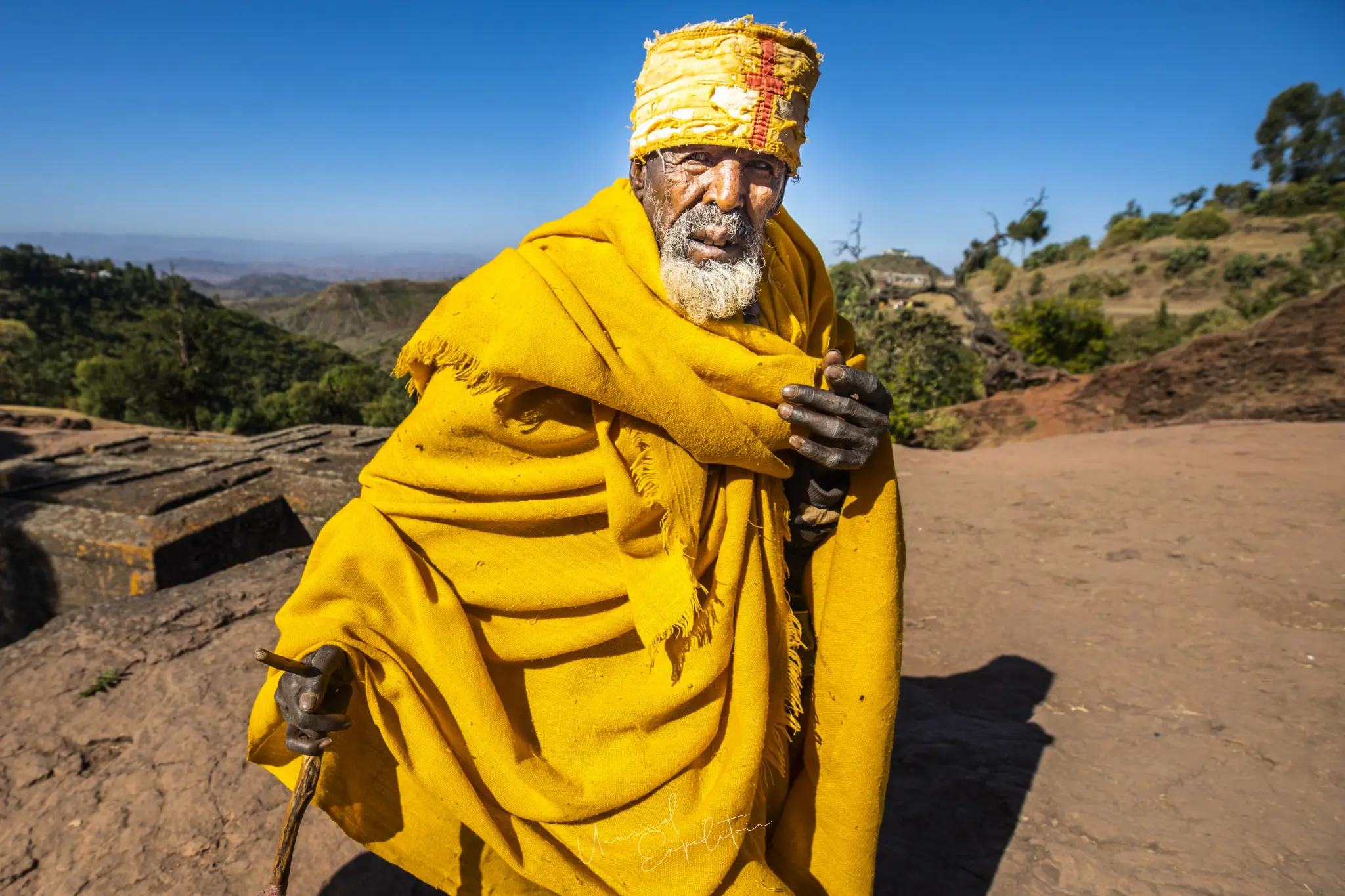
What to see in Lalibela with a camera comes down to six photo spots: the top view of Bete Giyorgis from the rim of its trench, the northern group of churches with Bete Medhane Alem, the church interiors where window light falls on priests and pilgrims, the trenches and passages between the churches, the Timket ground and procession route in January, and the edge of the escarpment above the Lasta mountains at sunset. Morning and late afternoon carry most of the work. This guide sits under our Lalibela photography tour guide.
The photographs here are our own, from our Timket trip to Lalibela, and we hold the rights to them.
What to see in Lalibela: photo spots at a glance
| Spot | Best light | Lens | Notes |
|---|---|---|---|
| Bete Giyorgis from the rim | Morning and late afternoon | 16-35mm, 24-70mm | The top view of the cross |
| Northern group | Morning | 16-35mm | Bete Medhane Alem, the largest |
| Church interiors | Midday, window light | 24-70mm | No flash, shoes off |
| Trenches and passages | Midday | 16-35mm | Light falling into the rock |
| Timket ground and procession | Early morning and mid-morning | 24-70mm, 70-200mm | Find a high bank early |
| Escarpment edge | Sunset | 24-70mm, 70-200mm | Layered Lasta mountains |
Lalibela is a working place of pilgrimage, and every spot on this list is also somebody's place of prayer.
Lalibela top view: Bete Giyorgis from the rim
Bete Giyorgis, the Church of St George, is the picture of Lalibela. UNESCO describes it as isolated from the other churches and connected to them by trenches, cut downwards into the rock in the plan of a cross. The top view from the rim of its trench is the frame everyone knows: the cross shaped roof sunk into the stone, with the green hills behind. In the morning the sun comes in low across the roof and shows the carved cross in relief; in late afternoon the trench walls glow. A 16-35mm from the rim takes in the whole church; a 24-70mm from a corner gives the cross on its own. The rim has no barrier in places, so watch your footing.
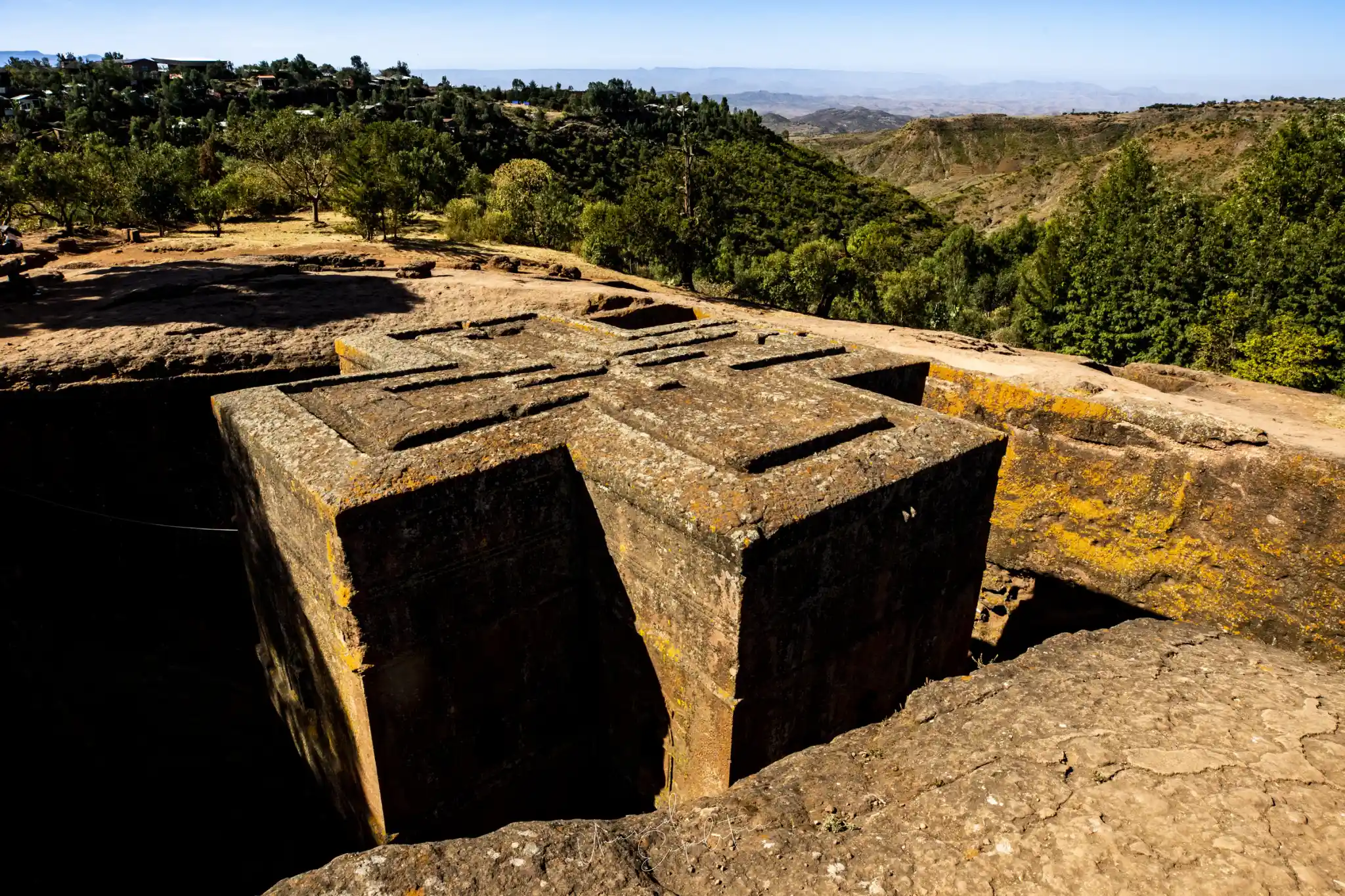
Our Church of St George Lalibela article covers the church in detail.
The northern group and Bete Medhane Alem
UNESCO lists eleven medieval monolithic churches at Lalibela, in two groups north and south of the channel known locally as the river Jordan, and inscribed them on the World Heritage List in 1978. In the northern group, Bete Medhane Alem with its five aisles is believed to be the largest monolithic church in the world. Several churches stand under temporary shelters, which UNESCO notes affect their appearance, so look for angles that keep the roofs out of frame or use them as part of the story. Morning light reaches into the courtyards before the sun is high.
Inside the churches
The interiors are dark, lit by small windows cut through the rock, and that light is the reason to go in. A shaft falls across a carpet, a priest sits reading by a window, and the rest of the church disappears into shadow. Expose for the light and let everything else go black; a 24-70mm at a wide aperture and a steady hand are enough. Take your shoes off at the door, do not use flash, and ask before photographing priests or pilgrims. Many priests will hold up a processional cross for a photograph and some expect a small offering.
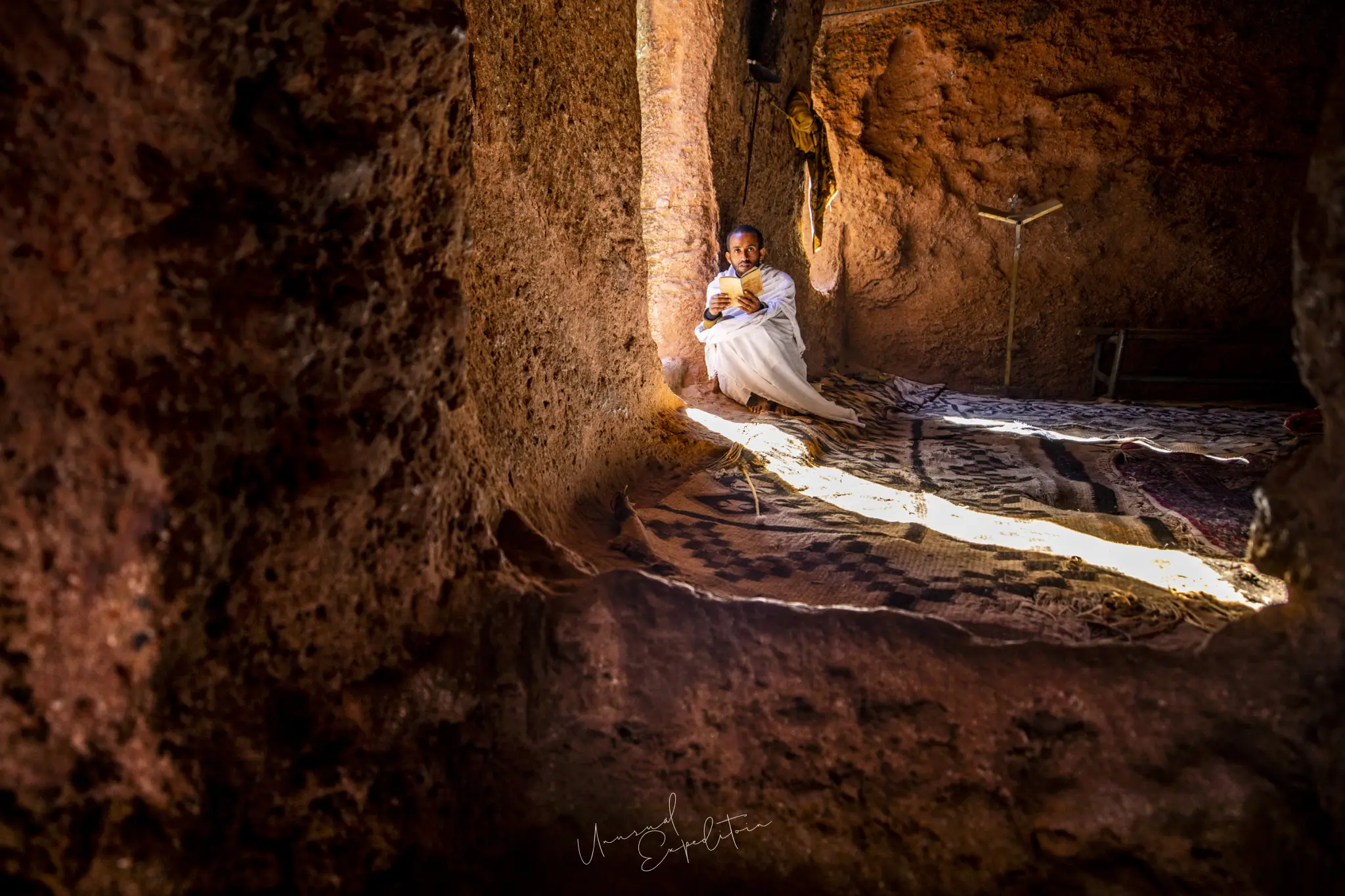
More interior frames in Lalibela church photos.
Trenches and passages between the churches
The churches are joined by trenches, tunnels and stairs cut through the rock, and these narrow passages give some of the most graphic pictures in Lalibela: a figure in white crossing a band of light at the bottom of a red stone wall. Midday puts light right down into the trenches. A 16-35mm used upright fits the height of the walls. Wait for a pilgrim to walk into the light rather than placing anyone.
The Timket ground and the procession route
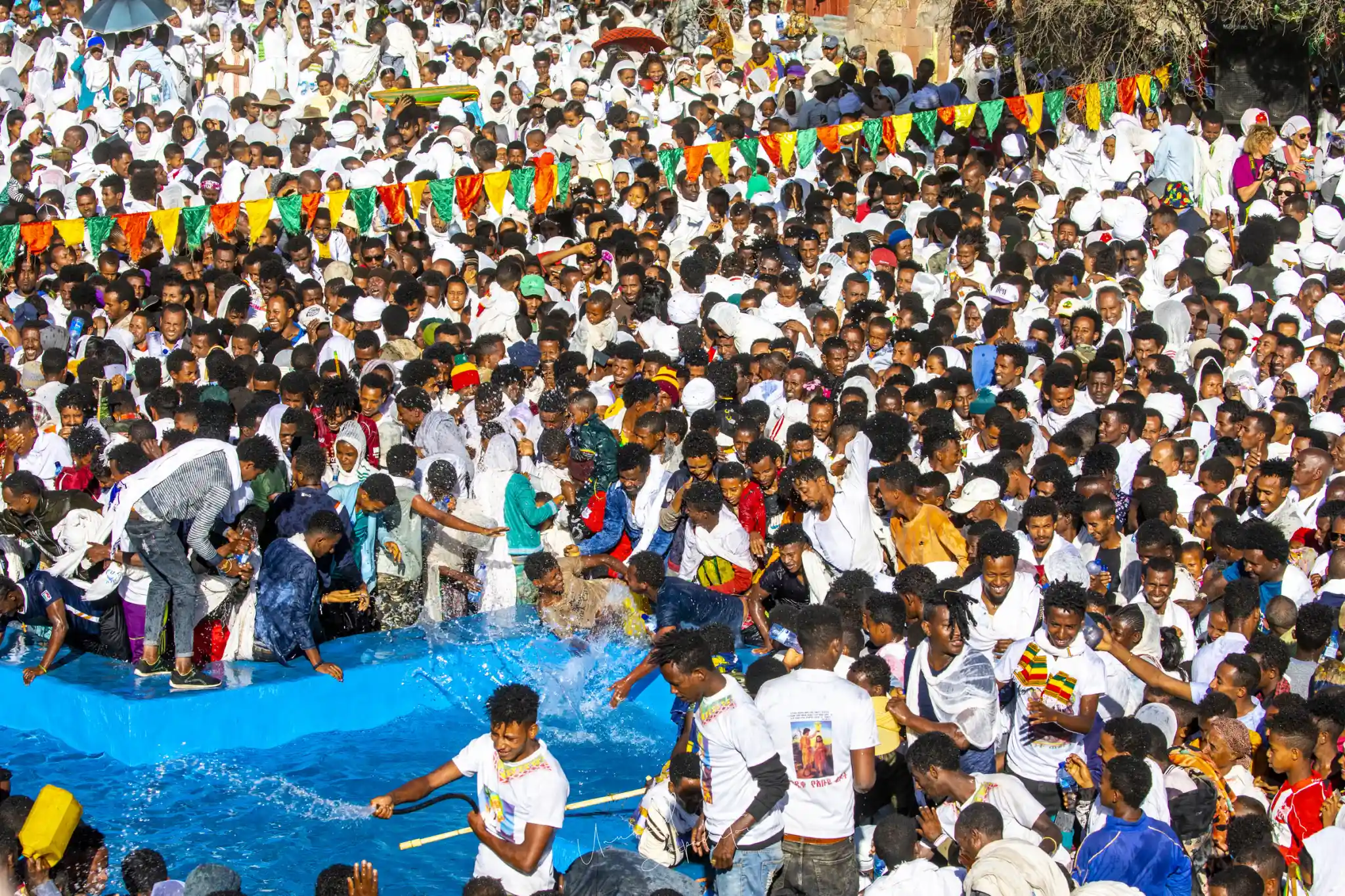
Timket, the Ethiopian Epiphany, is on UNESCO's list of intangible cultural heritage. In Lalibela the tabots are carried from the churches to a pool on an open field on the eve, 18 January, and return on the main day, 19 January (20 January in a leap year), in a procession of clergy under embroidered umbrellas, with crowds in white. The best photo spots are the banks and walls above the route and the slopes around the pool, where you can see over the crowd. Get there early to hold a high place, and use a 70-200mm to pick out faces and umbrellas.
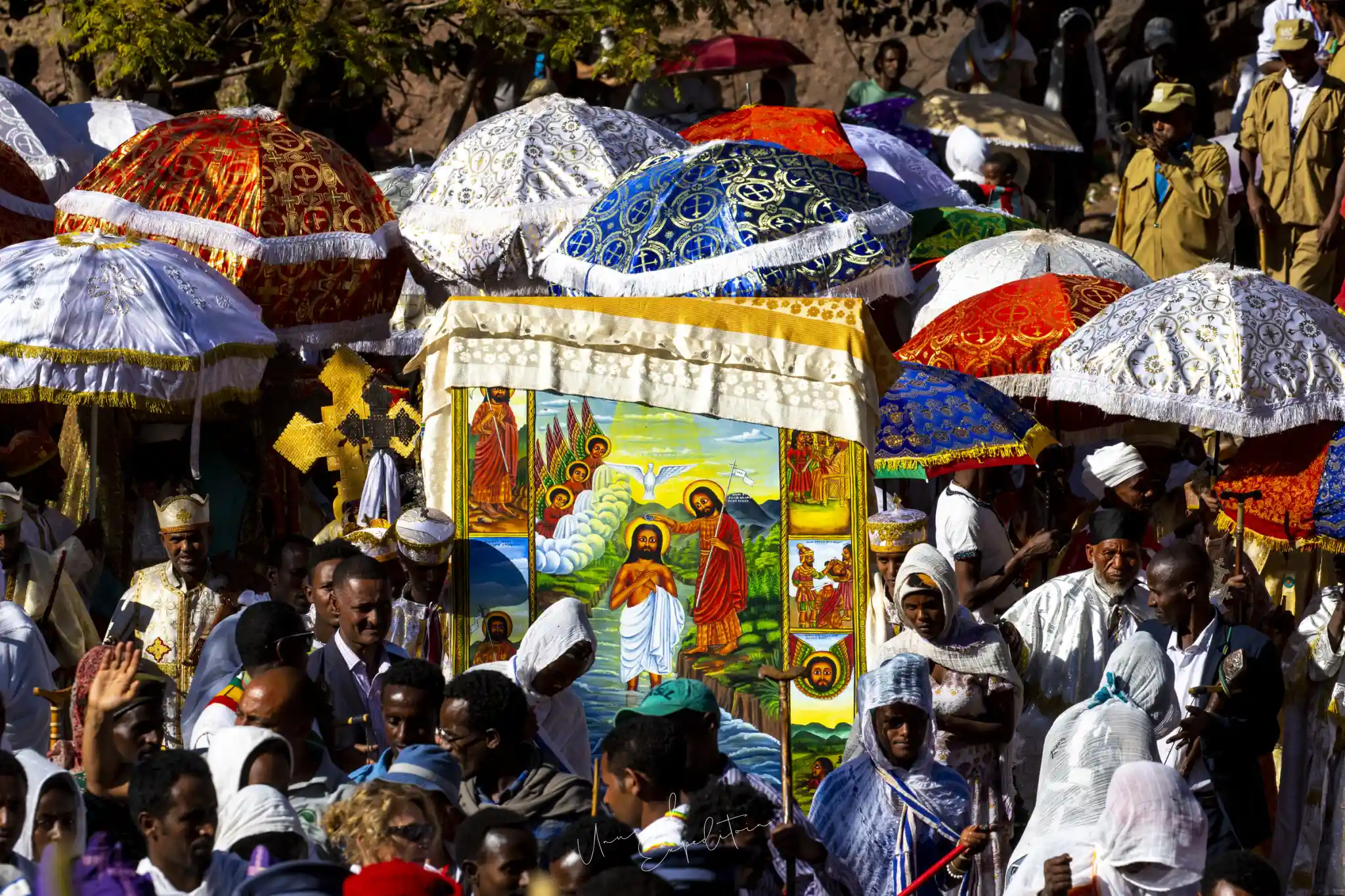
On the main day, after the water is blessed, people crowd round the pool to be splashed, which is the most energetic frame of the festival. Stand on the slope above the pool, not at its edge, unless you want a wet camera.
The festival has its own guide in Timkat festival Ethiopia.
The escarpment edge at sunset
Lalibela sits high on the Lasta mountains, and from the edge of town the ridges fall away in layers towards the west. At sunset the ranges turn blue and gold and a road winds down the escarpment below. A 70-200mm compresses the layers; a 24-70mm keeps the road in. The Lasta tukuls, two storey round stone houses that UNESCO mentions, stand on the slopes around the town and make good subjects on the walk out.
"Everyone wants the top view of Bete Giyorgis, and it is worth the wait. But I ask people to give the trenches and the dark interiors just as much time, because that is where Lalibela feels alive."
Joseph Mak, tour leader, Unusual Expedition
Before you go
At the time of writing the UK Foreign, Commonwealth and Development Office advises against all travel to the Amhara region, which includes Lalibela, and flights across the north can be suspended at short notice. We plan Lalibela only when the advice allows it. For timing across the year, see best time to visit Lalibela and the Lalibela photography FAQ.
Photograph Lalibela with us
We run Lalibela as a private trip on request, timed for Timket or for a quiet week among the churches, when travel advice allows. See private tours and the Ethiopia photography tours page.
Lalibela photography tours
The next Lalibela departure is announced on the Lalibela photography tours page, with previous expeditions and all the planning guides.
Explore Lalibela in depth
- Lalibela Photography Tour Guide: Rock-Hewn Churches and TimketEthiopia
- Timket Photos: Where to Stand and How to Shoot the FeastEthiopia
- Timkat Festival in Ethiopia: Ketera, the Water and the TabotsEthiopia
- Lalibela Photography FAQ: Airport, Tickets, Dress and SafetyEthiopia
- Lalibela Church Photos: Inside the Rock-Hewn ChurchesEthiopia
- Ethiopian Orthodox Priests in Lalibela: Vestments, Crosses, PortraitsEthiopia
- Church of St George, Lalibela: Photographing Bete GiyorgisEthiopia
- Lalibela Weather and the Best Time to Visit LalibelaEthiopia
Upcoming Photo Tours
- Egypt Photo Tour – EgyptEgypt 12 Dec 2026 To 20 Dec 2026
- Inner Mongolia Winter Owl Photo Tour – ChinaChina 01 Jan 2027 To 04 Jan 2027
- Inner Mongolia Winter Photo Tour – ChinaChina 05 Jan 2027 To 11 Jan 2027
- Mekong And Central Highland Vietnam Photo Tour - VietnamVietnam 16 Jan 2027 To 24 Jan 2027