
Ndutu Plains Photo Spots: Where to Stand Around Lake Ndutu
Ndutu plains photo spots: Lake Ndutu and Lake Masek shores, the acacia woodland, the calving plains and the marshes.
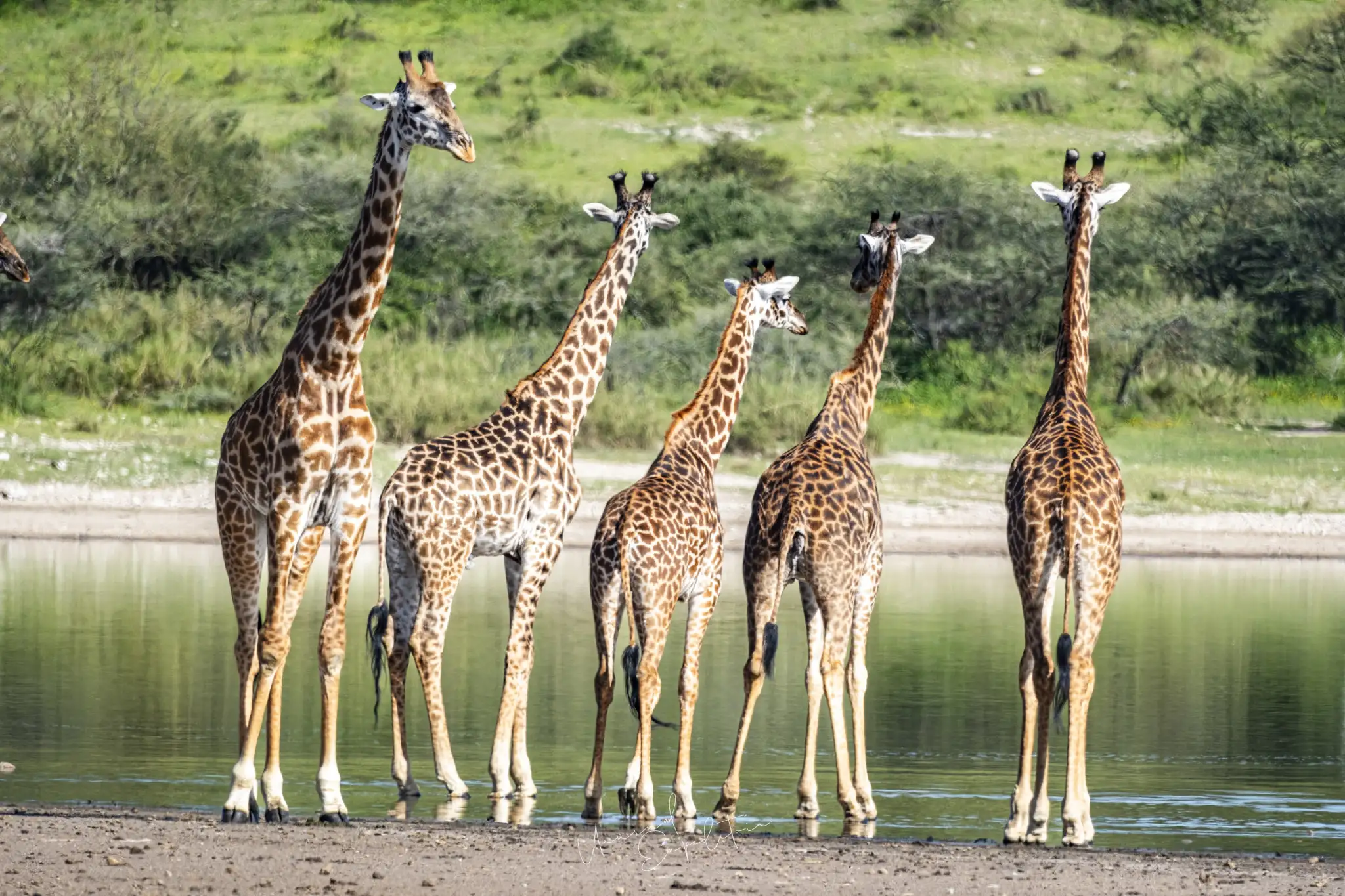
The best photo spots on the Ndutu plains are the shore of Lake Ndutu, the shore of Lake Masek, the acacia woodland that rings both lakes, the open short-grass plains where the herds calve, and the marshy hollows where predators wait for them. Ndutu sits in the northern Ngorongoro Conservation Area, where it meets the southern Serengeti, and in the calving months, broadly late January to March, every one of these places can fill a day. Which one wins depends on where the herds are that week.
The spots belong to our Ndutu photography tour guide, which covers the season, the animals and how a trip is run. Here we take the places one by one: where to stand, which way the light falls, the lens and the crowds. The photographs are our own, from our green-season trip to the Ndutu area.
Ndutu plains photo spots: how the area works
Ndutu is not a national park, and that changes how spots work. The area is managed by the Ngorongoro Conservation Area Authority (NCAA), whose published regulations say to keep to authorised roads and tracks and allow no more than five vehicles around an animal or a kill. Operators describe guides driving off-road around Ndutu, so the rule in practice is something to ask about before you go; we follow the ranger. Either way, a spot here is a place the herds and the predators come to, and you move with them. Carry a 100-400mm or 200-400mm for the animals, a 70-200mm for animals in their landscape, and a 24-70mm for skies, lakes and the camp at dusk.
Lake Ndutu shore
Lake Ndutu is a shallow soda lake with acacia woodland on one side and open grass on the other, and its shore is the most varied spot in the area. Giraffes walk down to the edge, flamingos and waders feed in the shallows when the water suits them, and herds cross the grass along the shore. The light is best early and late, when the lake reflects the sky and the animals on the shore stand out against it. Keep low, include the water line, and let the reflection do the work. The giraffes on our card walked along the water line, and a 70-200mm kept the whole group and the shore in one frame. More on both lakes is in our guide to Lake Ndutu and Lake Masek.
Lake Masek
Lake Masek lies close to Lake Ndutu and is also alkaline; the NCAA describes both as shallow basins too saline to drink. In calving season the herds often gather on the grass near its shore, and the herd updates safari operators publish name Lake Masek as often as Ndutu itself. Flamingos come and go with the water level, so treat them as a bonus. The best pictures here are often wide: lines of wildebeest along the shore with a pale lake behind. Shoot with the sun to the side, a 24-70mm for the scene and a long lens when a flock lifts off.
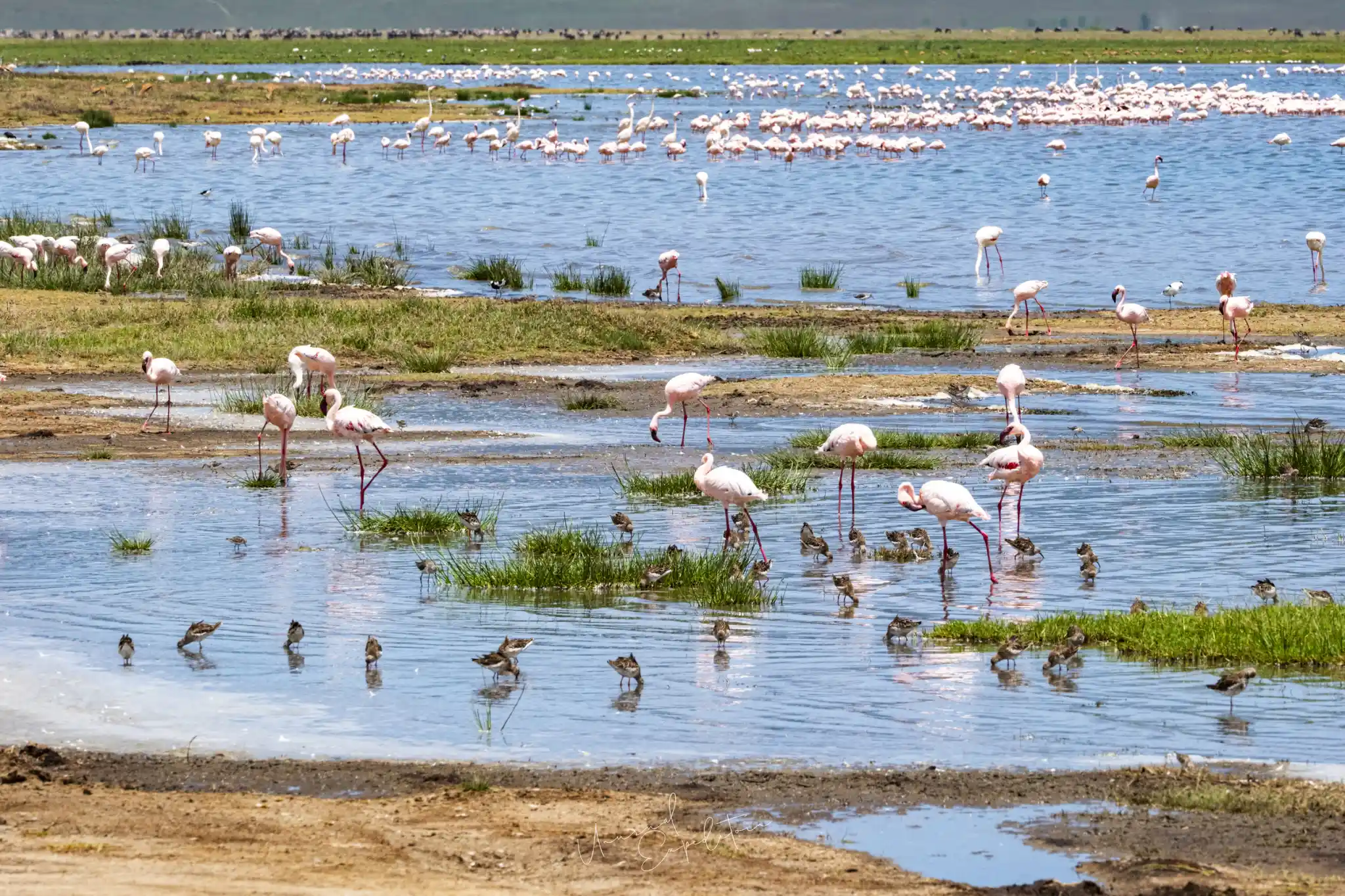
The acacia woodland around the lakes
The woodland that rings Lake Ndutu and Lake Masek is where the resident animals stay when the herds move on: giraffes, elephants, and cats resting in the shade. A leopard or a cheetah may lie up in an acacia, and lions use the shade at midday. The light under the trees is broken, so look for an animal in an opening, or wait for the low sun of the late afternoon to reach under the canopy. A long lens and a fast shutter, because branches and leaves move. Many camps sit in or beside the woodland, which makes it the easiest place for a short drive at first light.
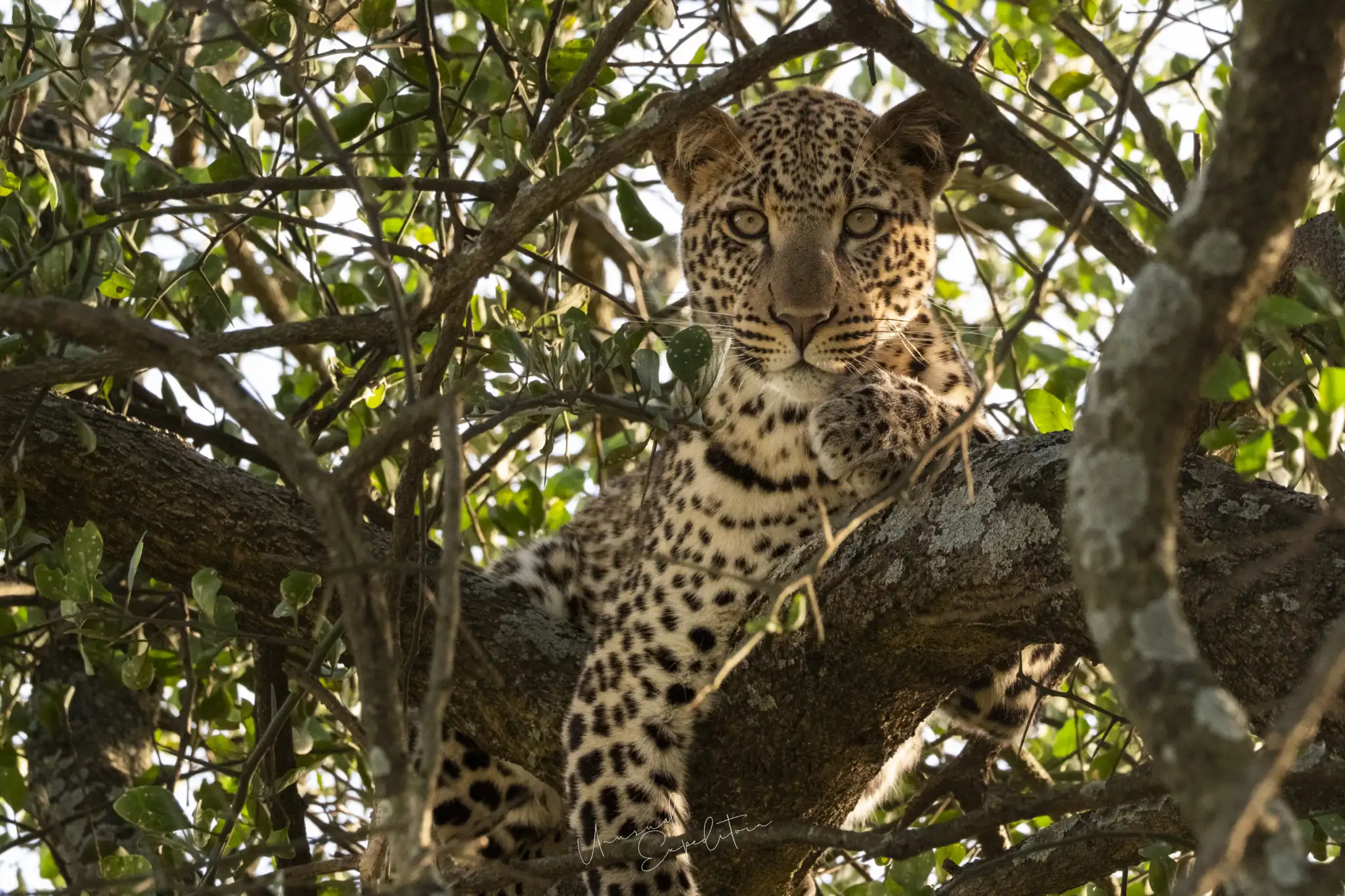
"At Ndutu I never plan a spot the night before. We ask where the herds slept, drive there at first light, and stay. The calves, the cats and the drama all follow the herd, and the lake and the woodland are there when the herd is too far."
Joseph Mak, tour leader, Unusual Expedition
The short-grass plains where the herds calve
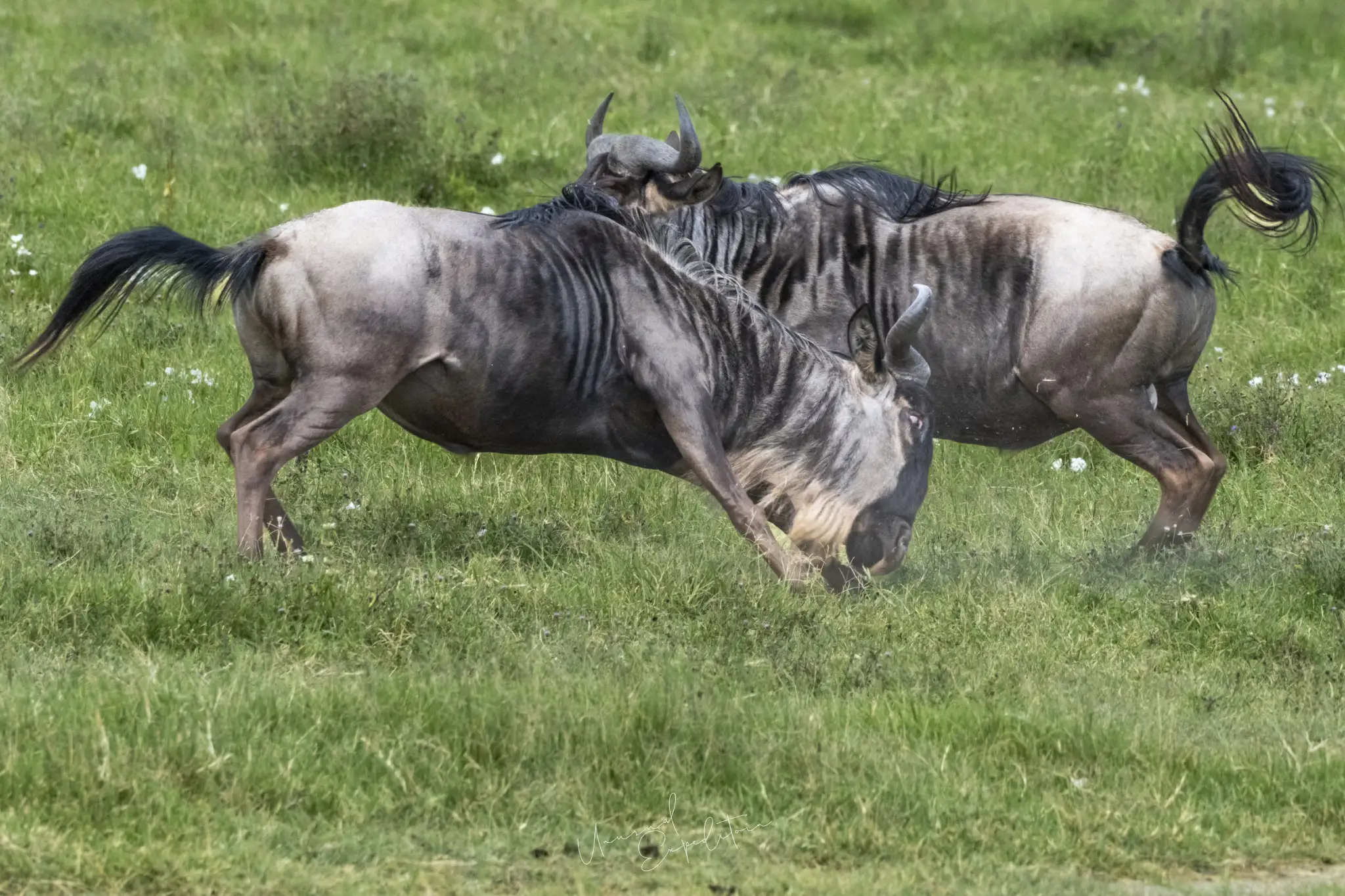
The open plains around Ndutu, running into the southern Serengeti, are where the wildebeest come to give birth. The Tanzania Daily News put it at over half a million calves born between late January and March, with as many as 9,000 newborns arriving in a single day, and NASA's Earth Observatory describes thousands of calves each February. On the plains you photograph the herd as a landscape, the newborns on wobbly legs, and the fights and chases that follow. The sky is huge in the green season, with storm clouds building in the afternoon. A 24-70mm for the herd under the sky, a 100-400mm for a calf and its mother. Our Ndutu calving season guide covers the season and the timing. For what the plains look like through the year, see our Ndutu plains photos.
The marshes and hollows
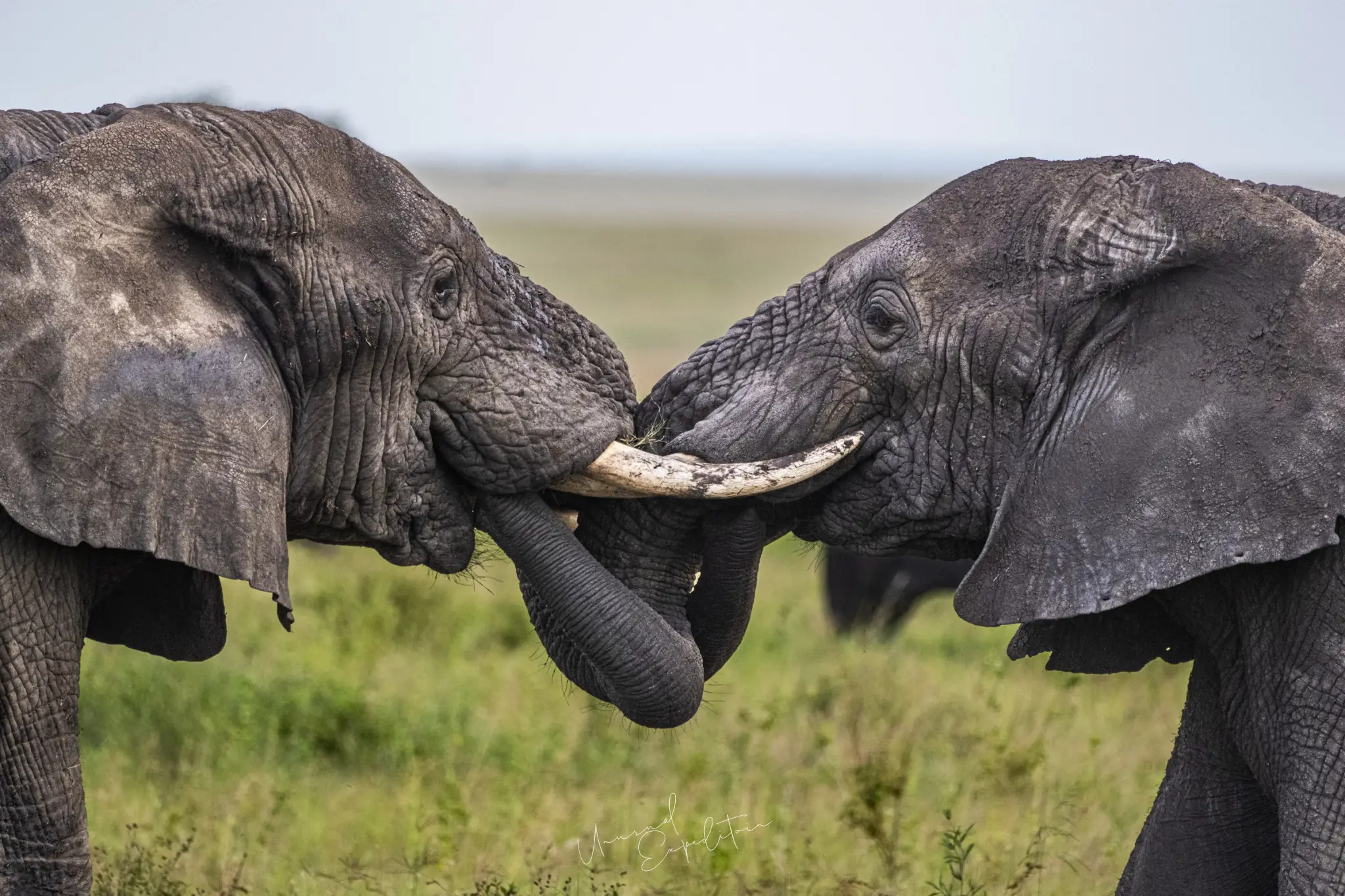
Between the lakes and the plains lie wetter hollows and marshes, which guides often call the Big Marsh and the Small Marsh. They stay green, hold water after rain, and draw herds, elephants and buffalo, and with them lions and hyenas. These are good places to wait in the morning, with the sun behind you as the animals come to drink and graze. The ground can be soft after rain, so your guide will decide how close you get. A 100-400mm covers the animals; keep the 24-70mm ready for elephants passing close to the vehicle.
Toward Kakesio and the Serengeti boundary
In some weeks the herds move away from the lakes, toward the Kakesio side or north onto the Serengeti short-grass plains, and operators report the herds at Ndutu, Lake Masek and Kakesio in turn. Going after them means longer drives and, across the boundary, Serengeti National Park fees and rules. The reward is the same picture with fewer vehicles. Ask your camp where the herds were the day before, and be ready to change plan.
Which Ndutu spot for which picture
| Spot | Main subjects | Best light | Lens | Crowds |
|---|---|---|---|---|
| Lake Ndutu shore | Giraffes, flamingos, reflections | Early and late | 70-200mm, 24-70mm | Medium |
| Lake Masek | Herds on the shore, flamingos | Sun to the side | 24-70mm, 100-400mm | Low to medium |
| Acacia woodland | Cats in trees, giraffes, elephants | Late afternoon | 100-400mm | Medium at a sighting |
| Short-grass plains | Calving herds, chases, sky | Morning, storms in the afternoon | 24-70mm, 100-400mm | High near a kill |
| Marshes and hollows | Elephants, buffalo, lions | Morning | 100-400mm | Medium |
The lakes and the woodland are the steady spots; the plains and the marshes are where the season happens.
Photograph Ndutu with us
We run Ndutu in the calving season as a private photography trip on request, timed to where the herds are. See the Tanzania photography tours page for every destination guide and how to ask us, and our Ndutu cheetah guide for the cats of the season.
Join the Ndutu photography tour
Serengeti Photo Tour – Tanzania 2027 departs 21 Aug 2027 To 01 Sep 2027. Small group, photography first. All Ndutu photography tours.
Explore Ndutu in depth
- Ndutu Photography Tour: Calving Season in Tanzania's Southern PlainsTanzania
- Serengeti in February: Weather, Light and Wildlife in Calving SeasonTanzania
- Ndutu Safari FAQ: Getting There, Fees, Rules and GearTanzania
- Ndutu Plains Photos: What the Calving Grounds Look LikeTanzania
- Cheetahs of Ndutu: Photographing the Southern Serengeti's CheetahsTanzania
- Ndutu Calving Season: When and Where the Wildebeest Give BirthTanzania
- Lake Ndutu and Lake Masek: Soda Lakes, Flamingos and WoodlandTanzania
- Baby Wildebeest and the Other Newborns of NdutuTanzania
Upcoming Photo Tours
- Egypt Photo Tour – EgyptEgypt 12 Dec 2026 To 20 Dec 2026
- Inner Mongolia Winter Owl Photo Tour – ChinaChina 01 Jan 2027 To 04 Jan 2027
- Inner Mongolia Winter Photo Tour – ChinaChina 05 Jan 2027 To 11 Jan 2027
- Mekong And Central Highland Vietnam Photo Tour - VietnamVietnam 16 Jan 2027 To 24 Jan 2027