
Papua New Guinea Bird Watching: Parrots, Kingfishers and Honeyeaters of the Highlands
Papua New Guinea bird watching in the Highlands: Pesquet's parrot, the national bird, cockatoos, kingfishers, honeyeaters and lenses.
Papua New Guinea bird watching means mornings in the montane forest of the Highlands with a local bird guide, looking for parrots, kingfishers, honeyeaters, cockatoos and birds-of-paradise among roughly 740 species, more than a hundred of them found nowhere else. BirdLife International lists 112 birds endemic to the country. For photographers the best chances come at fruiting trees, forest edges and lodge feeders, with a 100-400mm or a 500mm lens and patience.
The birds-of-paradise have their own article, birds of paradise Papua New Guinea. This one is about everything else that sat in front of our lenses in the Highlands, part of our Papua New Guinea Highlands photography guide.
Native birds of Papua New Guinea: what to expect
The native birds of Papua New Guinea are a mix of families shared with Australia and families that reach their greatest variety on New Guinea: parrots and lorikeets, kingfishers and kookaburras, honeyeaters, pigeons, bowerbirds and birds-of-paradise. BirdLife International's country profile counts about 741 species for Papua New Guinea, including 112 endemics, and the island as a whole holds roughly half of all the birds that live on it, according to WWF. Many endemics live only in the mountains, which is why bird photographers base themselves in the Highlands and not on the coast. The central ranges add cool mornings, mist in the trees and a forest that is dense, tall and dark: wonderful birds, difficult light.
Papua New Guinea parrots: Pesquet's parrot and the lories
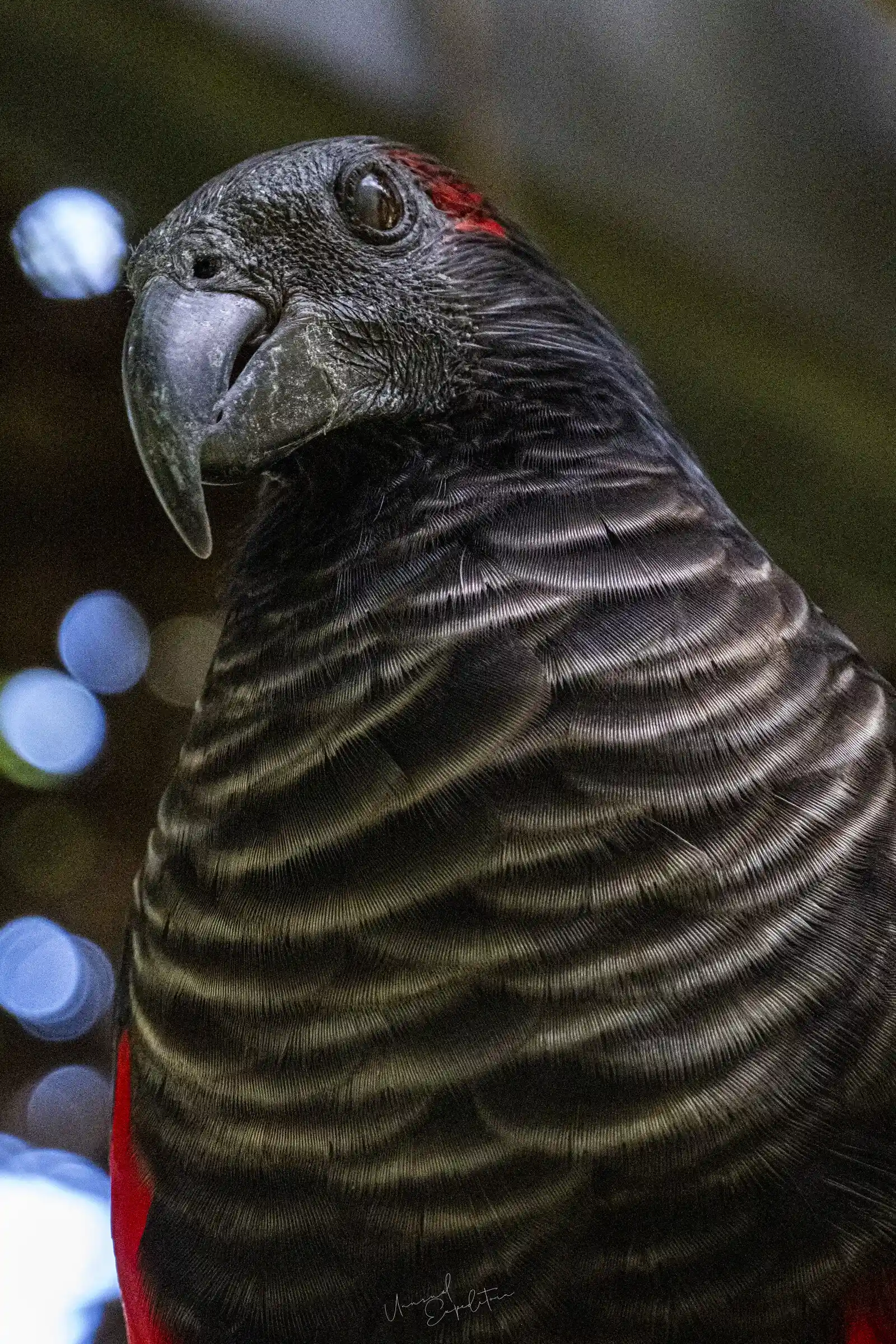
Papua New Guinea parrots range from tiny fig-parrots to Pesquet's parrot, a large black and scarlet bird with a bare, almost vulture-like face. Pesquet's parrot feeds on a handful of fig species, and BirdLife International lists it as Vulnerable because it is hunted for its feathers. The Wildlife Conservation Society in Papua New Guinea reports that the red feathers form the surface of ceremonial headbands in the Highlands, and that there may be more Pesquet's parrots in headdresses than alive in the wild. Photographing one quietly feeding is a privilege. Lories are the easier subject: small, loud, bright red and green birds that come to flowering trees and feeders, and our Papua New Guinea photography tour guide opens with one.
What is the national bird of Papua New Guinea?
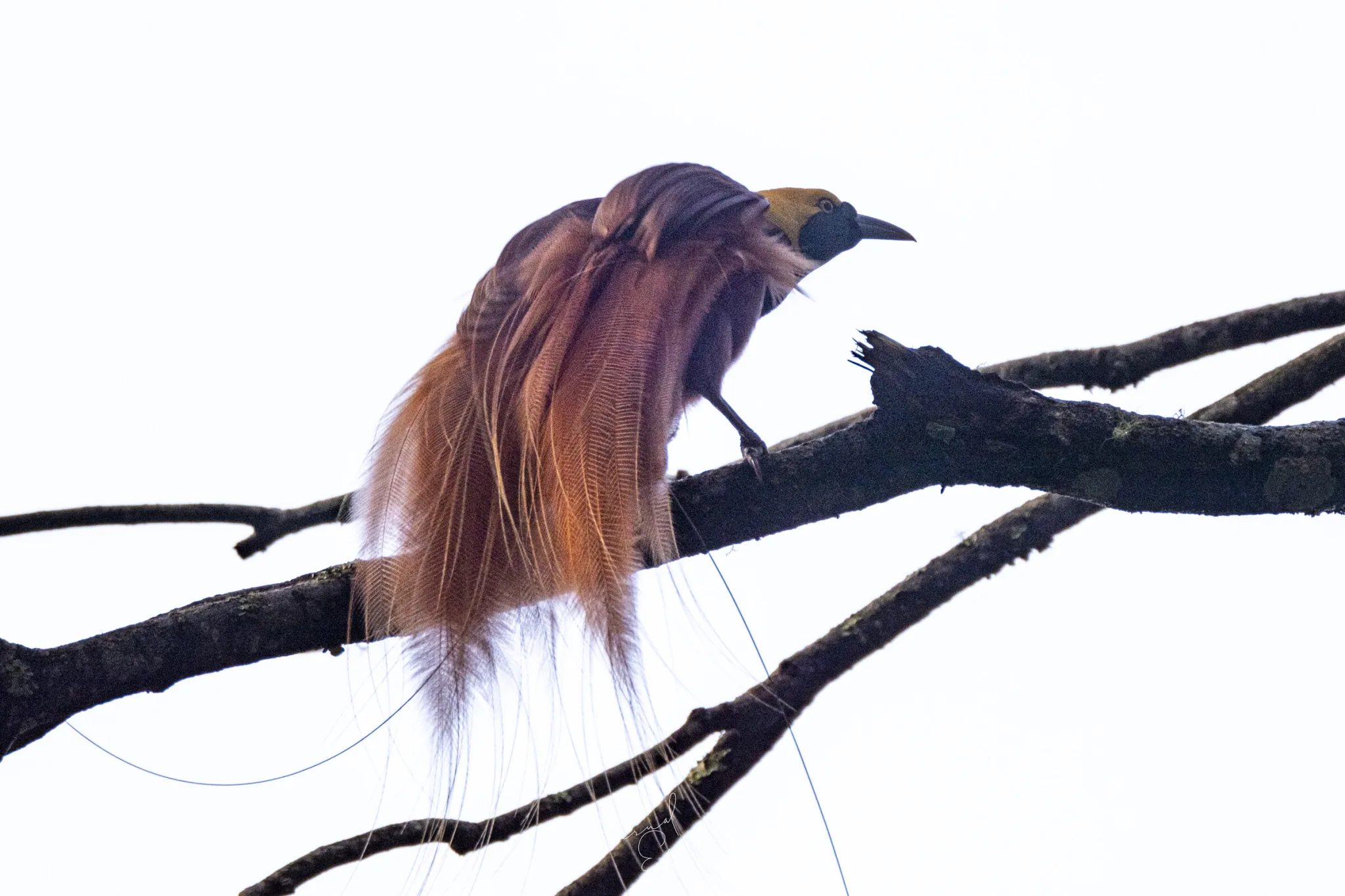
The national bird of Papua New Guinea is the Raggiana bird-of-paradise. It became the national emblem in 1971 and flies in yellow across the red half of the national flag, and it also sits on the coat of arms above a spear and a kundu drum. The male has a yellow crown, an emerald throat and long cascades of red-orange flank plumes, which he raises and shakes in a display tree at dawn. The Raggiana is widespread and common in the forests of eastern New Guinea, so it is one of the birds-of-paradise most visitors see, often high in the canopy against a pale sky. Expose for the plumes, not the sky, and accept that many frames will be backlit.
Papua New Guinea cockatoo and the bigger birds
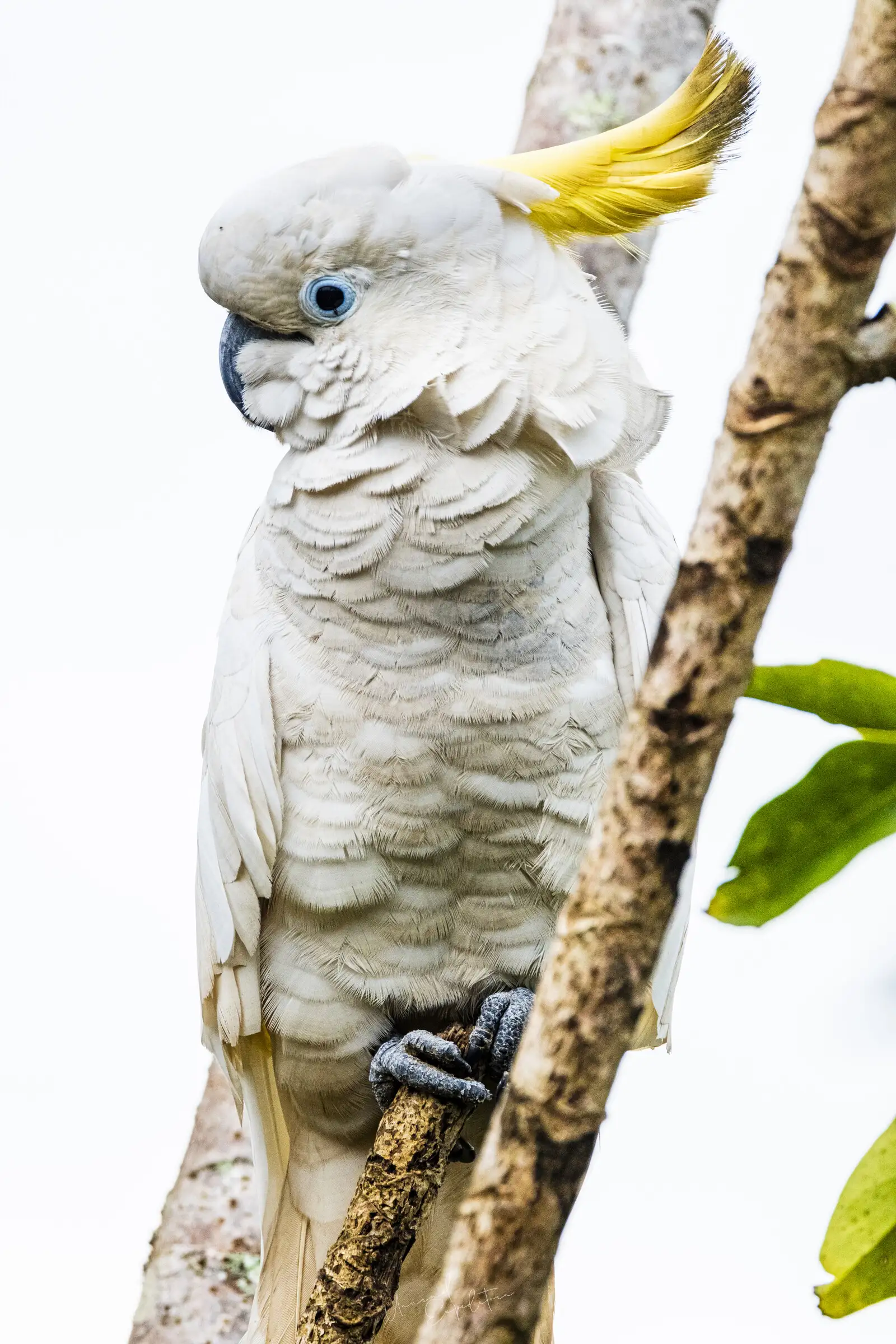
The Papua New Guinea cockatoo most people meet is the sulphur-crested cockatoo, the same white bird with a yellow crest that lives in Australia, here living in forest, not city parks. Cockatoos are loud and wary, and they usually show up on high dead branches, which gives a clean sky background but a hard exposure: white feathers against bright cloud. Underexpose by a stop or more to keep detail in the feathers. Other big birds of the forest edge include hornbills in the lowlands and fruit-doves, and at dusk flying foxes leave their roosts, a mammal rather than a bird but just as photogenic.
Kingfishers and honeyeaters
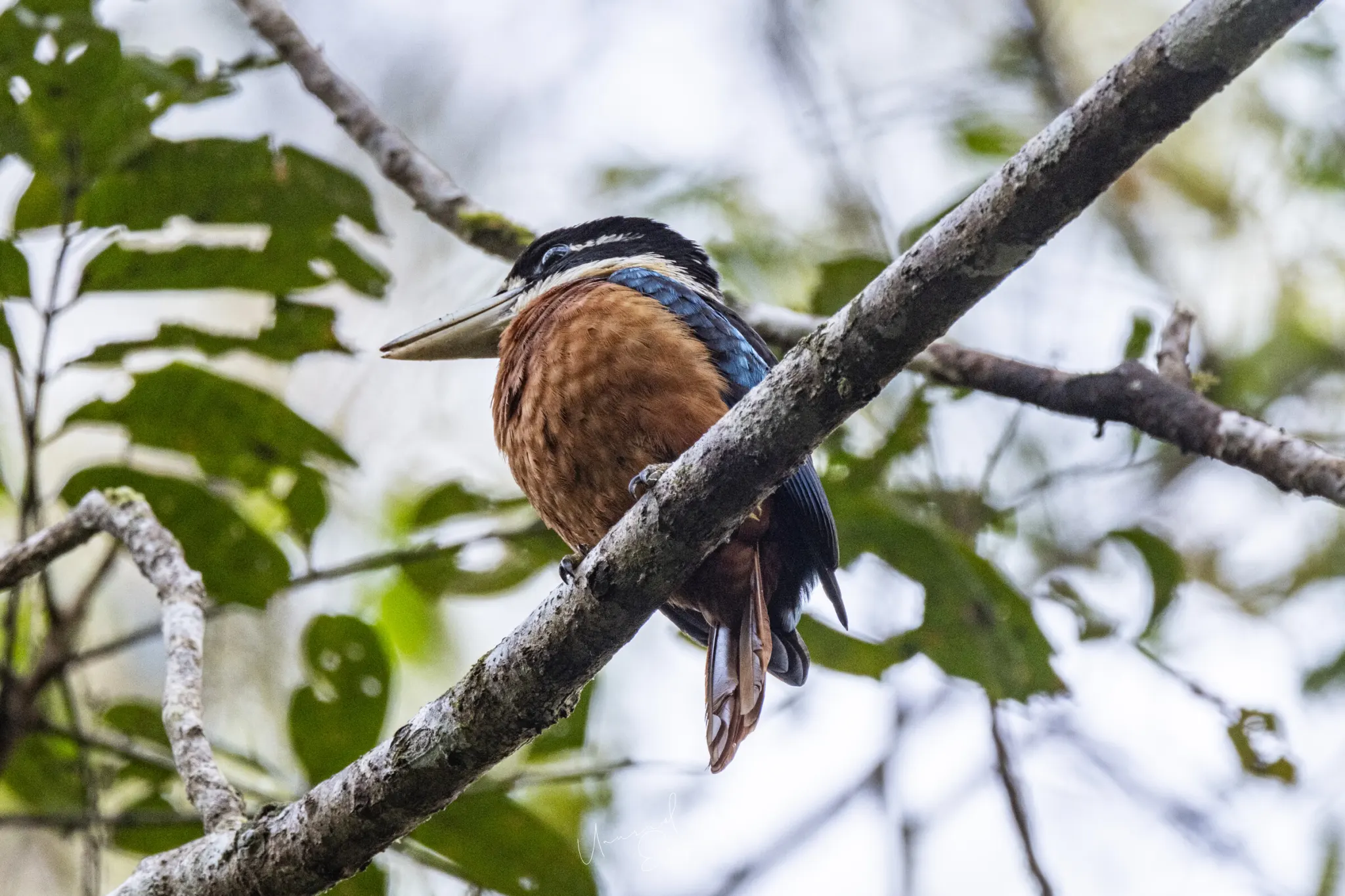
New Guinea is rich in kingfishers, from large kookaburras to small forest kingfishers that sit motionless on a branch for minutes at a time, which makes them some of the friendliest birds to photograph. Our feature frame is a forest kingfisher with a rufous belly and blue wings, perched on a bare branch with sunlit leaves behind it.
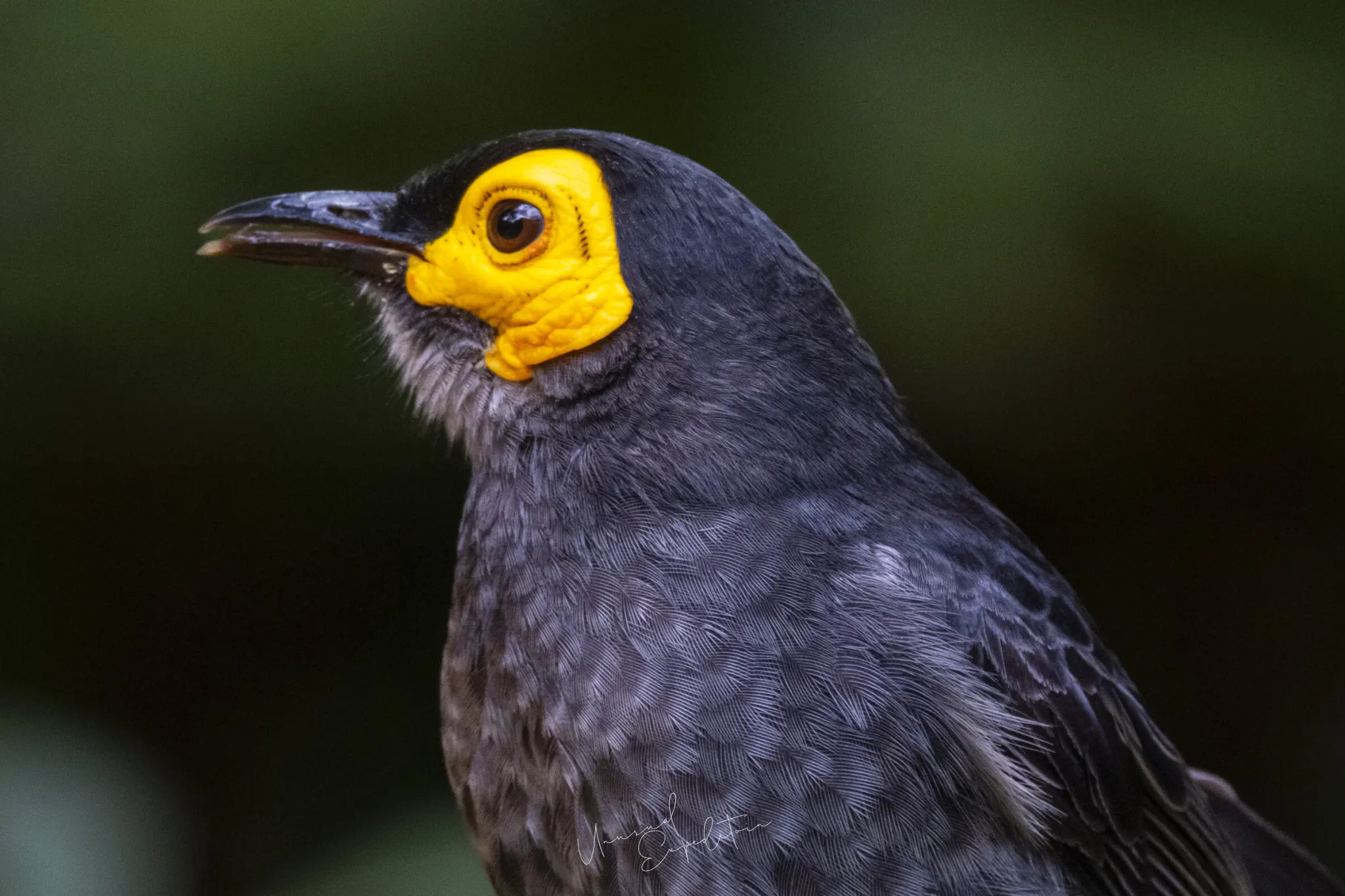
Honeyeaters are the most common birds at Highland feeders. The smoky honeyeater has bare facial skin that is normally yellow and can flush to red, as eBird's species account describes, so the same bird can look different from one minute to the next. At a feeder the birds come close enough for a 100-400mm, and a dark forest background turns them into small portraits.
"The birds-of-paradise are why people come, but the morning I remember is a Pesquet's parrot eating figs in silence, close enough to hear it. Nobody in the group said a word until it flew. In a country where its feathers are on every headdress, seeing one alive felt like luck."
Joseph Mak, tour leader, Unusual Expedition
Papua New Guinea bird watching tour: how a day works
A Papua New Guinea bird watching tour runs on the birds' clock. Days start before sunrise with a local bird guide who knows the display trees and fruiting figs, and the first hours are the busiest. By late morning activity drops, the light hardens and the clouds often come in, so the middle of the day is for feeders, editing or a village visit. Late afternoon brings a second, shorter window. Rain can arrive at any time in the Highlands, even in the drier months, which our best time to visit Papua New Guinea article explains month by month.
Birding Papua New Guinea: camera settings and gear
| Situation | Lens | Settings | Note |
|---|---|---|---|
| Canopy birds against sky | 500mm or 100-400mm | +1 to +2 exposure compensation | Backlight is the norm |
| Forest interior | 100-400mm | ISO 3200 to 6400, 1/250 s | Modern sensors handle the noise |
| Feeders | 100-400mm or 70-200mm | 1/500 s, burst | Wait for the bird to leave the feeder |
| White birds | Any telephoto | -1 exposure compensation | Protect the highlights |
The forest is darker than people expect, so high ISO is normal and a fast, quiet shutter matters more than the last stop of sharpness.
Papua new guinea birds list: how many will you see?
Nobody sees the whole Papua New Guinea birds list on one trip. In a week in the Highlands with a good guide, a keen birder sees dozens of species and photographs a fraction of them well, because so many stay high, move fast or keep to deep shade. Bring a field guide such as Birds of New Guinea by Pratt and Beehler, let the guide lead, and treat every clear frame as a bonus. The cultural sessions with the Huli wigmen and other groups fill the middle of the day.
Come birding in the Highlands with us
Our Papua New Guinea trips mix early birding mornings with village sessions, and we can weight them towards birds for keen wildlife photographers. Planned departures are on the Papua New Guinea photography tours page.
Papua New Guinea Highlands photography tours
The next Papua New Guinea Highlands departure is announced on the Papua New Guinea Highlands photography tours page, with previous expeditions and all the planning guides.
Explore Papua New Guinea Highlands in depth
- Papua New Guinea Highlands Photography Guide: Tribes, Markets and BirdsPapua New Guinea
- Papua New Guinea Highlands Photography FAQ: Fees, Consent, Weather and GearPapua New Guinea
- Papua New Guinea Traditional Dress: Bilas, Face Paint and Headdresses of the HighlandsPapua New Guinea
- Birds of Paradise Papua New Guinea: A Photographer's GuidePapua New Guinea
- Skeleton Tribe Papua New Guinea: Photographing the Chimbu Skeleton DancersPapua New Guinea
- Asaro Mudmen Photos: the Mud Masks of the Eastern HighlandsPapua New Guinea
- Huli Wigmen Photos: Photographing the Huli of Papua New GuineaPapua New Guinea
Upcoming Photo Tours
- Egypt Photo Tour – EgyptEgypt 12 Dec 2026 To 20 Dec 2026
- Inner Mongolia Winter Owl Photo Tour – ChinaChina 01 Jan 2027 To 04 Jan 2027
- Inner Mongolia Winter Photo Tour – ChinaChina 05 Jan 2027 To 11 Jan 2027
- Mekong And Central Highland Vietnam Photo Tour - VietnamVietnam 16 Jan 2027 To 24 Jan 2027