
Andasibe: Is It Worth Visiting, How to Get There, Lemurs and the Night Walk
Andasibe from Antananarivo: how to get there, things to do, the lemurs, the night walk and the weather by month, with our own photos.
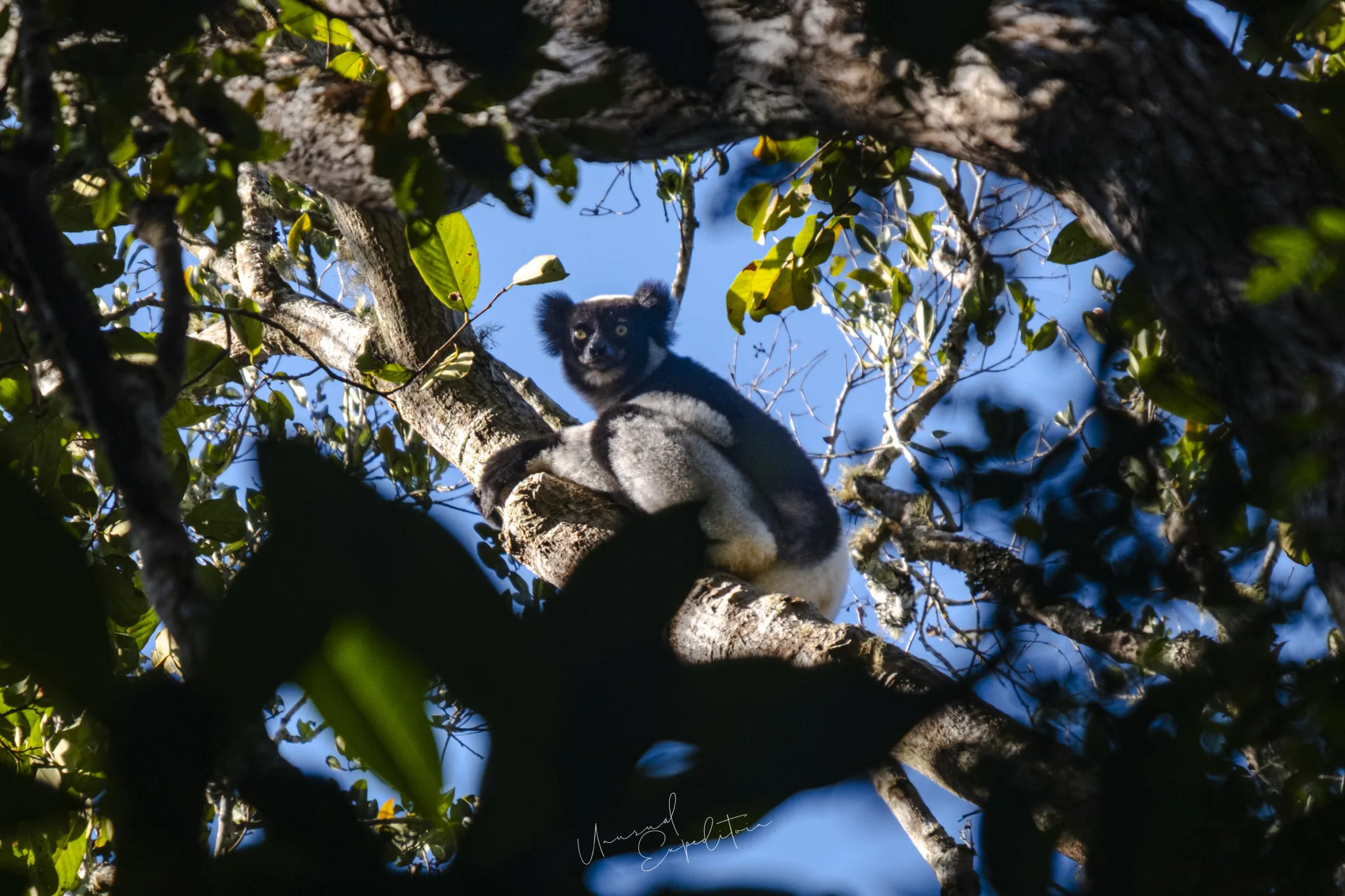
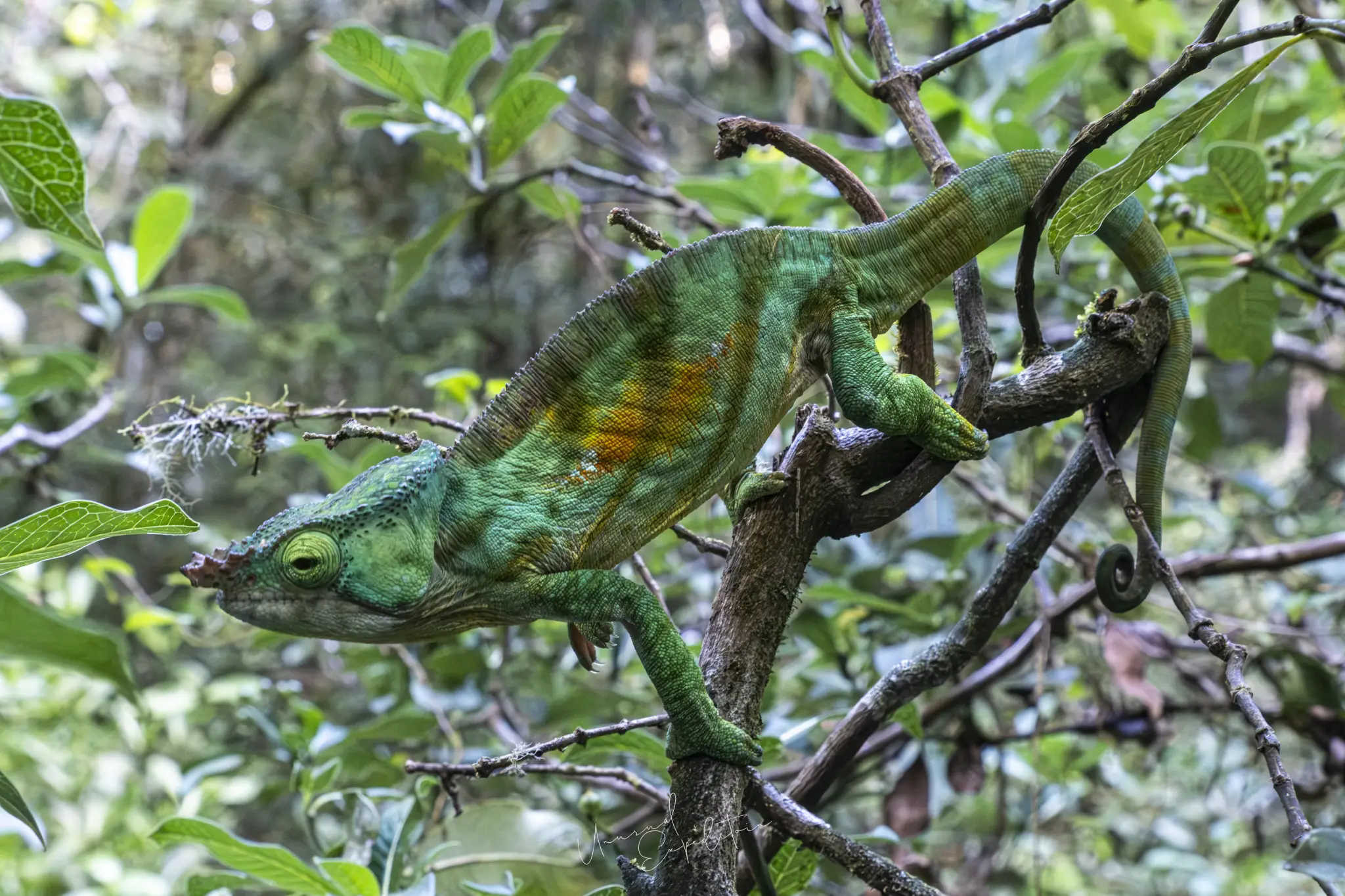
Is Andasibe worth visiting? For a photographer, yes, and it is the one place in Madagascar where the answer does not depend on the season. Andasibe is a rainforest village about 140 kilometres east of Antananarivo on the RN2, at around 950 metres on the eastern escarpment, and the easiest place in the country to photograph the indri, the largest living lemur, plus diademed sifakas, Parson's chameleons and the small animals of a night walk. Below: the road from Antananarivo, what there is to do, the weather and what the forest gives a camera.
The technique of photographing the lemurs is in lemur photography at Andasibe and beyond; this is the place itself, within the complete Madagascar photography tour guide.
How to get to Andasibe from Antananarivo
By road, on the RN2, the main highway east towards the port of Toamasina. The distance is about 140 kilometres and the drive takes most of a morning depending on traffic leaving the capital; the road is paved but busy with trucks. The route climbs out of the city past rice terraces and brick villages, crosses the Mangoro river and then drops into forest as it reaches Moramanga, the last town before Andasibe. There is no scheduled flight, and the old railway runs freight rather than passengers. Most visitors come with a driver, as our group does; shared taxi-brousse minibuses run from Tana to Moramanga and on to Andasibe for the budget traveller. The road is worth a stop or two for the terraces in the morning light.
Andasibe things to do
Four things, and a photographer wants all of them. First, a guided walk in Analamazaotra, the part of Andasibe-Mantadia National Park beside the village, for the indri family groups that the guides track by their calls in the morning. Second, the Mitsinjo community reserve across the road, which runs the night walks along the forest edge, since night walks inside the national park itself are not allowed. Third, the lemur island at Vakona, a short canoe crossing to habituated brown, ruffed and bamboo lemurs that will land on your shoulder. Fourth, Mantadia, the larger and wilder section of the park further north along a rough track, for diademed sifakas, black-and-white ruffed lemurs and primary forest; it is a longer walk and a longer drive. The village of Andasibe itself, with its old railway station and wooden houses, is a quiet stroll between sessions.
Andasibe lemurs: what you will see
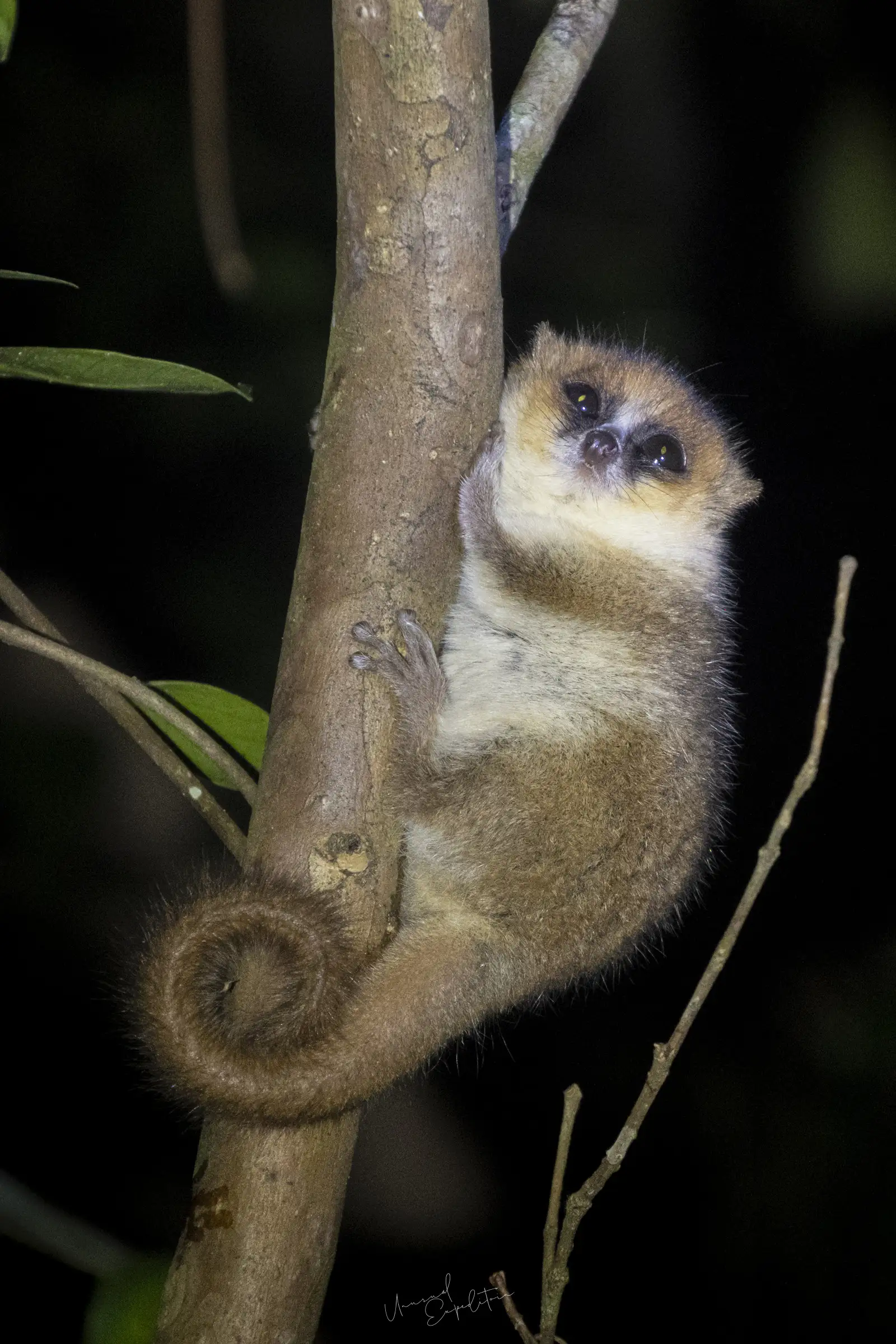
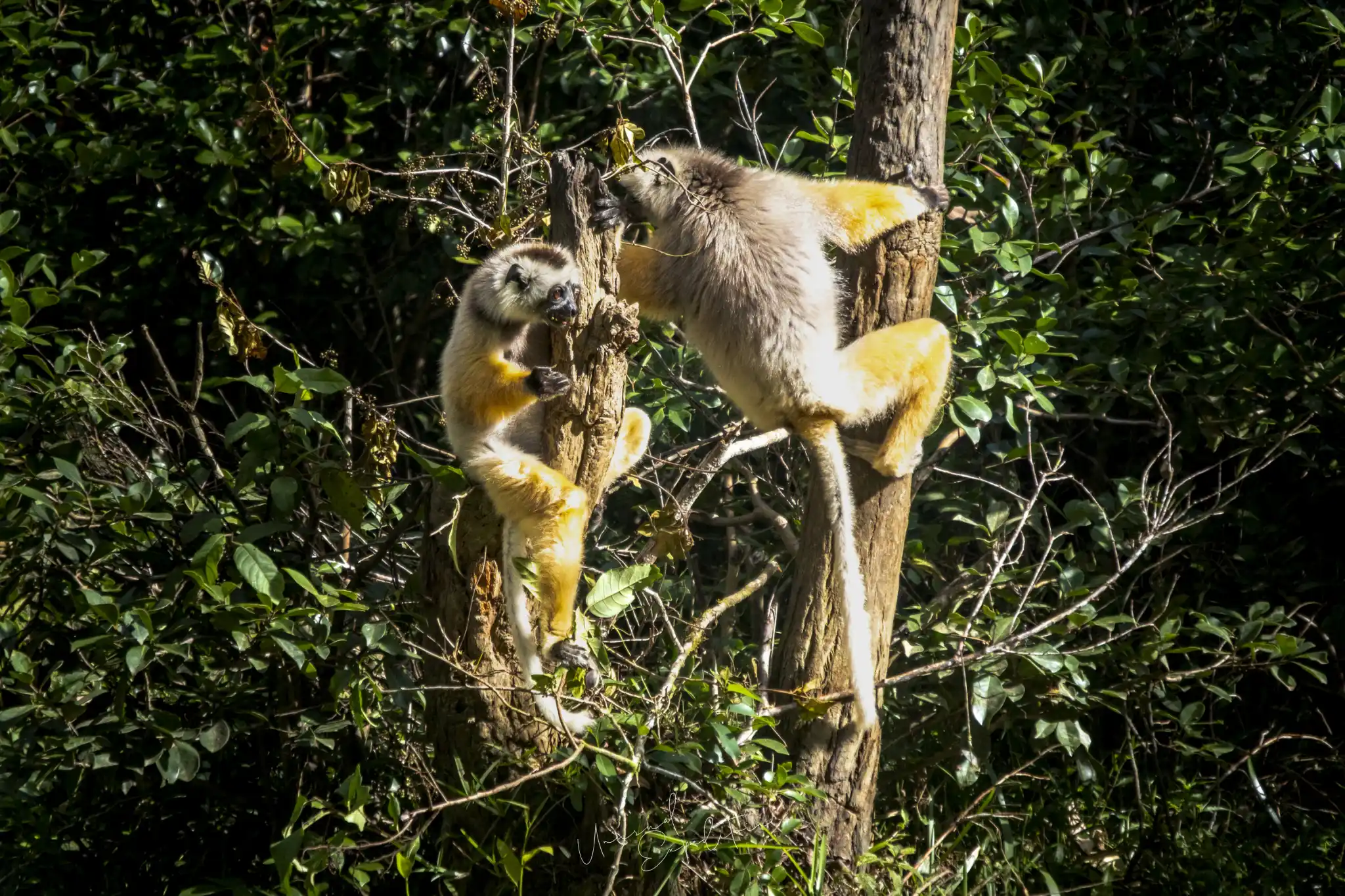
The indri is the reason the village exists on the tourist map: black and white, the size of a small child, no tail, and a call like a whale's song that carries for kilometres through the trees in the first half of the morning. Habituated family groups in Analamazaotra let you stand beneath them. Diademed sifakas, golden and grey with a black face, move through the canopy in groups and come to the ground in a few places. Common brown lemurs and grey bamboo lemurs are frequent, the eastern woolly lemur is a night sighting, and mouse lemurs are the stars of the torchlight walk. None of these are guaranteed on any given walk, but across two days at Andasibe the indri and the sifaka are close to certain, which is more than can be said for most wild primates anywhere.
Andasibe night walk
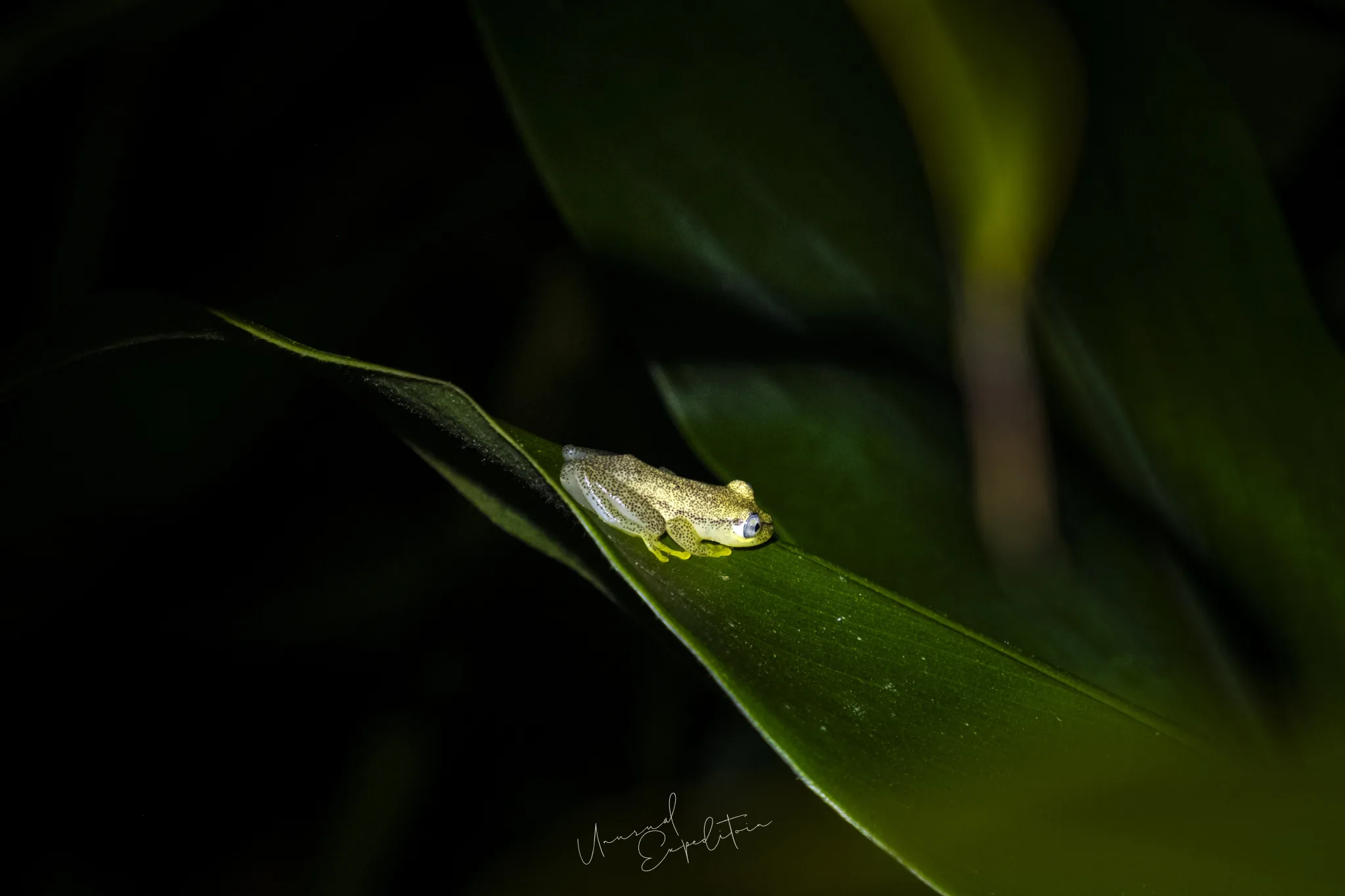
After dark a guide leads a small group along the forest edge with torches, usually on the Mitsinjo side or along the road verges. The guide finds the animals; your job is to be ready. Mouse lemurs show first as two orange eyes in the beam, then as a tiny body on a branch within a few metres. The same walk produces sleeping chameleons on the tips of twigs, tree frogs on leaves, stick insects and leaf-tailed geckos pressed flat against trunks. Take a standard or macro lens, a small LED or a flash with a diffuser held to one side, and keep the light off the lemurs' eyes at close range. It lasts an hour or so and it is often the session people talk about afterwards. The light is low and the subjects are small, so this is the walk for the macro lens that what to pack for a Madagascar photo tour argues for.
Andasibe weather
Andasibe is rainforest, and it rains in every month. The eastern escarpment catches the trade winds off the Indian Ocean, so the air is close to saturated, mornings are misty and showers come most afternoons. Temperatures sit between about 15 and 25 degrees through the year, cooler from June to August when nights drop into the low teens. The driest months are September to November; the wettest are January to March, when cyclones can close the RN2 for days. April, when our tour visits, is the tail of the wet season: green, humid, showery in the afternoons, and the lemurs are active in the mornings. For a photographer the weather matters less than the light under the canopy, which is soft and even on an overcast day and spotty on a sunny one; cloud is the friend here.
| Months | Rain | Temperature | Notes for a visit |
|---|---|---|---|
| January to March | Heaviest, cyclone risk | Warm, about 18 to 26 | Trails muddy, road closures possible |
| April and May | Easing, afternoon showers | Mild, about 16 to 24 | Green forest, active lemurs, our April visit |
| June to August | Light but frequent drizzle | Coolest, about 12 to 20 | Mist, quiet forest, indri still call |
| September to November | Driest months | Warming, about 15 to 25 | Most sun, young lemurs from October |
There is no bad month to see the indri; there are months when the walk to them is drier.
Is Andasibe worth visiting if you only have a day?
A day trip from Tana is possible and many people do it: leave early, walk Analamazaotra in the late morning, drive back. You will probably see the indri. You will miss the night walk, the dawn chorus of calls, the soft light of the first hours and any chance at Mantadia. Two nights is the right stay, which is what our itinerary gives it, and it is the difference between a sighting and a set of pictures. A photographer who comes for one day gets one lens's worth of Andasibe; two nights gets the long lens, the macro and the torch.
"Andasibe is the one place on the trip where the weather forecast does not change my plans. If it rains we shoot in the rain, the lemurs do not care, and the pictures are better for the wet fur and the soft light. Bring a cover for the camera and forget the sky."
Joseph Mak, tour leader, Unusual Expedition
Andasibe village and where to stay
The village sits beside the railway at the park entrance, with a cluster of lodges along the road and in the forest around it. Lodges range from simple bungalows to comfortable forest hotels; most have generator or grid power, and the damp is the thing to plan for. Leave air conditioning off at night so the camera does not fog the moment it meets the forest air, pack silica gel, and dry cloths over everything. The park office at the entrance sells permits and assigns the obligatory guides; fees change, so check current figures with your operator or at the office. Andasibe's rain and the west coast's dust are the two extremes a kit has to survive on this trip, as Madagascar light and weather, region by region explains.
Come and hear the indri with us
Andasibe is the rainforest chapter of the Madagascar photography tour, our April departure led by Joseph Mak, with two nights in the forest for the indri, the sifakas and the night walk. Fares are indicatively S$6,000 to S$7,000 per person depending on the room; the tour page carries the current rate.
Join the Madagascar photography tour
Madagascar Photo Tour – Madagascar departs 11 Apr 2027 To 19 Apr 2027, led by Joseph Mak. Small group, photography first. All Madagascar photography tours.
Explore Madagascar in depth
- The Complete Guide to a Madagascar Photography TourMadagascar
- Avenue of the Baobabs Photo Spots: Location and the Best PositionsMadagascar
- Morondava Photos: Sunset, the Fishing Village and the BeachMadagascar
- Belo sur Mer Photos: Where to Shoot, the Beach and the WeatherMadagascar
- Madagascar Photos: What the Island Really Looks LikeMadagascar
- What to Pack for a Madagascar Photo TourMadagascar
- The Milky Way over the Baobabs: Night Photography in MadagascarMadagascar
- Madagascar Tour from Singapore: Flights, Visa and What to ExpectMadagascar
- Is Madagascar Safe? Health, Roads and Drones for PhotographersMadagascar
- What a Madagascar Photo Tour Costs, Line by LineMadagascar
- Twelve Questions Before You Book a Madagascar Photo TourMadagascar
- Madagascar or an African Safari for Wildlife Photography?Madagascar
Upcoming Photo Tours
- Egypt Photo Tour – EgyptEgypt 12 Dec 2026 To 20 Dec 2026
- Inner Mongolia Winter Owl Photo Tour – ChinaChina 01 Jan 2027 To 04 Jan 2027
- Inner Mongolia Winter Photo Tour – ChinaChina 05 Jan 2027 To 11 Jan 2027
- Mekong And Central Highland Vietnam Photo Tour - VietnamVietnam 16 Jan 2027 To 24 Jan 2027