
RN7 Madagascar Photo Spots: Seven Places for the Classic Shots
RN7 Madagascar photo spots: Antsirabe, highland rice harvest, Ambositra, Ranomafana, Anja, Isalo and the Ifaty spiny forest.
The RN7 Madagascar photo spots worth planning around are the crater lakes and streets of Antsirabe, the rice paddies of the central highlands at harvest, the woodcarving workshops around Ambositra, the rainforest streams of Ranomafana, the granite domes and ring-tailed lemurs of Anja, the sandstone canyons of Isalo and the spiny forest and baobabs near Ifaty. The Route Nationale 7 runs about 980 kilometres south from Antananarivo, according to Wikipedia, and these are the places along it where the pictures are.
Each place has its own destination guide inside our RN7 Madagascar photography guide. Here we put them side by side as photo spots: where to stand, the light, the lens and the rules, in no particular order. The photographs are our own, from our trip down the RN7.
RN7 Madagascar photo spots: how to use them
The RN7 crosses three different Madagascars: the cool central highlands of rice terraces and brick villages, the rainforest of the eastern escarpment at Ranomafana, and the dry south of sandstone, grassland and spiny forest. Light changes with them. The highlands are often misty at dawn and clear by mid-morning; the rainforest is dim under the canopy all day; the south is bright and hard by late morning. National parks such as Ranomafana and Isalo are visited with a guide hired at the park, and drones need permission, so ask at the park office. A 24-70mm covers the towns and landscapes, a 70-200mm or 100-400mm the lemurs and birds.
Antsirabe: crater lakes and pousse-pousse
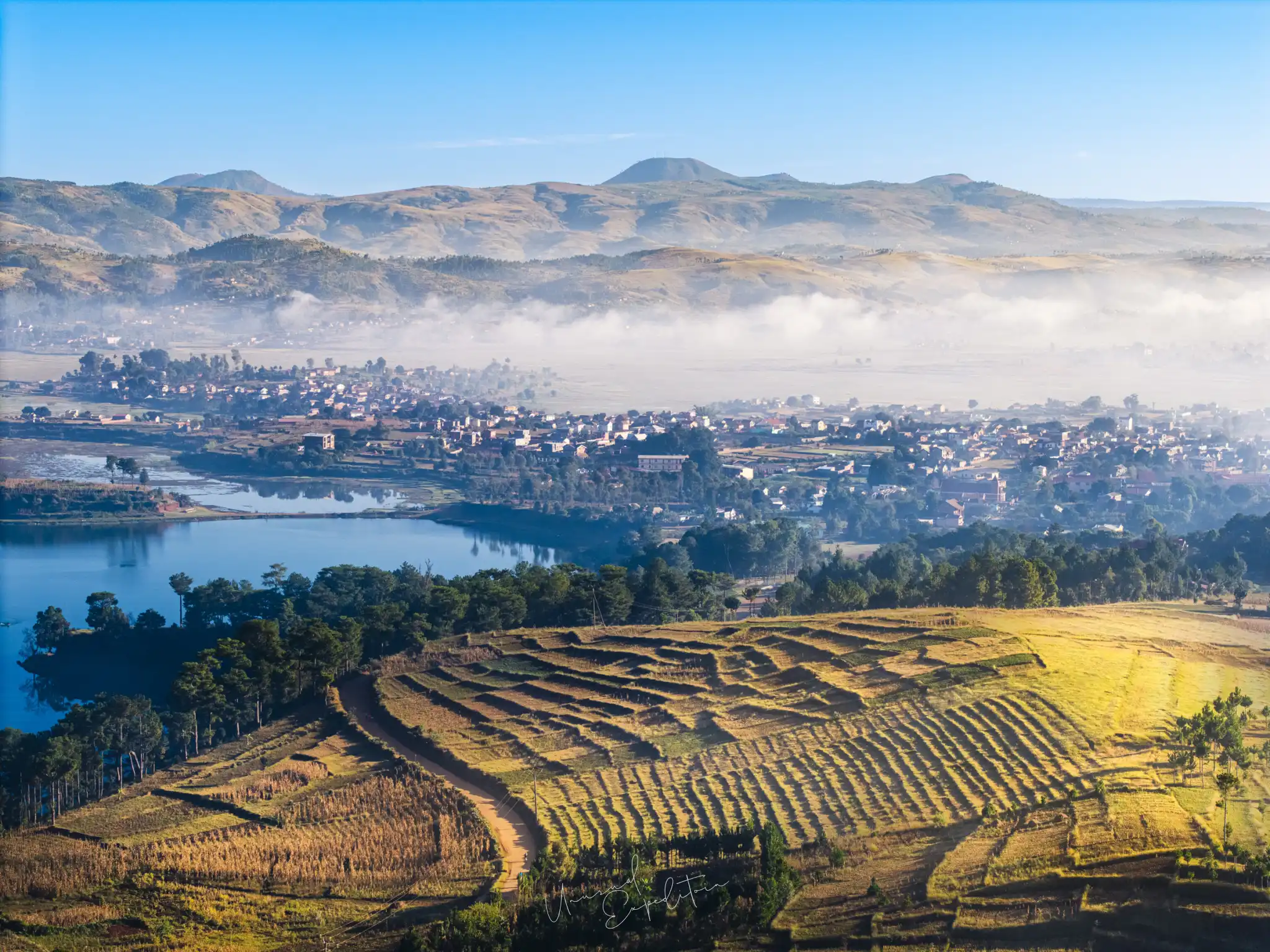
Antsirabe sits at about 1,500 metres and was founded as a hill station in the nineteenth century. Two subjects make it: the pousse-pousse, the hand-pulled and pedalled rickshaws with their painted canopies that fill the streets, and the crater lakes outside town, Lake Andraikiba and Lake Tritriva, set among terraced hills. At dawn the valleys around the town hold mist, and from high ground the lake, the terraces and the town come out of it one by one. Go early, with a 24-70mm. In town, photograph the pousse-pousse drivers in open shade and ask first. More in our Antsirabe destination guide.
The rice paddies of the central highlands
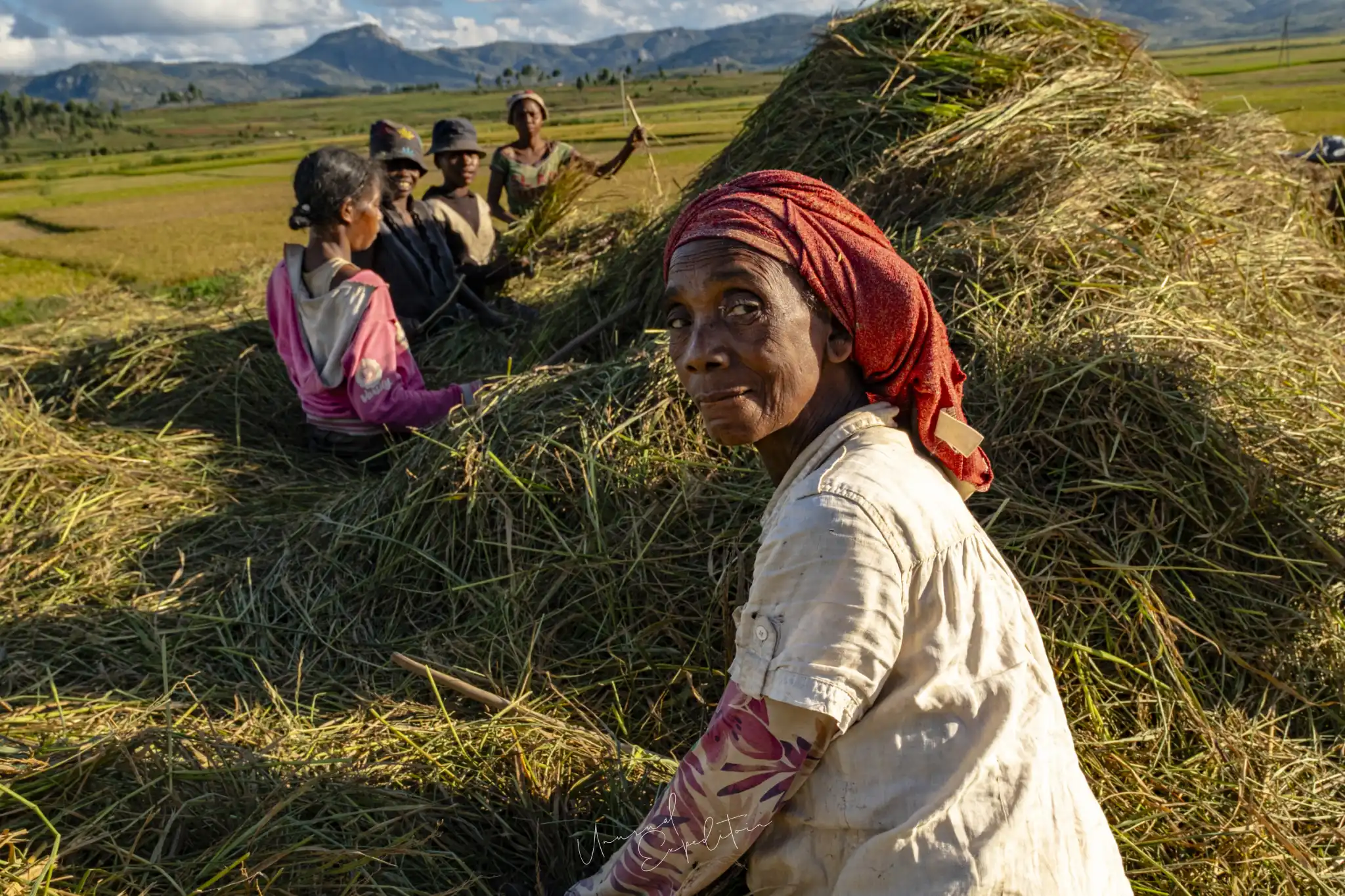
Between Antsirabe and the south the road crosses the central highlands, a land of rice terraces, red brick farmhouses and villages on the ridges. At the end of the rainy season and into the early dry season the paddies turn gold and families thresh the rice in the fields, beating the sheaves by hand. That is the moment to stop. Ask before photographing people at work, and work in the morning or late afternoon, when the low sun brings out the texture of the terraces. A 24-70mm for the people, a 70-200mm to compress the terraces. Our Madagascar central highlands guide covers the villages and the harvest.
Ambositra and the woodcarvers
Ambositra is the woodcarving town of the highlands, and the Zafimaniry woodcrafting knowledge of the villages to its south-east is on UNESCO's list of intangible cultural heritage. In the workshops in town you can photograph carvers and marquetry makers at their benches. The light comes through doors and windows, which gives strong side light on hands and tools. A 24-70mm at a wide aperture. These are workshops, so ask, watch, and buy if you can.
Ranomafana's rainforest and streams
Ranomafana National Park protects rainforest on the eastern edge of the highlands, and its lemurs, among them the golden bamboo lemur discovered there, are why it became a national park. Photography here means working in dim light: lemurs moving high in the canopy, streams running over mossy boulders, leaf-tailed geckos that only a guide will find. Use a fast lens or a high ISO, and for the streams a slow shutter on a support. The forest is visited with park guides. Our Ranomafana National Park photography guide covers the trails and the species.
"The RN7 is a road of changes. You start in mist among rice terraces and finish in the spiny forest by the sea. I tell people not to rush it: every region has one picture you only get if you are there at the right hour."
Joseph Mak, tour leader, Unusual Expedition
Anja: granite domes and ring-tailed lemurs
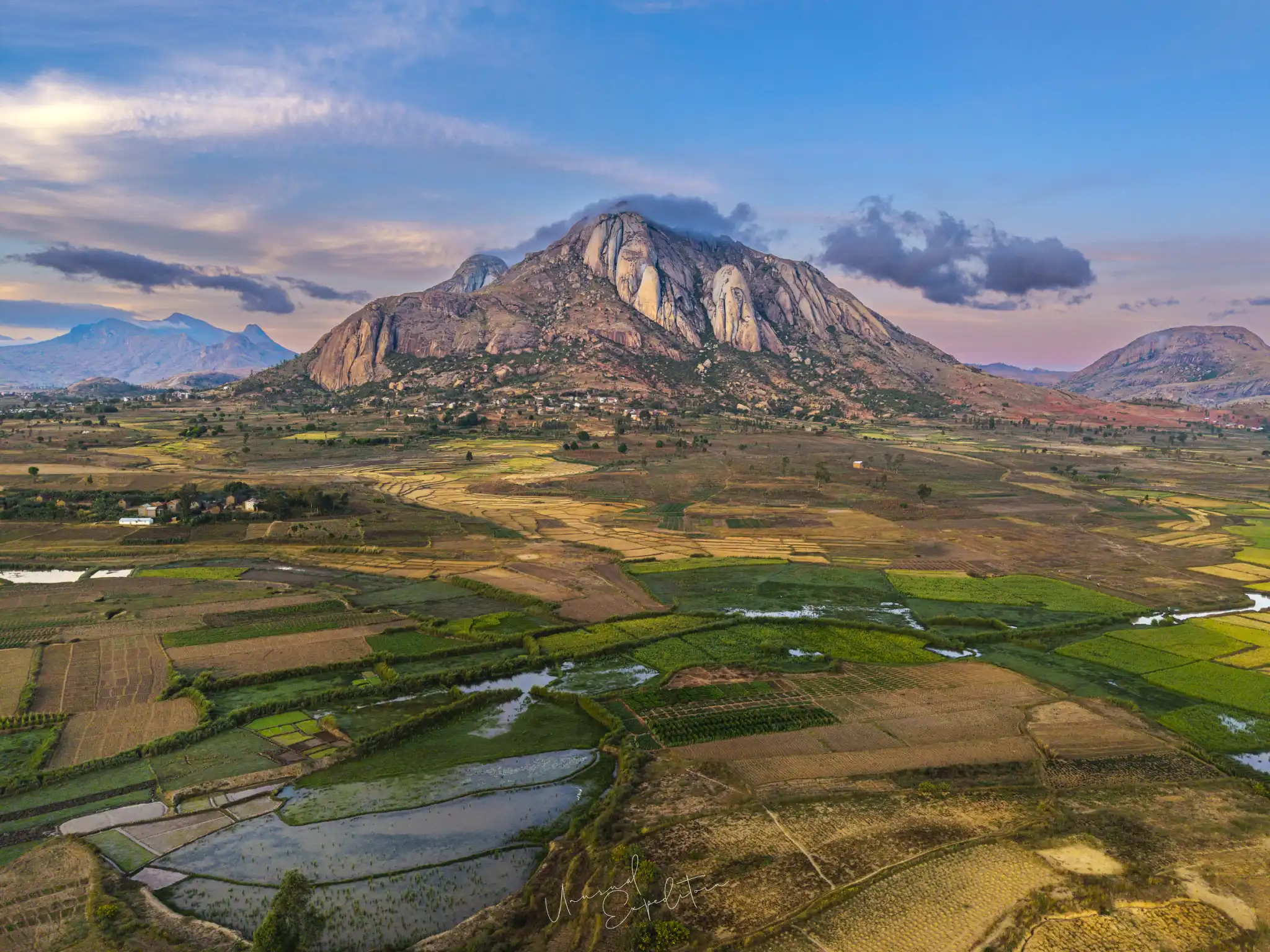
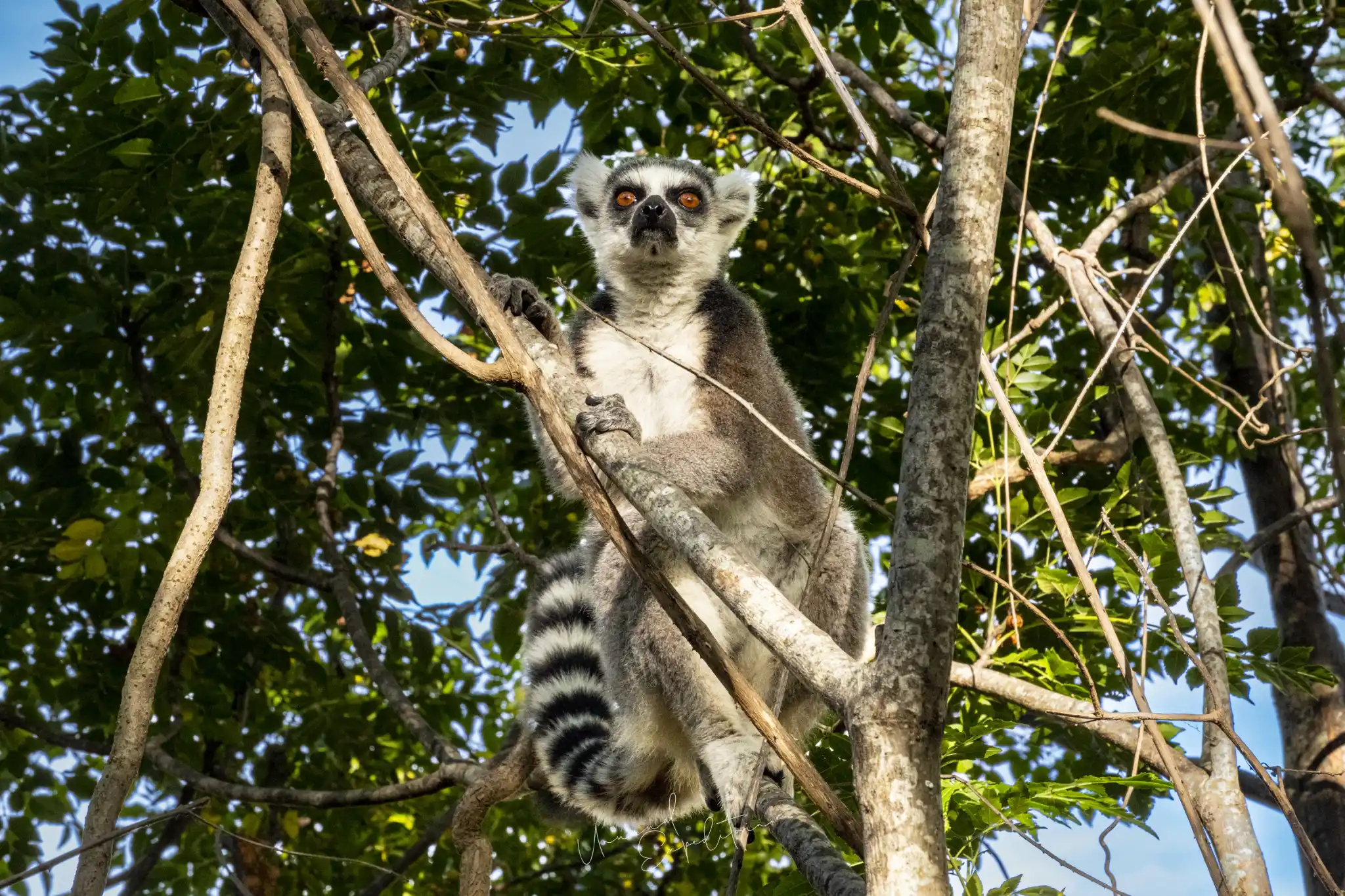
Anja Community Reserve, beside the RN7 south of Ambalavao, is a small reserve run by the local association Anja Miray, where ring-tailed lemurs live among granite boulders under huge domes of bare rock. A 2015 survey in Primate Conservation counted a little over two hundred habituated ring-tails. The domes catch the first sun beautifully, glowing above the paddies at their foot, so the landscape picture on our card is a dawn picture. For the lemurs, go in the morning when they sun themselves on the rocks and branches; a 70-200mm is enough because they are used to people. See our Anja Community Reserve guide.
Isalo's sandstone canyons
Isalo National Park is a massif of eroded sandstone in the dry south, with canyons, domes, grassland and pools fringed with pandanus. Visits, including the natural pool, are made with a guide recruited at the park entrance. The rock glows at sunrise and sunset, so be on the grassland at either end of the day for the wide views, and in the canyons in the middle of the day, when light reaches the floor and the pools. A 16-35mm or 24-70mm for the canyons. Our Isalo National Park photography guide has the details.
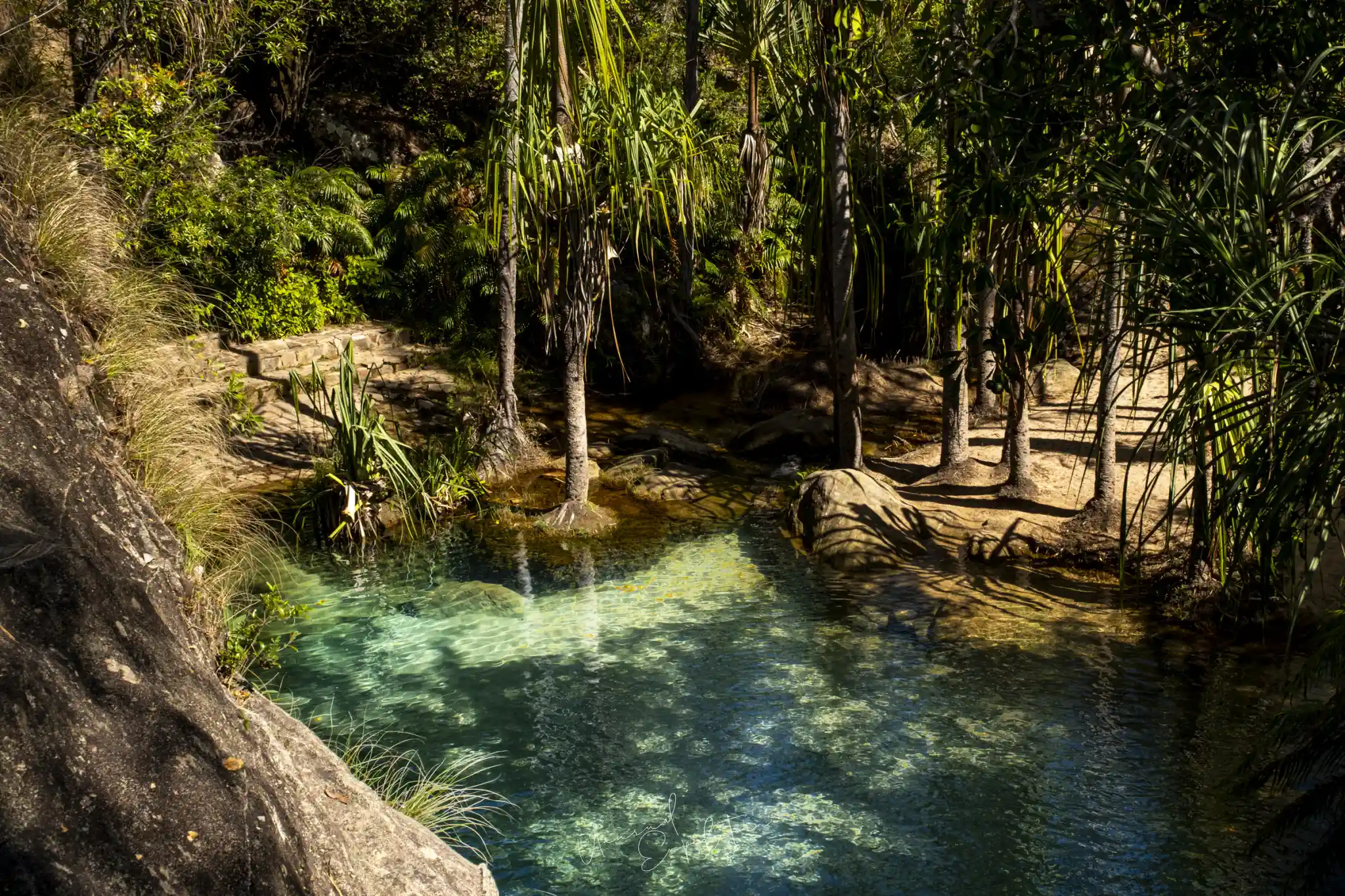
The spiny forest near Ifaty
Where the RN7 meets the coast near Toliara, the spiny forest begins: Didiereaceae with their thorned stems, bottle-shaped baobabs and, at night, chameleons. WWF's description of the spiny thicket ecoregion notes how slowly it regrows once cut, so stay on the paths. The baobabs glow in the last light of the day, and the forest after dark needs a headlamp and a guide. A 16-35mm for the baobabs, a macro or the 24-70mm close up for the night creatures. See our Ifaty spiny forest guide.
Which RN7 spot for which picture
| Spot | Main subject | Best light | Lens |
|---|---|---|---|
| Antsirabe | Crater lakes, pousse-pousse | Misty dawn, open shade in town | 24-70mm |
| Central highlands | Rice harvest, brick villages | Morning and late afternoon | 24-70mm, 70-200mm |
| Ambositra | Woodcarvers at work | Window light | 24-70mm |
| Ranomafana | Lemurs, streams, geckos | Dim forest light all day | 100-400mm, 24-70mm |
| Anja | Granite domes, ring-tailed lemurs | Sunrise, morning | 24-70mm, 70-200mm |
| Isalo | Sandstone, canyons, pools | Sunrise, sunset, midday in canyons | 16-35mm, 24-70mm |
| Ifaty | Spiny forest, baobabs, night walk | Last light and after dark | 16-35mm, 24-70mm |
The highlands want early mornings, the south wants the edges of the day, and the forests want patience.
Photograph the RN7 with us
We run the RN7 as a private photography trip on request, paced around the light at each of these places. The Madagascar photography tours page has every destination guide and how to ask us.
Join the RN7 photography tour
Madagascar Photo Tour – Madagascar departs 11 Apr 2027 To 19 Apr 2027, led by Joseph Mak. Small group, photography first. All RN7 photography tours.
Explore RN7 in depth
- RN7 Madagascar Photography Guide: the Road SouthMadagascar
- Ranomafana National Park Photography: Lemurs, Geckos and StreamsMadagascar
- Madagascar Central Highlands: Rice Harvest, Brick Villages and Craft TownsMadagascar
- Isalo National Park Photography: Sandstone, Pools and WildlifeMadagascar
- Ilakaka, Madagascar: Photographing the Sapphire TownMadagascar
- Ifaty and the Spiny Forest: Baobabs, Tortoises and Night SkiesMadagascar
- Antsirabe, Madagascar: Pousse-Pousse, Markets and Crater LakesMadagascar
- Anja Community Reserve: Photographing Ring-Tailed LemursMadagascar
Upcoming Photo Tours
- Egypt Photo Tour – EgyptEgypt 12 Dec 2026 To 20 Dec 2026
- Inner Mongolia Winter Owl Photo Tour – ChinaChina 01 Jan 2027 To 04 Jan 2027
- Inner Mongolia Winter Photo Tour – ChinaChina 05 Jan 2027 To 11 Jan 2027
- Mekong And Central Highland Vietnam Photo Tour - VietnamVietnam 16 Jan 2027 To 24 Jan 2027