
What to See in Pushkar: Photo Spots at the Camel Fair, the Lake and the Bazaar
What to see in Pushkar with a camera: the camel trading ground, water tanks, sunset dunes, the market, the lake ghats and the night bazaar.
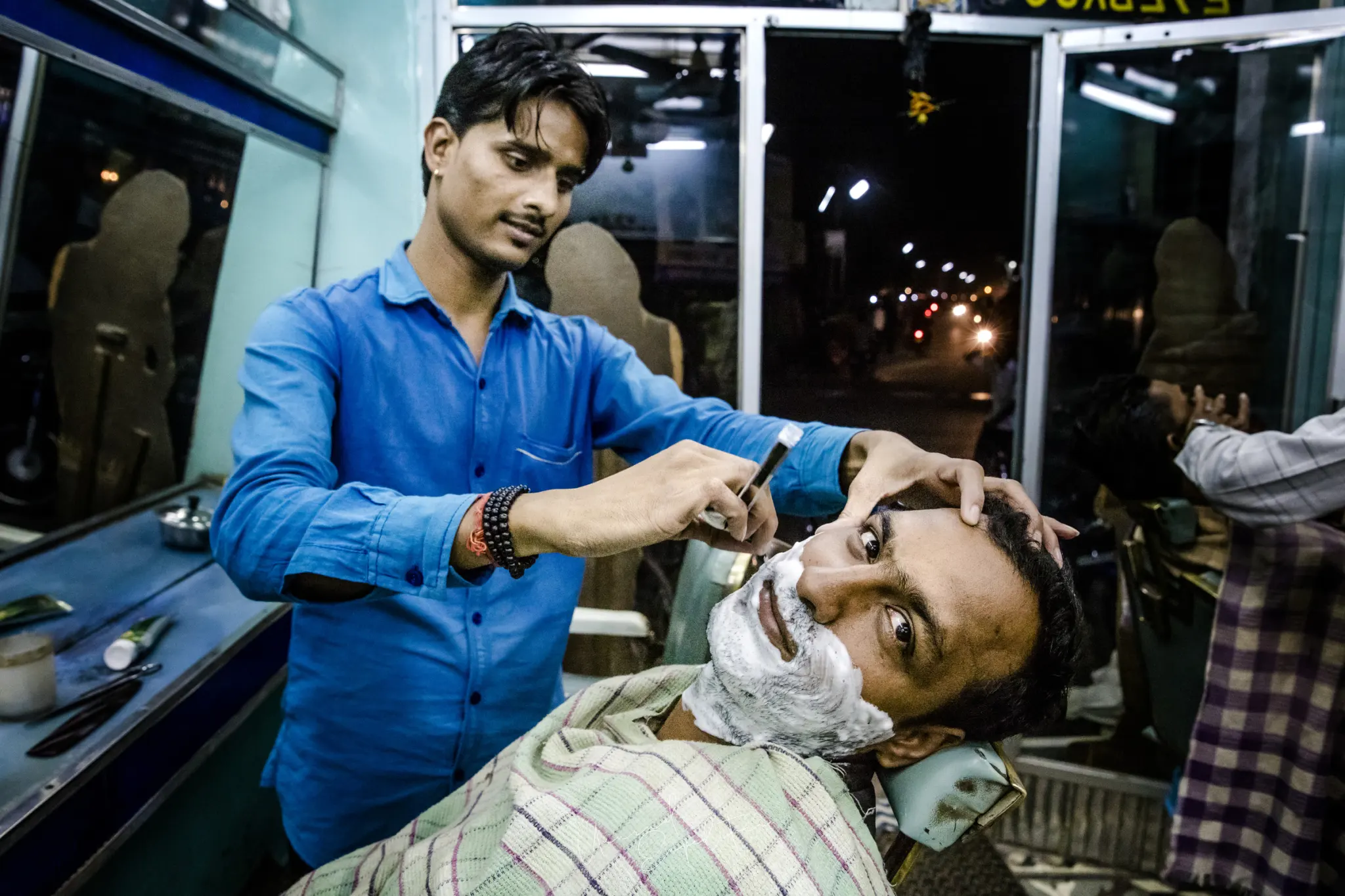
What to see in Pushkar with a camera: the camel trading ground of the fair, the water tanks where herders bring their camels to drink, the dunes at sunset, the fair market, the night bazaar, and in town Pushkar Lake with its ghats, the Brahma Temple and the Savitri Temple on its hill. The fair ground is best at first light and at sunset; the lake and the bazaar belong to early morning and evening.
This spot guide belongs to our Pushkar photography tour guide, and the India photography tour guide covers entry and money. The photographs are our own, taken on our fair trips to Pushkar; we hold the rights to them, and the notes come from knowing the place first hand. Our frames are of the fair and its people; the lake, the ghats and the temples are described from public sources and our own visits.
What to see in Pushkar: the fair and the town
Pushkar is two places for a photographer. For most of the year it is a small pilgrimage town around a sacred lake. In the lunar month of Kartik, ending on the Kartik Purnima full moon, the camel fair fills the sand at the edge of town with herders, camels, horses, tents and trade, and the town fills with pilgrims. Because the month is lunar, the dates move each year; check the Rajasthan Tourism calendar. The herders arrive and trade in the days before the full moon, which is when the fair ground is at its best; the religious crowd at the lake builds towards the full moon itself.
The camel trading ground
The open sand where herders camp with their animals is the heart of the fair. At first light smoke from cooking fires hangs over the camels, men in bright turbans inspect each other's herds, and deals are struck with a lot of talk. Walk slowly, greet people before raising the camera, and keep clear of camels' back legs. A 24-70mm covers the herds and the faces; a 70-200mm isolates a single herder against the haze. Our Pushkar camel fair guide covers the trading in more detail.
The water tanks
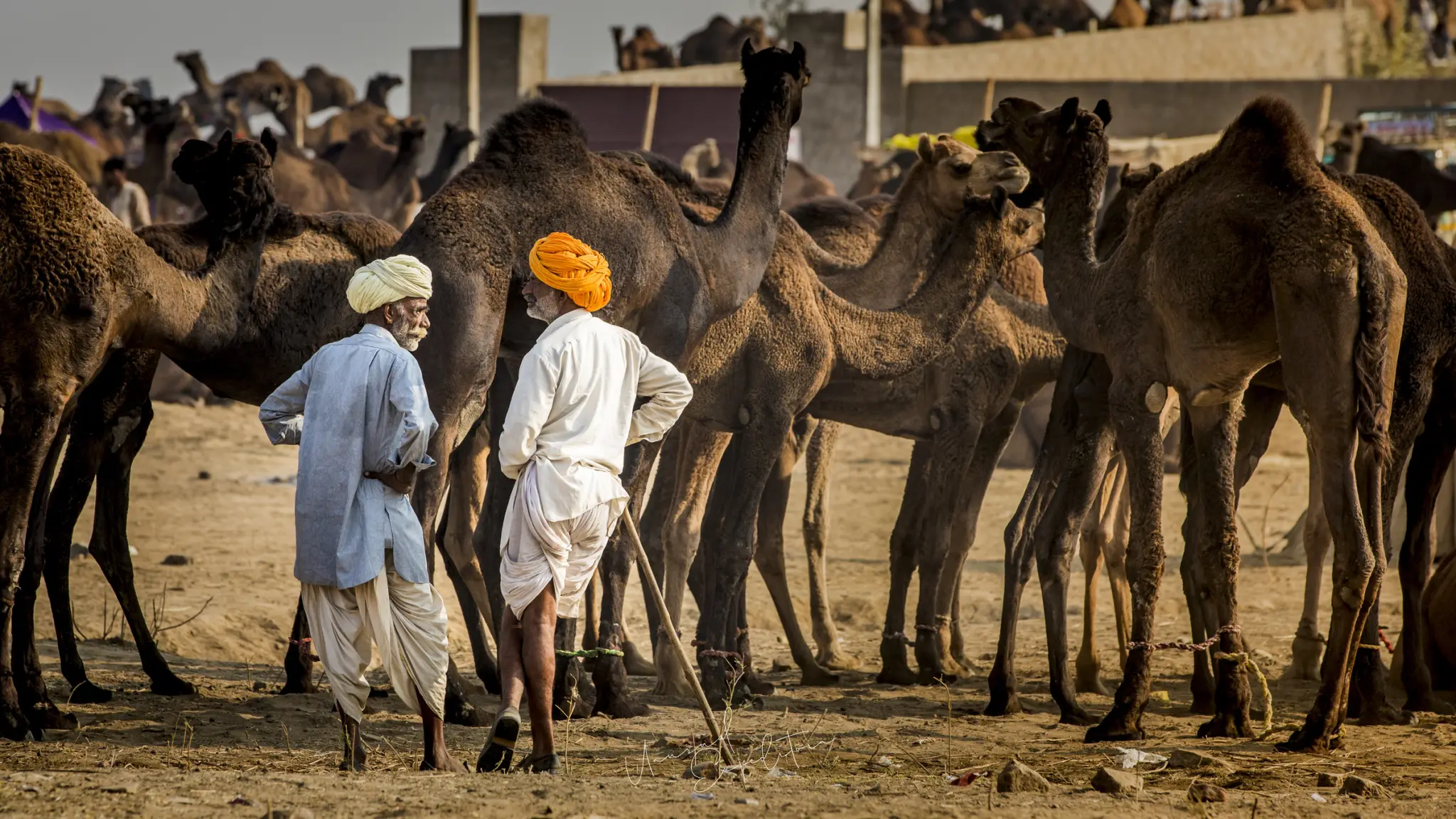
Around the fair ground, shallow tanks hold water for the animals, and herders bring their camels to drink through the day. In still air the tanks are mirrors, and a herder with his camels reflected whole is one of the classic Pushkar frames. Get low, close to the edge, and wait for the water to settle between drinks. Morning and late afternoon give the warmest light on the camels and the turbans.
The dunes at sunset
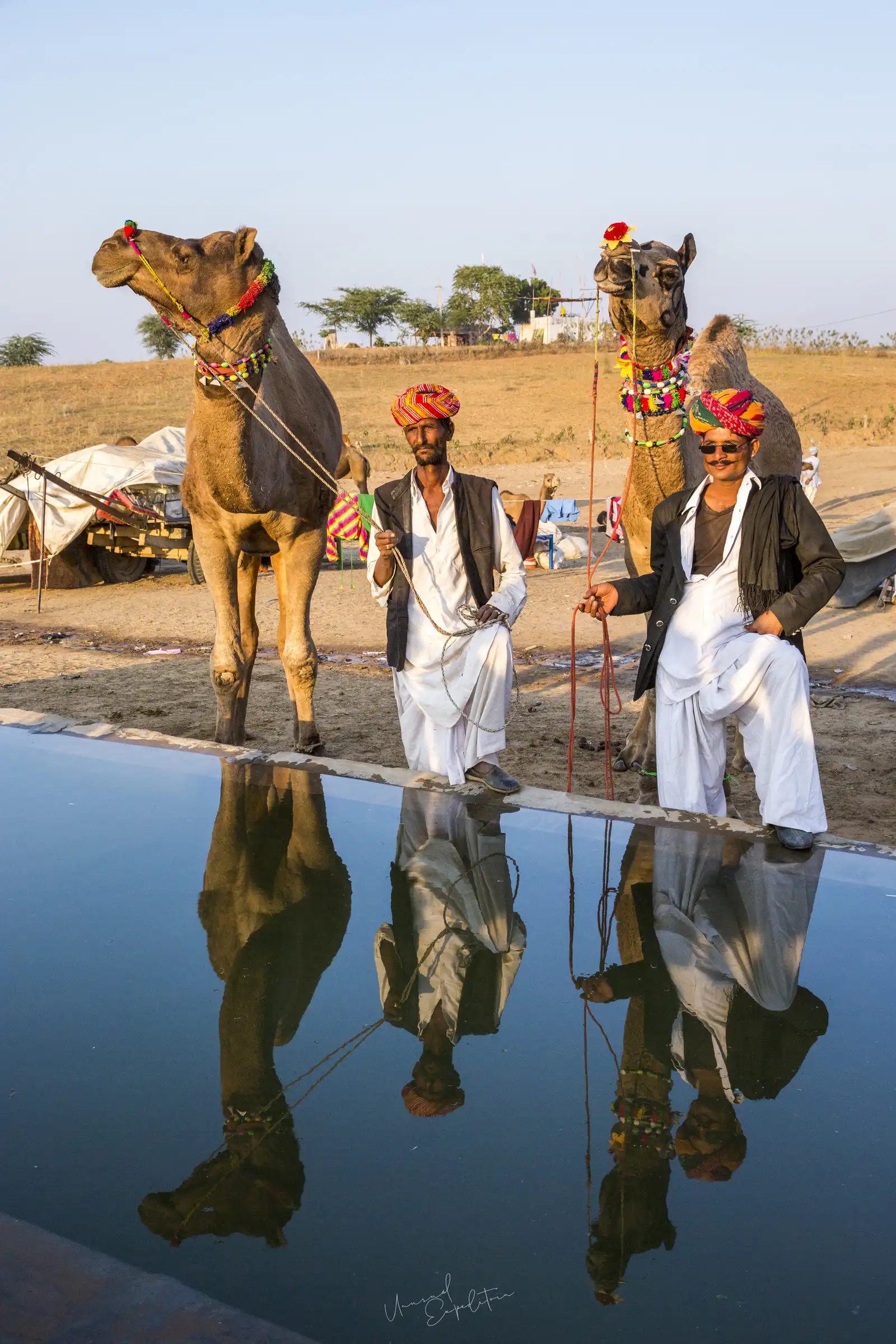
On the low dunes and open sand at the edge of the fair ground, herders lead camels across the skyline at the end of the day, against the setting sun. Silhouettes are the obvious picture: expose for the sky, keep the horizon clean, and wait for a camel to step into a gap between the others. Stay for the glow after the sun has gone. Our Pushkar sunrise and sunset guide covers the light through the day.
The fair market
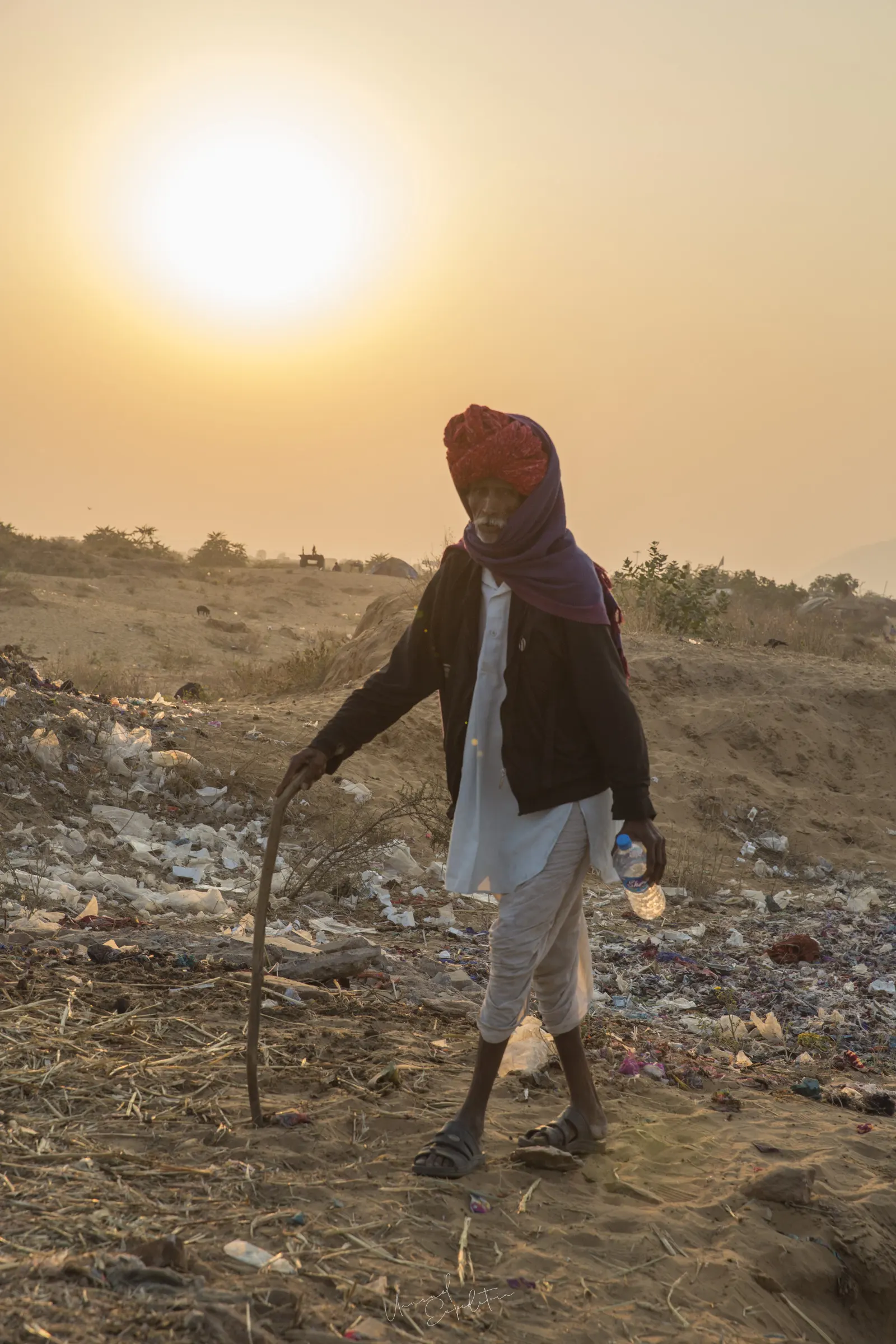
Between the camps and the town, stalls sell everything a herder needs and much a visitor wants: painted clay pots, tool handles and leather straps, camel finery with tassels and beads, feather fans, blankets and fodder. Morning is calmer for photographs; the stalls are busier in the afternoon. Buy something or ask, and frame the stall with its seller rather than the goods alone.
"At Pushkar the light does half the work, but only twice a day. In between, sit with the herders, drink their tea, and the pictures at sunset come much easier because they know you."
Joseph Mak, tour leader, Unusual Expedition
Pushkar Lake and its ghats
Pushkar Lake is surrounded by fifty-two bathing ghats, and a bath at the Kartik full moon is held to be especially meritorious. It is a sacred place first. Take your shoes off on the ghat steps, do not photograph people bathing, and ask before photographing anyone at the ghats. Offerings pressed on visitors at the ghats are not compulsory, as Wikivoyage warns. The evening aarti after sunset is the gentlest time to watch from the steps.
The Brahma Temple and the Savitri Temple
The Brahma Temple is, in Wikivoyage's words, one of the very few temples in the world dedicated to Brahma. Photography is not allowed in the sanctum, and shoes come off at the entrance. Above town, the Savitri Temple sits on a hill reached by a long stair climb, and it is recommended at sunrise for the view over the lake and the town; check before you go whether the ropeway reported there is running.
The bazaar at night
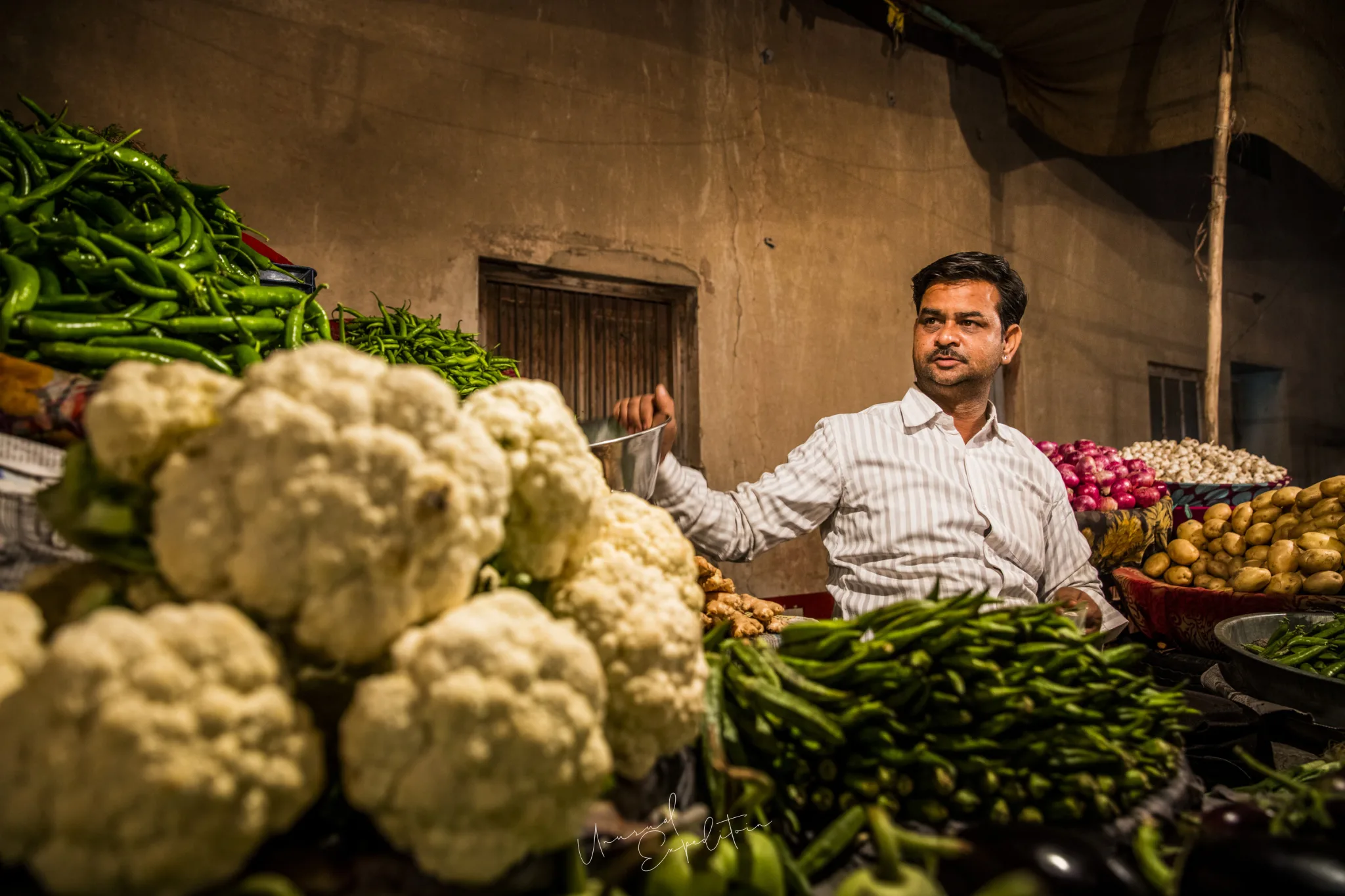
When the fair ground goes dark, the main bazaar of Pushkar lights up with vegetable sellers, sweet stalls, barbers and cloth shops. Bare bulbs and lamps make warm pools of light, and a fast lens at a wide aperture is enough. People are more relaxed in the evening, so this is a good time for portraits, always with a question first.
Pushkar photo spots at a glance
| Spot | Best light | Lens | Etiquette |
|---|---|---|---|
| Trading ground | First light | 24-70mm, 70-200mm | Greet first, keep clear of hind legs |
| Water tanks | Morning, late afternoon | 24-70mm | Wait for still water |
| Dunes at sunset | Sunset and after | 24-70mm, 70-200mm | Expose for the sky |
| Fair market | Morning | 24-70mm | Buy or ask |
| Pushkar Lake ghats | Early morning, evening aarti | 24-70mm | No photos of bathers, shoes off |
| Brahma and Savitri temples | Sunrise from the hill | 16-35mm, 24-70mm | No photos in the sanctum |
| Night bazaar | Evening | 24-70mm | Ask before portraits |
The fair ground has two short windows of great light; the town fills the hours between them.
Photograph Pushkar with us
We run Pushkar as a private trip on request, timed to the fair or in a quieter month, often with Rajasthan's forts and cities. Private tours suit individuals, families, couples and photographers at their own pace; we arrange all the logistics, the cost can be lower than our group tours because no tour leader travels, and a photographer or photography coaching can be added at extra cost. Ask at least two months ahead, and earlier for the fair. See private tours and our India photography tours page.
Pushkar photography tours
The next Pushkar departure is announced on the Pushkar photography tours page, with previous expeditions and all the planning guides.
Explore Pushkar in depth
- Pushkar Photography Tour Guide: the Camel Fair, the Lake and the TownIndia
- 5 Best Restaurants in Pushkar, India: Cafes, Thalis and KachoriIndia
- Pushkar Sunrise and Sunset: the Dunes, the Lake and the HillIndia
- Pushkar Photography FAQ: the Fair, the Ghats, Gear and SafetyIndia
- Pushkar Fair Market: Pots, Tools and Camel Finery at the Camel MelaIndia
- Pushkar Camel Fair: What Happens at the Pushkar MelaIndia
- Pushkar Fair Photos: Camels, Herders and the Trading GroundIndia
- Is Pushkar Worth Visiting? The Lake, the Ghats and How to Reach PushkarIndia
- Best Time to Visit Pushkar for the Camel Fair and the TownIndia
Upcoming Photo Tours
- Egypt Photo Tour – EgyptEgypt 12 Dec 2026 To 20 Dec 2026
- Inner Mongolia Winter Owl Photo Tour – ChinaChina 01 Jan 2027 To 04 Jan 2027
- Inner Mongolia Winter Photo Tour – ChinaChina 05 Jan 2027 To 11 Jan 2027
- Mekong And Central Highland Vietnam Photo Tour - VietnamVietnam 16 Jan 2027 To 24 Jan 2027