
Best Places to Visit in Yucatan Peninsula for Photos: Six Photo Spots
Best places to visit in Yucatan peninsula with a camera: Chichén Itzá, Ek Balam, cenotes, Valladolid, Tulum and Maya embroidery.
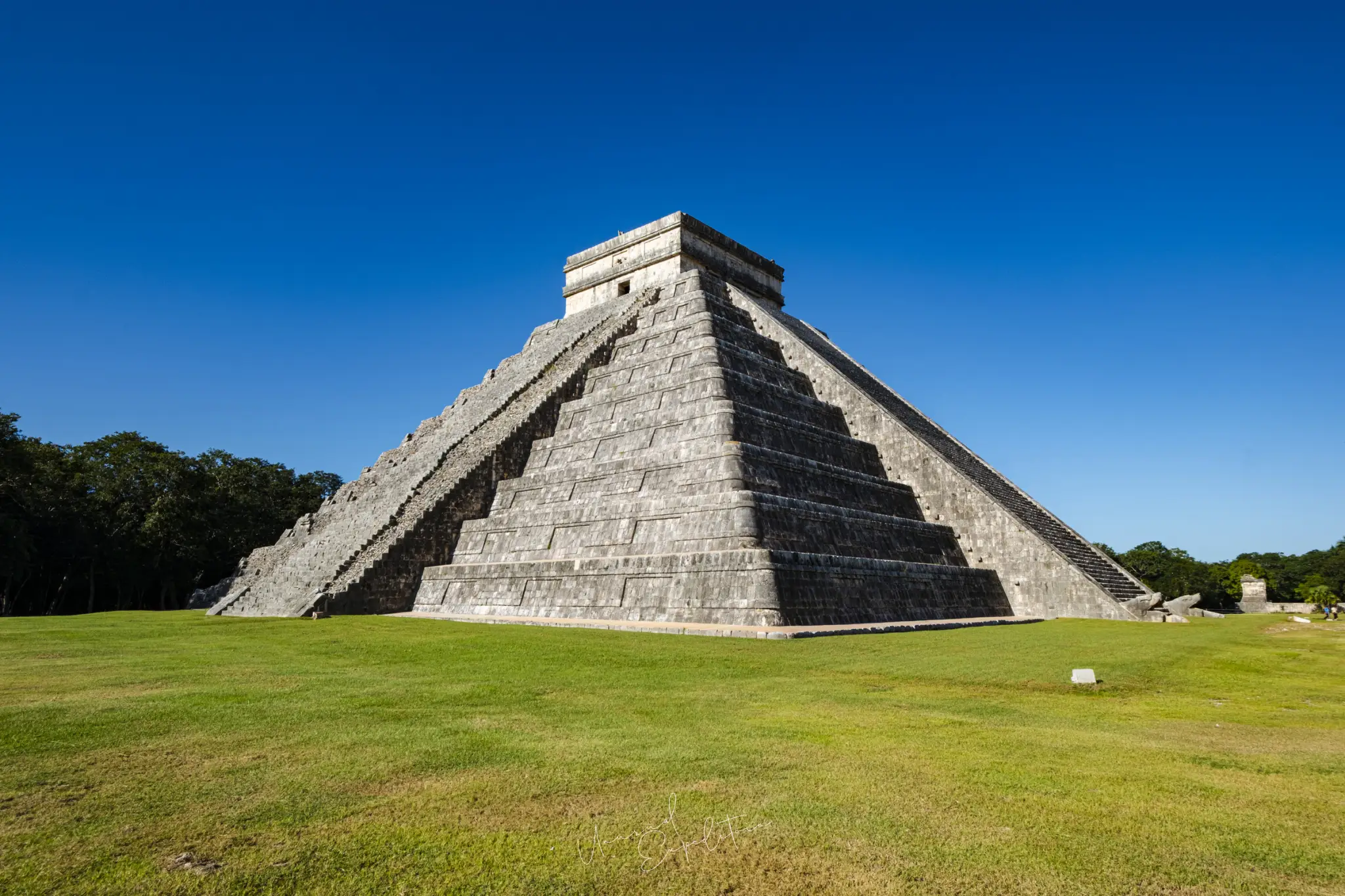
The best places to visit in Yucatan peninsula for photographs are El Castillo at Chichén Itzá, the Acrópolis at Ek Balam, the cenotes around Valladolid, the convent of San Bernardino in Valladolid itself, the cliff-top temples of Tulum above the Caribbean and the embroidery houses of the Maya villages. These six photo spots cover the peninsula's three themes, the Maya cities, the limestone and the living culture, and each has a part of the day when it is at its best.
We photographed the Yucatán on our Day of the Dead trip and on a recce the year before. For the whole region, start with our Yucatán photography tour guide; for the season and the weather, read the best time to visit Yucatán for photography.
Best places to visit in Yucatan peninsula: the photo spots at a glance
The peninsula is flat, hot and green, and the light turns hard quickly after sunrise. Most of the Maya sites open in the morning and close in the afternoon, so the classic warm light at the ruins is limited; the trick is to be at the gate when it opens and to use the soft light of overcast days. The table sums up each spot.
| Spot | Best light | Lens | Access |
|---|---|---|---|
| El Castillo, Chichén Itzá | At opening | 16-35mm, 24-70mm | No climbing, no flash |
| Acrópolis, Ek Balam | Morning | 16-35mm | Climb described as allowed, check at the gate |
| Cenotes near Valladolid | Around midday for light beams | 16-35mm | Privately run, wet steps |
| Convent of San Bernardino, Valladolid | Late afternoon, blue hour | 24-70mm | Open town square |
| Tulum cliff temples | Morning | 24-70mm | Inside the Parque del Jaguar, no drones |
| Maya village embroidery | Shade, soft light | 24-70mm | By arrangement, ask first |
Midday is the one time a cenote beats a ruin, so plan the cenotes for the hours when the ruins look flat.
El Castillo at Chichén Itzá
El Castillo, the pyramid of Kukulcán, is the picture everyone wants from the Yucatán, and Chichén Itzá has been a UNESCO World Heritage Site since 1988. The pyramid stands alone on a wide lawn, so from the edge of the grass a 16-35mm takes it whole against the sky, and a 24-70mm from further back gives it room. Climbing has been banned since 2008, and INAH, the national institute that runs the site, restated the ban in 2025. Be at the gate when the site opens: the lawn is empty before the tour coaches arrive in the middle of the day, and the low sun shows the steps of each terrace. At the spring and autumn equinoxes the late afternoon sun casts a line of triangles down the north stairway, the famous serpent of light. Flash is not allowed, and INAH charges an extra fee for professional cameras. Our Chichén Itzá photos covers the rest of the site.
The Acrópolis at Ek Balam
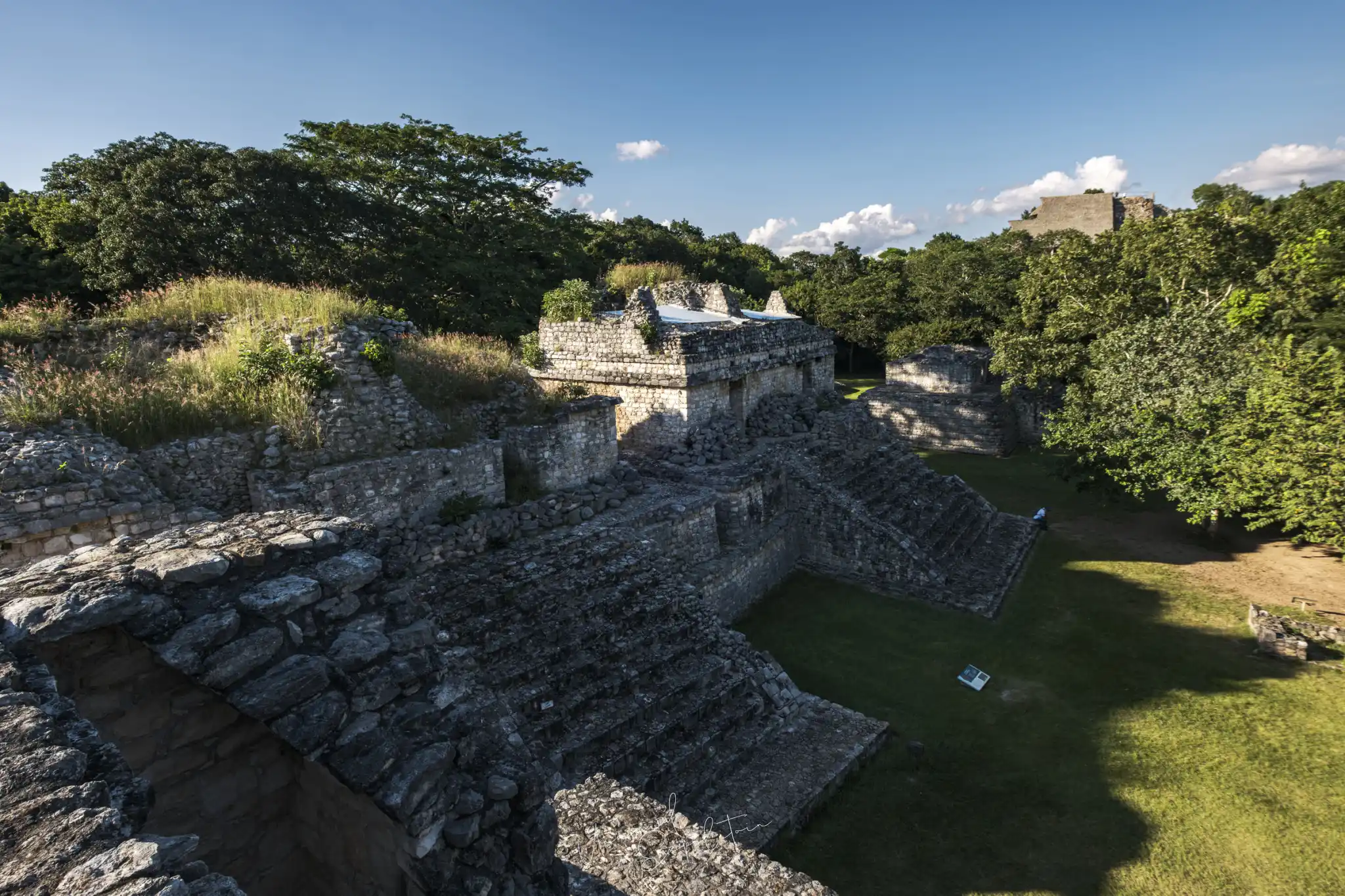
Ek Balam, north of Valladolid, is the Maya city photographers tend to prefer once they have seen both. Its Acrópolis is a long, stepped building rising in levels out of the forest, with a stucco doorway carved as a monster's mouth near the top. Travel sources in 2025 and 2026 describe the climb as allowed, with a rope up the centre of the stairway; check at the gate on the day. From the upper levels the view runs over the other structures and the forest canopy to the horizon, and the morning sun from the side gives the stonework texture. A 16-35mm is the lens for the ball court and plazas below. More in our Ek Balam photos guide.
The cenotes around Valladolid
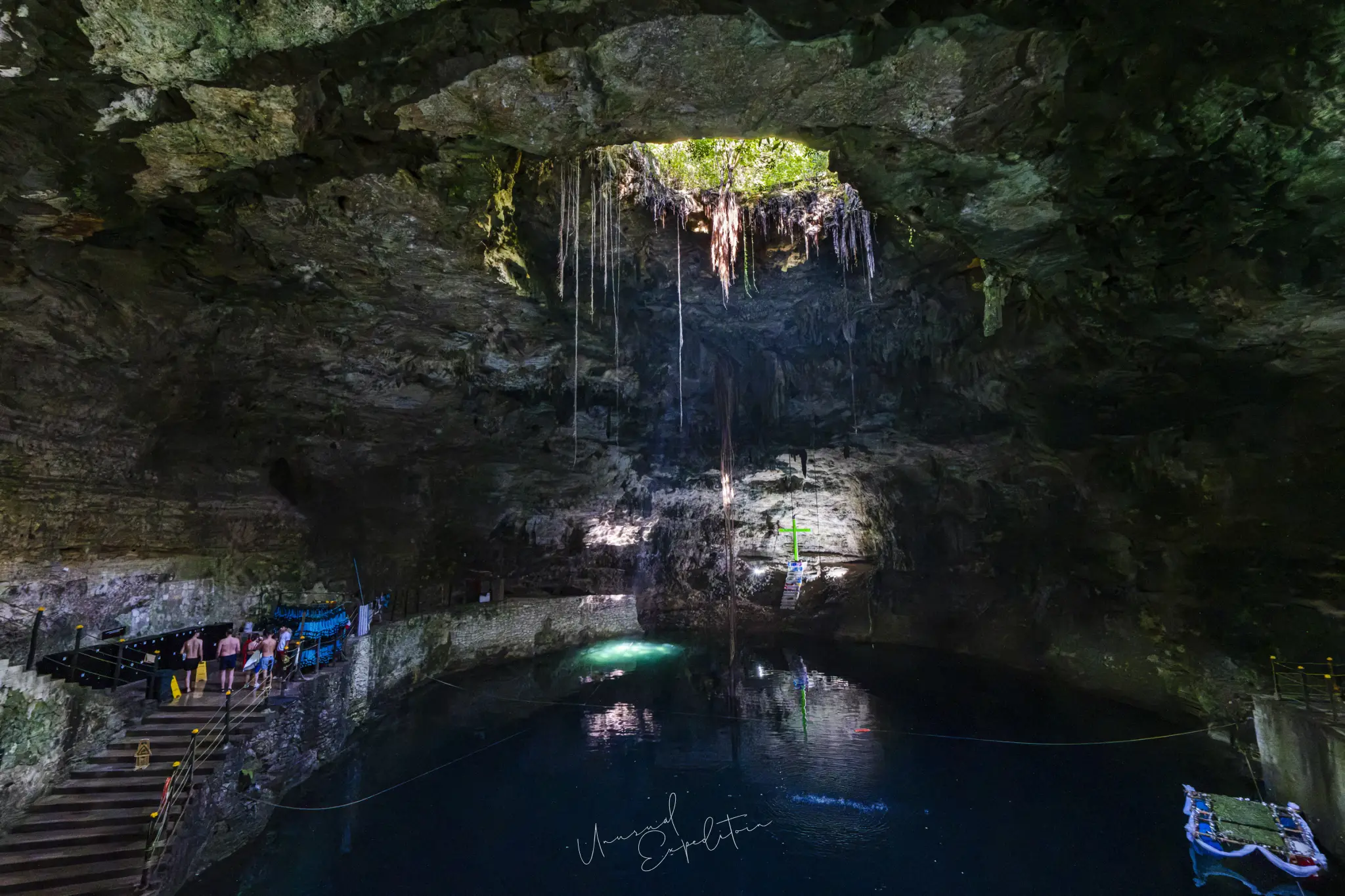
Cenotes are sinkholes in the peninsula's porous limestone where the roof has collapsed and exposed the groundwater. The Yucatán has almost no surface rivers, and in the north west the cenotes follow the ring of the buried Chicxulub crater. Around Valladolid there are dozens, from open pools under hanging roots to caves with a single hole in the roof. The famous beam of light at Cenote Suytun, a privately run cenote near the town, appears around midday on clear days only; we cannot promise a month. Inside, it is dark and damp: raise the ISO, use a 16-35mm and wipe the front element often. The stone steps are wet, so keep one hand free.
Valladolid and the convent of San Bernardino
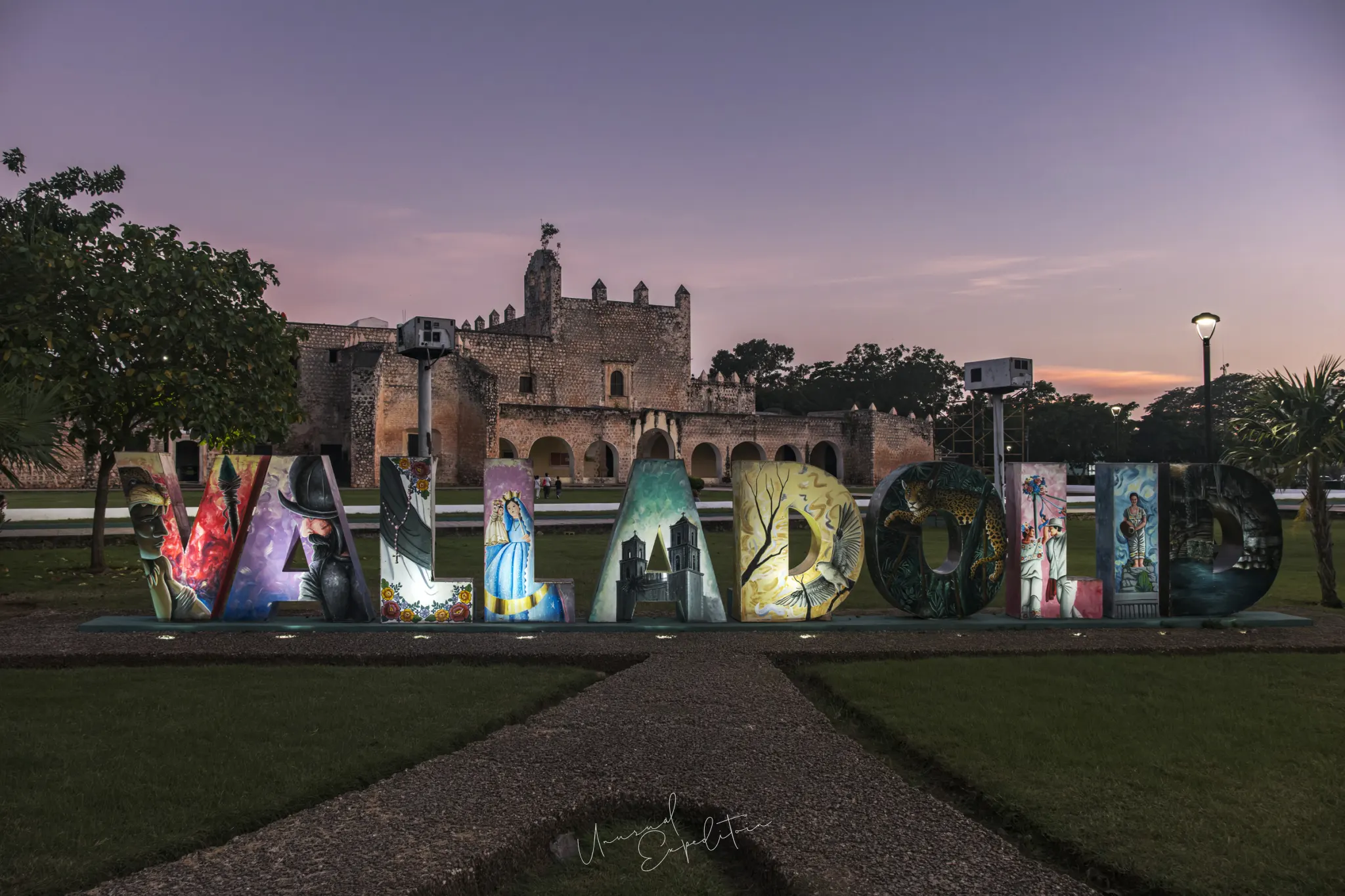
Valladolid is the colonial town in the middle of the peninsula, close to both Chichén Itzá and Ek Balam, and its Convent of San Bernardino de Siena stands at the end of a long stone path in the Sisal quarter. In front of the convent, painted letters spell out the town's name, and at blue hour the letters, the lamps and the dark bulk of the convent against a pink sky make the evening picture of the town. Late afternoon is good too, when the walls warm to gold. A 24-70mm from the start of the path holds both. Back in the centre, the painted streets and the main square are easy walking with a camera in the cooler hours.
The cliff-top temples of Tulum
Tulum is the Maya site on the sea, its temples standing on a limestone cliff above a white beach and the turquoise Caribbean, in the state of Quintana Roo on the eastern side of the peninsula. The site now sits inside the Parque del Jaguar national park with its own access. The best pictures come in the morning, when the sun rises over the sea and lights the cliff from the front, and from the paths along the cliff edge you can frame the temples with palms and the water below. Beach access is sometimes closed, and drones are prohibited without INAH authorisation. Our Tulum ruins photos has the view across the cove.
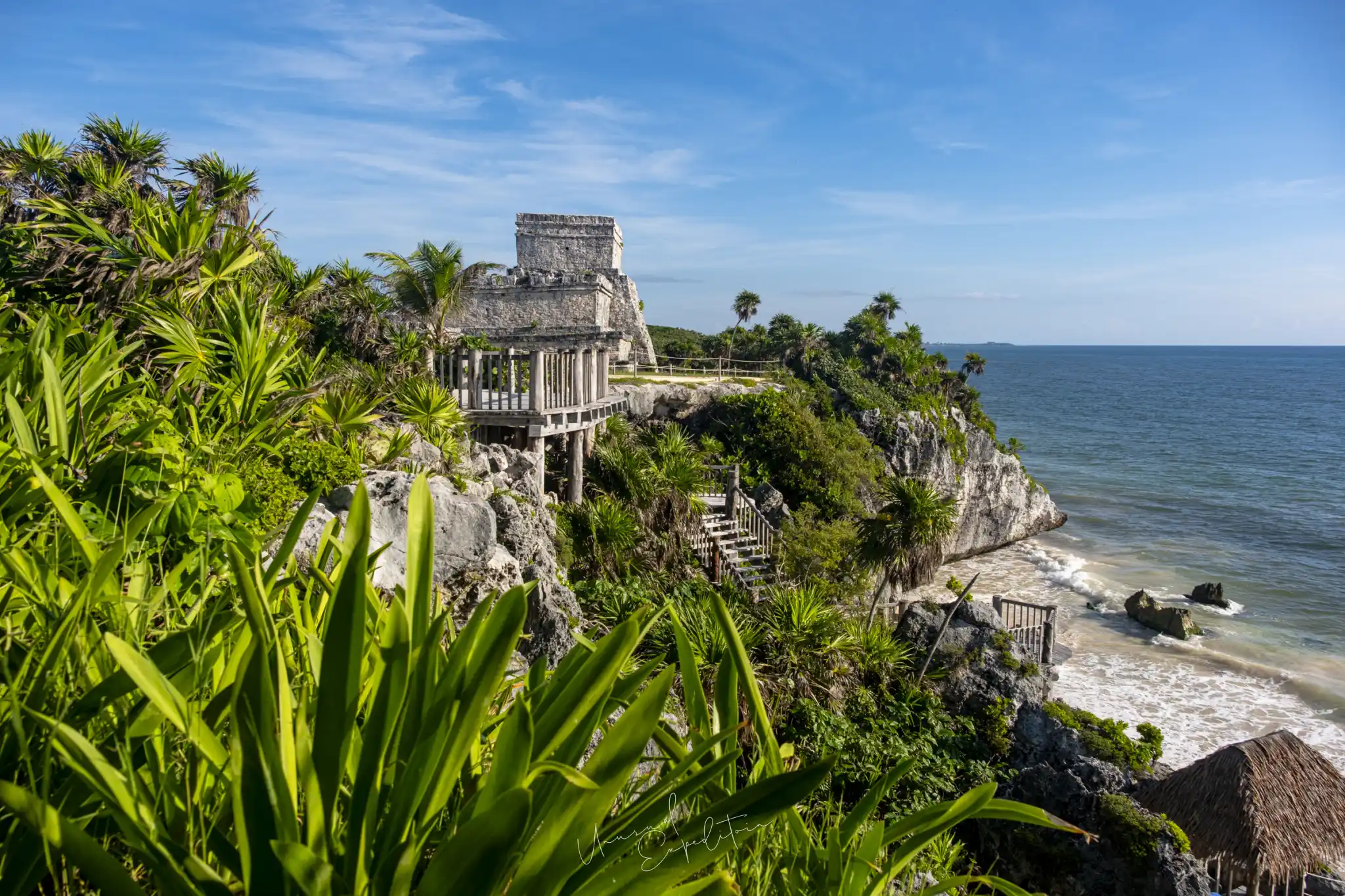
Maya villages and the embroidery houses
The last spot is not a monument at all. In the Maya villages of the Yucatán, women still embroider the hipil, the white dress with bands of flowers at the neck and hem, sitting in the doorways of thatched houses where the light is soft and even. It is the most personal of these photo spots and the one that needs most care: visit through a family or a guide who knows them, buy something, ask before you raise the camera and work slowly with a 24-70mm. Our Maya culture and embroidery photos shows what those visits look like.
"The Yucatán is about being early. Be first through the gate at the ruins, and leave the cenotes for the middle of the day, when the sun is straight overhead."
Joseph Mak, tour leader, Unusual Expedition
Photographing the Yucatán: rules and courtesy
Each Maya site is run by INAH with its own rules: no climbing at Chichén Itzá, no flash, no drones without authorisation, and extra fees for professional cameras; Yucatán state adds its own fee at Chichén Itzá. Fees change often, so check the official source before you travel. Carry water and a hat: the shade on the lawns is limited.
Photograph the Yucatán with us
Our Day of the Dead trip, which ended in the Yucatán, has run, and we plan Mexico again; see our Mexico photography tours page for current departures.
Yucatan photography tours
The next Yucatan departure is announced on the Yucatan photography tours page, with previous expeditions and all the planning guides.
Explore Yucatan in depth
- Yucatan Photography Tour: The Complete GuideMexico
- Maya Culture in Yucatan: Embroidery, Tortillas and PortraitsMexico
- Tulum Ruins Photos: the Maya City on the CaribbeanMexico
- Is Chichen Itza Worth It? Crowds, Vendors and Getting ThereMexico
- Ek Balam Photos: the Acrópolis Without the CrowdsMexico
- Chichen Itza Photos: El Castillo, the Serpents and Las MonjasMexico
- Cenote Suytun Photos and the Other Cenotes Worth a FrameMexico
- Best Time to Visit Yucatan for PhotographyMexico
Upcoming Photo Tours
- Egypt Photo Tour – EgyptEgypt 12 Dec 2026 To 20 Dec 2026
- Inner Mongolia Winter Owl Photo Tour – ChinaChina 01 Jan 2027 To 04 Jan 2027
- Inner Mongolia Winter Photo Tour – ChinaChina 05 Jan 2027 To 11 Jan 2027
- Mekong And Central Highland Vietnam Photo Tour - VietnamVietnam 16 Jan 2027 To 24 Jan 2027