
Madagascar Photos: What the Island Really Looks Like
Madagascar photos region by region: baobab west coast, Vezo lagoons, highland rice terraces, Antananarivo and the rainforest. Own frames.
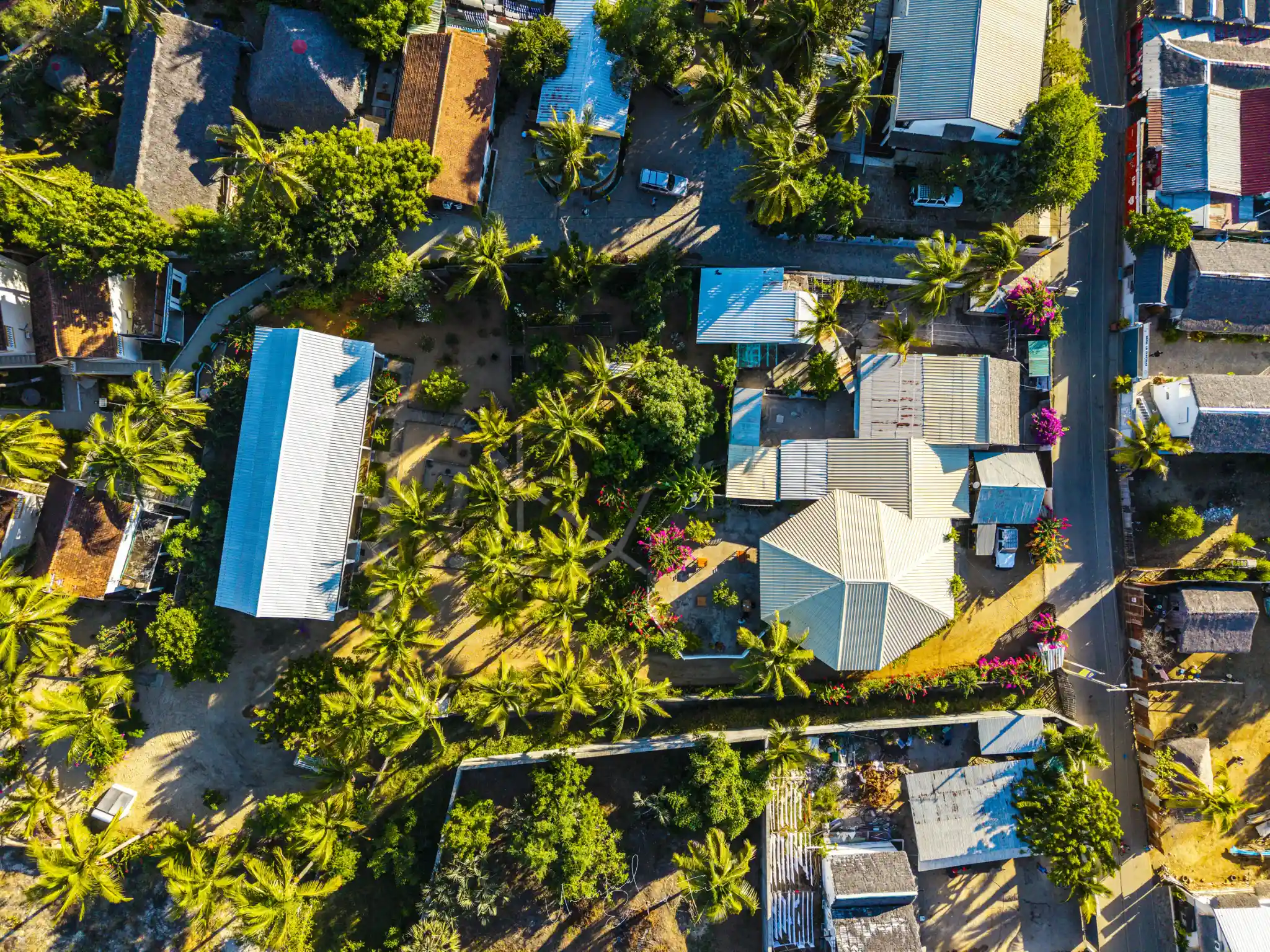
Madagascar photos tend to show one of two things: a row of baobabs at sunset or a ring-tailed lemur. The island is four times the size of Peninsular Malaysia and looks like six different countries, and the real pictures are in the gaps between the postcards. These are our own frames from the west coast, the Vezo fishing villages, the central highlands, the capital and the eastern rainforest, with a note on what each place gives a camera and when.
They sit under the complete Madagascar photography tour guide, which explains how the April trip is built. This page is the visual answer to a simpler question, what does Madagascar actually look like.
Madagascar landscape photos: the dry west
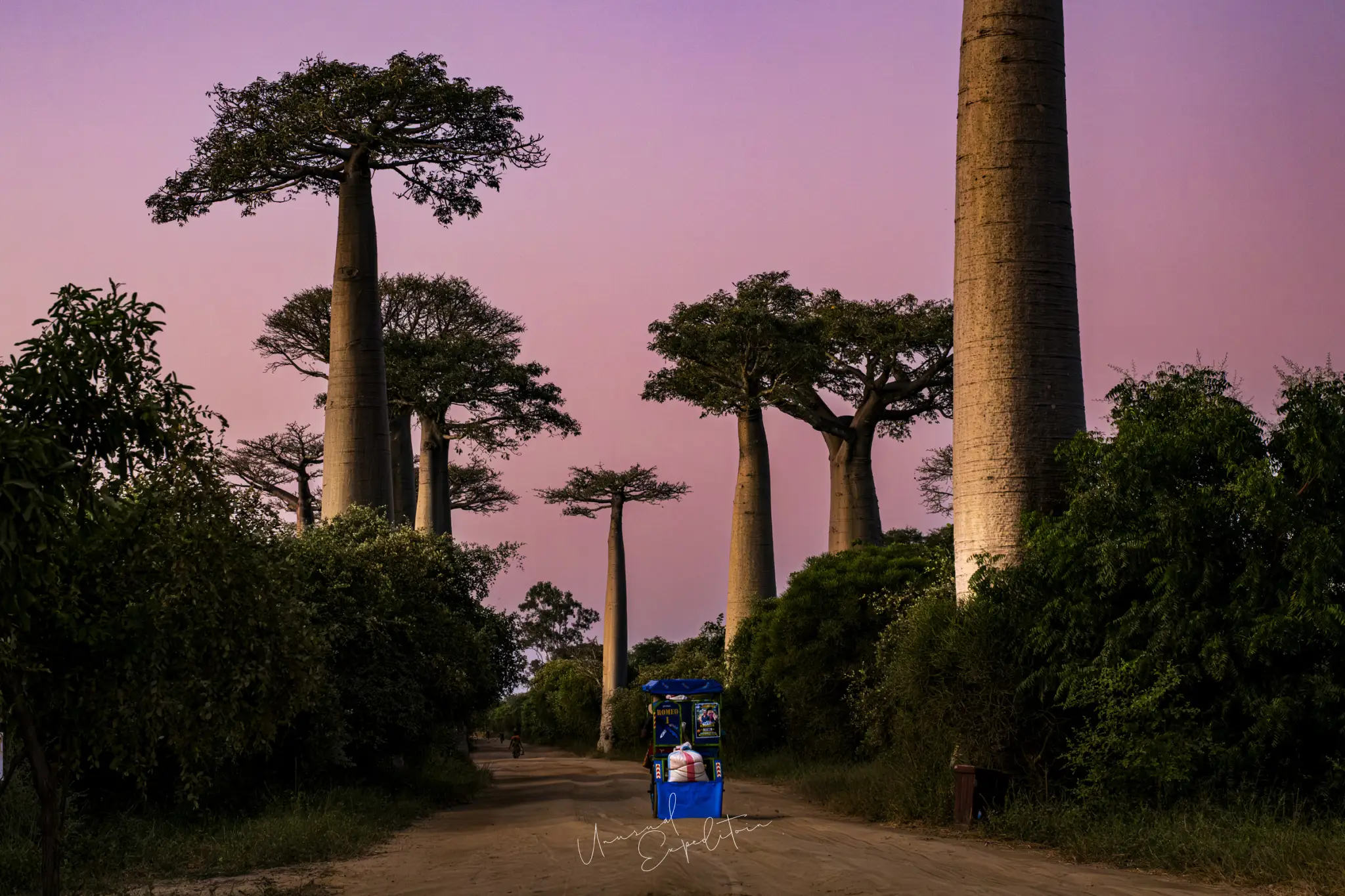
The west, around Morondava, is the Madagascar most people have seen. Red earth, dry deciduous forest that has lost its leaves by the middle of the dry season, and the Grandidier's baobabs standing above it like columns. The light is orange at both ends of the day and white in the middle. The Avenue of the Baobabs is the obvious frame and it is a good one, but the better pictures are the ones with life in them: a zebu cart on the dirt road at dusk, goats being driven under a lone tree, the paddies that flood beside the trees and turn them into reflections. The sky is clear for most of the dry season, so the evening colour is reliable, and the dust in the air makes the sun a soft disc you can point a lens at.
The Vezo coast: sand, lagoons and wooden boats
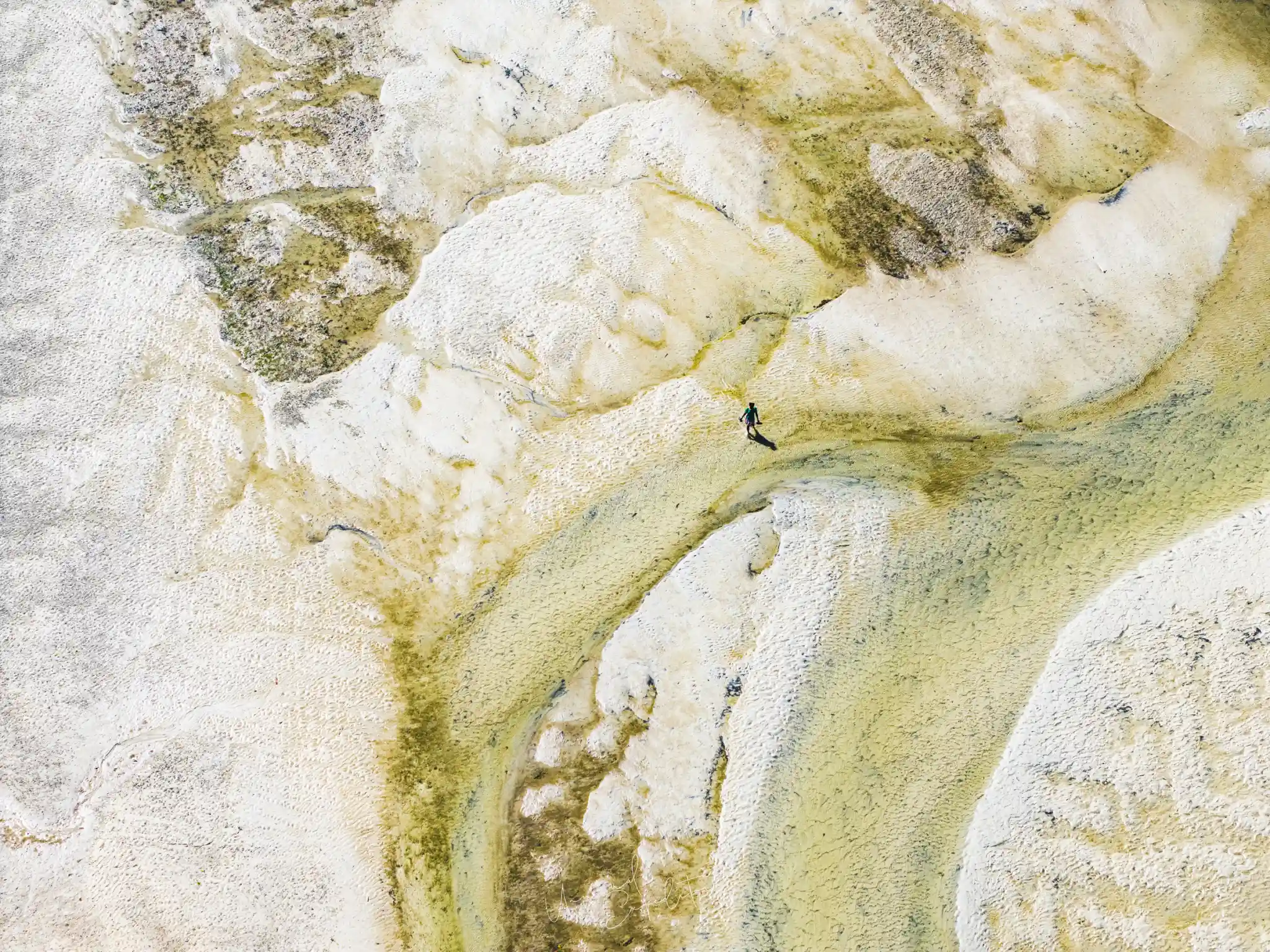
South of Morondava the coast belongs to the Vezo, the fishing people of the south-west, and their villages look nothing like the baobab country twenty kilometres inland. White sand, turquoise channels behind sand bars, outrigger pirogues drawn up in rows, and at Belo sur Mer the wooden dhows that are still built by hand on the beach. From above the pattern is graphic, the hulls at different stages of building laid out on the sand like a diagram. From the ground it is a people place, and the pictures are of hands, tools and faces. Our own frames from the coast are collected in Belo sur Mer photos: where to shoot and in the village piece on the dhow builders.
What is the landscape like in Madagascar's highlands?
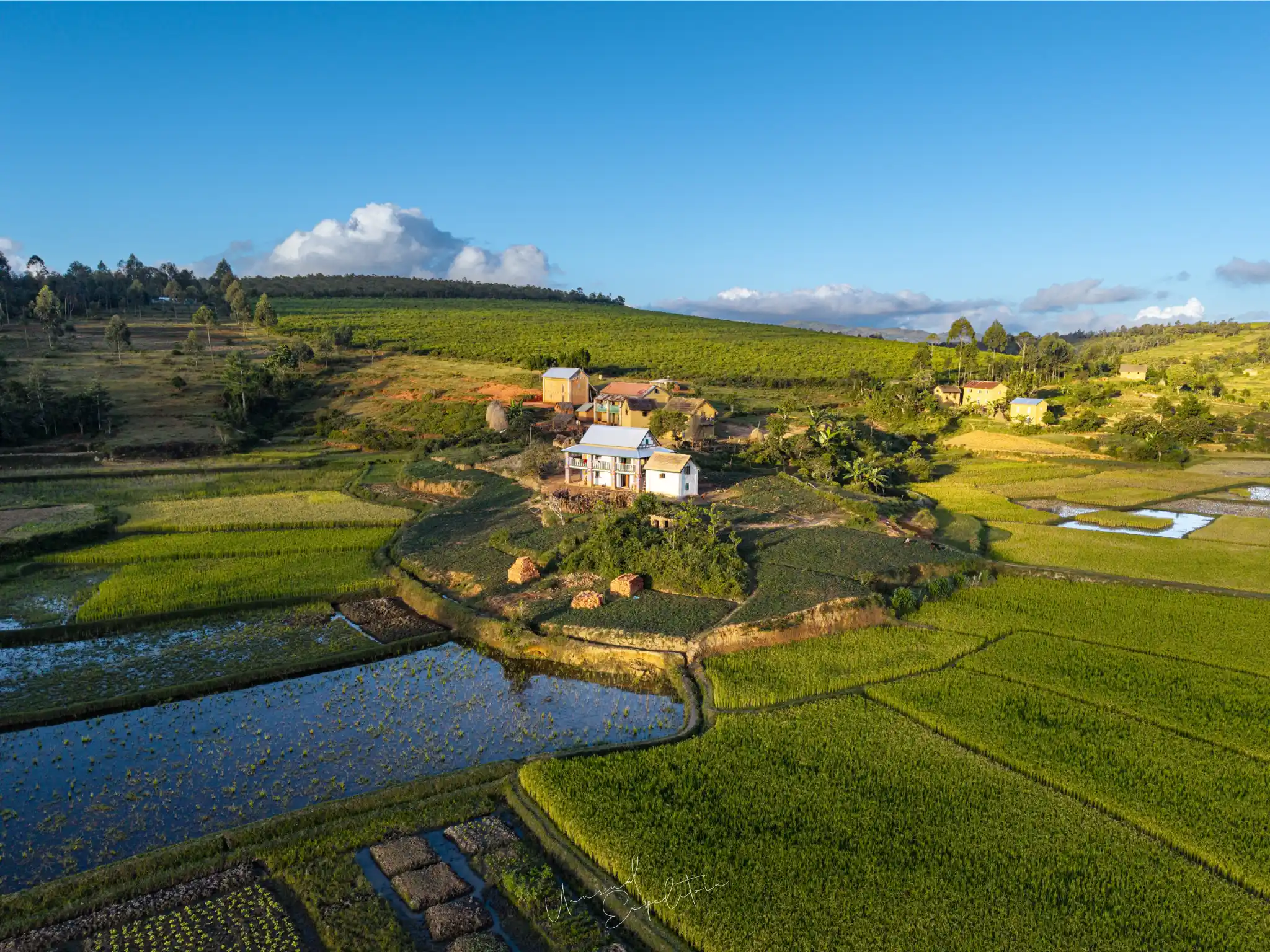
The centre of the island is a plateau at twelve to fifteen hundred metres, and it looks like South East Asia more than Africa. Terraced rice paddies climb every valley, the villages are two-storey houses of red brick and thatch, and in the cool season mist lies in the hollows until the sun burns it off in the middle of the morning. The Merina and Betsileo people who farm here came from the Malay and Indonesian islands two thousand years ago, and the rice terraces are the clearest sign of it. The colour palette is green and red: paddy and laterite. From above, a brick farmhouse on a knoll in a sea of rice is the picture; from the road, it is people carrying sacks along the railway line or threshing rice on a tarpaulin.
Antananarivo: a city on a dozen hills
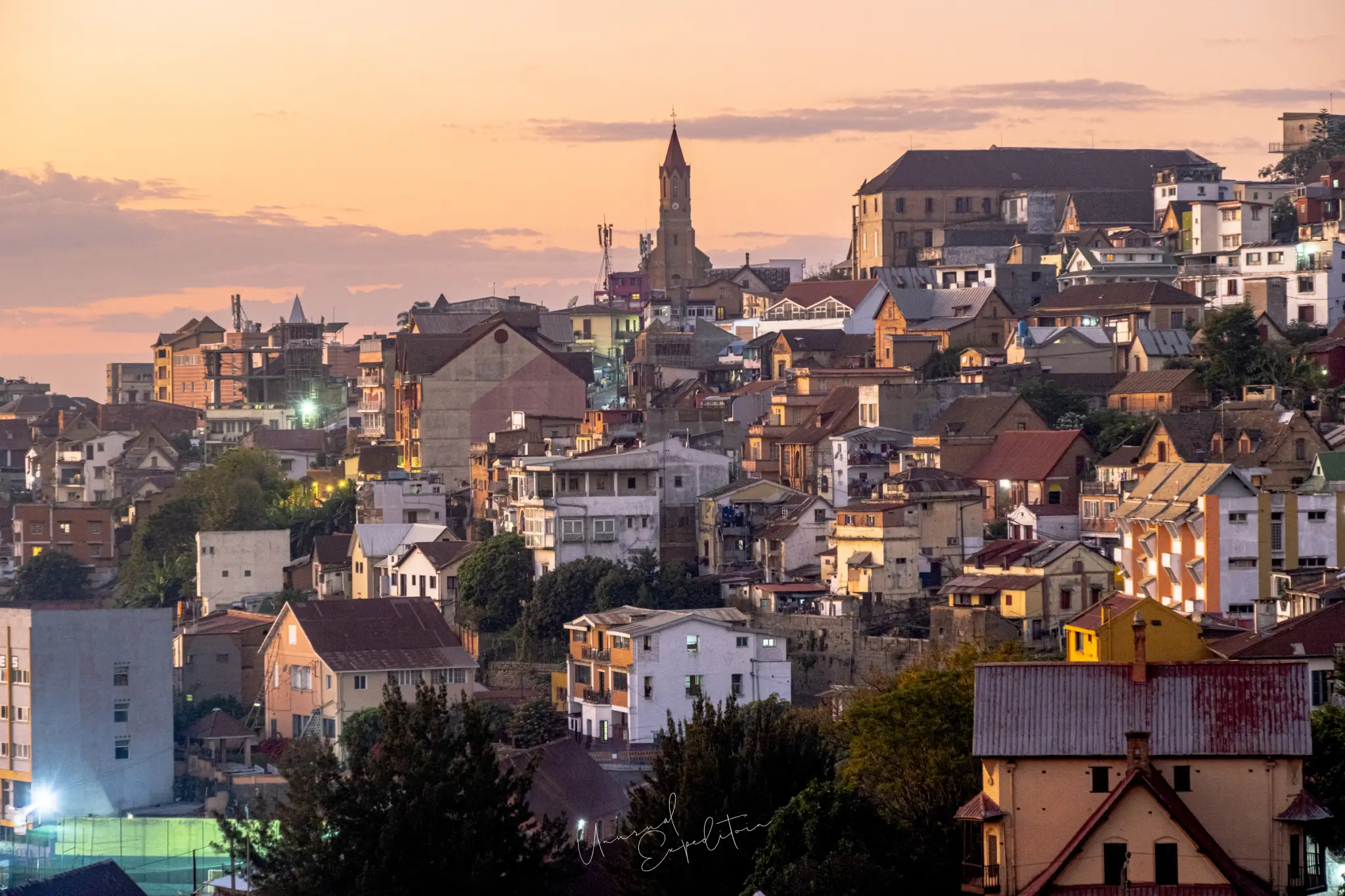
The capital is built on hills at about 1,280 metres, and the way to photograph it is from one hill towards another. At dusk the tiers of houses, church spires and the royal palace on the summit catch the last light while the valleys fill with lamps and traffic. By day the markets below the upper town give the street pictures: cobblers, book sellers, food stalls, the stairs down to Analakely lined with stalls. It is a dense, noisy city and it photographs better than its reputation. The city day is described in Antananarivo street photography.
The eastern rainforest: green, wet and close
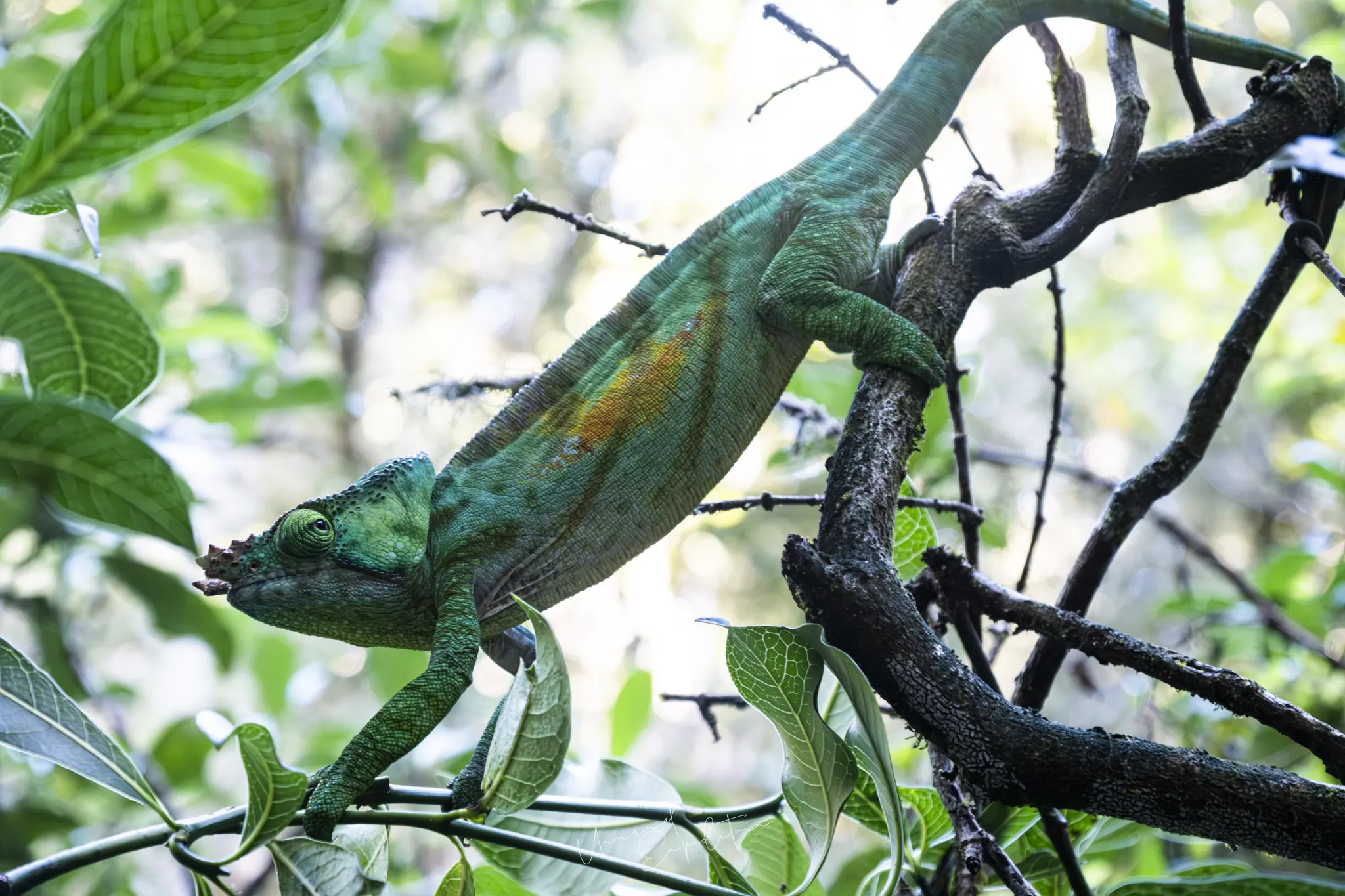
Drop off the eastern edge of the plateau towards Andasibe and everything changes in an hour. The air is damp, the forest closes over the road, and the subjects shrink from landscapes to things you can hold: a Parson's chameleon the length of a forearm, tree frogs the size of a thumbnail, leaf-tailed geckos that are invisible until the guide points. The indri, the largest lemur, calls through the canopy in the morning and the diademed sifaka moves through the trees in family groups. The light under the canopy is a stop or two down from the open and comes from every direction at once, which is kind to fur and skin. This is the Madagascar of wildlife photos, small and green where the west is wide and orange.
Madagascar people photos: markets and faces
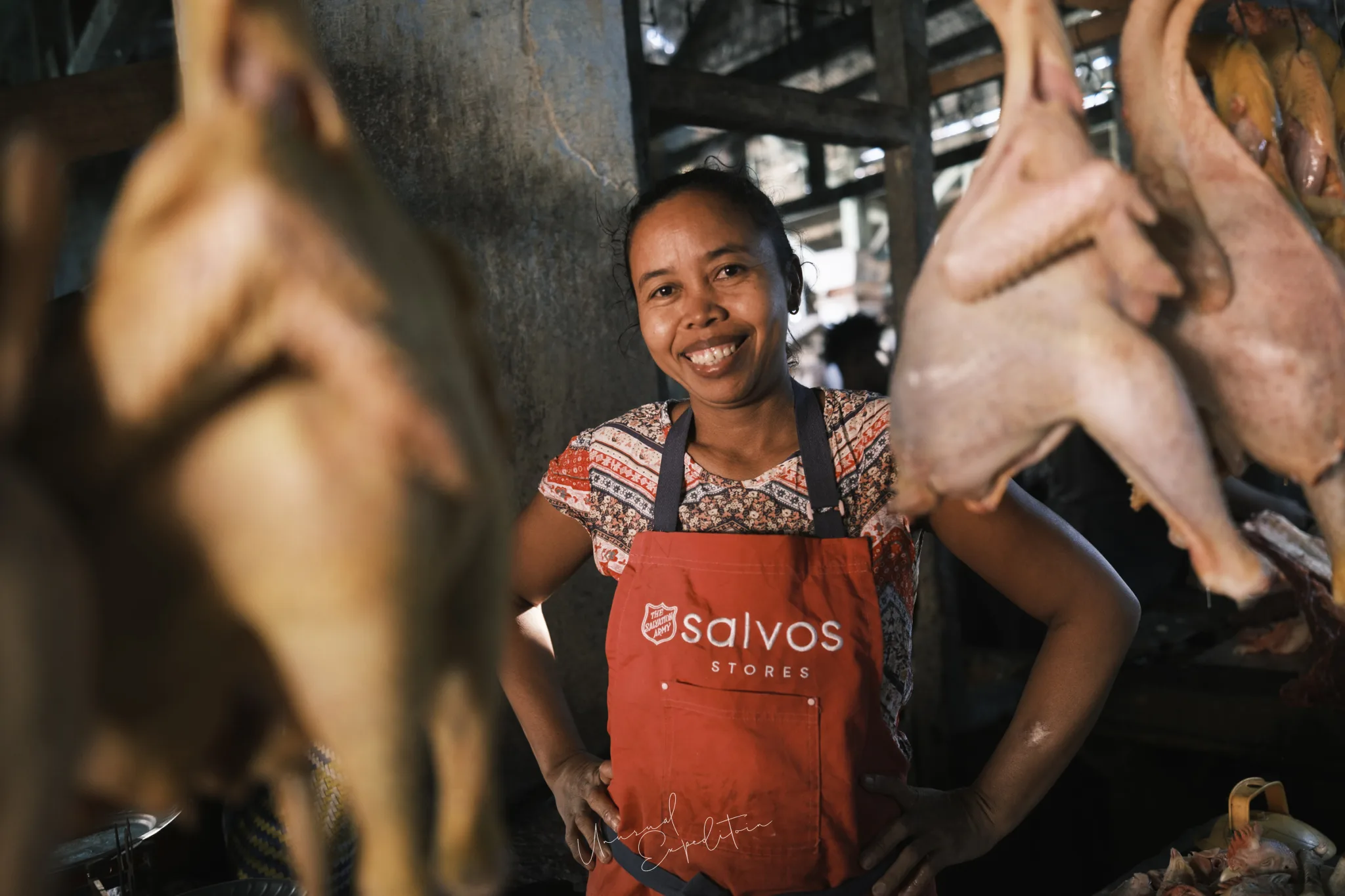
The frames guests print most often are not the baobabs. They are the people: a market woman in Morondava laughing with a chicken in each hand, a fish seller at Belo sur Mer, rice workers in the highlands, children in the Vezo villages who want to see the back of the camera. Malagasy people are generally open to being photographed if you ask, and the asking is the whole method. Our approach is to spend the first half hour somewhere without a camera, then work with the local guide translating. The market pictures come from standing still in one spot while the trade flows past, not from walking through.
"I tell people before they come that Madagascar is not one place. The west is Africa with baobabs, the middle is Java with red brick, and the east is a greenhouse. Pack for three trips and you will not be disappointed by any of them."
Joseph Mak, tour leader, Unusual Expedition
Region by region: what each one gives the camera
| Region | Looks like | Main subjects | Best light |
|---|---|---|---|
| West coast (Morondava) | Red earth, dry forest, baobabs | Avenue, lone trees, paddies, zebu carts | Late afternoon and after sunset; dawn for the quiet side |
| Vezo coast (Belo sur Mer, Betania) | White sand, turquoise lagoons, wooden boats | Dhow yards, pirogue launches, village life | Early morning and the last hour; midday from above |
| Central highlands | Rice terraces, brick villages, mist | Terraces, farm work, roadside markets | First two hours after sunrise |
| Antananarivo | Hills of stacked houses, spires, markets | City from above, market trade, the steps | Dusk for the city, midday inside markets |
| Eastern rainforest (Andasibe) | Dense wet forest, moss, mist | Lemurs, chameleons, frogs, night walk | Overcast mornings; torchlight after dark |
The table is also the argument for crossing the island instead of staying on one coast: no two rows share a light or a lens.
When were these photos taken?
All the frames on this page are Joseph Mak's own, from two trips in May, which is the start of the dry season on the west coast and still green in the highlands and the east. Our tour runs in April, a few weeks earlier, when the paddies are fuller and the first dust has not yet settled on the west. The sky and the light are much the same; the detail of what is in flower or in harvest shifts by a week or two. Which month suits which region is the subject of the best time for a Madagascar photography trip.
Come and make your own
If these are the pictures you want to take and not only look at, the Madagascar photography tour crosses the west coast, the highlands and the eastern forest on one April departure, with Joseph Mak leading. Fares are indicatively S$6,000 to S$7,000 per person depending on the room; the tour page carries the current rate.
Join the Madagascar photography tour
Madagascar Photo Tour – Madagascar departs 11 Apr 2027 To 19 Apr 2027, led by Joseph Mak. Small group, photography first. All Madagascar photography tours.
Explore Madagascar in depth
- The Complete Guide to a Madagascar Photography TourMadagascar
- Andasibe: Is It Worth Visiting, How to Get There, Lemurs and the Night WalkMadagascar
- Avenue of the Baobabs Photo Spots: Location and the Best PositionsMadagascar
- Morondava Photos: Sunset, the Fishing Village and the BeachMadagascar
- Belo sur Mer Photos: Where to Shoot, the Beach and the WeatherMadagascar
- What to Pack for a Madagascar Photo TourMadagascar
- The Milky Way over the Baobabs: Night Photography in MadagascarMadagascar
- Madagascar Tour from Singapore: Flights, Visa and What to ExpectMadagascar
- Is Madagascar Safe? Health, Roads and Drones for PhotographersMadagascar
- What a Madagascar Photo Tour Costs, Line by LineMadagascar
- Twelve Questions Before You Book a Madagascar Photo TourMadagascar
- Madagascar or an African Safari for Wildlife Photography?Madagascar
Upcoming Photo Tours
- Egypt Photo Tour – EgyptEgypt 12 Dec 2026 To 20 Dec 2026
- Inner Mongolia Winter Owl Photo Tour – ChinaChina 01 Jan 2027 To 04 Jan 2027
- Inner Mongolia Winter Photo Tour – ChinaChina 05 Jan 2027 To 11 Jan 2027
- Mekong And Central Highland Vietnam Photo Tour - VietnamVietnam 16 Jan 2027 To 24 Jan 2027