
Best Places to Visit in Hokkaido for Photographers: Seven Winter Spots
Best places to visit in Hokkaido with a camera: Otowa Bridge, Tsurui and Akan cranes, Lake Kussharo, Rausu, the Blue Pond and Hanasaki.
The best places to visit in Hokkaido for winter photography are Otowa Bridge over the Setsuri River at dawn, the crane feeding grounds of Tsurui and Akan, the warm shore of Lake Kussharo, Rausu harbour for the sea eagles, the Shirogane Blue Pond and the snow fields of Biei, and Cape Hanasaki on the Nemuro coast. Most of them are in the east of the island, and each has its hour: the river at first light, the cranes in the afternoon, the harbour in the morning.
This spot guide belongs to our Hokkaido photography tour guide, which covers the island as a whole. The photographs are our own, from our winter trips to eastern and central Hokkaido, and the notes on where to stand come from working these places. Each spot has its own fuller article, linked below.
Top tourist spots in Hokkaido for photographers, at a glance
| Spot | Subject | Best light | Lens |
|---|---|---|---|
| Otowa Bridge, Setsuri River | Cranes roosting in a steaming river | Dawn on the coldest mornings | 100-400mm or longer |
| Tsurui and Akan feeding grounds | Red-crowned cranes dancing on snow | Afternoon, low sun | 100-400mm, 70-200mm |
| Lake Kussharo | Whooper swans on the warm shore | Morning, clear days | 24-70mm, 70-200mm |
| Rausu harbour | Steller's sea eagles over the sea | Morning | 100-400mm |
| Blue Pond and Biei | Dead trees in snow, the lone tree, rolling fields | Clear morning, night illumination | 24-70mm, 70-200mm |
| Cape Hanasaki, Nemuro | The red lighthouse on the cliffs | Dusk | 24-70mm |
Eastern Hokkaido and Biei are far apart, so most trips treat them as two parts.
Otowa Bridge and the Setsuri River at dawn
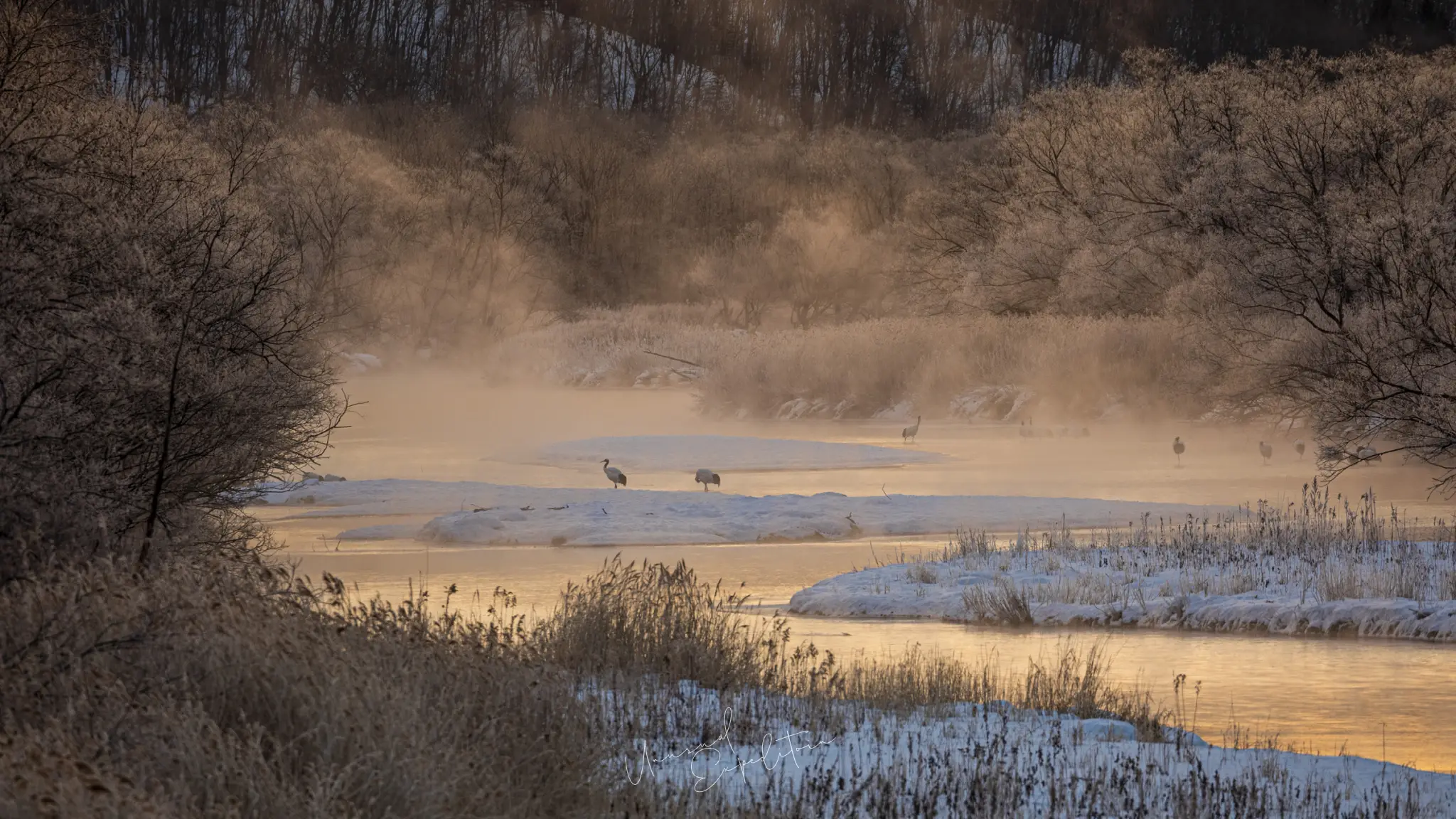
Otowa Bridge in Tsurui looks down on a bend of the Setsuri River where red-crowned cranes roost overnight, standing in the water. On very cold mornings the river is warmer than the air and steam rises off it, frost coats the trees on the banks, and the first sun turns the mist gold. Visit Hokkaido lists it among the places to see the cranes. The bridge is narrow and the photographers stand shoulder to shoulder, so arrive before first light, keep tripods out of the roadway and stay quiet. A long lens picks out the birds; a 70-200mm gives the whole bend with the mist.
Tsurui and Akan: the crane feeding grounds
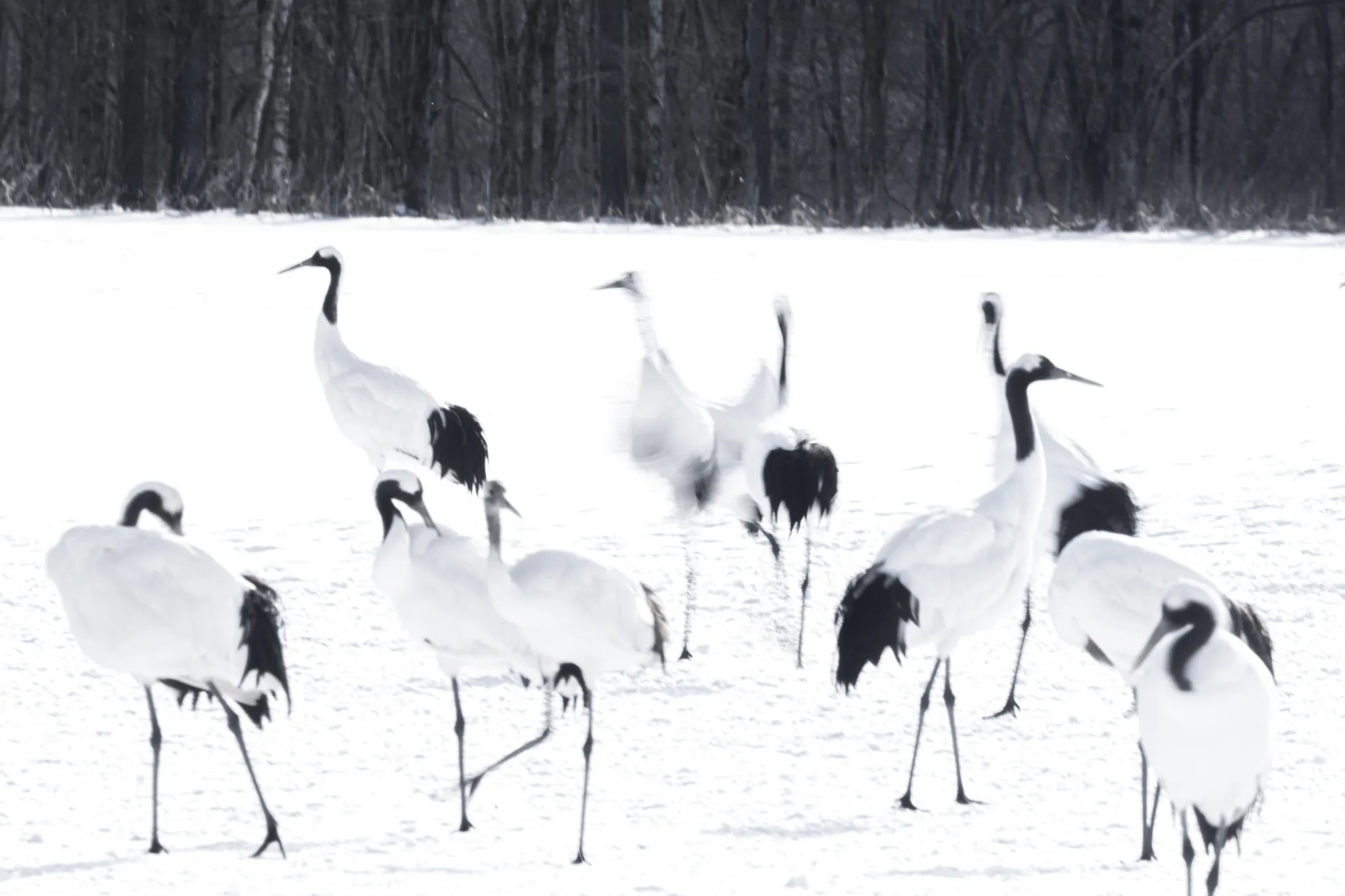
In the cold months the cranes come to fields where they are fed: the Tsurui-Ito Tancho Sanctuary, run by the Wild Bird Society of Japan on land where a dairy farmer began feeding the birds in the winter of 1966, and the Akan International Crane Center, with an observatory over a snowfield where cranes feed from November to March. The pictures come in the afternoon, when pairs bow, call and leap with their wings open. A white field and white birds push the meter towards grey, so dial in exposure compensation. Hokkaido's crane count was 1,927 in the January 2025 survey, nippon.com reported. Our red crowned crane Hokkaido guide covers both places.
Lake Kussharo: swans on the warm shore
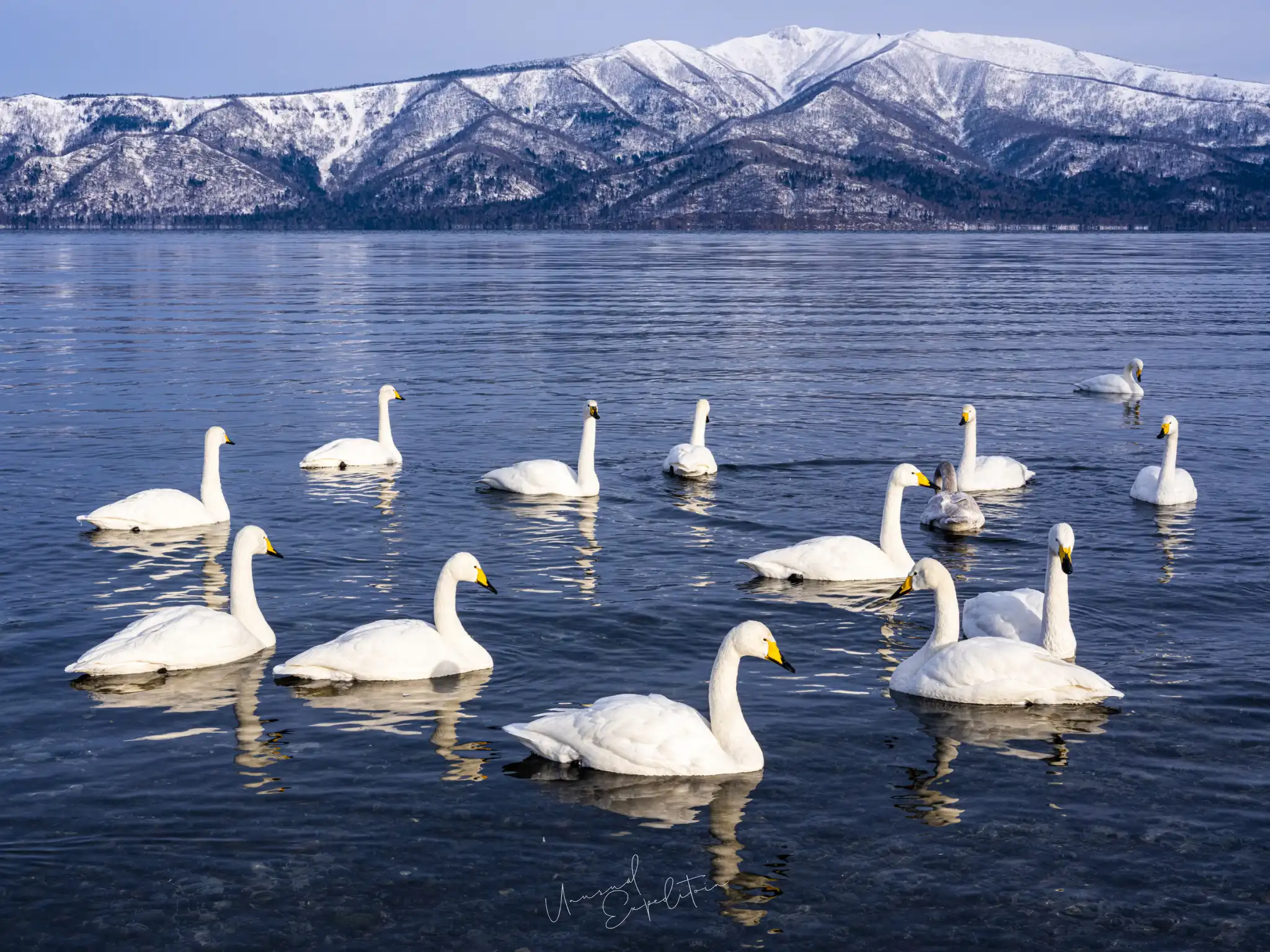
Lake Kussharo, in Akan-Mashu National Park, freezes in winter except where hot springs keep the shore open, and several hundred whooper swans gather there, according to the Japan Tourism Agency's commentary database. Stand at the waterline on a clear morning: the swans in the foreground and the snowy ridges across the lake make the picture, and steam drifts off the warm water when the air is cold. A 24-70mm works because the birds come close; a 70-200mm isolates take-offs and squabbles. Do not feed them. Mount Io's steaming sulphur vents are nearby. Our Lake Kussharo swans guide has more.
Rausu harbour: sea eagles
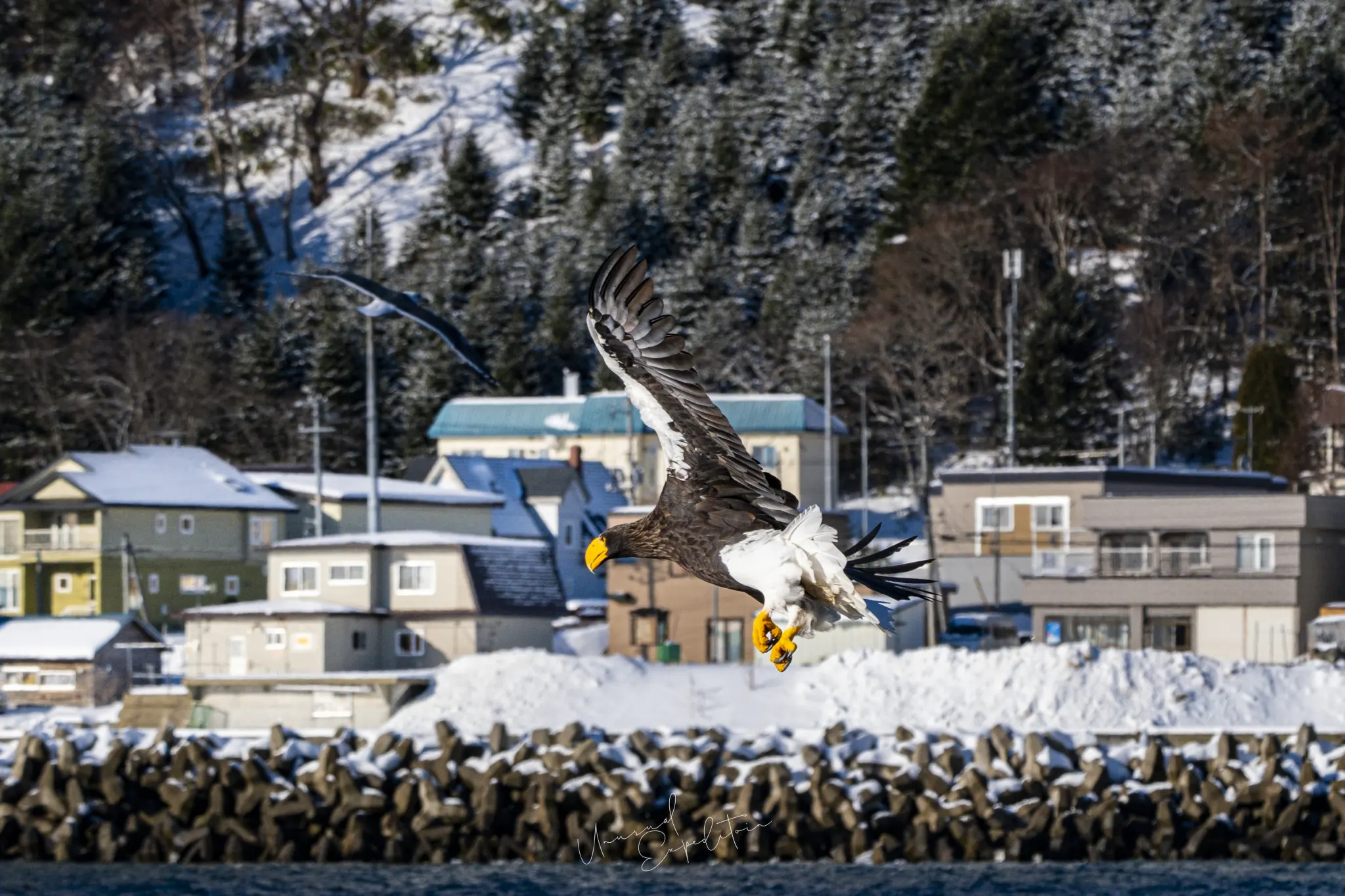
Rausu, on the Shiretoko Peninsula, a UNESCO World Heritage site, is where Steller's sea eagles and white-tailed eagles winter along the coast. Most of the close pictures come from the eagle cruises that run out of Rausu in winter, roughly January to March, and from the drift ice when it arrives, which is never guaranteed. From the harbour itself, eagles fly low over the water against the town and the snowy hillside behind, which gives a picture with a sense of place. Steller's sea eagle is listed as Vulnerable by BirdLife. Our Steller's sea eagle Rausu guide explains the boats.
The Blue Pond and Biei
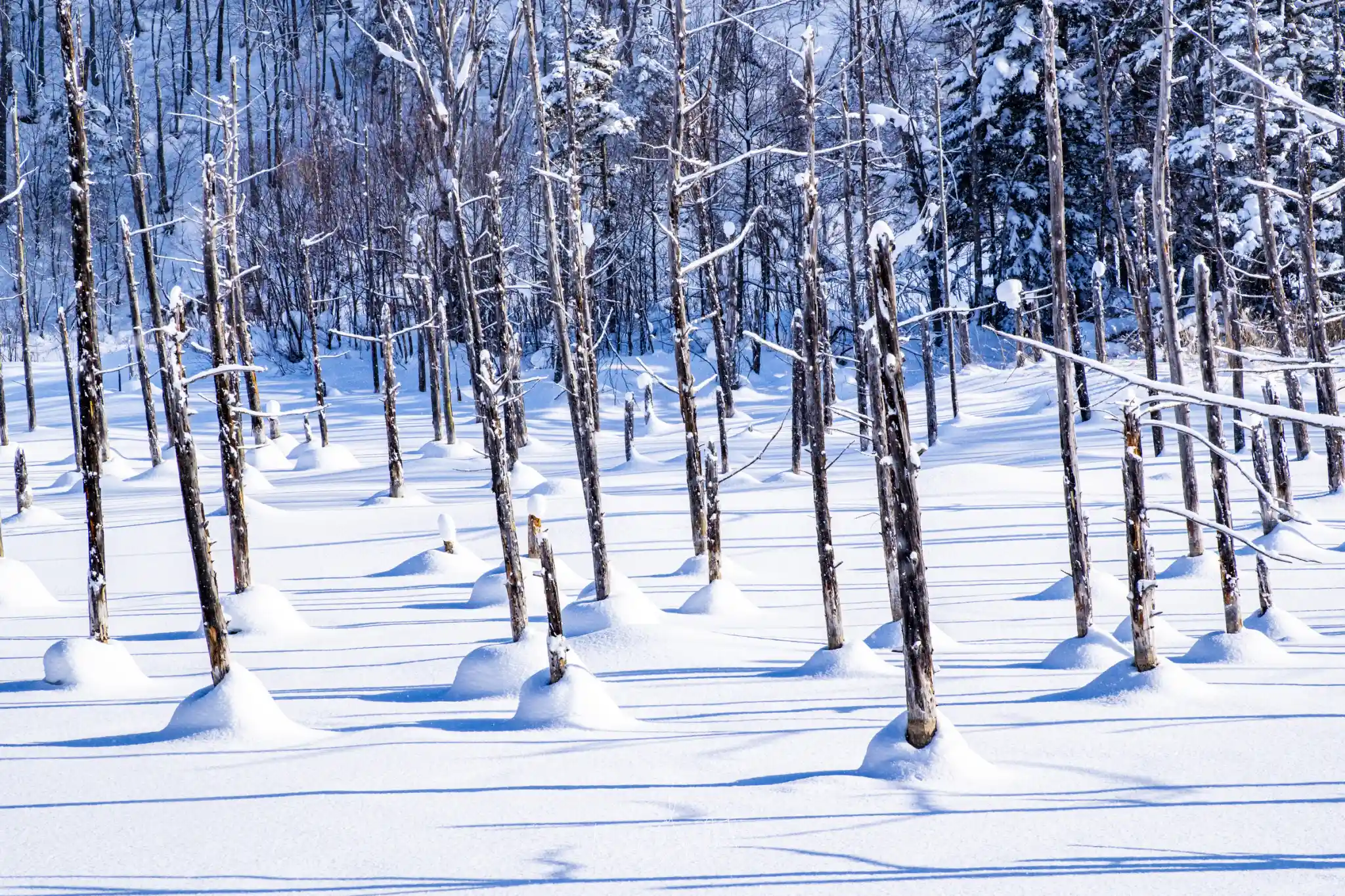
Central Hokkaido gives the quiet pictures. At the Shirogane Blue Pond the dead trees stand in snow in winter, throwing long shadows on a clear morning, and the pond is lit up at night through the winter, free to visit; check the season's dates on Visit Hokkaido. Around Biei, the rolling farmland carries the famous lone trees. These fields are private farmland, and Biei asks visitors not to enter them: photograph from the road, and do not block it. Our Biei in winter guide covers the Christmas tree and the pond.
Cape Hanasaki and the Nemuro coast
At Cape Hanasaki in Nemuro, a rectangular red-and-white lighthouse, first lit in 1890, stands above the cliffs, with the Kurumaishi basalt formation below. It is a dusk picture: the light comes on as the sky fades. Elsewhere on the eastern coast, sika deer graze the snowy grassland and wooden huts stand above the sea, pictures that need no more than a roadside stop and low sun.
"In Hokkaido the place decides the light for you. The river is a dawn place, the cranes are an afternoon place, and if you swap them you go home with grey pictures."
Joseph Mak, tour leader, Unusual Expedition
Rules and cold-weather notes
Do not feed or touch wildlife: the Ministry of the Environment asks visitors not to feed it, and Hokkaido's wild foxes can carry a parasite that infects people. At the crane grounds, keep behind the fences and keep your voice down. Drones need permission and many of these places ban them. Batteries fade fast in the cold; carry spares in an inside pocket and let the camera warm slowly in a bag before you bring it indoors. Our best time to visit Hokkaido in winter article covers when each subject peaks.
Photograph Hokkaido with us
There is no scheduled Hokkaido departure; we run winter Hokkaido as a private trip on request, built around these hours of light. See our private tours page, and our scheduled Japan departures on the Japan photography tours page.
Ask us about a Hokkaido photography trip
Join the Hokkaido photography tour
Kyushu, Shikoku And Setouchi Photography Journey departs 25 Sep 2027 To 05 Oct 2027, led by Joseph Mak. Small group, photography first. All Hokkaido photography tours.
Explore Hokkaido in depth
- Hokkaido Photography Tour Guide: Cranes, Eagles, Owls and Snow in Eastern HokkaidoJapan
- Steller's Sea Eagle Photography in Rausu: Size, Wingspan and the Winter BoatsJapan
- Red Crowned Crane Hokkaido: Photographing the Cranes of Tsurui, Akan and the Setsuri RiverJapan
- Whooper Swans at Lake Kussharo, Hokkaido: Photographing the Swans of the Hot Spring ShoreJapan
- Hokkaido Wildlife Photography: Red Foxes, Sika Deer, Owls and Forest Birds in WinterJapan
- Blakiston Fish Owl: How to Photograph the World's Largest Owl in HokkaidoJapan
- Biei in Winter: The Christmas Tree, the Blue Pond and the Snow Fields of HokkaidoJapan
- Best Time to Visit Hokkaido in Winter for Photography: Month by Month in the EastJapan
Upcoming Photo Tours
- Egypt Photo Tour – EgyptEgypt 12 Dec 2026 To 20 Dec 2026
- Inner Mongolia Winter Owl Photo Tour – ChinaChina 01 Jan 2027 To 04 Jan 2027
- Inner Mongolia Winter Photo Tour – ChinaChina 05 Jan 2027 To 11 Jan 2027
- Mekong And Central Highland Vietnam Photo Tour - VietnamVietnam 16 Jan 2027 To 24 Jan 2027