
Best Time to Visit the Serengeti for Photography, Month by Month
Best time to visit the Serengeti: Mara crossings July to October, calving January to March, cats all year. A month-by-month table.
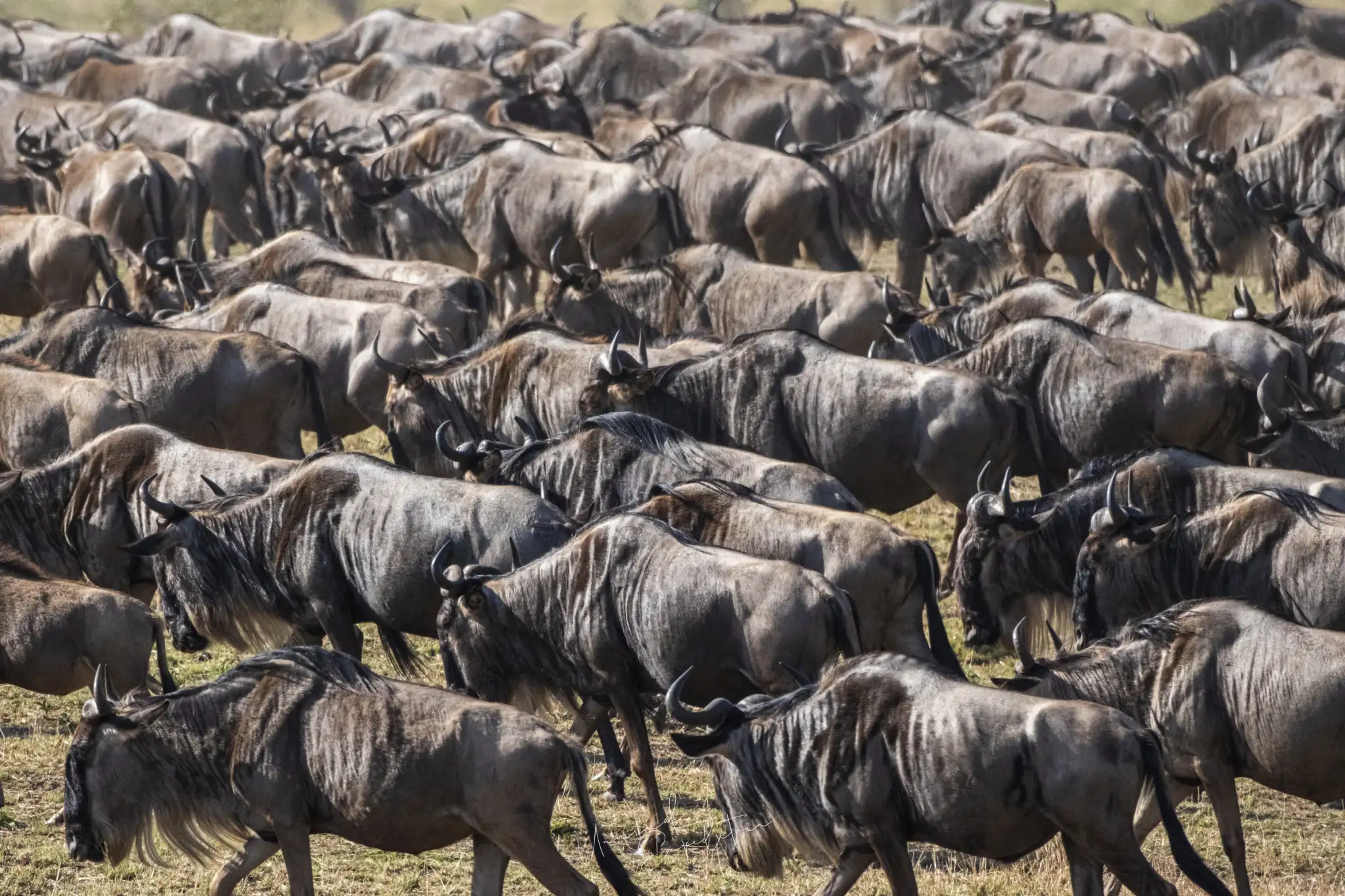
The best time to visit Serengeti National Park for photography depends on the picture you want. For the Mara River crossings, go between July and October, with August and September usually the busiest months. For calving herds, green grass and cheetahs on the southern plains, go between January and March. For leopards and lions in the central Serengeti, any month works. The long rains, around March to May, are the quietest time, with dramatic skies and harder tracks.
The Serengeti photography tour guide introduces the park's regions; this destination guide is about timing.
Serengeti best time to visit, by what you want to photograph
The Serengeti best time to visit is a question with three good answers. If the crossing is the reason for the trip, plan for the northern Serengeti in the dry season, when the herds reach the Mara River. If you want newborn wildebeest and the predators that follow them, plan for the short-grass plains around Ndutu early in the year. If the big cats and a quiet park matter most, the central Serengeti around Seronera holds resident lions and leopards all year, and the shoulder months bring fewer vehicles to each sighting. The trip length matters too: a crossing can take days to happen, so give the river several mornings, not one.
Best time to visit Serengeti great migration: month by month
The best time to visit the Serengeti for the great migration follows the herds clockwise through the year. Discover Africa's HerdTracker and Asilia Africa, who follow the migration on the ground, describe roughly the same pattern, with the warning that rain moves it by weeks in either direction.
| Month | Where the herds usually are | Landscape and light | What to photograph |
|---|---|---|---|
| January | Southern plains, Ndutu | Green, clear air, afternoon storms | Calving starts, cheetahs, lions |
| February | Southern plains, Ndutu | Green, clear | Peak calving, predator action |
| March | Southern and central plains | Green, rains begin | Young calves, storm skies |
| April | Central Serengeti | Long rains, lush | Quiet park, residents, moody light |
| May | Central to western corridor | Rains easing, green | Rutting herds, long columns |
| June | Western corridor, Grumeti | Drying, clear | Grumeti crossings, crocodiles |
| July | Western corridor to the north | Dry, golden grass | First Mara crossings, herds on the move |
| August | Northern Serengeti, Mara River | Dry, dust, clear light | Mara River crossings |
| September | Northern Serengeti, Mara River | Dry, golden | Crossings, crocodiles, big herds |
| October | Northern Serengeti, moving south | Dry, first clouds | Late crossings, return south |
| November | North to central | Short rains, green again | Herds moving, fewer vehicles |
| December | Central to southern plains | Green, showers | Herds arriving south, early calves |
Read the table as likelihoods: in some years the herds reach the Mara River early in July, in others they linger in the west.
Serengeti in July
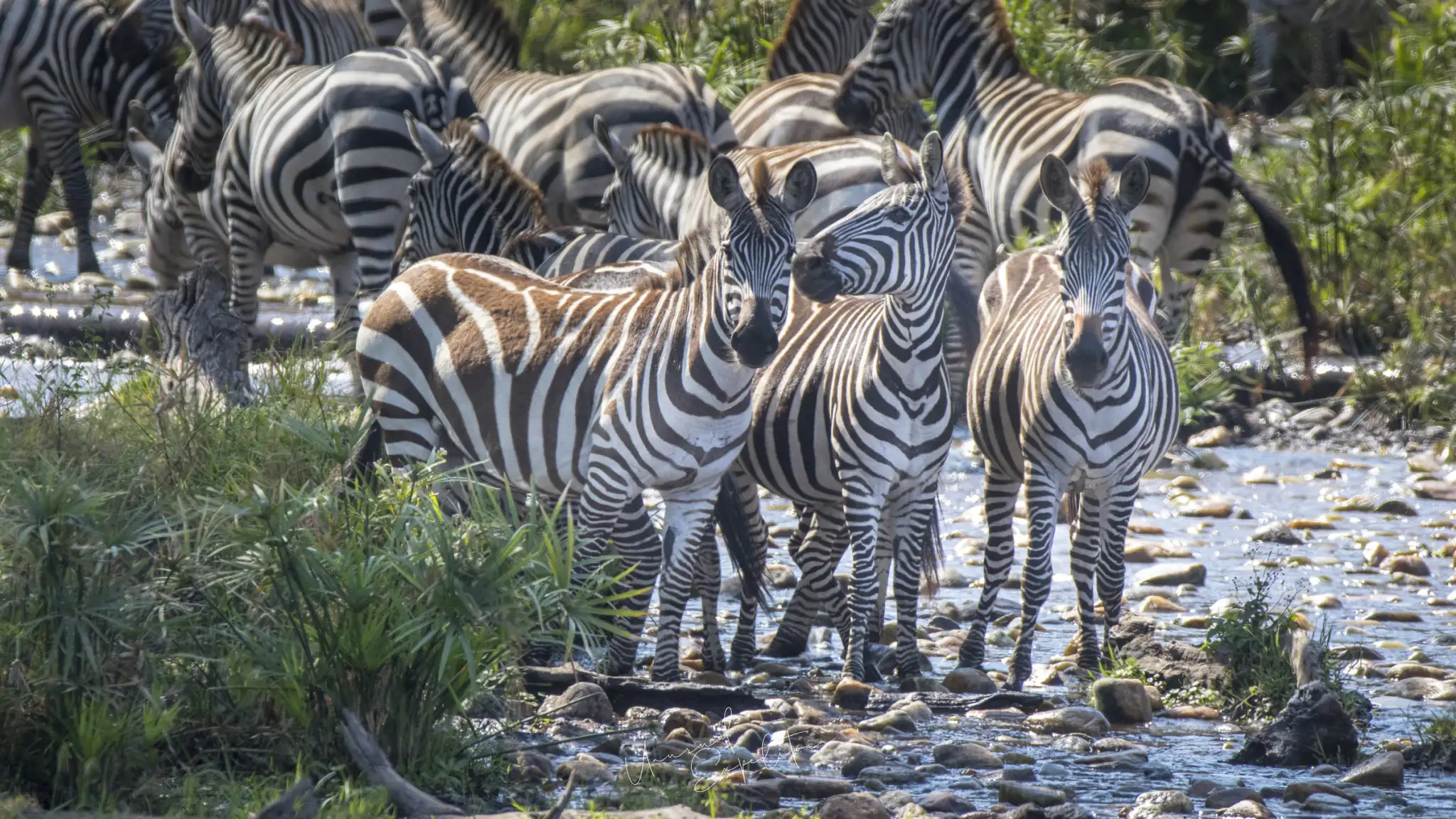
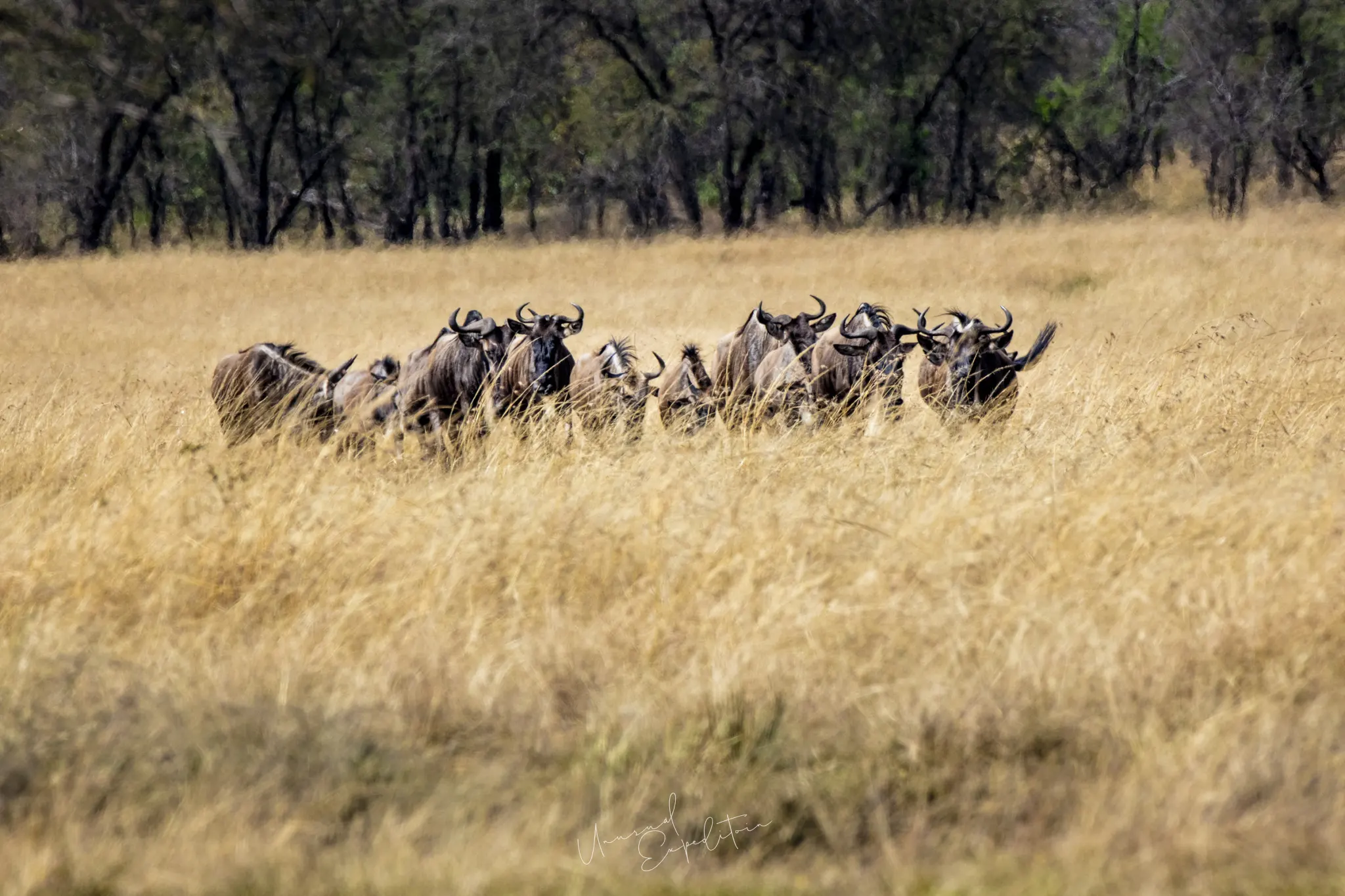
The Serengeti in July is a month of movement. The herds are leaving the western corridor and heading north, the grass is drying to gold and the first Mara River crossings can begin, though in a late year they do not. The central Serengeti is good for the cats at this time, with the dry season concentrating game around water. Mornings are cool, so bring a warm layer for the open roof. Our own July trips to the Serengeti gave us cheetahs in tall golden grass, leopards on kopjes and crossings on the Mara, which is a fair picture of what July can offer when the timing works.
Serengeti in August
The Serengeti in August is the month most people book for the crossings, and for good reason: Discover Africa's HerdTracker calls it the most reliable month to see the Mara River crossings, as the herds have usually reached the Kogatende area by then. The landscape is dry and dusty, which gives backlit dust at the edges of the day and a clean, bright light at midday. The northern Serengeti is busier with vehicles at the crossing points, so patience and a good position count. When we photographed the river at this time of year, the herds crossed on more than one day, with long quiet spells in between.
The calving season on the southern plains
From around January to March, the herds spread across the short-grass plains of the southern Serengeti and the neighbouring Ndutu area to give birth. Discover Africa and National Geographic describe thousands of calves born every day at the height of it, with February usually the peak. For a photographer this is the green season: fresh grass, clean air, storm clouds building over the plain and newborn calves standing for the first time. It is also a time of intense predator activity, and some of what you see is hard to watch. Cheetahs in particular do well on the open short grass, and the light after a passing storm can be the best of the year.
The rains and the quiet months
The long rains usually fall from around March to May, and a shorter wet spell comes towards the end of the year; Live Science describes this two-season pattern, though the timing varies. Rain rarely lasts all day. It brings heavy skies, rainbows and clean light between showers, and the park is at its quietest. Some tracks become hard to drive and parts of the park are harder to reach. For a photographer who values solitude and dramatic weather over the crossings, these months are underrated, especially in the central Serengeti where the resident cats stay put.
Serengeti best month for the light
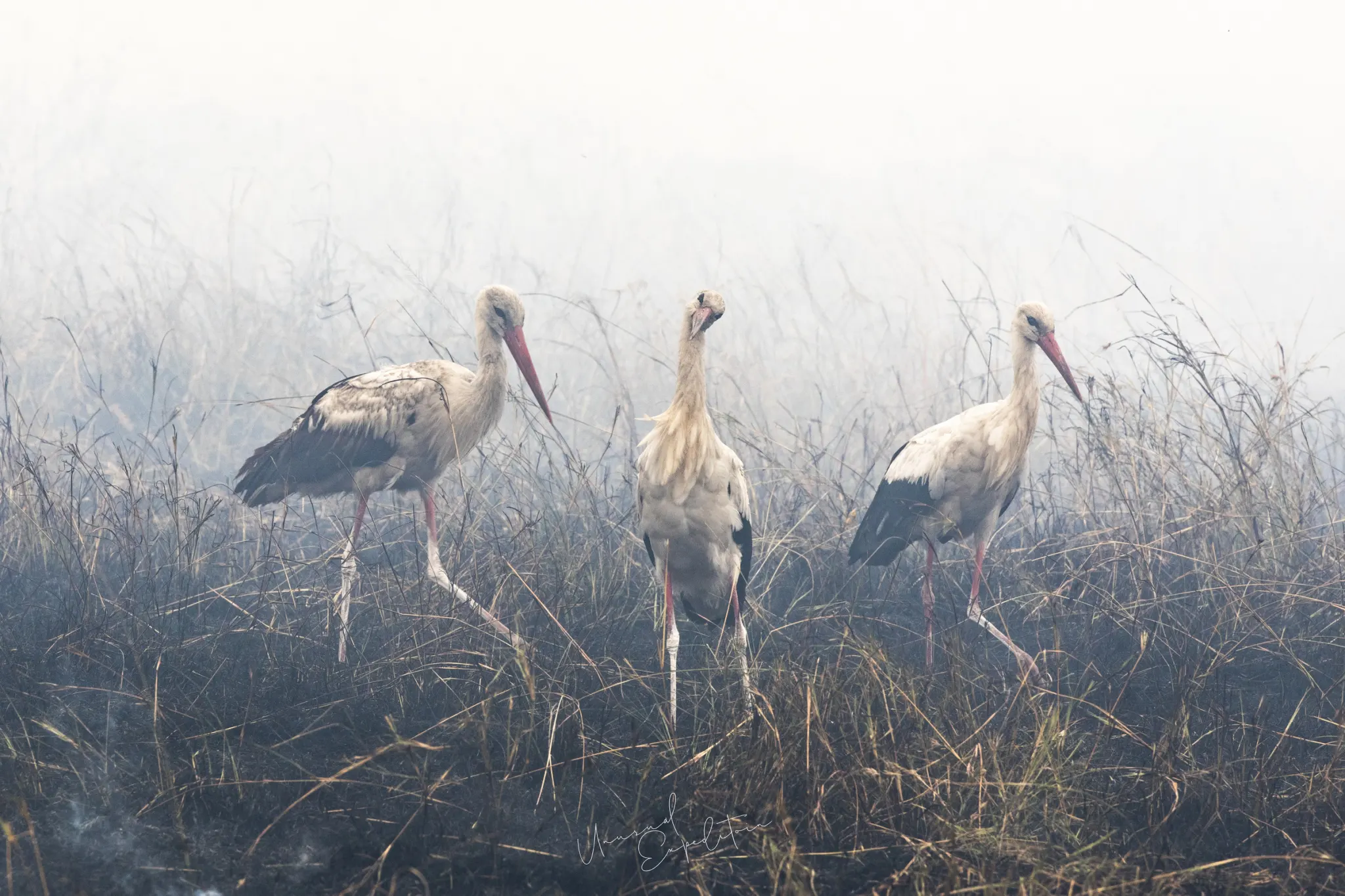
If light matters more than any single event, the Serengeti best month depends on your taste. Dry-season months give gold grass, dust in the air and low sun shining through it, which suits silhouettes and backlit herds. Grass fires, common in the dry season, add smoke that softens the light and draws birds hunting the insects that flee the flames. Green-season months give saturated colour, clean air and big cloud skies. The sun rises and sets fast this close to the equator, so the warm light at each end of the day is short in every month, and the Serengeti sunrise and sunset guide explains how to use it.
I used to tell people August and nothing else. After a green season on the southern plains I changed my mind. The crossings are the drama, but the light after a storm in the south is something else entirely.
Joseph Mak, tour leader, Unusual Expedition
How we choose our dates
Our Serengeti Photo Tour 2027 is timed for the dry season, when the herds are expected in the north, and gives several days to the Mara River so that a slow week still produces a crossing. Most of the remaining time is in the central Serengeti for the cats, before the trip ends in the Ngorongoro highlands and at Lake Eyasi. For more on what happens at the river, read the Mara River crossing guide, and for the cats the Serengeti big cats guide.
Plan your Serengeti season with us
The current departure and its dates are on the Tanzania photography tours page. If you would rather go in the green season, we can arrange the Serengeti as a private trip at the time you choose.
Ask us about the best month for your Serengeti trip
Join the Serengeti photography tour
Serengeti Photo Tour – Tanzania 2027 departs 21 Aug 2027 To 01 Sep 2027. Small group, photography first. All Serengeti photography tours.
Explore Serengeti in depth
- Serengeti Photography Tour: The Complete GuideTanzania
- Serengeti National Park Big Five: Where to Find and Photograph Each OneTanzania
- Serengeti National Park Zebra: Photographing the Stripes of the MigrationTanzania
- Serengeti National Park Birds: Bateleurs, Vultures, Hornbills and How to Photograph ThemTanzania
- Serengeti Leopards: Finding and Photographing Them in Seronera and on the KopjesTanzania
- Serengeti Photography FAQ: Fees, Weather, Rules and GearTanzania
- Is the Serengeti Worth Visiting? How to Get There and What to ExpectTanzania
- Serengeti Big Cats: Photographing Leopards, Lions and CheetahsTanzania
- Serengeti Sunrise and Sunset: Photographing the Golden HoursTanzania
- Mara River Crossing in the Serengeti: How to Photograph ItTanzania
- Serengeti National Park Photos: What the Park Looks LikeTanzania
Upcoming Photo Tours
- Egypt Photo Tour – EgyptEgypt 12 Dec 2026 To 20 Dec 2026
- Inner Mongolia Winter Owl Photo Tour – ChinaChina 01 Jan 2027 To 04 Jan 2027
- Inner Mongolia Winter Photo Tour – ChinaChina 05 Jan 2027 To 11 Jan 2027
- Mekong And Central Highland Vietnam Photo Tour - VietnamVietnam 16 Jan 2027 To 24 Jan 2027