
Serengeti Big Cats: Photographing Leopards, Lions and Cheetahs
Serengeti big cats: where to find leopards, lions and cheetahs, the best time of day, lenses, settings and ethics.
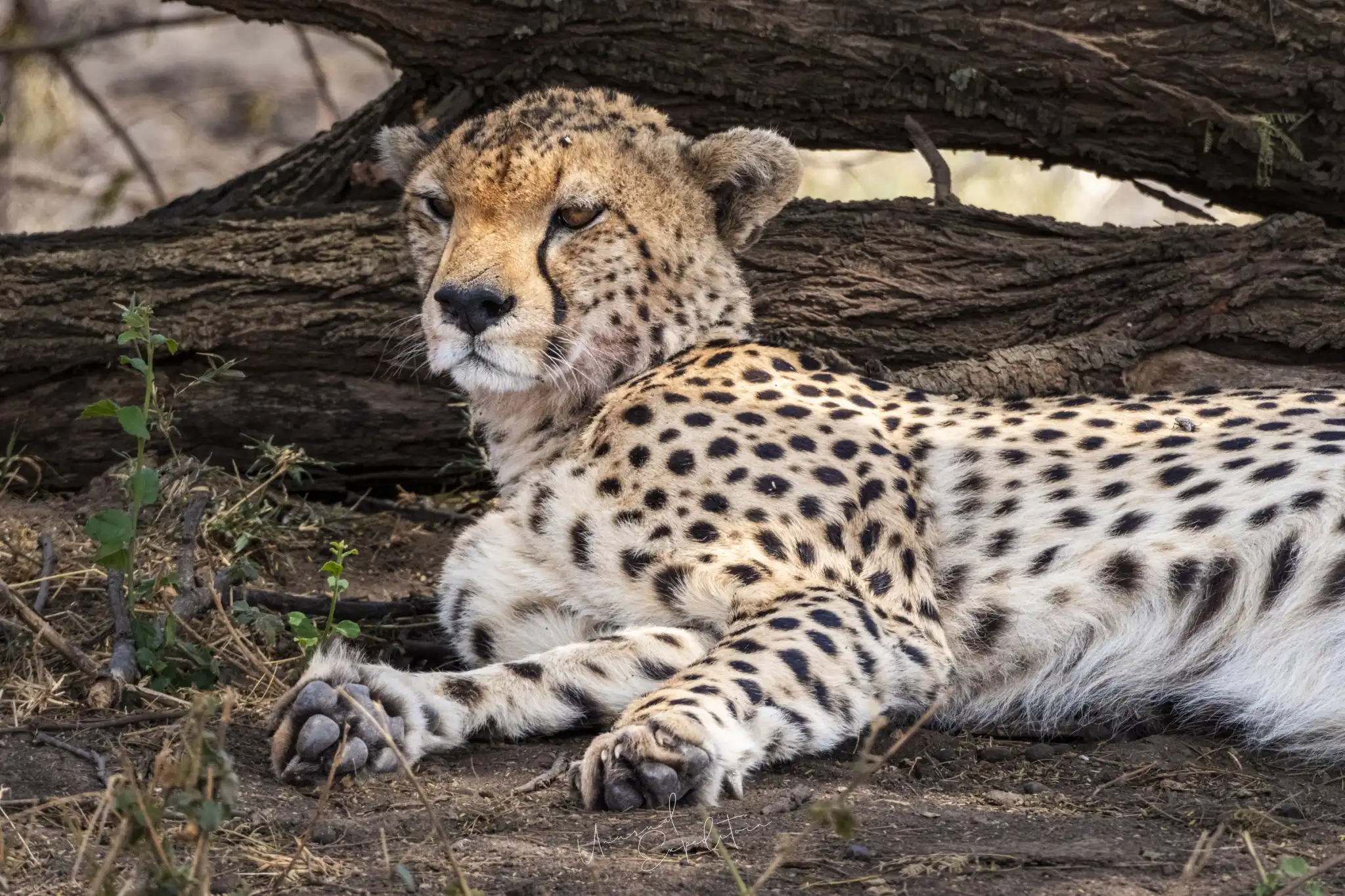
The Serengeti big cats are lions, leopards and cheetahs, and Serengeti National Park in Tanzania is one of the few places where a photographer can expect all three on one trip. Lions are the easiest to find, often on kopjes or under shade trees. Leopards are the hardest, usually resting in sausage trees and acacias along the rivers of the Seronera valley. Cheetahs hunt by day on the open plains. Early morning and late afternoon give the most behaviour and the best light.
The cats are a big part of our Serengeti photography tour guide; this destination guide looks at each one in turn.
Serengeti big cats: where to find them
The Serengeti big cats are spread unevenly through the park. The central Serengeti around the Seronera valley is the heart of it: permanent water, a good supply of resident prey and a mix of river trees, kopjes and open plains keep lions and leopards there all year, whether or not the migration is nearby. The southern short-grass plains are cheetah country, especially when the herds and their calves arrive early in the year. The northern Serengeti has its own prides and leopards along the Mara River, which follow the crossing herds in the dry season. Africa Dream Safaris and Four Seasons Serengeti, who both work in the central park, describe the Seronera river as one of the best places in the park to find leopards, and that matches our experience.
Serengeti leopard: patience under a tree
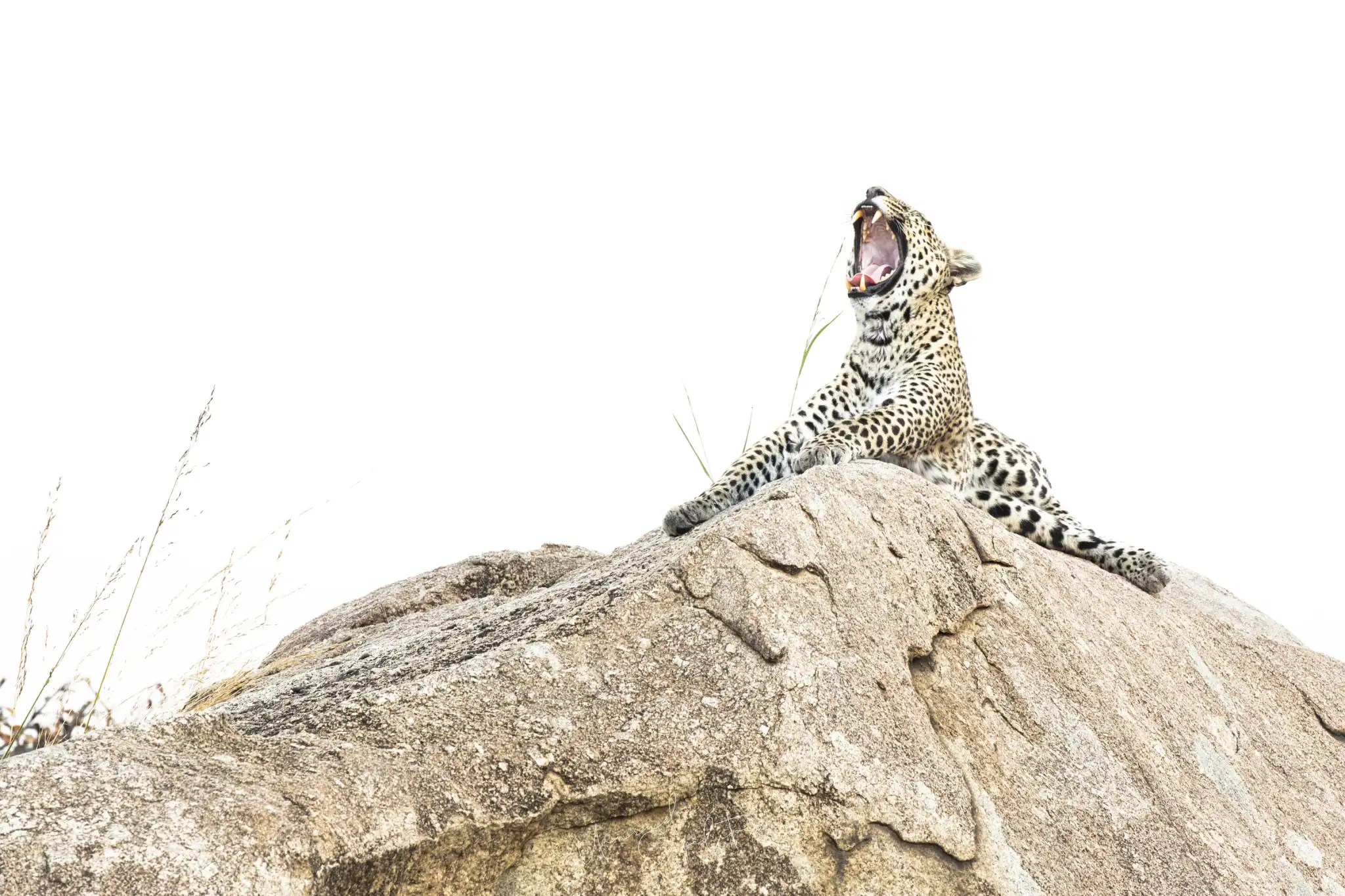
A Serengeti leopard spends most of the day out of sight, often stretched along a branch of a sausage tree or acacia with legs hanging, or tucked into the fork where a kill is stored. Finding one is the driver guide's skill: they scan every likely tree along the river, look for a hanging tail and watch for a kill wedged in the branches. Once found, the leopard is often asleep, and the picture comes when it lifts its head, yawns, climbs down or moves along the branch. That can take a long time. Set a 100-400mm or 200-400mm, frame with the branches, and expose for the leopard's coat against the bright sky behind it. On the kopjes, leopards also lie on the warm granite, which gives a cleaner background.
Lions on the kopjes and the plains
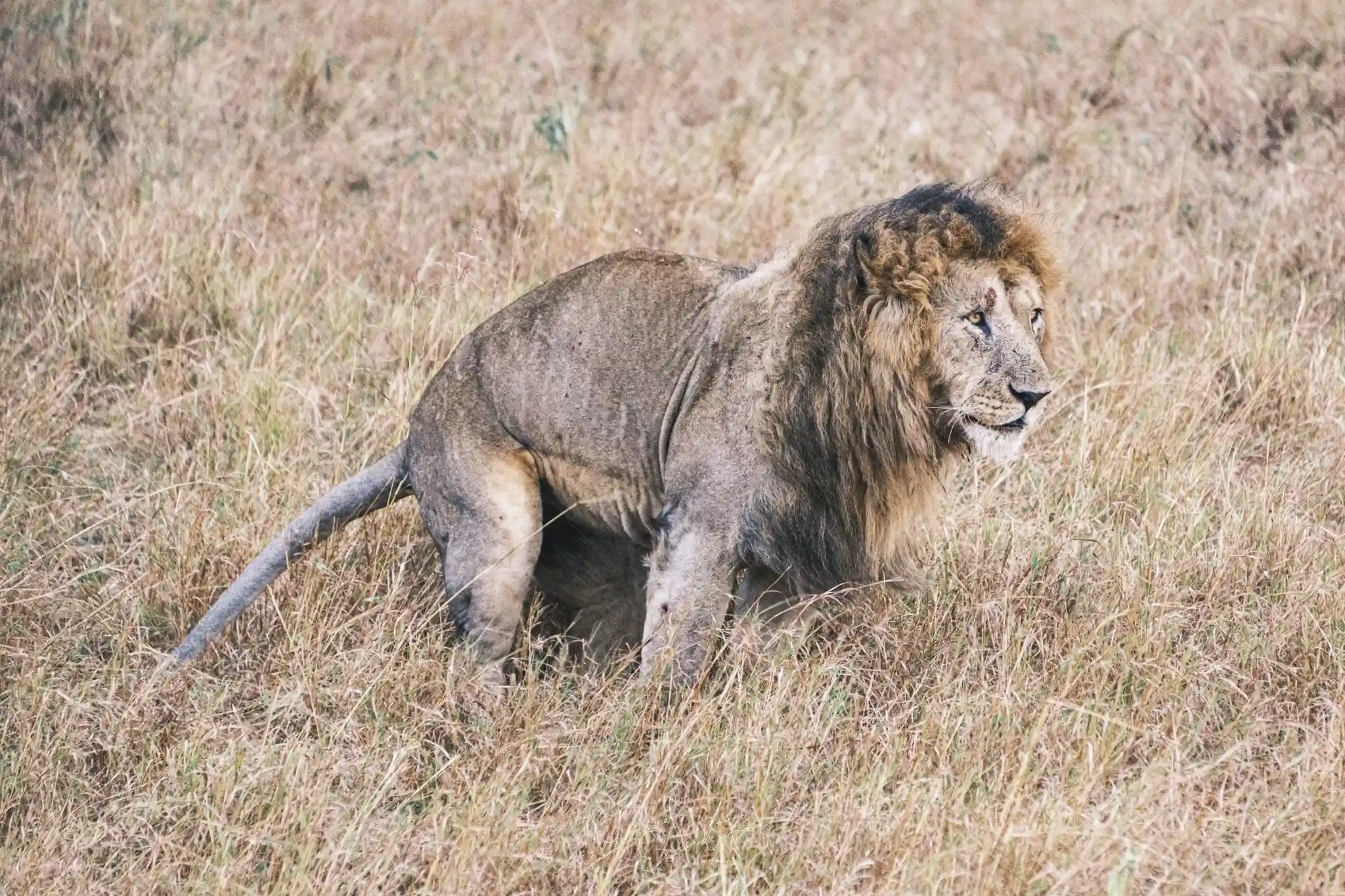
Lions are the most visible of the Serengeti big cats and the most rewarding for behaviour. Prides rest on the kopjes, granite outcrops that give them a lookout over the plains and shelter for cubs, and under shade trees through the middle of the day. In the cool hours they walk, groom, play and sometimes hunt, and the males patrol and call. Most lion pictures are made at eye level from the vehicle with a 70-200mm or 100-400mm, as lions largely ignore vehicles. Watch the cubs and the interactions between pride members; a single yawning male is a good frame, but two lionesses greeting each other tell more of a story. Kills are part of what you see, and some guests choose to look away.
Serengeti National Park cheetah
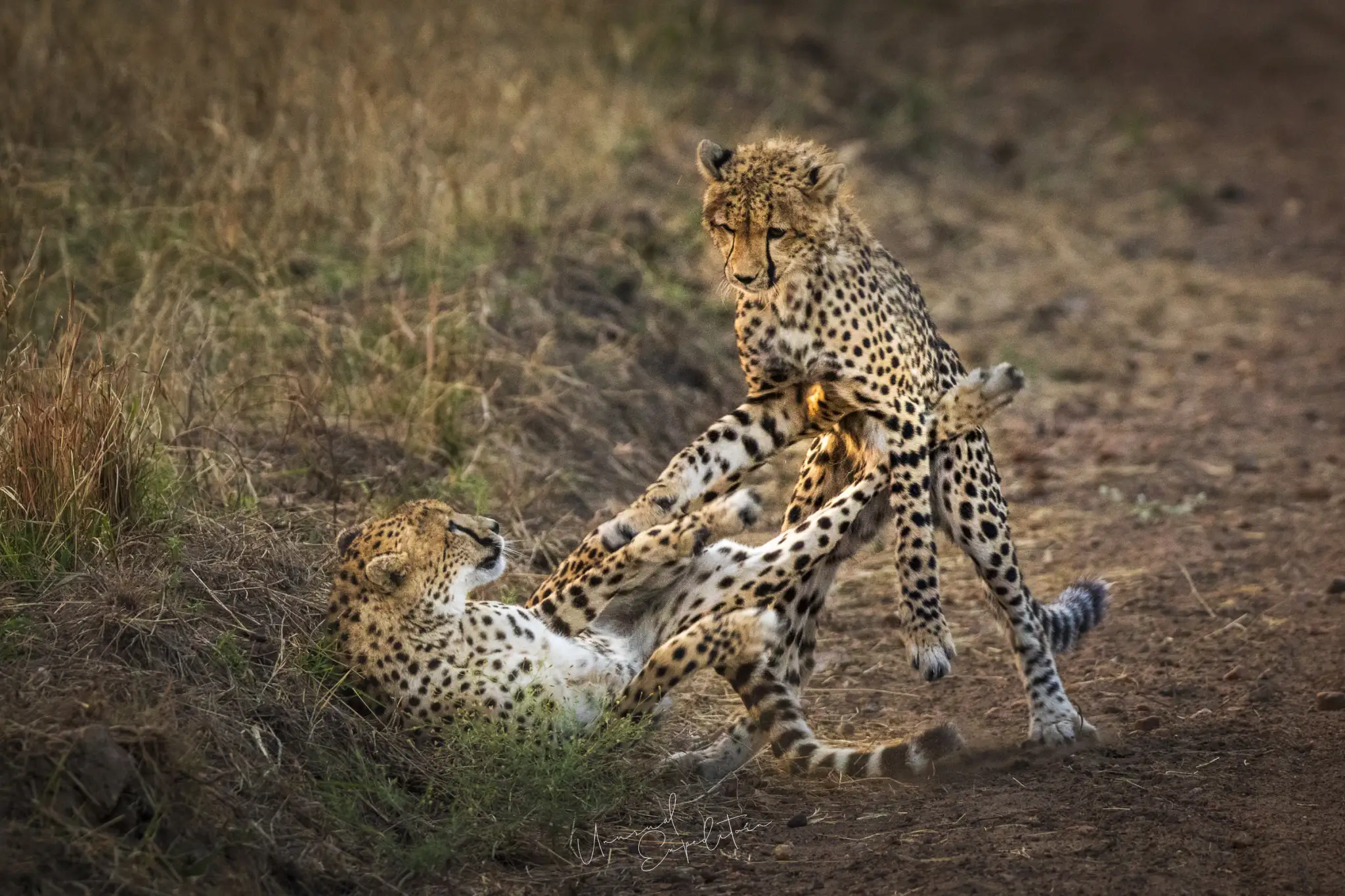
A Serengeti National Park cheetah is a daytime hunter, built for speed on open ground, so you find it on the plains, on termite mounds and on the low branches of fallen trees where it can see over the grass. Cheetahs hunt in daylight to avoid lions and hyenas, which means you can follow a hunt from the first stalk to the sprint, often in the middle of the morning. A chase lasts seconds, so be ready with a fast shutter of 1/2000s or more, continuous autofocus and the whole plain in view. Between hunts, mothers with cubs give the gentlest pictures of the trip: cubs climbing on their mother, playing and practising their stalk. On our trips we have photographed cheetahs resting in the shade of a fallen tree, watching from rocks and stalking through tall golden grass.
Comparing the three cats
| Cat | Where in the Serengeti | Best time of day | Lens | What makes the picture |
|---|---|---|---|---|
| Lion | Kopjes, shade trees, everywhere | Early morning, late afternoon | 70-200mm, 100-400mm | Interaction, cubs, males calling |
| Leopard | River trees in the Seronera valley, kopjes | Late afternoon, early morning | 100-400mm, 200-400mm | Head lifting, climbing down, the kill |
| Cheetah | Open plains, termite mounds, southern plains | Morning to midday | 100-400mm | The stalk and chase, cubs |
Leopards need the longest wait; give each sighting time before moving on.
Ethics and distance
Good big cat photography in the Serengeti is also respectful photography. The rules of Tanzania National Parks (TANAPA) keep vehicles on tracks in most of the park and visitors inside them; a good guide keeps a distance that leaves the animal's behaviour unchanged, does not block a hunting cheetah's line of sight and leaves when the cat shows stress. Do not call out to a cat or make noises to get it to look at you. Fewer vehicles at a sighting make for better pictures and calmer animals, which is one reason we keep our groups small.
Leopards teach you patience. You can sit under a tree for most of an afternoon while the cat does nothing, and then it stands, stretches and climbs down just as the light goes warm. That is the frame, and it is over in seconds.
Joseph Mak, tour leader, Unusual Expedition
Lenses and settings for the cats
A 100-400mm or 200-400mm zoom on a full-frame body, or a 100-400mm on a crop body, covers most cat situations in the Serengeti. Keep a 70-200mm on a second body for lions close to the vehicle and for scenes that include the landscape. Use a bean bag on the window or roof for stability. Start at 1/500s for resting cats and 1/2000s for any movement, and let the ISO rise. For more on the light at each end of the day, read the Serengeti sunrise and sunset guide; for the season the cats are busiest, the best time to visit the Serengeti.
Photograph the Serengeti cats with us
Our Serengeti Photo Tour 2027 spends its central days in the area where the cats live year round, with time to wait at each sighting. The current departure is on the Tanzania photography tours page.
Ask us about the big cats of the Serengeti
Join the Serengeti photography tour
Serengeti Photo Tour – Tanzania 2027 departs 21 Aug 2027 To 01 Sep 2027. Small group, photography first. All Serengeti photography tours.
Explore Serengeti in depth
- Serengeti Photography Tour: The Complete GuideTanzania
- Serengeti National Park Big Five: Where to Find and Photograph Each OneTanzania
- Serengeti National Park Zebra: Photographing the Stripes of the MigrationTanzania
- Serengeti National Park Birds: Bateleurs, Vultures, Hornbills and How to Photograph ThemTanzania
- Serengeti Leopards: Finding and Photographing Them in Seronera and on the KopjesTanzania
- Serengeti Photography FAQ: Fees, Weather, Rules and GearTanzania
- Is the Serengeti Worth Visiting? How to Get There and What to ExpectTanzania
- Serengeti Sunrise and Sunset: Photographing the Golden HoursTanzania
- Mara River Crossing in the Serengeti: How to Photograph ItTanzania
- Best Time to Visit the Serengeti for Photography, Month by MonthTanzania
- Serengeti National Park Photos: What the Park Looks LikeTanzania
Upcoming Photo Tours
- Egypt Photo Tour – EgyptEgypt 12 Dec 2026 To 20 Dec 2026
- Inner Mongolia Winter Owl Photo Tour – ChinaChina 01 Jan 2027 To 04 Jan 2027
- Inner Mongolia Winter Photo Tour – ChinaChina 05 Jan 2027 To 11 Jan 2027
- Mekong And Central Highland Vietnam Photo Tour - VietnamVietnam 16 Jan 2027 To 24 Jan 2027